
George Frideric Handel - E pur cosi... Piangerò la sorte mia, from Giulio Cesare
Cecilia Bartoli (Mezzo-soprano)
Il giardino armonico (Orchestra)
Giovanni Antonini (Conductor)
P KELLACH WADDLE - Winters Moscow; Winters Boston : Op. 758 Impression for Solo Bass in Homage To Koussevitsky
P. Kellach Waddle (Double Bass)
Scarlatti, Pasta 2022
This Week in Classical Music: October 24, 2022. Brief entry: Scarlatti and Pasta. Domenico Scarlatti, a son of Alessandro , was born on October 26th of 1685, the year that also 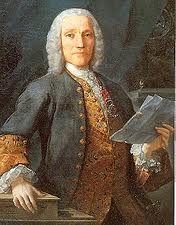 gave us Johann Sebastian Bach and George Frideric Handel. Domenico’s piano sonatas are as popular as ever, though out of the 555 that he had written during his lifetime in Italy and Spain, only a few are played often, while most of them remain unknown. Several pianists and harpsichordists, on the other hand, have recorded all of Scarlatti’s sonatas; Scott Ross, who was the first one to record the complete set in 1985. The British keyboardist Richard Lester also recorded all of them and the Italian pianist Carlo Grante is in a middle of his Scarlatti project, he’s playing them on a Bösendorfer piano. Here, almost randomly is Ivo Pogorelić playing Sonata in G minor, K. 450.
Luciano Berio, one of the most interesting composers of the second half of the 20th century, was born on October 24th of 1925. And Georges Bizet was also born this week, on October 25th of 1838. .jpg "Giuditta Pasta in the role of Anne Boleyn, by Karl Brullov")
One somewhat unusual anniversary: Giuditta Pasta. Pasta, born on October 26th of 1797 near Milan, was one of the greatest voices of the early 19th century. Based on the descriptions of her contemporaries, she was a real “soprano sfogato”. Sfogato, a rare voice, has a very large range, from mezzo, or even contralto, to the coloratura soprano. Many of the soprano sfogato roles were written by the bel canto composers of the 19th century, Rossini, Donizetti and Bellini. Maria Callas may be considered a soprano sfogato: she sung mezzo roles, such as Carmen, Rosina and Cenerentola, and also Norma, Lucia de Lammermoor and Anna Bolena, which require a very high tessitura, reaching the E above the high C. Three famous roles were created specifically for Giuditta Pasta: Donizetti's Anna Bolena, which she premiered in 1830, Amina in Bellini's La sonnambula and Norma in Bellini’s opera, both of which she sung in 1831. In the absence of the recordings of Pasta’s voice, here’s Maria Callas in the Mad scene (Il dolce suona) from Lucia de Lammermoor, in a 1953 recording.
Pasta performed in all major opera houses of Europe and also visited St-Petersburg: the portrait, above, by the Russian painter Karl (Kirill) Bryullov, was made there in 1830.
Read more...Gaetano Donizetti - Il dolce suona, from Lucia di Lammermoor
Maria Callas (Soprano)
Orchestra del Maggio Musicale Fiorentino (Orchestra)
Tullio Serafin (Conductor)
Domenico Scarlatti - Sonata in G minor, K.450
Ivo Pogorelić (Piano)
Liszt, Solti 2022
This Week in Classical Music: October 17, 2022. Liszt, Solti and more. Of all the composers and musicians born this week, Franz Liszt is by far the most important. A great composer and, 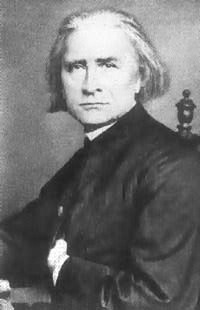 judging by the numerous ecstatic reviews left by his contemporaries, an even greater pianist, Liszt was born on October 22nd of 1811 in a small Hungarian village next to the border with Austria, both countries back then part of the Austrian Empire. We’ve written about Liszt many time and also published short articles on his piano cycle, Années de pèlerinage: Year One, Switzerland (Première année: Suisse), here, and Year Two, Italy (Deuxième année: Italie) here and Year Three, named just Troisième Année, here. Our library has about 250 different performances of Liszt’s works, many by young talented musicians, you can browse it here. Listen, for example, how 18-year-old Daniil Trifonov plays, live in concert, Liszt’s transcription of Schubert’s song Die Forelle.
Luca Marenzio, a fine composer of late Renaissance, was born on October 18th of 1553 or thereabouts in a village near Brescia. 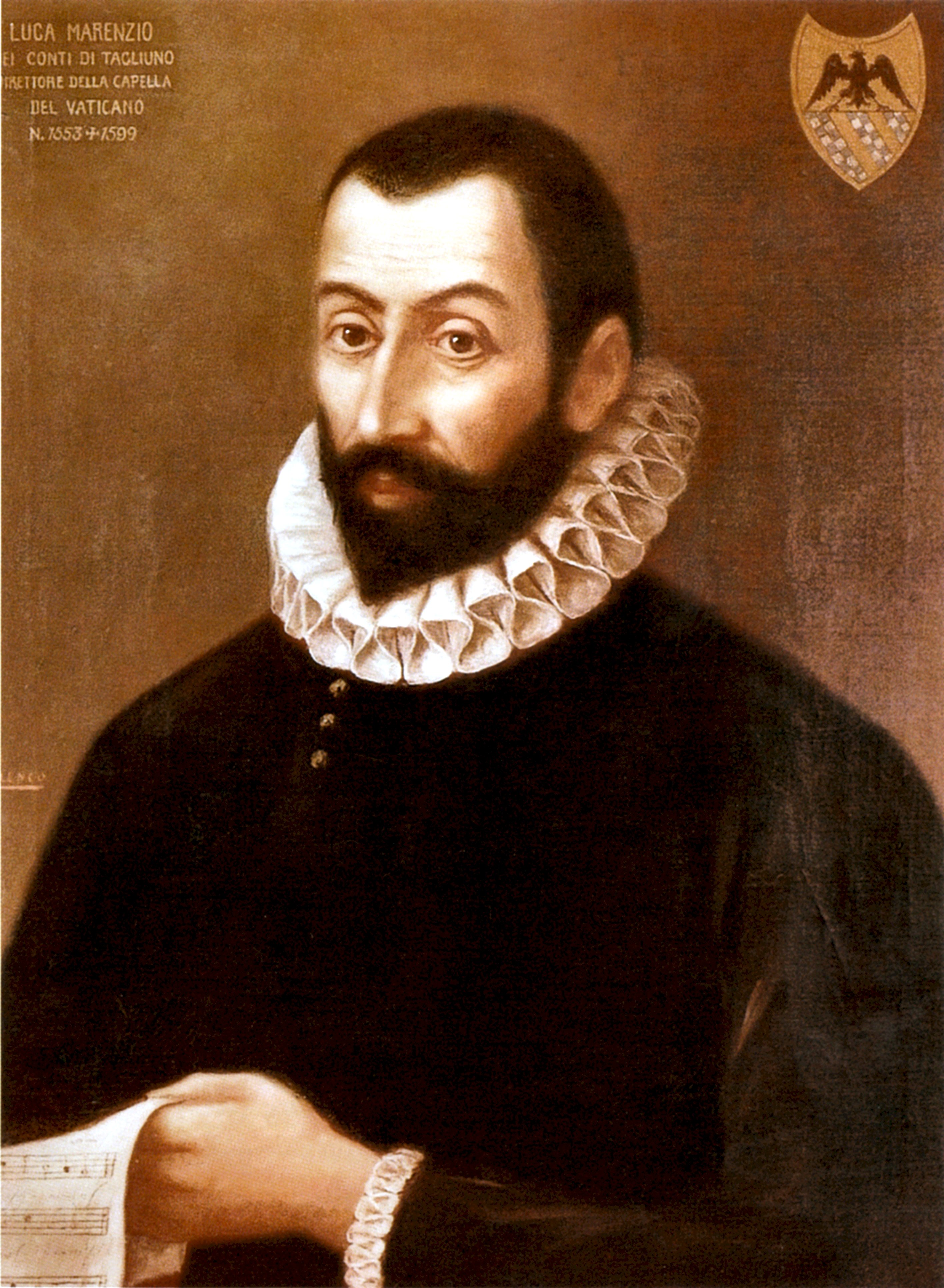 He served in courts of many notables – first, Cardinal Cristoforo Madruzzo; then, for a long time, Cardinal Luigi d’Este, son of Ercole II d'Este, Duke of Modena and Ferrara; then Cardinal Cinzio Aldobrandini, nephew of Pope Clement VIII; and finally, Ferdinando I de' Medici, the Grand Duke of Tuscany. You can read more about Marenzio here. He was one of the finest madrigalists of his time; listen, for example, to this madrigal for four voices, Madonna, sua mercé, performed by the Mirandola Ensemble
Another Italian composer, Baldassare Galuppi, was also born on October 18th but a century and a half later, in 1706. During his lifetime he was famous for comic operas, which he wrote to the librettos by Carlo Goldoni. A Venetian, he spent time in European capitals, Vienna, St. Petersburg and London. One of his piano sonatas (no. 5 in C Major), which is often played in music schools, was made famous by Arturo Benedetti Michelangeli. He also wrote a fine mass, Messa di San Marco. Here’s the section Qui sedes ad dexteram Patris (Thou who sits at the right hand of the Father) performed by the Vocal Concert Dresden.
Finally, a round date: Georg Solti was born as György Stern into a Hungarian Jewish family on October 21st of 1912, 110 years ago, in Buda. One of the greatest symphonic and opera conductors of the 20th century, he led the Chicago Symphony from 1967 to 1991. Even though we have many samples of his art in our library, we’ve never written about him at length. We’ll do it soon, in the meantime, here’s Solti conducting Liszt: Le Preludes, in the 1992 live recoding from Salzburg, with the Chicago Symphony.
Read more...
Franz Liszt - Les Preludes
Chicago Symphony Orchestra (Orchestra)
Georg Solti (Conductor)
Baldassare Galuppi - Qui sedes ad dexteram Patris, from Messa per San Marco
Vocal Concert Dresden (Chorale)
Dresdner Instrumental Concert (Ensemble)
Peter Kopp (Conductor)
Luca Marenzio - Madonna, sua mercé
The Mirandola Ensemble (Ensemble)
Luigi Legnani - Capriccio No. 28, Op. 20
Federica Canta (Guitar)