Welcome to our free classical music site

Do you write about classical music? Are you a blogger? Want to team up with Classical Connect? Send us a message, let's talk!
Do you write about classical music? Are you a blogger? Want to team up with Classical Connect? Send us a message, let's talk!




December 3, 2012. Padre Antonio Soler and more. Antonio Soler was born around December 3, 1729 (we know that he was baptized that day) in Olot, a small town in Catalonia. When he was six, he entered the choir school for boys at the ancient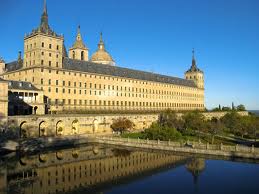 Montserrat Monastery. When he was 15, he was appointed the organist at the Cathedral of La Seu d'Urgell in the Catalan Pyrenees. He was ordained at the age of 23 – by then he was already employed at the Royal Court in El Escorial. Soler wrote 150 keyboard sonatas (and many more works as well). It is not known whether he studied with Domenico Scarlatti, who lived in Madrid from 1733 to his death in 1757, but it seems that the influence of the older master’s music is strong: listen, for example, to Sonata in D Major (it’s performed by the Ukrainian pianist Elena Ulyanova). Though he served the King and lived many years in the Royal residence, no known portraits of Padre Antonio Soler exist. The picture above depicts El Escorial where Soler spent more than half of his life.
Also this week: the great Finnish composer Jean Sibelius was born on December 8, 1865 in the south of Finland, then part of the Russian Duchy, into a Swedish-speaking family. Sibelius, born Johan, started using the French-sounding name Jean while he was a law student at the Imperial Alexander University. He was much more interested in music than law, so he quit the University and entered the Helsinki Music School. He went on to study in Berlin and Vienna. Sibelius, who wrote during the period of flourishing experimentation in classical music, may sound rather conservative to the modern ear. Still, his seven symphonies are masterly, his Violin concerto is one of the most popular, and so are his symphonic poems Finlandia and the Karelia suite. Sibelius wrote his First Symphony when he was 35, and composed very intensely for the following quarter century. Then, around 1926, he stopped and didn’t write a single work in the last 30 years of his life. He died on September 20, 1957 at the age of 92. Here’s the rousing Intermezzo, from the Karelia Suite Op. 11. It’s performed by the Oslo Philharmonic, Mariss Jansons conducting (courtesy of YouTube).
And finally, a performance note. The Lyric Opera of Chicago just started a run of Donizetti’s Don Paquale. The role of the Don is sung by the bass-baritone Ildebrando D'Arcangelo whose voice has an enormous range. In 1708 George Frederic Handel composed a “dramatic cantata” Aci, Galatea e Polifemo. Among the cast of characters is a Cyclops named Polifemo. One of his arias, Fra l'ombre e gl'orrori has a range of almost three octaves! One wonders who was the Neapolitan singer that Handel had in mind for the role. You can listen to the amazing performance by Ildebrando D'Arcangelo here (courtesy of YouTube).
PermalinkNovember 26, 2012. Jean-Baptiste Lully. The great French Baroque composer, Jean-Baptiste Lully was actually born an Italian on November 28, 1632 in Florence. As a young child, he received little education and learned only the basics of playing the guitar, probably from a Franciscan friar. Apparently, he was pretty good because in 1646 Roger de Lorraine, the chevalier de Guise, took the lucky boy to France where he entered into the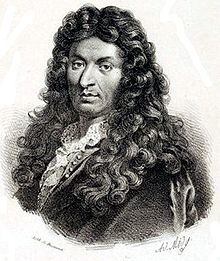 service of one of the noblest houses of the kingdom, that of Mademoiselle de Montpensier, the eldest daughter of Gaston, the Duke of Orléans and a brother of Louis XIII. Lully was taught to dance and studied music with Nicolas Métru, an organist and viol player who also taught Couperin.
In 1652, Mlle de Montpensier was exiled (she was one of the key leaders of the Fronde) and Lully left her court. A talented dancer and musician, his skills brought him to the attention of the young King Louis XIV and he became a dancer in the king’s service. After composing some music for the Ballet de la nuit, Louis XIV appointed him leader of the Petits Violons, the king’s own private violin band. Lully’s favor in the king’s court continued to grow and in 1671, he was appointed the Superintendent of Music. Eventually, he was even given complete control over all music performed in France by the king.
The king liked to dance, and Lully composed many ballets for the court. His music changed the genre, introducing much livelier ballets in place of the slow, stately older dances. With the aid of Molière, Lully also created the genre of comédie-ballet, which mixed spoken plays with dance and music numbers. As Louis XIV aged, however, his interest in ballet, as well as his ability to dance, waned and in response Lully turned his attention on operas. At that time the Italian opera, that of Monteverdi, Cavalli, and even lesser composers, reigned supreme throughout Europe (the first public opera house was opened in Venice in 1637). Still, Lully found it unsuitable for the French language. In his operas Lully removed the divisions between recitative and aria and, using good librettos by the dramatist Philippe Quinault, made the story move faster. It is his operas that made Lully the foremost composer in France.
In January of 1687, while conducting a performance, Lully struck his toe with a long staff that he was using to beat time. The wound became gangrenous, yet he refused to have the toe amputated. The gangrene inevitably spread and on March 22, Lully died from the injury.
We’ll hear the aria Belle Hermione, hélas, hélas from Cadmus et Hermione, a "musical tragedy" on the libretto by Philippe Quinault. It is sung by the wonderful French baritone Gérard Souzay, with Orchestre de la Société du Conservatoire Paris (courtesy of YouTube, here).
PermalinkNovember 19, 2012. Last week we celebrated the anniversary of Alexander Borodin but left out two major composers of the 20th century, Aaron Copland and Paul Hindemith. This week is even more prodigious, from Manuel de Falla to Benjamen Britten, Virgil Thomson, and Alfred Schnittke. We’ll start with last week’s birthdays. Aaron Copland was born on November 14, 1900 into a family of recent Russian-Jewish émigrés (his father changed his name from Kaplan), studied in Paris, but became the most "American" of all American composers. His use of hymns and songs, such as the famous rendition of Shakers’ "Simple Gifts" in Appalachian Spring harkens back to the Russian and Czech Nationalist composers, but his musical idiom was very much of the 20th century. Here is At the River, from Old American Songs. It’s performed by the baritone Jonathan Beyer with Jonathan Ware at the piano.
Compared to the lyrical Copland, few composers are more different than the cerebral Paul Hindemith, even though both wrote tonal music and never ventured into the twelve-tone world. Hindemith was born on November 16, 1895 near Frankfurt am Main. He played violin and viola, and started composing at the age of 21. Hindemith’s compositional career blossomed during the time Nazis were in power, and their relationship was complex. Some Nazis despised Hindemith’s music, but other wanted to make him into a model German composer and ambassador of German culture. Hindemith emigrated to Switzerland and then to the US in 1940. In the US he taught at Yale; among his students were Lucas Foss, Normal Dello Joio, and many other. Here is Hindemith’s Viola Sonata Op. 11 No. 4. It is performed by Yura Lee and Timothy Lovelace.
Benjamin Britten was the greatest British composer of the 20th century and probably the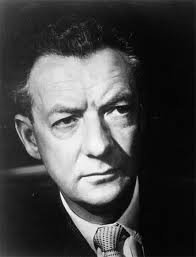 first great British composer since Henry Purcell, or Handel, depending on whether the latter is counted as a German composer or an English one (our apologies to the devotees of Elgar, Delius and Vaughan Williams!). He was born on November 22, 1913. When he was 17 he entered the Royal College of Music, where he studied with composers John Ireland and Arthur Benjamin. He started composing around that time. In 1936 he met the tenor Peter Piers who strongly affected Britten’s musical development and also became his lifelong partner. Britten and Pears moved to the US in 1939 (both were conscientious objectors), but returned to Britain in 1942. Britten’s greatest work was in opera: Peter Grimes (1945) made him a star, and altogether he wrote 13 operas, Billy Bud, The Beggar’s Opera and The Turn of the Screw being among the most popular. We don’t have Britten’s operas, but we do have a wonderful song cycle, A Charm of Lullabies, Op. 41 (here). It is sung by the mezzo-soprano Jennifer Johnson with Scott Gilmore at the piano. On a much lighter note, the late Dudley Moore’s parody of Pears singing the supposedly Britten’s rendition of Little Miss Muffet is hilarious and absolutely ingenious (you can find it on YouTube).
We’ll get back to Falla and Schnittke later, in the mean time enjoy the music.
PermalinkNovember 12, 2012. Borodin and more. Alexander Borodin, a Russian composer and famous chemist, was born on this day in St-Petersburg in 1833. He was an illegitimate son of a Georgian prince Luka Gedevanishvili, who had him registered as a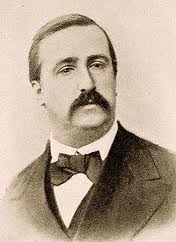 son of one of his serfs, Porfiry Borodin. Thus, Alexander Lukich Gedevanishvili was transformed into Alexander Porfirievich Borodin. Alexander received a good education, and took some music lessons (that he was gifted became clear very early on – when he was nine he composed several small pieces), but at the age of 10 he fell in love with chemistry. At 17 he entered the prestigious Medico-Surgical Academy and upon graduating pursued a career of surgeon and chemist, taking additional studies in Heidelberg and in Italy. In 1862, Borodin became a professor of chemistry at the same Academy and taught chemistry there for the rest of his life. His research in chemistry was significant and he became one of the most respected scientists in Russia; the famous Mendeleev, the inventor of the periodic table, was his good friend and colleague. All along, music was a love and a hobby to Borodin, second in priority. The same year he became a professor at the Academy, Borodin met the composer Mily Balakirev and stared taking composition lessons with him. His First Symphony, written in 1867, is not performed often, but the Second one (“Bogatyr”), became very popular. In 1879 he wrote the String Quartet no. 1, two years later, the Second String quartet. Borodin worked on his main composition, the opera Prince Igor, for 18 years. It still wasn’t finished at the time of his premature death on February 27, 1887, at the age of 53. Nikolai Rimsky-Korsakov and Alexander Glazunov completed the opera and the orchestration based on the materials left after Borodin’s death. The opera was first performed in 1890 at the Mariinsky Theater in St-Petersburg to great acclaim. It remains his masterpiece and one of the best known and loved Russian operas.
Borodin’s name was given to one of the most unique ensembles, the Borodin Quartet. It is probably the oldest continuously performing quartet in modern history. The quartet was formed in 1944 by the students of Moscow Conservatory. Mstislav Rostorpovich was the first cellist, but very soon he withdrew and Valentin Berlinsky took his place. Rudolf Barshai was the original viola player; he later founded the Moscow Chamber Orchestra. The quartet first performed publicly in 1946 under the name of the Moscow Philharmonic Quartet. It became known as the Borodin Quartet in 1955, Borodin of course being the founder of the Russian quartet tradition. For many years the Quartet worked very closely with the composer Dmitry Shostakovich, whom they first met in 1946; all of Shostakovich’s quartets were in their repertory. Also, they often performed with the great pianist Sviatoslav Richter. Valentin Berlinsky, the cellist, performed continuously from 1944 to 2007, for an amazing 62 years; he died just one year later at the age of 83.
We’ll hear the 3rd movement of Borodin’s quartet no. 2, Notturno, performed by the Borodin Quartet and recorded in 1965 (here, courtesy of YouTube).
Two prominent 20th century composers were also born this week: Aaron Copland, on November 14, 1900, and Paul Hindemith on November 16, 1895. We’ll present them at a later date.
PermalinkNovember 5, 2012. François Couperin, or Couperin le Grand, the great French Baroque composer, was born in Paris on November 10, 1668 during the reign of Louis XIV the Sun King. François was born into a family of musicians (his uncle was a famous composer of his day).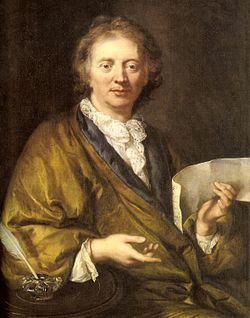 His talents became apparent from a very early age. His father was his first music teacher, and he inherited the position of the organist of the church of St-Gervais after his father’s death. The church, not far from the Hôtel de Ville, is one of the oldest in Paris, and the organ that Couperins played is still there today. In 1717 he entered the service of Louis XIV as an organist and composer. Even though his major works were written for the harpsichord, he was never given the title of the harpsichordist to the King. At the court, he gave weekly concerts, mostly of his own music: the “suites” for string and wind instruments and the harpsichord.
As we mentioned, Couperin’s major works were written for the harpsichord. In 1717 he published L'art de toucher le clavecin (The Art of Playing the Harpsichord). He wrote it to instruct musicians in harpsichord playing so that they could perform, among other things, his own compositions. Here is the famous Le Tic-Toc-Choc, from Book III of Pièces de clavecin, transcribed to the modern piano. It is performed – insanely fast – by the Hungarian piano virtuosos Geroges Cziffra (a live recording from his recital in Strasbourg 19 June 1960, courtesy of YouTube). Some listeners believe that he plays too fast but we think there’s enough music left to make it very interesting. Altogether Couperin published four books of harpsichord music, 230 pieces altogether. This music influenced Johann Sebastian Bach, and, much later, Richard Strauss, who in 1940 wrote a charming Divertimento for small orchestra (after François Couperin's keyboard works), Op. 86. Le Tic-Toc-Choc is there, of course, as elegant in this chamber arrangement as it is in the original. For Maurice Ravel Couperin was also a major figure, so much so that he wrote a piano suite Le tombeau de Couperin (Couperin's Memorial). It’s performed here by the pianist Alon Goldstein.Permalink
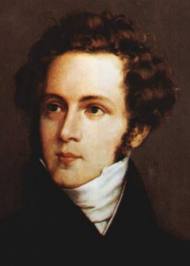 We do know that at the age of 18 he went to Naples to study at the conservatory. He wrote his first opera while still a student there. His second opera, Bianca e Gernando, was staged at Teatro San Carlo, the main opera theater of Naples. It was good enough to lead to a commission from La Scala. Bellini composed Il Pirata, which premiered to great success on October 27, 1827. With his career launched, Bellini moved to Milan. He wrote several operas that were met with muted enthusiasm but then in quick succession wrote La sonnambula, which premiered in 1831, Norma, premiered the same year, and I puritani, first staged in 1835. All three represent the pinnacle of bel canto. The greatest sopranos all prove their mettle singing the role of Norma, one of the most difficult in all of the opera repertoire, and opera lovers will forever continue arguing whose Casta Diva was the finest. Joan Sutherland, Maria Callas, Montserrat Caballé are the top contenders, at least for this site. Here’s a live recording of Casta Diva, made in 1974 with Montserrat Caballé as Norma (courtesy of YouTube). Ms. Caballé in an absolutely top form. Bellini’s life was tragically short. He died just nine months after the premier of I puritani of a disease which back then was diagnosed as “stomach inflammation.” He was just 34 years old.
October 29, 2012. Bellini and more. Vincenzo Bellini was born on November 3, 1801 in Catania, Sicily. It’s said that he was a child prodigy: started studying music at the age of two, playing piano at three, and composed his first pieces at the ago of six.
We don’t have many recordings from the Bellini’s operas for the same reason we’re poor on Verdi or Donizetti. But we do have a fantasy by Franz Liszt called Reminiscences of Norma by Bellini. Liszt’s birthday was last week, and we’re glad to have a chance to acknowledge it. Liszt wrote this paraphrase 10 years after the premier of Norma and used, in a very free form, seven themes from the opera. It’s performed here by the Canadian pianist Janice Fehlauer.
Permalink