Welcome to our free classical music site
Do you write about classical music? Are you a blogger? Want to team up with Classical Connect? Send us a message, let's talk!
Do you write about classical music? Are you a blogger? Want to team up with Classical Connect? Send us a message, let's talk!




February 27, 2012. Rossini, Chopin, Vivaldi. What a week - anniversaries of not one but three great composers. And because it’s a leap year, we can celebrate Gioachino Rossini on his exact birthday, February 29th. He was born in 1792 in Pesaro, a city on the Adriatic coast. Both of his parents were musicians, and his father gave him his first music lessons. When the family moved to Bologna, Gioachino took lessons from one Giuseppe Prinetti, a cembalo player who also distilled and sold brandy on a side. Rossini’s earliest surviving compositions are the six Sonate a quattro, scored for two violins, cello and double bass; he was twelve at the time. He composed his first opera, Demetrio e Polibio, just one year later. By the age of 21 he was famous throughout Italy, having written a very successful opera Tancredi. He was given a very lucrative contract as the music director of two theaters in Naples, the famous Teatro di San Carlo and Teatro del Fondo (as part of the agreement he was to write an opera a year for each theater). In 1816, when he was 24, he created what was to become his most successful opera, Il barbiere di Siviglia. It was written in just two or three weeks (later in his life Rossini boasted that he wrote it in 12 days). The premiere was a failure, as it was sabotaged by the whistling and booing supporters of Rossini’s rival, the composer Giovanni Paisiello, but the subsequent performances went triumphantly well. Rossini retired from composing at the age of 37. He moved from Bologna to Florence and then Paris. He became a gourmand, an excellent chef and a famous host. Later in life he returned to composition, writing a number of pieces he called Sins of Old Age. Rossini died in 1868. He was reburied in Florence’s Basilica di Santa Croce several years later. We’ll hear two of his pieces: one, the overture to the opera La Gazza Ladra, performed by The Texas Festival Orchestra, Michael Guttler conducting (here); another – the famous song La Danza (Tarantella), from Serate Musicali. It’s sung here by the Canadian soprano Lucia Cesaroni. Brent Funderburk is on the piano.
Frédéric Chopin was born 202 years ago, either on February 22 or March 1 of 1810 in Żelazowa Wola, Poland. Here are several Polonaises: Op. 26 no 1; Op 40 no 1; Op 40 no 2; Op 26 no 2; Op 44; and Op 53. They are performed by the extraordinary Russian piano virtuoso Lazar Berman (2/261930 – 2/6/2005). This live recording was provided to us by Istituto Europeo di Musica.
And finally, Antonio Vivaldi, il Prete Rosso, was born on March 4, 1678 in the Most Serene Republic of Venice. Vivaldi was without a doubt one of the greatest Baroque composers and influenced many composers, Johann Sebastian Bach among them. Famous during his life, he lost popularity soon after his death (it was waning even during the last years of his life, while he was living in Vienna). As hard as it is to imagine these days, with music from the Four Seasons playing in every shop, the revival of Vivaldi’s music happened only in the 20th century. Fritz Kreisler’s concerto in style of Vivaldi spurred the interest; later on the Italian composer Alfredo Casella published many of previously unknown manuscripts. General interest in Baroque music, which started in the late 1950s, cemented Vivaldi’s fame. Here’s Harpsichord Concerto in A Major. It’s performed by David Schrader and Baroque Band.
PermalinkFebruary 20, 2012. George Frideric Handel and Carl Czerny. We celebrate Handel’s birthday (he was born on February 23, 1685 in Halle) every year. It would been odd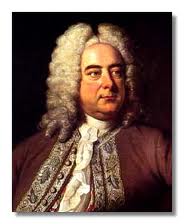 not to: he’s one of the pillars of classical music. This time we’ll be brief: here is his Concerto Grosso in a minor, op. 6, no. 4. It is performed by Baroque Band, a Chicago-based ensemble. David Schrader, who among other things is the ensemble’s harpsichordist writes, "Johann Sebastian Bach and George Frideric Handel both made use of a synthesis of the French and the Italian styles – in fact, this synthesis is a characteristic of the Germans of the baroque era. Added to the native German musical language's innate richness of harmony and counterpoint, it literally defines the styles of these two giants of the late baroque. While Handel used French dance types in his music for the theatre, in this concerto we hear mostly the legacy of Corelli, whom Handel had met and worked with when in Rome in the early years of the eighteenth century. The work was finished on the eighth of October of 1739 and was printed by subscription – the subscribers included members of the royal family and many prominent members of the English nobility. The concertos of op. 6 are considered to be among the finest of eighteenth-century ensemble music, on a par with the Brandenburg Concertos of Bach. Like the Brandenburgs, the concertos of op. 6 are so diverse in plan as to resist any pattern except that of extremely high quality."
We’d also like to mention a musician of much more modest talent – Carl Czerny. He was born on February 21, 1791. Probably not a single pianist, whether amateur or professional, has managed to avoid playing some of Czerny’s etudes. This is his legacy, even though he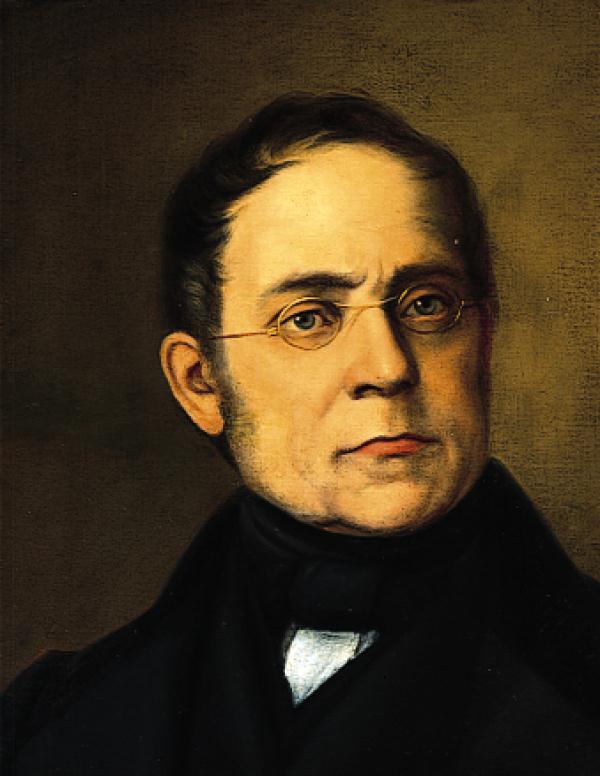 wrote a huge amount of other music, including masses, symphonies, sonatas, and quartets. Practically none of it can be heard these days. Czerny had great teachers: Clementi, Hummel, Salieri and Beethoven and became a famous piano teacher himself. His most celebrated pupil was Franz Liszt, as well as Liszt’s rival Sigismond Thalberg, Theodor Leschetizky, and many others. Through their own pupils they continued this celebrated musical linage till this day. Here’s Etude no.16 in G major from Czerny’s Op. 299, the School of Velocity. It’s performed by Canadian pianist David-Michael Dunbar.
PermalinkFebruary 13, 2012. Corelli and Boccherini. Arcangelo Corelli, the Italian Baroque composer and violinist, was born on February 17, 1653. During his lifetime Corelli was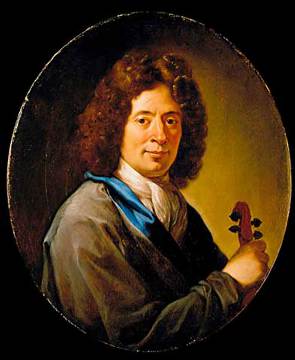 more famous as a violinist than composer. He had many pupils, among them Geminiani and Locatelli, who became famous themselves as composers and violinists. Corelli’s music for violin, while very melodic, was quite un-virtuosic and used only a limited range of the instrument. It was widely circulated and favored as suitable pieces for students. In a famous episode from 1708, it is said that Corelli refused to play a high altissimo A in a passage from the overture to Handel's oratorio The Triumph of Time and Truth. When Handel, at the time just 23 and 32 years younger than Corelli, played the note, Corelli took offence.
We’ll hear two pieces by the Corelli. First, Sonata in C Major, Op. 5, No. 3 performed by Rachel Barton Pine, violin, and David Schrader, harpsichord. Ms. Barton Pine plays a Nicola Gagliano violin from 1770, in original, unaltered condition. You can listen to it here. A very different recording was made by the Russian violinist Albert Markov in 1970. It is La Folia, arranged by Fritz Kreisler. Beautiful sound, rich and romantic, today may seem a bit dated. Still, it’s a pleasure to listen to (here). Dmitry Cogan is on the piano. We should note that La Folia (or folly) is one of the oldest recorded tunes in the history of European music. The first classical arrangement of it was written by Jean-Baptiste Lully in 1672. In addition to Corelli, the theme was used by Marin Marais, Alessandro Scarlatti, Antonio Vivaldi and many other composers (the site folias.nl is dedicated just to this music).
Luigi Boccherini, an Italian Classical composer, was born on February 19, 1743 in Lucca, Italy. Boccherini moved to Madrid around 1769 to become a music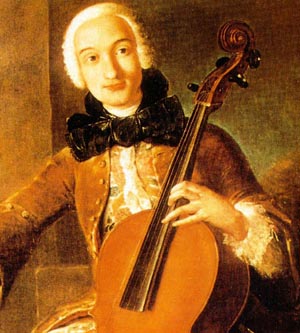 teacher to Infante Luis Antonio, younger brother of King Charles III. He enjoyed great popularity till, as the story goes, one day the King expressed his disapproval for a passage in a new trio, and ordered Boccherini to change it. Outraged, Boccherini doubled the passage instead, and was immediately dismissed. He stayed in Spain and eventually found other patrons, but his life ended in hardship in 1805.
Boccherini was a virtuoso cellist – it is said that he could play a violin repertoire on the cello in the original pitch. Boccherini was a great admirer of Haydn (he used to be dismissively called "Haydn’s wife" in the 19th century, when his music was all but forgotten) and wrote a number of trios, quartets and quintets following Haydn’s models. Permalink
February 6, 2012. Bell and Denk play French Violin Sonatas. The brilliant American violinist Joshua Bell and his good friend and recital partner pianist Jeremy Denk issued a CD with three sonatas for violin and piano for Sony Classical, called French Impressions. It’s their first album together, and after listening to it, one hopes it won’t be their last.
Violin Sonata No. 1 in d minor by Camille Saint-Saëns, very French and very elegant, is essentially salon music. Bell and Denk play it with great style. The 3rd movement, Allegretto Moderato, is especially attractive. The dynamics are lively and Bell’s sound is beautiful. You can listen to it here.
César Franck, born in 1822 in what is now Belgium, spent his adult life in Paris. He was an organist at Saint Clotilde in Saint-Germain-des-Prés for more than 30 years, a professor at the Paris Conservatory, and, as required for that position, became a French national. Franck wrote the Violin Sonata in A Major when he was 63; it was a wedding present for Eugène Ysaÿe. Ysaÿe became a great proponent of the sonata and played it regularly throughout his life, contributing to the public recognition of Franck as a major composer. Joshua Bell has a very special connection to this piece: his teacher, Josef Gingold, was a pupil of Eugène Ysaÿe. Maybe this connection to Franck affected the way Bell and Denk play the famous first movement of the Sonata: it’s slower, statelier than many well-known interpretations (Jascha Heifetz and Arthur Rubinstein play it in less than five and a half minutes. Bell and Denk take more than six). But who knows - his approach might be closer to what Franck intended: he originally wrote it as a slow movement: it was Ysaÿe who wanted a quicker tempo and convinced Franck to mark it Allegretto. Listen to it here.
It’s interesting that both sonatas figure prominently as possible prototypes of the violin sonata by the fictional composer Vinteuil in Marcel Proust’s In Search of Lost Time. In the novel Swann is haunted by the “little phrase” from the sonata, which he associates with his obsessive love for Odette. Of course we’ll never know for sure, but Proust scholars suspect that it could be the opening chords of Franck’s sonata, the beginning of the Adagio in Saint-Saëns’s sonata, or Faure’s Ballade in F-sharp Major op. 19.
Permalink
January 30, 2012. Franz Schubert. Last week we celebrated Mozart’s anniversary and this week it’s Franz Schubert’s turn: he was born on January 31, 1797. Mozart and Schubert had very few things in common, except that both were musical geniuses and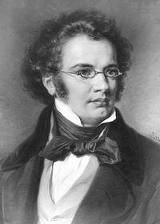 both died tragically early, Mozart at the age of 35, and Schubert even earlier, at age 31. Mozart was a child prodigy; he became famous at the age of seven, was employed by royalty and accepted in the finest salons of Europe. Schubert, on the other hand, was not very popular during his lifetime (very little of his symphonic music was performed until it was rediscovered by Schumann, Mendelssohn, Liszt, and other Romantic composers), he lived his whole life in Vienna and never visited another country, never married, and till the last three years of his life earned money mostly by teaching. What they do have in common is one person who played a significant role in both of their lives - Antonio Salieri. Mozart’s rival and nemesis at the court of Emperor Joseph II, Salieri became Schubert’s benefactor: when Schubert was seven, Salieri noticed his vocal talents and helped him to join Stadtkonvikt (Imperial seminary) on a choir scholarship. Salieri later gave Schubert private lessons in composition.
But of course the real difference between the two is in their music. Mozart’s was the pinnacle of classical Viennese style. Schubert, while deeply affected by it (he was influenced by both Mozart and Beethoven) evolved in a different direction, which we now call Romanticism. His song cycles, such as Winterreise, late piano sonatas (D. 958, 959 and 960), string quartets and symphonies, not just paved the way for Schumann, Berlioz, Mendelssohn and other Romantics – they ultimately represent some of the greatest achievements in all of 19th century music.
Since our library has a large number of Schubert’s works, we’ll present some of the latest uploads, as we did last week. Here is String Quartet No. 13 in a minor, D. 804, the so-called Rosamunde quartet (its second movement is based on the theme Schubert used in his incidental music to the play "Rosamunde"). It’s performed by the violinists Alexi Kenney and Kobi Malkin, Molly Carr, Viola and Jonathan Dormand , cello. The pianist Yael Weiss plays "Wanderer" Fantasy in C major, D. 760 (here). The violinist Diana Cohen plays the early Sonatina No. 3 for Violin and Piano in g minor, D. 408. Ron Regev is on the piano (here). Finally, one of Schubert’s last works, String Quintet in C Major, D. 956 (it was written two months before his death). Playing here are violinists Wonhyee Bae and Je Hye Le, Yoonji Kang, viola, Narek Hakhnazaryan and the great Laurence Lesser, cellos.
PermalinkJanuary 23, 2012. Mozart. Friday the 27th of January marks the 256th anniversary of the birth of Wolfgang Amadeus Mozart. This sublime piece of music, the terzettino, or short trio Soave sia il vento (“May the wind be gentle”) from the 1st act of his opera Così fan tutte, was most likely written at the end of 1789, when Mozart was 33 – just two short years before his death (Così was first performed in Vienna on January 26, 1790, a day before Mozart turned 34).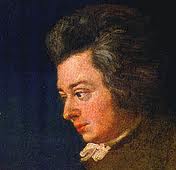 One cannot but stop and contemplate in amazement how different the history of classical music would have been had he lived another 20 years. This was not to be, but in the 30 years that he had been composing (his father Leopold wrote down some piece that Wolfgang composed – and played on the piano – at the age of five), he created a body of work unparallel in the history of music.
It’s rather pointless to try to select "the best of Mozart," so we’ll present several performances from recent uploads. The husband-and-wife piano duo Alessio Bax and Lucille Chung perform Sonata for Piano Four-Hands in C Major K. 521 is from 1787 (here). Piano Trio in B-flat Major, K.502 was written a year earlier. It’s performed by Yoon-Jung Yang , violin, Hiro Matsuo, cello, and Helen Huang, piano (here). Sonata in C Major for Violin and Piano K. 303 is considered one of Mozart’s "mature" violin sonatas. He was just 22 when he wrote it (in 1778), but by then he had already written 19 violin sonatas. Here it’s performed by the violinists Ariana Kim with Ieva Jokubaviciute on the piano. And finally, an old recording of Six Variations on "Salve Tu, Domine" K. 398 made by the great Russian pianist Emil Gilels. It was brought to us by Istituto Europeo di Musica. Listen to it here. Permalink