
Heitor Villa-Lobos - Joseph Galasso plays Villa-Lobos
Joseph Galasso (Guitar)
Gustav Mahler - Symphony no. 8, Part I
London Philharmonic Orchestra (Orchestra)
London Philharmonic Choir (Chorale)
Tiffin School Boys’ Choir (Chorale)
Klaus Tennstedt (Conductor)
Martha Argerich and Klaus Tennsteadt, 2026
This Week in Classical Music: June 1, 2026. Two Important Anniversaries. Martha Argerich’s birthday is June 5th; she will turn 85, and June 6th is the 100th anniversary of Klaus Tennstedt, a German conductor.
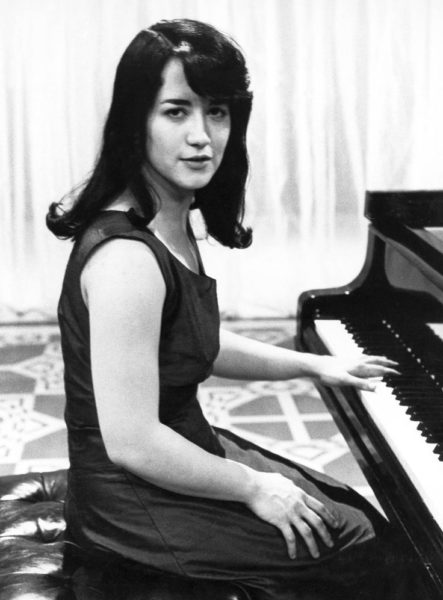 There’s no need to present the pianist Martha Argerich. If there is a superstar in the world of classical music, she’s it. Her career started in 1949, when at the age of eight, she played Beethoven’s Piano Concerto no. 1. At 19, she made her first commercial recording. Then, at 24, she won the VII International Chopin Piano Competition in Warsaw; this win catapulted her career into stardom, and since then, she has been one of the most sought-after pianists on the music scene. Even at 85, she performs scores of concerts a year: for example, at the end of June, she will play nine concerts in Hamburg. She stopped performing solo some years ago, but she will play several challenging pieces, for example, Beethoven’s 2nd, 4th, and 5th Piano and Violin Sonatas, with Maxim Vengerov. She’ll also play with the pianist Michail Pletnev, the violinist Gil Shaham and the cellist Mischa Maisky. We wish her many happy returns.
Klaus Tennstedt was born in Merseburg, in the German state of Saxony-Anhalt. As a child, he studied the violin. At the end of WWII, he joined an orchestra and thus avoided 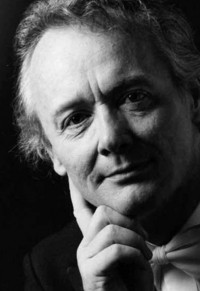 serving in the Nazi army. After the partition of Germany after the war, he ended up in the Russia-dominated East Germany. Tennstedt’s violin career was interrupted when he developed problems with his left hand, but he successfully transitioned to conducting. He started at the Chemnitz (then Karl-Marx-Stadt) opera, but soon after was appointed the Music Director at the more prestigious Dresden State Opera. For more than a decade, he was confined to working in the GDR and the Soviet bloc countries, but in 1971, during a rare appearance in Sweden, he defected. For several years, he lived in Sweden, conducting local orchestras. Then, in 1974, he appeared in North America, conducting the Toronto and then the Boston symphony orchestras. These concerts were very well received, especially his Bruckner’s Eighth, and were followed by invitations to conduct the Chicago Symphony, the New York Philharmonic, the Philadelphia Symphony, and other major orchestras in the US. His successes in the US led to his concerts with the Berlin and Vienna Philharmonic orchestras. Tennstedt led the London Philharmonic Orchestra for four years, but in 1984 his health started to fail. He gave a tremendous performance of Mahler’s Symphony no. 8 in 1987, but collapsed during a rehearsal later that year. He conducted several highly successful concerts in 1991 and 1992, and then stopped performing on the advice of his doctors. Tennstedt died of throat cancer in 1998. Here’s Mahler’s 8th: Part I, Veni, Creator Spiritus, and the longer Part II, Final Scene From Goethe's "Faust." Tennstedt conducts the London Philharmonic Orchestra and Choir, with Felicity Lott and other soloists (Dame Felicity Lott, a great soprano, passed away on May 15th of this year).
Gustav Mahler - Symphony no. 8, Part II
London Philharmonic Orchestra (Orchestra)
London Philharmonic Choir (Chorale)
Tiffin School Boys’ Choir (Chorale)
J.S.Bach, Franz Liszt - "Meditation on Half Steps": Recital at Bellefield Hall, University of Pittsburgh, April 12, 2026
Nikolai Choubine (Piano)
Post-Prokofiev Catching Up, 2026
This Week in Classical Music: May 25, 2026. Post-Prokofiev Catching Up. We’ve posted four entries on Sergey Prokofiev and missed one week due to technical difficulties, so this week we’ll look back at what we’ve missed. And it was a lot, too many composers to write about, but we’ll mention the “highlights,” the names that are better known and more popular. Four names stand out: Johannes Brahms and Pyotr Tchaikovsky, both born on May 7th, the German in 1833, the Russian in 1840; Claudio Monteverdi (May 15, 1567), and Richard Wagner (May 22, 1813). Then there are the composers who, at least in the public opinion, are close to the top, but not quite within the ranks of the composers mentioned above: Alessandro Scarlatti (May 2, 1660); Gabriel Fauré (May 12, 1845); Jules Massnet (May 12, 1842); Ruggero Leoncavallo (April 23, 1857); Isaac Albeniz (May 29, 1860) and Erich Wolfgang Korngold also born on May 29th, of 1897; and Marin Marais (May 31, 1656). By the way, we believe that Alessandro Scarlatti very much belongs in the highest ranks. The reason his music isn’t performed more often has to do with logistics, not its quality: he wrote long operas that are difficult to stage, and there are few voices capable of singing the main roles (Cecilia Bartoli helped to revive some of his music). And, of course, many of his roles were written for the castrati. On the other hand, we think Marais’ popularity is due mostly to one film, Tous les matins du monde.
We also want to mention several modern composers who, these days, are not popular at all, as their music is considered too difficult and isn’t in vogue: the Italian Bruno Maderna and the American Milton Babbitt. Maderna was born on May 10, 1916, Maderna April 21, 1920. We think they’re very important and interesting composers, and hope that interest in them will return.
We want to circle back to Prokofiev for a moment. As we were reading about his life, one name was constantly coming up: that of his friend, Nikolay Myaskovsky. Myaskovsky, born on April 20th of 1881, was ten years older than Prokofiev. They met in 1906 in the St. Petersburg Conservatory: both were taking composition classes with Lyadov and Rimsky-Korsakov (and both didn’t like Lyadov). Myaskovsky was a late starter (his father, an officer, discouraged him from pursuing musical studies), and he ended up being the oldest student in the class; Prokofiev was the youngest. That didn’t stop them from becoming fast friends. They worked together on a symphony, now lost. During WWI, Myaskovsky was conscripted and fought as a sapper, while Prokofiev continued his conservatory studies, composed and performed in public. Prokofiev left Russia after the Bolshevik Revolution, while Myaskovsky stayed, but they kept in touch: altogether, they wrote more than 300 letters to each other. When Prokofiev returned to the Soviet Union in 1936, they resumed their friendship in person. Both suffered during Stalin’s “anti-formalism” campaign in 1947-48, but it was Myaskovsky who defended Prokofiev, Shostakovich and Khachaturian from the Communist Party criticism. He died in August of 1950, four years before Prokofiev.
Myaskovsky was prolific. He composed 27 symphonies, 13 quartets, nine piano sonatas and several choral pieces. His music, rather conservative in style, is not widely performed today, but during his lifetime, he was considered a preeminent composer, not only in the Soviet Union but also in the West. Here’s the first movement of Myaskovsky’s Symphony no 4, composed in 1918. Evgeny Svetlanov leads the Russian Academic Symphony Orchestra.
Read more...Nikolai Myaskovsky - Symphony no. 4, mov. 2 and 3
Russian Academic Symphony Orchestra (Orchestra)
Evgeny Svetlanov (Conductor)
Nikolai Myaskovsky - Symphony no. 4, mov1
Russian Academic Symphony Orchestra (Orchestra)
Evgeny Svetlanov (Conductor)
Prokofiev, Part IV, 2026
This Week in Classical Music: May 18, 2026. Prokofiev, Part IV. We finished our previous post with Prokofiev, his Spanish wife, and two sons arriving in Moscow in the summer of 1936. .jpg "Sergey Prokofiev, by Konchalovsky") A shrewd man, Prokofiev should’ve known how dangerous it was, if not to him, then to his wife, who eventually ended up in the Gulag, serving eight years, but that didn’t stop him. Did he move back because he knew that his only real competitor, Dmitry Shostakovich, was silenced by the vicious criticism of the official press? We’ll never know, but we remember his problems with Rachmaninov in the US and Stravinsky in France.
A shrewd man, Prokofiev should’ve known how dangerous it was, if not to him, then to his wife, who eventually ended up in the Gulag, serving eight years, but that didn’t stop him. Did he move back because he knew that his only real competitor, Dmitry Shostakovich, was silenced by the vicious criticism of the official press? We’ll never know, but we remember his problems with Rachmaninov in the US and Stravinsky in France.
Prokofiev got plugged into the musical life of the Soviet Union instantly; it was as if he had lived there all his life. He wrote music to commemorate Pushkin’s 100th death anniversary, as was requisite in the midst of the national celebrations, pieces for children (one very successful, Peter and the Wolf, for a children’s theater), and a 10-part Cantata for the 20th Anniversary of the October Revolution, with texts from the works by Marx, Lenin, and Stalin. The latter wasn’t politically successful, as his music was judged “incomprehensible.” It was also just not very good. In 1939, Prokofiev followed the Cantata with Zdravitsa (Toast, or Hail), composed for Stalin’s approaching 60th birthday, a nauseating piece, but with streaks of Prokofiev’s talent. The text was purported to be “folkloric,” but was actually written by Kremlin's hacks. Prokofiev followed that with another Socialist Realist piece, the opera “Semyon Kotko,” which also failed to satisfy the Soviet critics. Till about 1940, or for the first four years of his life in the USSR, all his music was political, except for Romeo and Juliet and the first Cello sonata, both of which he started writing while still in France.
In 1941, as the Germans approached Moscow, he evacuated to safer areas, first to Georgia, then to Kazakhstan (Stalin moved to Kuibyshev). During that time, Prokofiev wrote several chamber and instrumental pieces, some of the best of his Soviet output: the three so-called “War sonatas” for the piano, nos. 6 through 8 (he premiered no. 6, Sviatoslav Richter played the first performance of no. 7, and Emil Gilels of no. 8). The Violin sonata no 1, premiered by David Oistrach, was also composed during that time. Of the large pieces, it was the ballet Cinderella, the music to Eisenstein’s film Ivan the Terrible, and the Fifth Symphony, probably his best.
Prokofiev’s relationship with his wife, Lina Llubera, had been failing for years, as he was involved with the young translator and librettist Mira Mendelson. He moved in with Mendelson in 1941, while still formally married to Lina, who wouldn’t give him a divorce. Artistically, though, things seemed to go well. Then, in February of 1948, two things happened: Andrei Zdanov, one of Stalin’s closest subordinates and the Soviet Union's chief propagandist, called a conference in the Kremlin where he scolded Prokofiev, Shostakovich, and Khachaturian as “formalists.” Zhdanov’s criticism wasn’t just words: at best, it could lead to a ban on one’s work, but things could get much worse; everybody remembers what happened to hundreds of cultural figures in the 1930s, who were criticized first and then disappeared in the Gulag or were shot outright. Zhdanov’s criticism affected Prokofiev the way the 1936 Pravda articles affected Shoskatkovich, but deeper: the young Shostakovich eventually recovered; Prokofiev, who was already in poor health, never did. He wrote a letter of self-criticism, repenting of his “formalism.” The self-flagellation didn’t stop the officials from banning many of his works. And then, that same month, Lina was arrested and sent to the Gulag for 20 years, and even though they had not lived together in years, the arrest deeply affected Prokofiev. He was only 53 in 1948, but from that point on, Prokofiev did not compose a single successful piece. He worked on revisions to his opera War and Peace and several other pieces, none of them significant. He suffered from terrible headaches and had several heart attacks. As his works weren’t performed in public, he had very little money. He died on the same day as Stalin, on March 5th of 1953, but his death went largely unnoticed; only several weeks later, there appeared a short obit at the back of a musical journal: the rest of the publication was dedicated to Stalin’s death.
Here’s Prokofiev’s Piano Sonata no. 8; it’s performed by the same pianist who premiered it in 1944, Emil Gilels. This recording was made 30 years later.
Read more... « first ‹ previous 1 2 3 4 5 6 7 8 9 … next › last »
Fernando Sor - Joseph Galasso plays Sor, Tarrega
Joseph Galasso (Guitar)