
György Kurtág 100, 2026
This Week in Classical Music: February 23, 2026. Kurtág and the skipped Big Names. György Kurtág turned 100 on February 19th! We hope he’s doing well; we can think of only two 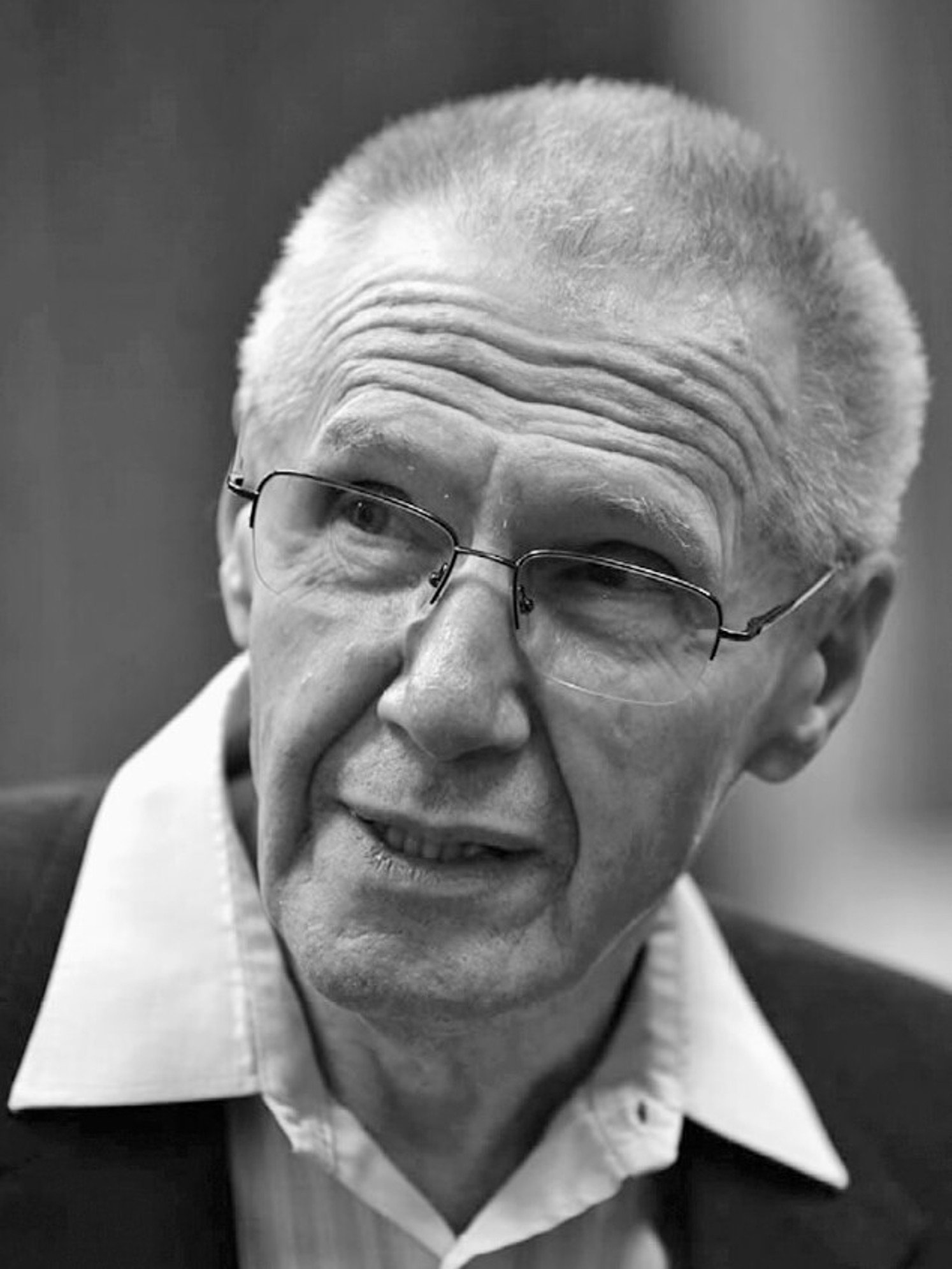 composers who lived longer than that, Elliott Carter and Leo Ornstein. By an amazing coincidence, not only were Carter and Ornstein centenarians, but they were also born on the same day, December 11th – Ornstein in 1893 and Carter in 1908. And both were modernist composers... But back to Kurtág. Last year, on his 99th birthday, we posted an entry, not being sure if he would make it to 100. We’re very happy he did, and will elaborate on our previous post.
György Kurtág (his first name is pronounced closer to Dyerd rather than George) was born on February 19th of 1926, in Lugoj, Banat. Most of the historical Banat now belongs to Romania, but before the dissolution of Austria-Hungary in 1918, Banat was part of the Austro-Hungarian Empire, and the majority of its inhabitants were Hungarian speakers. It also had a large Jewish population; Kurtág himself is half-Jewish. He spoke Hungarian at home and Romanian at school. As a child, he studied the piano on and off, first with his mother and then with professional teachers. After WWII, in 1946, the 20-year-old Kurtág moved to Budapest and continued taking piano lessons, eventually entering the Franz Liszt Music Academy. There he met György Ligeti, and they became friends for life (Ligeti, who died in 2006, was also of Hungarian-Jewish descent and also born in a part of Austria-Hungary that now lies in Romania; he rivals Kurtág as one of the most important classical composers of the second half of the 20th century). After the Hungarian Revolution of 1956, Kurtág moved to Paris. There, he studied with Olivier Messiaen and Darius Milhaud. He returned to Hungary in 1959 and remained there for the duration of the Communist regime – the only Hungarian composer of international renown to do so (and here we are thinking of Furtwängler’s decision to stay in Germany in the 1930s). Ligeti, for example, fled to Vienna immediately after the failed 1956 revolution and stayed in the West for the rest of his life. At that time, Kurtág became influential as a teacher. Surprisingly, he didn’t teach composition but rather interpretation: pianists Zoltán Kocsis and András Schiff, and the first Takács String Quartet were among his students. Kurtág resumed traveling only after the fall of communism in 1989, moving first to Berlin (he was the composer in residence for the Berlin Philharmonic in the mid-90s), then Vienna, the Netherlands, and Paris, where he worked with Boulez’s Ensemble Intercontemporain. In 2002, the Kurtágs settled in Bordeaux, but in 2015, he and his wife returned to Budapest (Kurtág’s wife, Márta, a pianist, died in 2019).
Here, from 1978, is Kurtág’s piece called 12 Microludes for String Quartet. It does contain 12 different musical “sentences” (or tiny plays: “ludus” is “play” in Latin) altogether lasting less than 10 minutes. It’s performed by the Keller String Quartet.
George Frideric Handel, Gioachino Rossini, and Frederic Chopin were all born this week. As great as they are (and as much as we love them), we’ll have to leave them for another time.
Read more...Francisco Tárrega - Capricho Árabe
Joseph Galasso (Guitar)
joseph galasso (Guitar)
Heitor Villa-Lobos - Choros No. 1
Joseph Galasso (Guitar)
György Kurtág - 12 Microludes for String Quartet
Keller String Quartet (Quartet)
Post-Furtwängler, 2026
This Week in Classical Music: February 16, 2026. Post-Furtwängler, catching up. During the previous four weeks, we were preoccupied with the great German conductor Wilhelm Furtwängler. We think it was worth it, as his personal story, while being fascinating on its own, also poses many important questions. What is the role of music in modern society? Is there one? Is there an ethical component to it? Does music “elevate” us? How can it flourish under a murderous regime, and why would such a regime promote it? Can a musician remain politically neutral in a totalitarian society, or is it a pretense? Can we judge actions and decisions made under extreme duress, and why does our judgment vary so much (Furtwängler vs. Karajan)? T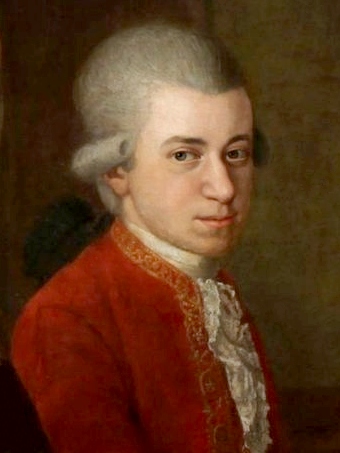 here are many more questions, and we don’t have many answers, but we do believe these issues are still relevant, even if in our time, the place of classical music has greatly diminished.
So, while we were dealing with Furtwängler, we missed a whole lot of interesting dates, the most important of which was the 270th anniversary of Mozart’s birthday, January 27th of 1756. Another one was Franz Schubert’s: he was born on January 31st of 1797. And we also missed Felix Mendelssohn’s anniversary: he was born on February 3rd of 1809. Giovanni Pierluigi Palestrina was probably born on January 3rd of 1525, although we don’t know for sure. One of the pioneers of opera, Francesco Cavalli, was born on February 14th of 1602.
Several important modern composers also had their anniversaries during the period of our inattention, Alban Berg being the most influential of the group; he was born on February 9th of 1885. Witold Lutosławski, a wonderful Polish composer (and the only non-Italian or non-German speaker on our list), was born on January 25th of 1913. Back to the Italians: a very important modernist composer, Luigi Nono, was born on January 17th of 1924. And another, Luigi Dallapiccola, on February 3rd of 1904.
Even though there are many other names of note, we’ll make a full circle and return to Wilhelm Furtwängler. As we mentioned in the first entry about him, Furtwängler started as a composer and turned to conducting when it occurred to him that nobody wanted to play his music. Furtwängler wrote several pieces in his youth, but as his conducting career took off, he stopped composing for about 20 years. He then wrote three symphonies in the 1940s and the 50s. Symphony no. 2, completed in 1945, is considered his best. Eugen Johum liked and recorded it, and so did Barenboim with the Chicago Symphony. We gave it a listen and, unfortunately, cannot recommend it: it’s long, about 80 minutes, Brucknerian in tone but completely lacking the spark of the great Austrian. In a cruel comment, it was called “musical graphomania.” We thought of presenting a movement as a sample, but then decided not to. It’s a pity it turned out he didn’t have a talent for composing, but in no way does it diminish Furtwängler’s conducting genius.
Read more...Furtwängler, Part IV, 2026
This Week in Classical Music: February 9, 2026. Furtwängler, Part IV. This is our fourth and final entry on Wilhelm Furtwängler; you can read previous entries below (here, here, and here). 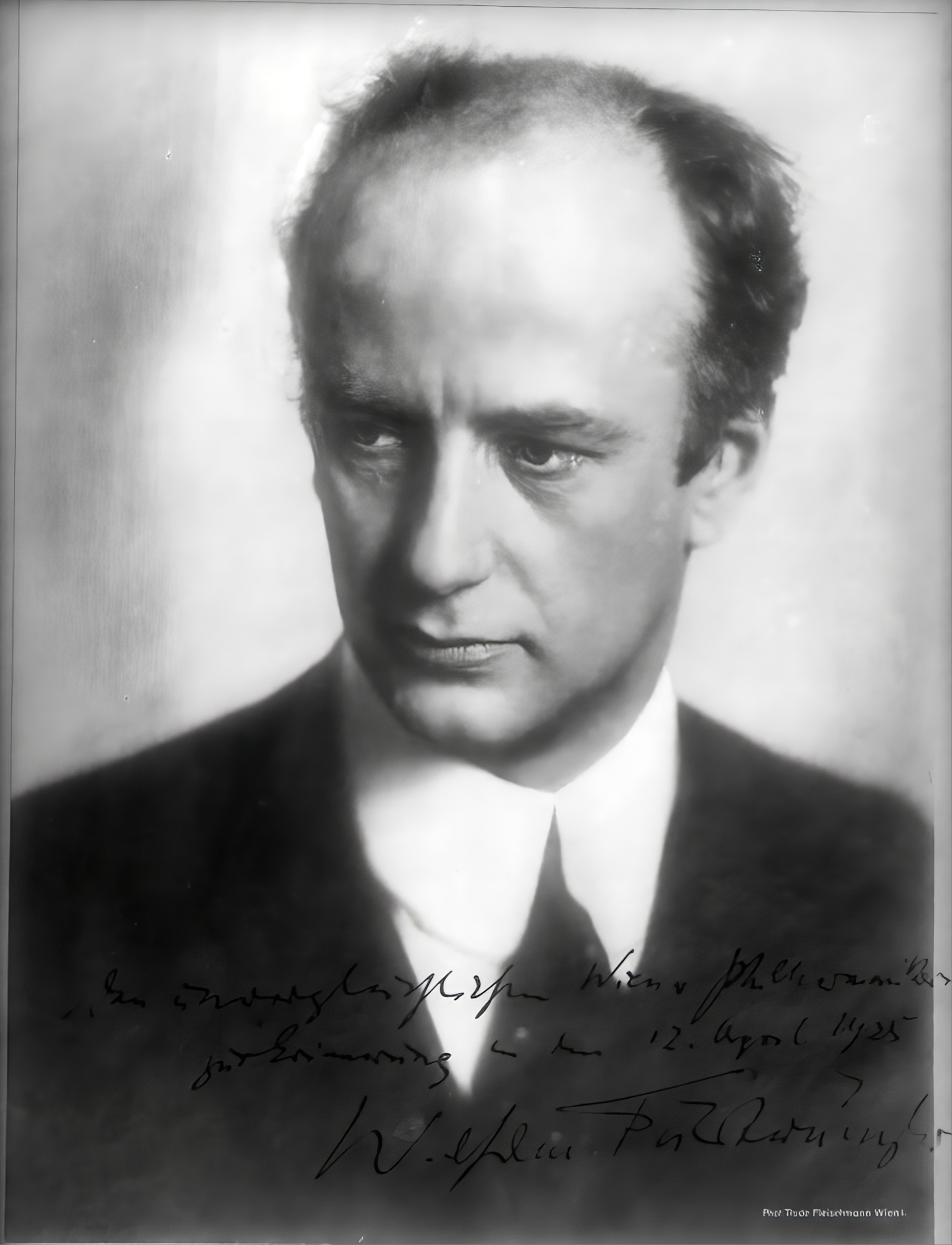 Furtwängler met the end of WWII in Switzerland. From early 1944 on, with the permission of the Nazi regime, he visited the country for extended periods. He was also added to the list of “God-gifted artists” in the special Section A. There were only three musicians in that section: two composers, Richard Strauss and Hans Pfitzner, and Furtwängler. In December of 1944, his name was removed from the list, as authorities suspected him of being close to some of the participants of the July ’44 attempt to assassinate Hitler (he wasn’t close to the real events). With the war over, Furtwängler returned to the American-occupied part of Germany. Like so many prominent Germans, he underwent the “denazification” process. The charges, conducting two official concerts, were minor, but it was a real trial, led by General Robert McClure. Furtwängler was supported by the testimony of two Jews, Berta Geissmar, his secretary and business manager, and Curt Riess, a journalist. For a long time, Riess was Furtwängler’s critic (he thought him a Nazi collaborator) but changed his mind as he learned about the work Furtwängler did on behalf of Jewish musicians. Geissmar compiled a long list of people whom Furtwängler helped; it was sent to McClure but disappeared. Still, Furtwängler was cleared after three other Jewish musicians testified on his behalf.
But being formally cleared of the Nazi collaborator charge didn’t end the controversy surrounding Furtwängler; he was too large a figure and too prominent during the regime. A number of musicians, many of them Jewish, were supportive of Furtwängler. Among them were Arnold Schoenberg and the violinists Yehudi Menuhin, Bronisław Huberman, and Nathan Milstein. Menuhin sent a letter to General McClure, in which he wrote: “The man never was a Party member. Upon numerous occasions, he risked his own safety and reputation to protect friends and colleagues. Do not believe that the fact of remaining in one's own country is alone sufficient to condemn a man.” But Furtwängler did stay in Germany, and whether he wanted to be or not, he was used by the Nazis as a propaganda tool. Thomas Mann, who in the early 30s called upon him to leave, praised Furtwängler after the war for helping the Jews, but still denounced his "lack of understanding and lack of desire to understand what had seized power in Germany" (emphasis is ours).
Things came to a head in 1949, when the Chicago Symphony Orchestra offered Furtwängler the position of music director. Furtwängler accepted, but that prompted a strong reaction from several prominent US-based musicians. Arturo Toscanini, a genuine anti-fascist but also musically Furtwängler’s opposite, was critical of him for many years; he once said that “everyone who conducts in the Third Reich is a Nazi!” Toscanini was joined by George Szell, Vladimir Horowitz, Arthur Rubinstein, Isaac Stern, and Alexander Brailowsky. They said that they would boycott the orchestra if it were led by Furtwängler. Their main point was that, were Furtwängler a “small fry,” as Horowitz put it, they would understand his decision to stay in Germany, but he was outside the country many times and always chose to return. Under pressure, the CSO rescinded the offer. What his critics ignored (or were not aware of) was that in addition to saving lives (first, by helping people to emigrate, and then saving the “half-Jews” or musicians with Jewish wives, even if he could not save the “full-blooded” Jews remaining in Germany or Austria; those perished in the extermination camps), Furtwängler saved the independence of the Vienna Philharmonic and the Vienna Opera, which Goebbels wanted to turn into subsidiaries of the Berlin Philharmonic and the Bayreuth Festival. And he forced the authorities to take the Nazi flag off the wall of the Musikverein, refusing to perform while it was hanging there, a small but unheard-of act of defiance.
The episode with the CSO hurt Furtwängler, but that was not the end of his career. In 1952, the Berlin Philharmonic reappointed Furtwängler as the music director; he stayed there for the last four years of his life. During that time, he made several magnificent recordings with the Berlin and Vienna Philharmonic orchestras. We’ll hear two, one from the war years, another from 1949. Here’s the famous Vienna recording of Beethoven’s “Eroica” from December 19, 1944, with the Vienna Philharmonic (Furtwängler escaped Austria right after that performance). And here’s another Third Symphony, the one by Brahms, from 1949. Furtwängler conducts the Berlin Philharmonic.
Read more...John Paul Walters - Organ Suite No. 7
John Paul Walters (Organ)
John Paul Walters - Organ Suite No. 6
John Paul Walters (Organ)
Johannes Brahms - Symphony no. 3
Berlin Philharmonic Orchestra (Orchestra)
Wilhelm Furtwängler (Conductor)
Maurice Ravel - Bolero
Joseph Galasso (Guitar)