
J.S.Bach - Two Transcriptions of Keyboard Works by JSB By Michael Bylina for Solo Bass
P. Kellach Waddle (Double Bass)
Feldman and Picander, 2026
This Week in Classical Music: January 12, 2026. Feldman and Picander. Morton Feldman was born 100 years ago in Queens, NY, into a family of Jewish immigrants from Russia. Feldman  was an unusual composer, very much influenced by the abstract art of his time. He studied with Stefan Wolpe, a German-American composer, himself a student of Franz Schreker, and close to Schoenberg’s circle. In his youth, Feldman was influenced by Edgard Varèse, a French-American composer we celebrated recently. Later, he became friends with John Cage, with whom he shared some aesthetic sensibilities, but it was the art of abstract painters like Jackson Pollock, Robert Rauschenberg, and Frank O'Hara that fascinated him the most. One of the most important elements of Feldman's atonal music was his treatment of time: open, it was said, and disorienting. As a result, many of his compositions are exceedingly long, making them practically unplayable. Of the shorter pieces, here is Feldman’s Rothko Chapel, inspired by and dedicated to Mark Rothko, an abstract painter and Feldman’s friend, who committed suicide soon after completing 14 paintings in a chapel in Houston. And here’s his For Frank O’Hara.
Ermanno Wolf-Ferrari, an Italian composer, was born on January 12th of 1876, in Venice. A son of a German father and Italian mother, he spent his time in Munich and Venice and was torn during WWI when Germany and Italy fought each other (he went to neutral Switzerland). Wolf-Ferrari was mostly an opera composer, and his Il segreto di Susanna, from 1909, is sometimes staged these days.
Niccolò Piccinni and César Cui were also born this week; the former, an Italian symphonist and opera composer popular in his day, was born on January 16, 1728, in Bari. The latter, a Russian composer of French-Polish descent, was born on January 18, 1835, in Wilno, the Russian Empire, now Vilnius, Lithuania. Piccini was competing with Gluck for the public’s attention in Paris, and, it seems, was more popular, even if these days we remember Gluck as a great composer and Piccini not at all. César Cui was part of the Mighty Five, probably the least “mighty” of them.
We’d also like to mark the anniversary of a person who was not a musician but still occupies an important place in the history of music. Picander, born January 14th of 1700 as Christian Friedrich Henrici, was Bach’s favorite librettist. Born near Dresden, he moved to Leipzig in 1720. Picander started his poetic career writing erotic verse, without much success. Not giving up, he switched to religious texts and published a more successful selection of poems, noticed by Bach in 1725. After that time, he worked with Bach, soon becoming his friend, writing texts to many of his cantatas, including the Coffee Cantata and Easter Cantata, which Bach eventually turned into Easter Oratorio, and, most importantly, the St. Matthew Passion. Apparently, Picander also wrote texts to several of Bach’s cantatas, music to which had been lost. Picander died in Leipzig in 1764.
Read more...Morton Feldman - For Frank O'Hara
Ensemble Recherche (Ensemble)
The Piano Day, 2026
This Week in Classical Music: January 5, 2026. The Piano Day. We think January 5th should be officially proclaimed Piano Day, as three great pianists of the second half of the 20th century 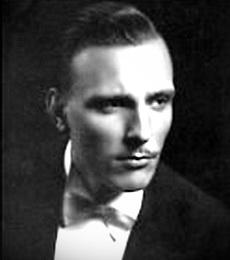 were born on this day: Arturo Benedetti Michelangeli, in 1920, Alfred Brendel, in 1931, and Maurizio Pollini, in 1942. As pianists and as musicians, they were all very different, and it’s impossible to characterize them in a sentence. We could probably say that Michelangeli’s playing was aristocratic and perfectionist, that Brendel was one of the deepest thinkers of the keyboard, while Pollini’s playing escapes definition: his repertoire was enormous, and he was brilliant in Chopin as much as in Beethoven or composers of the 20th century. Pollini’s technique was spectacular for much of his career (not surprisingly, it faltered as Pollini approached his seventies). Brendel was never a virtuoso, and he acknowledged it himself, but his technique was more than adequate, and many of his recordings are profound. And listening to Michelangeli’s live recordings, one gets a feeling that he never made any mistakes.
We wanted to illustrate the difference in their styles by presenting a piece that all three had recorded, but it turned out to be a difficult task. First of all, Michelangeli’s repertoire was relatively limited, and he recorded less than his contemporaries. Brendel’s recording output was broader, but he concentrated on the German classics, especially Beethoven, Schubert, Mozart, and Liszt. As far as we can tell, Brendel recorded very little of Chopin: only four Polonaises and Andante Spianato and Grande Polonaise Brillante. Pollini’s recording output, on the other hand, was very large: his Deutsche Grammophon set consists of 62 CDs. Interestingly, one of the few Chopin pieces that Pollini had not recorded was Andante Spianato and Grande Polonaise Brillante. Michelangeli did, so that was a close call.
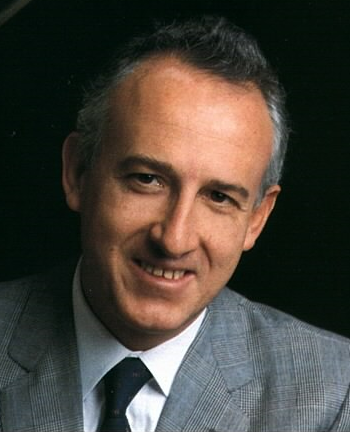 In our search, we probably missed some recordings, but the only composition that we could find that all three of them recorded is rather unexpected: it is Beethoven’s Piano Sonata no. 4, op. 7, nicknamed the Grand Sonata. It is an early piece, written in 1796, and one of Beethoven’s longest sonatas, running almost half an hour. Michelangeli recorded it in 1971, Brendel in 1977, and Pollini’s is from the 2012 recording (there’s another recording, made in 1977, but we couldn’t find it). Pollini's performance is fastest, running about 25 minutes; Brendel’s is almost 31 minutes. Michelangeli takes the slowest tempo: his sonata is one minute longer than Brendel’s. We thought it would be easier to compare, say, the first movement, rather than the interpretations of the whole sonata. So, here is Michelangeli, who plays the Allegro in a very measured 9 minutes and 46 seconds, here is Brendel, who takes eight and a half minutes, and here – Pollini, whose first movement flies in 7 minutes and 33 seconds. And of course, we have the complete sonatas as well: here, here, and here. Enjoy!
Ludwig van Beethoven - Piano Sonata No. 4, in E-flat Major, Op. 7
Maurizzio Pollini (Piano)
Ludwig van Beethoven - Piano Sonata No. 4, in E-flat Major, Op. 7
Alfred Brendel (Piano)
Ludwig van Beethoven - Piano Sonata No. 4, in E-flat Major, Op. 7, mov. 1
Arturo Benedetti Michelangeli (Piano)
P.Kellach Waddle - Scenes From The Advent Laundry: Sonata In Three Movements for Solo Bass -- Op.792
P. Kellach Waddle (Double Bass)
P. Kellach Waddle - Of The Daydream of The December Vampire; And Of The Letter S: Advent Sonatina for Organ Op. 814
Thomas B. Dawkins (Organ)
Anton Bruckner - Symphony no. 8, I. Allegro moderato
Vienna Philharmonic Orchestra (Orchestra)
Wilhelm Furtwängler (Conductor)