
New Year, 2025
This Week in Classical Music: December 29, 2025. Happy New Year! We won’t bother our readers and listeners with anything serious; this is the time to be joyous and happy. Therefore, we’ll  present a cheerful canzon, Matona, mia cara, mi follere, by the great Renaissance composer Orlando di Lasso. In it, a German soldier (a Landsknecht) serenades, in broken Italian, a girl while standing under her window. He tries to seduce her, but his Italian doesn’t allow for any subtleties. The song starts like this: “My lovely Lady, I want a song to sing/Under your window: this lancer is a jolly fellow!” but that’s as far as we’ll go, as it gets bawdier from there (you can read it both in Italian and in English here). This canzon, part of a set called Villanelle, moresche e altre canzoni, was published in 1581, when Lasso was around 50, when, as he himself said, “he should have known better.” It is performed (here) by the Hilliard Ensemble.
Christams and Edgard Varèse, 2025
This Week in Classical Music: December 22, 2025. Christmas is coming (and Varèse). This time of the year may be rather challenging for a music lover: “Christmas music” is being played 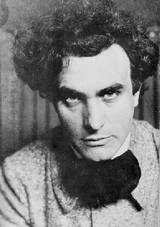 everywhere, and much of it is kitsch. Of course, there are tremendous pieces of music written for this wonderful holiday, Bach’s Christmas Oratorio first and foremost (we presented all of it, in several installments, some years earlier). The late Baroque Italians wrote numerous concertos for Christmas, but most of them are not particularly interesting. Last year, we presented Telemann’s Christmas Oratorio, which isn’t played often (it was new to us). So, this year, we’ll skip all that and go for something very different, in a way something opposite of traditional Christmas carols: the music of Edgard Varèse, a French-American composer. Varèse’s output is small, but his influence was significant, both on American and European composers (here’s a partial list). Varèse was born in Paris on this day, December 22nd, in 1883. He spent his childhood in Burgundy, was brought by his parents to Turin when he was 10 (his father was of Italian descent), studied math and some music there, and returned to Paris at the age of 20. In Paris, he took classes at the Schola Cantorum and the Conservatory (his teachers were Albert Roussel, Charles-Marie Widor, and Vincent d’Indy), befriended Apollinaire and Satie, met Romain Rolland and Debussy, composed some, and conducted. At the onset of WWI, he moved to New York. He settled in the Village, met artists, local and French, and got involved with the promotion of contemporary music, his long-standing interest. To that end, he founded the International Composers’ Guild, which organized performances of the Viennese (Schoenberg, Berg, and Webern – Varèse was much taken by atonal music), Stravinsky, and French contemporary composers. Later, Varèse established the Pan American Association of Composers, again to promote experimental music.
In the late 1920s and 1930s, Varèse spent some time in Europe, mostly in France, and then fell into depression, not composing for 10 years. For a long time, he was interested in music a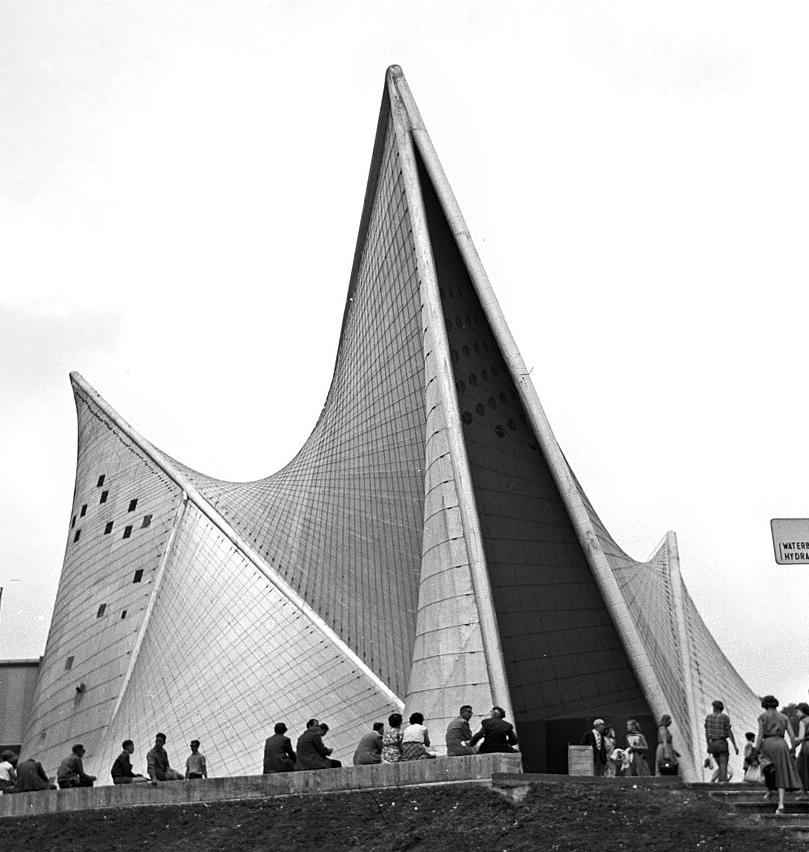 s “organized sound,” and felt that electronically-produced sounds have great potential. In 1954, he received an anonymous gift: a tape recorder. Varèse experimented with the tape first in New York, and then in Europe, first in France, and then in the Philips laboratories in Eindhoven, where in 1958, he completed a piece for tape alone called Poème électronique. It was composed for the Filips pavilion at the 1958 Brussels World Fair (the pavilion was built by the famous architect Le Corbusier). 325 loudspeakers, spread around the pavilion, were encased in the walls and played Poème électronique. Iannis Xenakis, who assisted Le Corbusier in designing the pavilion – he was not just a composer but an architect as well – created a separate piece of music that could be heard at the pavilion’s entrance and exit. We can only imagine the totality of the impression, visual, aural, and spatial.
So, in the spirit of diversity, instead of some orchestrated Christmas carols, we’ll hear two of Varèse’s compositions, an early one, Intégrales, composed in 1923-25, sort of a Dada-Industrial piece, and Poème électronique. The former is performed by the Ensemble InterContemporain under the direction of Pierre Boulez (here). The latter is a digital transfer of the tape created by Varèse for the World Fair (here).
Read more...Edgard Varèse - Poème électronique
Edgard Varèse (Conductor)
Edgard Varèse - Intégrales
Ensemble InterContemporain (Ensemble)
Pierre Boulez (Conductor)
Beethoven 2025
This Week in Classical Music: December 15, 2025. Beethoven. Tomorrow, December 16th, is Ludwig van Beethoven’s anniversary, or at least that’s usually assumed, as all we know he was 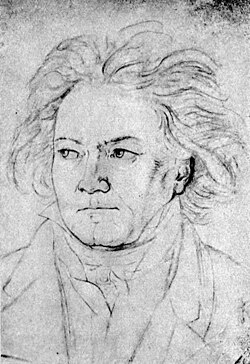 baptized on December 17th of 1770; at that time in Germany, newborns were customarily baptized within a day. Till this week, in our library, we had 29 out of 32 published piano sonatas that Beethoven composed during his life (at the age of 12-13, he wrote several piano sonatas, but later in life, he never intended to publish them). The piano sonata no. 1, op. 2, no. 1, was composed in 1790-92, the last one, no.32, op. 111, thirty years later, in 1821-22. We think that all of Beethoven’s numbered sonatas are great, even those composed for his students and friends (that’s not to say that we believe everything Beethoven wrote to be great: as all composers, with the possible exception of Mozart, he had his slips). One of the three sonatas we were missing but now have is the no. 15, op. 28, Pastoral, composed in Vienna in 1801 and dedicated to Joseph von Sonnenfels, an enlightened writer and jurist, and a friend of Mozart’s. 1801 was a difficult time in Beethoven’s life: his deafness was progressing, and he was depressed. On the other hand, around that time, he fell in love with at least two women: the beautiful Giulietta Guicciardi, his 17-year-old piano student (Beethoven dedicated his “Moonlight” sonata to her; the relationship was platonic), and his nascent relationship with the then still-married Josephine Brunsvik, to whom the “immortal beloved” letter was addressed (or at least that’s a popular assumption).
As for the sonata no. 15, it turns out that it was not a coincidence that we didn’t have this one in the library until now: even though we think it’s one of Beethoven’s best, it is rarely played in concert. The wonderful Czech pianist Ivan Moravec is superb in it, here. The vinyl was issued in the US in 1970 by the Connoisseur Society, but we suspect that the recording was made earlier.
As we had some technical issues with the site, we’re late with this entry, and shall make it brief. Zoltán Kodály, the Hungarian composer, who created a unique method of music education, was born on December 16th of 1882. The Soviet composer Rodion Shchedrin, the husband of Maya Plisetskaya, was born in Moscow on December 16th of 1932. And finally, Domenico Cimarosa, the Neapolitan composer of numerous operas, of which l matrimonio segreto (The Secret Marriage) is still quite popular, was born on December 17th of 1749.
Read more...Ludwig van Beethoven - Piano Sonata no. 15, op. 28, Pastoral
Ivan Moravec (Piano)
P. Kellach Waddle - The Sunrise On The First Day of Advent: Moment Muscial pour clavecin Op. 811
Thomas B. Dawkins (Harpsichord)
Elisabeth Schwarzkopf, 2025
This Week in Classical Music: December 8, 2025. Elisabeth Schwarzkopf. Tomorrow, December 9th, is the 110th anniversary of Elisabeth Schwarzkopf, one of the greatest German 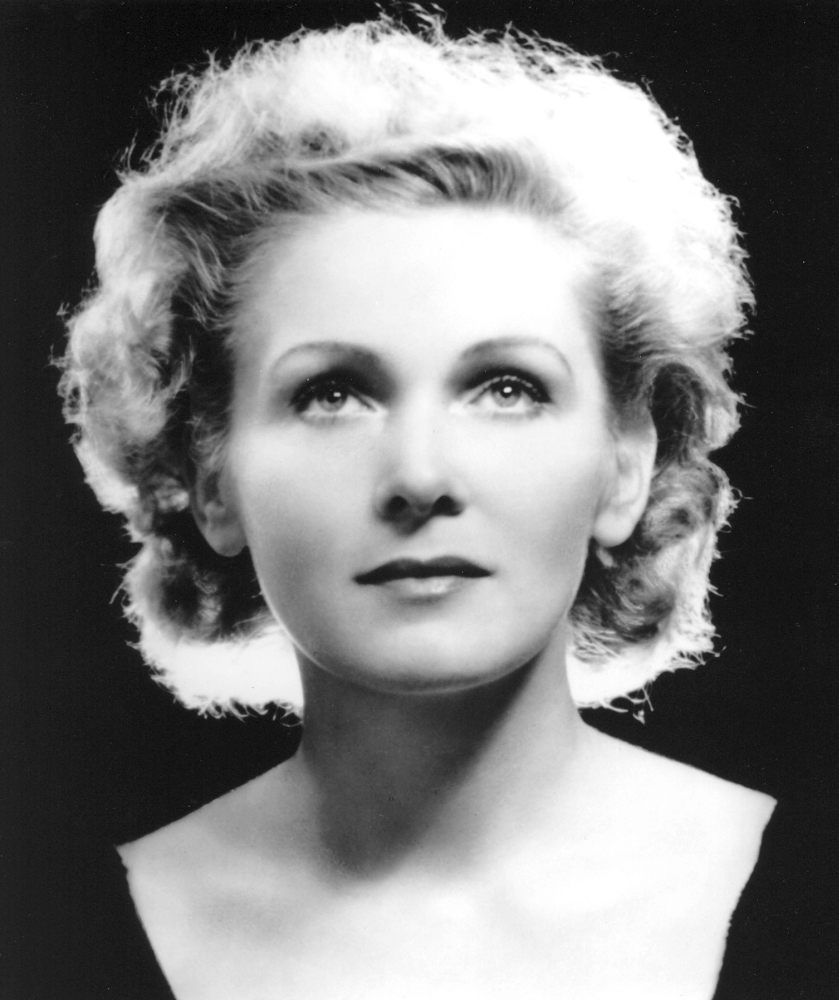 sopranos of the 20th century. She was born in 1915 and died at age 90 in 2006. We recently came across her name in Machael Kater’s book, The Twisted Muse. Its subtitle is Musicians and their music in the Third Reich, and that’s what this book explores: how the Nazis, in their totalitarian state, managed the very vigorous classical music scene, and how the non-Jewish German musicians reacted to it (of the numerous Jewish musicians, most lost their jobs almost immediately, some emigrated, some were later arrested and executed). It’s a wonderful book, and we strongly recommend it. Besides being a well-documented historical narrative about Germany, its leaders, cultural institutions, and many famous composers, conductors, and instrumentalists, it raises questions about the role of music in society. According to Kater, Elisabeth Schwarzkopf, together with Herbert von Karajan, falls into the category of the young Nazi careerists. The 17-year-old Schwarzkopf started her music studies at the Hochschule für Musik in 1933, the year the Nazis came to power. It became apparent very quickly that she was a very gifted singer. In 1938, she made her debut in Goebbels’ Deutsches Opernhaus (the more prestigious Berlin’s Preussische Staatsoper, now the Staatsoper Unter den Linden, was in the domain of Hermann Göring, the leader, or Ministerpräsident, of Prussia, of which Berlin was the capital). Wilhelm Rode, one of Hitler’s favorite singers and then the General Director of the Deutsches Opernhaus, took Elisabeth under his wing. While in school, Schwarzkopf joined the Nazi Student League and became, according to Kater, a section leader of the women’s wing, an influential position. In 1940, Schwarzkopf joined the Nazi Party (NSDAP), something she would deny after the war (she came clean, if that’s the word, only after persistent questioning by a New York Times journalist in 1983). In 1942, Schwarzkopf tried to join the more famous Vienna State Opera, where the highly compromised Karl Böhm had recently been made the music director, but Goebbels refused to let her go. It was only in 1944 that Schwarzkopf made several appearances in Vienna. In 1943-44, she performed for the SS-organized events in occupied Poland. Schwarzkopf had important patrons within the Nazi music establishment, among them secretaries of the Reich Culture Chamber and Reich Theater Chamber. Hugo Jury, an SS general and the Gauleiter of Lower Austria, a fervent Nazi who committed suicide on May 8th of 1945, was her lover.
After the war, Schwarzkopf was granted Austrian citizenship, joined the Vienna State Opera, befriended (and later married) Walter Legge, a record producer and the founder of the Philharmonia Orchestra, and continued an extremely successful career. For many years, she lied about her past; the questions about her involvement with the Nazis came much later. She didn’t go through the interrogation and de-Nazification process, something that happened to many prominent German musicians who were active at that time. (Compare that to the life of Wilhelm Furtwängler, who was the leading conductor of Nazi Germany, performed for Hitler and at the Nazi events, but never joined the party, never conducted the Nazi anthem, Horst-Wessel-Lied, and helped many Jewish musicians escape the country. His career was still pretty much derailed.)
And yet Schwarzkopf, this morally compromised person, became one of the most beloved and celebrated musicians of her generation. Clearly, she was a supremely talented singer, one of the greatest interpreters of the German Lied, who shone in the operas of Mozart and Richard Strauss, and was one of the best Wagnerian sopranos, but... Or maybe there are no “buts”? Either way, on this anniversary, the Schwarzkopf story makes us look at classical music and its place in our world from a different angle.
Read more...Post-Thanksgiving blues, 2025
This Week in Classical Music: December 1, 2025. Post-Thanksgiving blues. This is the holiday season (we hope you had a wonderful Thanksgiving), and classical music is not the first 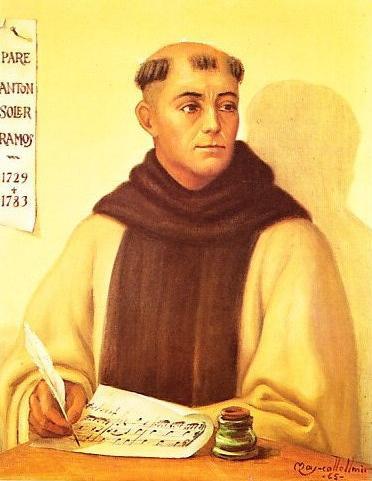 thing on people’s minds (but is it ever, now?). Thankfully, this week is rather scarce of major talent, which allows us to be brief. Padre Antionio Soler was born on December 3rd of 1729, in Olot, Catalonia, Spain. As a boy, he studied music at the Escolanía school of the Monastery of Montserrat. He was so successful at school that at the age of 17, he was appointed music director at Lleida. At the age of 23, he moved to the Royal monastery of El Escorial. Domenico Scarlatti was, by then, the music master to the Queen of Spain (he had lived in Spain for 25 years) and traveled to El Escorial with the royal family. Soler later called himself Scarlatti’s pupil. Some years later, Soler became the tutor to Prince Gabriel, a son of King Carlos III of Spain.
Like Scarlatti, Soler is known mostly for his keyboard sonatas, though we don’t think they’re on par with those of the Italian master. Nonetheless, some of them are nice. Here, for example, is one, the keyboard Sonata No. 47 in C Minor. It’s played on the piano by Mateusz Borowiak.
Francesco Geminiani, an Italian composer of the late Baroque, was born on December 5th of 1687, in Lucca. He was very famous in his lifetime, but was forgotten for centuries, till resurrected, with the rest of the Italian Baroque, in the middle of the 20th. Like so many Italians (and Handel), he spent many years in London. Here’s Geminiani’s Concerto Grosso in E Minor op. 3, no. 3 (it doesn’t sound in E, we think). Europa Galante is conducted by Fabio Biondi.
Bernardo Pasquini, another Italian of the Baroque era, lived exactly half a century earlier: he was born on December 7th of 1637. If Geminiani was a virtuoso violinist and wrote much of his music for the strings, Pasquini was a harpsichordist and organist, and one of the most important keyboard composers of the era between Frescobaldi and Domenico Scarlatti. Pasquini moved to Rome in 1650 and was employed as an organist in some of the most important churches of the city, such as San Luigi dei Francesi and Santa Maria in Aracoeli, where he had the title of “organist of the Senate and Roman people.” He played for Queen Christina, performed with Corelli, and joined the Arcadian Academy together with Alessandro Scarlatti. Here’s Paquini’s charming Toccata Con Lo Scherzo Del Cucco Per Lo Scozzese. Roberto Loreggian is playing the organ.
Also this week: one of the most popular composers of classical music, the Poland’s Henryk Gorecki (born December 6th of 1933), and Pietro Mascagni of the Cavalleria rusticana fame (born December 7th of 1863).
Read more... « first ‹ previous … 7 8 9 10 11 12 13 14 15 … next › last »
Orlando di Lasso - Matona mia cara
The Hilliard Ensemble (Ensemble)