
Rameau, Shostakovich, minor stars 2025
This Week in Classical Music: September 22, 2025. Rameau, Shostakovich and more. Several anniversaries of very important composers happen this week, and also those of composers who may not be as famous internationally but are important in their respective countries. The big names are Jean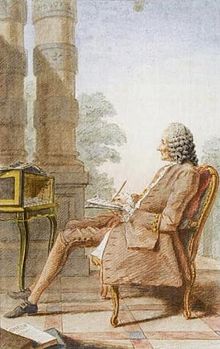 and Dmitri Shostakovich, the former, one of the most significant French Baroque composers of the 18th century, the latter, together with Prokofiev, the most celebrated Soviet one. We’ve written about both of them many times, for example, here about Rameau, or here about Shostakovich, so today, we will present some of their music and move on to the lesser stars. We’ll hear excerpts from Rameau’s opera Les fêtes d'Hébé, an opera-ballet that premiered in 1739 in the theater of the Palais-Royal. His second opera-ballet, after Les Indes galantes, Les fêtes was very successful. The best singers and dancers were engaged, and it became Rameau’s most successful opera, with 80 stagings in the first year. Here are the first three numbers from the ballet music for Les fêtes. The English Chamber Orchestra conducted by Raymond Leppard.
As for Shostakovich, here’s one of his quartets, no 6, from 1956. Shostakovich’s quartets are less “political” than his symphonies, and this one is mostly lighthearted, a rarity for the composer. It’s performed by the Fitzwilliam Quartet.
One of our “lesser stars” is the Lithuanian composer and painter, Mikalojus Čiurlionis, and September 22 marks his 150th anniversary. Čiurlionis is a Lithuanian national composer, a central figure in Lithuanian culture; he occupies a place that Sibelius holds in Finland or Grieg in Norway. His paintings are as important as his music (and probably better known). For centuries, Lithuania was in a union with Poland, till the Russian Empire captured it in the 1790s, and Čiurlionis wrote in Polish. We have his detailed biography here. Čiurlionis died at the age of 35, so most of his music is “early.” Here, from 1901, is Nocturne Op.6, no.2. Nikolaus Lahusen is at the piano.
As much as Čiurlionis was Lithuania’s national composer, Komitas was Armenia’s. Komitas was born Sogomon Sogomonian on September 26th of 1869 in the city of Kütahya, the Ottoman Empire (now Turkey). Orphaned at the age of 12, he was sent to Etchmiadzin, Armenia's religious center, educated in a seminary there, and became an ordained priest. He started collecting Armenian folk music soon after (the first collection was published in 1895) and then continued his musical studies in Berlin. He stayed there for three years and then returned to Etchmiadzin, where he continued collecting folk music and publishing songs and organized a quired, with which he gave concerts in Yerevan and Tbilisi. He later traveled to Europe and, in 1910, moved to Constantinople, Etchmiadzin being too conservative for him. Constantinople, with the then large Armenian population, was a center of Armenian culture. Komitas thrived there, organizing choirs, lecturing, teaching and writing music. It all ended in 1915 with the Ottoman government-sponsored Armenian massacres. Millions were killed. Komitas was arrested and deported to the interior of the country. He survived but had a mental breakdown, from which he never recovered. He was moved to a French hospital in Constantinople and then to a mental clinic in the suburbs of Paris. He died on October 22nd of 1935. Here are excerpts from Patarag, the Divine Armenian Liturgy by Komitas. The Russian Chamber Chorus of New York (sic!) is conducted by Nikolai Kachanov.
Read more...Mikalojus Čiurlionis - Nocturne op. 6, no. 2
Nikolaus Lahusen (Piano)
Dmitry Shostakovich - String Quartet No. 6
Fitzwilliam Quartet (Quartet)
Jean-Philippe Rameau - Les fêtes d'Hébé, mov 1-3
English Chamber Orchestra (Orchestra)
Raymond Leppard (Conductor)
Ghent incident, catching up 2025
This Week in Classical Music: September 15, 2025. Ghent incident and other things. Last week, instead of our usual fare, we wrote an entry about a music critic, Eduard Hanslick. While doing 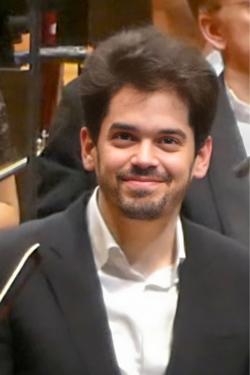 that, we missed some interesting anniversaries, so we’ll try to catch up on some of them this week. But first, another item that caught our eye. The Flanders Festival in Ghent has decided to cancel a concert featuring the Munich Philharmonic with Lisa Batiashvili. The reason? The orchestra was to be conducted by Lahav Shani, the current music director of the Israel Philharmonic and the next chief conductor of the Munich Philharmonic. As the organizer of the festival explained, “Lahav Shani has spoken out in favor of peace and reconciliation several times in the past, but in the light of his role as the chief conductor of the Israel Philharmonic Orchestra, we are unable to provide sufficient clarity about his attitude to the genocidal regime in Tel Aviv.” [Emphasis is ours]. The organizers prefaced this statement by saying: “The decision has been made on the basis of our deepest conviction that music should be a source of connection and reconciliation. First and foremost, Flanders Festival Ghent aspires to be a place where artists, audiences and staff can experience music in a context of respect and safety.” We find this malignant combination of antisemitism and wokeness appalling. It’s especially awful coming from a presumably nonpolitical arts organization. Fortunately, even the Prime Minister of Belgium, a country extremely critical of Israel, was shocked and condemned the action of the festival in a written statement. He then flew to Essen, Germany, to attend the same concert that was organized on very short notice. He met Shani and apologized to him in person. The German reaction in general was very strong: the Berlin Philharmonic extended an invitation to Shani, the culture minister called the action of the Ghent Festival “pure antisemitism,” and the German Commissioner for Antisemitism said that it was “a completely unspeakable and deeply antisemitic act." We applaud Bart de Wever, the Prime Minister of Belgium, and the German musical and political establishments for their strong condemnation of the Ghent Festival and their support of music. And we’re sorry that this unfortunate event had to happen in Ghent, a gem of a city that treasures one of the greatest masterpieces of visual art, the Adoration of the Mystic Lamb altarpiece by Huber and Jan van Eyck.
And now, briefly, back to music. Arvo Pärt, an Estonian composer, turned 90 on September 11th. He left for Vienna and then Germany in 1980, lived there for 30 years, returned to Estonia in 2010, and has resided in his motherland since then. In the year 2000, he wrote Cecilia, vergine romana, a piece for mixed choir and orchestra, commissioned by the Vatican as part of the celebration of the Great Jubilee. Santa Cecilia is a patron saint of music, and, appropriately, the premiere was held by the Accademia Nazionale di Santa Cecilia orchestra. Here it is, but in this case it’s played by the Orchestre National de France under the direction of Kristjan Järvi, Pärt’s compatriot.
Arnold Schoenberg’s birthday was also last week; he was born on September 13th of 1874. Last year, as we observed Schoenberg’s 150th anniversary (here), we found celebrations in the US muted. While things were already changing in 2024, compared to 2020-2021, since then, they seem to have improved a bit further. We think that had it been celebrated this year, the Schoenberg anniversary would’ve been more interesting and festive.
Last week was exceptional with birthdays, and here are some other names: Antonín Dvořák, Henry Purcell, Girolamo Frescobaldi, William Boyce, and Clara Schumann. And this week it’s the Swiss composer Frank Martin, the Russian Aleksandr Lokshin, and the Brit Gustav Holst.
Read more...Arvo Pärt - Cecilia, vergine romana
Orchestre National de France (Orchestra)
Kristjan Järvi (Conductor)
Hanslick 200, 2025
This Week in Classical Music: September 8, 2025. Eduard Hanslick. We dedicate this week’s entry to one who was neither a composer nor a performer, but was more influential than most of 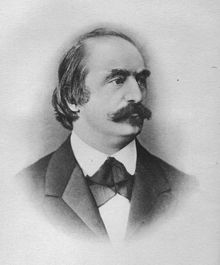 both. Eduard Hanslick’s 200th anniversary is on September 11th (an unfortunate coincidence). He was the most important music critic in Vienna; what we find astonishing, writing this in 2025, is not the (expected) centrality of classical music in the cultural life of Vienna in the mid-19th century, but the importance of musical criticism, a derivative of music itself. This seems unimaginable today, when classical music has become peripheral and music criticism has practically disappeared.
Hanslick was born in Prague, then part of the Austro-Hungarian Empire, into a German-speaking family. His father was a small and rather poor landowner; his mother was Jewish, the daughter of a well-to-do merchant; she converted to Catholicism upon marrying Hanslick senior. Richard Wagner, who would become Hanslick’s nemesis, never forgot that by blood, Hanslick was half-Jewish. In Prague, Hanslick studied music for a while but then went to the University of Vienna, graduating with a degree in law. But music remained his love, and even while at the university, he continued writing an occasional review. Upon graduation, while working in different ministries, Hanslick continued writing musical criticism, first for Wiener Zeiting, the oldest newspaper in the world still in publication today, and then for another major newspaper, Die Presse, which is also still in print. When, in 1864, two former editors of Die Presse started a new newspaper, Neue freie Presse, Hanslick joined them as a music critic and remained there for the rest of his career. In 1854, Hanslick wrote a book, On the Beautiful in Music, one of the arguments of which was that “Music means itself,” that it has no “subject” and is not an expression of feelings. Unfortunately, this rather conventional notion contradicted Wagner’s ideas. Just three years earlier, Wagner had published an essay, Opera and Drama, in which he, while describing “music drama” as the synthesis of music, poetry and spectacle, also maintained that his music expresses the feelings intrinsic to poetry and drama. This made the programmatic “esthetic of feelings” quite popular in the German-speaking world, and Hanslick’s refutation created a torrent of responses, both positive and negative. The book earned Hanslick a position of professor of “History and esthetics of music” at the University of Vienna, the first such position at any European university. On the other hand, Wagner took umbrage and, in Die Meistersinger von Nürnberg, created a character of Beckmesser, a town clerk and singer, who maliciously judges Walther’s performance, as a caricature of Hanslick. And in his essay, “Judaism in Music,” Wagner declared that Hanslick’s “Jewish style” of criticism is anti-German.
While writing for Neue freie Presse, Hanslick became the leading music critic of Vienna, which itself was the foremost music center of Europe. He had rather conservative taste and wasn’t interested in music before Mozart. He felt that Beethoven had reached the pinnacle and that Schumann and Brahms were the main talents to follow him. Brahms became a close friend and Hanslick his major supporter and promoter. Hanslick tried to be objective toward Wagner’s music. He openly admired his virtuoso orchestration; he liked Tannhäuser and, surprisingly, Meistersinger, despite the “Beckmesser affair.” At the same time, he felt that the whole concept of “music drama” is detrimental to music development. Hanslick could be very cutting: “The Prelude to Tristan and Isolde reminds me of the old Italian painting of a martyr whose intestines are slowly unwound from his body on a reel.” Hanslick was also very negative toward Liszt and Bruckner, one composer who needed a lot of encouragement. These days, Hanslick is remembered as a conservative who completely misunderstood the “new music” of Wagner and his followers. This is true to an extent, but we also should remember that he disliked some nativist, irrational aspects of Wagner’s (and Bruckner’s) music, which the Nazis some decades later found so attractive.
Read more...Cary Kembla - Creature From the Deep
Cary Kembla (Ensemble)
Cary Kembla - Father Time Frolics
Cary Kembla (Orchestra)
Komitas - Patarag, Armenian Divine Liturgy
Russian Chamber Chorus of New York (Chorale)
Nikolai Kachanov (Conductor)