
Mescellanea, June 2025
This Week in Classical Music: June 23, 2025. Miscellanea. Two composers were born this week: Benedetto Macello on June 24th (but maybe July 24th) of 1686 in Venice, and Gustave Charpentier on June 25th of 1860 in the French town of Dieuze. Marcello, a nobleman and amateur composer, was known for a setting of 50 psalms called “Estro Poetico-Armonico.” Interestingly, some of the psalms appear to be based on traditional Jewish tunes. Considering that Venice was the first city to segregate its Jews in a ghetto, this seems rather unusual. We’ll look into this and report back. In the meantime, here’s our earlier entry about Benedetto Marcello.
Gustave Charpentier was a French composer noted for his opera Louise (and shouldn’t be confused with the French composer of the Baroque era, Marc-Antoine Charpentier). Luise isn’t staged often these days, but one aria, Depuis le jour, is sung frequently as a concert piece. Here’s Anna Netrebko in her better years, doing a good job of it.
Three conductors were also born this week: James Levine on June 23rd of 1943 in Cincinnati,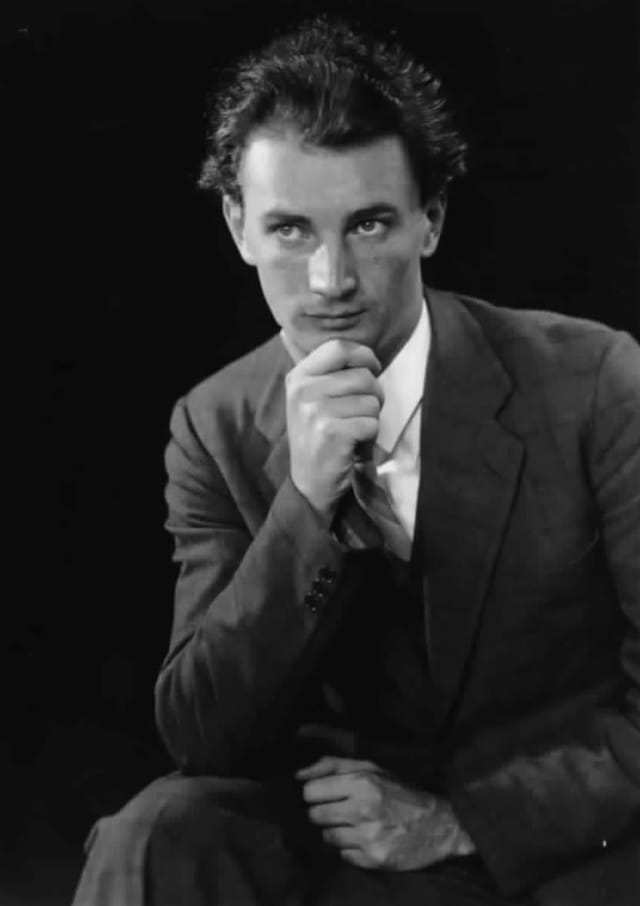 Ohio, Claudio Abbado on June 26th of 1933 in Milan, and Rafael Kubelik on June 29th of 1914 in Býchory, Bohemia, Austria-Hungary, now in the Czech Republic. The phenomenally talented Levine was the music director of the Metropolitan Opera for 40 years, from 1976 to 2016, when he was terminated over allegations of sexual misconduct. Levine made the Met orchestra into a world-class ensemble, was instrumental in developing the careers of many singers, and presided over some remarkable performances, including a great staging of Wagner’s Der Ring des Nibelungen. For several years, he was also the music director of the Boston Symphony Orchestra (and the first American-born person in that position). Though the rumors of Levine’s sexual misconduct persisted for years, they were ignored (and suppressed) by the Met management till publicly revealed in 2016. The allegations were so damaging that the Met had no choice but to let Levine go. In an overreaction, the Met also decided to wipe out all Levine’s recordings from the Met’s history. Soon it became obvious that, without Levine, there were not many things to broadcast, and his recordings were restored.
Claudio Abbado is one of our all-time favorite conductors; we’ve written about him and quoted his performances too many times to mention here.
Rafael Kubelik was born one day after the assassination of the Archduke Ferdinand. A month and a half later, the world descended into the Great War, and in another four years, the country of his birth was gone. After graduating from the Prague Conservatory, Kubelik, at the age of 25, became the music director of the Brno Opera. As the Nazis took over the Czech part of Czechoslovakia (Slovakia remained formally independent under a puppet regime), they closed the opera but allowed the Czech Philharmonic to continue operating. Kubelik became the principal conductor. It's said that he refused to give the Hitler salute to high Nazi officials (that could have cost him his life). He also didn’t perform Wagner’s music, so beloved by Hitler. In 1948, as the Czech Communists, organized and supported by Stalin’s Soviet Union, took over, Kubelik escaped to the UK. In 1950, he became the Music Director of the Chicago Symphony but left three years later. He then led the Covent Garden opera and the Bavarian Radio Symphony Orchestra (BRSO). He stayed in Munich for 18 years, till 1979. Under his baton, BRSO made several excellent recordings (he recorded all of Mahler’s symphonies with them). During his career, Kubelik guest-conducted all major symphony orchestras. Here’s the second movement of Bruckner’s Symphony no 3. Rafael Kubelik conducts the Bavarian Radio Symphony Orchestra.
Read more...Z musicalu "Koty" - Pamięć (Memory)
Kinga Sromek (Mezzo-soprano)
Vicenza, 2025
This Week in Classical Music: June 16, 2025. Vicenza. On our latest trip, we visited two musically famous cities, Cremona and Mantua, which we’ve written about in our previous posts. 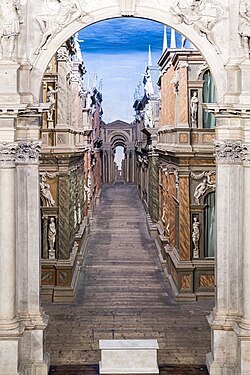 There was one more city, Vicenza, not as renowned, but worth a visit for a music lover, if just for one building, its Teatro Olimpico. Vicenza boasts more buildings designed by the great Renaissance architect, Andrea Palladio, than any other city, and Teatro Olimpico is one of them. The theater was Palladio’s last project; he started it in 1580 but died before the work on it had even begun. After Palladio’s death, the construction was supervised by another architect, Vincenzo Scamozzi, who also designed the stage scenery. The theater is majestic in its proportions, but it’s Scamozzi’s trompe l'oeil stage set that makes it all work. What you see is a fanciful cityscape, with a wall decorated by columns, pilasters, and Roman-looking statues, and several gates opening into streets that seem to go back for hundreds of yards. In reality, they are only 2-3 yards deep. There are columns and statues all over the theater, not only on the wall at the back of the stage, but also on the proscenium and the loggia that surrounds the seating area. The combination of the real statuary and the one on the trompe l'oeil creates a visual effect that is as strong now as it was 500 years ago, when the theater was built. The amphitheater of the seating area has no chairs: there are only cushions to make the public somewhat comfortable, but the absence of chairs eliminates the distraction to the architectural marvel of the theater.
It’s not by chance that Scamozzi did such a spectacular job in following Palladio’s design and creating the stage scenery: he was a talented architect. If you are in Venice, you can’t miss his most visible job, Procuratie Nuove, a row of buildings framing the Piazza San Marco on the right, as you face the cathedral.
Teatro Olimpico, completed in 1585, was one of the first permanent covered theaters in European history since the Greeks and the Romans built their open theaters millennia earlier. Of course, plays were staged and music played long before that, but usually it was in the palazzos of the princes and the cardinals. Olimpico was a “real,” permanent theater and it’s used today: in the Fall, classical plays are staged, and, in the Spring, a musical festival takes place. This year, for example, the theater hosted productions of Mozart’s Le nozze di Figaro and Don Giovanni, Verdi’s Falstaff, and a performance of Brahms’ Ein deutsches Requiem. Few people can experience these masterpieces in such a setting: the theater is small and seats only 400 lucky ones. Maybe one day…
Read more...Mantua 2025
This Week in Classical Music: June 9, 2025. Mantua. Last week, we wrote about Cremona, one of the most musical cities in the northern part of Italy. We should mention Mantua, which was a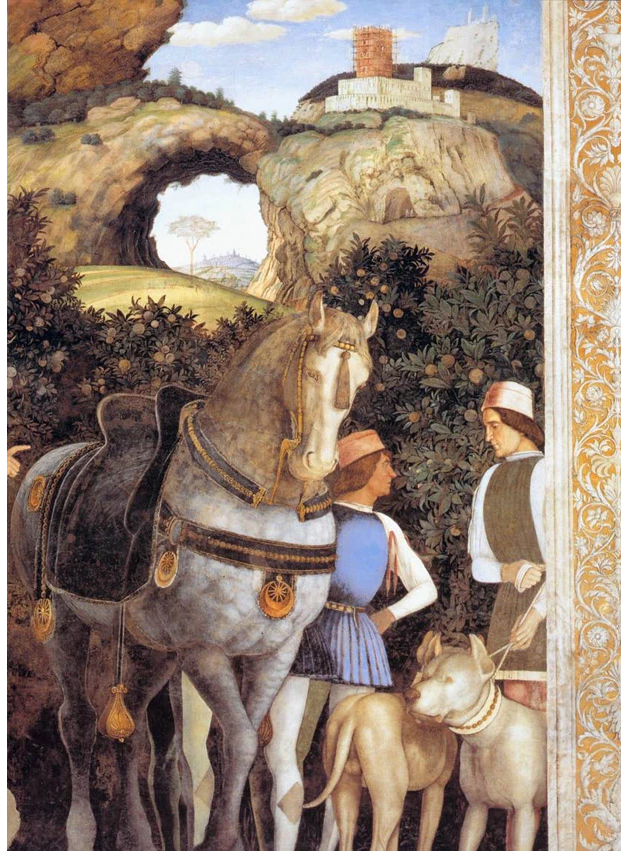 lso on our itinerary. For two centuries, from mid-15th to mid-17th, Mantua was even more prominent; musically, the city was second only to Ferrara, and, as the ruling families of the cities, the Gonzagas and the d’Este, were very close, intermarried and friendly, the cultural life of these two cities was similar. For example, Francesco II Gonzaga (1466 – 1519), Marquess of Mantua (the lords of Mantua were made Dukes in 1530 by the Emperor Charles V), was married to Isabella d’Este, the daughter of Ercole d’Este, the Duke of Ferrara. While her husband was fighting wars on behalf of the Republic of Venice and having numerous affairs, Isabella ruled Mantua on his behalf, promoting arts and music. Isabella was born in Ferrara in 1474 and died in Mantua in 1539, so her life covered the richest period of the Renaissance. She extended her patronage to some of the best painters of the time, among them Giovanni Bellini, Mantegna, Giorgione, Leonardo, Perugino, Rafael, and Titian. Isabella’s favorite composer was Bartolomeo Tromboncino (1470 – 1535). Here’s Vergine bella, one of his frottolas, secular songs of the time (a predecessor to the madrigal). The great British soprano Emma Kirkby is accompanied by the Consort of Musicke under the direction of Anthony Rooley.
Isabella’s son Federico II Gonzaga, the first Duke of Mantua, commissioned Palazzo Te to Giulio Romano, Rafael’s favorite student. The result is one of the most unusually decorated palaces of Renaissance Europe. Federico also established the first permanent cappella. Giaches de Wert became the maestro di cappella under the Duke Guglielmo Gonzaga, who himself was a composer. Among the composers who worked at the court were Palestrina (briefly) and Benedetto Pallavicino (1551 – 1601), an associate of de Wert and, for a while, Monteverdi’s rival. Pallavicino was a maestro di cappella for about five years. Here is his madrigal Cor mio, deh, non languire. The performers, again, are the Consort of Musicke under the direction of Anthony Rooley. Beautifully done.
The 22-year-old Claudio Monteverdi arrived in Mantua in 1589, two years after the coronation of Vincenzo I Gonzaga as the Duke of Mantua. Vincenzo was a great patron of the arts, supporting poets (Tasso), architects, and composers, Monteverdi first and foremost. Monteverdi assumed the directorship of the cappella in 1601 and stayed in Mantua till 1613. Some of the first operas were staged in Mantua: Monteverdi’s Orfeo was staged there in 1607. His Arianna and Il ballo delle ingrate, an opera-ballet, was staged a year later. Other prominent composers were active during the same time, one of them Salamone Rossi, a Jewish composer and virtuoso violinist born in the city. He served at the court from 1587 to 1626; Mantua at the time had a large Jewish community, protected by the duke.
Vincenzo died in 1612, and the great period of music development in Mantua came to an end. Some notable composers continued visiting Mantua, as Frescobaldi did in 1615, or, later, Antonio Caldara, who was the maestro di cappella to the last duke of Mantua, Ferdinando Carlo. Caldara composed and staged several operas in Mantua in the early 1700s.
Here’s a madrigal by Claudio Monteverdi, De la bellezza le dovute lodi, from his Mantuan period. It is one of the songs from his 1606 publication, Scherzi Musicali (Musical jokes). The performers are the Concerto delle Dame di Ferrara, Sergio Vartolo conducting.
Read more...Claudio Monteverdi - De la bellezza le dovute lodi
Concerto delle Dame di Ferrara (Ensemble)
Sergio Vartolo (Conductor)
Benedetto Pallavicino - Cor mio, deh, non languire
The Consort of Musicke (Ensemble)
Anthony Rooley (Conductor)
Bartolomeo Tromboncino - Vergine bella
Emma Kirkby (Soprano)
The Consort of Musicke (Ensemble)
Anthony Rooley (Conductor)
Cremona, 2025
This Week in Classical Music: June 2, 2025. Cremona. In our latest Italian travels, we encountered several musically important cities, and Cremona is one of them. Cremona is somewhat unusual in this respect. As a rule, music flourished at the courts of the powerful dukes, 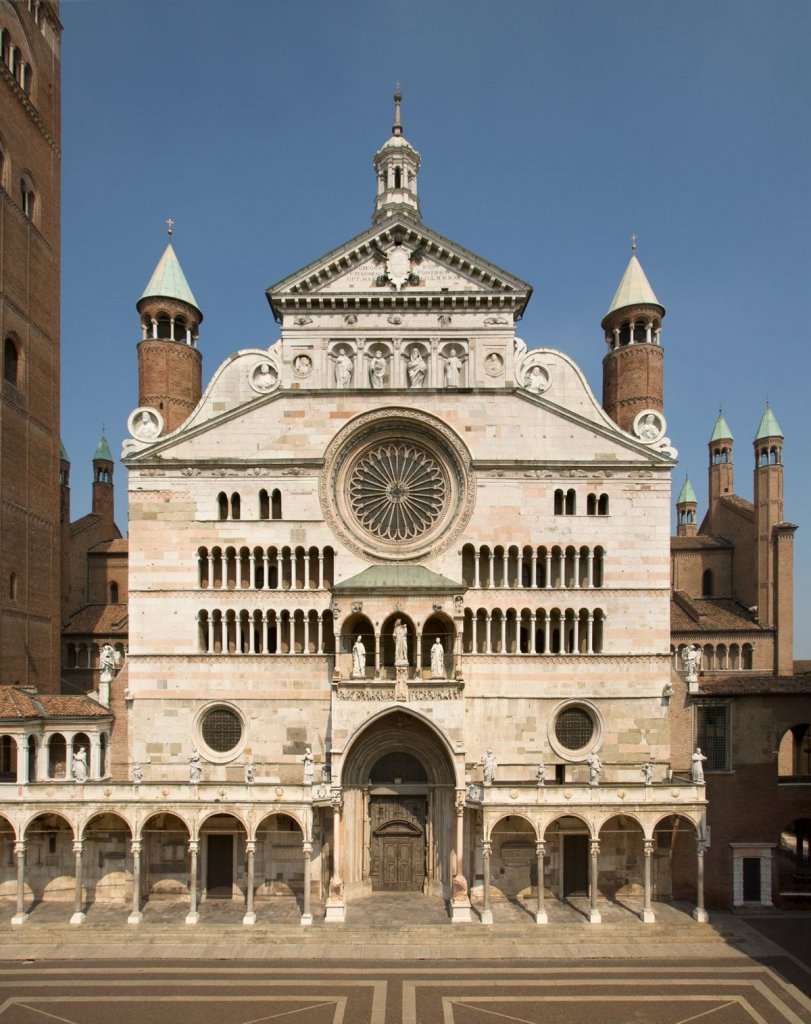 as it did in the neighboring Mantua under the Gonzagas. Cremona never had a prince: during its long and turbulent history, it fought many enemies, belonged to different parties (the Guelfs, the supporters of the Pope, and sometimes to the Ghibellines, the allies of the Holy Roman Emperor) and at different times was occupied by the Duchy of Milan, the Genovese Republic, the French and the Spanish. And for a while, it was an independent commune, led by Capitano del Popolo. One thing it never had was a substantial court. Therefore, music-making was concentrated at the Cathedral, the Duomo. We must say that the Duomo is magnificent, one of the best examples of Romanesque architecture in Northern Italy. Next to the Duomo stands the Torrazzo, the tallest pre-modern campanile (bell tower) in Italy and Cremona’s symbol. On the other side is the Baptistry. The cathedral was originally built in the 12th century in the then-current Romanesque style but was enlarged in the subsequent centuries, acquiring many Renaissance elements. It’s decorated with many wonderful sculptures, some dating back to the 12th century. The Torrazzo has 500 steps, and if you brave them, you’ll be rewarded with a wonderful view from the top.
Marc'Antonio Ingegneri was the most important composer to serve as the Maestro di Cappella at the Duomo, though we should also mention the Bishop, Nicolò Sfondrato, later Pope Gregory XIV, who was instrumental in promoting music and arts in the city. Ingegneri was born in Verona sometime around 1535 and moved to Cremona in the late 1560s. This was the time of the Counter-Reformation, and one of the conditions imposed by the Council of Trent, which produced the Counter-Reformation program, was that the words in Latin masses had to be legible. This, as we know, almost killed the polyphonic mass, which survived thanks to Palestrina’s mastery. Ingegneri worked in the style of Palestrina (some of his work was even attributed, incorrectly, to the great Roman). Here’s Ingegneri’s Salve Regina, performed by the Choir of Girton College, Cambridge, Gareth Wilson conducting.
But of course, the real fame was brought to Cremona by its luthiers: Cremona is rightfully considered the birthplace of the modern violin. The instruments made by the Amati family, Antonio Stradivari, and Giuseppe "del Gesù" Guarneri in the late 16th, 17th, and 18th centuries are still considered nonpareil. All of the Cremonese violin makers learned from each other: both Stradivari and Guarneri were pupils of Nicolò Amati, who in turn apprenticed with his father, Girolamo Amati. Girolamo’s father, Andrea Amati, born in 1505, is considered the first master to make a modern violin.
Cremona has a wonderful Museo del Violino (Violin Museum). It has a section dedicated to the history of string instruments and one on violin-making. All of it is done in good taste. But the most important part is the beautiful hall displaying rare instruments by the Amati family, Stradivari and Guarneri (there are other rooms with hundreds of instruments, some very important, for example, from the luthiers like Francesco Rugeri and Carlo Bergonzi). The museum has a small but beautiful auditorium, where several times a month the magnificent instruments from the museum’s collection are showcased by young musicians. For a small fee, anybody can come and listen. And clearly, the violin-making is still flourishing in Cremona: as you walk the streets of the city, you encounter many luthiers’ shops, some of them well-known around the world.
Read more...Marc'Antonio Ingegneri - Salve Regina
Choir of Girton College, Cambridge (Chorale)
Gareth Wilson (Conductor)
Anton Bruckner - Symphony no. 3, mov. 2
Rafael Kubelik (Conductor)