
Alessandro Scarlatti, 2025
This Week in Classical Music: April 28, 2025. Alessandro Scarlatti. It was just a month ago that, while writing about the music of Naples, we illustrated it with a wonderful aria from one of 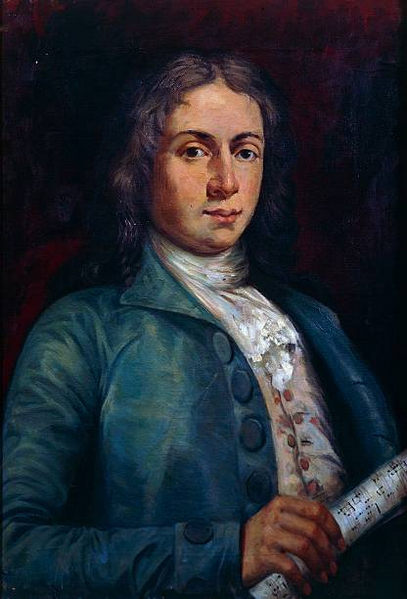 Alessandro Scarlatti’s operas, Tigrane, which premiered in that city, in Teatro San Bartolomeo, in February of 1715 (the aria, Sussurrando il venticello, or Whispering the breeze, could be found here; the soprano is Elizabeth Watts). Scarlatti was born in Palermo on May 2nd of 1660. After moving between Palermo, Rome, and Naples, Alessandro’s family settled in Rome in 1672. The obvious musical talent of the young Scarlatti attracted the attention of many important Romans; Gian Lorenzo Bernini invited him to live in his palazzo, while Bernini’s son was the godfather of Scarlatti’s first child. Cardinal Pamphili, one of the most important patrons of music in Rome, provided Scarlatti with his poetry to be set to music and introduced him to Queen Christina, another important person in the arts scene. In short order, Christina made Scarlatti her Maestro di capella. His first opera, Gli equivoci nel sembiante, was composed in 1679 and was successful not just in Rome but also in other Italian cities. By 1683, he had written six operas (here’s the aria O cessate di piagarmi from his opera Il Pompeo from 1683). Pope Innocent XI disliked opera, and because of that, new productions were staged only in the private theaters of the nobility, like Queen Christina’s, or foreign dignitaries, who could flout the Pope’s displeasure. One such patron was a Neapolitan duke of Maddaloni, who, in 1683, convinced Scarlatti to move to Naples.
Naples was then a Spanish possession. The Viceroy, Gaspar Méndez de Haro, previously served as the Spanish ambassador to Rome, where he became a devotee of Scarlatti’s music. Thus, Scarlatti was assured of the most important patronage in the city. This relationship was also the cause of great jealousy among the Neapolitan musicians, as the Viceroy made Scarlatti his Maestro di capella. Scarlatti was writing about two operas a year; first they would be staged at the royal palace and then produced in the Teatro San Bartolomeo. Almost single-handedly, Scarlatti made Naples into an opera center to rival Venice. In 1685, his first of the eventual five Neapolitan children was born: the boy was named Domenico, and he would become a composer, at least as famous as his father.
While in Naples, Scarlatti continued to maintain a relationship with many Roman patrons. In 1689, Queen Christina died, but soon a new important patron would appear, Pietro Ottoboni. Cardinal Ottoboni was the grandnephew of Pope Alexander VIII (see our entry on this illustrious patron of the arts here). Pope Alexander came from Venice, where opera was king. He removed many restrictions imposed by his predecessor, Pope Innocent XI. Pietro Ottoboni, the Cardinal, rich off the nepotism of his granduncle, lavished much of his wealth on arts and music, Scarlatti being one of his main beneficiaries. Ottoboni wrote the libretto for one of Scarlatti’s operas, La Statira (two more libretti would follow). Another cardinal, Benedetto Pamphili, wrote the libretto for one act of La santa Dimna and staged it at the theater of his own Palazzo Doria Pamphili. Some of Scarlatti’s patrons came from afar; one of them, Ferdinando de' Medici, Grand Prince of Tuscany, was himself an excellent musician. Unfortunately, all operas written by Scarlatti for Ferdinando are lost. Here, on the other hand, is an aria from the same period, S'io non t'amassi, from the 1697 opera La Caduta de' Decemviri. The countertenor Dmitry Egorov is accompanied by La Stagione Frankfurt under the direction of Michael Schneider.
Read more...Alessandro Scarlatti - O cessate di piagarmi, from Il Pompeo
Cecilia Bartoli (Mezzo-soprano)
György Fischer (Piano)
Prokofiev and Maderna, 2025
This Week in Classical Music: April 21, 2025. Prokofiev and Maderna. Two influential composers were born this week, Sergei Prokofiev and Bruno Maderna. Only 29 years separate 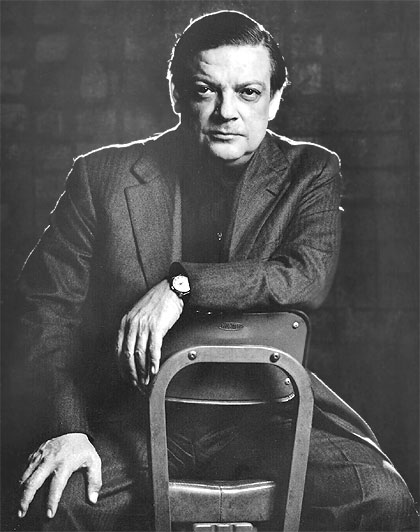 them (Prokofiev was born on April 23rd of 1891, Maderna – on April 21st of 1920), about the same age difference that separated Haydn from Mozart, but it’s difficult to think of more different composers. Prokofiev, even if hugely talented, was conservative in his writings; Maderna, on the other hand, was one of the most adventuresome modernist composers of his time. We’ve written about Prokofiev many times, for example here, here, here, and here: you wouldn’t be wrong to surmise that we like Prokofiev a lot. We haven’t missed Maderna (here), but we’d like to add a bit to our previous post. Sometime around 1946, Maderna composed a Requiem. The score was lost and then rediscovered in 2009. Requiem is Maderna’s early piece, mostly tonal in style. Here are two first parts of it titled Requiem (introduction) and Kyrie eleison (Lord have mercy). This recording is from the world premier performance made in 2013 by the Robert-Schumann-Philharmonie and the MDR-Rundfunkchor Leipzig chorus under the direction of Frank Beermann. Maderna wrote many concertos for different instruments, but it seems the oboe was his favorite: he wrote three oboe concertos. Here’s Maderna’s First Oboe Concerto, from 1962-63. The great Heinz Holliger is the soloist; Cologne Radio Symphony Orchestra is led by Gary Bertini.
Yehudi Menuhin, one of the greatest violinists of the 20th century, was also born this week, on April 22nd of 1916 in New York. And of course, we’ve written about him before (here, for example). Menuhin’s musicianship was impeccable from the earliest days of his career till the end of it. The same could not be said about his technique. We heard him live in the late 1980s, and it was too late: by then, his technique was shaky, and it overshadowed the overall impression. But when you listen to some of his older recordings, they are wonderful. Here’s one of them, the 1966 live recording of Bach’s Violin and Keyboard Sonata No. 4 in C minor BWV 1017, which Menuhin made with Glenn Gould. Idiosyncratic (no doubt that Gould had something to do with this) but absolutely worth listening to.
Read more...Johann Sebastian Bach - Violin and Keyboard Sonata no. 4 in C minor BWV 1017
Yehudi Menuhin (Violin)
Glenn Gould (Piano)
Bruno Maderna - Requiem and Kyrie, from Requiem
Robert-Schumann-Philharmonie (Orchestra)
MDR-Rundfunkchor Leipzig (Chorale)
Frank Beermann (Conductor)
Bruno Maderna - Oboe Concerto no. 1
Heinz Holliger (Oboe)
Cologne Radio Symphony Orchestra (Orchestra)
Gary Bertini (Conductor)
P. Kellach Waddle - Op. 802 During Prayer Again We Recall The Wounds, The Vinegar, And The Darkness : A Good Friday Supplication for Solo Bass
P. Kellach Waddle (Double Bass)
Four pianists, 2025
This Week in Classical Music: April 14, 2025. Four Pianists. It has been a long time since we’ve written about the instrumentalists: the city of Naples and composers of note have taken up 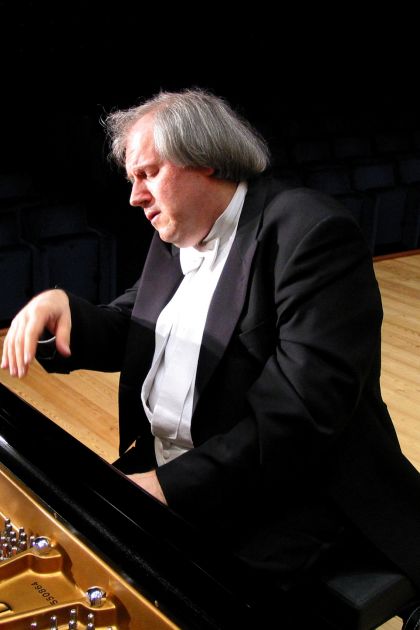 all of our time. Fortunately, this week presents us with the opportunity to address this problem, as four pianists have their birthdays this week. Two of them were born in the Soviet Union (neither still lives there), and both became famous after winning a Tchaikovsky competition. One is Grigory Sokolov, the other -- Mikhail Pletnev. Sokolov was born to a Jewish father and Russian mother on April 18th of 1950 in Leningrad, now St. Petersburg (we note the nationalities because of the persistent and official policies of antisemitism in the Soviet Union). Sokolov was 16 when, in 1966, he was awarded the first prize among pianists at the Third Tchaikovsky competition. It was quite unexpected (Misha Dichter was the public’s favorite that year), and nobody took Sokolov’s win seriously. Who could imagine then that this youngster would turn into one of the most profound pianists of his generation? For a while, Sokolov’s career didn’t go anywhere, even though he was allowed to play concerts internationally. Sometime around 1988, he left Russia (he’s a Spanish citizen and lives in Italy), and it wasn’t until the 2000s that his career really took off. Since 2006, he has performed only solo concerts; he plays mostly in continental Europe, where he’s famous. Sokolov eschews concerts in the UK and the US because of the visa requirements, which he deems Soviet-like. He rarely makes studio recordings but allows his live concerts to be recorded. Here is one of them, a live recording made in Haydnsaal of the Esterházy Palace in Eisenstadt, Austria, on August 10, 2018. Grigory Sokolov plays Schubert’s Impromptu no. 1 in F minor, from Four Impromptus, Op. 142, D. 935.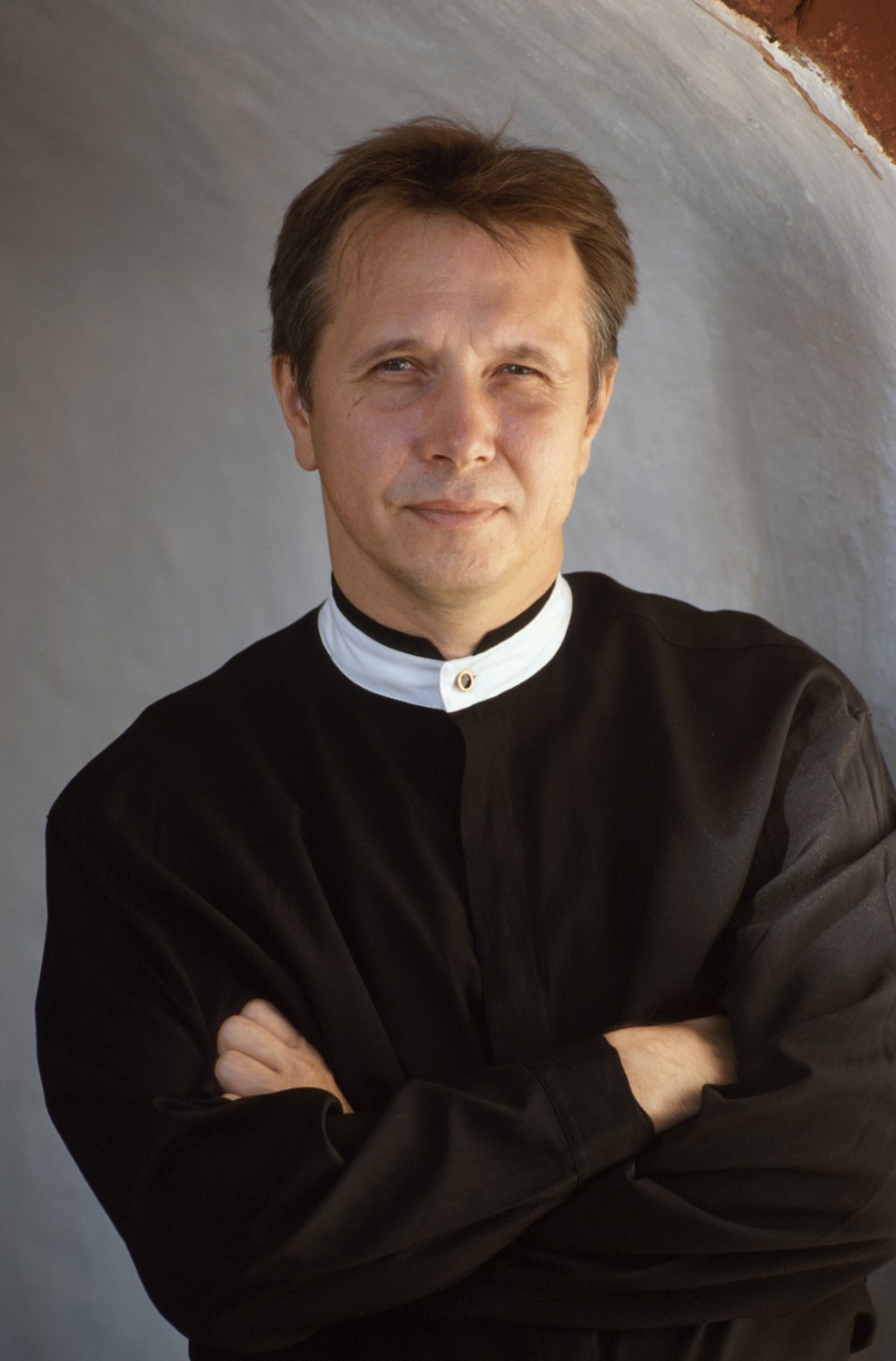
Mikhail Pletnev’s career was very different. He was born in the northern city of Arkhangelsk on April 14th of 1957. He won the Sixth Tchaikovsky Competition in 1974 when he was 21. His piano career flourished immediately after, as he went on tours of Europe and America. He played solo recitals and concerts with Claudio Abbado, Bernard Haitink, Zubin Mehta and other prominent conductors. Pletnev himself started conducting in 1980 while still studying at the Moscow Conservatory. In 1988 he met Mikhail Gorbachev, then the General Secretary of the Communist Party, in Washington, DC; two years later, Gorbachev helped him found the first non-state-owned orchestra, the Russian National Orchestra (RNO). Pletnev made it into one of the best orchestras in Russia. In 2022, after Russia invaded Ukraine, Pletnev made several anti-war comments, after which Putin’s officials pushed him out of his own orchestra. In the aftermath, Pletnev created a new ensemble, the Rachmaninoff International Orchestra; 18 musicians from the RNO joined it. Like Sokolov, Pletnev left Russia in the 1990s: he has been living in Switzerland since 1996. Here’s a recording, made live, like the one we heard from Sokolov. This one was made in Warsaw in August of 2017. Pletnev plays Rachmaninov’s Prelude in G-sharp minor op. 32, no. 12.
Two other pianists born this week are Murray Perahia, one of our all-time favorites; he was born on April 19th of 1947 and the great Artur Schnabel, born April 17th of 1882. We’ve written about Schnabel but not Perahia, which we hope to do in the future.
Read more...Sergei Rachmaninov - Prelude in G-sharp minor op. 32, no. 12
Mikhail Pletnev (Piano)
Alessandro Scarlatti - S'io non t'amassi, from La Caduta de' Decemviri
Dmitry Egorov (Countertenor)
La Stagione Frankfurt (Ensemble)
Michael Schneider (Conductor)