
Alexander Scriabin - Symphony No. 3, "The Divine Poem" mov. 3
Russian National Orchestra (Orchestra)
Mikhail Pletnev (Conductor)
Alexander Scriabin - Symphony No. 3, "The Divine Poem" mov. 2
Russian National Orchestra (Orchestra)
Mikhail Pletnev (Conductor)
Alexander Scriabin - Symphony No. 3, "The Divine Poem" mov. 1
Russian National Orchestra (Orchestra)
Mikhail Pletnev (Conductor)
Scriabin, 2025
This Week in Classical Music: January 6, 2025. Scriabin. We’re not sure if we completely share the enthusiasm of Grove Music, which writes that Alexander Scriabin was “[o]ne of the 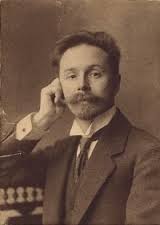 most extraordinary figures musical culture has ever witnessed, Skryabin has remained for a century a figure of cultish idolatry, reactionary yet modernist disapproval, analytical fascination and, finally, aesthetic re-evaluation and renewal.” It is clear, though, that Scriabin was very influential, and both his music and his persona evoked passionate reactions; moreover, the cultural life of Russia during his adult life, from the last decade of the 19th century through 1915, was at its peak, which amplifies Scriabin’s significance.
Alexander Scriabin (sometimes transliterated as Skryabin) was born in Moscow on January 6th of 1872 (December 25th of 1871, Old Style). Scriabin had a turbulent and complicated life, with ups and downs, both artistic and personal. There's no way we could describe it in any detail in the allotted space, so instead we'll try to untangle his complicated relationship with the Schloezer family and with his wives, relationships that so often intersected.
The Schloezers were of either German or, as some of Scriabin's friends presumed, Jewish descent. Two brothers, Teodor (Fyodor) and Paul (Pavel) settled in Russia, the former in the provincial city of Vitebsk, the latter in Moscow. Teodor became a successful lawyer, while Paul, a pianist, became, sometime around 1892, a professor at the Moscow Conservatory. With his French wife, Teodor had two children, Boris and Tatiana. We don’t know anything about Paul’s children, but what we do know is that among his pupils were Leonid Sabaneyev, who would become an important music critic and Scriabin’s good friend, Elena Gnessin, a founder of several music schools, and one Vera Isakovich, Scriabin’s future wife. Vera, an accomplished pianist, was one of Professor Schloezer’s favorite students and for a while even lived in his house. In 1892, Scriabin graduated from the Moscow Conservatory with a Little Gold Medal, as opposed to his rival Rachmaninov’s Great Gold Medal, mostly because of Alexander’s disagreements with Anton Arensky, a composer and Conservatory professor.
In his youth Scriabin had many affairs, some pretty scandalous; he met Vera Isakovich through Paul Schloezer in 1897. By then Scriabin was a struggling composer and a successful pianist. Vera and Alexander married, against the wishes of his family, in April of that year; he was 25 years old, she was 22.
In the meantime, Tatiana Schloezer, who was 11 years younger than Scriabin (she was born in 1883), grew up in Vitebsk, learned to play the piano, and fell in love with Scriabin’s music -- so much so that she would play only his compositions and nothing else. Sabaneyev also remembers seeing her at the Moscow house of Paul Schloezer while Vera was living there. In the meantime, Vera and Alexander’s marriage was having difficulties, mostly, in Alexander’s mind, on account of Vera not appreciating his music – and his genius – deeply enough. In 1902, Boris Schloezer and his sister Tatiana were staying in a hotel in Moscow (Tatiana, then 19, came with the specific goal of meeting Scriabin). Boris invited Alexander, who played his new compositions late into the night; Tatiana announced that she wanted to be his pupil. Later into the night, they moved to Scriabin’s house where Alexander continued to play; he was taken by Tatiana's deep understanding of his music. Sometime later Scriabin wrote a letter to Paul Schloezer praising his children and how happy he was to have met them.
We’ll stop here, even though we understand where this is leading. We’ll finish this story, just a small part of Scriabin’s biography, next week. In the meantime, some of Scriabin’s music from around that time. Soon after their marriage, Alexander and Vera moved to Paris, where he started working on his Third Piano Sonata. Here it is, in the 1988 performance of Grigory Sokolov.
Read more...Alexander Scriabin - Piano Sonata no 3 in f-sharp minor op.23
Grigory Sokolov (Piano)
New Year 2025
This Week in Classical Music: December 30, 2024. New Year. New Year’s Day is Wednesday of this week, and we wish all our listeners a very happy New Year. We often celebrate the end of 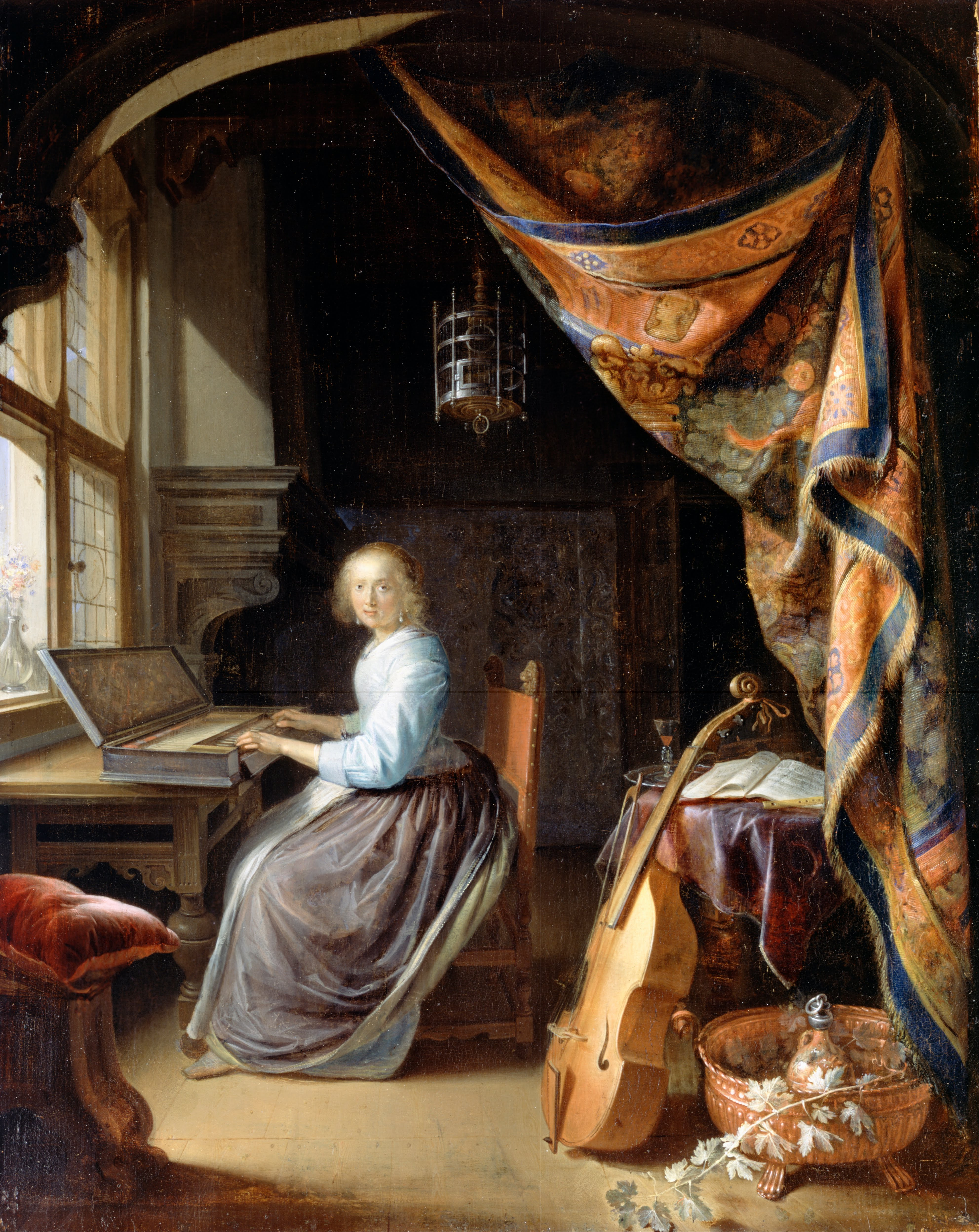 the year with the music of the great composers of the High Renaissance, as we’ll do this year. This time we present the music of four: Palestrina, Orlando di Lasso, Tomás Luis de Victoria, and Giovanni Gabrieli, all born within less than 30 years of each other. All four worked in Italy but only two were Italian, one of them the great Giovanni Pierluigi da Palestrina, born in 1525. We’ll hear a Magnificat by Palestrina, who wrote 35 versions of this hymn. Magnificat is the Virgin Mary’s praise of her Son, it forms part of the Vespers service. Here’s Palestrina’s Magnificat quinti toni (for five voices), published in 1591. The British Enselmble The Sixteen is conducted by its founder, Harry Christophers.
Orlando di Lasso (his name is often spelled Orlando Lassus) was born in the Flemish town of Mons in 1530 or 1532. Ferrante Gonzaga, of the Mantuan Gonzaga family, hired Orlando, then aged 12, while visiting the Low Countries. He brought him to Mantua in 1545. For the following 10 years, Orlando stayed in Italy, first in Sicily and Naples, then in Rome. Even though the rest of his life was spent at the Bavarian court in Munich, Orlando visited Italy several times. Here’s his motet Da Pacem Domine, performed by the German Alsfeld Vocal Ensemble, Wolfgang Helbich conducting.
The Spaniard Tomás Luis de Victoria was born in Avila in 1548. When he was 15, he was sent to Rome’s Jesuit Collegio Germanico; later, already an established composer, he would teach there. Victoria stayed in Rome till 1583 and then returned to Spain and spent the rest of his life in the service of Dowager Empress María, the wife of Charles V. In 1605 he composed Officium Defunctorum, a setting which includes a Requiem Mass, Missa pro defunctis, one of the greatest achievements of Renaissance music. Here is Versa est in luctum from the setting. David Hill leads the Westminster Cathedral Choir.
Giovanni Gabrieli, a nephew of another great composer, Andrea Gabrieli, was born in Venice in 1554. He worked at the tail end of the Renaissance when some, often minor, composers experimented with what would become the Baroque. Like his uncle, Giovanni was a student of Orlando di Lasso: he went to Munich and stayed at Duke Albrecht V's court for several years while Orlando was in charge of music-making there. In 1585 Giovanni returned to Venice and became the principal organist at the San Marco Basilica; a year later was appointed the principal composer at the church, the musical center of Venice. The unique acoustics of San Marco were used by many Venetian composers, and Gabrieli in his motet Hodie Christus Natus Est for eight voices created wonderful effects, using two choirs positioned on the opposite sides of the nave. And San Marco is where this particular recording was made. E. Power Biggs is the organist, and the Edward Tarr Brass Ensemble is conducted by Vittorio Negri.
Read more...Giovanni Gabrieli - Hodie Christus Natus Est
E. Power Biggs (Organ)
The Edward Tarr Brass Ensemble (Ensemble)
Vittorio Negri (Conductor)
Orlando di Lasso - Da Pacem Domine
Alsfeld Vocal Ensemble (Ensemble)
Wolfgang Helbich (Conductor)
Giovanni Pierluigi da Palestrina - Magnificat quinti toni
The Sixteen (Ensemble)
Harry Christophers (Conductor)
Alexander Scriabin - Symphony No. 3, "The Divine Poem"
Russian National Orchestra (Orchestra)
Mikhail Pletnev (Conductor)