
Ludwig van Beethoven - Sonata no.29 in B flat Major, Op.106, "Hammerklavier," mov. 1
Emil Gilels (Piano)
Three Francophone composers, 2024
This Week in Classical Music: December 9, 2024. Three Francophone composers. One Belgian, Cesar Franck, and two French composers, Hector Berlioz, and Olivier Messiaen, were 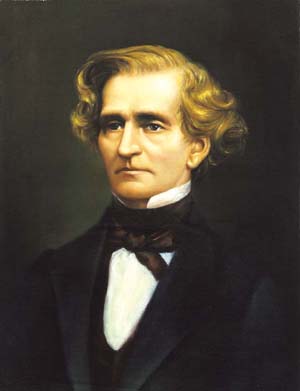 born this week. Berlioz, by far the greatest French composer of the mid-19th century, was born on December 11th of 1803 in the small town of La Côte-Saint-André in southeastern France. It seems strange, but France, artistically splendid, was not well represented in classical music in the first half of the 19th century; not, for example, as were the German-speaking countries. The 18th century was the time of Lully, Charpentier, Couperin and Rameau, the second half of the 19th century was also brimming with talent: from Gounod, Saint-Saëns and Bizet to Massenet and Fauré and then to Debussy and Ravel, well into the 20th century. Between those two groups, though, Berlioz was practically alone. He was unique, idiosyncratic, didn’t follow anybody, and didn’t leave a musical school after himself. All the same, he was a composer of genius. His Symphonie fantastique, composed in 1830, stands out in the originality of structure and musical ideas; the enormous opera, Les Troyens, is rarely performed but is exceptional in its richness. Harold en Italie, formally a symphony with the viola obbligato, is one of the best viola concertos ever composed. And of course, there are more: symphonic pieces, operas, choral works, like the Damnation of Faust, and songs. The Damnation of Faust runs for more than two hours, but here is a snippet: the first scene in which Faust contemplates nature. Kenneth Riegel is the tenor, Sir Georg Solti conducts the Chicago Symphony Orchestra in this 1982 recording.
As much as Berlioz was the greatest French composer of the middle of the 19th century, Olivier Messiaen was, in our opinion, the greatest French composer of the middle of the 20th. Messiaen was born in Avignon on December 10th of 1908. He was admitted to the Paris Conservatory at eleven; among his teachers were Pail Dukas and Charles-Marie Widor, composer and organist. Messiaen loved this instrument. In 1931 he was appointed the organist of Église de la Sainte-Trinité, a church not far from Gare Saint-Lazare, and held this position for the rest of his life. In 1940, at the outbreak of World War II, Messiaen was drafted into the French army as a medical auxiliary (he had poor eyesight). He was captured by the Germans soon after, at Verdun, the site of the terrible battles of the previous world war, and sent to a camp. There he met a violinist, a cellist and a clarinetist. He wrote a trio for them, and eventually incorporated it into the Quartet for the End of Time, creating a part for himself on the piano. It was first performed in January 1941 in the camp for an audience of prisoners and prison guards. We’ll hear two movements from the Quartet: Movement I, Liturgie de cristal (here), and Movement II, Vocalise, pour l'Ange qui annonce la fin du temps (here). It’s performed by a quartet anchored by Daniel Barenboim on the piano.
As for Franck, we love his violin sonata.
Read more...Olivier Messiaen - Vocalise, from Quartet for the End of Time (II)
Luben Yordanoff (Violin)
Albert Tétard (Cello)
Claude Desurmont (Clarinet)
Daniel Barenboim (Piano)
Olivier Messiaen - Crystal liturgy, from Quartet for the End of Time (I)
Luben Yordanoff (Violin)
Albert Tétard (Cello)
Claude Desurmont (Clarinet)
Daniel Barenboim (Piano)
Hector Berlioz - La Damnation de Faust, scene 1
Kenneth Riegel (Tenor)
Chicago Symphony Orchestra (Orchestra)
Georg Solti (Conductor)
Sir John Barbirolli and more, 2024
This Week in Classical Music: December 2, 2024. Barbirolli and more. We’ll start with a notable anniversary: the British conductor, Sir John Barbirolli was born on December 2nd of  1899, 125 years ago. Born in London, Barbirolli was of Italian-French descent. He started as a cellist, playing in small orchestras. During the Great War, he served for two years. Barbirolli started conducting, mostly in opera, in 1927. He also conducted several provincial orchestras, including the Hallé, later his favorite, which he built into a world-class ensemble. In 1936 he was invited to guest-conduct the New York Philharmonic; after one successful season, he was appointed the permanent conductor, in succession to Toscanini. His contract was renewed till 1942. That year, in the middle of WWII, he crossed the Atlantic several times to conduct several London orchestras as a gesture of support for Britain; these were dangerous undertakings considering the number of ships sunk by the German U-boats. In 1943 he returned to England to take charge of the Hallé orchestra in Manchester and stayed at the helm till 1967.
Barbirolli was fond of English music, especially Elgar, Delius and Vaughan Williams (one of his most famous recordings is that of Elgar’s Cello Concerto with Jacqueline du Pré). Later he started conducting Mahler and Bruckner and was quite successful. Here’s the first movement of Bruckner’s Symphony no. 9. Sir John Barbirolli conducts the combined forces of the Hallé Orchestra and the BBC Northern Symphony Orchestra in a live recording from December 14, 1961. And for more enjoyment, here are the second and third movements.
December 2nd is also Maria Callas’s anniversary: she was born on that day in New York in 1923. Last year we celebrated La Divina’s 100th birthday, here.
Several composers have their anniversaries this week. Probably the most famous of them is Jean Sibelius, born on January 8th of 1865. Finland’s national hero, Sibelius was a highly original composer working within traditional musical idiom. He wrote seven symphonies, some more interesting than others, a violin concerto, one of the best ever, and many other pieces. We admit that Sibelius is not one of our favorites, which is probably the reason we never dedicated a full entry to him. Maybe next year.
Several more well-known names: Padre Antonio Soler, a Spanish (Catalan) composer, born on December 3rd of 1729, known for his short, one-movement clavier sonatas; Francesco Geminiani, an Italian composer and violinist, famous in his time and much less so in ours, born in Lucca on December 5th of 1687; Pietro Mascagni, another Italian, who wrote one masterpiece, the opera Cavalleria rusticana but not much else of real value, he was born in Livorno on December 7th of 1863; and Henryk Gorecki whose “sacred minimalist” pieces remain very popular with audiences worldwide. He was born on December 6th of 1933.
Finally, we’d like to mention Ernst Toch, one of the many Jewish composers from Germany and Austria, whose lives and careers were shattered by the Nazis. Toch was born in Leopoldstadt, a Jewish district of Vienna, on December 7th of 1887. You can read about him here and here.
Read more...Anton Bruckner - Symphony no. 9, mov. 3
Hallé Orchestra (Orchestra)
BBC Northern Symphony Orchestra (Orchestra)
John Barbirolli (Conductor)
Anton Bruckner - Symphony no. 9, mov. 2
Hallé Orchestra (Orchestra)
BBC Northern Symphony Orchestra (Orchestra)
John Barbirolli (Conductor)
Anton Bruckner - Symphony No. 9, mov. 1
Hallé Orchestra (Orchestra)
BBC Northern Symphony Orchestra (Orchestra)
John Barbirolli (Conductor)
Ludwig van Beethoven - Sonata no.29 in B flat Major, Op.106, "Hammerklavier," mov. 2
Emil Gilels (Piano)