
Couperin, 2024
This Week in Classical Music: November 4, 2024. Couperin and performers. François Couperin, called “Le Grand” to distinguish him from the lesser but still talented members of his 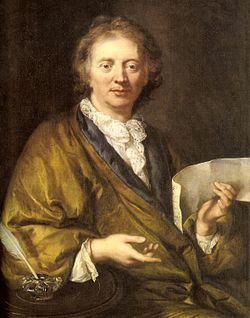 extended musical family, was born in Paris on November 10th of 1668 during the reign of Louis XIV. With Jean-Baptiste Lully and Jean-Philippe Rameau, Couperin was one of the three greatest French composers of the Baroque era and we have written about him on many occasions, for example here. The French culture of the period was in many ways indebted to Italy (and so was its food: Catherine de' Medici, the Italian wife of King Henry II and mother of kings Francis II, Charles IX, and Henry III, taught the French how to cook). Lully, a founding father of French classical music, was Italian by birth and a major influence on all French composers who followed him; Couperin was also influenced by Arcangelo Corelli. This of course in no way dеtracts from Couperin’s great talent and individuality, it is just a historical fact that music in Italy was much more developed than in late-17th century France. Interestingly, this relationship didn’t last long: the French music school continued developing, especially in the 19th and 20th centuries, whereas Italian music languished, except for opera. Couperin freely admitted the influence, pronouncing later in his life that he wanted to create a “union” between French and Italian music.
Couperin was famous as an organist and clavier player and wrote much for both instruments: he published four volumes of harpsichord music containing more than 200 pieces, many with very evocative titles but sometimes so vague that they remain poorly understood. He also published a book of organ music. We, on the other hand, will listen to one of his trio sonatas, which was not just influenced by but dedicated to Corelli. It’s called Le Parnasse ou L'Apothéose de Corelli and consists of seven movements. Each movement has a separate (and long) title, such as Corelli at the foot of Mount Parnassus asks the Muses to welcome him amongst them (movement 1) or Corelli, enchanted by his favorable reception at Mount Parnassus, expresses his joy. He proceeds with his followers (movement 2). It’s performed by the Musica Ad Rhenum (here).
Two pianists were born on November 5th, György Cziffra, whom we recently heard playing Liszt when we celebrated the composer’s birthday, in 1921, and Walter Gieseking, in 1895. A German, Gieseking excelled in playing the music of two French composers, Debussy and Ravel. And yet another musician was born on November 5th: the Hungarian-American violinist Joseph Szigeti, in 1892.
Also born this week: Ivan Moravec, a Czech pianist, on November 9th of 1930. Moravec studied with Arturo Benedetti Michelangeli, traveled widely, even while Czechoslovakia was part of the Soviet bloc, and was known as a supreme interpreter of Chopin.
Read more...François Couperin - Le Parnasse ou L'Apothéose de Corelli
Musica Ad Rhenum (Ensemble)
Meeting Between Works
11/08/2024 19:00, Online Broadcast
8. October, 19:00 (GMT-3) Chile
Leo Brouwer - Homenaje.
Misro Documental - Album Nuevas Musicas de Camara
Anna Leonova. "Lyrical Duett" for Violin and Violoncello
George Crumb.
"Madrigal I" Para Voz, Vibrafono y Contrabajo
Diana Arismendi
"Epiclesis del Espiritu" para Piano y Orquestra
Tomasz Skweres
"Even Horizont" para Ensamble
Anna Leonova - Miniature II for Violoncello solo
Joe Zeitlin (Cello)
Anna Leonova - Miniature I for Violoncello solo
Joe Zeitlin (Cello)
Dittersdorf, 2024
This Week in Classical Music: October 28, 2024. Dittersdorf. Carl Ditters von Dittersdorf, an Austrian with a funny-sounding name, was a serious composer. Born Carl Ditters in Vienna on 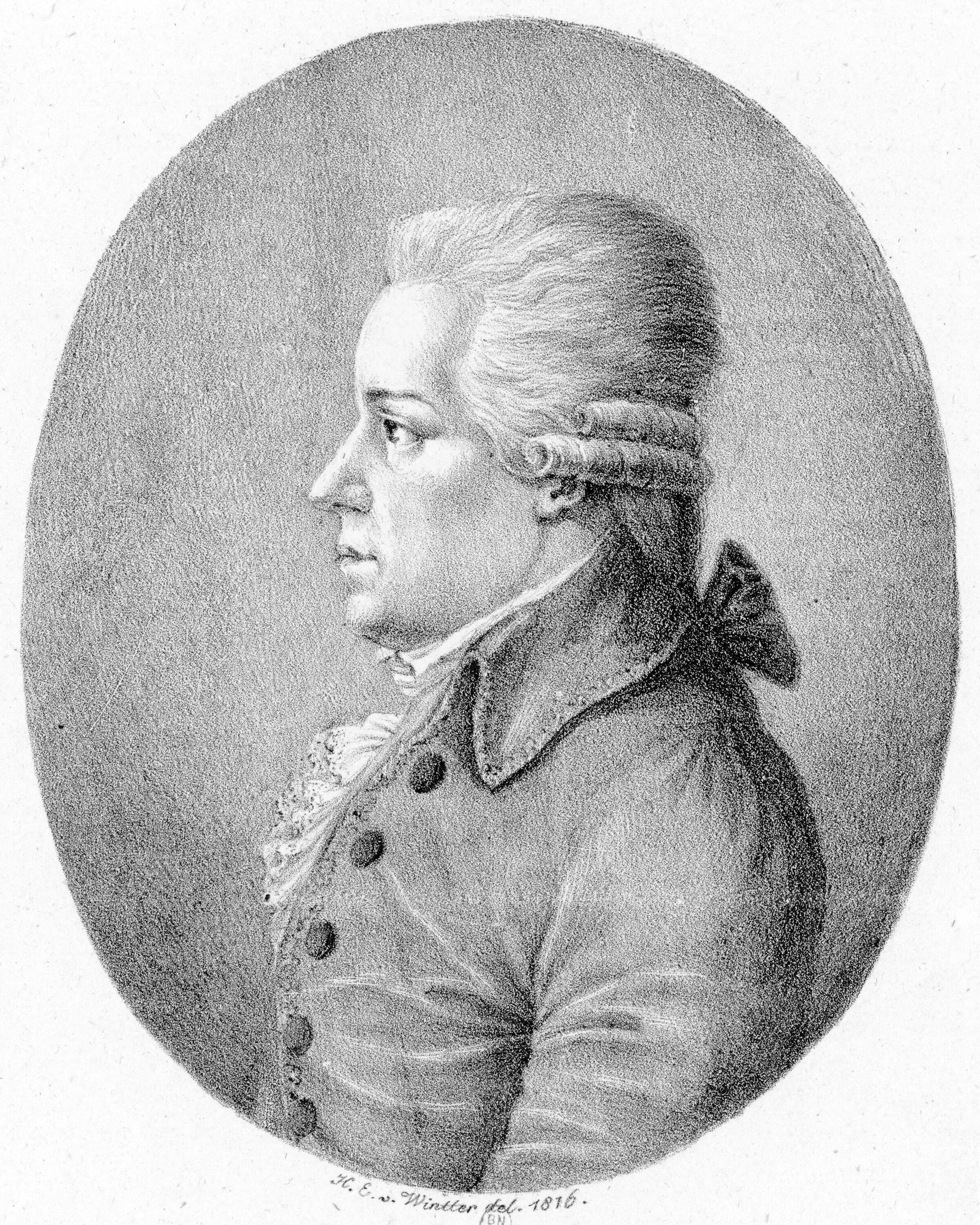 November 2nd of 1739, he acquired the noble title “von Dittersdorf” years later, while serving at the court of the Prince-Bishop of Breslau. His full surname became Ditters von Dittersdorf and since then he has been known as Dittersdorf. As a child, Carl studied the violin, and as a boy of 11, he was recruited to the orchestra of Prince Sachsen-Hildburghausen, one of the best in Vienna. When the prince left Vienna and disbanded his orchestra, Carl found employment with Count Giacomo Durazzo, director of Burgtheater, the imperial court theatre. Ditters played in the Burgtheater orchestra and soloed, often playing his own violin concertos. By that time a recognized virtuoso and composer, he accompanied Christoph Willibald Gluck on a trip to Italy. In 1765 he left the Burgtheater to accept the position of Kapellmeister for the Bishop of Grosswardein, succeeding Michael Haydn, Franz Joseph’s younger brother. He stayed there for four years, composing orchestral music and operas for the court theater.
In 1769, after the bishop got into legal troubles, Ditters found employment with Count Schaffgotsch, Prince-Bishop of Breslau (now Wrocław, Poland, at that time a part of Silesia). The prince lived in exile in the castle of Johannisberg and built a theater next to it. Ditters, for all purposes a Kapellmeister except for the title, was tasked with improving the court orchestra, hiring the singers, and composing operas. During that time (in 1772) Ditters’ employer successfully petitioned Empress Maria-Theresia to have Ditters ennobled; thus, he became “von Dittersdorf.” Through trials and tribulations (in 1778 Austrian politics forced the prince to flee Johannisberg, leaving the composer to administer part of his estate), Dittersdorf continued to manage the orchestra and compose. While Schaffgotsch was out of the picture, Dittersdorf offered some of his operas to Prince Esterházy, Haydn’s employer.
With the prince temporarily gone and musical life in Johannisberg in decline, Dittersdorf spent much of his time in Vienna. His oratorio Giob, the twelve symphonies, and the opera Der Apotheker und der Doktor (here is the Overture and the first scene) were all well received. In 1785, while in Vienna, he played a quartet with Franz Joseph Haydn, Mozart, and his pupil, Johann Baptist Wanhal (Dittersdorf played the first violin, Haydn the second violin, while Mozart played the viola). Dittersdorf returned to Johannisberg in 1787, but musical life there was in shambles. Dittersdorf attempted to find a position with Friedrich Wilhelm II of Prussia, who liked his music, but an offer never came. He was formerly dismissed from Johannisberg in 1785. By the end of his life, Dittersdorf, penniless and suffering from gout, continued to compose; some of his best work was written during those years. He died in 1779 in the castle of one of his patrons.
Dittersdorf was a prolific composer of concertos, operas, symphonies, oratorios and chamber music. Some of his concertos were written for unusual instruments: for example, there are four (!) concertos for the double bass. Let’s listen to one of them, Concerto no. 2 for Double Bass and orchestra. Ödön Rácz is the soloist, he plays with the Franz Liszt Chamber Orchestra.
Read more...Carl Ditters von Dittersdorf - Concerto No.2 in E major for Double Bass and Orchestra
Ödön Rácz (Double Bass)
Franz Liszt Chamber Orchestra (Orchestra)
Carl Ditters von Dittersdorf - Doktor und Apotheker, Overture, Scene 1
Staatsorchester Rheinische Philharmonie (Orchestra)
James Lockhart (Conductor)
Peter Lieberson and corrections, 20204
This Week in Classical Music: October 21, 2024. Lieberson and corrections. Last week our calendar got very much confused: we celebrated Franz Liszt, though his birthday, October 22nd, 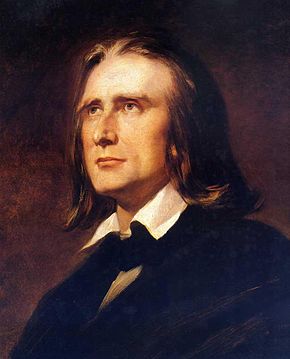 happens this week. There’s nothing wrong with celebrating Liszt early and often, so we’ll do it this week by playing one of his greatest compositions, the B minor Sonata. It’s a magnificent, grand Romantic piece, extremely popular in the early to mid-20th century when it was considered central to any virtuoso’s repertoire; it’s not played as often these days and its importance, so obvious before, is not as apparent. A one-movement piece, it is technically difficult and complex in structure. Liszt completed it in 1853 (the first sketches were written in 1842); it was premiered not by Liszt but Hans von Bülow, his student, in 1857. The sonata is dedicated to Robert Schumann, in return for Schumann dedicating his Fantasy in C major to Liszt some years earlier (Schumann died in 1856, between the Sonata’s completion and its premier). There are scores of excellent performances of the Sonata, so it’s nearly impossible to select the “best” one. Some recordings are more popular than others, for example, Krystian Zimerman’s from 1990 (and it’s indeed very good). And so are the recordings by Martha Argerich, Yuja Wang and Marc-André Hamelin. We’ll play an older recording, made live by the great pianist Sviatoslav Richter. He played it at the Aldeburgh Festival on June 21st of 1966 in the Aldeburgh parish church. We think it’s a profound performance.
The American composer Peter Lieberson was born on October 26th of 1946 in New York. He studied composition with Milton Babbitt and Charles Wuorinen, some of the most “modernist” of American composers but his own music is much more tuneful. Lieberson wrote several concertos (three for the piano, one each for the horn, viola, and cello), an opera, and many chamber pieces, but he’s best remembered for his two song cycles, Rilke Songs for mezzo-soprano and piano, composed in 2001 and, from 2005, Neruda Songs for mezzo and orchestra. Both cycles were written for his wife, the wonderful mezzo Loraine Hunt Lieberson. Here, from the Rilke cycle, O ihr Zärtlichen (Oh you, tender ones). Loraine Hunt Lieberson is accompanied by Peter Serkin. And here is another song from the same cycle, Atmen, du unsichtbares Gedicht! (Breathe, you invisible poem!). It’s performed by the same artists.
Loraine Hunt Lieberson died from breast cancer in 2006 at the age of 52. Shortly after her death, Peter Lieberson was diagnosed with lymphoma. He continued to compose till the end of his life. Peter Lieberson died on April 23rd of 2011.
Read more... « first ‹ previous … 25 26 27 28 29 30 31 32 33 … next › last »
Johannes Brahms - Violin Concerto in D major, Op. 77, mov. 1
Leonid Kogan (Violin)
The Philharmonia Orchestra (Orchestra)
Kirill Kondrashin (Conductor)