
Peter Lieberson - Rilke Songs: no. 1, O ihr Zärtlichen
Lorraine Hunt Lieberson (Mezzo-soprano)
Peter Serkin (Piano)
Franz Liszt - Sonata in b minor
Sviatoslav Richter (Piano)
Liszt and more, 2024
This Week in Classical Music: October 14, 2024. Liszt and much more. Even though this week overflows with talent, we’ll be brief. First and foremost, Franz Liszt was born on October  22nd of 1811 in Doborján, a small village in the Kingdom of Hungary, then part of the Austro-Hungarian Empire. Now it’s a town called Raiding which lies in Austria. Liszt is considered Hungary’s national composer, though he never spoke Hungarian. His first language was German, he moved to Paris at the age of 12 and preferred to speak French for the rest of his life. But Hungarians have lived in Doborján for centuries, and Liszt was exposed to Hungarian music as a child. Even though Liszt was a thoroughly German composer heavily involved in German musical life, he used Hungarian (and Gipsy) tunes in many compositions, starting with many versions of Rákóczi-Marsch, the Hungarian national anthem at the time, to Hungarian Rhapsodies, nineteen of them for the piano, of which he later orchestrated six (or eight, but there are doubts about two of the orchestrations), to the symphonic poem Hungaria, and other pieces. Here is Liszt’s Hungarian Rhapsody no. 1, performed by Gyrgy (Georges) Cziffra, the great Hungarian pianist of Romani descent. The recording, later remastered, was originally made in 1957.
Alexander von Zemlinsky, a very interesting Austrian composer whose music is rarely performed these days, was born on October 14th of 1871 in Vienna. Zemlinsky was central to the musical life of Vienna at the end of the 19th – early 20th century. He knew “everybody,” from Brahms and Mahler to Schoenberg; you can read more in one of our earlier posts here.
Luca Marenzio, an Italian composer of the Renaissance famous for his madrigals, was born in Northern Italy on October 18th, 1553. A century and a quarter later, on October 16th of 1679, the Czech composer Jan Dismas Zelenka was born near Prague. From 1709 to 1716 he worked in Dresden, first for Baron von Hartig and then for the royal court. He then moved to Vienna, later returning to the Dresden court. Zelenka knew Johann Sebastian Bach, who highly valued his music. Here are Lamentations for Maundy Thursday, from Zelenka’s The Lamentations of Jeremiah the Prophet. Jana Semerádová conducts Collegium Marianum.
A quarter of a century later, on October 18th of 1706, Baldassare Galuppi, was born on the island of Burano, next to Venice. He authored many operas, both comical, written to librettos of the playwright Carlo Goldoni, and “serious” (seria), often collaborating with Metastasio, one of the most famous librettists of the 18th century.
Finally, two Americans: Charles Ives, the most original American composer of the early 20th century, on October 20th of 1874, and Ned Rorem, on October 23rd of 1923. Ives’s 150th anniversary calls for a separate entry and we’ll do it soon.
Read more...Jan Dismas Zelenka - Lamentations for Maundy Thursday, from The Lamentations of Jeremiah the Prophet
Collegium Marianum (Ensemble)
Jana Semerádová (Conductor)
Franz Liszt - Hungarian Rhapsody no. 1
György Cziffra (Piano)
Heinrich Schütz, 2024
This Week in Classical Music: October 7, 2024. Schütz and more. Heinrich Schutz, the greatest German Renaissance predecessor of Johann Sebastian Bach, was born on October 8th of 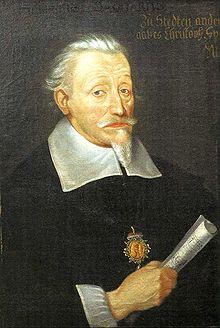 1585 in Bad Köstritz, Thuringia. When Heinrich was five, his family moved to Weissenfels, where his father inherited an inn and became a mayor. Heinrich demonstrated musical talent from a very early age. In 1598, Maurice, the landgrave of Hesse-Kasse, a tiny principality then part of the Holy Roman Empire, stayed overnight in the family inn and heard Heinrich sing. Maurice, himself a musician and composer, was so impressed that he invited Heinrich to his court to study music and further his education (while at the court, Heinrich learned several languages, including Latin, Greek and French). Heinrich sang as a choir boy till his voice broke and then went to study law at Marburg. In 1609 he traveled to Venice to study music with Giovanni Gabrieli. Even though Gabrieli was 28 years older than Schütz, they became close friends (Gabrieli left him one of his rings when he died). The master died in 1612 and Schütz returned to Kassel. In 1614 the Elector of Saxony asked Schütz to come to Dresden. The famous Michael Praetorius was nominally in charge of music-making at the court but he had other responsibilities, so the elector was interested in Schütz’s service. Schütz moved to Dresden permanently in 1615. In 1619 he received the title of Hofkapellmeister. Soon after he published his first major work, Psalmen Davids (Psalms of David), a collection of 26 settings of psalms influenced, as one can hear, by Gabrieli. Here’s Psalm 128, “Wohl dem, der den Herren fürchte.” Cantus Cölln and Concerto Palatino are conducted by Konrad Junghänel.
Schütz lived in Dresden for the rest of his life, making periodic extended trips: in 1628 he went to Venice where he met Claudio Monteverdi who became a big influence. He also made several trips to Copenhagen, composing for the royal court. Schütz lived a long life: he died on November 6th of 1672 at the age of 87. Schütz composed mostly sacred choral music, although in 1627 he wrote what is considered the first German opera, Dafne. Even though the libretto survived, the score was lost years ago. Here’s one of Schütz’s Kleine Geistliche Konzerte (Little Sacred Concertos), composed in 1636. It’s called Bone Jesu Verbum Patris (Good Jesus, word of the Father). Tölzer Knabenchors is conducted by Gerhard Schmidt-Gaden.
Also this week: Giulio Caccini, a very important, if mostly forgotten Italian composer of the transitional period between the Renaissance and the Baroque, was born on October 8th of 1551, probably in Rome. A very popular “Ave Maria,” attributed to Caccini, was written by Vladimir Vavilov, a Russian guitarist, lutenist, composer and musical prankster who published several compositions ascribing them to composes of different eras. In 1970 Melodia issued an LP, “The Lute Music of the 16th and 17th Centuries” performed by Vavilov. Eight out of ten pieces were composed by him rather than composers indicated on the sleeve. Francesco da Milano, a lutenist and composer of the early 16th century, was Vavilov’s “favorite”: he composed six pieces, including a widely performed “Canzona,” and attributed all of them to the Italian.
Read more...Heinrich Schütz - Bone Jesu Verbum Patris
Tölzer Knabenchors (Ensemble)
Gerhard Schmidt-Gaden (Conductor)
Three Pianists, 2024
This Week in Classical Music: September 30, 2024. The Pianists. Last week we complained that there were too many composers of note; this time the situation is reversed: only Paul Dukas of The Sorcerer's Apprentice fame has a birthday in the next seven days. One of the few French Jewish composers, he was born on October 1st of 1865 in Paris. (And our apologies to the fans of Sir Charles Villiers Stanford, we know you are there).
The pianists are faring much better. Vladimir Horowitz was born on October 1st of 1903 in Kiev, the Russian Empire (now Kyiv, Ukraine) into a well-off Jewish family. At nine, Horowitz entered the Kiev Conservatory where he studied with Felix Blumenfeld, among others. He made his solo debut in 1920; around that time, he met the violinist Nathan Milstein, who was the same age and showed great talent. They played together in concerts (Vladimir’s sister Regina was Milstein’s accompanist). Both Horowitz and Milstein left Russia in 1925; Vladimir went first to Berlin and then to the US. His debut, on January 12th of 1928, when he played Tchaikovsky’s First piano concerto faster than the conductor Thomas Beecham would have it and dazzled the public with his technique, became legendary. That was the beginning of one of the most brilliant pianistic careers of the 20th century, even though Horowitz interrupted it four times, first from 1936 to 1938, then from 1953 to 1965, his longest absence from the concert stage, and again in 1969–74 and 1983–85. Altogether, he was away from the public for a long 21 years. That didn’t prevent him from becoming both a celebrity and one of the most interesting pianists of the century.
Horowitz was known to make small alterations to the score. One example is Mussorgsky’s Pictures at an Exhibition: Horowitz felt that the composer, who wasn’t a pianist, didn’t use the instrument to its fullest extent. He added double octaves to some of Chopin’s pieces. But the real surprise was Rachmaninov’s Second Piano Sonata. Nobody would accuse Rachmaninov, one of the greatest pianists of the 20th century, of not knowing how to use the instrument. The sonata had two versions by then, the original, from 1930, and a reworking made in 1931. In 1940, Horowitz suggested some changes and Rachmaninov, who was in awe of Horowitz the pianist, consented to the alteration. Here it is, in Horowitz’s version, performed live in 1968 in Carnegie Hall. Horowitz always performed on his own Steinways, especially voiced by the maker. You can hear how, at around 12:25, in the middle of the second movement, a string breaks – on his own piano. After playing several more bars, Horowitz pauses (to applause) and waits for the technician to come on stage and remove the string. He then continues. Very often live recordings, despite some missed notes, are more exciting than ones made in a studio. This time the excitement reached a whole new level.
Vera Gornostayeva, a highly regarded Soviet/Russian pianist and pedagogue was born on October 1st of 1929 in Moscow. Alexander Slobodyanik, Pavel Egorov, Eteri Andjaparidze, Ivo Pogorelich, Sergei Babayan, Vassily Primakov, Lukas Geniušas, Vadym Kholodenko, Stanislav Khristenko, and others were her students.
Finally, Edwin Fischer, the Swiss pianist considered one of the greatest interpreters of Bach, was born in Basel on October 6th of 1886.
Read more...Dmitry Shostakovich - Symphony No. 10
Royal Liverpool Philharmonic (Orchestra)
Vasily Petrenko (Conductor)
Peter Lieberson - Rilke Songs: no. 2, Atmen, du unsichtbares Gedicht!
Loraine Hunt Lieberson (Mezzo-soprano)
Peter Serkin (Piano)