
Performers and Conductors, 2024
This Week in Classical Music: August 26, 2024. Performers and Conductors. Few composers were born this week; we’ll name two: Rebecca Clarke, a British composer and violist, born on 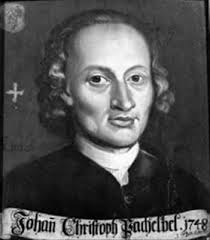 August 27th of 1886, in Harrow, and Johan Pachelbel, the German composer, famous for his Cannon in D, but in reality, a prolific composer, whose Hexachordum Apollinis, a collection of keyboard music, deserves to be known better. He was born on September 1st of 1653 in Nuremberg.
If we turn to the performers and interpreters – instrumentalists, singers, and conductors – those are aplenty. Itzhak Perlman was born on August 31st of 1945 in Tel Aviv. Perlman is deservedly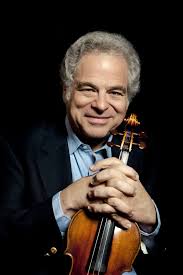 famous: from about the mid-1960s to the mid-1990s he was one of the greatest violinists to perform actively; he then narrowed his classical repertoire and branched out into klezmer and jazz, while also teaching and conducting. Some criticize his playing as too romantic, but we think that’s unfair: Perlman made hundreds of recordings, many excellent, some phenomenal. His Beethoven’s piano and violin sonatas and Brahm’s violin sonatas with Vladimir Ashkenazy are of the highest order. Here, for example, is the recording of Brahm’s Violin Sonata no. 1 made by Perlman and Ashkenazy in 1983.
Three conductors were born this week, two Germans and one Hungarian who worked mostly in Germany. The native Germans are Wolfgang Sawallisch and Karl Böhm; the Hungarian is István Kertész. We’ve written about Böhm, one of the most important conductors of the 20th century but a deeply flawed personality, more than once, for example, here. Both Sawallisch and Kertész were born in the 1920s: Sawallisch in 1923, in Munich on August 26th, Kertész in 1929, in Budapest, on August 28th. Sawallisch took piano lessons as a child and continued his musical education at the Musikhochschule in Munich. As a young man, he fought in the German army during WWII and was captured by the British in Italy at the tail-end of it. At the age of 30 he conducted the Berlin Philharmonic, and at 34 became the youngest conductor to appear at Bayreuth, where he led the performance of Tristan und Isolde. In 1960, he became the principal conductor of the Vienna Symphony (not to be confused with the much more famous Vienna Philharmonic). For 20 years he was the music director of the Bavarian State Opera where he conducted 32 complete cycles of Wagner’s Der Ring des Nibelungen. From 1993 to 2003 he was the music director of the Philadelphia Orchestra. He died in 2013, months shy of his 90th birthday.
István Kertész’s life was much shorter, he was only 43 when he drowned while swimming in the Mediterranean in Herzliya, a town next to Tel Aviv, in 1973. Kertész was Jewish, as were so many other Hungarian conductors: Fritz Reiner, Antal Doráti, Eugene Ormandy (born Jenő Blau), George Szell, Ferenc Fricsay (only his mother was Jewish but that was enough to be prosecuted in anti-Semitic Hungary), and Georg Solti. In 1944 most of Kertész’s relatives were deported to Auschwitz and killed there. Kertész survived, went to study at the Ferenc Liszt Academy when the war was over, and had some conducting assignments after graduation. He and his family left Hungary after the 1956 Uprising and settled in Germany. From 1958 to 1963 he was the music director of the Augsburg Opera, where he conducted a wide repertoire. At the same time, he guest-conducted many major European and American orchestras. In 1964, he assumed the same position with the Cologne Opera and also became the principal conductor of the London Symphony Orchestra. István Kertész had an unusually broad repertoire, both in opera and orchestral music. He conducted many major orchestras and was the first choice of the Cleveland musicians to replace the departing Geroge Szell (instead, Lorin Maazel was hired by the board).
Richard Tucker, a wonderful American tenor (also Jewish – we seem to have a Jewish theme today) was born on August 28th of 1913 in Brooklyn, NY. We’ll get back to him another time.
Read more...Johannes Brahms - Sonata No. 1 for Violin and Piano, Op. 78 in G Major
Itzhak Perlman (Violin)
Vladimir Ashkenazy (Piano)
Johann Sebastian Bach - Little Fugue in G Minor, BWV 578 (Piano Version)
Gulan (aka Andrei Gulaikin) (Synthesizer)
Sergei Rachmaninov - Piano Concerto No. 2, Op. 18: I. Moderato
Gulan (aka Andrei Gulaikin) (Synthesizer)
Peri, Debussy 2024
This Week in Classical Music: August 19, 2024. Peri, Bernstein. Jacopo Peri, an Italian composer of the transitional period between the Renaissance and Baroque and author of the very 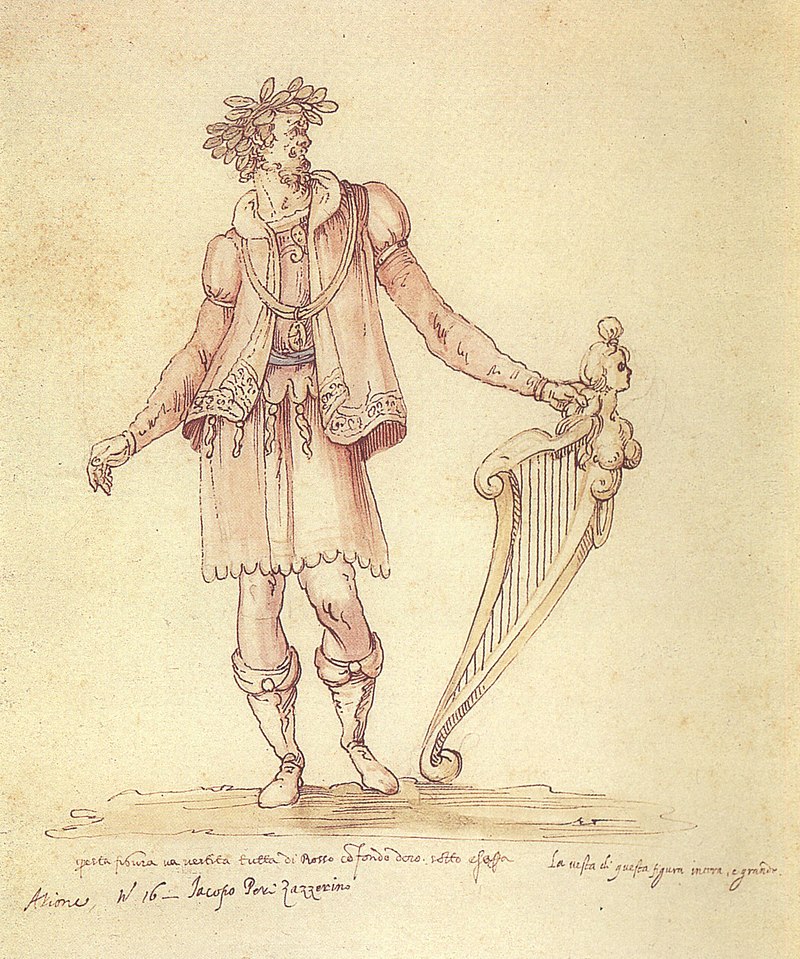 first opera, Dafne, was born on August 20th of 1561. Last year we got involved with Peri, his contemporary Emilio de’ Cavalieri, and the process of transitioning from one, deeply established musical style to a very different one, a style that may be considered a “lesser” one, at least in its initial phase. We still find this process and the personalities involved very interesting. You may want to read about Peri and the period here, here, and here.
Claude Debussy, one of the most influential composers of his time, was born in St. Germain-en-Laye on August 22nd of 1862. And when we say, “of his time,” we’re talking about one of the most fecund periods of classical music, the period from 1894, when Debussy composed Prélude à l'après-midi d'un faune, till his death in 1918 at the age of 55. Just for reference, let’s take a look at who else was active during the period. Here’s what we see: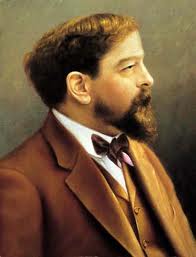 Gustav Mahler, who, by the way, conducted the Prélude in New York in 1910, his whole output falls within this period; Sergei Rachmaninov, whose piano concertos no. 2 and no. 2?? were written in the first decade of the 20th century; much of Alexander Scriabin’s late works; Richard Strauss’s most important tone poems and operas such as Salome and Der Rosenkavalier, all fall within the period. Composers as different as Arnold Schoenberg, Ottorino Respighi, Manuel de Falla, and of course, Debussy’s younger contemporary and friend Maurice Ravel were all extremely productive during the same period. And still, Debussy’s star shines brightly. While his piano and orchestral works are probably among his most popular, he worked in many genres. Pelléas et Mélisande, premiered in 1902, is one of the most important operas of the 20th century. His chamber music is brilliant; he also wrote wonderful songs. We have quite a bit of Debussy’s music in our library, you may take a look here. A note on labeling: Debussy created a musical style, at some point called “Impressionism,” the label stuck; he hated the term, and so did Ravel, another “impressionist.”
It's said that Debussy influenced all composers of the 20th century except for Schoenberg. That is an exaggeration, but Debussy did influence many composers, from Stravinsky to Les Six and on. One composer also born this week who clearly wasn’t is Karlheinz Stockhausen. Some years ago we wrote: “In our library, we have three recordings of Karlheinz Stockhausen. Two of them are rated “one note,” the lowest rating that could be given. Considering that one piece is played by the pianist Pierre-Laurent Aimard, we can safely assume that it’s not the performance that our listeners disliked but the pieces themselves. Stockhausen […] is considered one of the seminal composers of the second half of the 20th century. While we acknowledge the disapproval of some listeners, we think that his music is worth the effort, even if in small doses, and will continue bringing him up on occasion.” Since then, we added just one piece by Stockhausen, a composition called Kreuzspiel. It didn’t get rated, maybe nobody wanted to listen to it. The one-note ratings on older recordings still stand.
The great Leonard Bernstein was born on August 25th of 1918. Also, Lili Boulanger, whose life was tragically short, was born on August 21st of 1893; the Romanian composer and violinist George Enescu, born on August 19th of 1881; and a very interesting Austrian (and later American) composer Ernst Krenek, he was born on August 23rd of 1900.
Read more...Marco Misciagna - Malagueña - Caprice Flamenco for solo viola
Marco Misciagna (Viola)
Johann Sebastian Bach - Prelude in C Minor, BWV 999 (Arr. by Gulan)
Gulan (aka Andrei Gulaikin) (Synthesizer)
Through the Centuries, August 2024
This Week in Classical Music: August 12, 2024. Through the Centuries. This week covers four centuries of music: the oldest one, Heinrich Ignaz Biber, was born in 1644, and the most 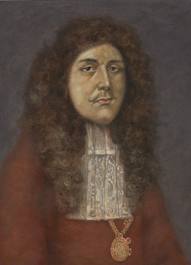 recent, Lucas Foss, in 1922 (he died in the 21st century, in 2009). There were too many in between, but we’ll mention some. Let’s start with Biber, a Bohemian-Austrian composer born on August 12th of 1644 in Wartenberg, Bohemia, then part of the Hapsburg Empire, now Stráž pod Ralskem in the Czech Republic. A highly reputable violinist, he was employed in courts of Graz, Olmütz (now Olomouc), Kremsier (now Kroměříž), and eventually, by the Archbishop of Salzburg, where one hundred years later Mozart would also be employed. Biber stayed in Salzburg for the rest of his life, eventually becoming the Kapellmeister. The finest or at least the most famous music composed by Biber was collected in his Mystery (sometimes called Rosary) Sonatas, in German Rosenkranzsonaten,15 short sonatas for the violin and continuo. Here’s the 3rd of the sonatas, The Nativity. Franzjosef Maier plays a Baroque violin; he’s accompanied by the organ, cello and theorbo, all of the Baroque era.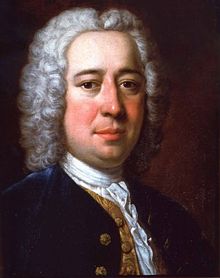
Two more composers were born in the 17th century this week: Nicola Porpora, in 1686, and Maurice Greene, in 1696. Porpora, born in Naples on August 17th of 1686, was one of the most important opera composers of the era, first challenging Alessandro Scarlatti in Naples, and then becoming Handel’s competitor in London. He was also a famous music teacher: his pupils included the castrati Farinelli and Caffarelli, and also Haydn. Porpora composed more than 50 operas, plus oratorios, cantatas and instrumental music. Here’s the aria In Amoroso Petto from Porpora’s opera Arianna In Nasso. Simone Kermes is the soprano, Vivica Genaux – the mezzo. Cappella Gabetta is conducted by Andrés Gabetta.
Maurice Green, born in London on August 12th of 1696 was an English composer known for his “anthems,” short sacred choral works. Lord, Let Me Know Mine End (here) is his most famous composition.
If three composers were born in the 17th century, only one comes from the 18th: Antonio Salieri, famous for all the wrong reasons. Three Frenchmen were born in the 19th century, Benjamin Godard, on August 18th of 1849, Gabriel Pierné, on August 16th of 1863, in Metz, and at the end of the century, on August 15th of 1890, Jacques Ibert. Of the three, Ibert seems to us to be the most interesting. The 20th century gave us only one composer, Lucas Foss. Foss was born in Berlin on August 15th of 1922 into a Jewish family (Benjamin Godard was also Jewish). Foss’s family left for Paris as soon as the Nazis came to power, and in 1937 they moved to the US. Foss was a prodigy, a talented composer, a lifelong friend of Leonard Bernstein, a teacher, music director and much more. We’ll write about him in detail next year.
Read more...
Nicola Porpora - In Amoroso Petto, from Arianna In Nasso
Simone Kermes (Soprano)
Vivica Genaux (Mezzo-soprano)
Cappella Gabetta (Ensemble)
Andrés Gabetta (Conductor)
Anton Bruckner - Symphony No. 0 in D minor, Mov 1 and 2
Concertgebouw Orchestra (Orchestra)
Bernard Haitink (Conductor)