
Mahler, Eisler, 2024
This Week in Classical Music: July 8, 2024. Mahler, Eisler. Last week, we wanted to write about Hanns Eisler who was born on July 7th but were sidelined by the 100th anniversary of the 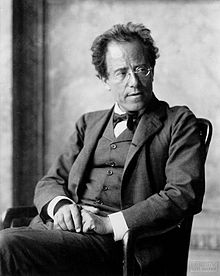 great cellist János Starker. July 7th was also the anniversary of Gustav Mahler, and we couldn’t miss it. Mahler was born in 1860; his last completed symphony, no. 9, was written between 1908 and 1909 (he died in 1911, at age 50). The last (fourth), movement of the symphony, Adagio, is one of the greatest pieces of music ever written, bar none. The movement preceding it, Rondo-Burleske, is denoted by Mahler as Allegro assai (Very cheerful) and Sehr trotzig (Very defiant). It’s complex, contrapuntal, and borderline insane, and not cheerful at all. It’s difficult for a conductor to interpret and for an orchestra to play. At the same time, if well done, it leads perfectly into the deathly serenity of the last movement. Here is Claudio Abbado with the Lucerne Festival Orchestra in a live 2010 performance. You can compare it with the interpretation by Pierre Boulez and Chicago, here.
Now back to Hanns Eisler. Eisler was born in Leipzig, Germany, on July 7th of 1898; his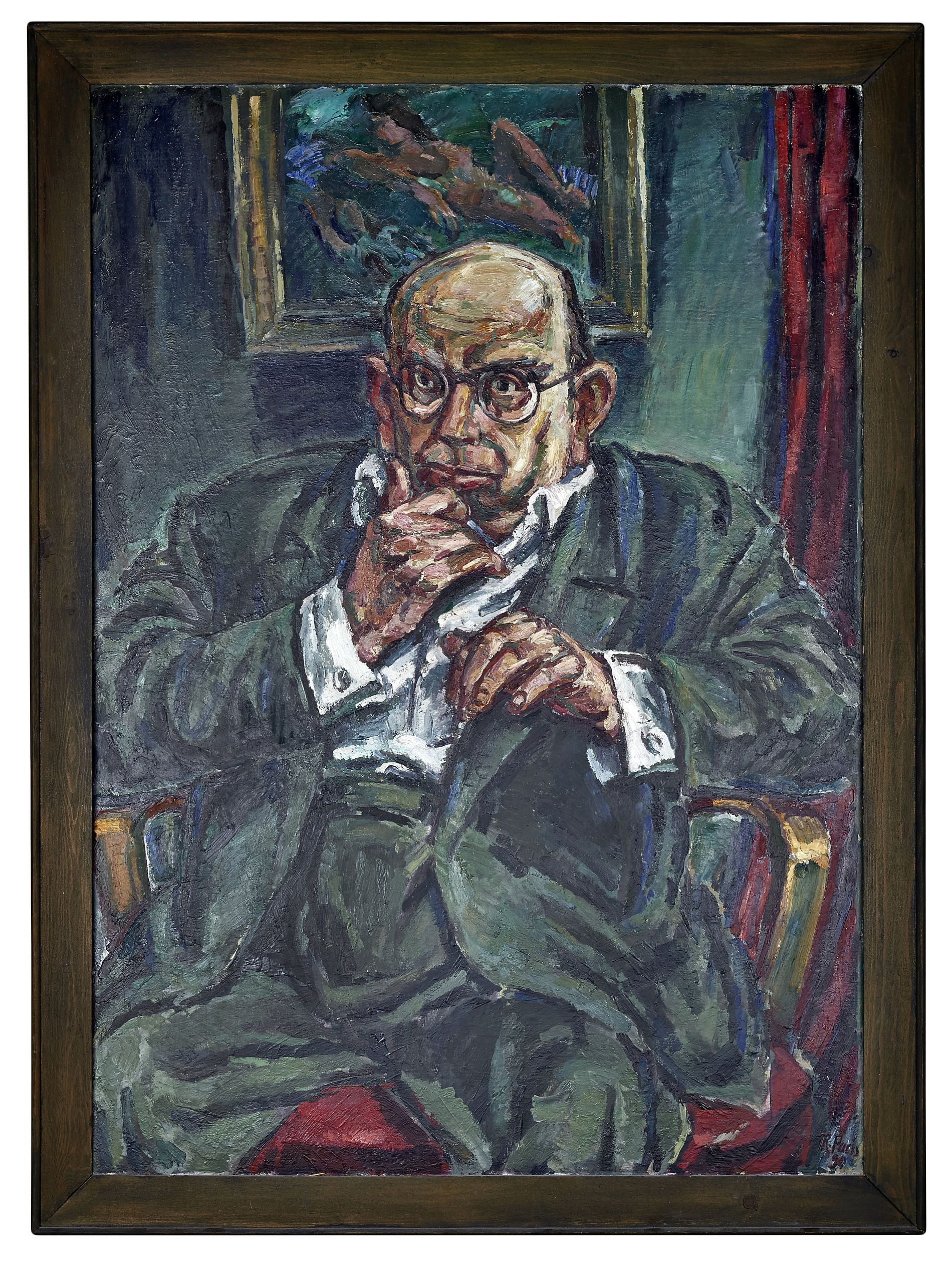 father was Jewish, his mother Lutheran. The family was very political: Hanns’s brother was a prominent communist journalist, while his sister, Elfriede Eisler-Fischer, was a co-founder of the Austrian Communist party. In 1901 the family moved to Vienna. Hanns himself became active in politics at the age of 14, joining a Socialist youth group. During the Great War, Eisler served in the Austrian army. As a boy, he studied the piano on and off and composed some music (he did it even during the war). In 1918 the war was lost, the Austro-Hungarian empire disappeared; Eisler returned to the impoverished Vienna, now the capital of a tiny Austria, looking to continue his musical studies. He was accepted by Arnold Schoenberg, who taught him composition free of charge (Anton Webern sometimes was the substitute teacher). Inculcated in atonality and serialism, Eisler wrote several pieces that sounded very much like his teacher’s, especially the ones written for voice. Here, for example, is Palmström for Voice, Flute, Clarinet, Violin, Viola and Cello, which Schoenberg asked Eisler to write for a performance that also featured Pierrot lunaire (Junko Ohtsu- Bormann is the soprano). Eisler’s piano pieces of the period were light and fresh, as, for example, is the short Andante con moto, op. 3, no.1 (Siegfried Stöckigt is the pianist).
Parallel to being involved with music, Eisler continued to be actively engaged in politics, and that, in turn, strongly affected his composition style. Eisler became a devoted Marxist and joined several radical leftist organizations, first in Austria and then, after moving to Germany in 1925, in Berlin where he applied for membership in the German Communist Party. He became disaffected with the “bourgeois” 12-tonal music and quarreled with Schoenberg who could not accept his student’s political views. Affected by ideology, Eisler switched to composing marches and solidarity songs, including Kominternlied, the unofficial hymn of the Comintern, the Soviet Union-led Communist International. Many of his songs became very popular with the European Left. They contained fighting words, and we should remember that that was the time when the Communists were literally fighting the Nazis on the streets of Germany.
In 1930 Eisler met the playwright Bertolt Brecht, one of the stars of the Left. They became lifelong friends and their cooperation led to several influential theatrical productions. We’ll finish the story of Hans Eisler during the Nazi period, his emigration and, later, his unexpected return to Germany, next week.
Read more...Hanns Eisler - Piano Pieces, Op. 3, I. Andante con moto
Siegfried Stöckigt (Piano)
Hanns Eisler - Palmström
Junko Ohtsu-Bormann (Soprano)
Orchester-Akademie Berlin (Ensemble)
Gustav Mahler - Symphony no. 9, mov. 3, Rondo-Burleske
Lucerne Festival Orchestra (Orchestra)
Pierre Boulez (Conductor)
Sergei Rachmaninov - Piano Concerto No. 2, Op. 18: II. Adagio sostenuto
Gulan (aka Andrei Gulaikin) (Synthesizer)
Janos Starker 100
This Week in Classical Music: July 1, 2024. Sarker and more. We will celebrate János Starker’s 100th birthday on July 5th. One of the greatest cellists of the 20th century, Starker was 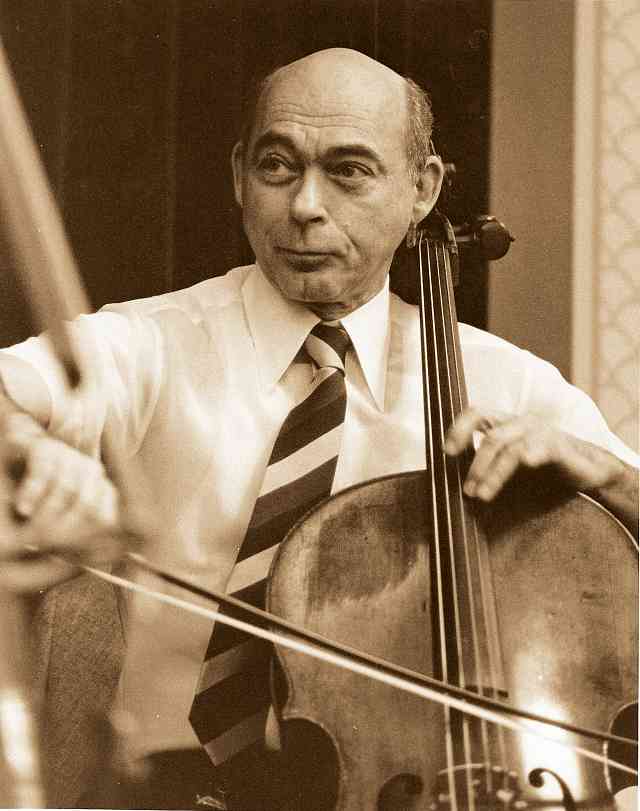 born in Budapest in 1924 into a Jewish family. Starker, a child prodigy, entered the Budapest Academy at the age of seven and gave his first solo performance at 11. His teachers at the Academy were Leo Weiner, Zoltán Kodály, Béla Bartók and Ernő (Ernst von) Dohnányi – the pre-war Budapest Academy was a great music institution. Starker left the Academy in 1939, the year WWII started; he spent the wartime in Budapest and survived (the majority of the Budapest Jews were sent to Auschwitz in the last months of the war and perished there; two of his older brothers were murdered by the Nazis). After the war, with Budapest occupied by the Soviets, Starker joined the Budapest Philharmonic Orchestra as Principal Cello. In 1946 he left Hungary, going to Paris first and two years later to the US. He became the principal cellist of the Dallas Symphony Orchestra whose music director was a fellow Hungarian Jewish conductor Antal Doráti. From 1949 to 1953 Starker was the principal cello of the Metropolitan Opera Orchestra, then under the direction of Fritz Reiner, another Jewish musician from Budapest. From 1953 to 1958 he occupied the same position at the Chicago Symphony, which at that time was also led by Reiner. In 1958 Starker was appointed professor of cello at Indiana University, Bloomington; he remained there for the rest of his life. He toured widely and made many recordings.
Starker recorded the complete set of Bach’s cello suites five times, the first recording made in 1950-52, the last – in 1997; that one won a Grammy. Here’s Johann Sebastian Bach’s Suite no. 5 in c minor. János Starker recorded it in New York on April 15th and 15th of 1963. There are many wonderful performances of this piece, we think this is one of the very best.
Starker died in Bloomington, Indiana, on April 28th of 2013.
We’d also like to mention several other names. Hans Werner Henze, an influential and prolific German composer, was born in Dresden on July 1st of 1926. And more than two centuries earlier, on July 2nd of 1714, another German, the great Christoph Willibald Gluck was born in the village of Erasbach, now part of Berching, a town in Bavaria.
We wanted to write about Hanns Eisler but Starker’s 100th anniversary intervened. Eisler, a composer of considerable talent, strong political opinions and an unusual life, was born on July 6th of 1898. We’ll write about him next week.
Read more...Johann Sebastian Bach - Cello Suite No. 5 In C Minor
János Starker (Cello)
Johann Sebastian Bach - Adagio in C Major, BWV 564 (Arr. for Orchestra)
Gulan (aka Andrei Gulaikin) (Synthesizer)
Marcello, Moffi, 2024
This Week in Classical Music: June 17, 2024. Benedetto Marcello. Benedetto Marcello, born on June 24th of 1686, was an unusual composer: a Venetian patrician, he was an amateur 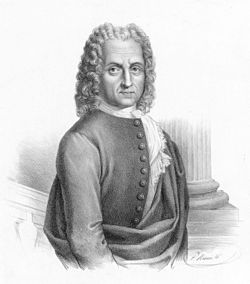 musician. His father wanted Benedetto to become a lawyer, which he did, and was so successful in this profession that at the age of 20, he was admitted to the Great Council of Venice, and five years later elected to the Council of Forty, Venice’s Supreme Court. In 1730 he was sent to Pula in Istria, then part of the Venetian Republic and now in Croatia, to serve as Governor (it could’ve been an exile, but we don’t know). He stayed in Pula for eight years and then retired to Brescia as a papal chamberlain. He died there of tuberculosis in 1739. While a successful public servant (and also a poet), Marcello’s real love was music. He took some lessons in his youth but never had formal musical training. He probably started composing around 1710: as he was never associated with any musical institution, researchers have a difficult time dating his work. He wrote some instrumental pieces, but Marcello’s main interest was sacred music. A collection titled Estro poetico-armonico (it could be roughly translated as Poetic and Harmonic Inspiration) consists of 50 psalms (Salmi), several masses, and a Requiem. Here are Kyrie I and II, from the Requiem. Academia de li Musici is led by Filippo Maria Bressan. And here is one of his Salmi, Psalm 3, O Dio perché. Konrad Junghänel conducts the ensemble Cantus Cölln.
An interesting tidbit: Faustina Bordoni, one of the most famous singers of the 18th century,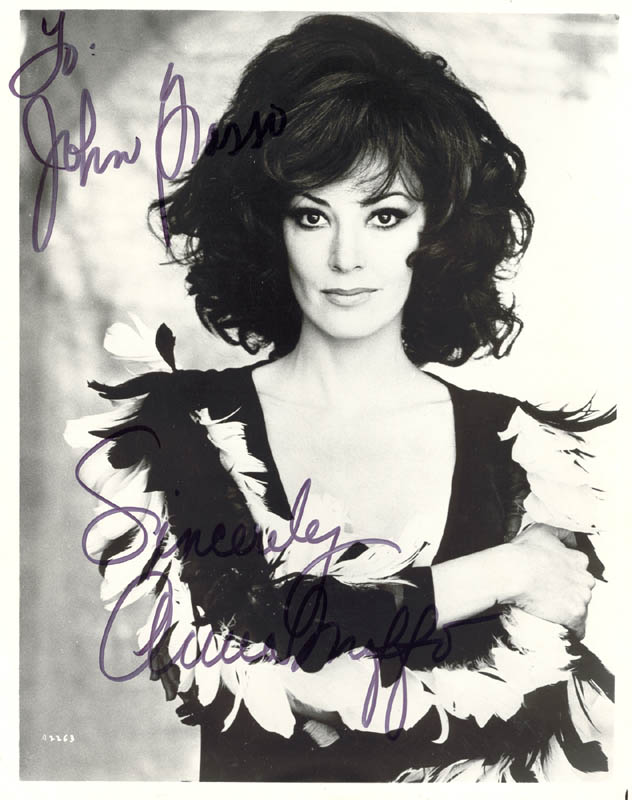 Handel’s favorite, and the wife of the composer Johann Adolf Hasse, was “brought up under the protection of the brothers Alessandro and Benedetto Marcello,” as per Grove Music, and later received lessons from the brothers.
And speaking of singers, Anna Moffo was born on June 27th of 1932 in Philadelphia into a family of poor Italian immigrants. She studied at the Curtis and then in Italy. There, in 1955, she made her debut in Don Pasquale. Then, still just 23 and virtually unknown (but very pretty), she was offered the role of Cio-Cio San by RAI, the main Italian TV company. Madama Butterfly was telecast in January of 1956 and made Moffo famous overnight. Her career took off: she was asked to join Maria Callas, Giuseppe di Stefano and Rolando Panerai in the 1956 now-famous recording of La bohème, conducted by Karajan. In 1957 she premiered at the La Scala, and the Vienna State Opera, and in 1959 made her debut at the Metropolitan. Moffo had a beautiful lyric soprano voice; she also sang coloratura roles. Here she is, singing Sì. Mi chiamano Mimi, from Act I of La bohème. Tullio Serafin conducts the Rome Opera House Orchestra.
And so that we don’t forget, Claudio Abbado, one of our all-time favorite conductors, was born on June 26th of 1933.
Read more... « first ‹ previous … 31 32 33 34 35 36 37 38 39 … next › last »
Refat Hasan Composer - Determination Orchestra
Refat Hasan (Orchestra)