
Joachim Raff - Symphony No. 5 in E major "Lenore," I. Allegro
Philharmonia Orchestra (Orchestra)
Yondani Butt (Conductor)
Pyotr Ilyich Tchaikovsky - Piano Concerto No. 1 in B flat Minor, Op. 23, TH. 55: I. Allegro non troppo e molto maestoso (Fragment)
Gulan (aka Andrei Gulaikin) (Synthesizer)
Johann Sebastian Bach - Piano Concerto No. 1 in D Minor, BWV 1052: I. Allegro
Gulan (aka Andrei Gulaikin) (Synthesizer)
Johann Sebastian Bach - Concerto for Violin and Oboe in C Minor, BWV 1060: I. Allegro
Gulan (aka Andrei Gulaikin) (Synthesizer)
Pyotr Ilyich Tchaikovsky - The Nutcracker, Op. 71, Act II: No. 14a, Pas de deux
Gulan (aka Andrei Gulaikin) (Synthesizer)
Richard Wagner and Lighter Fare
This Week in Classical Music: May 20, 2024. Wagner and Lighter Things. Richard Wagner’s 211th anniversary is on May 22nd: he was born in Leipzig in 1813. Wagner’s music is 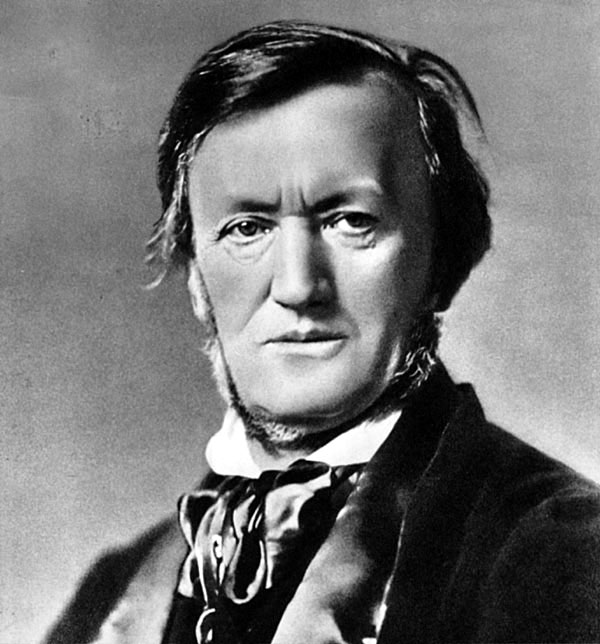 still so fresh (and often so controversial) that it feels strange that he was only two years younger than his stepfather, Franz Liszt, and three years younger than Frédéric Chopin and Robert Schumann, whose places in the pantheon of European music have been established a long time ago. Hitler’s love for his music didn’t help Wagner’s reputation, and neither did the composer’s abhorrent antisemitism. But if we put the non-musical considerations aside (and we recognize that it’s easier said than done), what we have is a musical genius, well ahead of his contemporaries, a composer whose music influenced generations of musicians all over the world, sometimes in very unexpected ways (think, for example, of the orchestral works of Claude Debussy, who had a love-hate relationship with Wagner).
Liebestod, or Love Death in German, is the final music of Wagner’s opera Tristan und Isolde, and one of his best-known pieces. In it, Isolde sings over Tristan’s dead body. It’s a difficult piece, especially considering it comes at the end of an almost five-hour opera. In our library we have three recordings of this scene, with Kirsten Flagstad, Birgit Nilsson and Waltraud Meier; all three were leading Wagnerian sopranos of their generation. We like all three, but Flagstad’s 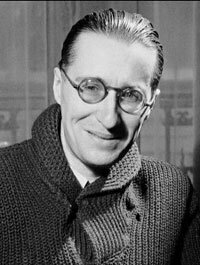 probably the most, even though the recording quality is not great. Here it is, from 1936, with Fritz Reiner conducting the orchestra of the Royal Opera House (Covent Garden).
On a much lighter note is the anniversary of Jean Françaix, whose music was sunny, witty and sophisticated. Françaix was born on May 23rd of 1912 in Le Mans. His musical gifts were obvious from an early age. He studied in Le Mans and then at the Paris Conservatory. He also took lessons with Nadia Boulanger, who considered him one of her most talented pupils, a praise of the highest order considering the many talented musicians who studied with her. Here’s Jean Françaix’s Concertino for Piano and Orchestra. The soloist is Claude Françaix, the composer’s daughter. The London Symphony Orchestra is conducted by Antal Dorati.
Read more...Franz Liszt - Chapelle de Guillaume Tell, S.160
Dr. Michael Kaykov (Piano)
Monteverdi, 2024
This Week in Classical Music: May 13, 2023. Monteverdi and more. We’ll be brief this week, not that we’ve been too loquacious lately. Of the composers, the great Claudio Monteverdi, 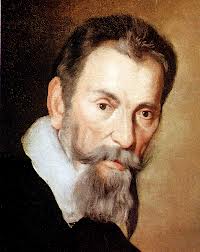 widely considered the most important composer of the end of the 16th – early 17th century, was born this week in 1567. He was baptized on May 15th in a church in Cremona, so most likely he was born a day earlier, on May 14th. In 2017, on Monteverdi’s 450th anniversary, we posted an entry about him. You can read it here.
Maria Theresia Paradis, born May 15th of 1759 in Vienna, was a blind piano virtuoso. As a composer, she is remembered for one piece only, her Sicilienne, even though she authored several operas and cantatas. It was performed on the violin and cello, and served as the favorite encore piece to many, from Nathan Milstein to Jacqueline du Pré (here). The problem is that most likely, the Sicilienne wasn’t written by Paradis at all but is a hoax perpetrated by Samuel Dushkin, a Polish-American violinist. Dushkin claimed that he found it among Paradis’ piano pieces and arranged it for the violin, but such a manuscript was never found. Sill, Paradis helped to establish the first school for the blind (in 1785, in Paris) and should be remembered if not as a composer, then as a pioneering blind musician.
Also, Otto Klemperer, one of the most important German conductors, was born on May 24th of 1885 in Breslau, then the capital of German Silesia, now Wrocław, Poland. He was one of many Jewish musicians who escaped Germany after the Nazis took power in 1933. He left for Switzerland but ended up in the United States where he led several major orchestras, including the LA Philharmonic and the Pittsburgh Symphony. After WWII, Klemperer reestablished his career in Europe, especially in London. He died in Zurich in 1973.
Read more...Brahms, Tchaikovsky, 2024
This Week in Classical Music: May 6, 2024. Brahms, Tchaikovsky, and more. Tomorrow is the birthday of two great composers, Johannes Brahms and Pyotr (Peter) Tchaikovsky. Brahms 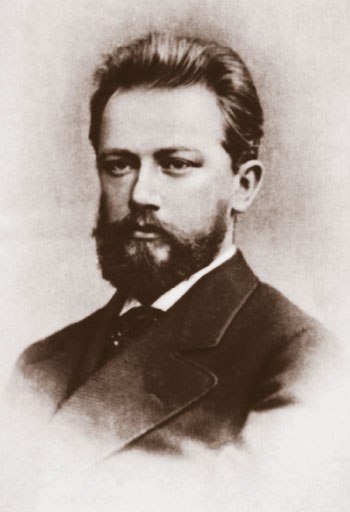 was born on May 7th of 1833 in Heide, a small town in northern Germany (then, the duchy of Schleswig-Holstein); Tchaikovsky – seven years later, in a small town of Votkinsk, not far from the Ural Mountains. Tchaikovsky is considered (at least, by the Russians) the greatest Russian composer, while Brahms is one of the “Three Bs” (with Bach and Beethoven). They lived through the same period (Brahms died in 1897, four years after Tchaikovsky), both were great symphonists, they wrote violin concertos that are considered among the best ever written, and their piano concertos are also hugely
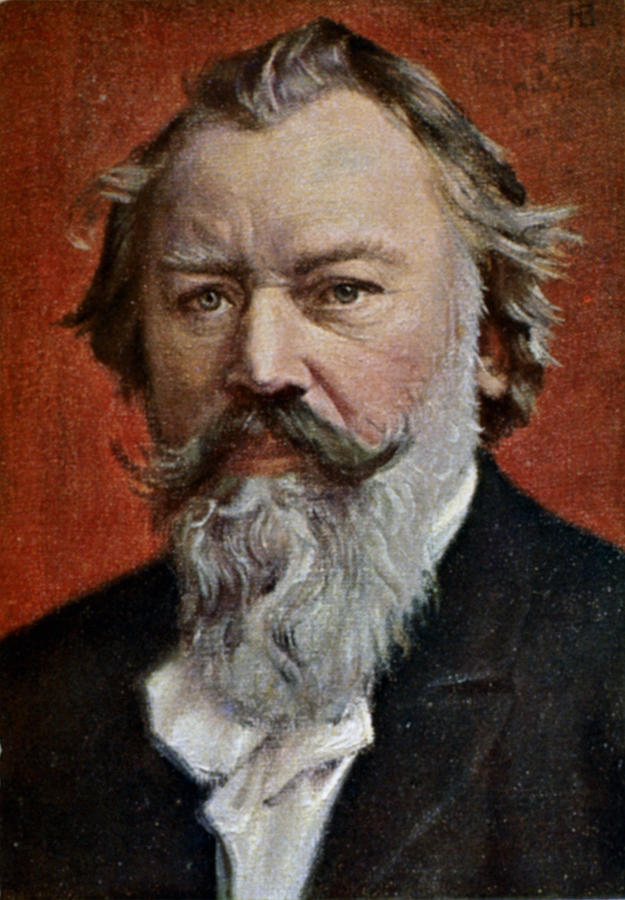 popular. Nonetheless, their music is as different as it can be, and so were their lives: Brahms’s was steady, not very eventful (at least the way it manifested itself to outsiders), Tchaikovsky’s – full of tragedies, many of which related to his closeted homosexuality. Given the format of our entries, we can do justice neither to their biographies, nor their music: we've dedicated four entries to Arnold Schoenberg just to go into some detail, and here we have two very prolific composers. So instead, we’ll play their violin concertos, the ones we mentioned above, both featuring female soloists. Here’s Rachel Barton Pine playing Brahms (Chicago Symphony Orchestra is conducted by Carlos Kalmar); and here is the Tchaikovsky; Julia Fischer is the soloist, Yakov Kreizberg leads the Russian National Orchestra).
Four composers were born on May 12th: Giovanni Battista Viotti, the famous Italian violinist and composer, in 1755; the Frenchman Jules Massenet, known for his operas Manon and Werther, in 1842; another, musically more adventuresome Frenchman, Gabriel Faure, three years later; and Anatoly Lyadov, the Russian composer known as much for his friendship with Tchaikovsky as for his small scale piano and orchestral pieces. Here’s Lyadov’s Kikimora (a nasty house spirit in Russian mythology); the Russian National Orchestra is conducted by Mikhail Pletnev.
Read more... « first ‹ previous … 34 35 36 37 38 39 40 41 42 … next › last »
Joachim Raff - Symphony No. 5 in E major "Lenore," II. Andante quasi larghetto
Philharmonia Orchestra (Orchestra)
Yondani Butt (Conductor)