
Argerich and Bartoli
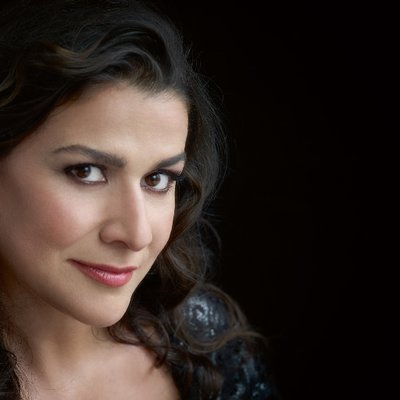
This Week in Classical Music: June 2, 2024. Argerich and Bartoli. For several weeks now we’ve been posting entries about composers, neglecting the performers. In a way, it’s 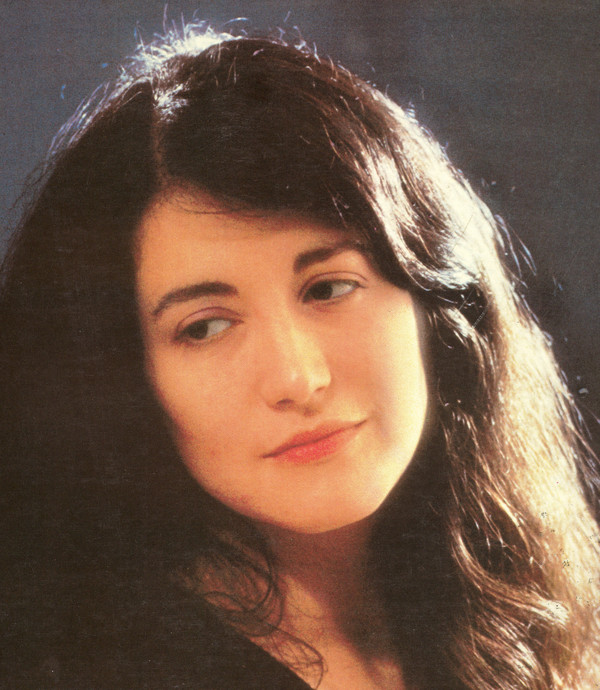 understandable: somehow, we value the creative talent of composers higher than that of performers and interpreters. It’s not immediately obvious why a gift from God of one type should be considered more important than another, especially considering that, historically, this has not always been the case, but this is a topic for another time. Two supremely gifted women were born this week, the pianist Martha Argerich, on June 5th of 1941, and the singer Cecilia Bartoli, on June 4th of 1966. Argerich, one of the most celebrated musicians of our time, still performs, at the age of 83. Here’s part of her schedule for June of this year: three performances on June 13th through 1
 5th of Beethoven’s Second Piano Concerto in Rome at the Auditorium Il Parco Della Musica, then several concerts in Hamburg – playing Ravel’s La Valse for two pianos with Sergio Tiempo on the 20th, the next day playing chamber pieces of Schumann, Beethoven and Shostakovich, and the following day giving a concert of Chopin pieces. And it goes like that for the rest of the month, almost every day: Schumann’s Dichterliebe with Ema Nikolovska, Beethoven’s Triple Concerto with Gil Shaham and Edgar Moreau, some Debussy, Schubert and Mussorgsky, and on the last day of the month, Shostakovich’s Concerto no. 1, for piano and trumpet with Sergei Nakariakov, a Russian-Israeli, Paris-based trumpet virtuoso. What amazing energy! We wish her many years to come.
Cecilia Bartoli was born in Rome and studied there at the Santa Cecilia Conservatory. She made her opera debut at the age of 21, and one year later was already widely known in Europe. Bartoli has a rare voice, a coloratura mezzo-soprano, with a huge range and unique flexibility. This allowed her to sing not just the standard mezzo repertoire, such as Rosina in The Barber of Seville, Zerlina in Don Giovanni, Cherubino in The Marriage of Figaro, or Dorabella in Così fan tutte, all of which she did extremely well;, she also brought to life Baroque music rarely heard before, and almost never performed on such a level, not since the end of the era of castrati. Here, for example, is Bartoli performing two arias from Vivaldi’s opera Griselda. First, Agitata da due venti (Moved by the wind), recorded in 1998 with the ensemble Sonatori de la Gioiosa Marca, and next, Dopo Un'orrida Procella (After a horrible storm), recorded one year later with Il Giardino Armonico under the direction of Giovanni Antonini. We find Bartoli’s musicianship and technique incredible.
Here are the names of three conductors born this week, Yevgeny Mravinsky, born June 4th of 1903, who led the Leningrad Philharmonic for 50 years and was a great interpreter of the music of Tchaikovsky and Shostakovich; a wonderful Mahlerian, the German conductor Klaus Tennstedt (June 6th of 1926); and the Jewish Hungarian-American, George Szell (June 7th of 1897), who, among other things, made the Cleveland Orchestra into one of the best in the world.
Read more...Antonio Vivaldi - Dopo Un'orrida Procella, from Griselda
Cecilia Bartoli (Mezzo-soprano)
Il Giardino Armonico (Orchestra)
Giovanni Antonini (Conductor)
Antonio Vivaldi - Agitata da due venti, from Griselda
Cecilia Bartoli (Mezzo-soprano)
Ensemble Sonatori de la Gioiosa Marca (Ensemble)
Johann Sebastian Bach - Chorale Prelude in G Minor “Nun Komm, der Heiden Heiland”, BWV 659
Gulan (aka Andrei Gulaikin) (Synthesizer)
Antonio Vivaldi - The Four Seasons, Concerto in G minor, Op. 8 No. 2, RV 315 “L’estate” (Summer): III. Presto
Gulan (aka Andrei Gulaikin) (Synthesizer)
Johann Sebastian Bach - Chorale Prelude in F Minor “Ich ruf zu dir, Herr Jesu Christ”, BWV 639
Gulan (aka Andrei Gulaikin) (Synthesizer)
Joachim Raff, 2024
This Week in Classical Music: May 27, 2024. Joachim Raff. The German composer Joachim Raff was born on this day in 1822. For all the years we’ve been writing these entries, not once did 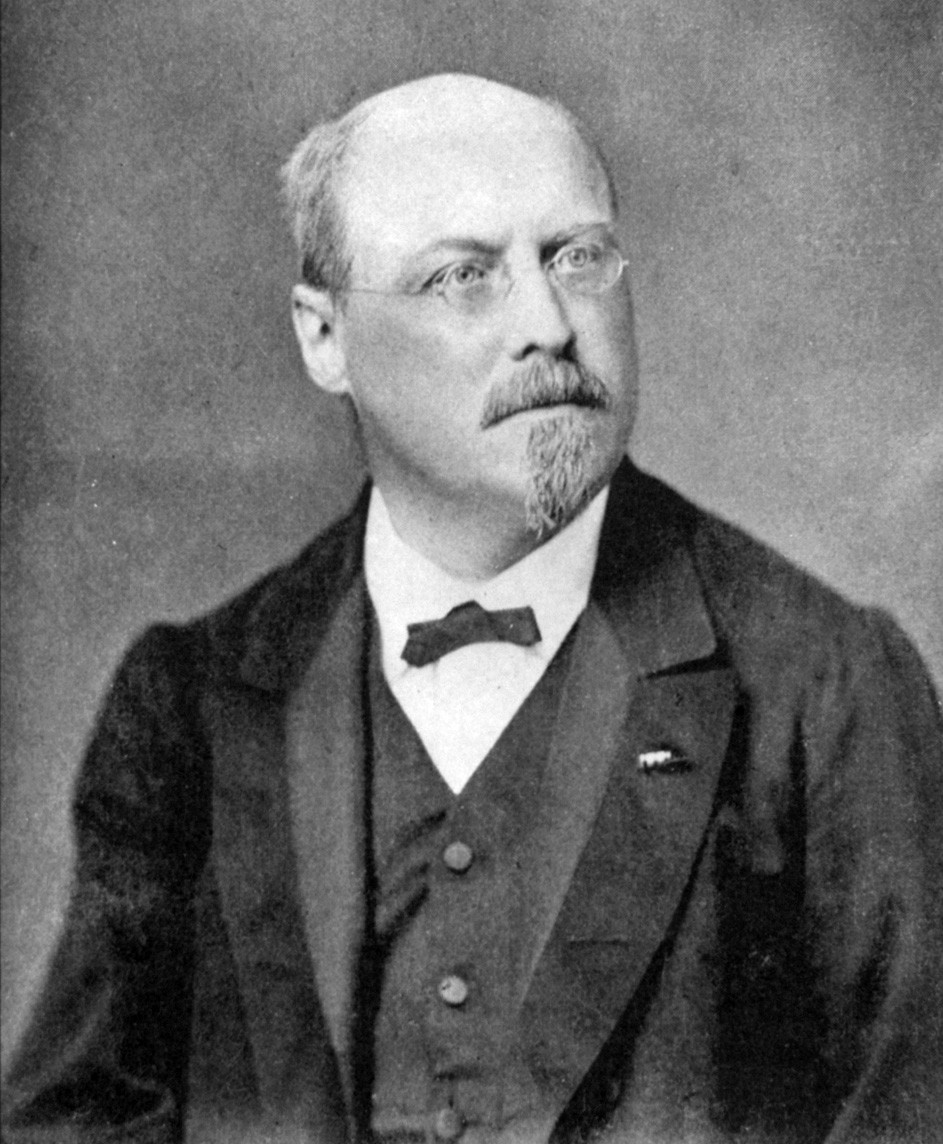 we mention his name. Of course, there are thousands of composers whose names escaped our attention, but these are usually second and third-tier; what makes Raff’s case unusual is that at the height of his popularity in the 1860s and 70s, his work was more popular than that of any other living German composer, including Bruckner (not at all popular during his lifetime) and Brahms. Soon after his death, Raff’s music was forgotten, and very few pieces are still performed today; it’s interesting to look back to see what attracted the sophisticated German public to his work and why it was abandoned so quickly. Raff, of German descent, was born in Switzerland, where his father escaped to avoid conscription during the Napoleonic wars. He was trained as a teacher, but as a musician, Raff was mostly self-taught (he became an accomplished pianist and organist); he started composing in his early 20s. Raff sent some of his work to Mendelssohn, who praised it and helped to get it published. In 1845 Raff, who lived in Zurich, met the great Franz Liszt. Liszt took a liking to him and found Raff a job in Cologne in a piano and music store. While in Cologne, Raff met Mendelssohn face-to-face and stayed in contact with Liszt. In 1847 he moved to Stuttgart and met the young Hans von Bülow. Bülow would later go to study with Liszt, marry his daughter Cosima, and then lose her to Wagner. He would also be one of the 19th-century best pianists and conductors. Bülow and Raff became best friends; Bülow had strong opinions and a sharp tongue and sometimes criticized Raff’s compositions but their friendship survived for the rest of Raff’s life.
Raff followed Lisz to Weimar, where, as Liszt’s protégé, he entered the circle of “New German composers,” an influential group that included Wagner. There he met Brahms and the famous violinist and conductor Josef Joachim. He also met his future wife, actress Doris Genast. Things looked positive for a while but eventually, it became clear that opportunities in Weimer were limited. And so, even though Liszt aided Raff financially and supported his musical efforts, Raff decided to leave Weimar. Around 1858, he found a position in Wiesbaden and moved there. It was in Wiesbaden that Raff composed the majority of his work and achieved public recognition. His First Symphony, a 70-minute composition subtitled An das Vaterland (To the Fatherland) was composed between 1859 and 1861 and was well received. And so were many other works that followed: his Third Symphony (Im Walde, In the Forest) became one of the most often-performed symphonies of its time, and the Fifth (Lenore) was also received enthusiastically. His piano and violin concertos became popular and the chamber pieces were widely performed. It’s even said that Raff’s music had some influence on Tchaikovsky and Richard Strauss. It’s not clear why Raff was forgotten so quickly. Indeed, he was not very original, much of his music was too long, and he wrote too much of it. But the same could be said about some 19th-century composers who are still feted today. And some of Raff’s music is very pretty. These days very few of his pieces are played, his Fifth Symphony, Lenore, is one of them. You can judge for yourself whether it’s worth it. Here’s the 1st movement of this symphony. Yondani Butt is leading the Philharmonia Orchestra. And if you want to hear more, here’s the rest of the symphony: the 2nd, 3rd and 4th movements.
Read more...Joachim Raff - Symphony No. 5 in E major "Lenore," IV. Allegro
Philharmonia Orchestra (Orchestra)
Yondani Butt (Conductor)
Joachim Raff - Symphony No. 5 in E major "Lenore," III. Marsch - Tempo
Philharmonia Orchestra (Orchestra)
Yondani Butt (Conductor)
Charles-Valentin Alkan - Le festin d'Ésope, Etude no. 12, from 12 Etudes in All the Minor Keys, Op. 39
Bruce Liu (Piano)