
On NY Times and music, 2025
This Week in Classical Music: July 21, 2025. The New York Times and Classical Music. Several days ago, Variety magazine, a purveyor of entertainment news, had a scoop of a different  kind: it obtained a New York Times internal memo, which detailed the reassignment of several cultural critics. The critics in question covered TV, pop music, theater, and included Zachary Woolfe, who writes about classical music. As part of the “revamp,” all of them were offered new positions within the newspaper, and at the moment, this leaves the NY Times without a classical music critic. This void made us think (again) about the role of music in our society in general and the Times in particular. Some years ago, it would’ve been unimaginable for the NY Times not to have a classical music critic: it was deemed so important that the paper had several writers covering multiple events and publishing many articles a week (Woolfe’s output was minuscule in comparison). We still remember the names of some of the great critics of the past: Harold Schonberg, the chief music critic for many years, Donal Henahan, who replaced him, and then followed by Edward Rothstein and Bernard Holland. Paul Griffiths also worked there, as did the wonderful Alex Ross, who later moved to the New Yorker and is one of the few who still publish interesting articles and books on music.
Not only was classical music important, but even the critics had a place in our culture: when Andrew Porter, who had written about music for 20 years at the New Yorker, resigned his position to move back to the UK, Edward Rothstein wrote a poignant article about him and his work. Some of the old coverage is unimaginable these days: for example, when, during a recital at Carnegie Hall, Kirsten Flagstad announced her retirement, the news made it to the front page of the Times. Yes, the front page.
It seems that two processes are working in parallel here: for one, classical music is losing its place in our culture, but secondly, newspapers are trying to get away from it at an even faster pace. For the lovers of classical music, the first trend is unfortunate but inevitable. We don’t live in the first quarter of the 20th century, when the parlor of every middle-class home was expected to have a piano, and piano manufacturers existed in every large city in the country (300,000 pianos were produced in 1924 when the US population was 1/3 its current size). Eventually, active music-making was replaced by passive listening: the radio and the phonograph killed the piano. Still, for a long time, music retained its cultural significance, and it was only at the end of the 20th century that the slide began in earnest. Whether this only coincided with the rise in identity politics or both processes fed on each other isn’t clear. But what we do know is that at some point, the cultural elites (and the NY Times is part and parcel of it) embraced identity politics and ran with it. During the worst days of wokeness, in 2020, Anthony Tomassini, then the chief (and by then practically the only) classical music critic of the Times, called for an end to blind additions, because, as he said, “the audition process should take into account race, gender and other factors,” not simply the talent or abilities of the performer. This absurd and pernicious notion was endorsed by many musical organizations and, what is worse, by foundations and endowments that constitute the financial base of classical music. In the meantime, classical music itself became associated with “dead white men,” a double offence when, for many in the cultural establishment, “white” became a sin, and “men” were linked to “toxic masculinity.” No wonder the Times decided to shy away from classical music.
Even though it seems that the worst of wokeness is behind us, what we have is classical music as a diminished art form, and the NY Times is partly responsible for the damage. Combine this with the paper’s past strong tradition in support of music, and you have an institution in a highly ambivalent position. We don’t expect the changes at the Times to improve on the mediocrity of the current state, but we’ll certainly watch the developments.
Read more...Ludwig van Beethoven - Beethoven Piano Concerto No.4 in G major Op.58 David-Michael Dunbar Pianist
David-Michael Dunbar (Piano)
Camille Saint-Saëns - Saint-Saëns piano concerto no.2 OP.22 David-Michael Dunbar pianist accompanist Edward Greiber.
David-Michael Dunbar (Piano)
Manuel de Falla - Manuel de Falla “Ritual Fire Dance” David-Michael Dunbar piano
David-Michael Dunbar (Piano)
J.S. Bach - Partita No.1 in Bb major BWV 825 David-Michael Dunbar pianist
David-Michael Dunbar (Piano)
The Bastille Day, 2025
This Week in Classical Music: July 14, 2025. Bastille Day. Today is the French national holiday, and we’ll play some music from that great country, without any pretense of a 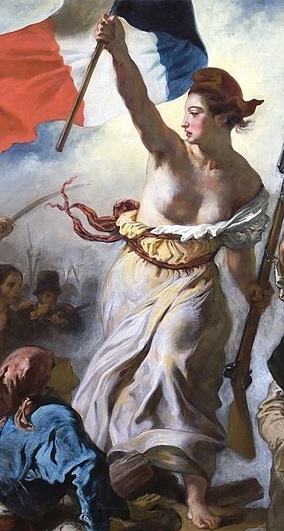 comprehensive survey. France has an incredibly long record of what we call “classical” music, dating back to medieval times: Leonin and Perotin lived in Paris in the second half of the 12th to early 13th centuries and worked at the recently built Notre-Dame Cathedral. They left a written record of their music, which can still be heard today performed by the old-music ensembles.
The Renaissance that followed brought us several important composers who were either French or Franco-Flemish, from what is now Belgium. Among them were Guillaume Dufay, considered by many the “founding father” of Renaissance music, and Gilles Binchois; both worked in the mid-15th century. A couple of generations later came Josquin des Prez, the most important composer of the last quarter of the 15th – first quarter of the 16th century. This vibrant milieu produced a plethora of composers, many on the French side of the border with Flanders.
The Baroque period was also rich in talent: we could mention just three stars: Jean-Baptiste Lully, François Couperin and Jean-Philippe Rameau. Here’s a section of a suite from Les Boréades, Rameau’s last opera. Les Musiciens du Louvre are conducted by Marc Minkowski.
Somewhat surprisingly, the French composers weren’t very productive during the Classical era (that was the domain of the Germans and Austrians), but they flourished in the following years during what we call the Romantic period. Hector Berlioz, Charles Gounod, César Franck (a Belgian by birth, he lived most of his productive life in Paris), Camille Saint-Saëns, Georges Bizet, and Jules Massenet are just the best-known names; there were many others. Berlioz stands somewhat alone, considering both the size of his talent and the audacity of some of his compositions. Here’s a symphonic interlude from his opera Les Troyens, which usually runs close to five hours. It’s called Chasse royale et orage (Royal hunt and thunderstorm); it is performed by the Orchestra of the Royal Opera House under the direction of Colin Davis.
Since the end of the 19th century, French composers have been at the forefront, while Paris has turned into a veritable Mecca for musicians from all over the world. The great Debussy was followed by the quirky Eric Satie and then the ever-popular Ravel (we have large samples of their works in our library). Les Six (Georges Auric, Louis Durey, Arthur Honegger, Darius Milhaud, Francis Poulenc, and Germaine Tailleferre) followed. Then came Olivier Messiaen, a great talent and the inspiration for a group of young composers who completely abandoned tonality and even went beyond the 12-tone system of Schoenberg and his pupils. Pierre Boulez was one of their leaders.
At the end of WWII, in 1944, Messiaen composed a set of twenty pieces for solo piano titled Vingt Regards sur l'Enfant-Jésus (Twenty Contemplations on the Infant Jesus). It was dedicated to his student, the pianist Yvonne Loriod, who later became Messiaen’s second wife. Here's one of the Regards, Regard de la Vierge (Contemplation of the Virgin). It’s performed by Pierre-Laurent Aimard.
Read more...Jean-Philippe Rameau - Les Boréades Suite, Entrée de Polymnie
Les Musiciens du Louvre (Ensemble)
Marc Minkowski (Conductor)
Mahler, Antheil 2025
This Week in Classical Music: July 7, 2025. Mahler and Antheil. There are several “semi-round” anniversaries this week, Mahler’s being the most significant: he was born on this day 165  years ago. Our readers may know how we feel and think about Gustav Mahler: not only was he one of the most important composers, he also became a litmus test of sorts – during the crazy woke days of 2020-2021, he completely disappeared from the musical scene, being singled out as the “really bad boy” of Western music. The trend was reversed a couple of years ago, and we’re happy to report that by now, Mahler has resumed his rightful place in classical repertory, both on stage and on the radio (he also never disappeared for real music lovers, who continued listening to his amazing music on streaming services and YouTube through those years).
George Antheil was born 125 years ago, on July 8th of 1900 in Trenton, NJ. Antheil had an interesting life: born into a German immigrant family, he was bilingual, started playing piano at the age of six, got involved with a modernist crowd when he was 19, and at 21 sailed to Europe, ready to make a name for himself as a “modern composer.” He spent a year in Berlin, where he met Stravinsky, and then moved to Paris. In Paris, Antheil lived in an apartment above Sylvia Beach’s bookstore, “Shakespeare and Co.” Beach took an interest in the young man and introduced him to several extraordinary Americans who lived in Paris in the 1920s, among them Ezra Pound, James Joyce, Ernest Hemingway, and Virgil Thomson. Antheil also became close with the Frenchmen Eric Satie and Jean Cocteau. The Paris years were a productive period for Antheil. He wrote several large piano pieces; during the premiere of one of them, Mechanisms, a riot broke out, to the composer’s delight (it made him, in his mind, equal to Stravinsky, whose premiere of the Rite of Spring was also met with a riot). Mechanisms was not the only piece that created a disturbance: Antheil’s Ballet Mécanique provoked the same reaction. The “ballet” was written as music to accompany the film by French painter Fernand Léger and American filmmaker Dudley Murphy. The effort was poorly coordinated, as Antheil’s music ran twice as long as the film, so the premiere presented the music on its own. It was scored (in its final, less extravagant form) for a pianola, several pianists, and airplane propellers that made a roaring noise when the pianos and the pianola stopped playing.
After another stint in Germany, Antheil returned to the US in 1933, pushed out by the Nazis. In 1936, he moved to Hollywood and became a very successful film composer, a far cry from his avant-garde days in Paris (the trajectory of Antheil’s life reminds us of Erich Wolfgang Korngold, a child prodigy who also settled for a life of film composing after emigrating to the US). In his later days, Antheil wrote some “serious” music, tonal and “neoromantic,” very different than what he was composing in his youth. He died of a heart attack in 1959.
Antheil had many interests: he wrote novels and worked as a literary critic. A most unusual thing happened after he met the Austrian-American actress Hedy Lamarr: the two of them invented what is called “frequency-hopping” for radio-controlled torpedoes. When a single frequency is used, it can be detected and then jammed by the enemy. The Lamarr-Antheil idea was to change frequencies rapidly, based on a code shared by the ship and the torpedo. There were 88 frequencies to be used – the number equal to the number of keys on a piano keyboard. The invention was patented by the actress and composer, but never implemented by the US Navy.
We’ll post samples of his music later this week.
Read more...
Eisler and more, 2025
This Week in Classical Music: June 30, 2025. Eisler and more. Next Sunday is the birthday of the German composer Hanns Eisler, who was born on July 6th of 1898, in Leipzig. As a young  man, he studied with Arnold Schoenberg; he then cooperated with the playwright Bertolt Brecht, creating music for many of his plays but abandoning the 12-tone technique in the process. In the late 1920s – early 1930s, Eisler became very political, turning hard left. He emigrated to the US during the Nazi years, but ended his life in East Germany, having composed the national anthem of this Communist totalitarian regime. We found his life so fascinating that we’ve posted not one but two entries about it, here and here.
Jiří Benda, also known by his German name, Georg Benda, was born in Bohemia, then part of the Austrian Empire, on June 30th of 1722. His older brother was the noted composer František (Franz) Benda. When he was 19, Jiří Benda was called to Berlin by none other than Frederick the Great, King of Prussia, to play the violin in the Royal Chapel in Berlin. He was later summoned to join his brother Franz at Potsdam, where the royal court resided. Later in his life, Georg Benda worked for the Duke of Gotha; he also traveled to Italy and Paris. In 1788, he moved to Vienna, hoping to be hired as the Kapellmeister of the new German opera, planned by the Emperor Joseph II. That didn’t work out, and the disappointed Benda abandoned music for good, traveling and studying philosophy. Benda's melodramas, the precursors of German opera, were highly valued by Mozart.
Christoph Willibald Gluck was born on July 2nd of 1714. He was one of the greatest composers of the mid-18th century. Gluck was especially good in the genre of opera, which he, to a large extent, defined for his time. We’ve written about Gluck many times and have samples of his music in our library.
Hans Werner Henze, a German modernist composer, was born on July 1st of 1926. Like Eisler, but in a very different context, he had strong political convictions and supported leftist causes. He was a member of the Italian Communist Party (Henze moved to Italy in 1953) and wrote music glorifying Ho Chi Minh and Che Guevara. In spite of that, he was a talented composer who worked in many different styles, from the 12-tone and serial idiom to jazz, and created music that is interesting to listen to years after it was first performed.
Finally, we should mention Leoš Janáček, another Czech composer (Benda, though he lived his life in the Austrian Empire, was Czech by birth). Janáček was born on July 3rd of 1854, in the Moravian village of Hukvaldy, when his country, Czechoslovakia, was still part of Austria-Hungary. Janáček was a friend of Antonín Dvořák, was influenced by him, and together with Dvořák and Smetana, is considered one of the greatest Czech composers.
Read more... « first ‹ previous … 14 15 16 17 18 19 20 21 22 … next › last »
Hans Rott - Symphony in E Major, mov. 3, Frisch und lebhaft
Frankfurt Radio Symphony Orchestra (Orchestra)
Paavo Järvi (Conductor)