
Venice, La Fenice, Kissin, 2026
This Week in Classical Music: April 6, 2026. Venice, La Fenice, Kissin. What could be better than a recital by one of the greatest pianists, played in a gorgeous old theater in one of the most  beautiful cities in the world? Or, rather, what could go wrong? As it turns out, some things can. First, the venue. La Fenice is a small but exceptionally beautiful theater (if not the neo-classical façade, then definitely the interior). It was built in 1792 and named La Fenice, or The Phoenix, after the immortal bird of Greek legend that rises to new life from the ashes: the company that owned the theater previously lost three buildings to fire. Unfortunately, the name proved prophetic, as La Fenice burned to the ground on two occasions, in 1836 and, recently, in 1996. Both times it was restored, after the first time within just one year, while in modern times, it took the bureaucratic state seven times longer. Still, the job was done well, and La Fenice gleams in its 19th-century beauty. It’s a relatively small theater, with a tiny main floor, which becomes even smaller when several front rows are removed for the concert stage. On the other hand, it’s tall, with five circles of boxes, all identical except for the Royal Box. For a piano recital, this creates an acoustic problem, as there are no panels above the stage to reflect sound into the hall. It’s especially evident in the boxes, which, by the way, are bare: boxes, quite literally. Even in the ones close to the stage, the sound felt distant. Kissin, who started his program with Beethoven’s early Piano Sonata no. 7, exacerbated the problem by minimally using the pedal. We understand his intent, and in a different hall, it might have worked, but in La Fenice, without the pedal, the sound was dry and failed to project. We even thought it might have been a problem with the instrument: Kissin was playing a Steinway with the Zanta logo under the maker’s name. Zanta, an Italian company, makes its own pianos, but it seems in this case it was a standard Steinway D-274.
We thought that Beethoven's sonata, with its exaggerated accents and very slow 2nd and 3rd movements, was not very successful. The five mazurkas by Chopin that followed fared better, even though they were also rather austere. Schumann’s Kreisleriana, which started the second half, was the best. Rambling and longish, it’s not an easy piece to pull together, but Kissin managed it very well. The concluding Hungarian Rhapsody no 12, even if a rather unusual choice for such a cerebral concert, was brilliant, demonstrating Kissin’s amazing technical abilities.
But we would be the first to admit that all these comments are somewhat nitpicking. Kissin is a tremendous musician and a phenomenal pianist, whether one agrees with his interpretations or not. La Fenice is beautiful, and Venice is magical. You leave the theater and step into one of the most beautiful places, and a glass of good Italian wine helps bring a great evening to an end.
Read more...John Paul Walters - Organ Suite No. 9
John Paul Walters (Organ)
Bologna, Ferrara, Modena, 2026
This Week in Classical Music: March 30, 2026. Bologna, Ferrara (and Modena). Historically, Bologna, with its numerous churches and a very old university, was one of the most 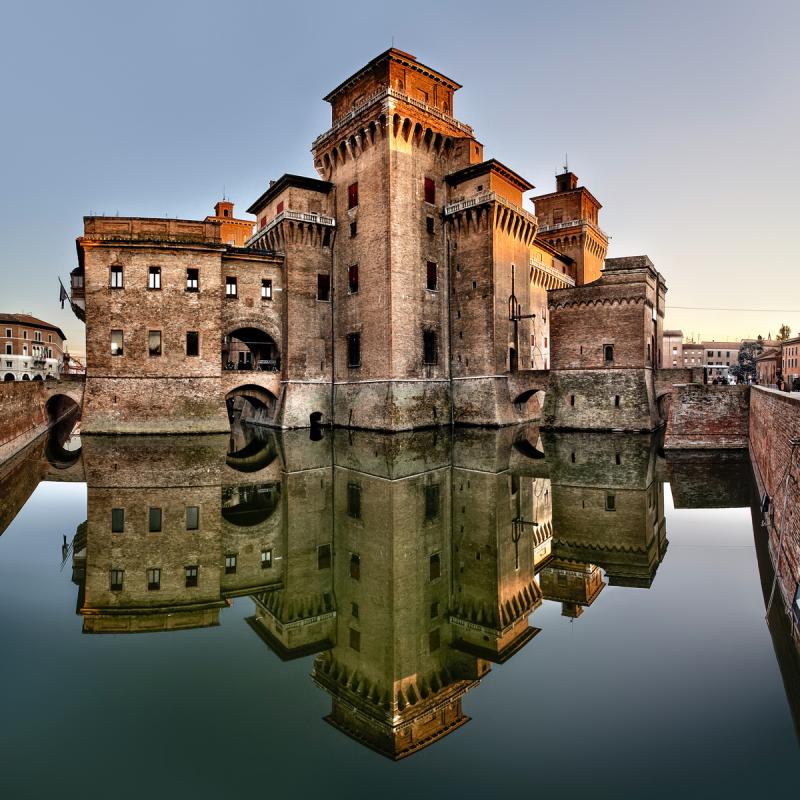 musical cities in Italy. It had a fine violin school – makers, players, and composers (Corelli, Torelli and Vitali were part of it). Starting in the early 17th century, numerous literary and artistic Academies were established, some, like Accademia dei Floridi, dedicated to music (Monteverdi and Merula were members). In 1660, the Accademia Filarmonica di Bologna was founded, with academicians divided into orders: the composers, instrumentalists, and singers (Mozart, whila in Italy, submitted a composition for examination there). The Academy continued into the 19th and 20th centuries, presenting important concerts and composers.
As early as the 15th and 16th centuries, Ferrara (and after 1598, Modena, where the d’Este court relocated when the pope took over their seat of power) was one of the most important musical centers in Italy. We’ve written about Ferrara’s Concerto delle donne, and will return to the musical tradition in that city in a later post (Modena deserves a separate entry).
Read more...Venice, 2026
This Week in Classical Music: March 23, 2026. Venice. In the 17th-18th centuries, Venice was the epicenter of the opera world. The first public opera theater, Teatro San Cassiano, opened there in _-_Facade.jpg "La Fenice") 1637, and a year later, the second one, Teatro Santi Giovanni e Paolo, was built. By the end of the 17th century, Venice had about six working opera houses, give or take: fires were common and were the main cause for theaters closing, and new ones were built. Today, Venice has two: the famous La Fenice, built in 1792, and a much older Teatro Malibran. Named after the great soprano sfogato, it was inaugurated in 1678 and, for a while, was the largest theater in Venice. La Fenice burned to the ground three times: in 1774, 1856, and in 1996 (it was reopened in its current form in 2004). These days, operas are not staged in Venice as often as one would hope, but a visit to La Fenice is inspiring, so, instead of an opera, we heard a recital given by Evgeny Kissin. A short review will follow soon.
1637, and a year later, the second one, Teatro Santi Giovanni e Paolo, was built. By the end of the 17th century, Venice had about six working opera houses, give or take: fires were common and were the main cause for theaters closing, and new ones were built. Today, Venice has two: the famous La Fenice, built in 1792, and a much older Teatro Malibran. Named after the great soprano sfogato, it was inaugurated in 1678 and, for a while, was the largest theater in Venice. La Fenice burned to the ground three times: in 1774, 1856, and in 1996 (it was reopened in its current form in 2004). These days, operas are not staged in Venice as often as one would hope, but a visit to La Fenice is inspiring, so, instead of an opera, we heard a recital given by Evgeny Kissin. A short review will follow soon.
Bach, 2026
This Week in Classical Music: March 16, 2026. Johann Sebastian Bach. Last week, we celebrated Georg Philipp Telemann; this week, it's Johann Sebastian Bach’s turn: their birthdays 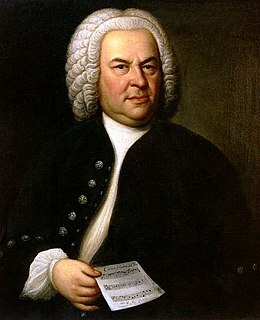 are one week apart. Bach was born on March 21st of 1685, in Eisenach. A word of warning: even though it’s Bach, we’ll be very brief: Classical Connect is about to embark on a trip. We celebrated Telemann with a cantata (one from the output of more than 1,000) that, for a long time, was ascribed to Bach, but was eventually proven to be his. Johann Sebastian, also quite prolific in this genre, composed more than 200 extant cantatas that are considered authentic by musicologists, plus several dozen have been lost. If selecting a Telemann cantata was practically impossible because of the sheer volume of them, selecting a Bach cantata is also difficult, but for a different reason: too many of them are exceptionally good. Cantata no. 51, Jauchzet Gott in allen Landen ("Rejoice in God in every land") is unusual: it’s the only Bach cantata for soprano and trumpet, and no choir. In this 1972 recording, the wonderful Edith Mathis is the soprano, Pierre Thibaud solos on the trumpet; Karl Richter leads his Münchener Bach-Orchester.
Next week, Classical Connect will be in Venice, later traveling to several cities in Marche and Emilia-Romagna. We will report.
Read more...Johann Sebastian Bach - Cantata Jauchzet Gott in allen, BWV 51
Edith Mathis (Soprano)
Pierre Thibaud (Trumpet)
Münchener Bach-Orchester (Orchestra)
Karl Richter (Conductor)
Tom Johnson - The Chords Catalogue II - III - IV
Nicolas Horvath (Piano)
Maurice Ravel - Joseph Galasso plays Ravel (Bolero)
Joseph Galasso (Guitar)
Francisco Tárrega - Joseph Galasso plays Tarrega (Capricho Arabe)
Joseph Galasso (Guitar)
Johann Sebastian Bach - The Art of Fugue
Maria Perrotta (Piano)