
Prokofiev delayed, 2026
This Week in Classical Music: May 10, 2026. Technical issues. We were looking forward to publishing the final installment in our series of posts on Sergey Prokofiev, covering his life in the Soviet Union after his return to Moscow in 1936. Unfortunately, we encountered some technical issues and will have to wait till next Monday.
Read more...Prokofiev, Part III. 2026
This Week in Classical Music: May 3, 2026. Prokofiev, Part III. As we mentioned in our previous post (here), even while living in Paris, Prokofiev continued to maintain relationships 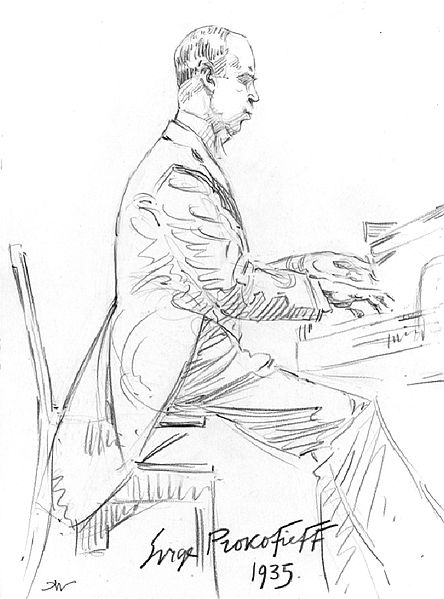 with Soviet musicians and music officials. He visited Soviet Russia for the first time in 1927, where he gave concerts in Moscow and Leningrad and oversaw the staging of The Love for Three Oranges in the Mariinsky theater. He also acquainted himself with the works of the young Shostakovich and Gavriil Popov, another talented composer. Several more trips followed, including the one to Moscow in 1929. But there were other ways in which Prokofiev maintained his relationship with Russia. For example, in 1926, he wrote a ballet Le pas d'acier (The Steel Step, an awkward name in English and no less so in Russian, Стальной скок). Commissioned by Diaghilev, who was impressed by the Russian futurist artists he saw at a Paris exhibition, the music, even if it borrowed from Stravinsky (and probably also from Arthur Honegger’s Pacific 231), already had all the attributes of a Soviet piece. The ballet was supposed to celebrate the Soviet industrial modernization; according to Richard Taruskin, its music made Stravinsky ill (we’re not that surprised). In 1929, Le pas d'acier was about to be staged at the Bolshoi, but the protests from the anti-Western Russian Association of Proletarian Musicians led to its withdrawal. Outside of musical affairs, there were other signs of Prokofiev's equivocations: for example, when France established diplomatic relations with the Soviet Union, Prokofiev elected to take Soviet citizenship.
Now a family man, he continued his existence in Paris; in 1930, he toured the US, this time quite successfully. All the while, Prokofiev contemplated the pros and cons of returning to the Soviet Union. His visits to Russia left him with no illusions about the political pressures on the arts in the country; what he was considering was whether he could use the politics to not just survive but flourish there, and how he would have to change his music to accommodate the art politics of the Socialist Realism, introduced by Stalin in 1932. He was ready to “simplify” his musical language, and, in the early 1930s, wrote several articles published in the Soviet newspapers, discussing such developments. He even composed several songs and choral pieces in a “folk” style, which were published and praised in Russia. The Soviets demonstrated their interest in Prokofiev by commissioning music for a film, Lieutenant Kijé. In 1935, he received a commission from the Kirov (formerly, Mariinsky Theater), which became the ballet Romeo and Juliet (the staging at the Kirov fell through; the ballet was premiered in Brno in 1938; the Soviet premiere had to wait till 1940, Galina Ulanova danced the Juliet).
It’s still a mystery why Prokofiev wanted to return to Russia. He was shrewd and by no means a political idealist. He knew the Soviet Union better than many of his fellow emigres. What made him think he would be impervious to Stalin’s terror? He knew that since the early 1930s, Stalin had brought all the arts under the control of the Communist Party. He knew what happened to Shostakovich when, in January of 1936, an article titled Muddle Instead of Music, was published in Pravda. It disparaged his opera Lady Macbeth of Mtszensk and called Shostakovich a “formalist” and “bourgeois.” A month later, another article severely criticized his ballet, The Limpid Stream. All this scared Shostakovich so much that for a while he stopped composing altogether. Prokofiev also knew about the treatment of the famous theater director Vsevolod Meyerhold or the poet Osip Mandelstam (both still alive in 1936, both to perish in the Gulag). So he knew that fame doesn’t protect anybody in Stalin’s Russia.
None of this stopped Prokofiev, and in the summer of 1936, he, his Spanish wife, and their two sons arrived in Moscow.
Here, from Prokofiev’s Paris period, is his Piano Concerto no. 4 for the left hand. It was composed in 1931 for the pianist Paul Wittgenstein, who lost his right hand in WWI. The soloist is Vladimir Ashkenazy; André Previn conducts the London Symphony Orchestra.
Read more...Prokofiev, Part II, 2026
This Week in Classical Music: April 27, 2026. Prokofiev, Part II. Prokofiev was 27 when he arrived in New York in September of 1918. Back in Russia, he was acknowledged as an  exceptionally talented young composer and virtuoso pianist (see our first entry for details), but things were very different in America. Prokofiev wasn’t that well-known in the US, but even more importantly, there was already an exceptionally talented composer and supreme virtuoso pianist, also an emigre from Russia: Sergei Rachmaninov. Rachmaninov was 18 years older and much better established: he toured the US in 1909-10 with his then-new Third Piano Concerto to great success. Even though he emigrated to the US at about the same time as Prokofiev, Rachmaninov played 60-70 concerts a year. Prokofiev played just a few, and then became involved in composing a new opera, The Love for Three Oranges, commissioned by the Chicago Opera Association, which took time from his concert activities. Things got worse in December of 1919 with the unexpected death of Cleofonte Campanini, the conductor for the Association, who spearheaded the commission. The completed opera had to wait for its premiere till December 1921 (it took place at Chicago’s Auditorium Theater). In the meantime, concert engagements were few.
As his American career was going nowhere, Prokofiev’s thoughts turned to Europe. In April of 1920, he left the US for Paris. There, he renewed his relationship with Diaghilev and his company, Ballets Russes. For him, Prokofiev reworked his 1915 ballet, Chout (Jester). He also completed his Third Piano Concerto and several piano pieces. He took time to go to Chicago to conduct the premiere performance of The Love for Three Oranges, which wasn’t very successful.
Igor Stravinsky was also living in Paris during that time. He was better known than Prokofiev; his music, scandalous in prior years, became popular, and he had a very special relationship with Diaghilev, for whom he wrote several ballets, including The Firebird and The Rite of Spring. In one episode, Stravinsky was in the audience during the presentation of Prokofiev’s The Love for Three Oranges, requested by Diaghilev, and made snide remarks about the music, which almost led to a fistfight between the two composers. Their relationship remained strained for several years. Stravinsky became as much a thorn in Prokofiev’s side in Europe as Rachmaninov was in the US. Well established and supremely talented, Stravinsky eclipsed Prokofiev at every turn. He was a reason Prokofiev made some fateful (one might say catastrophic) decisions several years later. In the meantime, Prokofiev moved to Ettal, Bavaria, to work on another opera, The Fiery Angel. In 1923, he married a Spanish singer, Lina Llubera, and moved back to Paris with her. There, he managed to improve his relationship with Stravinsky, even though they continued to differ musically in many ways. Stravinsky even acknowledged Prokofiev as the greatest living Russian composer – after himself, of course.
We should consider, for a moment, the tremendously vibrant musical atmosphere of Paris in those days, the mid- to late-1920s. Ravel was in his prime; Fauré and Satie had just passed away; Poulenc, Milhaud, Auric, Honegger, and the rest of Les Six were on the way up; Tcherepnin, Martinů and several other Eastern Europeans were also working there, as were several young Americans. As such, Prokofiev had a lot of competition to contend with, but for him, there was only one who counted: Stravinsky.
During this period, Prokofiev maintained his connections to the musical world of Soviet Russia. Several premieres were performed in Moscow and Leningrad, and he planned а tour there. How those connections developed, and what they evolved into, we’ll talk about next week. In the meantime, here’s a piece from his time in Ettal, the 1923 version of the Piano Sonata no. 5. Prokofiev revised it in the last years of his life as op. 135. Boris Berman is the pianist.
Read more...Sergei Prokofiev - Piano Sonata no. 5, op. 38
Boris Berman (Piano)
John Paul Walters - Organ Suite No. 10
John Paul Walters (Organ)
Sergey Prokofiev, Part I, 2026
This Week in Classical Music: April 20, 2026. Prokofiev, Part I. Sergey Prokofiev, one of the most interesting composers of the 20th century (and a wonderful pianist as well), was born on  April 23rd (new style) of 1891, in the village of Sontsovka near Donetsk in today’s Ukraine, then the Russian Empire. Let us note that in January of 2025, Sontsovka was again captured by Russia, as it is waging war against Ukraine. What happened to Prokofiev’s museum, we don’t know. The nearby towns Prokofiev mentions in his autobiography – Bakhmut, Konstantinovka – were all raised to the ground during this war.
Prokofiev lived through some of the most terrible and consequential events of the century, as did many Russian and European composers during those years. Those events, taken together with some questionable decisions he had made under often-challenging circumstances, affected him more than many others (of course, we remember and do not compare it to the tragic fate of the Jewish composers killed during the Holocaust). These events divided his life into several phases, all different, and all tied to particular places: Imperial Russia, the US, Europe, and then Stalin’s Soviet Union. The first thirteen (and for all we know, happy) years of Prokofiev’s life were spent in Sontsovka; his mother was a good pianist and became his first teacher. He started composing at the age of six, and at nine, after visiting Moscow and attending several performances of opera and Tchaikovsky’s “The Sleeping Beauty,” wrote his own opera, “The Giant.” Taneyev heard parts of it and was impressed; he even convinced his student, the young, gifted composer Reinhold Glière, to go to Sontsovka and teach the boy, which Glière did, for two summers. In 1904, Sergey was sent to St. Petersburg and entered the conservatory, where he studied composition with Rimsky-Korsakov and Lyadov and the piano with Yesipova. While at the conservatory, he met Rakhmaninov and Stravinsky, both of whom he’d later consider his rivals. He graduated with a gold medal, performing his own First Piano Concerto at the examination.
Till 1918, Prokofiev lived in Russia, with some visits to Paris, where he met Diaghilev. During that period, he composed his Second Piano Concerto (technically challenging and considered controversial at the time), the First (“Classical”) Symphony, and the scandalous, though by now quite tame, Scythian Suite, inspired by Stravinsky’s Rite of Spring. He also wrote two piano cycles, Sarcasms and Visions fugitives. In Russia, he became famous and was feted as one of the best pianists and a talented, if audacious, composer. In 1914, Russia entered the Great War, and in 1917, it sustained two revolutions, one in February and another, catastrophic, in October, which brought Lenin’s Bolsheviks to power. Prokofiev had considered emigration as early as the end of 1917, and in May of 1918, he boarded the Trans-Siberian train to the far East of Russia, took a boat to Japan, and from there made it to New York, arriving there in September of 1918.
Here, from the Russian period of Prokofiev’s life, is his Piano Concerto no. 1, from 1912. Prokofiev soloed at the premiere; he was then 21. In this recording, made live in September of 1993, the pianist is Evgeny Kissin, who was then also 21. Claudio Abbado conducts the Berlin Philharmonic.
We’ll continue with the American and European phases of Prokofiev’s life next week.
Read more...Sergei Prokofiev - Piano Concerto No. 1 in D-flat Major, Op. 10
Evgeny Kissin (Piano)
Berlin Philharmonic Orchestra (Orchestra)
Claudio Abbado (Conductor)
Pianists, harp, 2026
This Week in Classical Music: April 13, 2026. Pianists, and a bit of Italy. Before we turn to the main topic of our post, here’s a harp. It’s not just any harp; it’s displayed in the Galleria  Estense, Modena’s Art Museum. This harp was brought to Modena in 1598, when the Estense court, under pressure from the Pope, moved there from their original family seat of Ferrara. While in Ferrara, this harp was used by one of the members of the Concerto delle Donne. We don’t know who played this instrument: all members of the Concerto were virtuoso singers, and several used the harp, lute, and viol for accompaniment. The Concerto didn’t survive the move to Modena, but the precious harp did; it really is very beautiful, worthy of a ducal court.
Four pianists were born this week: Artur Schnabel, on April 17th of 1882, Murray Perahia, on April 19th of 1947, Grigory Sokolov, on April 18th of 1950, and Mikhail Pletnev, on April 14th of 1957. Schnabel, of course, was one of the most important pianists of the 20th century. He was born in Lipnik, then Austria-Hungary, now Poland, and moved to Vienna when he was seven. There, he studied with the famous Leschetizky, who valued the musicianship of the boy and told him to play Schubert’s sonatas rather than Liszt’s Hungarian Rhapsodies. In 1900, Schnabel moved to Berlin, where he lived till 1933, when the Nazis came to power (Schnabel was Jewish). 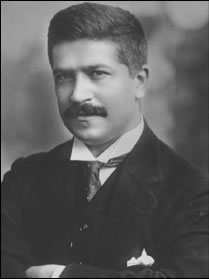 In Germany, he was considered the greatest pianist, and his recitals of Schubert and Beethoven sonatas were legendary. He also played chamber music with the best musicians of his generation: the cellists Pablo Casals, Emanuel Feuermann, and Pierre Fournier, with the violist William Primrose and Paul Hindemith, the composer who was also an excellent violist, and the violinists Huberman and Szigeti. He also performed with the best conductors: Furtwängler, Walter, Klemperer, and Szell. Schnabel was the first pianist to record all of Beethoven’s sonatas; he did so in 1932-34. There are some technical issues, some were Schnabel’s, an excellent pianist but not a virtuoso on the level with Horowitz or Josef Hofmann, and some were issues of the recordings themselves; still, they are very interesting to listen to. Here, from this set, is Beethoven’s Piano Sonata no. 21, the Waldstein.
Grigory Sokolov was born in Leningrad (in 1991, the city reverted to its original name, St. Petersburg) and won, unexpectedly, a Tchaikovsky Piano Competition at the age of 16, still a 9th-grader at a special music school (Misha Dichter was the public’s favorite). Mikhail Pletnev was born in Arkhangelsk, then moved to Moscow, and won a Tchaikovsky Piano Competition at the age of 21. After his initial success, Sokolov’s career developed slowly; he reached the peak of his career in the 1990s and is now considered one of the greatest pianists of the generation. For the last 20-plus years, he has been playing only in recitals and never with orchestras; he doesn’t record in studios (though permits recordings of his live concerts), and refuses to play in the US and the UK because of visa requirements. Pletnev has two parallel careers: one, as a very successful concert pianist; another, as a conductor: in 1990, he founded the Russian National Orchestra, the first Russian orchestra not sponsored by the state, and led it till 2022, when, after making a statement critical of Russia’s war against Ukraine, he was forced out.
Read more...Ludwig van Beethoven - Piano Sonata No. 21 in C major, Op. 53, the Waldstein
Artur Schnabel (Piano)
Sergei Prokofiev - Piano Concerto no. 4
Vladimir Ashkenazy (Piano)
London Symphony Orchestra (Orchestra)
André Previn (Conductor)