
P. Kellach Waddle - Op. 686 The Vampire Remembered The Dire Cincinnati Wind He Walked Through In February 1987 : Impression for Solo Bass
Susan Hagen (Double Bass)
Francis Poulenc, guest post, 2021
This Week in Classical Music: July 19, 2021. Francis Poulenc. We’re publishing an entry by a guest contributor, Aleah Fitzwater in which she writes about one of her favorite composers, 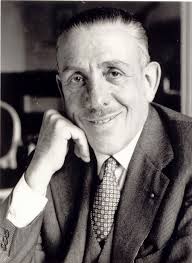 Francis Poulenc. A flute teacher, Aleah especially likes Poulenc’s Flute Sonata. Here it is, in an excellent performance by Emmanuel Pahud, flute, and Éric Le Sage, piano.
The Perplexing Francis Poulenc.
Francis Poulenc was born on January 7th of 1899 in Paris. One of France’s most popular composers, he was mainly self-taught. Many listeners feel that as a melodist, he was Faure’s greatest successor. In his music Poulenc was inspired by Stravinsky and Satie, and later by Auric and Milhaud.
Style. Poulenc’s style evolved considerably during his career, from very simplistic, direct pieces early on to much more complex compositions written after World War II. According to Seattlechambermusic.org, Poulenc struggled with both manic and depressive states. This may have led to his unique and eclectic collection of sounds and styles.
Perhaps his struggles with his identity and mental health are also part of the reason why he destroyed most of his earliest compositions. I can’t help but wonder what they may have sounded like. Many of Poulenc’s pieces took on a dark and haunting theme, such as a piece for solo piano, titled Processional pour la crémation d'un mandarin, one of the pieces that he destroyed.
An Early Start. Poulenc started writing when he was just 15 years old, in 1914. As we mentioned, none of the composition written in the following three years survive. His first popular piece was written when he was only 18 years old.
Studying with Ricardo Viñes. Ricardo Viñes was a pianist from Spain, with whom Poulenc studied. A well-regarded musician, Viñes gave premieres for many of this era’s composers, such as Ravel, Debussy and Satie; he was also their close friend. It is surprising to me that Poulenc studied with Vines, as he later joined a group that was at odds with Ravel’s style.
During Poulenc’s time with Vines, he was introduced to many composers, among them Satie and Auric. Vines helped Poulenc network and hone his art as a performing pianist.
Les Six. Les Six was a group of six French musicians. And yep! Their name pays homage to the nationalistic Russian group titled ‘The Five.’ This group (Les Six) was formed by Satie himself in the year 1919. The members of Les Six include Georges Auric, Louis Durey, Darius Milhaud, Arthur Honegger, Poulenc himself, and the only woman, Germaine Tailleferre.
Poulenc joined this group of composers and helped to collaborate on the 1920 album (fittingly named) L’Album des Six. Shortly after this, five of the six members (including Poulenc) worked together to create the collection titled Les Maries de la Tour Eiffel. In this collection, Poulenc wrote a polka, as well as the piece La Baigneuse de Trouville. The collaboration itself was an opera, which was rumored to have caused almost as much of a stir as The Rite of Spring did. The plotline is nothing short of odd. Some key points include a lion (who eats people), and a witchy child murderer. But hey, at least it sounds nice? https://www.youtube.com/watch?v=7zc2FirtReE (continue reading here).
Read more...Francis Poulenc - Sonata for Flute and Piano
Emmanuel Pahud (Flute)
Éric Le Sage (Piano)
P. Kellach Waddle - The Vampire Was Thankful to Receive a Box of French Lysol on Valentine’s Day During the Pandemic Snowstorm the Day Before the Blackout: Hymn-Lied for bass trio, op. 695
P. Kellach Waddle (Double Bass)
Jonathan Rouse (Double Bass)
Christopher Flores (Double Bass)
P. Kellach Waddle - Op. 704 : AT MACY'S Salon Serenade in 7 Movements for Bass Duo
P. Kellach Waddle (Double Bass)
Jonathan Rouse (Double Bass)
Heinrich Isaac, 2021
This Week in Classical Music: July 12, 2021. Heinrich Isaac. Gerald Finzi, a British composer, Eugène Ysaÿe, a Belgian composer and virtuoso violinist, and Giovanni Bononcini, an 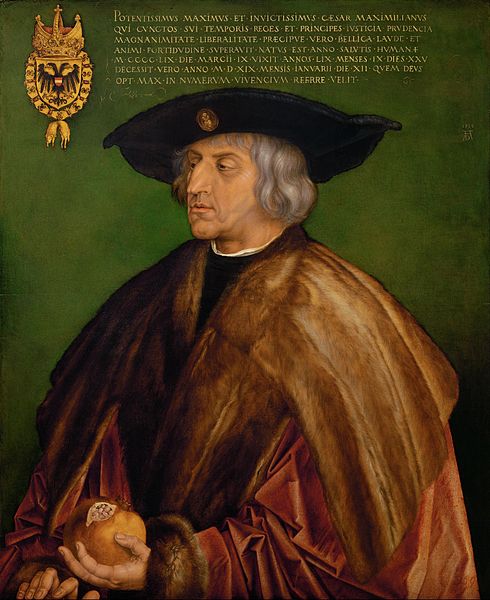 Italian and Handel’s rival, were all born this week (on July 14th of 1901, July 16th of 1858 and July 18th of 1670 respectively). But we’d like to write about Heinrich Isaac, as we haven’t done so before. Isaac, a contemporary of Josquin des Prez and Jacob Obrecht, was born around 1450 in southern Flanders, probably in the Duchy of Brabant. As usually is the case with the composers of the era, little is known about his youth. He’s first mentioned in 1484 as a composer at the court of Duke Sigismund of Austria in Innsbruck. In 1485 he was already in Florence, singing (and probably composing) at the magnificent Baptistry, at the Cathedral of Santa Maria del Fiore, and the Basilica della Santissima Annunziata. Soon after, he entered the employ of Lorenzo de’ Medici the Magnificent, the de facto ruler of Florence during that time. Lorenzo didn’t have a formal chapel of singers, but Isaac was expected to set to music the poems by Lorenzo’s favorite authors and, as Professor Strohm writes, “to contribute generally to the musical life of the Medici household and the city.” Isaac stayed in Florence till 1496; after Lorenzo died in 1492, he came under the patronage of Lorenzo’s son Pietro de’Medici. Even though the Medicis were banished from Florence in 1494, the association with the family was quite beneficial to Isaac: when Lorenzo’s other son, Giovanni, was installed the Pope Leo X in 1513, he became Isaac’s patron in Rome. In the meantime, in 1496 he found employment in Vienna, at the chapel of Maximilian I, the future Holy Roman Emperor from the Habsburg family. By 1502 Isaac was back in Italy, first in Florence and then at the Este court of Ferrara, where he had hoped to find a job. To quote Strohm: “Josquin des Prez was chosen instead, although the court agent Gian d’Artiganova reported (2 September 1502) favourably about Isaac who ‘would compose whenever asked’ and not as he pleased like Josquin.” Isaac returned to Tyrol to join Maximilian’s court and served there till 1514. In 1515 Maximilian allowed Isaac to live in Florence while receiving a salary. He stayed there, composing for Maximilian, the Pope and the church of Santissima Annunziata. Isaac died in Florence on March 26th of 1517.
Isaac was tremendously prolific, composing masses, 36 of which survive, motets and songs. He was one of the few composers to work in the German language lands, and thus influenced musical development in those countries. Here is Virgo Prudentissima, composed by Isaac for the court of Maximilan I. It’s performed by the ensemble Stile Antico, a British group which is rather unique in that it performs without a conductor. And here is another motet, Innsbruck, Ich Muß Dich Lassen (Innsbruck, I must leave thee); as the one above it was written for Maximilian I. The motet is based on a popular song, also composed by Isaac; it was also used by Johann Sebastian Bach at least twice, in his Cantata BWV 97 In allen meinen Taten and Cantata BWV 117 Sei Lob und Ehr dem höchsten Gut. Innsbruck is performed by the ensemble Hofkapelle under the direction of Michael Procter.
We don't know what Heinrich Isaac looked like -- no portraits of his are extant. The picture above, painted by Albrecht Dürer in 1519, is of the Emperor Maximilian I, Isaac's generous patron.
Read more...Heinrich Isaac - Innsbruck, Ich Muß Dich Lassen
Hofkapelle (Ensemble)
Michael Procter (Conductor)
Heinrich Isaac - Virgo Prudentissima
Stile Antico (Ensemble)
Franz Liszt - Hungarian Rhapsody No. 9 in E-flat Major "Pesther Karneval"
Dr. Michael Kaykov (Piano)
P.Kellach Waddle - Op. 688 Washing ( the disciples' feet) and Waiting ( for the darkness of the crucifixion) : Maundy Thursday Lament for Solo Bass
P. Kellach Waddle (Double Bass)