
Johann Sebastian Bach - Trio Sonata # 3
Linda Ehle (Organ)
Johann Sebastian Bach - Sonata in g minor for unaccompanied violin.
Robert Todd Ehle (Violin)
Argerich, Tennstedt 2021
This Week in Classical Music: May 31, 2021. Argerich and Tennstedt. It is hard to imagine, but Martha Argerich, that young girl who famously won the Chopin competition in Warsaw, will 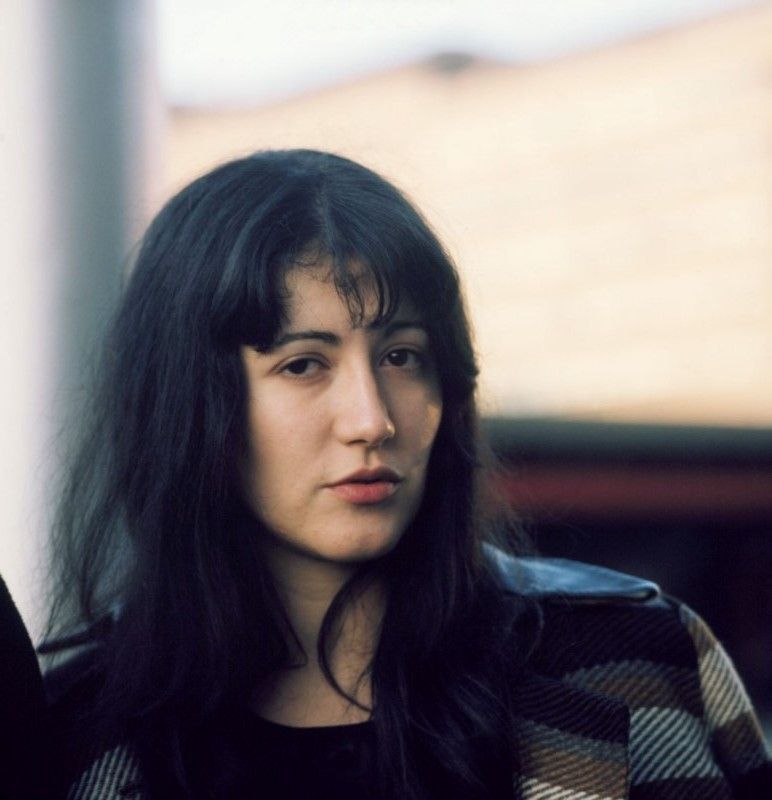 turn 80 on June 5th. We dedicated an entry to her a year ago, you can read it here. Ms. Argerich is still performing, or at least is scheduled to perform: many of her concerts have been cancelled, whether due to the Covid epidemic or for personal reasons (that’s not new, though: she’s been known for cancellations throughout her entire career). We wish her the very best and good health in particular, and to the millions of her admirers we wish for them to hear her play live.
Here are some composers that were born this week: Marin Marais, on May 31, 1656, in Paris. The French composer and viol player, he studied the viol with the famous Sainte-Colombe and composition with Lully. Marais performed at the court of Louis XIV and was famous in France and beyond. Even though he’s mostly known for his viol compositions, Marais also wrote several operas. Here’s the Overture to his opera Alcione, performed by Le Concert des Nations under the direction of Jordi Savall. Georg Muffat (born on June 1st of 1673, about whom the Gove Dictionary writes: ”German composer and organist of French birth… He considered himself a German, although his ancestors were Scottish and his family had settled in Savoy in the early 17th century.” Also: Mikhail Glinka, the first Russian composer to reject the Italianate ways of his predecessors (June 1st of 1804); Sir Edward Elgar; and Aram Khachaturian, one of the better Soviet composers.
Two conductors also have their anniversaries this week: Evgeny Mravinsky, about whom we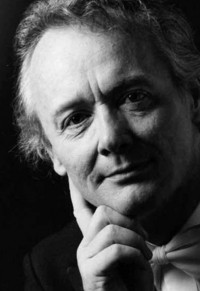 wrote here, and Klaus Tennstedt, a German conductor who was one of the 20th century’s greatest interpreters of Mahler’s symphonies. Tennstedt was born in Merseburg, near Leipzig, on June 6th of 1926. He studied the violin and piano in Leipzig Hochschule für Musik. He turned to conducting in 1948, after experiencing problems with the fingers on his left hand. Tennstedt held conducting positions in the German Democratic Republic but defected to Sweden in 1971. He made what the critics called a “stunning” debut with the Toronto Symphony in 1974, and then equally successfully performed with the Boston and Chicago Symphony orchestras. Tennstedt conducted all major American and European orchestras but was most closely associated with the London Philharmonic, where he was first the Principal Guest conductor and later Music Director. Tennstedt’s physical and emotional health came under pressure in later 1980s. He had two hip replacements and battled throat cancer, cancelled many of his concerts. In 1987 he collapsed during a rehearsal with the London Philharmonic and resigned his post immediately thereafter. He remained the orchestra’s Conductor Laurate and performed with them occasionally till 1994. Tennstedt died on January 11th of 1998 in Kiel, Germany. Here’s the last, sixth, movement of Mahler’s Symphony no. 3, which Mahler had marked Langsam. Ruhevoll. Empfunden (Slowly, tranquil, deeply felt). It is, all these things, as you can hear; Klaus Tennstedt leads the London Philharmonic Orchestra in the 1986 recording.
Johann Sebastian Bach - Partita in b minor for unaccompanied violin
Robert Todd Ehle (Violin)
Gustav Mahler - Symphony no. 3, 6th mov. (Langsam, Ruhevoll, Empfunden)
London Philharmonic Orchestra (Orchestra)
Klaus Tennstedt (Conductor)
Marin Marais - Alcione, Ouverture
Le Concert des Nations (Ensemble)
Jordi Savall (Conductor)
William Bolkom, 2021
This Week in Classical Music: May 24, 2021. Bolcom. American composer William Bolcom will turn 83 the day after tomorrow: he was born on May 26th of 1938, in Seattle. Bolcom is not just a wonderful composer, he also writes well. Recently he sent a letter to the New York Review of Books commenting on an article by Matthew Aucoin about Pierre Boulez (we referred to the article here). His letter is so much better and more interesting than anything we could’ve written about music that we decided to quote it at length. We hope that Mr. Bolcom and the NY Review will forgive us for that.
In 1959 the French musical scene was to a degree terrorized by Boulez, who said and wrote that any music not twelve-tone was not worth taking seriously. As a fresh-faced twenty-one-year-old from the West Coast studying composition at the Paris Conservatoire, I was thrown into a cauldron of musical polemic. Into this setting came Boulez’s impenetrable book Penser la Musique Aujourd’hui, an example of his oracular but very clumsy literary tone that Aucoin mentions. My compositional colleagues admired it extremely (or wouldn’t admit to not liking it), but when I requested any explanation of something he’d written, they had often to admit to not understanding it either. Boulez’s word was law even if you didn’t subscribe to it.
Boulez had put together a series of concerts of new music at the Théâtre de l’Odéon in Paris called Domaine Musical, featuring principally works of Luciano Berio, Karlheinz Stockhausen, and himself (along with a few others) to be conducted by the ailing Hans Rosbaud, who was too unwell to show up; Boulez took the baton each time without fanfare or mention in the program. I shall never forget the first concert with him listed as conductor, I think in the late fall of 1961, featuring a stunning piece by Berio for three orchestras and probably the swiftest rendition of Schoenberg’s Kammersymphonie ever performed (perhaps owing to Boulez’s nerves).
Nothing like the music of Berio, Boulez, Stockhausen, or Henri Pousseur had been heard in most of the US then. At the time some New York composers (and critics) disdained a good deal of whatever new was coming from Europe, and very little of the Boulez/Berio/Stockhausen triumvirate’s music had traveled far enough west to be heard in Seattle or San Francisco. It could be heard, however, in California by the early 1960s; Leonard Stein and I, several weeks apart, gave the first US performances of Boulez’s third piano sonata around 1963, and about then with Stanford students we did the same for Stockhausen’s Kontra-Punkte.
It’s hard for Americans to conceive of a new-music composer having this kind of power here—not even Aaron Copland at his height, or Leonard Bernstein. Aucoin’s review was perhaps the first thing I have ever read about Boulez that wasn’t intimidated by the Boulezian presence. It would be decades before new French music began to wrest itself free of his influence; I myself admit to being overcome by it in my work some of that time.
Music history abounds in examples of strong disciplines and mathematical systems inventing new sounds for composers to use creatively, but usually only once the original impulses are discarded or forgotten; this is how much musical language has often been generated, not only in our culture but in others. I was never seduced by the systems everyone seemed to subscribe to, on both sides of the Atlantic.
I’m grateful for Boulez’s premiering of two of my early works and for the excellent aural taste and frequent deliciousness his works showed (though I didn’t want to follow him stylistically). One can’t argue that he wasn’t a complete musician, one of the best ever. His recording of Stravinsky’s Le Sacre du Printemps, for example, reveals stunning details no one else had ever shown as well to my knowledge, so there is ample reason to be grateful for his conducting as well. Once the dust has settled, I think Boulez’s music should survive as a sort of elegant exquisite jewelry, shorn of the bullying polemics he and others indulged in back then.
Amazing that Boulez’s example has so much less power today. Who would have guessed that then?
Read more...
Miscellanea, May 2021
This Week in Classical Music: May 17, 2021. Miscellanea. The music of Erik Satie provides respite from the drudgery of everyday life: just listen to his Gymnopédie no. 1 in Pascal Rogé’s .jpg "Erik Satie, by Suzanne Valadon, 1892") interpretation. Satie was born on this day in 1866. Wagner’s music is a different world entirely. Richard Wagner was also born this week, on May 22nd of 1813 (are we the only ones who finds it incongruous, both musically and historically, that Wagner was only a year and a half younger than his father-in-law, Franz Liszt?). And the wonderful Jean Françaix, a composer with a great sense of humor, was also born this week, on May 23rd of 1912. He gave us many examples of how to write accessible but sophisticated music, his Concerto for Piano of Orchestra being one of them. Here his daughter Claude Françaix performs it with the London Symphony Orchestra under the direction of Antal Dorati.
interpretation. Satie was born on this day in 1866. Wagner’s music is a different world entirely. Richard Wagner was also born this week, on May 22nd of 1813 (are we the only ones who finds it incongruous, both musically and historically, that Wagner was only a year and a half younger than his father-in-law, Franz Liszt?). And the wonderful Jean Françaix, a composer with a great sense of humor, was also born this week, on May 23rd of 1912. He gave us many examples of how to write accessible but sophisticated music, his Concerto for Piano of Orchestra being one of them. Here his daughter Claude Françaix performs it with the London Symphony Orchestra under the direction of Antal Dorati.
Samson François, a French pianist, was born on May 18th of 1924. He was born in Frankfurt, where his father worked at the consulate, and by the age of six he was living in Italy, where Pietro Mascagni gave him several lessons. Eventually François settled in Paris where he studied with Alfred Cortot, Marguerite Long and Yvonne Lefebure. In 1943 he won the first Marguerite Long - Jacques Thibaud Competition. François was famous for his (often idiosyncratic) performances of the music of Debussy, Fauré and Ravel, and also the 19th century Romantics. Here’s his recording of Maurice Ravel’s Gaspard de la nuit. It was made in 1958. François died of heart failure on October 22nd of 1970, at just 46 years old. Another pianist, Alicia de Larrocha, probably the greatest Spanish pianist, was born a year earlier, on May 23rd of 1923 and played till she was 80; she lived till 2009. She was incomparable as a performer of the music of her compatriots, Isaac Albéniz and Enrique Granados, and her Mozart was sublime. Here’s Mozart Concerto no.23 in A major, K.488 with Alicia de Larrocha at the piano. The English Chamber Orchestra is conducted by Sir Colin Davis.
Birgit Nilsson, one of the greatest sopranos of the 20th century, was born on this day in 1918. Here’s the post we wrote about her three years ago.
Read more...Wolfgang Amadeus Mozart - Piano Concerto No.23 in A major, K.488
Alicia de Larrocha (Piano)
English Chamber Orchestra (Orchestra)
Colin Davis (Conductor)
Bob Ehle - Forests of the Night
Robert Todd Ehle (Violin)
Czech Radio Symphony (Orchestra)