
Jean de Castro - Quand je dors
Ensemble Clément Janequin (Ensemble)
Dominique Visse (Conductor)
Maurice Tafazzoli - Snowy walk on Venus
Maurice Tafazzoli (Piano)
Corelli 100
This Week in Classical Music: April 19, 2021. Franco Corelli. For the past two weeks we’ve been so busy with Karajan that we missed an important date: the 100th anniversary of Franco Corelli. Corelli was one of the greatest tenors of the 20th century, who excelled on the biggest 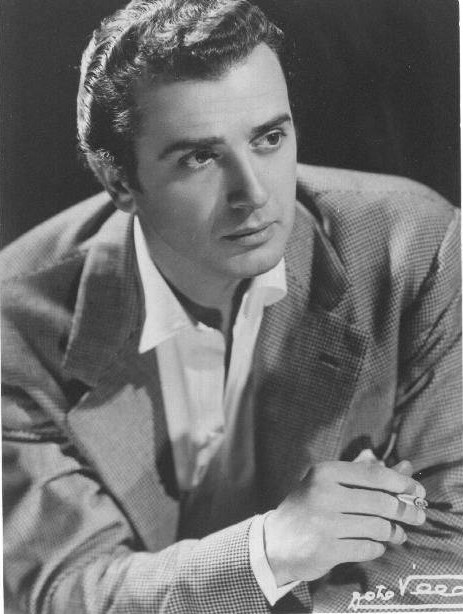 opera stages of Europe and America and left a wonderful recording legacy. He had a clear, powerful voice with a wide range, what the Italians call “spinto” tenor: he could handle both the dramatic roles (think of Mario del Monaco in the role of Canio in Pagliacci or Radames in Aida) and the lyric ones (like Pavarotti singing Rodolfo in La Boheme). It didn’t hurt that Corelli was also a handsome man with good acting abilities. Franco Corelli was born in Ancona on April 8th of 1921. His grandfather was a successful opera singer and many other family members sung either professionally or as amateurs. For a while Corelli studied at the Pesaro Conservatory, but soon decided that he didn’t like voice teachers; from that time on he was mostly self-taught. Corelli made his operatic debut in 1951 in Spoleto, singing Don José in Carmen. In 1952 he sung in the Rome Opera and joined it in 1953. That same year he sung Pollione in Norma, with Maria Callas performing the title role. In 1954 he made his debut in the famed La Scala, again singing with Callas in Spontini's opera La vestale (the opera is rarely staged these days, but YouTube has both the full opera and also this wonderful scene). Corelli would appear with Callas many times, both in La Scala and at the Met. He was asked to perform in the best opera theaters of Italy; then, in 1957, he appeared in Vienna’s State Opera, and the same year made a sensational debut in the Covent Garden, singing Cavaradossi in Tosca. The following year he went to the US, singing in Chicago and San Francisco, and in 1961 made his debut at the Met. During these years he sung with the best sopranos of the generation, Maria Callas, his favorite, Renata Tebaldi, Magda Olivero, the mezzo Giulietta Simionato and, later, Joan Sutherland. At the Met he sung with Leontine Price (she was his Leonora when Corelli sung Manrico in Il Trovatore in his first appearance at the theater) and Birgit Nilsson (their Turandot was spellbinding). Corelli sung at the Met for ten years, giving 282 performances of 18 roles.
Corelli performed at the highest level for about 20 years, but in the early 1970s his voice became a little tired, making Corelli nervous. He later said that at that time he could either eat or sleep. Corelli’s last performance was in 1975. Corelli left so many wonderful recordings, both live and studio, that it’s almost impossible to pick one to illustrate his art. Probably one of the best is his Pollione, from Norma, which he recorded in 1960 with Maria Callas and Christa Ludwig – one of the greatest Normas ever. Here is the aria Meco all'altar di Venere from Act I. Tullio Serafin conducts the La Scala Orchestra.
Read more...Vincenzo Bellini - Meco all'altar di Venere, from Norma
Franco Corelli (Tenor)
Orchestra of La Scala (Orchestra)
Tulio Serafin (Conductor)
Anton Bruckner - Symphony No. 5, Mo. 4: Finale. Adagio - Allegro moderato
Berlin Philharmonic Orchestra (Orchestra)
Herbert von Karajan (Conductor)
Anton Bruckner - Symphony No. 5, Mov. 3: Scherzo- Molto vivace (Schnell) - Trio. Im gleichen Tempo
Berlin Philharmonic Orchestra (Orchestra)
Herbert von Karajan (Conductor)
Anton Bruckner - Symphony No. 5, Mov. 2: Adagio. Sehr langsam
Berlin Philharmonic Orchestra (Orchestra)
Herbert von Karajan (Conductor)
Karajan Part II, 2021
This Week in Classical Music: April 12, 2021. Karajan, Part II. Last week we paused our Karajan story somewhere around 1946. At the end of the war Herbert von Karajan, a member of 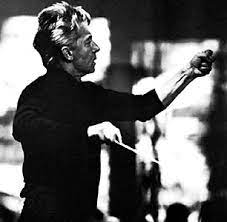 the Nazi party from 1933 and Goering’s favorite, fled to Italy – with the help of the wonderful Italian conductor Victor de Sabata; he then returned to Austria to face the denazification commission and was cleared of any Nazi-related wrongdoings – this time with the help of his father-in law, whose daughter he would divorce soon after. In 1946 he met Walter Legge, the famous record producer and the founder of London’s Philharmonia Orchestra, with which Karajan started a very fruitful relationship. During that time, he also worked with the Vienna Symphony Orchestra (and sometimes with the Vienna Philharmonic), conducted at La Scala and made conducting appearances at the Bayreuth festivals. In 1955 he achieved a pinnacle (if not the pinnacle) of any conductor’s career: he succeeded Wilhelm Furtwängler as the chief conductor of the Berlin Philharmonic Orchestra. But not everybody forgave Karajan’s past: when he took the Berlin Philharmonic on the first tour of the US, he was met with protests, his concert in Detroit was cancelled and Eugene Ormandy, the music director of the Philadelphia Orchestra, refused to shake his hand. But somehow the rest of the world – and eventually the US as well – forgot about Karajan’s past and fell under his spell. And indeed, Karajan was making wonderful music, there is no doubt about that. His concerts and numerous recording with the Berlin Philharmonic were of the highest order. He was also conducting memorable opera performances at La Scala, Vienna and in Salzburg, where he eventually founded his own Easter Festival. His international tours were immensely popular: when he visited Moscow in 1969, mounted police had to be called to the Great Hall of the Moscow Conservatory to control the crowd. Karajan had the title of Berlin Philharmonic’s music director for life, and conducted the orchestra till 1989, the last year of his life. In 1984 he had a dispute with the orchestra, when he decided to make Sabine Meyer the principal clarinet. The orchestra refused to accept her, Meyer eventually withdrew her candidacy, but the relationship between Karajan and the orchestra was permanently damaged. It is not at all clear who was right in this dispute, the despotic Karajan or the misogynistic orchestra members: after leaving the orchestra, Meyer embarked on a very successful solo career. After that episode, Karajan worked more often with another great orchestra, the Vienna Philharmonic.
In the last years of his life Karajan had many health issues but was stoic about them. He resigned his post in Berlin in August of 1989 and died two months later, on June 16th of 1989. Karajan made hundreds of recordings; it’s impossible to pick one to demonstrate the quality of his musicianship. His Bruckner was highly regarded; here is the first movement of Bruckner’s Symphony no. 5. It was recorded by Herbert von Karajan and his Berlin Philharmonic Orchestra in 1975.
Read more...Anton Bruckner - Symphony No. 5, Mov. 1: Introduction. Adagio - Allegro
Berlin Philharmonic Orchestra (Orchestra)
Herbert von Karajan (Conductor)
Jean de Castro - Quand tu tournes tes yeux
Ensemble Clément Janequin (Ensemble)
Dominique Visse (Conductor)