
Catching Up, March 2021
This Week in Classical Music: March 8, 2021. Catching up. Last week, as we wrote about Eboracum, a British Baroque group, we missed several important anniversaries, such as those of Frédéric Chopin, Antonio Vivaldi and Maurice Ravel. On March 4th Bernard Haitink 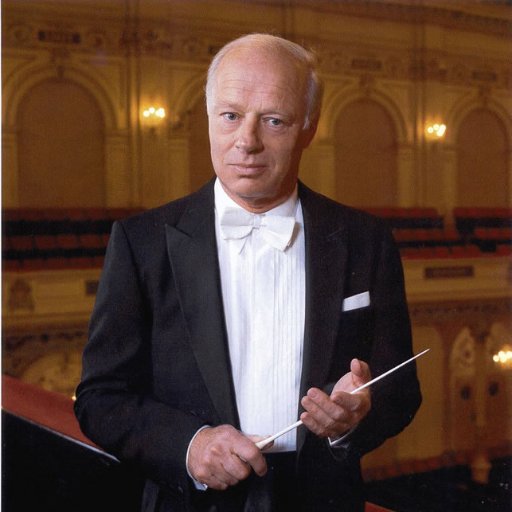 celebrated his 92nd birthday and we wish him many happy returns. And March 6th was the birthday of the wonderful New Zealand soprano Kiri Te Kanawa and the late conductor Lorin Maazel.
This week is also full of memorable dates. Carl Philipp Emanuel Bach was born on this day in 1714, and so was Carlo Gesualdo, in 1566. Gesualdo’s biography is so unusual that it is almost impossible not to get into the sordid details, which we’ve done in the past, for example here and here. Josef Mysliveček, a somewhat underappreciated Czech composer, was born on March 9th of 1737. Mysliveček was friends with the Mozarts, both father and son (they fell out eventually after Mysliveček couldn’t keep his promise to get a commission for Wolfgang from Teatro San Carlo in Naples). Mozart even arranged Mysliveček’s aria Il caro mio bene for the voice and piano (he also used a different text, so Mozart’s version is called Ridente la calma (K152). Here it is, sung by Cecilia Bartoli with András Schiff on the piano.
Arthur Honegger, Hugo Wolf, and Georg Philipp Telemann were also born this week. We’ve complained on more than one occasion about Telemann’s prodigious output: it was uneven, some not of the highest quality. But when Telemann was good, he was very good, it’s just that finding the gems isn’t easy. Here is his whimsical Alster-Ouvertüre, performed by Collegium Musicum 90 conducted under the direction of Simon Standage. The seventh movement, The concert of frogs and crows (it starts at around the 17th minute) is especially funny.
Thomas Arne, who was born on March 12th of 1710, is known these days mostly for one song, Rule, Britannia! This old (and very patriotic) song could not avoid the controversies of our culture. Rule, Britannia! was traditionally performed on the last day of the Proms, with the audience enthusiastically singing along. But of course, in 2020 some people decided that the words of the anthem are too imperialistic for this day and age and so the BBC, which organizes and broadcasts the concert, decided that the orchestral version would be performed. This is exactly what the Soviet authorities did in 1956, during the Thaw, when invoking the name of Stalin became impolitic. But it turned out that in the UK tradition trumps wokeness, and after a backlash in the media and an intervention by the Prime Minister Boris Johnson, the choral part was restated. Because of the Covid restriction there was no audience at the Royal Albert Hall, so instead a small, socially distanced choir performed the song as intended. Thomas Arne was a prolific theater composer, and some of his music is quite good: listen, for example, to this short Cantata from 1755, subtitled Dalia (here). Dame Emma Kirkby is the soprano; London Baroque is conducted by Charles Medlam.
Read more...Thomas Arne - English Cantata No. 6, Delia
Emma Kirkby (Soprano)
London Baroque (Ensemble)
Charles Medlam (Conductor)
Wolfgang Amadeus Mozart - Ridente la calma
Cecilia Bartoli (Mezzo-soprano)
András Schiff (Piano)
Georg Philipp Telemann - Alster-Ouvertüre
Collegium Musicum 90 (Ensemble)
Simon Standage (Conductor)
Nikolai Rimsky-Korsakov - Pesenka
Nico De Napoli (Piano)
Jeffrey Davidson - Nightwaltz
Jeffrey Davidson (Piano)
Eboracum Baroque, 2021
This Week in Classical Music: March 1, 2021. Eboracum Baroque. How is a small ensemble to survive the calamity of a major pandemic? When even some of the well-established 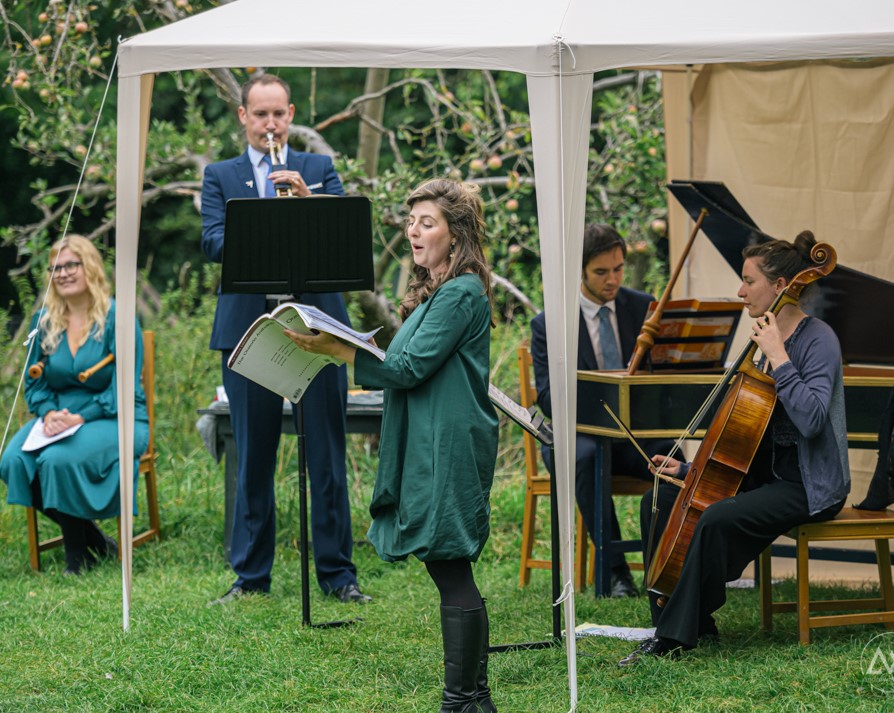 orchestra, like the Met, are suffering, how will the small ensembles and soloists fare without any endowments and little aid available to them? And is there truly a light at the end of the tunnel with the vaccine becoming more available? When are we going to enjoy – and when will musicians be able to perform – live music again? Eboracum Baroqueseems to have fared well, given the circumstances. The unusual name of the ensemble comes from Eboracum, a Roman British city we know as York. Eboracum Baroque was founded in 2012 by Chris Parsons at the University of York and the Royal College of Music as an ensemble of young professional singers and instrumentalists at the start of their classical music careers. Classic FM called them “spectacular.” They have performed across the UK and Europe in prestigious venues and festivals including Senate House, Cambridge; The Temple Church, London and Christuskirche, Hannover. In addition to playing concerts, they’ve given fully staged performances of Purcell’s Dido and Aeneas and Handel’s Acis and Galatea.
While Eboracum Baroque performs music from across the Renaissance and Baroque, they specialize in English music from the 17th and 18th century, championing overlooked English composers from the period. In 2015 the ensemble recorded their first CD. It features forgotten music by the English Baroque composer Thomas Tudway (1650-1726) recorded at Wimpole Hall near Cambridge, where Tudway worked from 1714-1726. It was described by The Guardian as “Stylish Choral Singing and playing.”
In 2015 the group went on their first major tour abroad with performances of Handel’s Messiah across Germany, receiving standing ovations from sell-out audiences and encores of the Hallelujah chorus. In 2016 they toured Estonia, with concerts of the Bach Magnificat and Vivaldi Magnificat in Tartu and Tallinn, the latter being broadcast on Estonian National Radio.
Their second CD “Sounds of Suffolk” was released in November 2018 and features forgotten music from 18th century Suffolk including violin sonatas by Joseph Gibbs and music from Ickworth House.
The group runs an active education program which works with schools across the UK. Recent projects have been based around Handel’s Water Music and Vivaldi’s Four Seasons. Eboracum Baroque also works with Terry Deary, the British author of Horrible Histories and other popular children’s books. Performances with Terry include a new narration of Purcell’s King Arthur, The Fairy Queen and the brand-new, original production “The Glorious Georgians” which received 5-star reviews at the Edinburgh Fringe Festival.
During the COVID-19 pandemic, the group has remained active, going entirely online, with themed concerts including, “Above the Stars,” “A Baroque Christmas” and “Fairest Isle,” which currently have 200,000 views on Facebook and YouTube and the Spotlight concerts, which focus on certain instruments in the group. In December of 2020 they recorded an upcoming crowdfunded CD of Handel’s Messiah with distinguished producer Adrian Peacock.
Take a listen: here’s Winter from Vivaldi 's The Four Seasons with the recorder instead of the violin as the soloist; it comes from “Baroque Christmas” performance. And here’s Fairest Isle by Henry Purcell from King Arthur, from the recent “Fairest Isle” concert.
Further details about the ensemble, the upcoming concerts and events can be found at their website: www.eboracumbaroque.co.uk. And we didn’t forget about Chopin, Vivaldi and Ravel: we’ll celebrate them the next week.
Read more...Henry Purcell - Fairest Isle, from King Arthur
Elen Lloyd Roberts (Soprano)
Eboracum Baroque (Ensemble)
Antonio Vivaldi - Winter, from The Four Seasons
Eboracum Baroque (Ensemble)
Jeffrey Davidson - Variations on "Amazing Grace" for solo violin
Idim Pazzo (Violin)