
Frédéric Chopin - Nocturne no. 1 in B-Flat minor, Op. 9,
Alexander Brailowsky (Piano)
Frédéric Chopin - Ballade No.3 in A flat major Op.47
Ignaz Friedman (Piano)
Franz Liszt - Consolation N° 3
Nico De Napoli (Piano)
Berg, Cavalli 2020
This Week in Classical Music: February 8, 2021. Berg and Cavalli. Last week we posted, for the first time, a political statement. We’re not going to turn Classical Connect into a Culture Warrior but will comment on the Culture Wars when facts – the outrageous ones – call for it. Today, however, we’d like to point out the gross hypocrisy that the Met Opera perpetrated while hiring a Chief Diversity Officer: the Met is the only major organization currently not paying their orchestra musicians any salary due to Covid; the orchestra is on a verge of complete collapse. In the meantime, we can safely assume that Ms. Marcia Lynn Sells, the new CDO, whose prior position was the Dean of Students at Harvard Law School, is not going to donate her services to the Met but will received a handsome C-level salary. And one other thing: the Met Opera is not the only “Metropolitan” organization that has hired a Chief Diversity Officer: the Met Museum 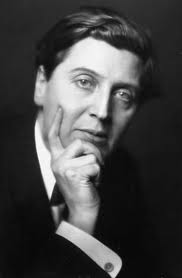 did the same 2 ½ months ago, we guess so that Rembrandt is properly curated with diversity in mind.
Back to the music, though. Alban Berg was born this week, on February 9th of 1885. A student of Arnold Schoenberg, he was, without a doubt, one of the most important composers of the 20th century, especially considering his operas, Wozzeck and Lulu. Two years ago, when we wrote about Berg, we even posted five minutes from Lulu, which clearly is one of the most difficult operas. Nonetheless, the emotional intensity and lyricism of Berg’s music are spellbinding. Here’s another entry about Berg, from 2017. Speaking of modern operas: it’s worth looking up an interesting recently released Russian animation called The Nose or the Conspiracy of Mavericks. It is, very generally, about the great Russian writer Nikolai Gogol working on a short story, Nos (The Nose), Dmitry Shostakovich writing an opera based on the story and the famous director Vsevolod Meyerhold attempting to stage it. Most of the musical score of this full-length animation is from Shostakovich’s opera.
Francesco Cavalli was also born this week, on February 14th of 1602. He stood at the beginning of opera: his first one, Le nozze di Teti e di Peleo, was composed in 1639 and was only the third opera to be performed in Teatro San Cassiano, the very first opera house to be built for the public and inaugurated in 1637. In the following 27 years Teatro San Cassiano staged 15 more operas, 14 of which were composed by Cavalli. La Didone was Cavalli’s third opera, composed and staged at San Cassiano in 1641. Here’s the marvelous Frederica von Stade is singing the beautiful L'alma fiacca svanì, Cassandra’s Lamentation, from Act I. The Scottish Chamber Orchestra is conducted by Raymond Leppard. And a bit more about Teatro San Cassiano: it had a long and glorious history, but in 1805 the theater was closed by the occupying French and in 1812 the building demolished. Almost 200 years later, the British entrepreneur Paul Atkin decided to rebuild the famous theater according to the archival documents as close to the original as possible, and to create there a center for the research and staging of historically informed Baroque opera. Nothing is easy in bureaucratic Italy, especially in Venice; the project has been moving forward, slowly, since 2015 and we wish it the best. The Financial Times has a good article on the project, worth checking out.
Read more...Francesco Cavalli - L'alma fiacca svanì, from La Didone
Frederica von Stade (Mezzo-soprano)
Scottish Chamber Orchestra (Orchestra)
Raymond Leppard (Conductor)
Current Events 2021
This Week in Classical Music: February 1, 2021. Nota Bene. Of the great composers, only Felix Mendelssohn was born this week. We also celebrate the genius of Palestrina around this time: he died on February 2nd of 1594 and, according to some sources, only one day before his 69th birthday. Of the composers not as famous, Alessandro Marcello was born on this day in 1673. We’ve written about all of them on a number of occasions, so instead we intended to focus  on the interpreters, highly talented in their own right if not as creative. Two phenomenal violinists were born on the same day: Fritz Kreisler on February 2nd of 1875 and Jascha Heifetz in 1901.
But as we were about to write about these great musicians, it occurred to us that we cannot. As much as we love them, we simply cannot when we see what is happening around us. We believe in the utmost importance of music, but we cannot ignore what is happening outside, in the real world. What we see is the attack on the freedom of speech, the most fundamental aspect of our society. And this is an attack on our personal freedom as well. What started with assaults on individuals (shaming and canceling) has now grown into attacks on established media companies and inconvenient social media sites: a literary agent was fired because she used them. Not even for the content of the messages she posted there but for the fact that she used them – not that the former would be much better. Journalists who are prime beneficiaries of the freedom of speech now advocate regulations and censorship. And if you think that freedom of speech is unrelated to freedom of musical expressions, think again. Soviet Union and Nazi Germany are prime examples: in 1930 the Soviet Union cancelled all “bourgeois” music which covered most of what was composed in the 20th century; the Nazis banned all Jewish music – and what is most frightening, people supported these decisions. And now Metropolitan Opera hires a Diversity Officer – actually, the title is Chief Diversity Officer, so we can assume that there will be other diversity officers within the organization. According to the Met, her role would be to “develop new diversity initiatives” and help in “dismantling racial inequalities within the institution.” We are well aware that in the past the Met, like so many other institutions, was racist – the great Marian Anderson was allowed to perform on its stage only in 1955, when she was 58. But that was 66 years ago. Is the role of the Chief Diversity Officer to find a new Leontine Price or a Jessye Norman, who were the greatest American singers to ever perform on Met’s stage? What about Shirley Verrett, Kathleen Battle, Lawrence Brownlee and tens of other wonderful black singer who graced the Met with their art during the last 40 years? During that time the Met had its share of scandals involving singers both white (Angela Gheorghiu) and black (Kathleen Battle) but we never heard any complaints about the company being racist. Did it suddenly turn racist in the last six months?
The role of a Chief Diversity Officer reminds us of the Soviet Union. There, every musical organization, from the Bolshoi Theater to a chamber orchestra, had to have a Party organization, at the head of which stood its Secretary. His or her role was to ensure that only the appropriate music is being played, that Party members are duly promoted, and the unreliable ones wouldn’t be sent on a cherished concert tour in the West. Do we really want to live in a new cultural Soviet Union?
If you wish to share your thoughts, the Contact information is at the bottom of this page.
Read more...Francis Poulenc - Violin Sonata, FP 119
Veronique Mathieu (Violin)
Jasmin Arakawa (Piano)
Lili Boulanger - Two Pieces for Violin and Piano
Veronique Mathieu (Violin)
Jasmin Arakawa (Piano)
Claude Debussy - Sonata for Violin and Piano
Veronique Mathieu (Violin)
Jasmin Arakawa (Piano)
Frédéric Chopin - Impromptu no. 3 in G-flat major, Op. 51.
Nikita Magaloff (Piano)