
Calendar, 2020
This Week in Classical Music: January 25, 2021. Calendar Quirks. Why couldn’t Fate be more even-handed? She, the Greek goddess of Time, is responsible for our lives, the moments we 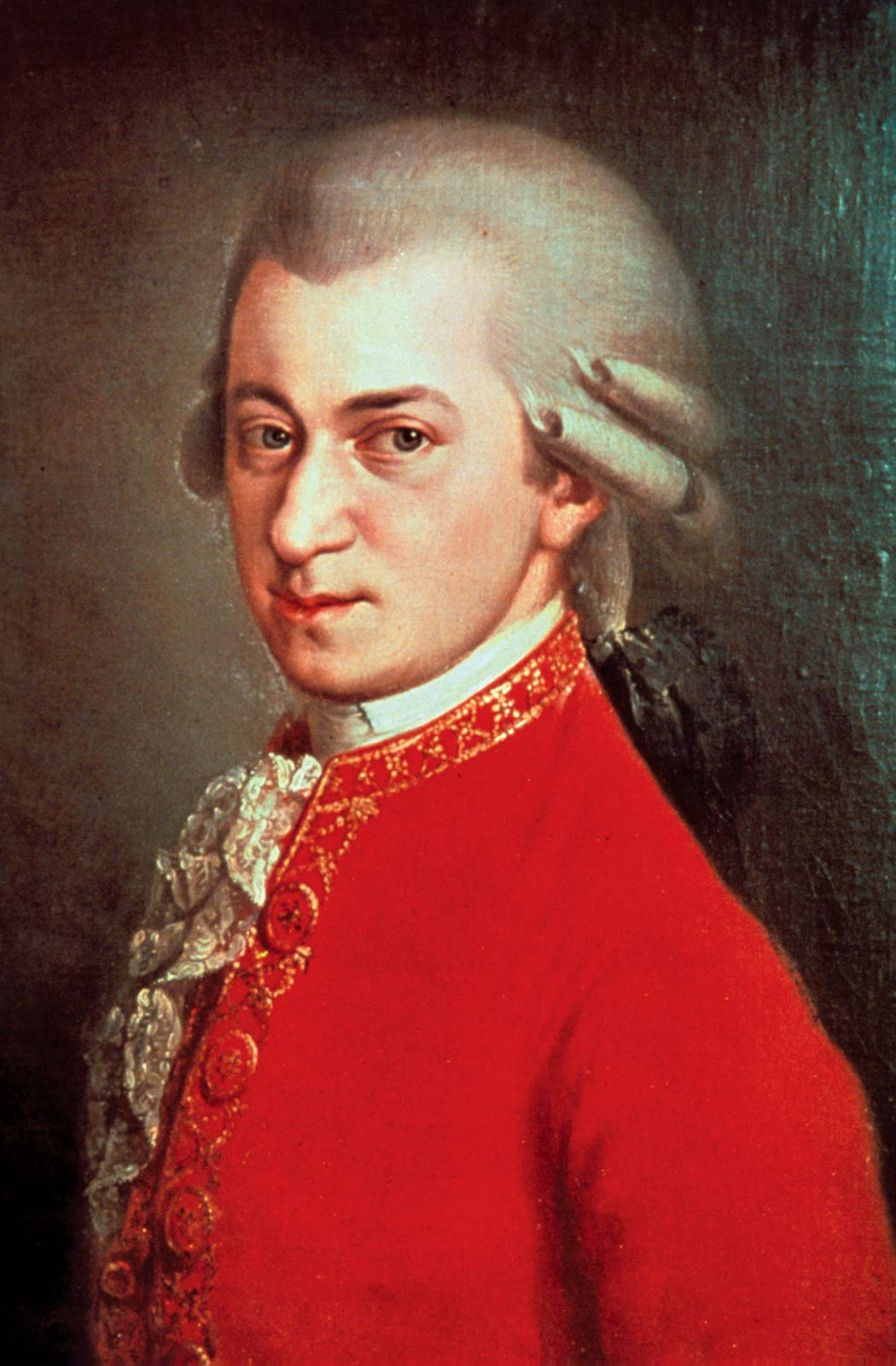 are born and die, so why couldn’t she spread geniuses more evenly? Take 52 of them – and there have been at least that many since the time of Josquin – and just deliver them once a week! But no, she’s capricious or doesn’t pay enough attention to these things. So, four days after Mozart’s birth on January 27th she gives us Schubert! And even that is not enough for her: just next to them she places two important composers of the 20th century: the Polish Witold Lutoslawski and Luigi Nono, an Italian. And then Édouard Lalo of the Symphonie espagnole fame and John Tavener, the Brit made popular by his minimalist Orthodox music. Clearly, she wasn’t done with this week, as, for good measure, she placed two great pianists, Arthur Rubinstein and John Ogdon within it too. And she seems to be keen on the cello because Jacqueline du Pré and Lynn Harrell, who unfortunately left us last year, were also born this week. And
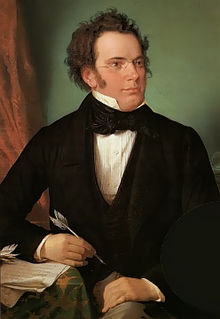 just to top it off, she decided that Wilhelm Furtwängler, one of the greatest conductors of the 20th century, should also be born this week.
There is not much we could say about this cornucopia, but we can play some music. Here is one pair: the 1961 recording of Arthur Rubinstein playing Mozart’s Piano Concerto no. 20 with Alfred Wallenstein conducting the RCA Victor Symphony Orchestra. And here is another: Wilhelm Furtwängler conducts Schubert’s "Unfinished" symphony. The recording, with Furtwängler’s Berlin Philharmonic Orchestra, was made live in 1953. We would’ve loved to play Franz Schubert's Piano Sonata in C minor, D.958 in John Ogdon’s performance – we know that he made that recording in 1972 – but we don’t have access to it. We’d love to share it with you some day.
Read more...Wolfgang Amadeus Mozart - Piano Concerto no. 20
Arthur Rubinstein (Piano)
RCA Victor Symphony Orchestra (Orchestra)
Alfred Wallenstein (Conductor)
Henri Duparc, 2021
This Week in Classical Music: January 18, 2021. Duparc and Elman. Last year this week we celebrated Johann Hermann Schein and Farinelli. Some years ago it was the Russian composer  of French descent César Cui and two real Frenchmen, Ernest Chausson and Emmanuel Chabrier (here). And we’ve written about Henri Dutilleux several times (for example, here, here and here). All these composers (and the famous castrato) had their birthdays this week. But, as always, there are several musicians which we, for one reason or another, had left out. One is the composer Henri Duparc. Duparc was born in Paris on January 21st of 1848. He studied with César Franck, to whom he dedicated several compositions, for example this symphonic poem, Lénore. Duparc’s best known pieces are his “art songs,” most of which he wrote around 1870. Here’s Phidylé, sung by Renée Fleming, and here Natalie Dessay sings Supir. At the age of 37 Duparc developed certain mental problems that at the time were diagnosed as "neurasthenia” and stopped composing. He was not mad in the usual sense, it is very likely that his problems were of a physical nature: some suggest hyperaesthesia, an extreme sensitivity of the skin. He moved to the south of France and led a quiet life, and eventually moved to Switzerland. He took up painting as a hobby and spent time with his family. But there were more problems to come: around the turn of the century, he started losing his eyesight and soon went completely blind. Later in his life he destroyed much of his music, leaving only about 40 compositions. Whatever is left is of a remarkably high quality: listen, for example, to this wonderful song, Chanson triste, performed by Elly Ameling. Duparc died on February 12th of 1933 in Mont-de-Marsan, completely blind and partially paralyzed. He was 85.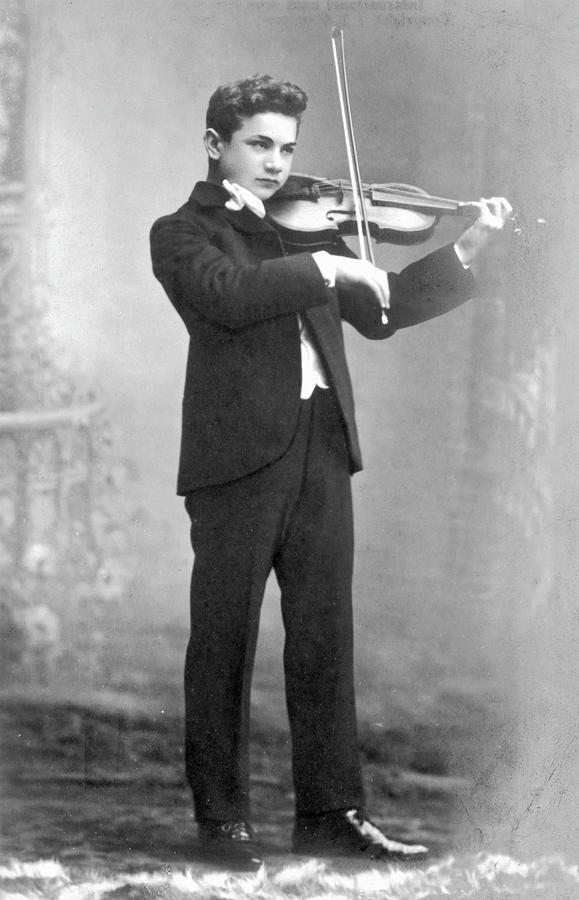
One of the most interesting violinists of the 20th century, Mischa Elman was also born this week, on January 20th of 1891, in a small town of Talnoye not far from Kyiv. From 1897 to 1902 he studied the violin in Odessa with the virtuoso violinist and teacher Alexander Fiedemann. In 1903 he so impressed the visiting Leopold Auer that the famed pedagogue took Mischa to St. Petersburg to study in his class at the capital’s conservatory. One year later he gave a highly successful concert in Berlin, then premiered in London and in December of 1908, in New York. By then he had already established himself as one of the greatest violinists of the era. Elman settled in New York in 1911.
Elman’s career reached its zenith during the years when recordings were still not widespread and few of them were reissued on CDs. His playing was “romantic” but he had great taste; his sound was of incomparable beauty. You can hear it for yourself in this recording from 1959 of Massenet’s Meditation from Thais. Mischa Elman died in New York on April 5th of 1967.
Read more...Jules Massenet - Meditation from Tais
Mischa Elman (Violin)
Joe Seiger (Piano)
Henri Duparc - Chanson triste
Elly Ameling (Soprano)
Dalton Baldwin (Piano)
Henri Duparc - Soupir
Natalie Dessay (Soprano)
Philippe Cassard (Piano)
Henri Duparc - Chanson triste
Gérard Souzay (Baritone)
Dalton Baldwin (Piano)
Henri Duparc - Phidylé
Renée Fleming (Soprano)
Philharmonia Orchestra (Orchestra)
Sebastian Lang-Lessing (Conductor)
Henri Duparc - Lénore
Orchestre du Capitole de Toulouse (Orchestra)
Michel Plasson (Conductor)
Franz Schubert - Symphony No 8 "Unfinished"
Berlin Philharmonic Orchestra (Orchestra)
Wilhelm Furtwängler (Conductor)