
Karajan Part I, 2021
This Week in Classical Music: April 5, 2021. Karajan, Part I. Today is the birthday of Herbert von Karajan, one of the greatest conductors of the 20th century. He was born in 1908, in 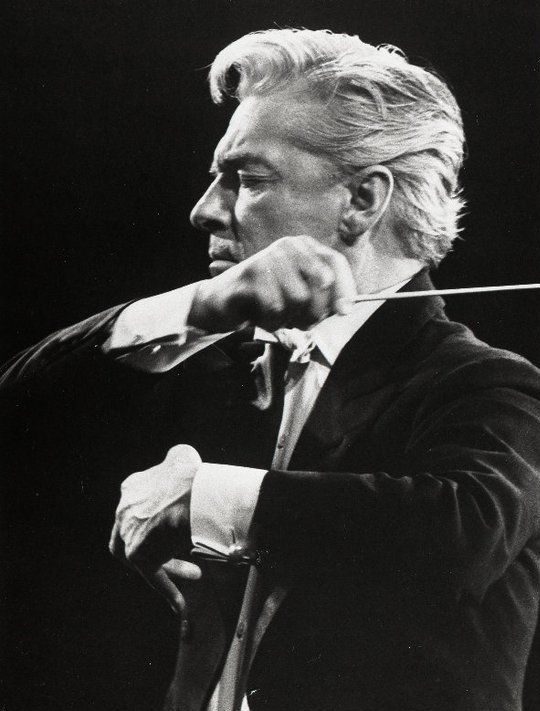 Salzburg. Karajan is a Germanized version of the Greek name Karajannis; Herbert’s great-great-grandfather was born in what’s now Greece (back then the territory was an Ottoman possession) and moved to Vienna in 1767. Karajan’s story presents a problem similar to the one posed by the life of the recently deceased James Levine: how are we to judge – or accept – a tremendous musical talent embodied in a flawed personality. In the case of Levine, it was very credible accusations of sexual abuse of young men. With Karajan it was his membership in the Nazi Party. It appears that Karajan joined the Party twice, first, in April of 1933 while in Salzburg, and then two years later when he was living in Aahen. April 1933 was just months after Nazis came to power in Germany – joining the Nazi Party then was early and damning. Moreover, it has been said that during the Nazi period he always opened his concerts with the "Horst-Wessel-Lied," Nazi’s unofficial anthem. We should contrast this with Wilhelm Furtwängler, the leading conductor of the time. Here’s from Wikipedia: “Furtwängler never joined the Nazi Party. He refused to give the Nazi salute, to conduct the Horst-Wessel-Lied, or to sign his letters with "Heil Hitler", even those he wrote to Hitler.” He also refused to participate in many propaganda activities. Moreover, Furtwängler had helped many of his Jewish musicians to escape prosecution. Nevertheless, because Furtwängler stayed in Germany during the Nazi years, he had to endure a lengthy de-Nazification trial and years later had to suffer the humiliation of a rescinded offer from the Chicago Symphony, when Toscanini, Szell, Horowitz and several other prominent musicians threatened the orchestra with a boycott if Chicago were to hire him. Karajan’s fate was very different: he was examined by the de-Nazification board and immediately cleared of any illegal activities, resuming his international career shortly thereafter. On the other hand, it should be mentioned that in 1942 Karajan married a quarter-Jewish Anita Gütermann, after which he was stripped of many positions (he did keep the directorship at the Staatskapelle, though). The Salzburg Wiki says that after the war Karajan and Gütermann fled to Italy, as he was temporarily banned from performing in Germany and Austria. Karajan pleaded with his father-in-law to help him in his de-Nazification process, which Gütermann apparently did. Karajan’s gratitude didn’t last long, as in the early 1950s he met the young French model Eliette Mouret and divorced Anita.
Be it as it may, Karajan was a tremendously talented and hardworking conductor. He spent his formative years, 1929 to 1934, as the assistant Kapellmeister at Ulm’s Städtisches Theater. He then moved to Aachen as the youngest ever Generalmusikdirektor. In 1938 he made his debut with the Berlin Philharmonic, and in 1941 he was appointed music director of the Staatskapelle Berlin, where Daniel Barenboim currently occupies the same position. In 1946 he met Walter Legge who had just a year earlier formed the Philharmonia Orchestra in London. Karajan worked with the Philharmonia Orchestra from 1946 till 1960, making a number of notable recordings.
In 1946 Karajan was 38 and had another 43 years to live and conduct, which he would till the very end. We’ll continue with him next week.
Read more...Rach-Busoni, 2021
This Week in Classical Music: March 29, 2021. April 1st is a big day for pianists: first of all, it’s the birthday of Sergei Rachmaninov, one of the greatest pianists in history and of course a brilliant composer, who wrote many pieces for his favorite instrument. Rachmaninov’s music, 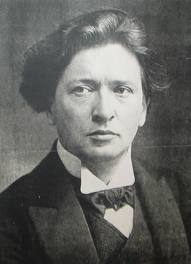 especially his piano concertos no. 2 and 3, is widely played and popular with music listeners. It’s also the birthday of Ferruccio Busoni, also a pianist and composer. As a composer he’s not as famous as Rachmaninov, although his piano transcriptions of the organ works by Bach are part of the standard piano repertoire, but as a pianist he rivaled anybody at the end of the 19th – early 20th century. Busoni was born in 1866, Rachmaninov – in 1873, and these six years, plus the fact that Busoni lived only 58 years make a big difference in their recording legacies: we have a significant number of recordings by Rachmaninov, some of them – recordings of his own works; they are well-known and well-loved. Not so with Busoni: all that is left are several recordings made during one day in February of 1922 at Columbia Studios in London. Their quality is low, the background noise significant, but they are still interesting as historical artefacts. Here is Busoni playing his own transcription of Bach’s organ prelude Nun freut euch, lieben Christen gmein (Rejoice, Beloved Christians) BWV 734. Busoni also made several piano rolls, but those do not authentically represent the pianist’s art. One of the few champions of Busoni’s original compositions is the wonderful pianist Alfred Brendel. Here he is playing, live, Busoni’s Toccata (Preludio - Fantasia – Ciaccona).
Dinu Lipatti, a great Romanian pianist, was also born on April 1st, in 1917. We wrote about him two years ago, here. In that entry there’s also more information about Rachmaninov the pianist. There is also a bit about Vladimir Krainev, a wonderful Soviet pianist, who was born on April 1st of 1944. Here are Schumann’s Symphonic Etudes, recorded by Krainev live in 1974. Busoni had many pupils, Egon Petri and Percy Granger among them. Krainev was also a prominent teacher. In 1994, during an economically difficult period in Russia, he organized a foundation to help young musicians. The foundation has grown and now has affiliates in several countries. He also organized the Krainev Young Pianists Competition which has helped to promote careers of dozens of young pianists.
Franz Joseph Haydn was also born this week, on March 31st of 1732. We love him and have written about him many times. And Alessandro Stradella, whose biography is almost as unusual that of Carlo Gesualdo was born on April 3rd of 1639.
Read more...Robert Schumann - Schumann Symphonic Etudes, Op.13
Vladimir Krainev (Piano)
Ferruccio Busoni - Toccata
Alfred Brendel (Piano)
Johann Sebastian Bach - Nun freut euch, lieben Christen gmein, BWV 734
Ferruccio Busoni (Piano)
Johann Sebastian Bach - Sonata No. 1 in G minor for Solo Violin
Vlad Bourceanu (Violin)
Bartok & more, 2021
This Week in Classical Music: March 22, 2021. Bartók and much more. Béla Bartók’s 140th birthday is on March 25th. Bartók was one of the most brilliant composers of the 20th century, 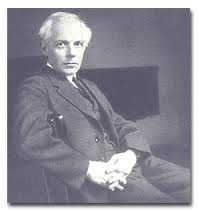 and we feel that these days he is not being played as often as he should be. Maybe it’s a temporary problem: even though his music is tonal in general terms, it may be too pungent for the Covid era. We’ve written about Bartók many times, for example here, here and here. A much more difficult, but also superb composer was born on March 26th of 1925: Pierre Boulez. There has been much public debating about the music of Boulez and other rigorously atonal and serialist composers such as Charles Wuorinen and Milton Babbitt. The young American composer and conductor, Matthew Aucoin wrote a scathing article in the NY Review of Books called Sound and Fury (very much worth reading). William Bolcom, who is 82, responded gently in Remembering Boulez. This debate is not going away.
A very different composer, Johann Adolph Hasse was born on March 25th of 1699 near Hamburg. A German, he was instrumental in developing the Italian Opera Seria. Hasse stands as one of the great opera composer of the early 18th century, on par with Alessandro Scarlatti and Antonio Caldara of the generation before him, and George Frideric Handel, Nicola Porpora, Antionio Vivaldi and Leonardo Vinci, with whom he competed directly. Here’s a lovely aria from Hasse’s 1742 opera Didona Abbandonata on the libretto of his friend Metastasio. The countertenor is Valer Barna-Sabadus. Hofkapelle München is conducted by Michael Hofstetter.
Franz Schreker is another opera composer who was very popular during his lifetime but who disappeared practically without a trace soon after. Here is what we’ve written about him a couple years ago. And that year, as this one, the pianist Egon Petri had his anniversary during the same week. Like Bartók, he was born in 1881 and would be 140 on March 23rd.
Speaking of pianists: Byron Janis will turn 92 on March 24th. At the age of eight he became Vladimir Horowitz’s very first pupil. Janis played his debut concert at the Carnegie Hall in 1948 and instantly became one of the stars of his generation; he performed with all major orchestras and played at many major halls worldwide. In 1960, two years after Van Cliburn had won the first Tchaikovsky competition, Janis toured the Soviet Union with spectacular success. In 1973 he developed arthritis which brought his brilliant career to a halt. Here’s Byron Janis playing Rachmaninov’s Prelude in E-Flat Major, Op. 23, No. 6
And then there are two моrе eminent pianists, Wilhelm Backhaus and Rudolf Serkin. Backhaus was born on March 26th of 1884 in Leipzig, Serkin – on March 28th of 1903 in Eger, a town in Bohemia now called Cheb. Both immensely talented, both great interpreters of the music of Beethoven, both native German speakers, both spent a lot of time in the US, but it’s hard to imagine more different biographies. Backhaus was close to the Nazis and knew Hitler personally, though eventually he emigrated from Nazi Germany to Switzerland. Serkin, of Russian-Jewish decent, lived in Vienna and then in Berlin, but after the rise of Nazism had to flee Germany first to Switzerland then to the US.
Last but not least, Mstislav Rostropovich. The great cellist was born on March 27th of 1927.
Read more...Sergei Rachmaninov - Prelude in E-Flat Major, Op. 23, No. 6
Byron Janis (Piano)
Johann Adolph Hasse - Didona Abbandonata
Valer Barna-Sabadus (Countertenor)
Hofkapelle München (Ensemble)
Michael Hofstetter (Conductor)
Jeffrey Davidson - Audi Nos Domine
Alexi Idim Nebunesc (Piano)