
Robert Ehle - Petroglyphic Duo
Robert Todd Ehle (Violin)
Charles DuChateau (Cello)
Bob Ehle - Yucatan Trio
Keith Bowen Trio (Trio)
Robert Ehle, May 2021
This Week in Classical Music: May 10, 2021. Robert Ehle on his music. This week’s entry is rather unusual: we provided this space to Robert Ehle, composer and Emeritus Professor of Music and Composition, Electronic Music and Acoustics at the University of Northern Colorado. He’s discussing his piece called Petroglyphic Duo for violin and cello; you can listen to it here. And with this, we turn it over to Robert Ehle:
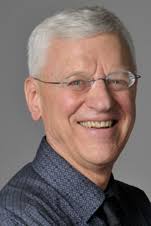 My Petroglyphic Duo for Violin and Cello, Opus 118, is one of a group of compositions that use the word Petroglyphic in their title. This word is supposed to carry the meaning of ageless or timeless, as opposed to modern, Classical, Neoclassical or contemporary. The meaning comes from my long study of world cultures and anthropology and is supposed to mean a kind of music that could have existed in some time or place in the distant past or in another part of the world. Compositions that utilize this word, in addition to the Duo, include a Petroglyphic Duo for Oboe and Trumpet and twelve single-movement Petroglyphic Piano Sonatas.
I have collected folksongs and studied performance practices in a dozen African countries including Lizuli Village, Botswana, a favorite destination of Overseas Adventure Travel (OAT) with whom I occasionally travel. My wife and I have traveled to more than 60 countries. We have also traveled to famous paleolithic cultural sites including the Cro Magnon sites along the Dordogne River in southwestern France and Olduvai Gorge in Tanzania where Australopithicus lived six million years ago. When you see the petroglyphic images and the cave paintings you get a pretty clear idea that something cultural was going on in these places and that it would have included music, both vocal and instrumental, employing hand made instruments. I play the Duduk, purchased in Uzbekistan, and the Zurna, purchased in Istanbul.
The Petriglyphic Duo is in three movements. The first movement opens with a section built from portamenti, such as might be found on the stick fiddle or the didgeridoo in Australia. Then the Allegro section that follows has the big theme that is an audience favorite.
The second movement opens with a 4-voice chorale, played by the use of double stops on both instruments. Then follows a folk song, Down by the Susquehanna, from the region of Lancaster, Pennsylvania, where I come from. The movement ends with a repeat of the chorale.
The third movement is a four-quadrant double canon. It is a strict canon throughout and is in four sections. The first section features the original form of the canon, the second section features the retrograde inversion form of the canon, the third section features the inversion form of the canon and the last section features the retrograde form of the canon. Thus, the movement is like the four quadrants of a circle and ends where it began. The word Canon means rule, and this piece follows two strict rules throughout. <continue reading here>
Read more...Frédéric Chopin - Piano Sonata N° 3 - Op 58 (1st Movement)
Maria Perrotta (Piano)
Tatiana Nikolayeva, 2021
This Week in Classical Music: May 3, 2021. Tatiana Nikolayeva. This is the week we always feel stumped: two very different but supremely talented composers were born on the same day, May 7th, Peter Tchaikovsky in 1840 and Johannes Brahms in 1833 and we’re never sure how to 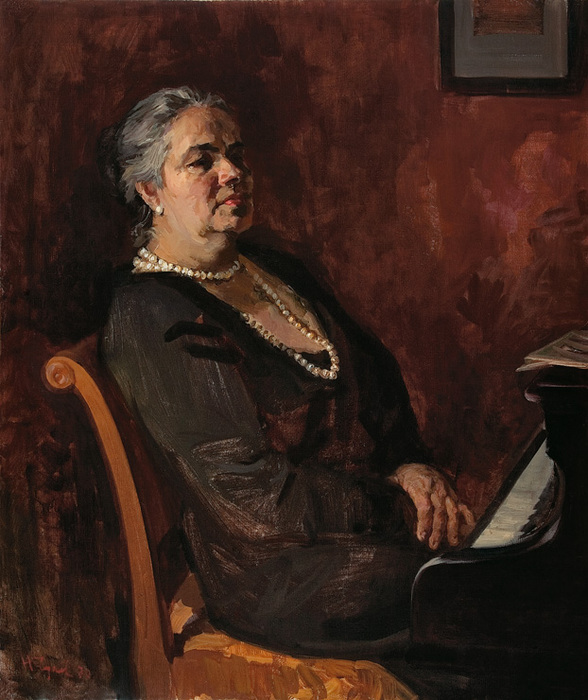 approach this dual anniversary. We’ve tried everything: to compared them on some formal parameter, such as their piano or violin concertos, or their symphonies, as dissimilar as they are, or emphasize incongruities, which are numerous. Nothing really ever worked. Some years we’ve written about one or another; that always felt incomplete. This year we’ll just acknowledge them and move on. Several interesting composers were also born this week, for example Stanisław Moniuszko, the author of many songs and the father of the Polish national opera (Halka, The Haunted Manor and several other operas are still being staged, more often in Poland and Belarus, where Moniuszko is also considered a national composer). Moniuszko was born on May 5th of 1805. The French organist and composer Marcel Dupré (born on this day in 1886), Carl Stamitz, the German composer of Czech descent and one of the more interesting representatives of the Mannheim school (b. May 8th of 1745), the American pianist and composer Louis Moreau Gottschalk (b. May 8th of 1829) – all have their anniversaries this week.
The person we would like to remember today is Tatiana Nikolayeva, a Soviet pianist not well known in the West. She was born on May 5th of 1924 in Bezhitsa, a small town near the city of Bryansk. She started playing piano at the age of three, then moved to Moscow where she studied with Alexander Goldenweiser. Very poor, she earned a bit of money working as an accompanist. She graduated the Moscow Conservatory in 1947 majoring in piano and three years later received a diploma in composition, both cum laude. In 1950 Nikolayeva won a Bach International Competition in Leipzig. Dmitry Shostakovich was the Chairman of the jury and they became good friends. It was Nikolayeva who two years later premiered Shostakovich’s 24 Preludes and Fugues. Nikolayeva’s repertoire was enormous: her page on the site of the Moscow Conservatory states that from 1942 to 1993 she played 3,000 concerts, performing 1,000 different composition by 74 composers. She recorded more than 50 LPs and 20 CDs. Nikolayeva played all clavier compositions by Bach, all piano sonatas and concertos by Beethoven, piano music by Scarlatti, Mozart, Schubert, Chopin, Schumann and on to the 20th century. She performed the composers that were either not popular or semi-banned in the Soviet Union, such as Stravinsky and Hindemith. For more than thirty years Nikolayeva was a professor at the Moscow Conservatory; among her students were Nikolai Lugansky and Oxana Yablonskaya. On November 13, 1993 Nikolayeva was playing a concert in San Francisco when she had a stroke. She died nine days later, on November 22nd of that year.
It’s hard to select a representative sample from such a rich legacy but playing a Prelude and Fugue by Shostakovich seems appropriate. Here is no. 22, in G minor. The recording was made in 1962.
Read more...Dmitry Shostakovich - Prelude and Fugue in G minor, Op. 87, No. 22
Tatiana Nikolayeva (Piano)
Joseph Defazio - Inspirazione - Inspiiration
Joseph Defazio (Piano)
Jean de Castro, 2021
This Week in Classical Music: April 26, 2021. Jean de Castro. Of all the composers and performers that we’re aware of, the only really significant one to have a birthday this week is 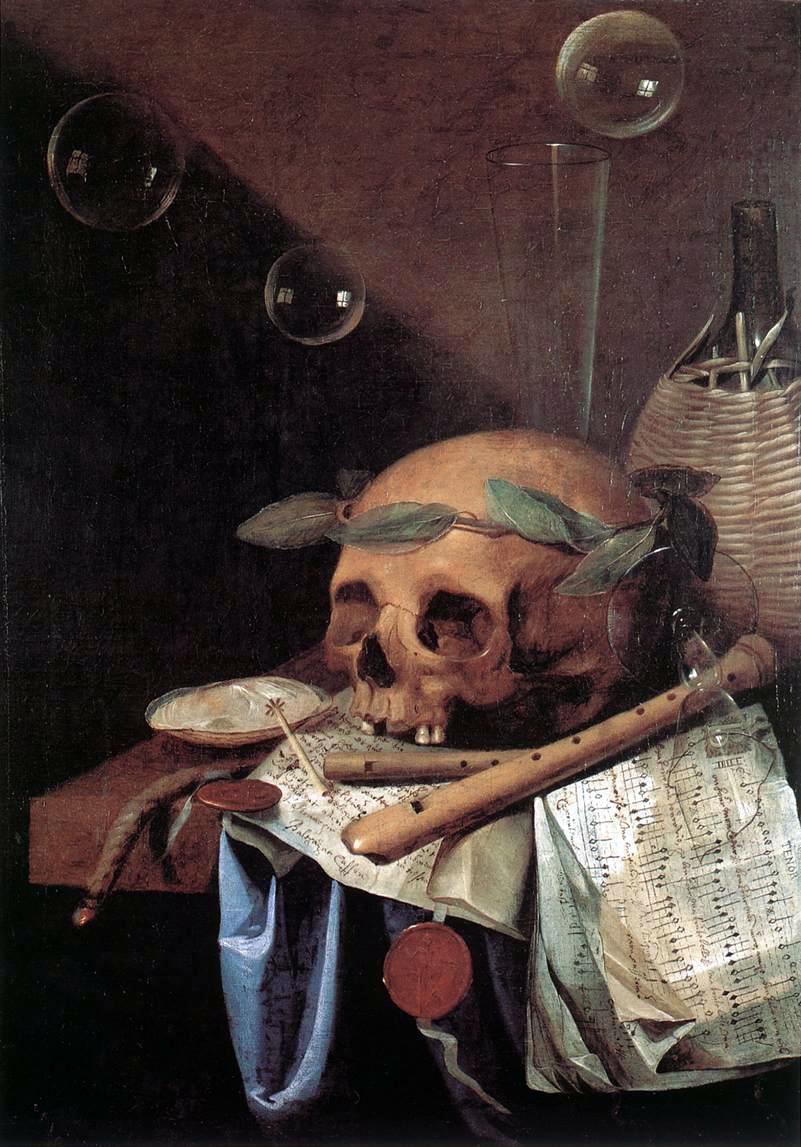 Alessandro Scarlatti. We think very highly of him and thanks to Cecilia Bartoli his music is better known these days, although he still seems to be rather underappreciated. We’ve written about him several times, including this entry a year ago (but also here and here). Duke Ellington, born on April 29th of 1899, was a tremendously talented composer but a jazz-related site would be a more appropriate place to celebrate him. We, on the other hand, will use this time to write about one of the numerous composers of the Renaissance and early Baroque whose birth dates were lost. We are aware of about 150 composers that were born from the end of the 14th to the beginning of the 18th centuries, whose birthdays are unknown. In reality, there are many more, and there is a surprisingly large number of them who were born later, in the 18th and even 19th century, whose birth records were lost. We’ve written many times about the giants of earlier eras, such as Guillaume Dufay, Josquin des Prez, Orlando di Lasso, Giovanni Pierluigi da Palestrina and Tomás Luis de Victoria, but never about Jean de Castro, even though during his life (1540 – 1600) only one composer, Lasso, was published more often than him. Castro, despite his Spanish-sounding name, was a Fleming, born in Liège, the city poetically referred to as nostre Castro in Latin. Castro is interesting (and unusual) for being an itinerant musician: most composers of his standing had well-positioned patrons, usually from the nobility or the Church. Castro, on the other hand, moved from one place to another, looking for opportunities, usually finding them within the emerging merchant class of the rich Northern countries. In the 1560s Castro moved to Antwerp, then one of the cultural centers of the Spanish Netherlands, famous for its printing culture, and stayed there till 1576, when the city was decimated by the mutinous Spanish soldiers of Philip II (as Rome was, almost exactly half a century earlier, by the mutinous soldiers of his father, Charles V). While in Antwerp, Castro set to music several sonnets by the famous French poet of the time, Pierre Ronsard. One of them was Bon jour mon Coeur, which Orlando di Lasso also used for a chanson. We don’t have access to Castro’s rendition, but here is the one by Lasso. On the other hand, the picture, above, by a French painter Simon Renard de St. André is a testimony to the popularity of Castro’s music: the notes are from his version of Bon jour mon Coeur. In 1576 Castro fled to Germany and then moved to France. The ten years of his wandering are poorly documented, but in 1586 he returned to Antwerp, where he attended the wedding of Duke Johann Wilhelm de Jülich in Düsseldorf, to whom he dedicated a book of music. This was an auspicious meeting, as two years later the Duke made him the Kapellmeister at Düsseldorf. Castro stayed there for three following years, this being the only stable position of his career. In 1591 the Duke had several strokes and went mad, and Castro moved to Cologne, where he remained for the rest of his life.
As tastes changed early in the 17th century, Jean de Castro was forgotten, as were many other composers of the Renaissance. He still mostly is, which is a pity, as he was a wonderful composer: listen, for example, to this chanson of his, Quand je dors. It is performed by the Ensemble Clément Janequin under the direction of Dominique Visse.
Read more...Jean de Castro - De peu de bien
Ensemble Clément Janequin (Ensemble)
Dominique Visse (Conductor)
Erik Satie - Gymnopédie no. 1
Pascal Rogé (Piano)