
Messiaen, Carter, Schwarzkopf 2019
This Week in Classical Music: December 2, 2019. Three Francophones and more. As it often happens, the anniversaries of three French speaking (and mostly French) composers fall on the second week of December. They are César Franck’s, who was born on December 10th of 1822 in Liège, Belgium but spent much of his life in France, and two great Frenchmen: Olivier 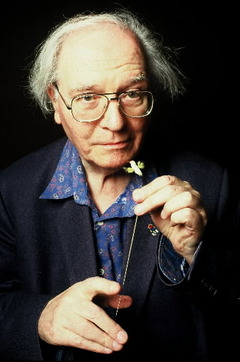 Messiaen and Hector Berlioz. Messiaen was born on December 10th of 1908 in Avignon, Berlioz – on December 11th of 1803 in La Côte-Saint-André, a small village not far from Grenoble. Messiaen was one of the greatest composers of the 20th century, while Berlioz occupies a similar place in the Pantheon of the 19th century composers, and we’ve written about both of them on many occasions (see, for example, here and here). Messiaen, as we know, was not only a composer, he was an amateur ornithologist; he also used real and imitated birdsongs in many of his compositions. In 1955 Pierre Boulez asked Messiaen to write a piece based on the songs of exotic birds, and that’s exactly what Messiaen came up with, Oiseaux exotiques, a composition for the piano and small orchestra. It was premiered in 1956 with Yvonne Loriod, Messiaen’s wife, at the piano. The birds Messiaen so exquisitely imitates include the cardinal, the Hindu mynah, the oriole and the mockingbird. Oiseaux exotiques is performed here by the pianist Jean-Yves Thibaudet with the Royal Concertgebouw Orchestra under the direction of Riccardo Chailly.
Elliott Carter was one of the most important American modernist composers. He was born on December 11th of 1908, one day after Messiaen, in Manhattan and lived a very long and productive life: Carter died on November 5th of 2012 at the age of 103 and wrote his last composition, Epigrams for piano trio, that very year. Much of Carter’s music is complex and not easy to approach. This piece, Variations for Orchestra, was written in 1955 (as was Messiaen’s Oiseaux exotiques which we referenced above) and is considered one of his more accessible pieces. Everything, of course, is relative. Variations is performed by the Cincinnati Symphony Orchestra under the direction of Michael Gielen.
One of the greatest German sopranos of the 20th century, Elisabeth Schwarzkopf was born on 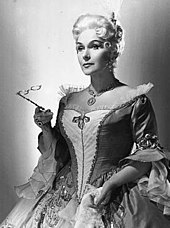 December 9th of 1915 in Jarotschin in the Prussian Province of Posen (this now-Polish city is called Jarocin). Schwarzkopf also lived a long life – not as long as Elliott Carter, but still a full 90 years. Some of these years were difficult and morally ambiguous if not repugnant (she was a member of the Nazi party – but so was Herbert von Karajan). What we remember her for, though, is the clarity and beauty of her voice, which is unsurpassed, and the intelligence of her singing. And of course, she was also a beautiful woman with a great stage presence. Here’s a recording from 1951: Schwarzkopf singing Robert Schumann’s Der Nussbaum (The Walnut Tree), from his collection of songs, op. 25, Myrthen. Gerald Moore is on the piano.
Elliott Carter - Variations for Orchestra
Cincinnati Symphony Orchestra (Orchestra)
Michael Gielen (Conductor)
Olivier Messiaen - Oiseaux exotiques
Jean-Yves Thibaudet (Piano)
Royal Concertgebouw Orchestra (Orchestra)
Riccardo Chailly (Conductor)
Weinberg and Górecki, 2019
This Week in Classical Music: December 2, 2019. Mieczysław Weinberg and Polish music. December 8th marks the 100th anniversary of the birth of Mieczysław Weinberg, a Polish-Jewish-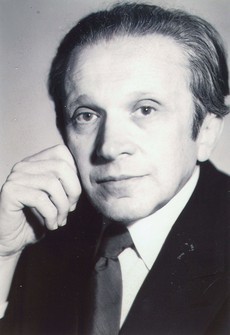 Soviet composer who barely survived first the Nazi invasion of Poland and then Stalin’s deadly persecution of the Jews. We wrote about Weinberglast year, so here is a piece of his music: the first movement of his last symphony, No. 21, “Kaddish,” written in 1991 as a memorial for Holocaust victims from the Warsaw Ghetto. The Lithuanian conductor Mirga Gražinytė-Tyla is leading the combined forces of the City of Birmingham Symphony Orchestra and Kramerata Baltica, with Gidon Kremer playing solo parts.
Even though Weinberg was born in Poland, he was a very Soviet composer, highly influenced by Shostakovich. But there was also a “purely” Polish composer who was born this week: Henryk Górecki. While Weinberg is half-forgotten, despite several very successful stagings of his magnum opus, the opera The Passenger, Henryk Górecki is one of the most commercially successful contemporary composers. Górecki was born on December 6th of 1933, in Czernica, a village in southern Poland. When he was four, he dislocated a hip, which, untreated, led to the development of bone tuberculosis; Górecki suffered from it for the rest of his life. He studied at a provincial music school in Rybnik, and later, at the Music Academy in Katowice (he would eventually become a professor there). Górecki’s early compositions coincided with Poland opening up to Western influences, and were strongly affected by modernist composers, from Webern to Boulez. His symphony no. 1, written in 1959, was a successful example of his early style. For about 10 years Górecki was known as one of the most important Polish avant-garde composers, but eventually he started moving away from dissonance and serialism, simplifying his musical idiom and making it more expressive. An interesting example of this transitional period is his 1965 orchestral piece Refrain, Op. 21. This transformation culminated in 1976 with the Symphony No. 3, “Symphony of Sorrowful Songs,” Op. 36, for soprano and orchestra. Probably Górecki’s most accessible work, it became popular around the world;recordings of it sold more than one million copies, an unheard-of number for a living classical composer. Following that success, he wrote several significant works, including another symphony and chamber pieces, some commissioned by the Kronos Quartet. Górecki died in Katowice on November 12th of 2010. Here’s the second movement of his 1986 Lerchenmusik, Op 53, subtitled Recitatives and Ariosos. It’s performed by the members of the London Sinfonietta.
And continuing with the Polish theme, Krystian Zimerman, a brilliant Polish pianist, was born on December 5th of 1956. Like Górecki, he was born in Silesia, in the city of Zabrze. In 1975, at the age of 18, Zimerman won the Warsaw International Chopin Piano Competition; that launched his international career. Known as a great interpreter of the music of Chopin, he promotes the music of Polish composers; Witold Lutosławski dedicated his piano concerto to Zimerman. For a world-renowned musician, Zimerman is very politically active. He doesn’t visit Russia because of its policies and the Katyn massacre; he stopped concertizing in the US over the Guantanamo detainees and the proposed missile shield in Poland, and he supports Palestinian causes.
Read more...Henryk Górecki - Lerchenmusik, Op 53, Recitatives and ariosos. 2nd mov.
London Sinfonietta (Ensemble)
Mieczysław Weinberg - Symphony No. 21, Op. 152 "Kaddish," 1st mov., Largo
City Of Birmingham Symphony Orchestra (Orchestra)
Mirga Gražinytė-Tyla (Conductor)
Virgil Thomson, 2019
This Week in Classical Music: November 25, 2019. Virgil Thomson. The American composer Virgil Thomson’sbiography may be more interesting than his music, and the same probably could be said about his work as a music critic, but there’s no questioning him as a cultural figure of 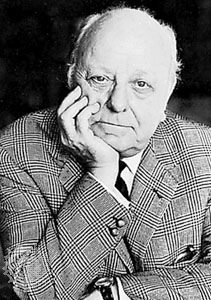 major influence. Thomson was born in Kansas City, Missouri, on this day in 1896. As a youngster he studied music with several teachers; in 1913 he enrolled in college and when the US entered the Great War, he enlisted. Thomson never saw action and was discharged as soon as the war ended. In 1919 Thomson went to Harvard, were he studied music and worked as an accompanist to the Harvard Glee Club, which by then was turning into a serious choral ensemble. Through a friend, the poet and musician Samuel Foster Damon, he was introduced to the music of Erik Satie and the poetry of Gertrude Stein. In 1921 he went with the Glee Club on tour in France and stayed in Paris the following year. While in Paris, he studied with Nadia Boulanger, met his idol Satie and the members of Les Six. Graduating from Harvard in 1923, he went to New York to study at the Juilliard, but two years later left New York for Paris. Thompson stayed there till 1940. In 1926 he wrote "Sonata da Chiesa," scores for an unusual combination of instruments: the viola, clarinet, trumpet, horn and trombone. It was borderline atonal (John Cage liked it) and the last one to be written in this style: after that all of Thompson’s work was tonal, straightforward but very original and whimsical. Here’s the first movement, Choral, from the Sonata. In January of 1926 Thomson’s friend composer George Antheil took him to the home of Gertrude Stein and Alice B. Toklas. Stein, a poet, a major art collector, hostess of a popular salon and overall an important cultural figure, was 20 year older than Thomson but she took to the young composer. Soon after, Thomson put to music Stein’s playful and abstract poem “Susie Asado” (here performed by the tenor Glenn Siebert with Phillip Bush on the piano); that marked the beginning of their long and fruitful collaboration. In 1927, on Thomson’s suggestion, Gertrude Stein wrote a piece she called “Four Saints in Three Acts”; Thomson used it to compose an opera. The main characters include Ignatius of Loyola and Saint Teresa of Ávila and a whole lot of other saints; the narrative is vague, the plot practically nonexistent: the text revolves around the sound of words. Nonetheless, Thomson loved it and set it to music, every word of it. Completed in 1928, it wasn’t staged till 1934. Maurice Grosser who produced it had to invent a story line. “Four Saints” premiered in Hartford, Connecticut – surprisingly, to great acclaim. Two week later it opened on Broadway and ran for six weeks. Difficult to imagine such a thing happening in the 21st century.
In 1940, with the war raging in Europe and the Germans occupying Paris, Thomson accepted an offer from the New York Herald Tribune, one of the best newspapers of the day, to become their chief music critic and moved to New York (Stein stayed behind in Vichy, France and unfortunately, became rather sympathetic to the Pétain regime). Thomson settled in the Chelsea Hotel, where he lived for the rest of his life: he died in his suite there in 1989 at the age of 92. He became the most influential critic in America, even though his reviews were often idiosyncratic and sometimes unfair. As Thomson put it, the reason his reviews were tolerated is that he wrote “musical descriptions more precise than those being used just then by other reviewers.” He continued composing and collaborating with Stein. Their final effort together was The Mother of Us All, based, rather vaguely, on the life of Susan B. Anthony, which Stein completed before her death in 1946. The opera premiered in May of 1947. Here’s the Overture, with Raymond Leppard conducting the Santa Fe orchestra.
Read more...Virgil Thomson - The Mother of Us All: Overture - A Political Meeting
Santa Fe Opera Orchestra (Orchestra)
Raymond Leppard (Conductor)
Virgil Thomson - Susie Asado
Glenn Siebert (Tenor)
Phillip Bush (Piano)
Robert Schumann - Der Nussbaum, Op 25, No. 3
Elisabeth Schwarzkopf (Soprano)
Gerald Moore (Piano)