
Sergey Akhunov - ADAGIO:PRAYER FOR PEACE
Sergey Akhunov (Orchestra)
Johann Sebastian Bach - Prelude and Fugue in d minor, Book II
Dr. Michael Kaykov (Piano)
Ludwig van Beethoven - Sonata No. 21 in C major, Op.53, "Waldstein"
Dr. Michael Kaykov (Piano)
Frédéric Chopin - Etude Op. 25, No. 8 in D-flat Major
Dr. Michael Kaykov (Piano)
Franz Liszt - Hungarian Rhapsody No. 9 in E-flat Major "Pesther Karneval"
Dr. Michael Kaykov (Piano)
Victor de Sabata, part II, 2022
This Week in Classical Music: April 11, 2022. Conductors, continued. Last week we started with five famous conductors that were born that week: the Frenchman Pierre Monteux, the 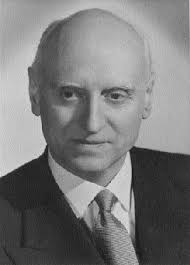 German Herbert von Karajan, the British Adrian Boult, the Hungarian-American Antal Doráti, and the Italian Victor de Sabata. We spent much time with de Sabata, following his career till the end of WWII, and we did so because this wonderful conductor isn’t that well known in the US. So, here’s a bit more on Sabata. His previous association with Mussolini didn’t affect Sabata’s international standing, even though in 1950 he was briefly detained in the US under the soon-to-be abolished McCarran Act (his concert at Carnegie Hall ran on schedule and to great acclaim – the recording of the excerpts from Tristan un Isolde which we presented the last week came from that concert). Sabata’s base was La Scala, with which he made several great recordings, including the one from 1953 of Puccini's Tosca with Maria Callas, Giuseppe Di Stefano and Tito Gobbi which many consider the best opera recording of all time. Sabata toured all major European music centers and made recording with the London Philharmonic and the Orchestra of Santa Cecilia, in addition to his own orchestra of La Scala. In 1953 Sabata had a heart attack which forced him into semi-retirement. He died of heart decease in 1967.
Victor de Sabata had a phenomenal ear and musical memory. It’s also said that he could play every instrument in the orchestra. The music magazine, International Record Review, now unfortunately defunct, wrote the following notes about him: “The story is that de Sabata, rehearsing in London around 1930, was asked why he never conducted any English music; because there's nothing worth doing, he answered. Did he know the Enigma Variations? No. So they gave him a score to take home and he went through the work from memory at the next morning's rehearsal, which Elgar himself and Malcolm Sargent attended. De Sabata was apparently correcting mistakes in the parts that neither the composer nor the man who fancied himself its principal interpreter had noticed.” The British music critic Felix Aprahamian recalls the following story (as per Wikipedia): “In the rehearsal interval, he asked the flicorni [the saxhorn, one of the instruments invented by Adolphe Sax] for the final movement to play their brass fanfares. They did. 'What are you playing?' he asked. 'It is an octave higher.' 'Can't be done, Maestro.' ... The Maestro borrowed one of their instruments and blew the correct notes in the right octave.” These is just two of many legendary stories.
Among De Sabata’s recordings is the first ever of Debussy’s Jeux, made in 1947 in Rome with the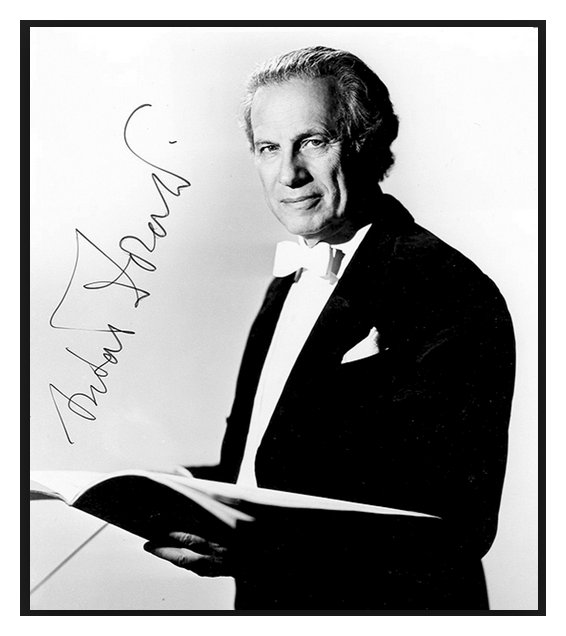 orchestra of the Academy of Santa Cecilia. Here it is.
Antal Doráti deserves a separate entry (as do Monteux and Boult – we’ve written about Karajan more than once) and we’ll try to do it soon. With Philharmonia Hungarica orchestra Doráti recorded all 104 Haydn symphonies. Here’s no. 100, “Military.”
Read more...Franz Joseph Haydn - Symphony no. 100, "Military
Philharmonia Hungarica (Orchestra)
Antal Dorati (Conductor)
Claude Debussy - Jeux
Academy of Santa Cecilia (Orchestra)
Victor de Sabata (Conductor)
Victor de Sabata, part I, 2022
This Week in Classical Music: April 4, 2022. Conductors. Five famous conductors were born this week: the Frenchman Pierre Monteux on April 4th of 1875, the German Herbert von 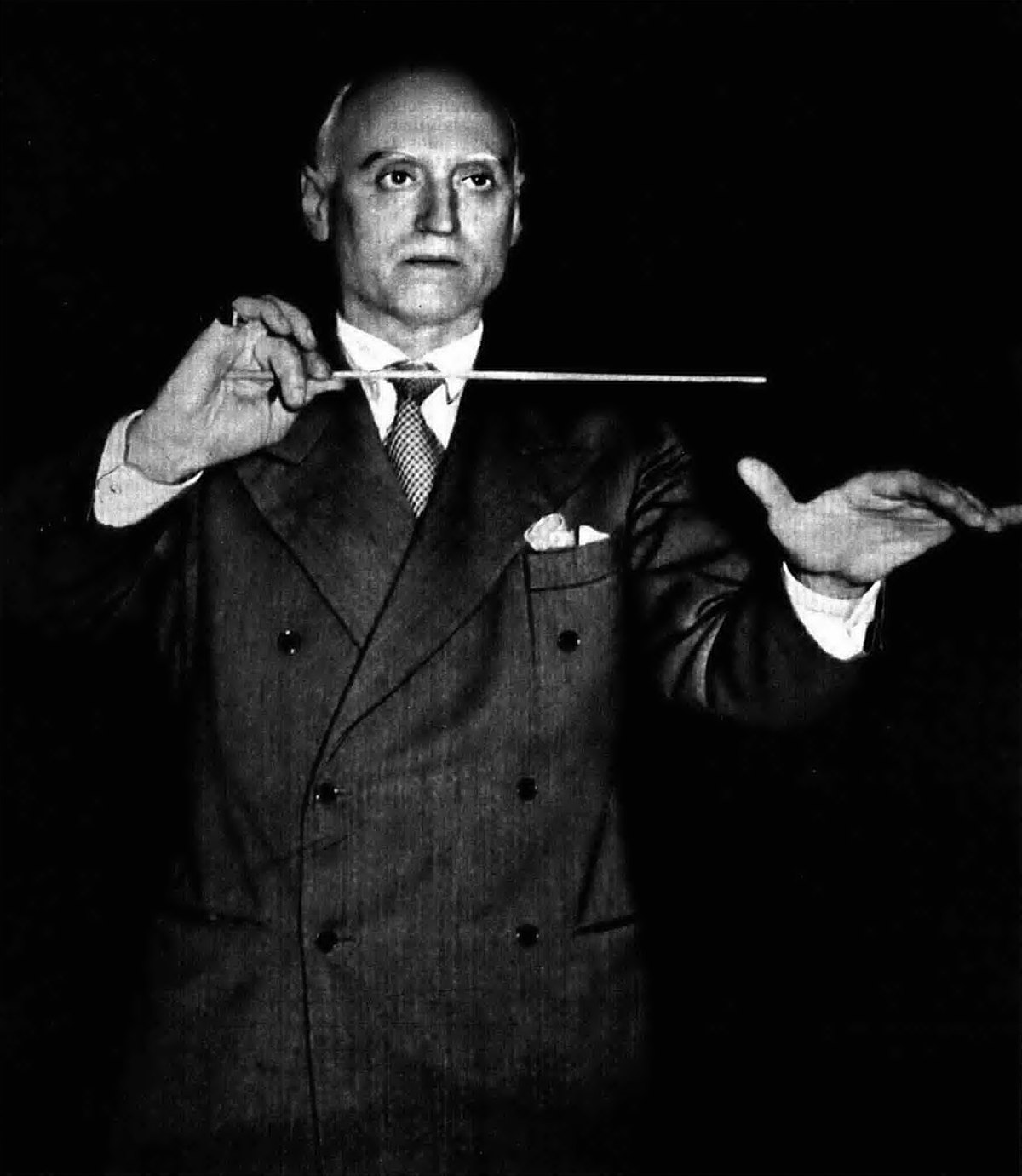 Karajan, on April 5th of 1908, the British Adrian Boult on April 8th of 1889, the Hungarian-American Antal Doráti on April 9th of 1906, and the Italian Victor de Sabata on April 10th of 1892. Before we delve into their careers, let us make a non-musical comment: conductors seem to live a long life! Of this group, Boult lived the longest, almost 94 years, de Sabata – the shortest, 75 years. On average, they lived 84 years. Do you know what the life expectancy at birth was around the time when our conductors were born? An astonishingly short 41 years! One could reasonably respond that at that time the child mortality rate was very high, and once one made it past the childhood, he (all our conductors are male) could expect to live a fairly long life. In addition, we have a rather specific selection – conductors – and one doesn’t become a conductor until later in their life, as they all start as pianists, violinists, etc. This is very true, so let’s see what the life expectancy was for a 30-year-old (by that age all our conductors had already chosen their careers) at around 1920. The easily accessed demographics tables tell us it was 37 years, which makes the lifespan of an average person who was born around 1894 and lived at least into his 30s about 67 years. That’s much less than the 84 years that our conductors lived on average. And of course, this group is not exceptional: we recently wrote about Herbert Blomstedt who performs, magnificently, at the age of 94. One of our favorite conductors, Bernard Haitink, died at 92 and worked almost to the end and there are many more examples. We have no idea why it is so, and unfortunately, it’s no help to the rest of us.
Of the group, Karajan clearly is the most famous (we wrote a two-part entry about him a couple year ago, here and here) and Victor de Sabata the least so. So, here’s his story, in brief. De Sabata was born in Triest, an important city in Austria-Hungary, now Trieste in Italy. He started playing the piano at the age of four, at the age of eight his family moved to Milan and he entered the Giuseppe Verdi Conservatory there. He studied the piano, the violin (he excelled in both instruments) and composition and graduated cum laude. After graduating, he concentrated on composing (his opera Il macigno was staged in La Scala in 1917) but then, being influenced by Arturo Toscanini, Sabata turned to conducting. He was appointed the conductor of the Monte Carlo Opera in 1918, and while there, got engaged with the Orchestra of the Accademia di Santa Cecilia in Rome, playing the symphonic repertoire. In 1930, Sabata succeeded Toscanini as the principal conductor of La Scala and stayed in that position for 20 years. Toscanini and Sabata were friendly for years but then fell out, one of the reasons being that Sabata became rather close to Mussolini, even playing at Villa Torlonia, Mussolini’s residence. Toscanini, on the other hand, was a vehement opponent of the dictator and emigrated from Italy in 1939. That same year de Sabata conducted Tristan und Isolde at the Bayreuth Festival. He also conducted the Vienna and Berlin Philharmonic orchestras, the premier orchestras of the Nazi regime, and befriended the young party member, Herbert von Karajan. At the end of WWII, de Sabata helped Karajan move to Italy.
We’ll continue with de Sabata and other conductors next week, in the meantime here’s Prelude to Act I and Isolde's Death from Tristan und Isolde, recorded live years later, in 1951. Eileen Farrell is Isolde, Victor de Sabata conducts the New York Philharmonic.
Read more... « first ‹ previous … 82 83 84 85 86 87 88 89 90 … next › last »
Johannes Brahms - Clarinet Sonata N0.2 in E flat Major Allegro Amiable
Armando Vazquez (Clarinet)