
Franz Joseph Haydn - Sonata in E-flat Major, Hob. XVI:52
Alfred Brendel (Piano)
Haydn and more, 2022
This Week in Classical Music: March 21, 2022. Catching Up: Haydn and more. Last week we celebrated Bach’s anniversary and didn’t have neither time nor space to even acknowledge 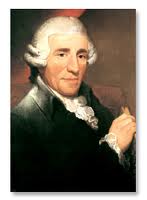 several prominent composers and musicians; this week there are more, and the first one on our list is Franz Joseph Haydn, who was born on March 31st of 1732 in Rohrau, Austria. We love Haydn, have written about him on many occasions (here) and feel that he’s somewhat underappreciated these days. Haydn wrote 104 symphonies, some of supreme quality, he is considered the father of the string quartet, and we’ll go on a limb and say that some of Haydn’s piano sonatas are better than any ever written by Mozart. You can judge for yourself: here’s his sonata in E-flat Major, Hob. XVI:52, written in 1794, performed by Alfred Brendel. And here is the same sonata but in Glenn Gould’s rather idiosyncratic interpretation. It runs about 5 minutes faster than Brendel’s; you can also hear Gould singing.
Last week we missed anniversaries of Franz Schreker, who in the first quarter of the 20th century was, together with Richard Strauss, the most popular opera composer in the German-speaking world (Schreker was born on March 23rd of 1878). Another famous German-speaking opera composer, of a very different ear, Johann Adolph Hasse, was baptized on March 25th of 1699 (we don’t know his exact birthday). In the mid-18th century, Hasse’s opera seria were widely admired not only by the public but also by composers like Handel. The great Hungarian composer Béla Bartók was born on March 25th of 1881. And let’s not forget Pierre Boulez – the French composer, theoreticians, teacher, and conductor was born on March 26th of 1925.
This week, in addition to Haydn, we have: Sergei Rachmaninov, born on April 1st of 1873, the Spanish composer of the Renaissance Antonio de Cabezón, born March 30th of 1510 (here is his Pavana Italiana, performed by the organist Sebastiano Bernocchi); Ferruccio Busoni, born on April 1st of 1866 and another Italian of a very different era, Alessandro Stradella, on April 3rd of 1639. (Stradella’s life story was incredible, you may read about it here).
Among the conductors born this week (Willem Mengelberg, Pierre Monteux) there’s one with a particular interest to us, Christian Thielemann, who will turn 73 on April 1st. The reason is that he is rumored to become the Music Director of the Chicago Symphony, as 2023 is when the contract of the current Music Director, Riccardo Muti, expires. Despite Muti’s great popularity, we think replacing Miti with Thielemann would be an improvement, as the latter is superb in the core German-Austrian repertoire. Many political considerations come into play with such an important and visible position, and Thielemann has made a number of controversial statements (here’s an article in the Guardian on the subject). Of course, there are many other candidates in addition to Thielemann; we’ll see how it all plays out. So let’s conclude with Thielemann conducting Haydn. Here’s Thielemann with the Staatskapelle Dresden and the choir in the final section of Franz Joseph Haydn’s oratorio The Creation, Singt dem Herren, alle Stimmen! (Sing the Lord ye voices all).
Read more...Franz Joseph Haydn - Singt dem Herren, alle Stimmen!, from The Creation
Staatskapelle Dresden (Orchestra)
Christian Thielemann (Conductor)
Antonio de Cabezón - Pavana Italiana
Sebastiano Bernocchi (Organ)
Anna Leonova - Miniature II for Violoncello solo
Joe zeitlin (Cello)
Anna Leonova - Miniature I for Violoncello solo
Joe Zeitlin (Cello)
Bach 2022
This Week in Classical Music: March 21, 2022. Johann Sebastian Bach. This is one birthday we cannot miss no matter what:Johann Sebastian Bach was born on this day in 1685. Last year 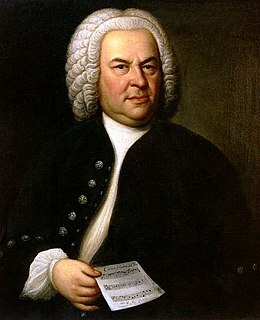 we played Bach’s Cantata BWV 1, Wie schön leuchtet der Morgenstern(How beautifully the morning star shines), composed soon after Bach was made the Thomaskantor in Leipzig in 1723. Number 1 is a quirk of the BWV (Bach-Werke-Verzeichnis) catalogue, which lists Bach’s works by the genre and not in a chronological order: Cantatas come first, with the numbers from 1 to 224, then Motets, which are assigned numbers from 225 to 231, and so on. BWV 1, composed in 1725, was not Bach’s first cantata, it wasn’t even part of the first cycle of cantatas, which were composed in 1723-24. Today we’ll turn to BWV 2, Ach Gott, vom Himmel sieh darein (Oh God, look down from heaven), composed for the second Sunday after Trinity and first performed on June 18th of 1724. Even though it has the second BWV number, it was preceded by more than 60 cantatas. Isn’t it time to create a more reasonable catalogue of Bach’s work? Whatever the number, it’s a wonderful piece which is performed here by Concentus Musicus Wien under the direction of Nikolaus Harnoncourt.
We’ll stay with Bach in three more interpretations, all three by pianists who were also born this week. First, Egon Petri, a German of Dutch descent, he was born on March 23rd of 1881 in Hannover. A wonderful musician, he was a student and friend of Ferruccio Busoni, and helped his teacher in editing the 25-volume version of all Bach’s clavier compositions. And like Busoni, Egon Petri wrote several piano arrangements of Bach’s music. Here is one of them, the arrangement of Bach’s chorale prelude Vor deinen Thron tret ich hiermit (I Step Before Thy Throne), BWV 668. Petri recorded it in 1958.
Another brilliant German pianist, Wilhelm Backhaus was three years younger than Petri, he was born on March 26th of 1884 in Leipzig. Backhaus’s career was very long: he went on his first concert tour of England in 1900 and recorded Brahms’ Piano Concerto no. 2 with Karl Böhm in April of 1968, when he was 83, his formidable technique still quite in place. The problem with Backhaus (as with Böhm) is that he was a supporter of the Nazi regime and Adolf Hitler in particular. Because he had moved to Switzerland in 1930 (and became a Swiss citizen some years later) Backhaus escaped the denazification process and the stigma he had fully deserved. In a way he was no better than many Russian musicians who are being “canceled” all over Europe and the US today. Here’s Wilhelm Backhaus playing Bach’s French Suite No. 5 in G major, BWV 816. This recording was also made in 1958.
Lastly, the American pianist Byron Janis was born in McKeesport, Pennsylvania on March 24th of 1928 into a family of Jewish refugees from Russia (their original name was Yankelevich). As a kid, Janis studied with Josef and Rosina Lhévinne in New York and then became Vladimir Horowitz’s first pupil. He debuted with Rachmaninov’s Second Piano concerto at the age of 15 and played his first Carnegie concert at 20. In 1960, two years after Van Cliburn won the first Tchaikovsky competition, Janis toured the Soviet Union to tremendous success. He was also the first American to win a Grand Prix du Disque. Janis’s brilliant career was cut short by severe arthritis in both hands, which hit him in 1973. Here’s Byron Janis playing Bach’s Prelude and Fugue in A Minor, BWV 643. It’s an arrangement of an organ piece by Franz Liszt. The recording was made in 1948.
Read more...Johann Sebastian Bach - Prelude and Fugue in A Minor, BWV 643
Byron Janis (Piano)
Johann Sebastian Bach - French Suite No. 5 in G major, BWV 816
Wilhelm Backhaus (Piano)
Richard Wagner - Prelude to Act I and Isolde's Death, from Tristan und Isolde,
Eileen Farrell (Mezzo-soprano)
New York Philharmonic (Orchestra)
Victor de Sabata (Conductor)