
Schubert 2022
This Week in Classical Music: January 31, 2022. Schubert and more. Franz Schubert, one of the greatest composers of the 19th century, was born on this day in 1797. We love Schubert and 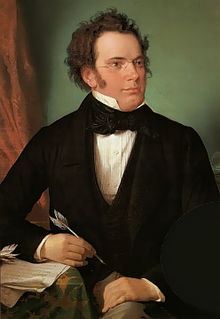 have written about him and his work on many occasions, and here’s a bit more. Schubert’s last three piano sonatas are some of his greatest works. They were composed in 1828, practically in the last half a year of Schubert’s life, as he was dying of syphilis. Inevitably they are compared to Beethoven’s last five: pianos sonatas number 28, op. 101 through 32, op. 111. There clearly are parallels: the scope, the depth, the variety of musical material and just pure beauty. We should remember that Beethoven’s sonatas, as coherent as they are in their dramatic effect, were written during a period of five years, not in a feverish six months, as Schubert’s. Schubert’s last sonatas, although profound, are somewhat loosely structured. That was one of the reasons they were considered somewhat inferior after they were published in1838, ten years after Schubert’s death. This lack of internal structure (and, in some cases, excessive length) make these sonatas difficult to play. There are some pianists who excel in them, Alfred Brendel, Sviatoslav Richter, Claudio Arrau, Maurizio Pollini being one of the best (of course there were many more who’ve played them wonderfully). This is also the reason why some famous pianists don’t do as well: we remember Lang Lang’s performance in Chicago in 2008, which we thought was quite disastrous: our impression was that Lang Lang doesn’t quite understand what he was playing. Of course back then Lang Lang was a media darling and many classical music critics went along with it, so the reviews of the concert were mostly positive. Things have changed since then… Here is Sviatoslav Richter playing Pianos Sonata D. 958 in C minor; the recording was made in 1972. And Here is’ Alfred Brendel in the Sonata D. 959 in A major, from a 1988 recording.
Felix Mendelssohn was also born this week, on February 3rd of 1809. By the time of Schubert’s death, when Mendelssohn was 19, he has already written several dozen compositions, including quartets, a symphony, and the famous Midsummer Night's Dream Overture. And two great violinists, Fritz Kreisler and Jascha Heifetz were born on the same day this week, February 2nd, Kreisler in 1875 and Heifetz in 1901.
Also, the conductor Erich Leinsdorf, who was born Erich Landauer into a Jewish family in Vienna on February 4th of 1912, 110 years ago. He became Bruno Walter’s assistant at Salzburg in 1934 at the age of 22. Leinsdorf left Austria several weeks before the Anschluss, Nazi Germany’s capture of Austria, to assume the position of assistant conductor at the Metropolitan opera and stayed in the US for the rest of his life, becoming a naturalized citizen in 1942. He became the Music director of the famed Cleveland Orchestra at the age of 31 but served briefly as he was conscripted to the Army. Leinsdorf had a distinguished career: he was named the Music director of the Boston Symphony orchestra in 1962, conducted many operas and the Met and guest-conducted many major orchestras. He also made a number of highly acclaimed recordings, both symphonic and operatic. Of the latter, Un ballo in maschera, Tristan und Isolde, Die Walküre and Turandot are considered most interesting.
Read more...Franz Schubert - Piano sonata in c minor, D. 958
Sviatoslav Richter (Piano)
Mozart, more, 2022
This Week in Classical Music: January 24, 2022. Mozart and more. January 27th is Wolfgang Amadeus Mozart’s birthday (he was born in 1756) and a strange question comes to mind: how did 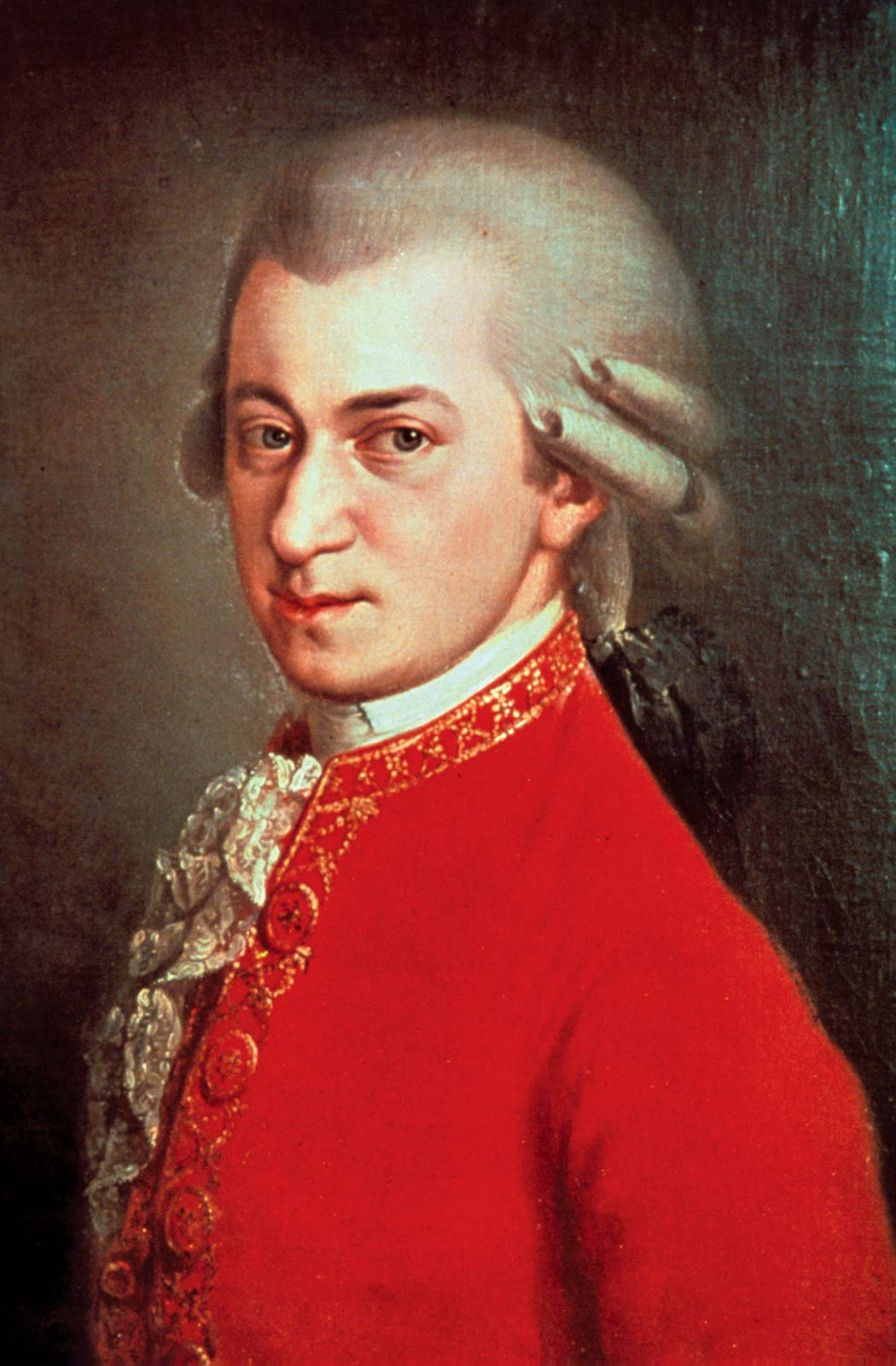 Mozart escape the wrath of the woke cultural commissars? Obviously, this question would never arise under normal circumstances, but these days nothing is normal. Beethoven, the titan of European music, has been in crosshairs of the woke musicologists for at least the last two years, becoming a symbol for the “overrated dead white men.” But if you think of it, it could as easily have been Mozart: Beethoven, after all, had rather dark skin (there was even silly talk that he could’ve been of African descent), whereas Mozart’s skin, judging by several authentic portraits, was milky-white. And Beethoven had a handicap – he was practically deaf half of his life, which in the era of intersectionality and disability studies could’ve earned him some points with the woke crowd. Mozart, on the other hand, even though often poor, was happily married (Beethoven never was), loved women and partying and was prone to making silly scatological jokes. One would think that of the two, the woke would go after Mozart, but no – since their insane minds work in mysterious ways. The only thing we can say is that we’re happy for Wolfgang. That said, here, to celebrate, is Mozart’s Symphony no. 38, "Prague," performed live in 2017 by the Chamber Orchestra of Europe under the direction of Bernard Haitink.
Several very interesting composers were also born this week: Witold Lutoslawski, one of the greatest Polish composers of the 20th century, on January 25th of 1913. Luigi Nono, the Italian, was born 11 years later, on January 29th of 1924; Nono was one of the most influential modernist composers of the century. 20 years after Nono the British religious minimalist John Tavener was born on January 28th of 1944. Here’s Lutoslawski’s Symphony no. 3, performed by the Berlin Philharmonic under the direction of the composer.
Lutoslawski, even though he regularly conducted his own music, was much better known as a composer. Wilhelm Fürtwangler, on the other hand, even though he composed several symphonies, chamber music and several choral works, is famous as a conductor, one of the greatest ever, and practically unknown as composer. Fürtwangler was born on January 25th of 1886 in Schöneberg, Berlin. A great musician, he was politically controversial, as were many German musicians who lived during the Nazi era. We wrote about the first half of his life here (will try to complete his story sooner rather than later). Here is a live recording of Bruckner’s Symphony no. 9, made live in Beethovensaal, Berlin, on October 7th of 1944 (Beethovensaal was one of the Philharmonic’s temporary homes after the original one, Alte Philharmonie, was completed destroyed after the Allied bombing raid on January 30th of 1944).
Read more...Witold Lutoslawski - Symphony no. 3
Berliner Philharmonic Orchestra (Orchestra)
Wltold Lutoslawski (Conductor)
Wolfgang Amadeus Mozart - Symphony no. 38 "Prague"
Chamber Orchestra of Europe (Orchestra)
Bernard Haitink (Conductor)
Anton Bruckner - Symphony no. 9
Berlin Philharmonic (Orchestra)
Wilhelm Furtwängler (Conductor)
Hugo Peretti, Luigi Creatore, George Weiss - Can't Help Falling In Love
Ayenn Legagneur Stark (Tenor)
Mercedes (Harp)
Cecilia Garcia (Violin)
Cecilia Garcia (Viola)
Lucas Argomedo (Cello)
Ayenn Legagneur Stark - By Your Side
Ayenn Legagneur Stark (Tenor)
Tze Liew (Soprano)
Irina Markevich (Guitar)
Joaquin Muro (Trumpet)
Cecilia Garcia (Violin)
Ayenn Legagneur Stark - Meant To Be
Ayenn Legagneur Stark (Tenor)
Ayenn Legagneur Stark (Piano)
Cecilia Garcia (Violin)
Lucas Argomedo (Cello)
Franz Schubert - Piano Sonata in A Major, D. 959
Alfred Brendel (Piano)