
George Frideric Handel - Violin Sonata in D Major, HWV 371
Joseph Szigeti (Violin)
Nikita Magaloff (Piano)
George Frideric Handel - Suite in D Minor, HWV 436
Ragna Schirmer (Piano)
György Kurtág, 2022
This Week in Classical Music: February 14, 2022. Kurtág and more. This week brings a bevy of musical talents from several centuries, from Michael Praetoriuswho was born in 1571, 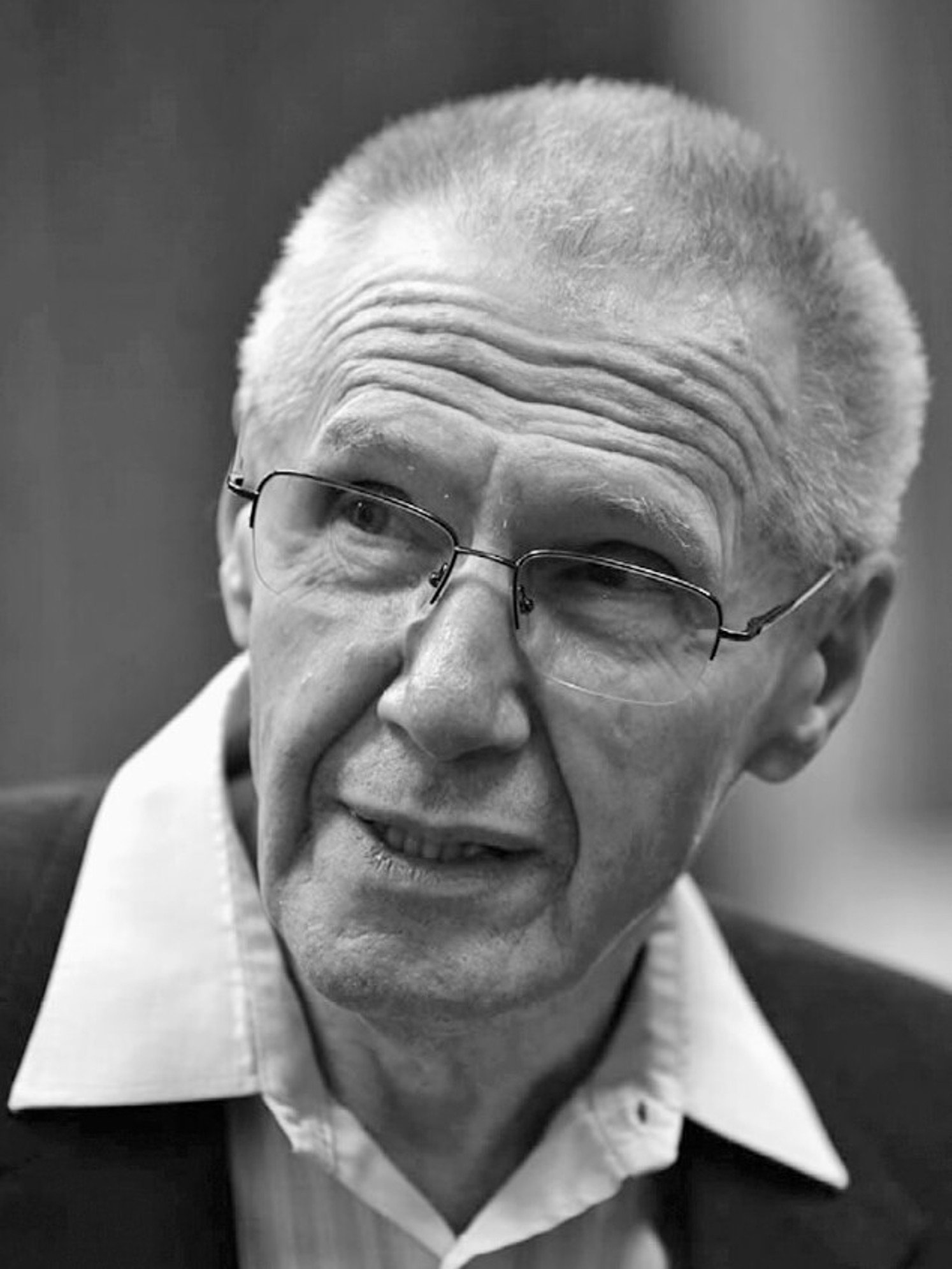 probably on February 15th (although some musicologist think he might have been born on September 28th of that year) toFrancesco Cavalli, who was born on this day in 1602, to Arcangelo Corelli, born half a century later, on February 17th of 1653, and then, skipping several well-known names, to the Hungarian composer . It was Kurtág’s name that caught our eye: in five days he will turn 96! But of course it’s not the longevity that makes him special (after all, Elliott Carter lived much longer, to the age of 103): Kurtág is one of the most interesting composers of the 20th century. Here’s an interesting question to ponder: in 100 years, assuming that classical music survives that long as a genre, who would be more popular, Corelli or Kurtág? We think that Kurtág is a much more original composer, but will music lovers internalize and accept the complexities of his music (obviously this is not the case yet). As long as we ventured into the shaky grounds of comparisons, we might as well say that we think that Cavalli was more interesting than Corelli, except for the genre of the early Baroque opera in which he had worked and which is rarely presented these days.
György Kurtág (his first name is pronounced closer to Dyerd rather than George) was born on February 19th of 1926 in Lugoj, Banat. These days most of the historical Banat lies in Romania, but prior to 1918 Banat was part of the Austro-Hungarian empire; many inhabitants were Hungarian speakers. It also had a large Jewish population; Kurtág is half-Jewish. He spoke Hungarian at home and Romanian at school. As a child, he studied the piano on and off, first with his mother, then with professional teachers. After WWII, in 1946, the 20-year old Kurtág moved to Budapest and continued taking piano lessons, eventually entering the Franz Liszt Music Academy. There he met György Ligeti and they became friends for life. After the Hungarian revolution of 1956, Kurtág moved to Paris. There he studied with Olivier Messiaen and Darius Milhaud. He returned to Hungary in 1959 and stayed there for the duration of the Communist regime – the only Hungarian composer of international renown to do so (Ligeti, for example, fled to Vienna right after the failed revolution and stayed in the West for the rest of his life). At that time Kurtág became influential as a teacher. Surprisingly, he didn’t teach composition but rather interpretation: the pianists Zoltán Kocsis and András Schiff, and the first Takács String Quartet were among his pupils. Kurtág resumed traveling only after the fall of communism in 1989, moving first to Berlin (he was the composer in residence for the Berlin Philharmonic in the mid-90s), then Vienna, the Netherlands and Paris, where he worked with Boulez’s Ensemble Intercontemporain. In 2002, the Kurtágs settled in Bordeaux but in 2015 he and his wife live returned to Budapest (Kurtág’s wife Márta, a pianist, died in 2019).
In addition to Kurtág’s music already in our library, we have two more pieces to illustrate Kurtág’s art. First, a very simple and short piano piece titled ... feuilles mortes ... It’s performed by the Armenian pianist Hayk Melikyan (here). And here is a much more complex …concertante… for violin, viola and orchestra, written in 2003. It’s performed by Hiromi Kikuchi, violin, Ken Hakii, viola and the BBC Symphony Orchestra under the direction of Jukka-Pekka Saraste.
Read more...György Kurtág - ...concertante...
Hiromi Kikuchi (Violin)
Ken Hakii (Viola)
BBC Symphony Orchestra (Orchestra)
Jukka-Pekka Saraste (Conductor)
György Kurtág - ... feuilles mortes ...
Hayk Melikyan (Piano)
Joanna Bruzdowicz - Erotique n°2 Sognatoremente
Nicolas Horvath (Piano)
Renata Tebaldi, 2022
This Week in Classical Music: February 7, 2022. Renata Tebaldi. Last week we missed a very important anniversary: Renata Tebaldi was born 100 years ago! Tebaldi had one of the most 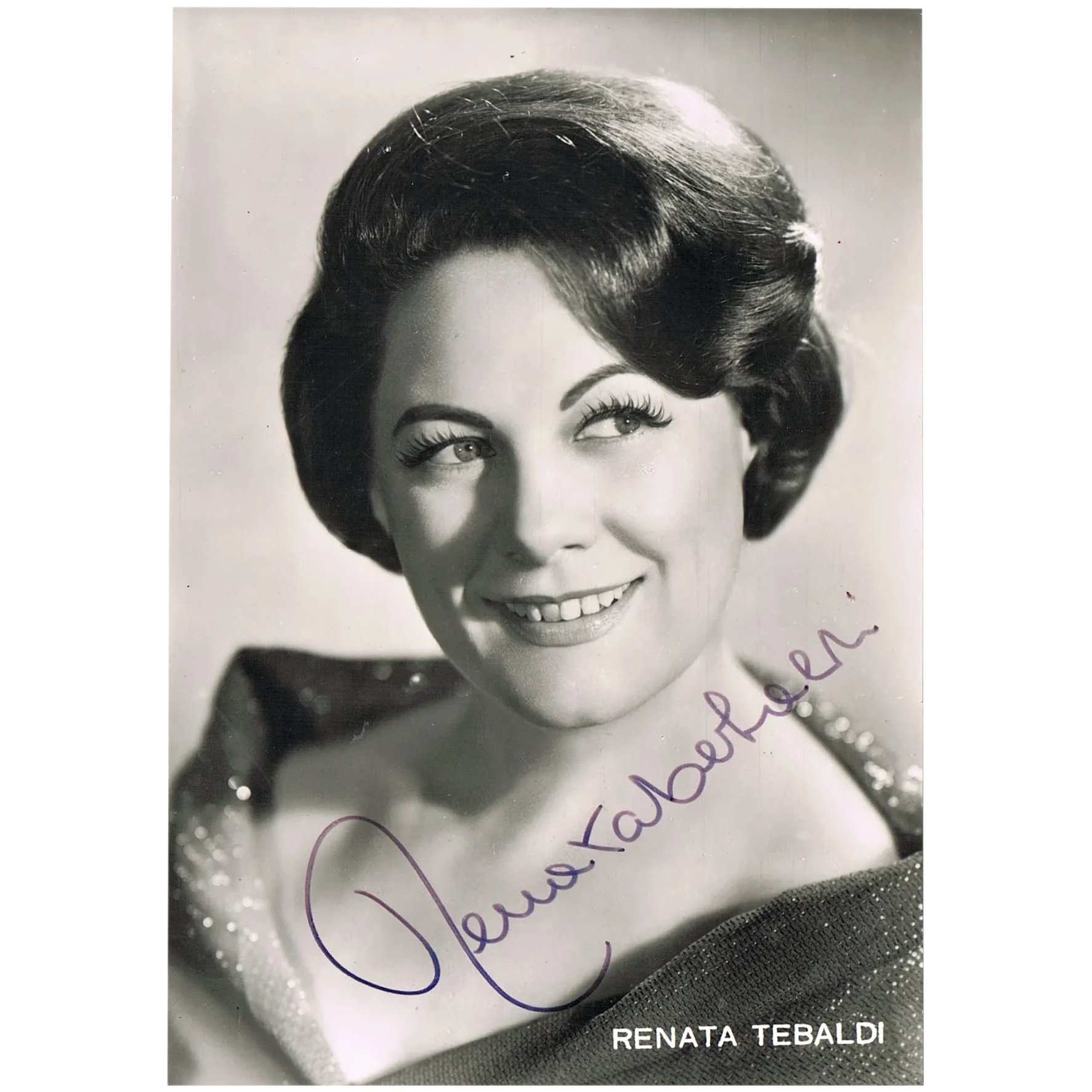 beautiful voices of the century, which Toscanini called “the voice of an angel.” She was a rival of Maria Callas, who was a year younger than Tebaldi – it’s hard to imagine that two sopranos of such talent were singing contemporaneously, although Callas’s career was much shorter. It’s difficult to argue that Tebaldi’s voice was more “classical” and in many ways better, although Callas’s had an amazing emotional quality which Tebadli’s interpretations sometimes lacked. Their voices also had somewhat different timbre and range: Callas was a dramatic soprano capable of singing coloratura parties, she was especially good in the bel canto repertoire, while Tebaldi was a lyric soprano at her best in the verismo operas. They shared some roles, Tosca being one of them. Opera lovers will be forever divided between those two divas while adoring them both.
Tebaldi was born in Pesaro on February 1st of 1922. In 1946 she took part in the opening concert at the war damaged La Scala. The conductor that evening was Arturo Toscanini, and both he and the public loved Tebaldi’s voice. She became a regular at La Scala in the post-war era. In 1950 she sang for the first time at the Covent Garden; the same year she made her debut at the San Francisco opera and then in Chicago. In 1955 she came to New York; she would appear at the Met for the following 20 years. Tebaldi performed till 1976.
As so often is the case with great artists, it’s difficult to select a recording to illustrate their art. Mimi in La Bohème was one of Tebadli’s great roles. Here she is in Si. Mi chiamano Mimi, from the 1959 recording. The Orchestra of Santa Cecilia is conducted by Tullio Serafin. And here is a scene from another opera in which Tebaldi excelled: Pace, pace mio Dio, from Verdi’s La Forza del Destino. This recording was made in 1958 in concert; Leonard Bernstein conducts The New York Philharmonic.
This week and the previous one were rich on singers’ anniversaries: last week we could’ve also celebrated Jussi Björling’s birthday, who was born on February 5th of 1911; this week there are two greats: the soprano Hildegard Behrens who excelled in the German repertoire, from Mozart to Wagner and Berg, and the incomparable Leontyne Price. Behrens was born on February 9th of 1937 and Price – on February 10th of 1927, so she will be celebrating her 95th birthday. Price deserves a full entry, which will be forthcoming. In the meantime, you may be interested to compare Pace, mio dio sung by Tebaldi, above, with Price’s 1984 recording, here.
Read more...Giuseppe Verdi - Pace, pace mio Dio, from La Forza del Destino
Renata Tebaldi (Synthesizer)
New York Philharmonic (Orchestra)
Leonard Bernstein (Conductor)
Giacomo Puccini - Si. Mi chiamano Mimi, from La Bohème
Renata Tebaldi (Soprano)
Orchestra of Santa Cecilia (Orchestra)
Tullio Serafin (Conductor)
Johann Sebastian Bach - Violin Sonata No. 3 in C major BWV 1005
Gidon Kremer (Violin)