
Frédéric Chopin - Etude Op. 25, No. 6
Josef Lhévinne (Piano)
Frédéric Chopin - Etude Op. 10, No. 11
Josef Lhévinne (Piano)
François Couperin - Order XXV, from Book 4 of Pièces de Clavecin
Giovanni Paganelli (Harpsichord)
Tarquinia Molza, 2021
This Week in Classical Music: October 31, 2021. Tarquinia Molza. Tarquinia Molza by all accounts was one of the most extraordinary women of the late Renaissance, a virtuosa, a courtier 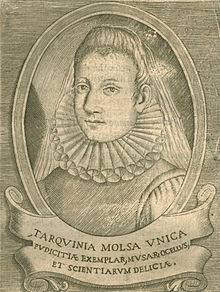 and intellectual. She was born in Modena on November 1st of 1542. Her grandfather, Francesco Maria Molza, was one of the best-known poets of his generation (but also a libertine, who abandoned his family and died of syphilis). Tarquinia married young, as almost everybody at that time, and was widowed by the age of 36. She was famous as a singer: Francesco Patrizi, a writer, philosopher, and a very good friend of Molza’s gave a detailed description of her performances in his book L'amorosa filosofia. Patrizi, who taught Molza the Greek language (she also knew Hebrew and Latin), even featured her in his philosophical treaties, disguised as Diotima, a character from Plato’s famous Symposium. When singing, Molza usually accompanied herself on the viola bastarda, a viol, similar to the viola da gamba and traditionally used in virtuosic performances. She also played the harpsichord and the lute. Somewhere around 1583 she moved to the Este court of Ferrara, where she became a lady-in-waiting to the Duchess, Margherita Gonzaga-Este. She knew many poets, philosophers, and musicians, who flocked to the Este court, and continued her friendship with Torquato Tasso whom she knew from her days in Modena. Tasso dedicated one of his dialogues to Molza.
In Ferrara, Molza was involved with the court’s concerto delle donne, by all accounts an extraordinary group of female singers (you can read more about this remarkable ensemble here). It seems that she didn’t sing with them but rather acted as a teacher and advisor. In Ferrara Molza had an affair with Giaches De Wert, one of the many talented composers patronized by the Este court. As a lady-in-waiting to the Duchess, she was considered nobility, while De Wert, though a well-known composer, was of a servant class. Such a misalliance was unacceptable, and in 1589, when discovered, Molza was banned from Ferrara. She eventually moved to Rome; in 1600 the Roman Senate bestowed on her an honorary citizenship. Monza died in Modena on August 8th of 1617.
Many of the best composers of the Renaissance spent some time (and sometimes a long time) in Ferrara, from Guillaume Dufay to Jacob Obrecht, Josquin des Prez and on. During Molza’s time, Luzzasco Luzzaschi was the Duke’s favorite composer but he wasn’t the only one. Giovan Leonardo Primavera composed madrigals based on Molza’s poetry. Here’s one of his madrigals, Nasce La Gioja Mia, performed by The Tallis Scholars.
Read more...Giovan Leonardo Primavera - Nasce La Gioja Mia
The Tallis Scholars (Ensemble)
Bernard Haitink, 2021
This Week in Classical Music: October 24, 2021. Bernard Haitink. Although it was bound to happen sooner rather than later – he was 92 after all, and slowing down, yet the news of Bernard 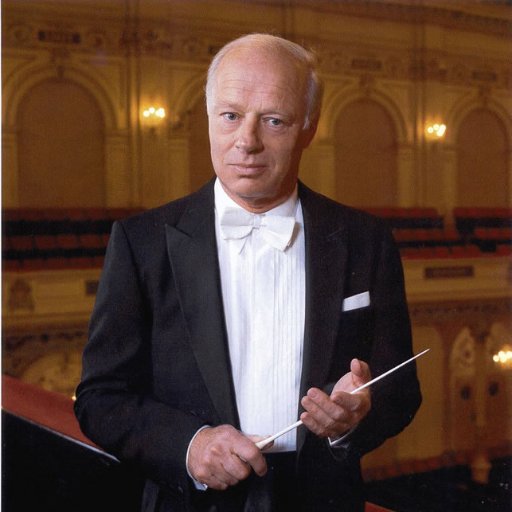 Haitink’s death was a sad one. Haitink, an unassuming man and great conductor, died in his home in London. We were lucky to have heard him live many times, as, in the role of Principal Conductor, he led the Chicago Symphony for four years, from 2006 to 2010. One memory is indelible, that of Mahler’s Symphony no. 6, in 2007. Rarely did the Chicago Symphony play as beautifully, and rarely was the music presented with such poignancy and completeness. He was offered the position of Music Director at Chicago but refused: his explanation back then was that he was too old, though we suspect that he just didn’t want to deal with the financial and social obligations that come with the title; he wanted to make music.
Bernard Haitink was born in Amsterdam on March 4th of 1929. As a child he studied the violin but never played on a level that satisfied him. In 1954-55 he took several conducting courses, and it became apparent that that was his true calling. In 1957 he became Principal Conductor of the Netherlands Radio Philharmonic Orchestra. In 1956 he was invited as a replacement for an ailing conductor to lead a performance of Cherubini’s Requiem with the Concertgebouw. In a very telling episode, he first refused, saying that he wasn’t ready ready, even though he had already conducted the piece; fortunately, at the last moment he changed his mind. The performance went very well, several engagements followed and in 1961 he was made the Principal Conductor of the Concertgebouw, the youngest ever. He shared this position with the eminent German conductor Eugen Jochum till the latter retired in 1964, and then, on his own, till 1988. At the same time, since 1964, he was the Principal Conductor of the London Philharmonic. He widely traveled with both orchestras, performing in the US and around the world. While in England, he was also the Music Director of the Glyndebourne Festival (from 1978 to 1988) and the Royal Covent Garden Opera (from 1987 to 2002). From 2002 to 2006 he was the Principal Conductor of the Dresden Staatskapelle and Principal Guest Conductor of the Boston Symphony.
Haitink’s discography is extensive: he recorded all symphonies of Beethoven, Brahms, Bruckner, Mahler, Tchaikovsky, Wagner’s Der Ring des Nibelungen, Debussy and Ravel’s symphonic pieces and many more, but Mahler and Bruckner constituted the core of his repertory.
In his obituary, the New York Time quoted their former chief music critic Harold Schonberg who said that Haitink was “not one of the glamour boys on the podium… He does not dance, he does not patronize the best tailor on the Continent.” It seems what Schonberg was implying that Haitink was the opposite of Herbert von Karajan. We’ll miss Bernard Haitink dearly.
Here’s the third movement of Mahler’s Symphony no. 6, which he recorded live in 2007 with the Chicago Symphony Orchestra.
Read more...Gustav Mahler - Symphony no. 6, 3rd movement
Chicago Symphony Orchestra (Orchestra)
Bernard Haitink (Conductor)
Tatiana Mikova - String Quartet In Modo Lidico
Zino Bogachek (Violin)
Natasha Bogachek (Violin)
Phiilippe Chao (Viola)
Igor Zubkovsky (Cello)
Franz Liszt - Mephisto Waltz No. 2, S. 515
Dr. Michael Kaykov (Piano)
Fritz Kreisler - Caprice Viennois, Op. 2
Leonid Kogan (Violin)
Andrei Mytnik (Piano)