
Horowitz, more, 2021
This Week in Classical Music: September 27, 2021. Pianists and a Singer. October 1st is a big day for the pianists: Vladimir Horowitz was born on that day in 1903, and Vera 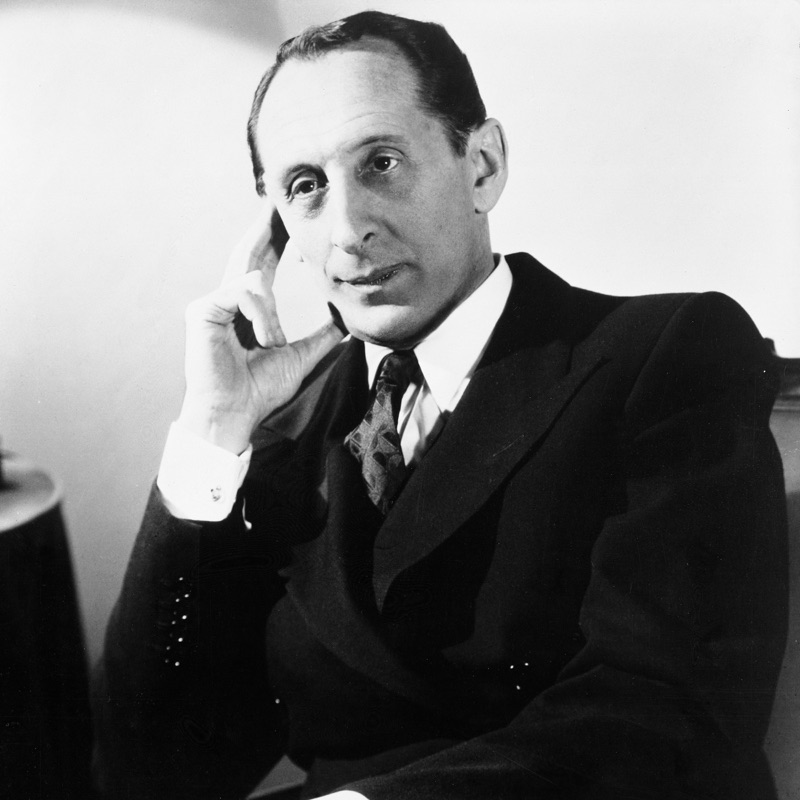 Gornostayeva in 1939. Horowitz is world-famous, we’ve written about him on several occasions (for example, here), but still cannot quite come to terms with his art. Somehow, Horowitz managed to combine a sublime touch and bombast, the most incisive interpretation with showmanship, very often in the same recording. There are some pianists, like Arthur Rubinstein, who sound flawless to us, even if during their long careers they had changed the way they played some pieces (which Rubinstein, for one, certainly did). Horowitz is not like that: you listen to him and sometimes cringe: why so fast, why this blur, where’s the music? And the next moment everything is perfect, and you start thinking that maybe the mayhem he created several bars ago had some reason behind it. In any event, here’s Vladimir Horowitz playing Chopin’s Scherzo no. 1. This recording was most likely made in 1951. By the way, Chopin was only 21 when he wrote this Scherzo.
In the same entry we referred to above, we mentioned Vera Gornostayeva, a fine Russian pianist and teacher. Here she plays, in recital, Chopin’s Waltz in C-Sharp Minor op.64, no.2. It’s very well played, even if there’s no Horowitz’s fire in it. We’re not sure about the date of the recording, it’s probably from the 1970s.
The French composer Paul Dukas was also born on October 1st, in 1865. He’s known for one composition only, his brilliant orchestral piece The Sorcerer's Apprentice. Dukas was born in Paris into a Jewish family. He started composing at the age of 14, went to the Paris Conservatory at 16. To his great disappointment, despite several attempts he failed to win the coveted Prix de Rome. Dukas was very critical of his own compositions and destroyed most of the scores. He was very influential as a music critic; he also extensively wrote about history, philosophy, and politics. Here’s one of Dukas surviving compositions, Variations, Interlude et Finale sur un thème de Rameau. It’s performed by the pianist Marco Rapetti.
Fritz Wunderlich is one of our all-time favorite singers. We just missed his birthday: he was born on September 26th of 1930. As a Lied tenor, he’s incomparable (you can listen to Schubert’s Die schöne Müllerin or Schumann’s Dichterliebe in our library). He was also wonderful in Mozart’s operas. Here’s Il mio tesoro from Act 2 of Mozrt’s Don Giovanni. Herbert von Karajan leads the Vienna Philharmonic orchestra.
Read more...Wolfgang Amadeus Mozart - Amici miei...Il mio tesoro, from Don Giovanni
Vienna Philharmonic orchestra (Orchestra)
Herbert von Karajan (Conductor)
Paul Dukas - Variations, Interlude et Finale sur un thème de Rameau
Marco Rapetti (Piano)
Frédéric Chopin - Waltz in C sharp minor op 64 no 2
Vera Gornostayeva (Piano)
Frédéric Chopin - Scherzo No. 1 in B minor Op. 20
Vladimir Horowitz (Piano)
Gustav Holst and more, 2021
This Week in Classical Music: September 20, 2021. Geography. This week is rich on anniversaries and exceptionally diverse on geography. Gustav Holst was born on September 21st 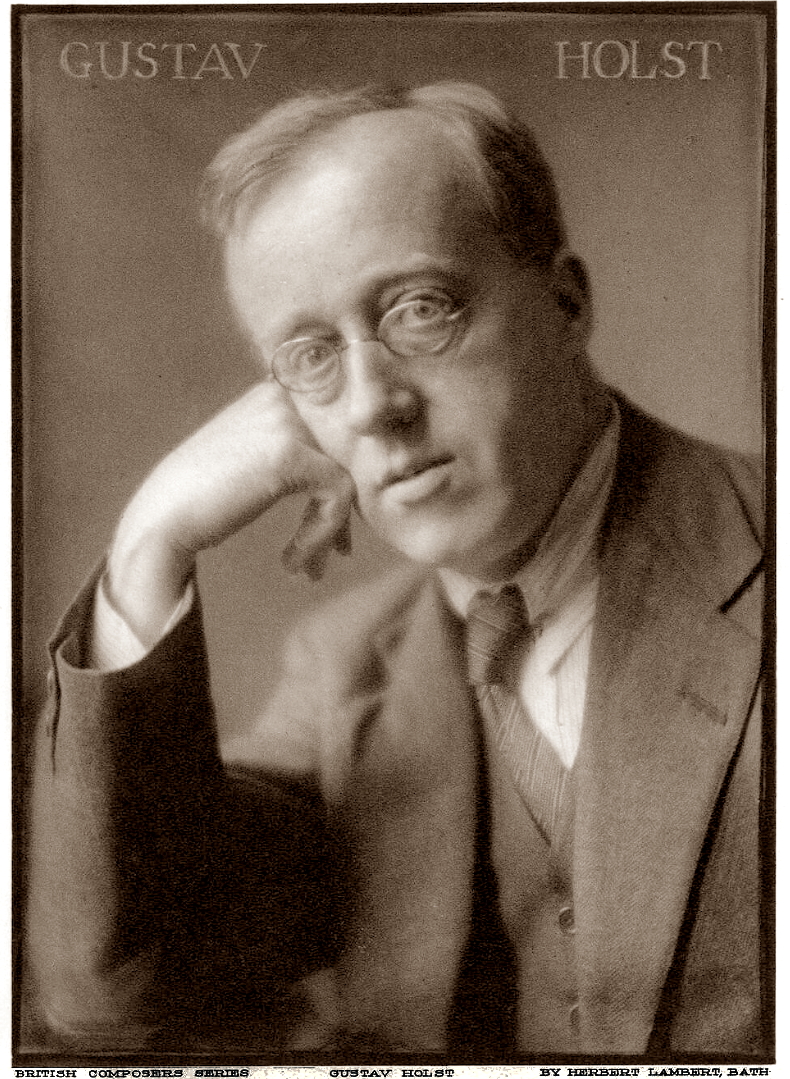 of 1874 in Cheltenham, England. A thoroughly English composer, he got his German-sounding name from his German-Swedish ancestors on the paternal side: his great-grandfather, Matthias Holst, a minor composer, pianist and harpist, was born in Riga and served at the Imperial Russian Court in St. Petersburg. Gustav Holst was quite famous during his lifetime; these days outside of Britain he’s mostly known for his orchestral suite The Planets. Holst studied at the Royal College of Music under Charles Stanford. Another English composer, Ralph Vaughan Williams, was his close friend, and so was Arnold Bax. Holst was a wonderful teacher, among his students were composers Michael Tippett and Benjamin Britten. The Planets were composed between 1914 and 1917. Each of the “planet” movements is supposed to have an astrological meaning, which escapes us, and a certain mood, which can be heard much clearer. Here, for example, is the fourth movement of the suite: Jupiter, the Bringer of Jollity. James Levine conducts the Chicago Symphony Orchestra.
Mikalojus Čiurlionis, a Lithuanian composer, painter and writer, was born on September 22nd of 1875. He’s one of the central cultural figures in modern Lithuanian history. Andrzej Panufnik, one of the most interesting Polish composers of the 20th century, was born on September 24th of 1914 in Warsaw. Here’s what we wrote about him to commemorate his 100th anniversary. Jean-Philippe Rameau, born on September 25th of 1683 in Dijon, was one of the greatest French composers of the Baroque, and probably of all of French music. Here’s the Overture to Rameau’s opera Dardanus, a tragédie en musique, as opera was then called in France. Dardanus premiered at the Paris Opéra on November 19th of 1739. Marc Minkowski leads Les Musiciens du Louvre.
So far we’ve visited England, Lithuania, Poland and France on our list of anniversaries. Three more countries are still ahead. Dmitry Shostakovich was born in imperial Russia, became one of the most famous composers of the Soviet Union and now is venerated as one of Russia’s greatest. Here’s one of our many entries on Shostakovich. Komitas was born in Turkey, in the town of Kütahya, on September 26th of 1869 and died in Paris, France on October 22nd of 1935, but he is an utterly Armenian composer and is celebrated in that country as Čiurlionis is in Lithuania or Shostakovich in Russia. He collected folksongs, as Bartok did in Hungary, and singlehandedly created a Western-style musical tradition in Armenia. And finally, an American: George Gershwin, named Jacob Gershowitz at birth, was born on September 26th of 1898 in Brooklyn, New York.
Seven composers, seven countries. Should we add a Canadian, Glenn Gould, born in Toronto on September 25th of 1932? Maybe next time.
Read more...Gustav Holst and more, 2021
This Week in Classical Music: September 20, 2021. Geography. This week is rich on anniversaries and exceptionally diverse on geography. Gustav Holst was born on September 21st of 1874 in Cheltenham, England. A thoroughly English composer, he got his German-sounding name from his German-Swedish ancestors on the paternal side: his great-grandfather, Matthias Holst, a minor composer, pianist and harpist, was born in Riga and served at the Imperial Russian Court in St. Petersburg. Gustav Holst was quite famous during his lifetime; these days outside of Britain he’s mostly known for his orchestral suite The Planets. Holst studied at the Royal College of Music under Charles Stanford. Another English composer, Ralph Vaughan Williams, was his close friend, and so was Arnold Bax. Holst was a wonderful teacher, among his students were composers Michael Tippett and Benjamin Britten. The Planets were composed between 1914 and 1917. Each of the “planet” movements is supposed to have an astrological meaning, which escapes us, and a certain mood, which can be heard much clearer. Here, for example, is the fourth movement of the suite: Jupiter, the Bringer of Jollity. James Levine conducts the Chicago Symphony Orchestra.
Mikalojus Čiurlionis, a Lithuanian composer, painter and writer, was born on September 22nd of 1875. He’s one of the central cultural figures in modern Lithuanian history. Andrzej Panufnik, one of the most interesting Polish composers of the 20th century, was born on September 24th of 1914 in Warsaw. Here’s what we wrote about him to commemorate his 100th anniversary. Jean-Philippe Rameau, born on September 25th of 1683 in Dijon, was one of the greatest French composers of the Baroque, and probably of all of French music. Here’s the Overture to Rameau’s opera Dardanus, a tragédie en musique, as opera was then called in France. Dardanus premiered at the Paris Opéra on November 19th of 1739. Marc Minkowski leads Les Musiciens du Louvre.
So far we’ve visited England, Lithuania, Poland and France on our list of anniversaries. Three more countries are still ahead. Dmitry Shostakovich was born in imperial Russia, became one of the most famous composers of the Soviet Union and now is venerated as one of Russia’s greatest. Here’s one of our many entries on Shostakovich. Komitas was born in Turkey, in the town of Kütahya, on September 26th of 1869 and died in Paris, France on October 22nd of 1935, but he is an utterly Armenian composer and is celebrated in that country as Čiurlionis is in Lithuania or Shostakovich in Russia. He collected folksongs, as Bartok did in Hungary, and singlehandedly created a Western-style musical tradition in Armenia. And finally, an American: George Gershwin, named Jacob Gershowitz at birth, was born on September 26th of 1898 in Brooklyn, New York.
Seven composers, seven countries. Should we add a Canadian, Glenn Gould, born in Toronto on September 25th of 1932? Maybe next time.
Read more...Jean-Philippe Rameau - Overture, from Dardanus
Les Musiciens du Louvre (Ensemble)
Marc Minkowski (Conductor)
Gustav Holst - Jupiter, the Bringer of Jollity, from The Planets
Chicago Symphony Orchestra (Orchestra)
James Levine (Conductor)
Ayenn Legagneur Stark - Una vita di amore
Ayenn Stark (Tenor)
Irina Marevich (Violin)
Joaquin Muro (Trumpet)
Miguel Vargas (Flute)
Ayenn Stark (Piano)