Welcome to our free classical music site

Do you write about classical music? Are you a blogger? Want to team up with Classical Connect? Send us a message, let's talk!
Do you write about classical music? Are you a blogger? Want to team up with Classical Connect? Send us a message, let's talk!




This Week in Classical Music: March 11, 2024. Classical Connect is on a hiatus.
PermalinkThis Week in Classical Music: March 4, 2024. Luigi Dallapiccola, Part II. Last week, we ended the story of the Italian composer Luigi Dallapiccola at the beginning of WWII. Mussolini’s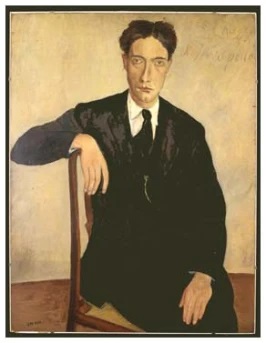 fascist state had passed race laws that restricted the civil rights of the Italian Jews, affecting Dallapiccola directly, as his wife was one of them. Later laws would strip the Jews of their assets and send them into internal exile. Italy was no Germany, and these laws weren’t enforced by the Mussolini fascists as they were by the Nazis: no Italian Jews were killed by the regime just because they were Jews (many political opponents of Mussolini were imprisoned and executed, and some of them were Jewish). That state of affairs abruptly changed in 1943 when the Italian army surrendered to the Allies, and in response, the Nazis occupied all of the northern part of Italy. During those years, Dallapiccola and his wife lived in Florence, where he was teaching at the conservatory – Florence was part of the occupied territory. In 1943 and again in 1944, they were forced into hiding, first in a village outside the city, then in apartments in Florence.
Once the war was over, Dallapiccola’s life stabilized. His opera Il prigioniero (The Prisoner), which he composed during the years 1944-48, was premiered in 1950 in Florence (the opera was based in part on the cycle Canti di prigionia, the first song of which we presented in our entry last week). The opera's music was serialist; it was one of the first complete operas in this style, as Berg’s Lulu, the first serialist opera, had not yet been finished. Hermann Scherchen, one of the utmost champions of 20th-century music, conducted the premiere. Despite the music’s complexity, it was often performed in the 1950s and ‘60s. Times have changed, but it’s still being performed, occasionally. Here is the Prologue and the first Intermezzo (Choral) of the opera, about eight minutes of music. It was recorded live in Bologna on April 16th of 2011; Valentina Corradetti is the soprano singing the role of Mother, the orchestra and chorus of the Teatro Comunale di Bologna are conducted by Michele Mariotti.
In 1951, Serge Koussevitzky, the music director of the Boston Symphony and himself a champion of modern music, invited Dallapiccola to give lectures at the Tanglewood Festival. After that first trip, Dallapiccola often traveled to the US, sometimes staying for a long time. Dallapiccola, who spoke English, German and French, also traveled in Europe. Interestingly, he never visited the Darmstadt Summer School, the gathering place for young composers such as Karlheinz Stockhausen, Pierre Boulez, Luigi Nono and Bruno Maderna, who were experimenting with serial music and developing new idioms. It’s especially surprising considering that he was very close to Luigi Nono, and that Luciano Berio, also a Darmstadt habitué, was his former student. It seems that the Darmstadt composers were too cerebral and too radical for Dallapiccola, whose pieces, while strictly serial during that period, were infused with lyricism, somewhat in the manner of one of his idols, Alban Berg.
Dallapiccola’s last large composition was the opera Ulisse, which premiered in Berlin in 1968; Lorin Maazel was the conductor. After that, Dallapiccola composed very little, his time went into adapting some of his lectures into a book. He died on February 19th of 1975 in Florence.
In 1971 Dallapiccolo compiled two suites based on Ulisse. Here is one of them, called Suite/A. The soprano Colette Herzog is Calypso, the baritone Claudio Desderi is Ulysses. Ernest Bour conducts the Chorus and the Philharmonic Orchestra of the French Radio.Permalink
This Week in Classical Music: February 26, 2024. Missed dates and Luigi Dallapiccola. For the last three weeks, we’ve been preoccupied with Alban Berg, and we feel good about it: Berg was a revolutionary composer (not by his constitution but by the nature of his creative talent) and he should be celebrated, even if our time, philistine and woke, doesn’t suit him well. The problem we have is that we missed several very significant anniversaries: for example, George Frideric Handel‘s – he was born on February 23rd of 1685; also, one of the most interesting German composers of the 16th century, Michael Praetorius, was born on February 15th of 1571. We missed the birthday of Francesco Cavalli, a very important composer in the history of opera, on February 14th of 1602. Two famous Italians were also born during those three weeks, Archangelo Corelli on February 17th of 1653 and Luigi Boccherini, on February 19th of 1743. Of our contemporaries, György Kurtág, one of the most important composers of the late 20th century, celebrated his 98th (!) birthday on February 19th. And then this week, there are two big dates: Frédéric Chopin’s anniversary is on March 1st (he was born in 1810) and Gioachino Rossini’s birthday will be celebrated on February 29th – he was born 232 years ago, in 1792. We’ve written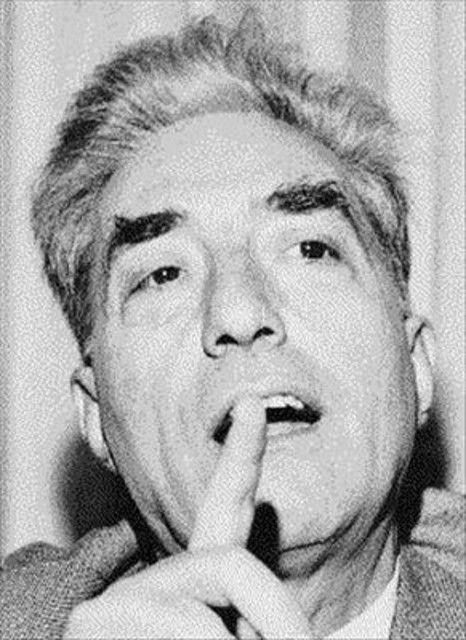 about all these composers, about Handel and Chopin many times. Today, though, we’ll remember an Italian whom we’ve mentioned several times but only alongside somebody else; his name is Luigi Dallapiccola, and his story has a connection to Alban Berg.
Luigi Dallapiccola was born on February 3rd of 1904 in the mostly Italian-populated town of Pisino, Istria, then part of the Austrian Empire. Pisino was transferred to Italy after WWI, to Yugoslavia after WWII, as Pazin, and now is part of Croatia. The Austrians sent the Dallapiccola family to Graz as subversives (Luigi, not being able to play the piano, enjoyed the opera performances there); they returned to Pisino only after the end of the war. Luigi studied the piano in Trieste and in 1922 moved to Florence, where he continued with piano studies and composition, first privately and then at the conservatory. During that time, he was so much taken by the music of Debussy that he stopped composing for three years, trying to absorb the influence. A very different influence was Schoenberg’s Pierrot Lunaire, which Luigi heard in 1924 at a concert organized by Alfredo Casella (in the following years, Casella would become a big supporter and promoter of Dallapiccola’s music).
Upon graduation, Dallapiccola started giving recitals around Italy, later securing a position at the Florence Conservatory where he taught for more than 30 years, till 1967 (among his students was Luciano Berio). In 1930 in Vienna, he heard Mahler’s First Symphony, which also affected him strongly: at the time, Mahler’s music was practically unknown in Italy. In the 1930s, Dallapiccola's life underwent major changes. Musically, he became more influenced by the Second Viennese School, and in 1934 got to know Alban Berg (in 1942, while passing through Austria to a concert in Switzerland, he met Anton Webern). The policies of Italy also affected him greatly: first, he was taken by Mussolini’s rhetoric, openly becoming his supporter. This changed with the Abyssinian and Spanish wars, which Dallapiccola protested, and then much more so when Mussolini, under pressure from Hitler, adopted racial (for all practical purposes, antisemitic) policies: Dallapiccola’s wife, Laura Luzzatto, was Jewish. They married on May 1, 1938; the racial laws were adopted in November of that year. Here, from 1938, is the first of the three Canti di Prigionia (Songs of Imprisonment), Preghiera di Maria Stuarda (A Prayer of Mary Stuart) written, in part, as a protest against Mussolini’s racial laws. The New London Chamber Choir is conducted by James Wood, and the Ensemble Intercontemporain, by Hans Zender. We’ll continue with the life and music of Luigi Dallapiccola next week. Permalink
This Week in Classical Music: February 19, 2024. Alban Berg, Part III, Lulu. Frank Wedekind was a famous (and controversial) German playwright. Among his more famous plays
By 1929, when Berg started working on Lulu, he was financially secure and quite famous, thanks to the popularity of Wozzeck. He used Wedekind’s Earth Spirit to write the libretto for Act I and part of Act II, and Pandora's Box for the rest of what he planned as a three-act opera. He worked on it for the next five years and mostly completed it in what’s called a “short score,” without complete orchestration, in 1934. By then the Naxis were in power and the cultural situation had changed dramatically. Berg’s position was difficult on two accounts: first, because of the kind of music he was composing (by now not just atonal but 12-tonal) – the Nazis considered it “Entartete,” that is “Degenerate.” And secondly, he was a pupil of a famous Jewish composer, Schoenberg, and that, in the eyes of the regime, tainted him even more. Wozzeck was banned (Erich Kleiber conducted the last performance of the opera in November of 1932), practically none of his music was being performed, and Berg’s financial situation was precarious. In January of 1935, the American violinist Louis Krasner commissioned Berg a violin concerto; financially, that was of great help and the concerto, dedicated to the 18-year-old daughter of Alma Mahler and the architect Walter Gropius, who died of polio, became one of Berg’s most successful compositions.
Understanding that Lulu most likely wouldn’t be staged in Germany – or anywhere else – anytime soon, Berg decided to write a suite for soprano and orchestra based on the opera, the so-called Lulu Suite. Erich Kleiber performed it in November of 1934, it was well received by the public but the level of condemnation by Goebbels and his underlings was such that Kleiber was not only forced to resign from the Berlin Opera but emigrated from Germany. Berg continued working on the orchestration of Lulu but never completed it: in November of 1935 he was bitten by an insect, that developed into a furuncle, which led to blood poisoning. Berg died on Christmas Eve of 1935. In 1979, the Austrian composer Friedrich Cerha completed the orchestration of the third act; this became the standard version of Lulu.
Here is Berg’s Lulu Suite. It’s performed by the City of Birmingham Symphony Orchestra with Simon Rattle conducting. Arleen Auger is the soprano.Permalink
This Week in Classical Music: February 12, 2024. Alban Berg, Part II. In 1911, Arnold Schoenberg moved from Vienna to Berlin but the intense relationship between Berg and his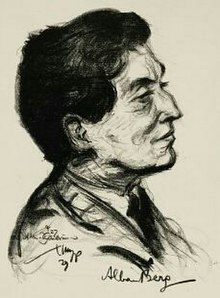 teacher continued through letters. Schoenberg’s notes often contained demands that were about more than just the music: some were domestic, some financial. Though Berg adored his teacher, Schoenberg’s demands were difficult and time-consuming, and the relationship was getting more difficult – so much so that in 1915 their correspondence broke off. WWI was in full swing; Berg was conscripted into the Austrian Army and served for three years (the 42-year-old Schoenberg, who moved back to Vienna in 1915, also served in the army, but only for a year). Things changed in 1918 after Berg was discharged: he returned to Vienna and reestablished his relationship with his teacher.
In May of 1914 Berg attended a performance of Woyzeck, a play by the German playwright Georg Büchner. He immediately decided to write an opera based on the play; it would become known as Wozzeck, a misspelling of the original play’s name that somehow stuck. Berg wrote the libretto himself, selecting 15 episodes from Woyzeck, a macabre story of a poor and desperate soldier, who, suspecting that the mother of his illegitimate child is having an affair with the Captain, murders her, and then drowns. Berg started writing sketches soon after he saw the play but had to stop in June of 1915 when he was drafted. He continued composing while on leave in 1917 and 1918, finished the first act in 1919, the second act two years later, and completed the opera in 1922. It premiered at the Berlin State Opera in December of 1925, with Erich Kleiber conducting. Wozzeck created a scandal, which is understandable, given that it was the first full-size opera written in an atonal idiom, unique not only musically but also in its emotional impact. What is more important (and somewhat surprising) is that the premier was followed by a slew of productions across Germany and Austria. Wozzeck was staged continuously in different German-speaking cities for the next eight years, but also internationally: in Prague, Philadelphia, and even in such an unlikely place as Leningrad. It all came to an end when the Nazis banned it as part of their campaign against Entartete Musik (Degenerate music) and the Austrians dutifully followed. Wozzeck’s success made Berg financially secure, brought him international recognition and some teaching jobs. We’ll listen for the first 15 minutes of Act II of Wozzeck. In Scene 1, Marie puts her son to bed, then Vozzeck arrives, gets suspicious of her earrings (they were given to her by the Captain), gives her some money and leaves. In Scene 2, the Doctor and the Captain walk the street; they see Wozzeck, make fun of him and insinuate that Marie isn’t faithful. Wozzeck runs away in despair. Claudio Abbado conducts the Orchestra and Chorus of the Vienna State Opera (we know the orchestra as the Vienna Philharmonic); Wozzeck is sung by Franz Grundheber, his common-law wife Marie is Hildegard Behrens. Heinz Zednik is the Captain, Aage Haugland is the Doctor.
Wozzeck was an atonal opera, but it wasn’t a 12-note composition, the technique which by then was being developed by Schoenberg. Berg was receptive to it and soon moved in a similar direction. He wrote two pieces, Kammerkonzert (Chamber Concerto for Piano and Violin with 13 Wind Instruments), completed in 1925, and Lyric Suite, a year later, which broadly used the 12-tone technique. In 1929 he started work on his second major opera, Lulu, a much larger and more complex composition than Wozzeck. We’ll cover it next week, in our the third and final installment on Berg.Permalink
This Week in Classical Music: February 5, 2024. Berg, Part I, Early Years. Alban Berg, a seminal German composer of the first half of the 20th century, was born in Vienna on February 9th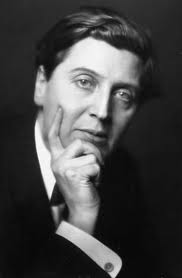 of 1885. Berg, with Anton Webern, was a favorite pupil of Arnold Schoenberg and was one of the first composers to write atonal and 12-tonal music. While Schoenberg was often cerebral, even in his more expressive works and Webern a much stricter follower of the technique in his succinct, perfectly formed pieces, Berg’s music was more lyrical and Romantic, even as he abandoned the tonal format. Berg’s background was very different from his Jewish teacher’s: his Viennese family was well-off, at least while his father was alive (he died when Alban was 15), they lived in the center of the city (Schoenbergs lived in Leopoldstadt, a poor Jewish neighborhood). Berg was a poor student: he had to repeat the 6th and the 7th grades. Even though Alban was interested in music from an early age and wrote many songs, he clearly wasn’t suited for studies in a formal environment and lacked the required qualifications, so, instead of going to a conservatory he became an unpaid civil servant trainee. In 1904, without any previous musical education, he became Schoenberg’s student. By that time Schoenberg, who was struggling financially and took students to support himself, had already written Verklärte Nacht (Transfigured Night) and a symphonic poem Pelleas und Melisande. Both had a fluid tonal canvass as Schoenberg was already researching the atonal idiom, but it would be another three years till he’d write his Quartet no. 2, his first truly atonal piece; all these developments took place while Berg was his student. Berg studied with Schoenberg till 1911, first the counterpoint and music theory, and later composition. During that time he sketched several piano sonatas and later completed one of them, published as his op. 1. That was a big departure, as before joining Schoenberg all he could write were songs.
We should note that the pre-WWI years in Vienna were a period of tremendous cultural development; despite the overall antisemitism of the Austrian society, many of the leading figures were Jewish, and sexuality was explored deeply for the first time. In music, it was Gustav Mahler, Richard Strauss, Alexander von Zemlinsky, Schoenberg, Franz Schreker, Egon Wellesz, Ernst Toch, and of course, Webern and Berg, with many younger composers to follow. Arthur Schnitzler, Hugo von Hofmannsthal, Robert Musil and Stefan Zweig were important novelists and playwrights (Frank Wedekind, their German contemporary, was the source for Berg’s opera Lulu). The painter Gustav Klimt was Berg’s friend, and so was the architect Adolf Loos. And we shouldn’t forget Sigmund Freud, who was not just a psychoanalyst famous around Vienna but a leading cultural figure.
A characteristic episode happened in March of 1913 when Schoenberg conducted what became known as the Skandalkonzert ("scandal concert") in Vienna’s Musikverein. Here’s the program: Webern: Six Pieces for Orchestra; Zemlinsky: Four Orchestral Songs on poems by Maeterlinck; Schoenberg: Chamber Symphony No. 1; Berg: Two of the Five Orchestral Songs on Picture-Postcard Texts by Peter Altenberg. Mahler's Kindertotenlieder was supposed to be performed at the end, but during the performance of Berg’s songs fighting began and the concert was cut short. The Viennese public’s response could be expected, if not necessarily in its physical form (after all, their favorite music was Strauss’s waltzes), but how many American presenters would dare to program such a concert in our time, more than 100 years later? We can listen to Berg’s songs that were performed during the concert, no. 2 of op. 4 here and no. 3 here. The soprano is Renée Flemming; Claudio Abbado leads the Lucerne Festival Orchestra.
We’ll continue with Berg and his two masterpieces, operas Wozzeck and Lulu, next week. Permalink