Welcome to our free classical music site

Do you write about classical music? Are you a blogger? Want to team up with Classical Connect? Send us a message, let's talk!
Do you write about classical music? Are you a blogger? Want to team up with Classical Connect? Send us a message, let's talk!




This Week in Classical Music: August 16, 2021. Ginette Neveu and Karlheinz Stockhausen. Last week we promised to write about the violinist Ginette Neveu. The reason Neveu is not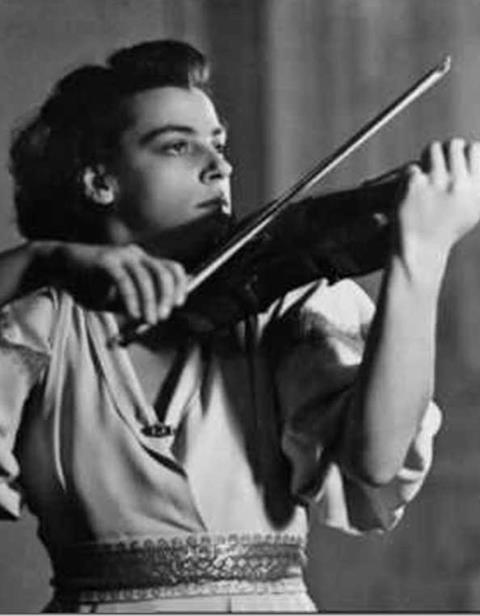 better known is because her life was tragically short. Neveu was born in Paris on August 11th of 1919. Her mother was Ginette’s first violin teacher. Ginette made her first public appearance at the age of seven playing Bruch's Violin Concerto no. 1 and later that same year performing Mendelssohn’s Violin Concerto with the Colonne Orchestra under the direction of Gabriel Pierné. She studied at the Paris Conservatory, receiving a premier prix at the age of 11, and then continued with George Enescu and the Hungarian teacher and violinist Carl Flesch (among Flesch’s pupils were Ivry Gitlis, Ida Haendel, Josef Hassid and Henryk Szeryng). In 1935, aged 15, Neveu won the International Wieniawski Competition; David Oistrakh, who was 11 years her older, took the second place and another Flesch’s pupil, Henri Temianka, took the third prize. Boris Goldstein, then 12 years old, came in the fourth. The Wieniawski win opened all major concert halls for Neveu: after the competition she toured Poland and Germany, then went to the Soviet Union, in 1937 she performed in the United States and Canada. During WWII, Neveu performed very few concerts, all of them in the occupied France (she refused to perform in Germany). In 1946 she played her debut concert in London and a year later – in South and North America. After hearing her perform Beethoven’s Violin Concerto in the first half of a concerts at the Royal Albert Hall, Queen Elizabeth invited Neveu to the royal box for the second half. But it was not just the royal fans who admired her: music critics all over the world praised her playing. Sibelius called Neveu’s performance of his Violin Concerto “extremely sensitive” and “unforgettable.”
On October 27th of 1949 she and her brother, a pianist who accompanied her in many concerts, were on their way from Paris to New York when their plane crashed near the Azores. Everybody on board was killed; her Stradivari was destroyed. Ginette Neveu was thirty when she died. Here’s a recording of Sibelius’s Violin Concerto that so impressed the composer. It was made on November 21st of 1945. Walter Süsskind leads the Philharmonia Orchestra.
Karlheinz Stockhausen was born on August 22nd of 1928 in Burg Mödrath,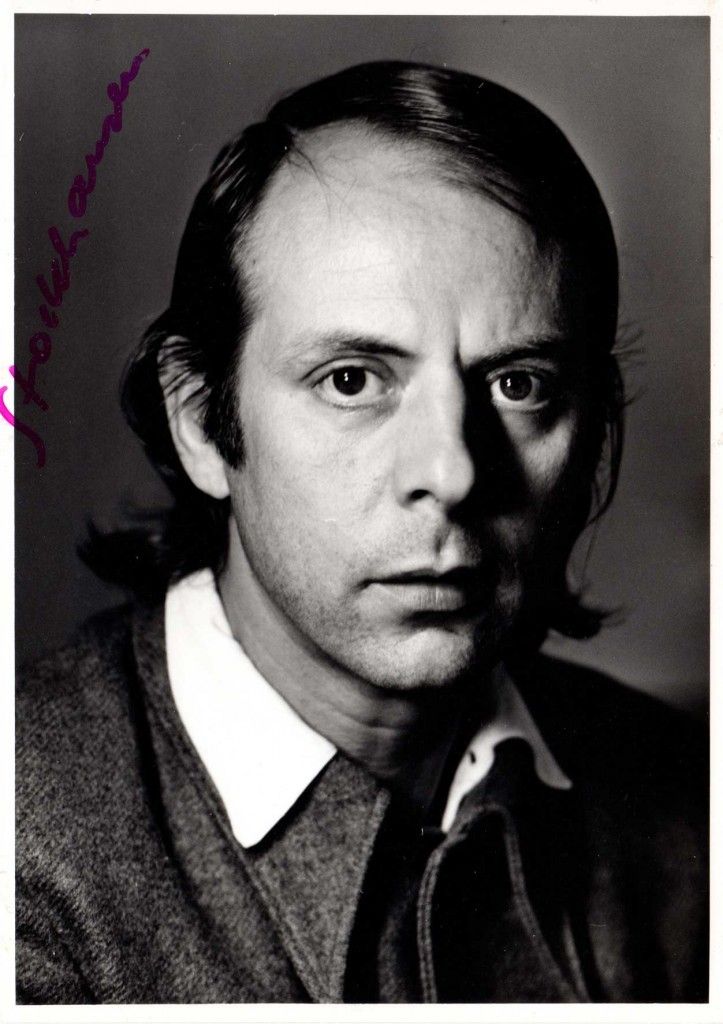 near Cologne. We often mention his name, and always somewhat anxiously: Stockhausen’s music is often very difficult. He was one of the most important composers of the second half of the 20th century, expanding serial composition technique with aleatory, or chance, elements. In the 1950s he was (along with Pierre Boulez and Luigi Nono) one of the most influential figures in the Darmstadt Summer Courses. What is interesting (and, by today’s standards, quite incredible) is that in the 1960s he was the second most recorded composer of the 20th century, after Stravinsky. In the 1970s Stockhausen was appointed professor of composition at the Cologne Musikhochschule. Also in the 1970s Stockhausen started working on his magnum opus. a cycle of seven operas Licht (Light), subtitled "Die sieben Tage der Woche" (The Seven Days of the Week). It was completed in 2003 and consists of 29 hours of music.
Of the three Stockhausen’s pieces in our library, two received “one note,” the lowest rating. Still, we’d like to offer our more adventuresome listeners an early piece called Kreuzspiel (here). It’s not very complicated and, we think, is a lot of fun. Kreuzspiel is performed by the Netherland-based Ives Ensemble. Permalink
This Week in Classical Music: August 9, 2021. Many composers and one Solomon. We’d like to acknowledge several composers, none of them great, all very interesting: a Venezuelan-born Frenchman Reynaldo Hahn (born August 9th of 1874): it’s not clear if these days he’s better known for his wonderful songs or the friendship with Marcel Proust. Alexander Glazunov, a Russian composer, was also born on August 9th, in 1865. He was a prolific composer of rather old-fashioned music. Glazunov led the St-Petersburg Conservatory during a very difficult time after the revolution; Dmitry Shostakovich was his pupil. Heinrich Ignaz Biber, an Austrian composer, was born in Bohemia on August 12th of 1644, he’s known for his violin music. Maurice Greene (born August 12th of 1696) was an English composer who wrote several popular “anthems.” Another English composer, Kaikhosru Shapurji Sorabji, one of the most unusual composers of all time, was born on August 14th of 1892 (we wrote a brief on him here). His father was a Parsi. Samuel Coleridge-Taylor, yet another English composer, was born on August 15th of 1875. Coleridge-Taylor was highly regarded during his lifetime but then his fame faded rapidly. Coleridge-Taylor’s father was from the African country of Sierra-Leone, which may explain why his music was played more often throughout the last year than during the previous 30. This is not all: the delightful French composer, Jacques Ibert, was born on August 15th of.jpg "Solomon") 1890. August 15th is also the birthday of the American Lucas Foss (b. 1922).
1890. August 15th is also the birthday of the American Lucas Foss (b. 1922).
Now, to the performers. The British pianist known professionally as Solomon was born Solomon Cutner on August 9th of 1902. He had a most unusual career: a child prodigy, he made his public debut at the age of eight, playing Tchaikovsky’s First Piano Concerto at the Queen’s Hall. Just a couple years later he stopped performing and disappeared for about 10 years. In 1924 he returned to the stage, his technique intact. He toured across Europe and in the US, played for the troops during WWII and later formed a famed trio with the violinist Zino Francescatti and cellist Pierre Fournier. Solomon brilliantly played a broad repertoire, including Brahms, Liszt and Tchaikovsky. He was a great interpreter of such disparate composers as Beethoven and Chopin. Here is Chopin’s Berceuse, recorded in 1946. Solomon loved to play Brahms’s Intermezzo in C Major Op. 119 No. 3, both during the main program or as an encore. Here’s a recording from 1952.
The wonderful Italian pianist Aldo Ciccolini was born on August 15th of 1925. Also this week: the brilliant violinist Ginette Neveu, born on the 11th of August of 1919, who tragically died in a place crash at the age of 30.Permalink
This Week in Classical Music: August 2, 2021. Short takes. We’ll follow the lead of the musicologist Alejandro Planchart who, after sorting out all kind of information, had determined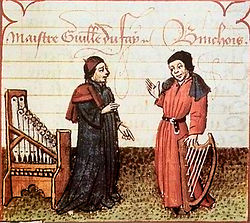 that Guillaume Dufay was born on August 5th of 1397. Dufay (his name was also spelled as Du Fay and Du Fayt) was the most famous composer of his time, that being the early Renaissance of European music. (The picture to the left indirectly attests to his fame: depicted on the left is Guillaume Dufay, on the right – Gilles Binchois, three years younger but also a famous composer; the script above the figures calls Dufay, and only him, “maître,” or master– Binchois is identified just by his name). We’ve written about Dufay a number of times, the last time just a year ago when we analyzed his peregrinations around Europe, here, which are absolutely fascinating, considering the distances he traveled and the general lack of any transportation infrastructure. Getting back to music: what we also find interesting is the use of certain technical devices, which changed as music forms were being developed. For example, early in his career, Dufay wrote what is called “isorhythmic” music. Isorhythm is just a way of using a fixed rhythmic pattern, called talea, which repeats, without change, in one of the voices, usually in the tenor. The use of talea was invented in the Middle Ages, was used by composers like Guillaume de Machaut, and was supposed to give certain structure to the musical piece. That’s how Dufay wrote his motets and masses early on. He dropped this device to write freer and more melodic music later in his career. Here’s Dufay’s early isorhythmic motet, Vasilissa ergo gaude (Therefore rejoice, princess) from about 1420. It’s performed by the Huelgas Ensemble, Paul Van Nevel conducting. And here’s the section Gloria in excelsis Deo from Dufay’s mass Missa ave regina, which was written later in his life, after 1463 (Dufay died in 1474). Ensemble Cantus Figuratus is led by Dominique Vellard.
Several composers from the modern era were also born this week: the Frenchman André Jolivet on August 8th of 1905 in Montmartre, Paris, and the American, William Schuman, on August 4th of 1910, in Manhattan, New York. Another French composer, Cécile Chaminade, was born on August 8th of 1857, also in Paris. With recent changes in cultural attitudes, Chaminade has enjoyed more popularity than any time since her death in 1944. We’ll have a guest post about Chaminade coming soon. Also, Erich Kleiber, the great Austrian conductor, was born on August 5th of 1890, in Vienna. He moved to Berlin in 1923 to assume the directorship of the Berlin State Opera. Kleiber, who was neither Jewish nor politically active and therefore could have continued to live and conduct safely in Germany, left the country in protest to the Nazi regime’s policies and emigrated to Argentina. Erich Kleiber was the father of Carlos Kleiber, also a celebrated conductor.Permalink
This Week in Classical Music: July 26, 2021. Di Stefano. We missed a big date, Giuseppe Di Stefano’s 100th anniversary, by two days: he was born in a small village of Motta Sant’Anastasia,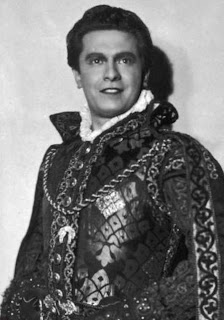 near Catania in Sicily on July 24th of 1921. His family moved all the way north to Milan when Giuseppe was six. At the age of 20 he began voice studies with Luigi Montesanto, a fine baritone and teacher. The war interrupted his career as Di Stefano was conscripted. The regiment’s doctor, having heard him singing, gave him a medical dispensation, saying that he would better serve Italy as singer than a soldier. The regiment was sent to the Russian front where most of the soldiers, including the doctor, were killed. In 1943 Di Stefano fled to Switzerland, was interned there but then released. In Lausanne he made his first recordings. He returned to Italy in 1946 and soon after made his début at the Teatro Municipale, Reggio nell’Emilia, as Massenet’s Des Grieux. A year later, in 1947, he sang at La Scala. In 1948 he made his Metropolitan debut as the Duke in Rigoletto. He was noticed almost immediately, with a critic comparing the 27-year-old tenor with Beniamino Gigli and praising his warm, sensual timbre. A lyric tenor, in his early career he sang mostly lighter roles. By 1957 he moved to heavier “spinto” and even dramatic tenor roles, such as Don José in Carmen, Canio in Pagliacci, Turiddu in Cavalleria rusticana, and Radames in Aida. With this, his voice lost some of its shine and got rougher; still, it was spectacular. Rudolf Bing, the General Manager of the Metropolitan Opera, who knew his singers, said: “The most spectacular single moment in my observation year had come when I heard his diminuendo on the high C in "Salut! demeure" in Faust: I shall never as long as I live forget the beauty of that sound." You can listen to it here, and while the whole aria is sung beautifully, it’s literally breathtaking at around 5’05”. This was a live recording made in 1950 in San Francisco during the War Memorial Opera House Concerts which were then broadcast on NBC. Gaetano Merola conducts the (substandard) San Francisco Opera Association Orchestra.
Walter Legge, the famous record producer, put Di Stefano and Maria Callas together to record many popular Italian operas. One of them, the 1953 recording of Tosca, with Titto Gobbi as Scarpia, is considered one of the best opera recordings ever made. Here’s a 12-minute excerpt from Act I, starting with “Mario! Mario! Quale occhi" from that legendary recording. Di Stefano and Callas are accompanied by the Orchestra del Teatro alla Scala under the direction of Victor de Sabata.
Di Stefano was a bon-vivant, he smoked and partied, had many lovers (he had an affair with his singing partner, Maria Callas), and sometimes – too often, as far as Rudolf Bing was concerned – failed to show up for rehearsals: Bing banned him from the Met for three years. All of that probably affected his career, which at its height was brief: his voice was already in decline in the late 1950s; Di Stefano himself blamed allergies. He rarely performed after a disastrous Otello in Pasadena in 1966. Di Stefano had a house in Kenia. On December 3rd of 2004 he was robbed and beaten there; perpetrators were never found. He never fully recovered from his injuries. Giuseppe Di Stefano died in his home in Lecco on Lake Como, on March 3rd of 2008 at the age of 86.
Riccardo Muti, a wonderful Italian conductor and the Music Director of the Chicago Symphony, will turn 80 on July 28th. He deserves a full entry, which is forthcoming.Permalink
This Week in Classical Music: July 19, 2021. Francis Poulenc. We’re publishing an entry by a guest contributor, Aleah Fitzwater in which she writes about one of her favorite composers,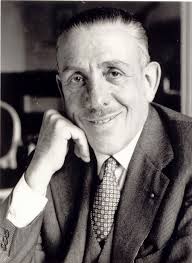 Francis Poulenc. A flute teacher, Aleah especially likes Poulenc’s Flute Sonata. Here it is, in an excellent performance by Emmanuel Pahud, flute, and Éric Le Sage, piano.
The Perplexing Francis Poulenc.
Francis Poulenc was born on January 7th of 1899 in Paris. One of France’s most popular composers, he was mainly self-taught. Many listeners feel that as a melodist, he was Faure’s greatest successor. In his music Poulenc was inspired by Stravinsky and Satie, and later by Auric and Milhaud.
Style. Poulenc’s style evolved considerably during his career, from very simplistic, direct pieces early on to much more complex compositions written after World War II. According to Seattlechambermusic.org, Poulenc struggled with both manic and depressive states. This may have led to his unique and eclectic collection of sounds and styles.
Perhaps his struggles with his identity and mental health are also part of the reason why he destroyed most of his earliest compositions. I can’t help but wonder what they may have sounded like. Many of Poulenc’s pieces took on a dark and haunting theme, such as a piece for solo piano, titled Processional pour la crémation d'un mandarin, one of the pieces that he destroyed.
An Early Start. Poulenc started writing when he was just 15 years old, in 1914. As we mentioned, none of the composition written in the following three years survive. His first popular piece was written when he was only 18 years old.
Studying with Ricardo Viñes. Ricardo Viñes was a pianist from Spain, with whom Poulenc studied. A well-regarded musician, Viñes gave premieres for many of this era’s composers, such as Ravel, Debussy and Satie; he was also their close friend. It is surprising to me that Poulenc studied with Vines, as he later joined a group that was at odds with Ravel’s style.
During Poulenc’s time with Vines, he was introduced to many composers, among them Satie and Auric. Vines helped Poulenc network and hone his art as a performing pianist.
Les Six. Les Six was a group of six French musicians. And yep! Their name pays homage to the nationalistic Russian group titled ‘The Five.’ This group (Les Six) was formed by Satie himself in the year 1919. The members of Les Six include Georges Auric, Louis Durey, Darius Milhaud, Arthur Honegger, Poulenc himself, and the only woman, Germaine Tailleferre.
Poulenc joined this group of composers and helped to collaborate on the 1920 album (fittingly named) L’Album des Six. Shortly after this, five of the six members (including Poulenc) worked together to create the collection titled Les Maries de la Tour Eiffel. In this collection, Poulenc wrote a polka, as well as the piece La Baigneuse de Trouville. The collaboration itself was an opera, which was rumored to have caused almost as much of a stir as The Rite of Spring did. The plotline is nothing short of odd. Some key points include a lion (who eats people), and a witchy child murderer. But hey, at least it sounds nice? https://www.youtube.com/watch?v=7zc2FirtReE (continue reading here). Permalink
This Week in Classical Music: July 12, 2021. Heinrich Isaac. Gerald Finzi, a British composer, Eugène Ysaÿe, a Belgian composer and virtuoso violinist, and Giovanni Bononcini, an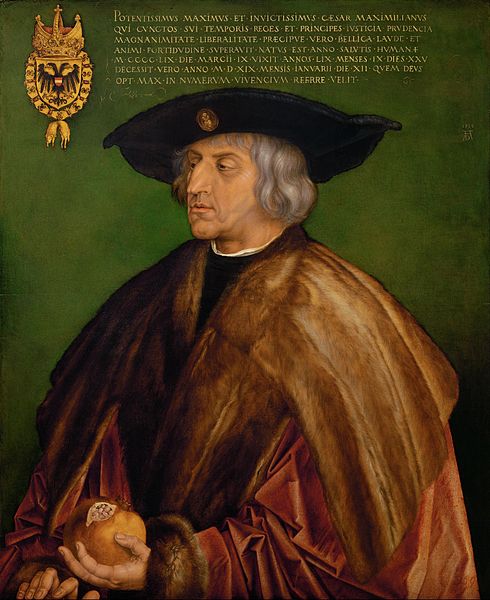 Italian and Handel’s rival, were all born this week (on July 14th of 1901, July 16th of 1858 and July 18th of 1670 respectively). But we’d like to write about Heinrich Isaac, as we haven’t done so before. Isaac, a contemporary of Josquin des Prez and Jacob Obrecht, was born around 1450 in southern Flanders, probably in the Duchy of Brabant. As usually is the case with the composers of the era, little is known about his youth. He’s first mentioned in 1484 as a composer at the court of Duke Sigismund of Austria in Innsbruck. In 1485 he was already in Florence, singing (and probably composing) at the magnificent Baptistry, at the Cathedral of Santa Maria del Fiore, and the Basilica della Santissima Annunziata. Soon after, he entered the employ of Lorenzo de’ Medici the Magnificent, the de facto ruler of Florence during that time. Lorenzo didn’t have a formal chapel of singers, but Isaac was expected to set to music the poems by Lorenzo’s favorite authors and, as Professor Strohm writes, “to contribute generally to the musical life of the Medici household and the city.” Isaac stayed in Florence till 1496; after Lorenzo died in 1492, he came under the patronage of Lorenzo’s son Pietro de’Medici. Even though the Medicis were banished from Florence in 1494, the association with the family was quite beneficial to Isaac: when Lorenzo’s other son, Giovanni, was installed the Pope Leo X in 1513, he became Isaac’s patron in Rome. In the meantime, in 1496 he found employment in Vienna, at the chapel of Maximilian I, the future Holy Roman Emperor from the Habsburg family. By 1502 Isaac was back in Italy, first in Florence and then at the Este court of Ferrara, where he had hoped to find a job. To quote Strohm: “Josquin des Prez was chosen instead, although the court agent Gian d’Artiganova reported (2 September 1502) favourably about Isaac who ‘would compose whenever asked’ and not as he pleased like Josquin.” Isaac returned to Tyrol to join Maximilian’s court and served there till 1514. In 1515 Maximilian allowed Isaac to live in Florence while receiving a salary. He stayed there, composing for Maximilian, the Pope and the church of Santissima Annunziata. Isaac died in Florence on March 26th of 1517.
Isaac was tremendously prolific, composing masses, 36 of which survive, motets and songs. He was one of the few composers to work in the German language lands, and thus influenced musical development in those countries. Here is Virgo Prudentissima, composed by Isaac for the court of Maximilan I. It’s performed by the ensemble Stile Antico, a British group which is rather unique in that it performs without a conductor. And here is another motet, Innsbruck, Ich Muß Dich Lassen (Innsbruck, I must leave thee); as the one above it was written for Maximilian I. The motet is based on a popular song, also composed by Isaac; it was also used by Johann Sebastian Bach at least twice, in his Cantata BWV 97 In allen meinen Taten and Cantata BWV 117 Sei Lob und Ehr dem höchsten Gut. Innsbruck is performed by the ensemble Hofkapelle under the direction of Michael Procter.
We don't know what Heinrich Isaac looked like -- no portraits of his are extant. The picture above, painted by Albrecht Dürer in 1519, is of the Emperor Maximilian I, Isaac's generous patron.Permalink