Welcome to our free classical music site

Do you write about classical music? Are you a blogger? Want to team up with Classical Connect? Send us a message, let's talk!
Do you write about classical music? Are you a blogger? Want to team up with Classical Connect? Send us a message, let's talk!




This Week in Classical Music: May 24, 2021. Bolcom. American composer William Bolcom will turn 83 the day after tomorrow: he was born on May 26th of 1938, in Seattle. Bolcom is not just a wonderful composer, he also writes well. Recently he sent a letter to the New York Review of Books commenting on an article by Matthew Aucoin about Pierre Boulez (we referred to the article here). His letter is so much better and more interesting than anything we could’ve written about music that we decided to quote it at length. We hope that Mr. Bolcom and the NY Review will forgive us for that.
In 1959 the French musical scene was to a degree terrorized by Boulez, who said and wrote that any music not twelve-tone was not worth taking seriously. As a fresh-faced twenty-one-year-old from the West Coast studying composition at the Paris Conservatoire, I was thrown into a cauldron of musical polemic. Into this setting came Boulez’s impenetrable book Penser la Musique Aujourd’hui, an example of his oracular but very clumsy literary tone that Aucoin mentions. My compositional colleagues admired it extremely (or wouldn’t admit to not liking it), but when I requested any explanation of something he’d written, they had often to admit to not understanding it either. Boulez’s word was law even if you didn’t subscribe to it.
Boulez had put together a series of concerts of new music at the Théâtre de l’Odéon in Paris called Domaine Musical, featuring principally works of Luciano Berio, Karlheinz Stockhausen, and himself (along with a few others) to be conducted by the ailing Hans Rosbaud, who was too unwell to show up; Boulez took the baton each time without fanfare or mention in the program. I shall never forget the first concert with him listed as conductor, I think in the late fall of 1961, featuring a stunning piece by Berio for three orchestras and probably the swiftest rendition of Schoenberg’s Kammersymphonie ever performed (perhaps owing to Boulez’s nerves).
Nothing like the music of Berio, Boulez, Stockhausen, or Henri Pousseur had been heard in most of the US then. At the time some New York composers (and critics) disdained a good deal of whatever new was coming from Europe, and very little of the Boulez/Berio/Stockhausen triumvirate’s music had traveled far enough west to be heard in Seattle or San Francisco. It could be heard, however, in California by the early 1960s; Leonard Stein and I, several weeks apart, gave the first US performances of Boulez’s third piano sonata around 1963, and about then with Stanford students we did the same for Stockhausen’s Kontra-Punkte.
It’s hard for Americans to conceive of a new-music composer having this kind of power here—not even Aaron Copland at his height, or Leonard Bernstein. Aucoin’s review was perhaps the first thing I have ever read about Boulez that wasn’t intimidated by the Boulezian presence. It would be decades before new French music began to wrest itself free of his influence; I myself admit to being overcome by it in my work some of that time.
Music history abounds in examples of strong disciplines and mathematical systems inventing new sounds for composers to use creatively, but usually only once the original impulses are discarded or forgotten; this is how much musical language has often been generated, not only in our culture but in others. I was never seduced by the systems everyone seemed to subscribe to, on both sides of the Atlantic.
I’m grateful for Boulez’s premiering of two of my early works and for the excellent aural taste and frequent deliciousness his works showed (though I didn’t want to follow him stylistically). One can’t argue that he wasn’t a complete musician, one of the best ever. His recording of Stravinsky’s Le Sacre du Printemps, for example, reveals stunning details no one else had ever shown as well to my knowledge, so there is ample reason to be grateful for his conducting as well. Once the dust has settled, I think Boulez’s music should survive as a sort of elegant exquisite jewelry, shorn of the bullying polemics he and others indulged in back then.
Amazing that Boulez’s example has so much less power today. Who would have guessed that then?
Permalink
This Week in Classical Music: May 17, 2021. Miscellanea. The music of Erik Satie provides respite from the drudgery of everyday life: just listen to his Gymnopédie no. 1 in Pascal Rogé’s.jpg "Erik Satie, by Suzanne Valadon, 1892") interpretation. Satie was born on this day in 1866. Wagner’s music is a different world entirely. Richard Wagner was also born this week, on May 22nd of 1813 (are we the only ones who finds it incongruous, both musically and historically, that Wagner was only a year and a half younger than his father-in-law, Franz Liszt?). And the wonderful Jean Françaix, a composer with a great sense of humor, was also born this week, on May 23rd of 1912. He gave us many examples of how to write accessible but sophisticated music, his Concerto for Piano of Orchestra being one of them. Here his daughter Claude Françaix performs it with the London Symphony Orchestra under the direction of Antal Dorati.
interpretation. Satie was born on this day in 1866. Wagner’s music is a different world entirely. Richard Wagner was also born this week, on May 22nd of 1813 (are we the only ones who finds it incongruous, both musically and historically, that Wagner was only a year and a half younger than his father-in-law, Franz Liszt?). And the wonderful Jean Françaix, a composer with a great sense of humor, was also born this week, on May 23rd of 1912. He gave us many examples of how to write accessible but sophisticated music, his Concerto for Piano of Orchestra being one of them. Here his daughter Claude Françaix performs it with the London Symphony Orchestra under the direction of Antal Dorati.
Samson François, a French pianist, was born on May 18th of 1924. He was born in Frankfurt, where his father worked at the consulate, and by the age of six he was living in Italy, where Pietro Mascagni gave him several lessons. Eventually François settled in Paris where he studied with Alfred Cortot, Marguerite Long and Yvonne Lefebure. In 1943 he won the first Marguerite Long - Jacques Thibaud Competition. François was famous for his (often idiosyncratic) performances of the music of Debussy, Fauré and Ravel, and also the 19th century Romantics. Here’s his recording of Maurice Ravel’s Gaspard de la nuit. It was made in 1958. François died of heart failure on October 22nd of 1970, at just 46 years old. Another pianist, Alicia de Larrocha, probably the greatest Spanish pianist, was born a year earlier, on May 23rd of 1923 and played till she was 80; she lived till 2009. She was incomparable as a performer of the music of her compatriots, Isaac Albéniz and Enrique Granados, and her Mozart was sublime. Here’s Mozart Concerto no.23 in A major, K.488 with Alicia de Larrocha at the piano. The English Chamber Orchestra is conducted by Sir Colin Davis.
Birgit Nilsson, one of the greatest sopranos of the 20th century, was born on this day in 1918. Here’s the post we wrote about her three years ago.Permalink
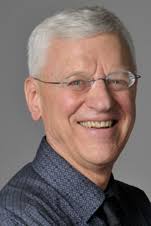 My Petroglyphic Duo for Violin and Cello, Opus 118, is one of a group of compositions that use the word Petroglyphic in their title. This word is supposed to carry the meaning of ageless or timeless, as opposed to modern, Classical, Neoclassical or contemporary. The meaning comes from my long study of world cultures and anthropology and is supposed to mean a kind of music that could have existed in some time or place in the distant past or in another part of the world. Compositions that utilize this word, in addition to the Duo, include a Petroglyphic Duo for Oboe and Trumpet and twelve single-movement Petroglyphic Piano Sonatas.
This Week in Classical Music: May 10, 2021. Robert Ehle on his music. This week’s entry is rather unusual: we provided this space to Robert Ehle, composer and Emeritus Professor of Music and Composition, Electronic Music and Acoustics at the University of Northern Colorado. He’s discussing his piece called Petroglyphic Duo for violin and cello; you can listen to it here. And with this, we turn it over to Robert Ehle:
I have collected folksongs and studied performance practices in a dozen African countries including Lizuli Village, Botswana, a favorite destination of Overseas Adventure Travel (OAT) with whom I occasionally travel. My wife and I have traveled to more than 60 countries. We have also traveled to famous paleolithic cultural sites including the Cro Magnon sites along the Dordogne River in southwestern France and Olduvai Gorge in Tanzania where Australopithicus lived six million years ago. When you see the petroglyphic images and the cave paintings you get a pretty clear idea that something cultural was going on in these places and that it would have included music, both vocal and instrumental, employing hand made instruments. I play the Duduk, purchased in Uzbekistan, and the Zurna, purchased in Istanbul.
The Petriglyphic Duo is in three movements. The first movement opens with a section built from portamenti, such as might be found on the stick fiddle or the didgeridoo in Australia. Then the Allegro section that follows has the big theme that is an audience favorite.
The second movement opens with a 4-voice chorale, played by the use of double stops on both instruments. Then follows a folk song, Down by the Susquehanna, from the region of Lancaster, Pennsylvania, where I come from. The movement ends with a repeat of the chorale.
The third movement is a four-quadrant double canon. It is a strict canon throughout and is in four sections. The first section features the original form of the canon, the second section features the retrograde inversion form of the canon, the third section features the inversion form of the canon and the last section features the retrograde form of the canon. Thus, the movement is like the four quadrants of a circle and ends where it began. The word Canon means rule, and this piece follows two strict rules throughout. <continue reading here>Permalink
This Week in Classical Music: May 3, 2021. Tatiana Nikolayeva. This is the week we always feel stumped: two very different but supremely talented composers were born on the same day, May 7th, Peter Tchaikovsky in 1840 and Johannes Brahms in 1833 and we’re never sure how to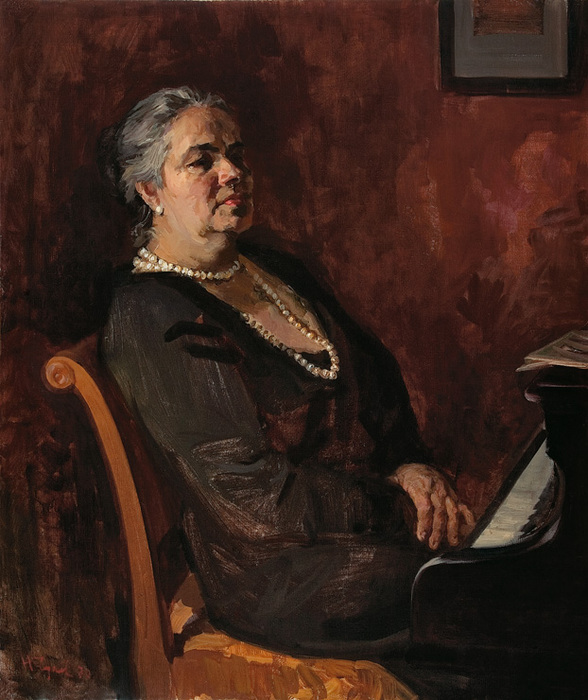 approach this dual anniversary. We’ve tried everything: to compared them on some formal parameter, such as their piano or violin concertos, or their symphonies, as dissimilar as they are, or emphasize incongruities, which are numerous. Nothing really ever worked. Some years we’ve written about one or another; that always felt incomplete. This year we’ll just acknowledge them and move on. Several interesting composers were also born this week, for example Stanisław Moniuszko, the author of many songs and the father of the Polish national opera (Halka, The Haunted Manor and several other operas are still being staged, more often in Poland and Belarus, where Moniuszko is also considered a national composer). Moniuszko was born on May 5th of 1805. The French organist and composer Marcel Dupré (born on this day in 1886), Carl Stamitz, the German composer of Czech descent and one of the more interesting representatives of the Mannheim school (b. May 8th of 1745), the American pianist and composer Louis Moreau Gottschalk (b. May 8th of 1829) – all have their anniversaries this week.
The person we would like to remember today is Tatiana Nikolayeva, a Soviet pianist not well known in the West. She was born on May 5th of 1924 in Bezhitsa, a small town near the city of Bryansk. She started playing piano at the age of three, then moved to Moscow where she studied with Alexander Goldenweiser. Very poor, she earned a bit of money working as an accompanist. She graduated the Moscow Conservatory in 1947 majoring in piano and three years later received a diploma in composition, both cum laude. In 1950 Nikolayeva won a Bach International Competition in Leipzig. Dmitry Shostakovich was the Chairman of the jury and they became good friends. It was Nikolayeva who two years later premiered Shostakovich’s 24 Preludes and Fugues. Nikolayeva’s repertoire was enormous: her page on the site of the Moscow Conservatory states that from 1942 to 1993 she played 3,000 concerts, performing 1,000 different composition by 74 composers. She recorded more than 50 LPs and 20 CDs. Nikolayeva played all clavier compositions by Bach, all piano sonatas and concertos by Beethoven, piano music by Scarlatti, Mozart, Schubert, Chopin, Schumann and on to the 20th century. She performed the composers that were either not popular or semi-banned in the Soviet Union, such as Stravinsky and Hindemith. For more than thirty years Nikolayeva was a professor at the Moscow Conservatory; among her students were Nikolai Lugansky and Oxana Yablonskaya. On November 13, 1993 Nikolayeva was playing a concert in San Francisco when she had a stroke. She died nine days later, on November 22nd of that year.
It’s hard to select a representative sample from such a rich legacy but playing a Prelude and Fugue by Shostakovich seems appropriate. Here is no. 22, in G minor. The recording was made in 1962.Permalink
This Week in Classical Music: April 26, 2021. Jean de Castro. Of all the composers and performers that we’re aware of, the only really significant one to have a birthday this week is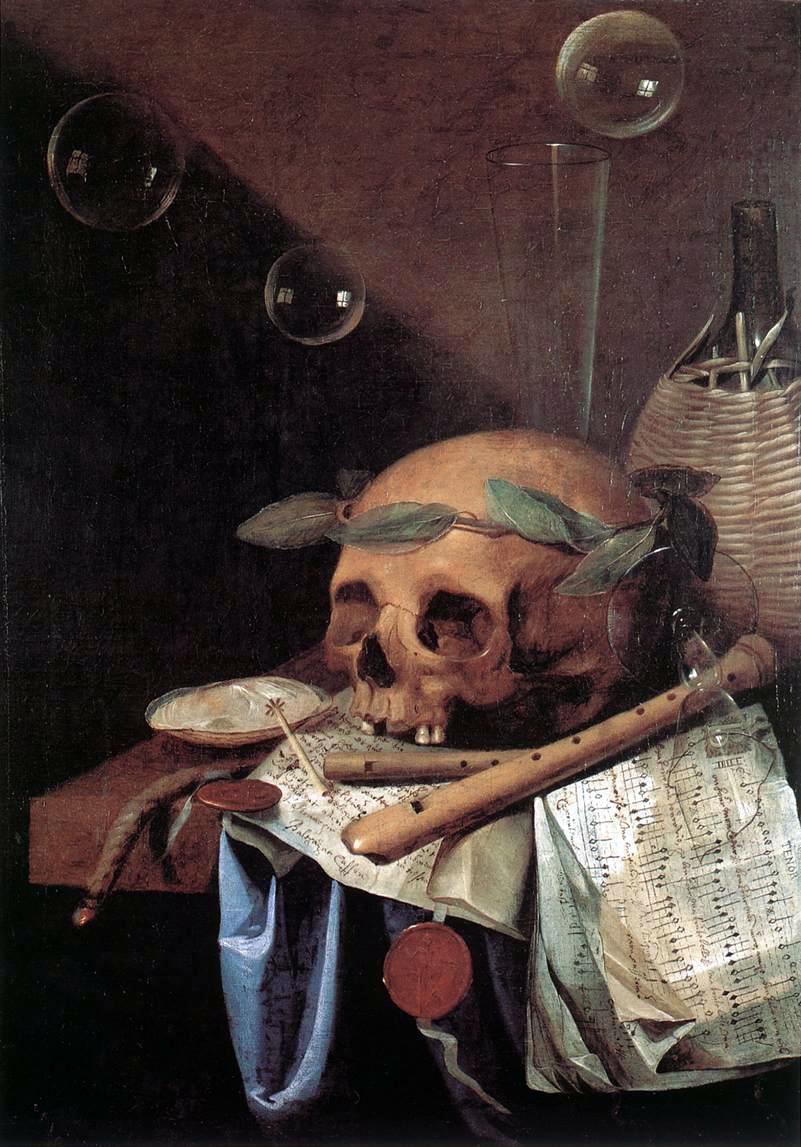 Alessandro Scarlatti. We think very highly of him and thanks to Cecilia Bartoli his music is better known these days, although he still seems to be rather underappreciated. We’ve written about him several times, including this entry a year ago (but also here and here). Duke Ellington, born on April 29th of 1899, was a tremendously talented composer but a jazz-related site would be a more appropriate place to celebrate him. We, on the other hand, will use this time to write about one of the numerous composers of the Renaissance and early Baroque whose birth dates were lost. We are aware of about 150 composers that were born from the end of the 14th to the beginning of the 18th centuries, whose birthdays are unknown. In reality, there are many more, and there is a surprisingly large number of them who were born later, in the 18th and even 19th century, whose birth records were lost. We’ve written many times about the giants of earlier eras, such as Guillaume Dufay, Josquin des Prez, Orlando di Lasso, Giovanni Pierluigi da Palestrina and Tomás Luis de Victoria, but never about Jean de Castro, even though during his life (1540 – 1600) only one composer, Lasso, was published more often than him. Castro, despite his Spanish-sounding name, was a Fleming, born in Liège, the city poetically referred to as nostre Castro in Latin. Castro is interesting (and unusual) for being an itinerant musician: most composers of his standing had well-positioned patrons, usually from the nobility or the Church. Castro, on the other hand, moved from one place to another, looking for opportunities, usually finding them within the emerging merchant class of the rich Northern countries. In the 1560s Castro moved to Antwerp, then one of the cultural centers of the Spanish Netherlands, famous for its printing culture, and stayed there till 1576, when the city was decimated by the mutinous Spanish soldiers of Philip II (as Rome was, almost exactly half a century earlier, by the mutinous soldiers of his father, Charles V). While in Antwerp, Castro set to music several sonnets by the famous French poet of the time, Pierre Ronsard. One of them was Bon jour mon Coeur, which Orlando di Lasso also used for a chanson. We don’t have access to Castro’s rendition, but here is the one by Lasso. On the other hand, the picture, above, by a French painter Simon Renard de St. André is a testimony to the popularity of Castro’s music: the notes are from his version of Bon jour mon Coeur. In 1576 Castro fled to Germany and then moved to France. The ten years of his wandering are poorly documented, but in 1586 he returned to Antwerp, where he attended the wedding of Duke Johann Wilhelm de Jülich in Düsseldorf, to whom he dedicated a book of music. This was an auspicious meeting, as two years later the Duke made him the Kapellmeister at Düsseldorf. Castro stayed there for three following years, this being the only stable position of his career. In 1591 the Duke had several strokes and went mad, and Castro moved to Cologne, where he remained for the rest of his life.
As tastes changed early in the 17th century, Jean de Castro was forgotten, as were many other composers of the Renaissance. He still mostly is, which is a pity, as he was a wonderful composer: listen, for example, to this chanson of his, Quand je dors. It is performed by the Ensemble Clément Janequin under the direction of Dominique Visse.Permalink
This Week in Classical Music: April 19, 2021. Franco Corelli. For the past two weeks we’ve been so busy with Karajan that we missed an important date: the 100th anniversary of Franco Corelli. Corelli was one of the greatest tenors of the 20th century, who excelled on the biggest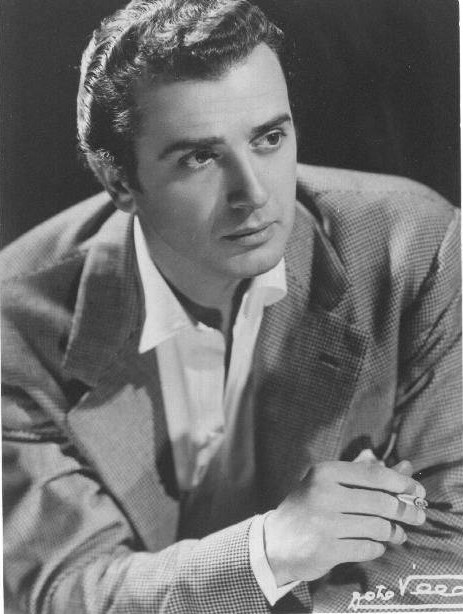 opera stages of Europe and America and left a wonderful recording legacy. He had a clear, powerful voice with a wide range, what the Italians call “spinto” tenor: he could handle both the dramatic roles (think of Mario del Monaco in the role of Canio in Pagliacci or Radames in Aida) and the lyric ones (like Pavarotti singing Rodolfo in La Boheme). It didn’t hurt that Corelli was also a handsome man with good acting abilities. Franco Corelli was born in Ancona on April 8th of 1921. His grandfather was a successful opera singer and many other family members sung either professionally or as amateurs. For a while Corelli studied at the Pesaro Conservatory, but soon decided that he didn’t like voice teachers; from that time on he was mostly self-taught. Corelli made his operatic debut in 1951 in Spoleto, singing Don José in Carmen. In 1952 he sung in the Rome Opera and joined it in 1953. That same year he sung Pollione in Norma, with Maria Callas performing the title role. In 1954 he made his debut in the famed La Scala, again singing with Callas in Spontini's opera La vestale (the opera is rarely staged these days, but YouTube has both the full opera and also this wonderful scene). Corelli would appear with Callas many times, both in La Scala and at the Met. He was asked to perform in the best opera theaters of Italy; then, in 1957, he appeared in Vienna’s State Opera, and the same year made a sensational debut in the Covent Garden, singing Cavaradossi in Tosca. The following year he went to the US, singing in Chicago and San Francisco, and in 1961 made his debut at the Met. During these years he sung with the best sopranos of the generation, Maria Callas, his favorite, Renata Tebaldi, Magda Olivero, the mezzo Giulietta Simionato and, later, Joan Sutherland. At the Met he sung with Leontine Price (she was his Leonora when Corelli sung Manrico in Il Trovatore in his first appearance at the theater) and Birgit Nilsson (their Turandot was spellbinding). Corelli sung at the Met for ten years, giving 282 performances of 18 roles.
Corelli performed at the highest level for about 20 years, but in the early 1970s his voice became a little tired, making Corelli nervous. He later said that at that time he could either eat or sleep. Corelli’s last performance was in 1975. Corelli left so many wonderful recordings, both live and studio, that it’s almost impossible to pick one to illustrate his art. Probably one of the best is his Pollione, from Norma, which he recorded in 1960 with Maria Callas and Christa Ludwig – one of the greatest Normas ever. Here is the aria Meco all'altar di Venere from Act I. Tullio Serafin conducts the La Scala Orchestra.Permalink