Welcome to our free classical music site

Do you write about classical music? Are you a blogger? Want to team up with Classical Connect? Send us a message, let's talk!
Do you write about classical music? Are you a blogger? Want to team up with Classical Connect? Send us a message, let's talk!




This Week in Classical Music: September 14, 2020. Cherubini. Luigi Cherubini may have been born on this day in 1760, in Florence, or he may have been born on the 8th, we’ll never know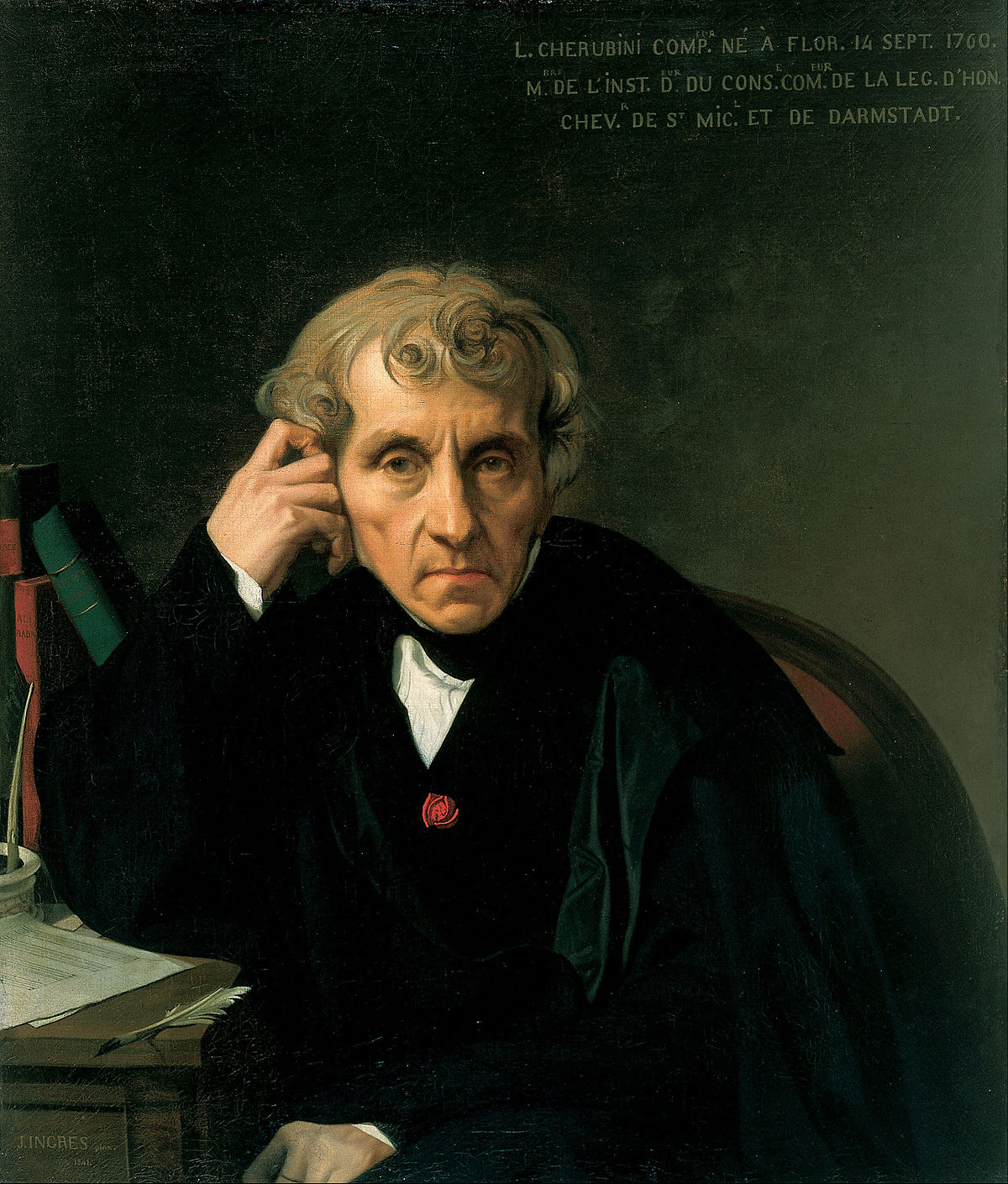 for sure. What we do know is that Beethoven held him in high esteem, proclaiming him to be the greatest composer – other than himself, of course. This is especially interesting considering that Cherubini, ten years his elder, openly disliked Beethoven’s opera Fidelio, which he heard during its premier in Vienna in 1805, and considered his piano music “rough.” And Beethoven was not his only admirer: Haydn and Rossini liked him too. Cherubini, who moved to Paris permanently in 1786, was for a time considered the premier opera composer. During his life he wrote almost 40 pieces in this genre, very few of which are performed these days. Later in his career Cherubini turned to church music, writing masses and two requiems (Beethoven greatly admired the first one, in C minor, written in 1816). As he grew older, Cherubini’s musical output diminished (at that time he wrote mostly instrumental music), but not his influence, as in 1822 he became the director of the Paris Conservatory. Cherubini died in Paris on March 15th of 1842. Here are Introitus et Kyrie from Cherubini’s Requiem in C minor, which Beethoven enjoyed so much. Martin Pearlman leads the Boston Baroque.
Frank Martin, a Swiss composer who lived most of his live in the Netherlands, was also born this week, on September 15th of 1890, in Geneva. He started composing at the age of eight but never went to a conservatory. He even started studying physics and mathematics, following his parent’s wishes, but eventually abandoned his studies. Martin’s music style was influenced by many, from Bach to Schumann to the modernists. Eventually he settled on a mostly harmonic approach, with some 12-tone technique thrown in for good measure. A bit like Cherubini, later in his career Martin wrote a number of sacred pieces, some choral, some for the organ, and, like Cherubini, he wrote a Requiem. He died in Naarden, Holland, on November 21st of 1974. Here’s Frank Martin’s Petite Symphonie Concertante, from 1944. Armin Jourdan leads the Orchestre de la Suisse Romande.
The great conductor Bruno Walter was also born this week, on September 15th of 1876. We celebrated him last year. And the incomparable Jessye Norman was also born on September 15th, in 1945. In two weeks will be the one-year anniversary of her death. It was a great loss.Permalink
This Week in Classical Music: September 7, 2020. Purcell. Henry Purcell was born on September 10th of 1659 during the last year of Interregnum: Oliver Cromwell, who ruled England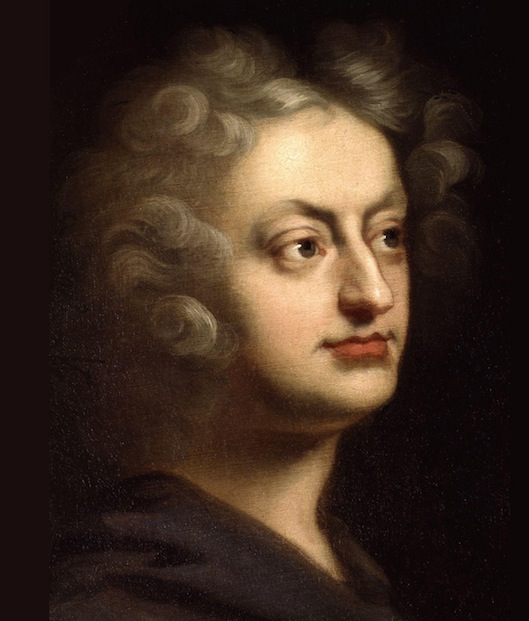 as Lord Protector, died a year earlier, in 1658, and Charles II, the son of the executed King Charles I would return to London a year later and be coronated in 1561; Henry’s father, Henry Purcell Sr., a musician, would sing at the Westminster Abbey during the ceremony. Henry Jr’s uncle Thomas was a musician at the Chapel Royal and through him Henry was admitted there as a chorister. Purcell studied with noted musicians, first John Blow and Christopher Gibbons and later with Matthew Locke, who was "Private Composer-in-Ordinary to the King Charles II." Purcell started composing early, his first known composition dates around 1670. By 1677, when he replaced Locke as the court composer, he had written several “Anthems” and other sacred music (at that time, he was writing few instrumental pieces). Many of Purcell’s compositions were created for the Westminster Abbey, although the Abbey paid him mostly for his services as an organ tuner. In 1679 Purcell succeeded John Blow as organist at the Abbey and held that position for the rest of his short life (he died at the age of 36). In 1682 Purcell was admitted as a Gentleman of the Chapel Royal where he performed as one of the organists. In 1685 Charles II died and his younger brother James II became king. For James’s coronation Purcell wrote the anthem “My heart is inditing of a Good Matter.” Here it is, performed by the Collegium Vocale Ghent under the direction of Philippe Herreweghe. Under James, who was a Catholic, the court music was reorganized, and Purcell’s activities were reduced. In 1688 James was deposed during the Glorious Revolution. William III and Mary II ascended to the throne, but they weren’t interested in music as much as the preceding Stuarts. Purcell refocused his attention on music theater, though he continued to compose odes for Queen Mary. He wrote music for Dryden’s tragedy Tyrannick Love, a three-act opera Dido and Aeneas, for the then popular play The Fool's Preferment and several others. In 1692 he composed music to The Fairy-Queen, after Shakespeare’s A Midsummer Night's Dream. He started working on another Dryden’s play, The Indian Queen, but never finished it: he died of an unknown illness on November 21st of 1695. His younger brother Daniel completed the last act of the opera. Purcell was buried at the Westminster Abbey, next to the organ he played for many years. Purcell’s own Music for the Funeral of Queen Mary was played during the ceremony.
Several important composers were also born this week, among them Girolamo Frescobaldi (on September 13th of 1583, in Ferrara). And isn’t it surprising that Arnold Schoenberg (September 13th of 1874) was only 33 years younger than Antonin Dvořák (September 13th of 1841)? Musically, they belong to different eras.Permalink
This Week in Classical Music: August 31, 2020. Cornucopia. Last week was rather disappointing, we had to go back several centuries to find a composer of interest, but look how different it is this week. Of the first-rate composers, the oldest is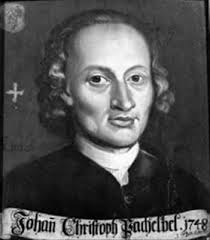 . Yes, he was absolutely first rate: not just the author of the ubiquitous Canon but the composer of the influential Hexachordum Apollinis, a wonderful collection of tkeyboard music. Please check out our library, we have all six Arias with variations there. Pachelbel was born on September 1st of 1653.
Pietro Locatelli, an Italian Baroque composer and violinist, was born on September 3rd of 1695. Not a great figure in the history of music, but some of his violin sonatas and concerti were pleasant. And then, a very different figure, Anton Bruckner, one of the greatest composers of the 19th century, sometimes underappreciated but at the peak of recognition these days – and rightfully so. Bruckner was born on September 4th of 1824.
Jumping forward: Darius Milhaud. He was also born on September 4th, of 1892. A member of Les Six, he wrote in many different styles, from jazz to polytonality. As a Jew, he had to flee France during the occupation and spent several years in the US. Here’s Milhaud’s Quartet no. 15, op. 291 performed by the Quatuor Parisii.
Moving on, or for the moment back, here’s Johann Christian Bach, the eighteenth (yes, eighteenth!) offspring of Johann Sebastian Bach; by the time he moved to England and became famous there (he would be called "the London Bach” or "the English Bach"), around 1766, only seven of his siblings were still alive. Johann Christian, born on September 5th of 1735, was the youngest of Johann Sebastian’s composer kids. He did much to further the new “Classical” style.
And that’s not all: Giacomo Meyerbeer, Amy Beach, and John Cage were also born this week. That makes three centuries of music, from the late 17th to the second half of the 20th.
That is as far as the composers go, but then there are three conductors,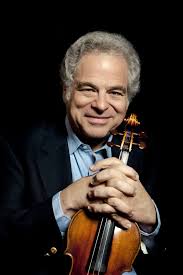 Tullio Serafin, Leonard Slatkin and Seiji Ozawa, all born on September 1st: Serafin, a great opera conductor, in 1878, Ozawa in 1935 and Slatkin in1944. But that’s not all: Itzhak Perlman also has his birthday this week. Can you imagine that he’s going to turn 75? Perlman was born on this day in 1945. You may have your qualms, but all in all he is one of the greatest violinists of the end of the 20th century. Nobody matched the beauty of his tone when Perlman performed at his best. Here’s Perlman and Vladimir Ashkenazy playing Beethoven’s Violin Sonata No. 4 in A Minor, Op. 23.Permalink
This Week in Classical Music: August 24, 2020. Giovanni Animuccia. Leonard Bernstein was born on August 25th 101 years ago. Otherwise a rare paucity, which we’ll use to go back to the music of the Renaissance. Up till now we have never written about Giovanni Animuccia, a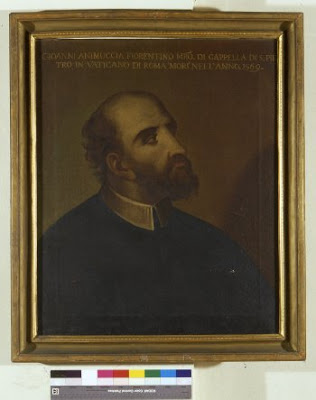 Florentine composer born around 1520. The music of Florence was not as developed as that of Rome; Animucci was one of only two significant composers working around that time, the other one being Francesco Corteccia, maestro di cappella to the Duke of Florence, Cosimo I de' Medici. While in Florence, Animucci composed a book of madrigals, which was published in Venice in 1548. He was associated with major literary and religious figures of Florence, such as the famous priest Philip Neri, who would later, after moving to Rome, be known as the Second Apostle of Rome and for whose religious community, the Oratory, Animuccia would write a set of Laude for early morning services. In 1550 Animuccia left Florence for Rome and entered the service of Cardinal Guido Ascanio Sforza. He met many former Florentines (the Florentines even had their own church, the San Giovanni dei Fiorentini) and enter the circle of Antonio Altoviti, whom Pope Paul III made the Archbishop of Florence. Duke Cosimo didn’t like Altoviti and banned him from entering the city, thus the archbishop spent the following 20 years in Rome. We mention this because Altovivi’s circle included the young Orlando di Lasso, so the two composers knew each other. Animuccia’s musical life was also tied to another great composer, Giovanni Pierluigi da Palestrina. In 1551 Pole Julius III appointed Palestrina the music director of the Cappella Giulia, the second most important choir in the St. Peter’s, after the Capella Sistine In January of 1555 Palestrina moved to San Giovanni di Laterano, the seat of the pope as the Bishop of Rome, and Animuccia took his place. He remained themagister cantorum at the Cappella Giulia until his death in 1571, at which time Palestrina returned to the post.
Here’s the Sequence (a hymn) from Animuccia’s Mass Victimae Paschali (Praises to the Passover victim), performed by Wellington, New Zealand- based The Tudor Consort.
Three conductors were also born this week: Wolfgang Sawallisch, a German conductor who for ten years led the Philadelphia Orchestra, on August 26th of 1923; the great German conductor Karl Böhm, on August 28th of 1894 (here’s our recent entry about him); and István Kertész, a Jewish-Hungarian conductor who led many of the best orchestras but died (by drowing) young, at 43 (Kertész was born on August 28th of 1929).Permalink
This Week in Classical Music: August 17, 2020. Porpora and Salieri. Nicola Porpora, a composer famous of his time for his operas and as a music teacher (Farinelli was one, as was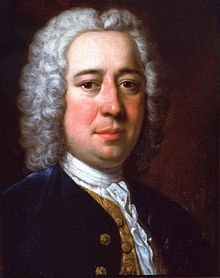 Haydn) was born on this day in 1686. Here is an entry we wrote about him two years ago. Another composer mentioned in this entry is Antonio Salieri. His birthday is also this week: Salieri was born on the 18th of August 1750. We left off our story about Salieri in 1784, when he returned from Vienna after a two-year stay in Paris. Two things had changed during this time: the Emperor Joseph II became more interested in Italian opera buffa, and new competition arrived from the likes of Giovanni Paisiello and the 28-year-old Mozart. Salieri’s first Viennese opera after his return from Paris was La grotta di Trofonio (1785). Here’s the overture to it, performed by the Mannheimer Mozartorchester, Thomas Fey conducting. Next, following the new tastes, he reworked his French opera Tartare in Italian (and gave it a new title, Axur re d'Ormus). Axur became very popular and between 1788 and 1805, when Vienna was captured by Napoleon, was staged more than 100 times. In 1788 Joseph appointed Salieri the Hofkapellmeister, the highest musical position at the court. Salieri held it till 1824, the longest tenure ever.
 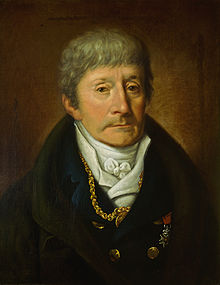 (It’s interesting that the highest position Mozart was ever to attain was Kammermusicus or Chamber Musician, lower than that of Hofkapellmeister, person in charge of music-making at the Court). Joseph II died in 1790 but Salieri continued working under the patronage of Joseph’s successor, Emperor Leopold II. Life was not quite the same for him: Leopold wasn’t as interested in music as his predecessor, Salieri couldn’t travel to Paris because of the Revolution, he stopped working with Da Ponte, the great librettist, and his genius competitor, Mozart, was dead. Still, Salieri continued to write, and one of the operas of the period, Palmira, composed in 1795, is now considered his best. And, like Porpora, Salieri taught: Beethoven and Schubert were among his students. Salieri retired in 1824 and died in Vienna a year later, on May 7th of 1825.
The great Claude Debussy was also born this week, on August 22nd of 1862. You can read our entries about him here and here. Also, one of the most interesting composers of the second half of the 20th century, Karlheinz Stockhausen was also born on August 22nd, but in 1928.Permalink
This Week in Classical Music: August 10, 2020. Foss and the pianists. The German-American composer Lukas Foss was born in Berlin on August 15th of 1922. Unusually gifted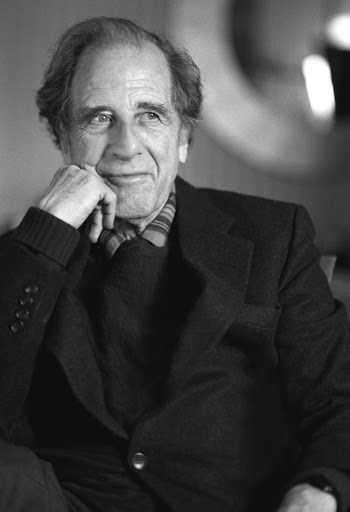 musically, he started composing at the age of seven. The Fosses, who were Jewish, emigrated from Germany in 1933 when the Nazis came to power. They first went to Paris where Lukas studied with several prominent musicians, then in 1937 they moved to the US. Lukas continued his studies at the Curtis Institute where he met Leonard Bernstein; they became lifelong friends. In 1944, Foss gained prominence with his cantata The Prairie on Carl Sandburg’s poem. A year later, when he was 23 years old, Foss became the youngest recipient of the Guggenheim Fellowship. In 1953 Foss was appointed Professor of Music at UCLA, the position previously occupied by Arnold Schoenberg. He created the Improvisation Chamber Ensemble, directed the Ojai Festival, went on to direct the Buffalo Philharmonic and founded the Center for Creative and Performing Arts in that city. He led and guest conducted a number of orchestras in the US and in Europe and incessantly promoted contemporary music.
Lukas Foss’s early compositions were neo-classical and often populist, as in this Early Song from Three American Pieces, 1944 (the solo violin is by Itzhak Perlman, with Seiji Ozawa conducting the Boston Symphony Orchestra). Later he turned to serialism and improvisation: here is his Elytres for 2 flutes and chamber orchestra from that period, composed in 1964. The New York Philomusica Chamber Ensemble is directed by the composer. Later Foss turned to electronic music. Here is his wonderfully whimsical take on Bach’s Partita in E for solo violin. Leonard Bernstein conducts the New York Philharmonic Orchestra. And here is the interview Lukas Foss gave to Bruce Duffie in 1987.
Two brilliant pianists were also born this week, Aldo Ciccolini on August 15th of 1925 and Julius Katchen, who was born on the same day one year later, in 1926 (Lukas Foss, by the way, was also a brilliant pianist). Ciccolini, an Italian who became a naturalized French citizen, was famous for his interpretation of piano music of his adopted country (his Debussy was exquisite). Katchen, one of the most interesting American pianists of his generation, was a renowned interpreter of the music of Brahms. Katchen died of cancer at the age of 42. We’ll write more about both of these wonderful pianists at a later date.Permalink