Welcome to our free classical music site

Do you write about classical music? Are you a blogger? Want to team up with Classical Connect? Send us a message, let's talk!
Do you write about classical music? Are you a blogger? Want to team up with Classical Connect? Send us a message, let's talk!




This Week in Classical Music: June 22, 2020. Orlando di Lasso. No, the great Franco-Flemish composer of the Renaissance was not born this week. We are not even sure when he was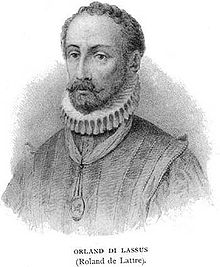 born, whether in 1530 or 1532. We do know, though, that he was one of the greatest and most prolific composers of his time. Orlando, often spelled as Orlande de Lassus, was born in the town of Mons in the County of Hainaut in what is now Belgium; at that time Hainaut and the rest of the Low Countries were part of the empire of Charles V, the Holy Roman Emperor. As a boy, Orlando moved to Italy with Ferrante Gonzaga, a condottiero who was then serving Charles V (Ferrante belonged to a minor branch of Gonzagas, the dukes of Mantua). Orlando’s first stop in Italy was Mantua but several months later Ferrante left the city for Sicily, with Orlando in tow. After serving at several Italian courts, Orlando moved to Rome, where, in 1553, he became maestro di cappella at San Giovanni in Laterano, a position that eventually would be assumed by Palestrina. We know that during that time Orlando traveled to many cities in Europe, possibly visiting England. In 1555 he went to Antwerp, where he met many musicians and made friends with Tielman Susato, a composer and major music publisher. That year Susato published Orlando’s music, his “opus 1.”
In 1556 Orlando received an invitation from Albrecht V, Duke of Bavaria to join his court; Orland accepted and moved to Munich. His initial position was that of a singer (tenor) in the Duke’s chapel (choir), which was being refashioned in the Flemish style. Orlando, who by then was well known as a composer, continued to write and publish music; soon he was made maestro di cappella of the Bavarian court. He stayed in that position for the rest of his life. Orlando’s duties included composing music for morning masses and numerous Magnificats for the Vespers in the evening. He also wrote a copious number of motets. In addition to church music, Orlando wrote many secular pieces composed for different court events: Tafelnusik for the feasts and banquets, and music for other occasions, for example, hunting parties. On top of that he was supervising music education of the choirboys – all that reminds us of the enormous workload Johann Sebastian Bach had as a Thomaskantor in Leipzig some century and a half later.
Orlando’s position at the court was exceptional: he was a friend to the duke and especially to his heir, the future Wilhelm V. He traveled extensively, hiring musicians in the Flanders, attending coronations in Prague and Frankfurt. When he visited Ferrara and Venice (in 1567) he told his hosts that good Italian music could be had even in a far-off Germany. He visited a French court on the invitation of King Charles IX. In 1570 Orlando was made a noble by Maximilian II, Holy Roman Emperor.
Orlando died in Munich on June 14th of 1594, the same year as Palestrina. Enormously productive, he wrote more than 60 masses and hundreds of motets. Here’s one of them, In Monte Oliveti, performed by the Hilliard Ensemble directed by Paul Hillier.Permalink
This Week in Classical Music: June 15, 2020. Musical dynasties, Stravinsky. Several very interesting composers were born this week, two of them belonging to dynasties: Johann Stamitz was the head of one, while Johann Christoph Friedrich Bach was one of several sons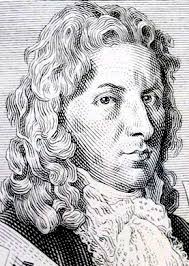 of Johann Sebastian who became prominent composers. Johann Stamitz was born on June 18th of 1717 in Bohemia, then ruled by the Habsburgs and to a large extent dominated by the German language and Austrian-German culture. Stamitz was a violin virtuoso; sometime around 1741 he was hired by the Mannheim Court to play in the famous orchestra. Stamitz’s career advanced quickly: he was soon appointed Konzertmeister, then Director of Court music and the orchestra’s chief conductor. Stamitz developed the orchestra into the “most renowned ensemble of the time, famous for its precision and its ability to render novel dynamic effects,” to quote the musicologist and historian Eugene Wolf. Johann’s sons Carl and Anton were among the best composers of the Mannheim school, of which their father was the founder.
Johann Christoph Friedrich Bach was Johan Sebastian’s fifth son. He was born on June 21stof 1732 in Leipzig, where his father was serving as Thomaskantor teaching at the Thomasschuleand composing for and playing at the Thomaskirche. J.C.F. is not as well known as his half-brothers Whilhelm Friedeman and Carl Philipp Emanuel, or his brother Johann Christian. Part of the reason may be that many of his scores were lost during the WWII bombing of Berlin; they were stored at the National Institute of the German Music Research, and most of its collection of scores and musical instruments were lost. Here’s his lively Piano Concerto in E Major, perfomed by Cyprien Katsaris, piano, with the Orchestre de Chambre du Festival d`Echternach, Yoon K. Lee conducting.
We celebrated Charles Gounod’s 200th anniversary in 2018, you can check out our entry here. Edvard Grieg was born on this day in 1843. And then there was Jacques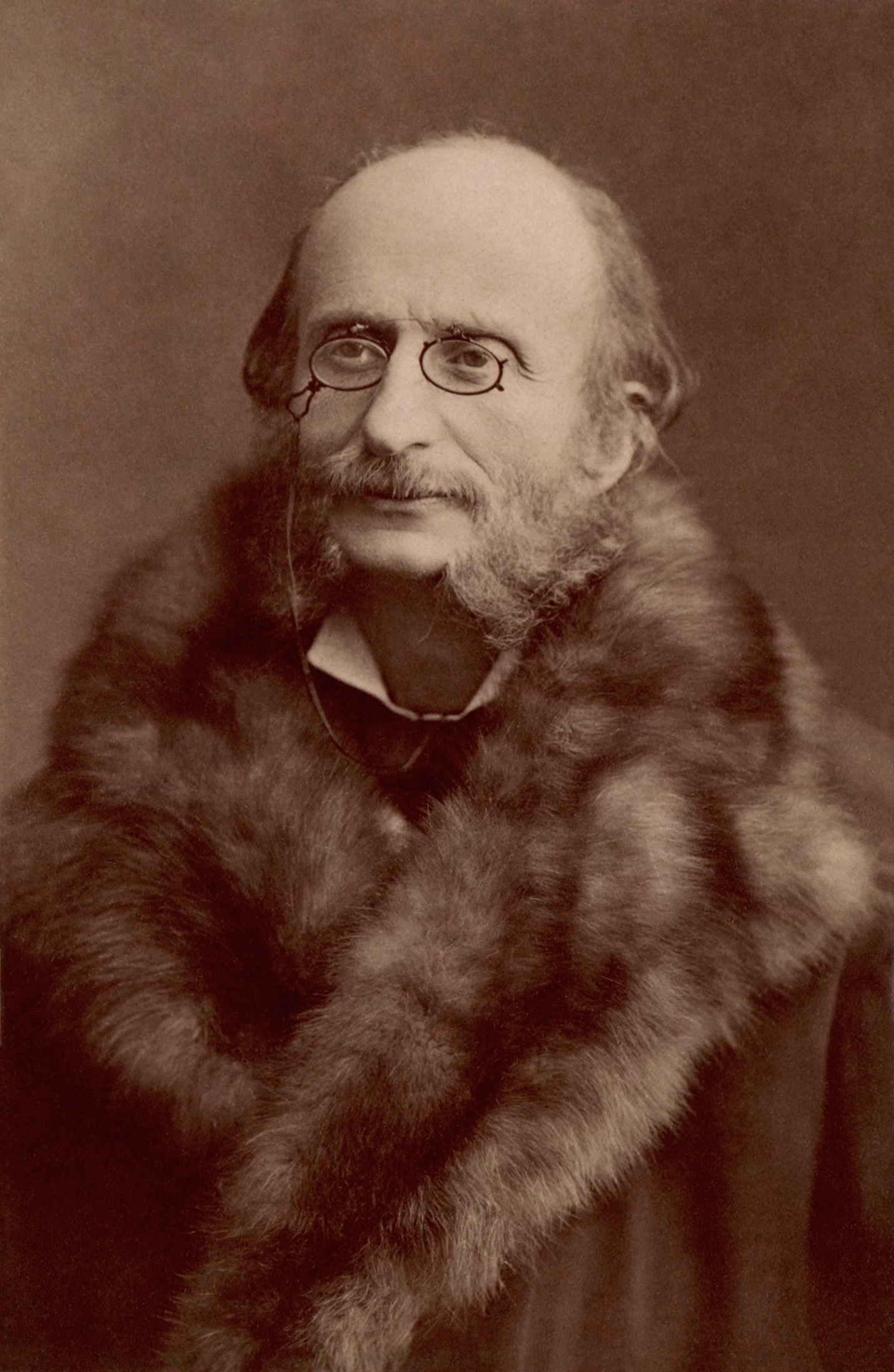 Offenbach, a German-Jewish composer from Cologne who practically invented the genre of operetta and became the most popular French composer of his time. Offenbach wrote 100 opera-buffe (operettas) and one unfinished opera, The Tales of Hoffmann, a staple of the opera repertoire. Here’s the overture to La Grande-Duchesse de Gérolstein. It’s not serious music, and was composed to be light, but the orchestration is quote brilliant and the whole piece is a lot of fun. In this recording the Philharmonia Orchestra is conducted by Sir Neville Marriner. (By the way, the librettists of La Grande-Duchesse were Henri Meilhac and Ludovic Halévy – Halévy was the nephew of another French Jewish composer Fromental Halévy; Meilhac and Halévy also co-wrote the libretto for the famous Carmen.)
The composer who towers over all of the above is Igor Stravinsky, born June 17th of 1882. Please check our previous entries as there are many, for example here, here and here.Permalink
This Week in Classical Music: June 8, 2020. Charles Wuorinen. Robert Schumann’s 210th anniversary is today: he was born on June 8th of 1810 in Zwickau, Germany. He is without a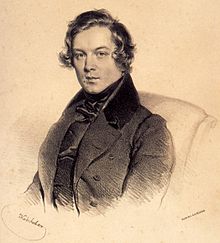 doubt one of the greatest composers of all time, and we’ve written about him many times. Many musicologists and regular listeners believe that Schumann’s best work was composed early in his life, and he was suffering greatly by the end of it (he died at just 46 years old in a mental institution). Despite all the depressions and hallucinations, Schumann continued to compose till almost the very end of his life. His last piano composition, called Geistervariationen (Ghost Variations) was written in 1854. At that time Schumann thought that he was surrounded by spirits who played him music, “both "wonderful" and "hideous".” Soon after he was admitted to the mental hospital in Endenich, a suburb of Bonn. He died there two years later. Here is a wonderful young pianist Igor Levit playing Geistervariationen.
Erwin Schulhoff was also bon on this day, in 1894. We’ve never had a chance to write about him; he was one of many European composers who perished during the Holocaust. Schulhoff was born in Prague into a German-Jewish family. Politically, a highly complicated figure but a very talented composer, he died in a German concentration camp in 1942. Here’s his Quartet no. 1, performed by the Kocian Quartet. We owe Schulhoff a separate entry; it will be coming soon.
Today is a special day, as yet another composer, an Italian from the Baroque era, Tomaso Albinoni was also born on this day in 1671. He was famous in his day as a composer of many operas. Now, unfortunately, he’s mostly known for the Adagio in G minor, which he actually didn’t write: it was composed by his biographer, Remo Giazotto, probably based on excerpts from Albinoni’s works.
The composer we’d like to commemorate today is Charles Wuorinen, who died less than three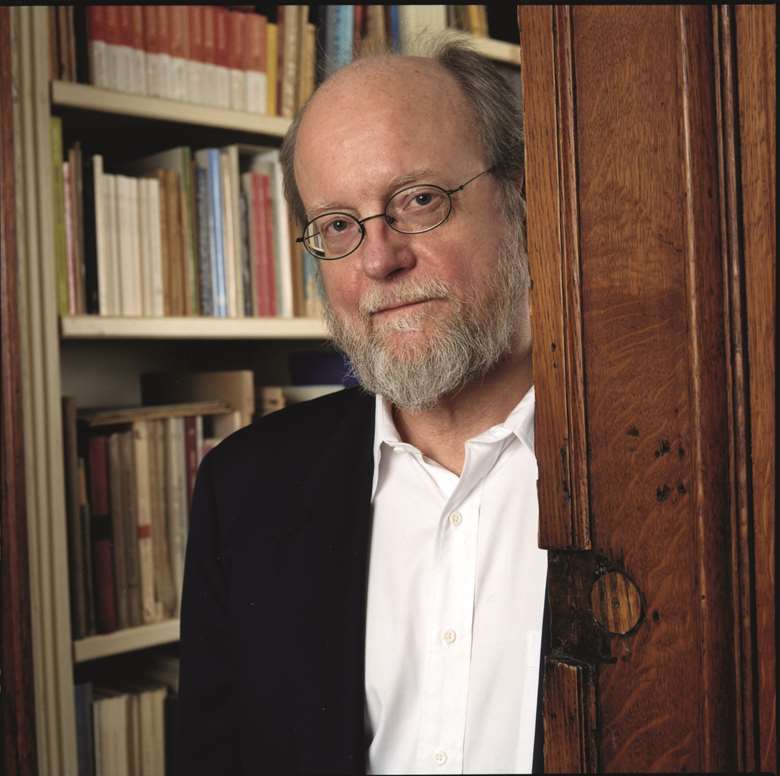 months ago, on March 11th of 2020 at the age of 81. Wuorinen (pronounce WOrinen) was born on June 9th of 1938 in Manhattan; his father was a prominent Finnish-American historian. Charles wrote his first compositions at the age of five. In 1962 Wuorinen formed an ensemble, The Group for Contemporary Music, which performed the music of modernist American composers of the day such as Milton Babbitt, Elliott Carter and Stefan Wolpe, as well as the music of Wuorinen himself. In 1970s he taught at the Manhattan School of Music. As many composers of his age, he experimented with electronic music, at some point in the 1970s even getting a grant from the Rockefeller Foundation to conduct sonic experiments at AT&T’s Bell Labs. In 2000s James Levine became a champion of Wuorinen’s music and commissioned a piano concerto (his fourth). Overall, Wuorinen composed about 270 pieces, including an opera, Brokeback Mountain (2015). Wuorinen had many supporter (the pianist Peter Serkin for one) and almost as many detractors, the renowned musicologist Richard Taruskin being one of them. Here’s Wuorinen’s very interesting Piano Concerto no. 3, performed by one his champions, the pianist Garrick Ohlsson and the San Francisco Symphony Orchestra conducted by Herbert Blomsted.Permalink
This Week in Classical Music: June 1, 2020. Argerich. Our apologies to the devotees of the music of Georg Muffat, if there are any. We’re not going to write about him, even though his birthday is today (he was born in 1653); however, you can check our earlier entries about him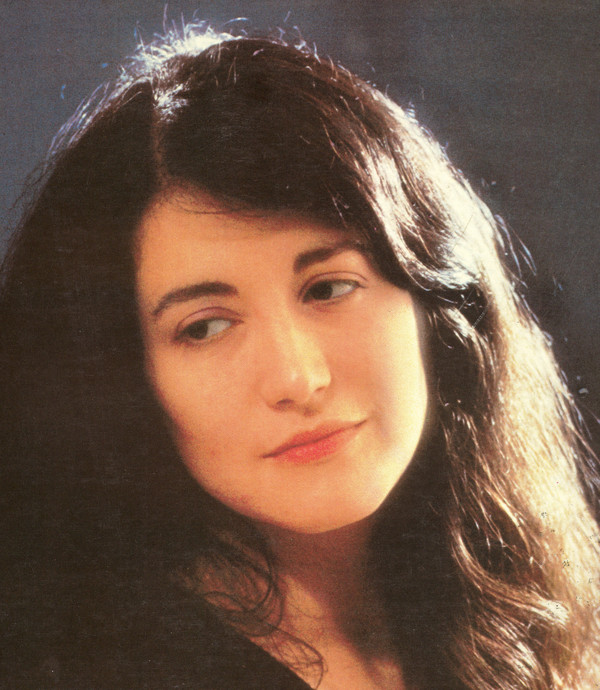 here and here. Neither will we write about Mikhail Glinka, also born on this day, in 1804, Edward Elgar, born June 2nd of 1857 and beloved by the English, or Aram Khachaturian, the pride of the Armenians. Khachaturian was born on June 6th of 1903 in Tbilisi into an Armenian family; Tbilisi, the capital of Georgia, had a large Armenian population at the time. He eventually moved to Moscow and lived there for the rest of his life and only visited Armenia on several occasions. He was affected by the Armenian folk tunes, though, which he loved and collected on his trips to Armenia; his ballet Gayane, written around 1939, incorporated many of them. Khachaturian died in Moscow in 1978 but was buried in Yerevan, in the Komitas Pantheon of great Armenians.
The artist we’d like to celebrate today is Martha Argerich, one of most spectacular pianists of the last 50 years. Martha, whose name is correctly pronounced “Marta Arkheritch” was born on June 5th of 1941 in Buenos Aires, Argentina. Her father’s ancestors came from Catalonia, Spain, while her mother’s grandparents were Russian Jews who came to Argentina to settle in the Colonia Villa Clara, established by the Jewish Colonization Association and supported by Baron Maurice de Hirsch, a Jewish philanthropist. Martha started playing the piano at the age of three and gave her first concert when she was eight, performing Mozart’s Piano Concerto no. 20, Beethoven’s First Piano Concerto and Bach’s French Suite no. 5. The family moved to Vienna when Martha was 14. There she studied with Friedrich Gulda; later she would work with a number of outstanding pianists and teachers: Stefan Askenase, Arturo Benedetti Michelangeli, Madeleine Lipatti, the widow of Dinu Lipatti, Abbey Simon and Nikita Magaloff. At the age of 16 Martha won first prizes in the 1957 Busoni and Geneva international competitions. Then, in 1965 she won the first prize in the Chopin Competition in Warsaw; her playing created a sensation. Argerich made her US debut the same year. For the next 10 years she played up to 150 concerts a year, but by 1980 she scaled down the number of concerts and her solo performances became quite unpredictable: it was never clear whether Argerich would play a concert or cancel it. She was (and still is) much more consistent when playing chamber music, often partnering with the pianists Nelson Freire and Stephen Bishop-Kovacevich, the violinist Gidon Kremer and cellist Mischa Maisky; she often performs with the conductor Charles Dutoit – all either good friends of hers or, like Kovacevich and Dutoit, former husbands. Here’s Martha Argerich playing Bach’s English Suite No. 2 in A minor, BWV 807. Bach is not the composer we usually associate with her repertoire but, as you can hear yourself, Martha’s playing is superb.Permalink
This Week in Classical Music: May 25, 2020. Albéniz and Korngold. In four days we’ll celebrate the 160th anniversary of a wonderful Spanish composer Isaac Albéniz: he was born near Gerona on May 29th of 1860 (the family moved to Barcelona when Isaac was one year old). A child prodigy, he played paino publicly at the age of three and was refused entry into the Paris Conservatory only because he was just seven when he took the exams (everybody said that the jury was impressed with his talent). As a teenager he performed around Europe and even gave concerts in the Spanish-speaking American countries like Puerto Rico and Cuba. At the age of 15, Albéniz settled down, concentrating more on his studies. He was admitted to the Brussels conservatory and performed little for the next five years. By 1885, at 25, he moved to Madrid and established himself as a major figure in the music circles. He took on conducting and was composing (in concerts, he often performed his own piano music).
In 1890, after securing a suitable contract, Albéniz moved to London, where he wrote his first opera, which was published and performed that same year. He was also actively writing zarzuelas, typically Spanish dramatic compositions, a combination of opera and theater. Zarzuelas were usually rather short, like operettas they combined singing with spoken scenes and sometimes included popular songs and dance numbers. During his life, Albéniz wrote four zarzuelas and six operas, some of which he started as zarzuelas. In 1895 Albéniz moved to Paris and soon after became part of the French musical establishment; he was good friends with Vincent d'Indy, Ernest Chausson, Paul Dukas and Gabriel Fauré.
From around 1900 Albéniz began suffering from kidney disease, he felt better in warner climates and left Paris for Spain. He was also spending time in Nice. During this period, he was composing operas, unti, in 1905, he embarked on writing a series of “musical impressions” for the piano he called Iberia. It was to be his last masterpiece. Iberia was completed in 1908, and just one year later Albéniz died of acute kidney disease; he was 48 years old.
Erich Wolfgang Korngold was also born this week, on May 29th of 1897. You can read more about him (and Albéniz) in one of our older entries here. Korngold was also a child prodigy, and a remarkable one: he started composing at a very young age, and, when he was nine, played a cantata, called Gold, to Gustav Mahler, who pronounced him a genius. At 11 he composed a ballet, Der Schneemann, which was performed at the Vienna Court Opera. His second piano sonata was championed by none other than Artur Schnabel. In 1914, at the age of 17, he completed two operas, Der Ring des Polykrates and Violanta. His opera Die tote Stadt premiered in 1920 and made him world-famous. His other opera, Das Wunder der Heliane (The Miracle of Heliane), premiered in 1927, was considered a flop, but at least one aria from it, Ich ging zu ihm (“I went to him”) was made famous by the soprano Renee Fleming. Here she is, singing the aria at the 2007 Prom in Albert Hall. The BBC Philharmonic Orchestra is conducted by Gianandrea Noseda.Permalink
This Week in Classical Music: May 18, 2020. Wagner. Richard Wagner was born on May 22nd of 1813. One of the most important achievements of his life was the establishment of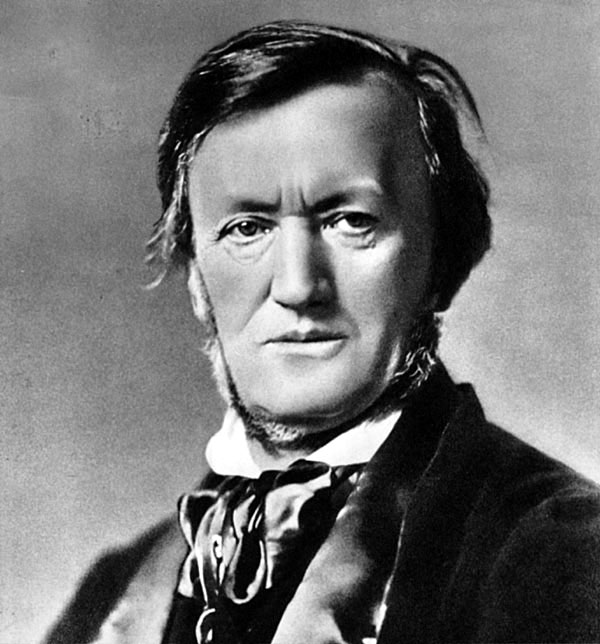 the Bayreuth Festival (or Bayreuther Festspiele in German) in 1876. One of the most important and prestigious music festivals in the world, it ran with few interruptions since then but this year it was cancelled because of the coronavirus. This is a strange time we’re living in.
Wagner was thinking of establishing a festival to promote his operas since the breakup with his patron of many years, King Ludwig II of Bavaria in 1865, when he had to leave Munich under a cloud. On the advice of his friend, the conductor Hans Richter, Wagner selected Bayreuth, a Bavarian town near Nuremberg as the place for the festival, partly on the assumption that the existing opera house would be an adequate venue. The theater, while beautiful, proved to be insufficient for the enormous productions envisioned by the composer, but the city was supportive and with its help Wagner embarked on the construction of a new theater. The money soon dried up and Wagner went fundraising around Germany. Twice he talked to the Chancellor Bismarck, to no avail. Eventually Wagner was forced to appeal to his former patron, King Ludwig, who, reluctantly, lent Wagner the money. The theater’s cornerstone was laid on May 22nd, 1872, (Wagner's birthday) and the theater was opened to the public in August of 1876; Das Rheingold was performed three nights in a row. The German Kaiser Wilhelm and King Ludwig both attended (on separate nights, as Ludwig was against Bavaria losing its independence within the newly-formed Germany), and so did many luminaries, including Wagner’s father-in-law Franz Liszt, Anton Bruckner, Edvard Grieg, and Tchaikovsky. The opening, while musically highly successful, was a disaster financially, and the second season took place only six years later, in 1882. It was dedicated exclusively to Parsifal, which was written specifically for the Festspielhaus. Wagner himself conducted the final scene of the last performance. He died less than a year later. Since then it’s been the Wagners who have been running the festival. First, Richard’s widow Cosima List Wagner took over, then Siegfried Wagner, Richard and Cosima’s son. Siegfried died in 1930 and his wife, Winifred Wagner became the director. This infamous friend and admirer of Adolph Hitler ran the Bayreuth till 1945. After the war, the festival resumed in 1951 with Wagner’s grandsons Wieland and Wolfgang Wagner at the helm. After Wieland’s death in 1966 his brother continued on his own, till 2008. Wolfgan’s daughters Eva and Katharina Wagner ran the festival together till 2015, and since then Katharina has been running it alone. Let us hope that the hiatus is short and that the 2021 festival will take place as scheduled.
The great Wagnerian soprano Birgit Nilsson was also born this week, on May 17th of 1918.Permalink