Welcome to our free classical music site

Do you write about classical music? Are you a blogger? Want to team up with Classical Connect? Send us a message, let's talk!
Do you write about classical music? Are you a blogger? Want to team up with Classical Connect? Send us a message, let's talk!




This Week in Classical Music: February 17, 2020. Handel and Corelli. This week we celebrate the 335th birthday anniversary of George Frideric Handel, who was born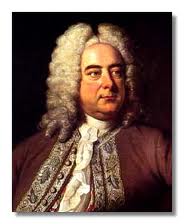 in Halle on February 23rd of 1685. We’ve written about this great composer many times: here, for example is the entry from last year. In our library you can find samples from several of his operas (he composed almost 50 of them), such as Rinaldo, Xerxes, Ariodante, or Jiulio Cesare. Not all of them are equal, but Rodelinda is one of the most beautiful. It was written in 1725 and premiered at the King’s Theatre in Haymarket, London. The famous soprano Francesca Cuzzoni sung the role of Rodelinda, Queen of Lombardy. Senesino, Handel’s favorite castrato singer, was Bertarido, the defeated King of Lombardy. Another Handel’s favorite, the baritone Giuseppe Maria Boschi sung the role of the duke of Turin. According to Charles Burney, the 18th century musicologist and historian, during the premier of Rodelinda Cuzzoni “wore a brown silk dress trimmed with silver, with the vulgarity and indecorum of which all the old ladies were much scandalized, the young adopted it as a fashion, so universally, that it seemed a national uniform for youth and beauty." (The contemporary caricature features Cuzzoni at the center and Senesino at the left).
 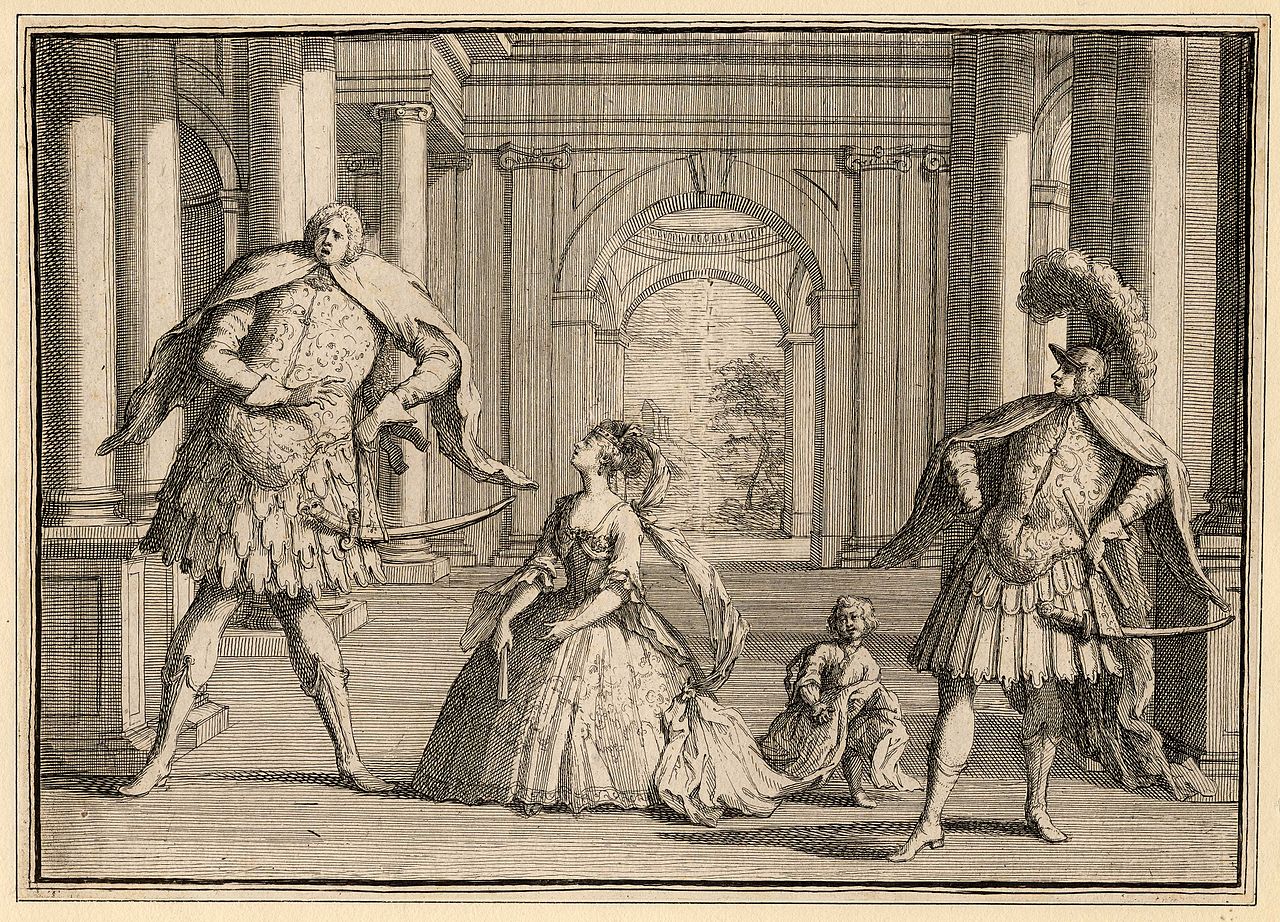 Burney thought very highly of the opera and wrote that Rodelinda "contains such a number of capital and pleasing airs, as entitles it to one of the first places among Handel's dramatic productions." Here’s the aria Io t'abbraccio (I embrace you) from Act II of the opera. Rodelinda is sung by the mezzo-soprano Magdalena Kozena; Bertarido is David Daniels, a counter tenor.
When Handel was twenty, he moved to Italy and lived there for the next five years, mostly in Rome. There he met Arcangelo Corelli, thirty-two years older (Corelli was born on February 17th of 1653) and already famous. Still, a rivalry of sorts developed. Corelli was not just a composer, he was renowned as a violinist. As a matter of taste, Corelli played and composed for the violin mostly in the middle register of the instruments. Handel also played the violin (and the keyboard). His overture to the oratorio The Triumph of Time and Truth (with the aria Lascia la spina, which Handel later reworked into the famous Lascia ch’io pianga in Rinaldo), had a high note, which Corelli refused to play. Handel did, and thus offended Corelli terribly. But in reality, Handel liked Corelli’s music and fashioned his Concerti Grossi op. 6 after Corelli’s own op. 6 Concerti. Here’s Corelli’s Concerto grosso in G minor, Op. 6, No. 8 (Christmas Concerto). It’s performed by I Musici.
Two very interesting pianists were also born this week: Benno Moiseiwitsch on February 22nd of 1890 and Nikita Magaloff on February 21st of 1912. We’ll celebrate Moiseiwitsch’s birthday next week together with Chopin’s.Permalink
This Week in Classical Music: February 10, 2020. Praetorius, Price, Godowsky. A couple of weeks ago we celebrated a relatively unknown German Renaissance composer, Johann Hermann Schein (for those who missed that week’s entry, here’s his sacred madrigal Da Jakob vollendet hatte from the collection Israelis Brünnlein, “The Fountains of Israel.” We think it’s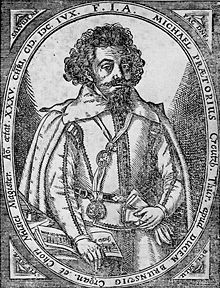 absolutely first rate). Michael Praetorius was 15 years older than Schein: he was born on February 15th of 1571. Those 15 years make a big difference: Praetorius was probably the first German composer of significance, as at that time the music centers were concentrated in Italy; not long after, it was not just Schein, but also Heinrich Schütz that wrote fine music in Germany, and development was moving toward the Baroque. Praetorius lived much of his adult life in Dresden, at the court of Johann Georg I, Elector of Saxony. There he met a number of Italian musicians and through them encountered the polychoral music of Giovanni Gabrieli, which impressed him very much. Here’s an example, Vom Himmel Hoch, from the collection of choral music, Polyhymnia Caduceatrix et Panegyrica, published in 1619. Musica Fiata and La Capella Ducale are conducted by their founder, Roland Wilson.
Today is also the birthday of the great American soprano Leontyne Price: she just turned 93! Price was born in Laurel, a small town in the state of Mississippi. She studied at the Juilliard and in late 1950’s sung in Europe to great acclaim, In 1960s she became the first African American soloist at the Metropolitan opera – the phenomenal Marian Anderson sang only one role at the Met, that of Ulrica in Verdi’s Un Ballo in Mschera, a shame and a great loss to all opera lovers. Leontyne Price’s repertoire was very broad, but it was in Verdi that she was at her best – and internationally famous. Aida, Leonora in Il trovatore, Leonora in La forza del destino, Amelia in Un ballo in Maschera – few sopranos could rival Price in these roles. Here’s Pace, Mio dio, from Verdi’s La Forza del Destino in a 1984 live Metropolitan recording. James Levine conducts the Met orchestra.
One of the greatest pianists of the early 20th century, Leopold Godowsky was born 150 years ago, on February 13th of 1870. Of Jewish descent, he was born in Žasliai, a village halfway between Vilnius and Kanunas in what is now Lithuania but in 1870 was part of Russia’s Poland. Godowsky was one of the very rare self-taught pianists: he studied briefly in Berlin and that was the extent of his formal musical education. In 1884 he made his American debut in Boston; in the following years he toured across the country. From 1887 to 1890 he lived in Paris: a protégé of Camille Saint-Saëns, he played in all the fashionable salons. After a series of extraordinarily successful Berlin concerts in December of 1900 he moved to the city and lived there and in Vienna till the outbreak of WWI, when he moved back to the US. Godowsky was also a composer, writing a number of original works and paraphrases for the piano (those of the Schubert songs are famous). He made several recordings in the late 1920s but suffered a stroke in 1930. Godowsky died in New York on November 21st of 1938.Permalink
This Week in Classical Music: February 3, 2020. Palestrina, Peter Serkin. Giovanni Pierluigi da Palestrina might have been born on this day in 1525, although it could be any day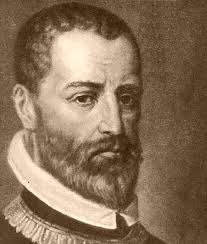 between February 3rd of 1525 and February 2nd of 1526: he died on February 2nd of 1594 and the eulogist mentioned that he was 68, and according to other sources, he died one day short of his 69th birthday. One of the greatest composers of the late Renaissance, he was recognized as such during his lifetime: in 1575, the agent of the Duke of Ferrara, who, we can assume, was very knowledgeable in these things as the Duke’s court was Italy’s musical center, had written of Palestrina that he was “now considered the very first musician in the world.” Palestrina’s output was enormous: 104 masses are extant, about 300 motets and many other pieces of music. In addition to the church music, he wrote 140 madrigals, some set to pieces of secular poetry. Here’s an example, a madrigal Chiare fresche e dolci acque (Clear, sweet fresh water/where she, the only one who seemed/woman to me, rested her beautiful limbs – a sonnet by Petrarch). Pro Musica Antiqua, Milan, is directed by Giovanni Vianini.
While we’re not sure about Palestrina’s exact birthdate, we can be fairly certain that Felix Mendelssohn was born on this day in 1809. It took almost three centuries for music to evolve from the polyphony of Palestrina to the romanticism of Mendelssohn, but just three quarters of a century to propel it to the twelve-tone technique of Alban Berg. Berg was born in Vienna on February 9th of 1885. Also on February 9th, in 1937, a wonderful German soprano was born, Hildegard Behrens. She was great in the Wagnerian repertoire. Here’s the last aria of Wagner’s Tristan und Isolde, Mild und leise wie er lächelt (Mildly and gently, how he smiles). In this 1986 recording Hildegard Behrens sings Isolde; the Munich Radio Orchestra is conducted by Peter Schneider.
Some sad news: Peter Serkin died on February 1st from pancreatic cancer at the age of 72.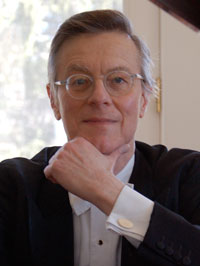 Peter was born on July 24th, 1947 in New York, his father was the renowned pianist Rudolf Serkin, his grandfather – the violinist Adolf Busch. Despite, or maybe because of this, Peter was never comfortable with the classical music establishment. He started performing in public at the age of 12. In 1965, at age 18, he recorded Bach’s Goldberg Variations, which were very well received (he made three other recordings of the Variations, the last one in 1994). Then, at the age of 21, he stopped playing music altogether and didn’t touch the piano for the next three years. He said that he decided to resume playing after listening to a radio broadcast of Bach’s music. Peter Serkin was exceptionally good in the modern repertoire. He played Olivier Messiaen Vingt Regards sur L'Enfant Jesus, an extremely complex 20-part suite lasting about two and a half hours, from memory. His recording of this piece is considered one of the very best. Peter was still playing concerts in 2019. His death is a great loss.Permalink
This Week in Classical Music: January 27, 2020. Mozart, Schubert and more. Much more, that is. In a way it’s not fair, as there is too much talent for one week. To begin with, two of the greatest composers who ever lived, Mozart (we’ve written about him many times, for example here and here here), who was born on this day in Salzburg in 1756, and Schubert (here is one of the many entries devoted to him), born on January 31st of 1797 in the outskirts of Vienna. And that’s just the beginning. Six composers of considerable talent were also born this week; they are, chronologically: Alessandro Marcello (b. February 1st of 1673), brother of a more famous Benedetto but a fine composer in his own right; Édouard Lalo (b. January 27th of 1823), mostly famous for his Symphonie espagnole, Frederick Delius (b. January 29th of 1862), beloved by many Brits. And then there are two very different 20th century composers, Luigi Nono (b. January 29th of 1924), one of the most interesting “modernists,” and John Tavener (b. January 28th of 1944), who wrote many religious pieces in a sparse (but not minimalistic) style. It’s interesting that of the six composers on this week’s list, two, Schubert and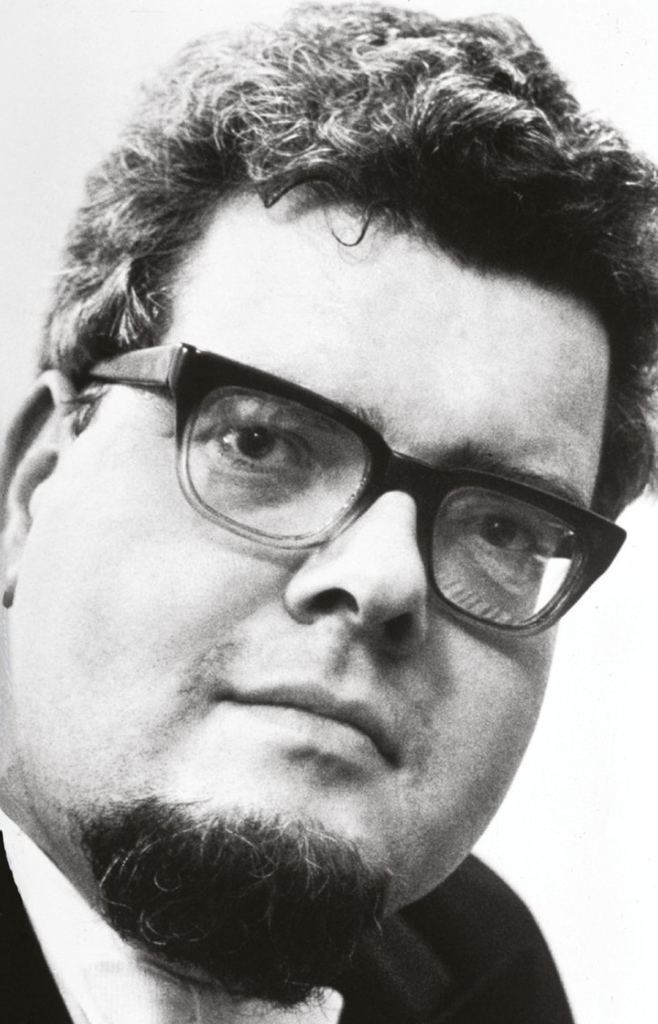 Delius, were afflicted with syphilis, the scourge of the pre-antibiotic era.
And then we have the performers: Arthur Rubinstein, one of the greatest pianists of the 20th century, who was born January 28th of 1887 and John Ogdon, born on this day in 1937. The beginning of John Ogdon’s career was very promising. After studying at the Royal Manchester College of Music and then, individually, with Dame Myra Hess and Egon Petri, he won the London Liszt Competition (in 1961) and the following year took part in the Second Tchaikovsky Competition, sharing the First Prize with Vladimir Ashkenazy. Back then winning the Tchaikovsky was very significant, and Ogdon was acknowledged both by the public and the critics as one of the brightest stars of his generation. He extensively performed, both in the UK and internationally, and made numerous recordings. Ogdon had a phenomenal technique, prodigious memory and deep understanding of the musical material. As Alistair Hinton wrote in the Grove Dictionary, “A widely read man of profound intellect who never took any repertory for granted, he often wrote copious notes about pieces; he even arrived at one recording session clutching his substantial essay on Chopin's G minor Ballade.” Ogdon made several unusual recordings, for example a rarely played Fantasia contrappuntistica by Ferriccio Busoni and, later in his life, the enormous, four-and-a-half hour long Opus clavicembalisticum by Sorabji. In 1973 he had a nervous breakdown and was admitted to a psychiatric hospital. The initial diagnosis was schizophrenia, later it was changed to manic depression. Ogdon never completely recovered but did perform, infrequently, in 1983 and after. In 1988, he released Opus clavicembalisticum to a great acclaim. Ogdon died a year later, on August 1st of 1989 in London. Here’s the recording of Liszt's Funérailles which Ogdon made in 1967.
Renata Tebaldi, one of the most extraordinary sopranos of the 20th century, was born on February 1st of 1922. Let’s wait another two years and celebrate her properly.Permalink
This Week in Classical Music: January 20, 2020. From Schein to du Pré. A group of brilliant musicians (and several composers) whose lives span almost half of a millennium, were born this week. The oldest, the German composer Johann Hermann Schein, was born on this day in.jpg "Johann Hermann Schein (circa 1620)") 1586. A contemporary (and a friend) of themore famous Heinrich Schütz, Schein lived a short life of just 44 years and never traveled outside of Germany. He worked as a Kapellmeister in Weimar, later became the cantor at Thomasschule in Leipzig (a position held by Bach a century later) and lived there for the rest of his life. Even though he hadnever been to Italy, he absorbed many of the new (Baroque) music trends emanating from that country. You can hear them in this section of his Israel's Brünnlein (The Fountains of Israel), written in 1623. The section is called Die mit Tränen säen (Who sow with tears will reap with joy), and it sounds very much like a sophisticated Italian madrigal. Ensemble Vocal Européen is conducted by Philippe Herreweghe.
1586. A contemporary (and a friend) of themore famous Heinrich Schütz, Schein lived a short life of just 44 years and never traveled outside of Germany. He worked as a Kapellmeister in Weimar, later became the cantor at Thomasschule in Leipzig (a position held by Bach a century later) and lived there for the rest of his life. Even though he hadnever been to Italy, he absorbed many of the new (Baroque) music trends emanating from that country. You can hear them in this section of his Israel's Brünnlein (The Fountains of Israel), written in 1623. The section is called Die mit Tränen säen (Who sow with tears will reap with joy), and it sounds very much like a sophisticated Italian madrigal. Ensemble Vocal Européen is conducted by Philippe Herreweghe.
Farinelli, born Carlo Broschi, was probably the most famous castrato singer of all time. A soprano, he had a huge range that allowed him to sing arias written for the contraltos. He was born 215 years ago, in Andria, near the Adriatic coast of Italy on January 24th of 1705..jpg "Farinelli, by Corrado Giaquinto") Broschi was castrated when he was about 12 years old; while a common practice for boys from poor families having fine voices, a medical pretense had to be declared for the operation to take place; in Broschi’s case it was a false report of damage he suffered after falling from a horse. Broschi studied with the famous composer and teacher Nicola Porpora and made his debut at the age of 15 in Porpora’s opera Angelica e Medoro. His fame grew swiftly; by the age of 18 he was cast in leading roles singing in major opera houses of Venice, Milan and Florence. From 1727 to 1734 he lived in Bologna; while performing in Turin he met the British ambassador who helped him negotiate a contract with London’s Opera of the Nobility, a competitor to Handel’s Royal Academy of Music. Porpora and Hasse were the major composers working for the Opera of the Nobility, with Senesino, who previously sung for Handel but ended up quarrelling with him and quitting the Academy, as their main star. With Farinelli joining, the Opera became even more popular, leading to the bankruptcy of Handel’s enterprise. Adored by the public, Farinelly was earning 5,000 pound a year, an enormous sum for the time. He stayed in London till 1737 when he quit in order to move to Spain, where he was made the Chamber musician to the King. Farinelli’s task was to sing to the King every night; he never sung in public again. In addition to his duties at the court, Farinelli was appointed the director of two Madrid theaters; there he collaborated with his friend Metastasio staging numerous lavish productions. Interestingly enough, another famous Italian, the composer Domenico Scarlatti, had a position at the court at the same time as Farinelli. After staying in Spain till 1759, Farinelli retired to his villa in Bologna. He lived there in luxury, and was visited by luminaries like Gluck, Mozart and Emperor Joseph II. He died on September 16th of 1782.
Broschi was castrated when he was about 12 years old; while a common practice for boys from poor families having fine voices, a medical pretense had to be declared for the operation to take place; in Broschi’s case it was a false report of damage he suffered after falling from a horse. Broschi studied with the famous composer and teacher Nicola Porpora and made his debut at the age of 15 in Porpora’s opera Angelica e Medoro. His fame grew swiftly; by the age of 18 he was cast in leading roles singing in major opera houses of Venice, Milan and Florence. From 1727 to 1734 he lived in Bologna; while performing in Turin he met the British ambassador who helped him negotiate a contract with London’s Opera of the Nobility, a competitor to Handel’s Royal Academy of Music. Porpora and Hasse were the major composers working for the Opera of the Nobility, with Senesino, who previously sung for Handel but ended up quarrelling with him and quitting the Academy, as their main star. With Farinelli joining, the Opera became even more popular, leading to the bankruptcy of Handel’s enterprise. Adored by the public, Farinelly was earning 5,000 pound a year, an enormous sum for the time. He stayed in London till 1737 when he quit in order to move to Spain, where he was made the Chamber musician to the King. Farinelli’s task was to sing to the King every night; he never sung in public again. In addition to his duties at the court, Farinelli was appointed the director of two Madrid theaters; there he collaborated with his friend Metastasio staging numerous lavish productions. Interestingly enough, another famous Italian, the composer Domenico Scarlatti, had a position at the court at the same time as Farinelli. After staying in Spain till 1759, Farinelli retired to his villa in Bologna. He lived there in luxury, and was visited by luminaries like Gluck, Mozart and Emperor Joseph II. He died on September 16th of 1782.
Today is also the birthday of Josef Hofmann, the famous Polish-American pianist; he was born in 1876 in Kraków, Poland. And 15 years later, also on this day, Mischa Elman, a Russian-Jewish violinist was born. Both he and Hoffman lived most of their lives in the US. And finally, the youngest of the group, the cellist Jacqueline du Pré, who was born on January 26, 1945, 75 years ago.Permalink
This Week in Classical Music: January 13, 2020. Jansons. Mariss Jansons died less than two months ago, on November 30th of 2019 (the great Wilhelm Furtwängler also died on November 30th, in 1954). This week Jansons would’ve celebrated his 77th birthday: he was born on January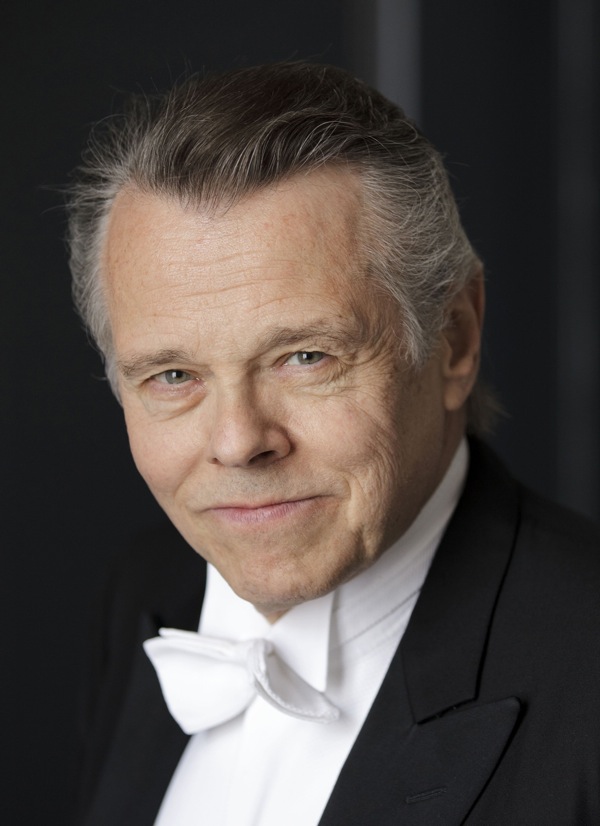 14th of 1943 in Riga, Latvia. The circumstances of his childhood were extremely difficult. Latvia was occupied by the Germans, and while his father, Arvid Jansons, was an established musician, his mother, a soprano Ida Blumenfeld, was Jewish and undermortal danger. Almost 70,000 Jews were killed in Latvia during the German occupation, only 14,000 survived. Most of the Riga Jews ended up in the ghetto, but Ida, with Arvid’s help, went into hiding. All her relatives perished during the occupation. Mariss was born while Ida was still hiding from the Nazis and local collaborators, and that’s how he spent the first year and a half of his life. After the war, with the Soviets taking over Latvia, Mariss studied the violin in Riga (Gidon Kremer was one of his fellow students) and later, when Arvid became an assistant to Yevgeny Mravinsky with the Leningrad Philharmonic, he moved to that city and continued his studies at the Leningrad Conservatory. In addition to the violin, he took conducting classes with the noted Soviet conductor Nikolai Rabinovich. Mariss was one of the first Soviet musicians to study abroad: in 1969 he went to Vienna where he studied first with the conductor Hans Swarowsky and then with Herbert von Karajan. In 1971 Jansons won the Young Conductors competition in Berlin; Karajan offered Jansons to become his assistant at the Berlin Philharmonic but the Soviet didn’t let him take the coveted position. Instead, following in the steps of his father, he became the assistant conductor at the Leningrad Philharmonic (Arvid by then was the second conductor of the orchestra). In 1979, with Mravinsky’s help, Mariss Jansons became the music director of the Oslo Philharmonic. He worked there till 2000 and made the orchestra, previously quite mediocre, into a world-class ensemble. From 1997 to 2002 he was the music director of the Pittsburgh Symphony Orchestra. He was regularly invited to Vienna to conduct the Philharmonic and from 2004 till 2016 he was the Chief Conductor of the famed Concertgebouw Orchestra.
In 1996 Mariss Jansons had a heart attack while conducting the La bohème in Oslo (his father Arvid had a heart attack and died while conducting a concert with the Hallé Orchestra). He had another heart attack five weeks later, soon after a defibrillator was implanted in his chest. Last year Jansons health deteriorated; he cancelled many concerts. He did come to the United States in November with the Bavarian Radio Symphony Orchestra but was clearly unwell: a music critic noted in a review that during one of the concerts Jansons could barely lift his arms. Mariss Jansons died at his home in Saint-Petersburg later that month. Here’s the first movement, Allegro maestoso, of Mahler’s Symphony no. 2. Mariss Jansons conducts the Bavarian Radio Symphony Orchestra. This recording was made during the Munich concerts on May 13-15, 2011.Permalink