Welcome to our free classical music site

Do you write about classical music? Are you a blogger? Want to team up with Classical Connect? Send us a message, let's talk!
Do you write about classical music? Are you a blogger? Want to team up with Classical Connect? Send us a message, let's talk!




This Week in Classical Music: November 25, 2019. Virgil Thomson. The American composer Virgil Thomson’sbiography may be more interesting than his music, and the same probably could be said about his work as a music critic, but there’s no questioning him as a cultural figure of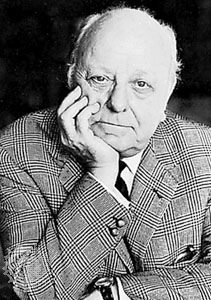 major influence. Thomson was born in Kansas City, Missouri, on this day in 1896. As a youngster he studied music with several teachers; in 1913 he enrolled in college and when the US entered the Great War, he enlisted. Thomson never saw action and was discharged as soon as the war ended. In 1919 Thomson went to Harvard, were he studied music and worked as an accompanist to the Harvard Glee Club, which by then was turning into a serious choral ensemble. Through a friend, the poet and musician Samuel Foster Damon, he was introduced to the music of Erik Satie and the poetry of Gertrude Stein. In 1921 he went with the Glee Club on tour in France and stayed in Paris the following year. While in Paris, he studied with Nadia Boulanger, met his idol Satie and the members of Les Six. Graduating from Harvard in 1923, he went to New York to study at the Juilliard, but two years later left New York for Paris. Thompson stayed there till 1940. In 1926 he wrote "Sonata da Chiesa," scores for an unusual combination of instruments: the viola, clarinet, trumpet, horn and trombone. It was borderline atonal (John Cage liked it) and the last one to be written in this style: after that all of Thompson’s work was tonal, straightforward but very original and whimsical. Here’s the first movement, Choral, from the Sonata. In January of 1926 Thomson’s friend composer George Antheil took him to the home of Gertrude Stein and Alice B. Toklas. Stein, a poet, a major art collector, hostess of a popular salon and overall an important cultural figure, was 20 year older than Thomson but she took to the young composer. Soon after, Thomson put to music Stein’s playful and abstract poem “Susie Asado” (here performed by the tenor Glenn Siebert with Phillip Bush on the piano); that marked the beginning of their long and fruitful collaboration. In 1927, on Thomson’s suggestion, Gertrude Stein wrote a piece she called “Four Saints in Three Acts”; Thomson used it to compose an opera. The main characters include Ignatius of Loyola and Saint Teresa of Ávila and a whole lot of other saints; the narrative is vague, the plot practically nonexistent: the text revolves around the sound of words. Nonetheless, Thomson loved it and set it to music, every word of it. Completed in 1928, it wasn’t staged till 1934. Maurice Grosser who produced it had to invent a story line. “Four Saints” premiered in Hartford, Connecticut – surprisingly, to great acclaim. Two week later it opened on Broadway and ran for six weeks. Difficult to imagine such a thing happening in the 21st century.
In 1940, with the war raging in Europe and the Germans occupying Paris, Thomson accepted an offer from the New York Herald Tribune, one of the best newspapers of the day, to become their chief music critic and moved to New York (Stein stayed behind in Vichy, France and unfortunately, became rather sympathetic to the Pétain regime). Thomson settled in the Chelsea Hotel, where he lived for the rest of his life: he died in his suite there in 1989 at the age of 92. He became the most influential critic in America, even though his reviews were often idiosyncratic and sometimes unfair. As Thomson put it, the reason his reviews were tolerated is that he wrote “musical descriptions more precise than those being used just then by other reviewers.” He continued composing and collaborating with Stein. Their final effort together was The Mother of Us All, based, rather vaguely, on the life of Susan B. Anthony, which Stein completed before her death in 1946. The opera premiered in May of 1947. Here’s the Overture, with Raymond Leppard conducting the Santa Fe orchestra.Permalink
This Week in Classical Music: November 18, 2019. Merula and Ormandy. Tarquinio Merula (not to be confused with Claudio Merulo), the Italian composer of the early Baroque, was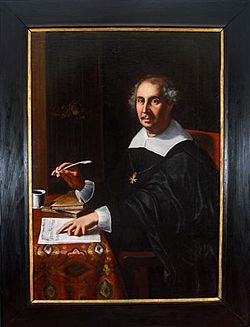 born on November 24th of 1595 in Brusseto, Emilia-Romagna. (Brusseto, a town of only 7,000, has a rich musical history: Giuseppe Verdi, who was born in the nearby village of Le Roncole, went to school in Busseto and further studied there with the composer Ferdinando Provesi; the famous tenor Carlo Bergonzi owned a hotel in Busseto, he called it I due Foscari, after an opera by Verdi in which he sung with great success. Bass-baritone Luca Pisaroni also grew up in Brusseto). Merula studied music in Cremona and worked as an organist there and in Lodi. In 1621 he traveled to Warsaw where he was offered a position of ‘organista di chiesa e di camera’ to Sigismund III, King of Poland. He stayed in Warsaw for five years, returning to Cremona in 1626. From that point on he lived and worked in two cities, Cremona and Bergamo, often moving not on his own volition. First, he served in the cathedral of Cremona, responsible for certain celebrations of the Madonna; in 1631 he went to Bergamo to assume the position of maestro di capella at the church of Santa Maria Maggiore. Just one year later he was dismissed for “indecency manifested towards several of his pupils” and returned to Cremona to assume his old position. There he had disagreements about his salary and in 1638 returned to Bergamo, this time serving at the Cathedral (the Cathedral and Santa Maria Maggiore are located next to each other in the historic center of the so-called Citta Alta, the oldest and the prettiest part of Bergamo). The two churches often used the same musicians but Merula often quarreled with his former employer. Still, he managed to stay in Bergamo till 1646, when he returned to Cremona, again to assume his old position; he lived in Cremona for the rest of his life and died there on December 10th of 1665.
Merula’s music followed the Venetian tradition of Monteverdi and Giovanni Gabrieli. Here’s an example of his church music, a beautiful setting of Lauda Jerusalem from the 1640 collection of psalms and masses called Arpa Davidica. Giovanni Acciai leads the ensemble Nova Ars Cantandi. And here is a very different example, a secular piece called Aria sopra la ciaccona, from a collection published three years earlier, in 1637. It’s performed by the Australian Brandenburg Orchestra under the direction of Paul Dyer.
November 18th marks the 120th anniversary of the birth of Eugene Ormandy. He was born Jenő Blau in Budapest into a Jewish family in 1899. Blau changed his name to Eugene Ormandy when he moved to the US in 1921. A violinist whose American career wasn’t going well, he turned to conducting almost by chance. He slowly built up his career and was hired by the Philadelphia Orchestra in1936. He led the orchestra for the next 44 years, co-creating (with Leopold Stokowski) the famously lush “Philadelphia sound,” retiring as “conductor-laureate” in 1980. Some of Ormandy’s interpretations may seem a bit dated but nobody can deny the beauty of his orchestra’s sound.Permalink
This Week in Classical Music: November 11, 2019. The interpreters. Even though Alexander Borodin, Aaron Coplandand Paul Hindemith were born this week, we’ll dedicate this entry not to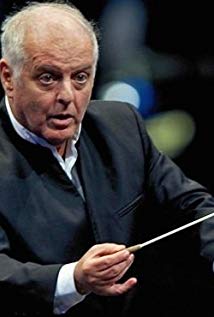 composers but to musicians who interpret their music. And this week was rich in this respect: several talented pianists, conductors, and string players have their birthdays or anniversaries this week. Daniel Barenboim who was born on November 15th of 1942 in Buenos Aires, Argentina, spans two categories, that of a pianist and a conductor. Barenboim started out as a piano wunderkind: the conductor Wilhelm Furtwängler and the pianist Edwin Fischer both hailed him as “phenomenon.” The Barenboim family moved from Argentina to Israel when Daniel was 10. He studied with Nadia Boulanger in Rome, played at the Mozarteum in Salzburg, met Zubin Mehta, Pinchas Zukerman, Itzhak Perlman and in 1967, in London, the young cellist Jacqueline Du Pré, whom he married later that year. The friendship between these five outstanding musicians was remarkable; they played together often – some of the best violin recordings were made by Perlman and Zukerman playing with Barenboim; there is even a recording of the five of them playing Schubert’s "Trout" Quintet. From the 1960s to 2000s Barenboim had one of the most successful piano careers, but he was also interested in conducting, which he studied with Igor Markevich from the age of 12. He debuted as a conductor in 1966; in 1977 he conducted the opera (Don Giovanni) for the first time and since then has performed in all major opera houses, including Baireuth, Paris, London, New York and Milan’s La Scala, where he was the music director. From 1989 to 2006 he was also the music director of the Chicago Symphony, succeeding Sir Georg Sotli. Since 1992 Berenboim has been the music director of the Berlin State Opera and its resident orchestra, the Staatskapelle Berlin, of which he was made Conductor for Life. Barenboim is one of the most frequently recorded musicians of our time.
Another wonderful musician is alive and well – the cellist Natalia Gutman. Her career was not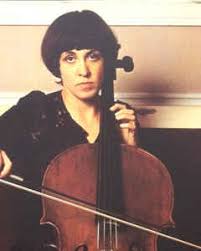 as illustrious as Barenboim’s, but not for lack of musicianship or skill: cellists are rarely glorified the way pianists and conductors are. In one aspect, though, they are alike: Barenboim formed a close circle of musical friends, and so did Gutman, with none other than Sviatoslav Richter and the violinist Oleg Kagan. This close relationship was rather unusual, as Richter was much older and much more famous than either Gutman and or Kagan. Like Barenboim, Gutman made music with her friends: three of them recorded trios by Schumann, Franck, Debussy, Ravel and Tchaikovsky. Gutman and Richter recorded cello sonatas by Frédéric Chopin, Camille Saint-Saëns, Prokofiev, Britten and more. And, like Barenboim, who married Jacqueline Du Pré, Gutmann eventually married Oleg Kagan. Natasha Gutman was born one day earlier than Barenboim, on November 14th of 1942 in Kazan, Russia. At the Moscow Conservatory she studied with the famous cellist and teacher Galina Kozolupova; later she took classes with Mstislav Rostropovich. As a student Gutman successfully participated in several international competitions, after which her international career took off. She played and recorded with major orchestras and conductors and participated in the Salzburg, Lucerne and other festivals. Together with Claudio Abbado she organized the “Berlin Encounters” festival and later, after the death of her husband Oleg Kagan, a festival in Kreuth, Bavaria, dedicated to his memory. Gutman inspired many noted composers: Alfred Schnittke, Edison Denisov and Sofia Gubaidulina wrote cello compositions for her. These days Gutman teaches at the Moscow Conservatory and musical school in Fiesole, Italy. Here’s Gutman and Richter playing Prokofiev’s Cello Sonata op. 119 in a live recording from 1992.Permalink
This Week in Classical Music: November 4, 2019. Three pianists. Three very different pianists were born this week, György Cziffra, Walter Gieseking and Ivan Moravec. Walter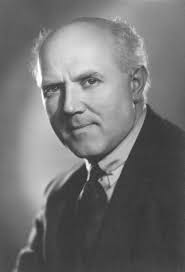 Gieseking, the oldest of the three, was born on November 5th of 1895 in Lyon, France into the family of a distinguished German doctor. Gieseking spent his youth mostly in France and Italy; he started studying piano at the age of four but didn’t have a formal musical education till 16 when he entered the Hanover Conservatory. In 1920 he performed a nearly complete cycle of Beethoven’s sonatas. It was around that time that his affinity for the music of Debussy and Ravel became evident. Gieseking stayed in Germany during WWII and performed for the Nazi cultural organizations. Accused of collaboration, he wasn’t cleared till 1947, but even later he continued to be boycotted by Jewish organizations. He returned to the United States only in 1955 and played an all-Debussy program at the Carnegie Hall to great acclaim. Gieseking had a phenomenal memory, often memorizing music from a score. His repertory was very broad: he recorded all of Mozart’s and Ravel’s solo piano music, and practically all the solo works of Debussy. His recording of all Beethoven’s pianos sonatas was left incomplete because of his sudden death. Gieseking also often played contemporary music. But it was his Ravel and Debussy that stand out unsurpassed. Here’s Image, Book II, recorded in 1953.
György Cziffra’s life was as unusual as it gets, especially for a famous concert pianist. He was born on November 5th of 1921 in Budapest into a poor family of Hungarian gypsies. As a child, he earned money improvising on popular melodies at a local circus. In 1930 he entered the Liszt Academy in Budapest where he studied with Ernst von Dohnányi. Between 1933 and 1941, Cziffra successfully concertized in Hungary and other countries. In 1941 he was conscripted, sent to the Eastern front and soon after captured by Russian partisans; he spent the remaining war years as a prisoner. After the war he earned his living playing in bars. In 1950 he attempted to defect from Socialist Hungary, was captured and imprisoned again, this time for three years of hard-labor camp. He made several recordings after being released. Cziffra managed to escape in 1956, the year of the Hungarian Revolution, going first to Vienna and then settling in Paris. From that point on, till 1981, Cziffra’s career flourished. He was recognized as a supreme virtuoso, even though his many critics questioned some musical aspects of his performances. In 1981 yet another tragedy struck: his 37-year-old son died in a fire in his Paris apartment. Cziffra, heartbroken, never performed again. He died in Paris 13 year later, on January 17th of 1994. Here’s his recording of Balakirev’s “Oriental Fantasy” Islamey. It was made in 1954-1956 while Cziffra was still living in Hungary.
The somewhat under-appreciated Czech pianist Ivan Moravec was born on Nov 9th of 1930 in Prague. He studied in Prague, and later took classes with Arturo Benedetti Michelangeli. A citizen of an Eastern-Bloc country, he couldn’t travel to the West and was practically unknown to the European and American public. Eventually, though, his audio recordings made their way to the US and he was invited to make several recordings and to perform. The 1964 concerts with George Szell and the Cleveland Orchestra launched his international concert career, but even after that the Czech authorities weren’t eager to let him travel. As a result, Western listeners heard relatively little of Moravec at the peak of his career. He lived in Prague for his whole life and died there on July 27th of 2015. He was one of the best interpreters of the music of Chopin; here is Chopin’s Nocturne op.9, no.2; this recording was made in 1965.Permalink
This Week in Classical Music: October 28, 2019. Opera Composers. Vincenzo Bellini, one of the greatest composers of the bel canto opera, was born on November 3rd of 1801 in Catania. The creator of such masterpieces as Norma, I Puritani, La sonnambula, he died at the age of 33. We’ve written about him on a number of occasions, and just this past week we mentioned that Giuditta Pasta premiered two of his operas, singing Amina in La sonnambula and the title role in Norma. But Bellini wasn’t the only opera composer to be born this week: quite an unexpected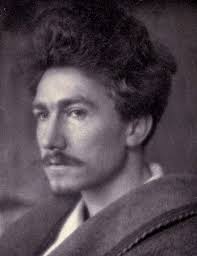 name shows up on the calendar, that of Ezra Pound. Yes, that very Ezra Pound, one of the finest poets of the 20th century, and, politically, a very controversial figure. He was born onOctober 30th of 1885 in Hailey, ID, but spent much of his life in Europe. Pound, who had no musical education, was a big lover of classical music. In his youth, he wrote musical criticism for several publications; one of his articles was about a concert given by the violinist Olga Rudge; they became friends and eventually lovers. They stayed together for the rest of Pound’s life (Rudge outlived him by 24 years – she died at the age of 100). Pound and Rudge (and also the Italian composer Alfredo Casella) were key figures in the Vivaldi revival, discovering manuscripts in the Turin library: it’s hard to imagine but in the early 20th century Vivaldi’s works were practically unknown to the general public. In the early 1920s, while living in Paris, Pound became friends with the American composer George Antheil. Pound was very interested in the music of troubadours, composers and performers from the medieval Occitan, – he felt that their art represented the ideal union of music and word. The poetry of troubadours influenced his own, especially his Cantos. Then, in 1923, he decided to write an opera which he called The Testament of François Villon, after a poem by the famous French 15th century poet. As Pound had no formal knowledge of compositional technique, he asked Antheil to consult him (on the front page of the score Pound mentioned Antheil as an “editor”). The Testament is an unusual creation, not quite an opera but a curious piece of music with a very unorthodox rythm (here are the first five minutes of it, performed by the ASKO-Ensemble under the direction of Reinbert de Leeuw, recorded at the Holland Festival in 1980). The Testament was performed in concert in 1926 and was praised by Virgil Thompson, the American composer of another unusual opera, Four Saints in Three Acts, on the libretto by Gertrude Stein. In 1932 Pound wrote his second opera, Cavalcanti, based on the life of the famous Italian poet and troubadour Guido Cavalcanti, whose poems influenced his friend Dante. That was his last known musical effort.
Two prominent conductors, the German Eugen Jochum and the Italian Giuseppe Sinopoli were also born this week, Jochum on November 1st of 1902, Sinopoli – on November 2nd of 1946. Permalink
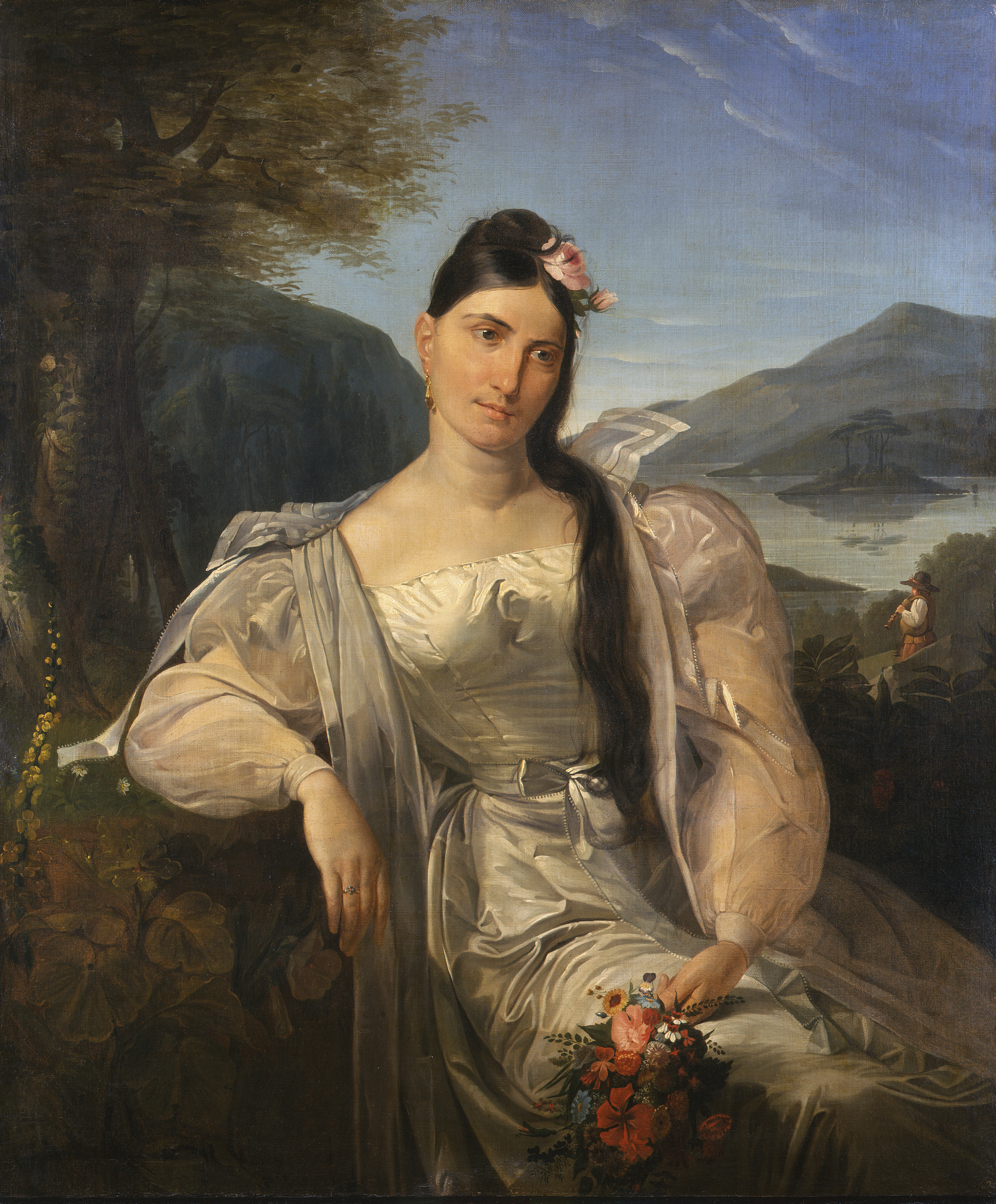 The singer we mentioned above is Giuditta Pasta, born on October 26th of 1797. She had an unusually beautiful voice with a huge range, the voice Italians call soprano sfogato. What is more, several opera roles, central to the bel canto repertoire, were written specifically for her. Giuditta Pasta was born Giuditta Negri on November 26th of 1797 in Saronno near Milan (in 1816 she married one Giuseppe Pasta, a fellow singer, and took his name). She studied in Milan and sung her debut role at the age of 19. By her early 20s she had performed in all major opera theater of Italy. Her first great triumph was the role of Desdemona in Rossini’s Otello which she sung at the Théâtre Italien in 1821 in Paris. In the subsequent years she became acclaimed as the greatest soprano in Europe. Rossini wrote the role of Corinna in Il viaggio a Reims for her in 1825; Donizetti – the role of the protagonist in the opera Anna Bolena in 1830. Bellini wrote two roles for Pasta, that of Amina in La sonnambula and then the great role of Norma, both in 1831. In 1835 Pasta retired from stage – she was only 38 years old. Her voice, soprano sfogato, had an enormous range: naturally a mezzo it went up to the coloratura soprano range. Wikipedia gives a wonderful quote from Stendhal, who describes Giuditta Pasta’s voice this way: “… she possesses the rare ability to be able to sing contralto as easily as she can sing soprano. Many notes … have the ability to produce a kind of resonant and magnetic vibration, which, through some still unexplained combination of physical phenomena, exercises an instantaneous and hypnotic effect upon the soul of the spectator.” Giuditta Pasta died in Como, Italy, on April 1st of 1865.
October 21, 2019. Giuditta Pasta. There are several anniversaries which we’d like to commemorate today: the birthdays of Franz Liszt, Luciano Berio, George Biset and Domenico Scarlatti. And there is also a very special singer we’d also like to write about as well. Franz Liszt was born on October 22nd of 1811 in the Kingdom of Hungary, then part of the Austro-Hungarian Empire. One of the most important composers of the 19th century, he was also the first (and the greatest) in a long line of piano virtuosos. We’ve written about his life and, separately, about his piano cycle Années de pèlerinage (for example, here and here). Please browse our library, which has an extensive collection of his works. Some of Liszt’s best works were written for the then newly-improved keyboard instrument, the piano, and so were most of Domenico Scarlatti’s numerous sonatas, though during his lifetime the main keyboard instrument was not the piano but the harpsichord. Domenico, the son of the great composer Alessandro Scarlatti, was born on October 26th of 1685 in Naples. Like Liszt, he was an excellent keyboard player, he even beat Handel in a 1709 harpsichord competition organized by Cardinal Pietro Ottoboni (Handel was judged to be a better organ player). Scarlatti wrote 555 sonatas; though we don’t have all of them, you could find several wonderful performances on our site. Another Italian, Luciano Berio, was born on October 24th of 1925 in Oneglia, Liguria, not far from the French border. One of the most interesting composers of the late 20th century, he had an unusual distinction of being uncompromisingly experimental and very popular at the same time. Here’s Berio’s O King, dedicated to Martin Luther King. Soprano Elise Ross is accompanied by members of the London Symphonietta, with the composer conducting. Finally, Georges Bizet, the author of Carmen, was born on October 25th of 1838 in Paris.
The portrait, above, was made by the Italian painter Giuseppe Molteni in 1829. Its title is “Portrait of the Singer Giuditta Pasta in the Stage Costume of “Nina or the Girl Driven Mad by Love”.” “Nina” is an opera by Giovanni Paisiello.Permalink