
Schein and many other, 2024
This Week in Classical Music: January 15, 2024. Schein and much more. Several composers were born this week: Niccolò Piccinni (b. 1/16/1728), a nearly forgotten Italian composer who was famous in his day for his Neapolitan opera buffa; Cesar Cui (b. 1/18/1835), a Russian .jpg "Johann Hermann Schein, 1620") composer of French descent (his father entered Russia with Napoleon) and a member of the Mighty Five; Emmanuel Chabrier (b. 1/18/1841), a mostly self-taught French composer, whose España is his best-known symphonic work but who also wrote some very nice songs; Ernest Chausson (b. 1/20/1855), another Frenchman, who wrote the Poème for the violin and orchestra which entered the repertoire of all virtuoso violinists; Walter Piston (b. 1/20/1894), a prolific and prominent American composer of the 20th century who often used Schoenberg’s 12-note method; Alexander Tcherepnin (b. 1/20/1899), a Russian composer who was born into a prominent musical family (his father, Nikolai Tcherepnin was a noted composer and cultural figure), left Russia after the 1917 Revolution, settled in France, moved to the US after WII and had several symphonies premiered by the Chicago Symphony Orchestra; and, finally, another Frenchman, Henri Duparc (b. 1/21/1848), best known for his art songs. None of these composers were what is usually called “great” but all were talented and some of their works are very interesting. Listen, for example, to Alexander Tcherepnin’s 10 Bagatelles, op. 5 in a version for piano and orchestra (here). Margrit Weber is at the piano, Ferenc Fricsay conducts the Radio-Symphonie-Orchester Berlin. Or, in a very different way, here’s Duparc’s fine song, L'invitation au Voyage. Jessye Norman is accompanied by Dalton Baldwin.
composer of French descent (his father entered Russia with Napoleon) and a member of the Mighty Five; Emmanuel Chabrier (b. 1/18/1841), a mostly self-taught French composer, whose España is his best-known symphonic work but who also wrote some very nice songs; Ernest Chausson (b. 1/20/1855), another Frenchman, who wrote the Poème for the violin and orchestra which entered the repertoire of all virtuoso violinists; Walter Piston (b. 1/20/1894), a prolific and prominent American composer of the 20th century who often used Schoenberg’s 12-note method; Alexander Tcherepnin (b. 1/20/1899), a Russian composer who was born into a prominent musical family (his father, Nikolai Tcherepnin was a noted composer and cultural figure), left Russia after the 1917 Revolution, settled in France, moved to the US after WII and had several symphonies premiered by the Chicago Symphony Orchestra; and, finally, another Frenchman, Henri Duparc (b. 1/21/1848), best known for his art songs. None of these composers were what is usually called “great” but all were talented and some of their works are very interesting. Listen, for example, to Alexander Tcherepnin’s 10 Bagatelles, op. 5 in a version for piano and orchestra (here). Margrit Weber is at the piano, Ferenc Fricsay conducts the Radio-Symphonie-Orchester Berlin. Or, in a very different way, here’s Duparc’s fine song, L'invitation au Voyage. Jessye Norman is accompanied by Dalton Baldwin.
One composer, also born this week, interests us more than all the above, even though his name is almost forgotten- Johann Hermann Schein. Schein, a good friend of the better-known Heinrich Schütz, was one of the most important German composers of the pre-Bach era. He was born on January 20th of 1586 (99 years before Bach) in Grünhain, a small town in Saxony. As a boy, he moved to Dresden where he joined the Elector’s boys’ choir; there he also received thorough music instruction. In his twenties, on the elector’s scholarship, he studied law and liberal arts at the University of Leipzig. He published his first collection of madrigals and dances, titled Venus Kräntzlein, in 1609. Starting in 1613 he occupied several kapellmeister positions, starting in smaller cities, till 1616, when he was called to Leipzig. He passed the audition and was accepted as the Thomaskantor, the most senior position in the city and the one Bach would assume 107 years later. Like Bach a century later, he was responsible for the music at two main churches, Thomaskirche and the Nicolaikirche, and for teaching students at the Thomasschule. Schein held the position of Thomaskantor for the rest of his life, which, unfortunately, was short: in his later years, he suffered from tuberculosis and other maladies and died at the age of 44 (Heinrich Schütz visited him on his deathbed).
Here's Schein’s motet, Drei schöne Ding sind (Three beautiful things), performed by the Ensemble Vocal Européen under the direction of Philippe Herreweghe. And here’s another motet, Ist nicht Ephraim mein teurer Sohn (Isn't Ephraim my dear son?), performed by the same musicians.
Read more...Johann Hermann Schein - Drei schöne Dinge sind
Ensemble Vocal Européen (Ensemble)
Philippe Herreweghe (Conductor)
Henri Duparc - L'invitation au voyage
Jessye Norman (Soprano)
Dalton Baldwin (Piano)
Alexander Tcherepnin - 10 Bagatelles
Margrit Weber (Piano)
Radio-Symphonie-Orchester Berlin (Orchestra)
Ferenc Fricsay (Conductor)
Phoebe Knapp / David Joseph Stith - Three harmonizations of ASSURANCE
Striped Gazelle (Piano)
Catching up, January 2024
This Week in Classical Music: January 8, 2024. Catching up. Last week we simply wished you a happy New Year, so this week we’ll try to make up for it and cover the first two weeks of the year. January 5th should be officially named Piano Day, as on this day three great pianists were born: Arturo Benedetti Michelangeli, in 1920, Alfred Brendel, in 1930, and Maurizio Pollini, in 1942. Pollini still performs, but we stopped attending his concerts some years ago: he’s now just a shadow of his great self. This doesn’t diminish his prodigious talent that he brilliantly 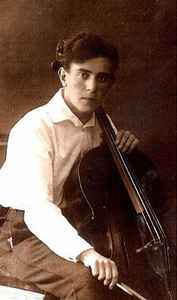 displayed for decades with virtuosity and incisive repertoire, which, unique to a pianist of his stature, included the music of many modern composers. (In comparison, the repertoire of his compatriot, the perfectionist Michelangeli, was very narrow).
Two prominent Soviet cellists were born during these two weeks, Sviatoslav Knushevitsky, on January 6th of 1908, and Daniil Shafran, on January 13th of 1923. Knushevitsky is not well known outside of Russia but in his day, he was considered one of the very best (in the rank-obsessed Soviet Union, he was the third best cellist, after Rostropovich and Shafran; had he not drunk, he might have been number one). In 1940, Knushevitsky, David Oistrakh and Lev Oborin organized a very successful trio; they performed worldwide to great acclaim. Knushevitsky and Oistrakh also played together in one of the incarnations of the Beethoven quartet. Knushevitsky died at the age of 55 from a heart attack, alcoholism probably contributing to his early death. Here’s the famous second movement from Schubert’s Piano Trio no. 2, which Stanley Kubrick used so effectively in his Barry Lindon. It’s performed by David Oistrakh, violin, Sviatoslav Knushevitsky, cello, and Lev Oborin, piano. The recording was made in 1947. You can also find the complete Triohere. And here, from 1950, is Sviatoslav Knushevitsky’s recording of Tchaikovsky’s Rococo Variations. Alexander Gauk leads the Great Radio Orchestra. As for Shafran, you can read more about him in one of our earlier entries.
Another Russia-born string player has an anniversary this week: Nathan Milstein, one of the greatest violinists of the 20th century. Odessa, where Milstein was born on January 13th of 1904, was back then part of the Russian empire. Now, spelled Odesa, it is in free Ukraine, being bombed by Russia almost daily. Speaking of Russia, Aleksander Scriabin was born on January 6th of 1872 in Moscow. His early piano pieces were charming imitations of Chopin’s but later he developed a musical language all his own, with a very fluid tonality, if not quite atonal. His grandiosity, both personal and musical, and his attempts to synthesize music and color didn’t age well (especially in his orchestral output), but his piano music is still played very often and is of the highest quality.
Among other anniversaries: Francis Poulenc’s 125th was celebrated on January 7th (he was born in 1899). Giovanni Battista Pergolesi, who died tragically young, aged 26, from tuberculosis, but left us a tremendous Stabat Mater and a brilliant intermezzo La serva padrona (Sonya Yoncheva is great as Serpina in this production), was born in a small town of Jesi, Italy, on January 4th of 1710.
Read more...Franz Schubert - Piano trio no. 2, D. 929
David Oistrakh (Violin)
Sviatoslav Knushevitsky (Cello)
Lev Oborin (Piano)
Franz Schubert - Piano trio no. 2, D. 929. 1st mov, Allegro
David Oistrakh (Violin)
Sviatoslav Knushevitsky (Cello)
Lev Oborin (Piano)
Nicolas Lebègue - Suite du 2e ton
Striped Gazelle (Organ)
Johann Hermann Schein - Ist nicht Ephraim mein teurer Sohn
Ensemble Vocal Européen (Ensemble)
Philippe Herreweghe (Conductor)