
Beethoven, DEI, Berlioz 2023
This Week in Classical Music: December 11, 2023. Beethoven and Berlioz. On December 16th we’ll celebrate Ludwig van Beethoven’s 253rd anniversary. As we thought of it, we 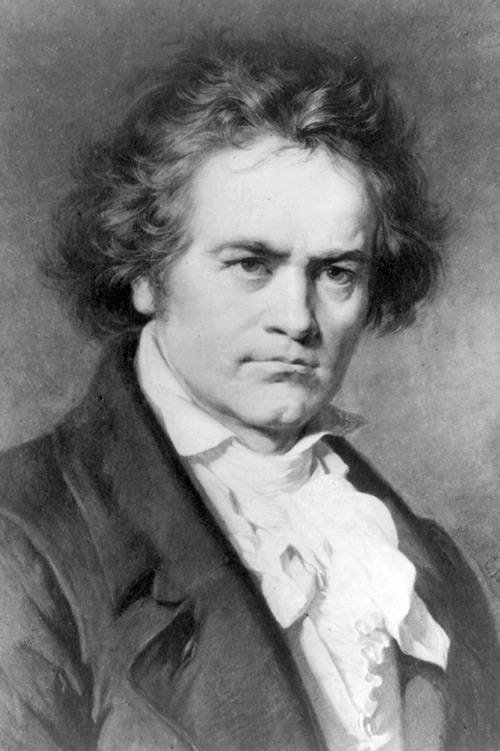 remembered what happened on this date three years ago when the world was supposed to celebrate a monumental date, Beethoven’s 250th. It didn’t happen, as our musical organizations couldn’t bring themselves to honor a white male composer – that was the year of Critical Race Theory run amok, DEI ruling the world, and sanity running for cover On the website Music Theory’s White Racial Frace, Philip Ewell, a black musicologist, published an article titled “Beethoven Was an Above Average Composer – Let’s Leave It at That” which contained a sentence: “But Beethoven’s Ninth Symphony is no more a masterwork than Esperanza Spalding’s 12 Little Spells.” Alex Ross, our most important public music critic, felt compelled to respond to this nonsense with an article of his own, publishing “Black Scholars Confront White Supremacy in Classical Music” in the New Yorker magazine. The article's subtitle was: “The field must acknowledge a history of systemic racism while also giving new weight to Black composers, musicians, and listeners.” In the New York Times, Anthony Tomassini, the chief classical music critic who is no longer with the newspaper, wrote an article about the harm of the blind, behind-the-curtain orchestral auditions. Those were widely accepted a quarter century ago to avoid any racial or gender biases, but Tomassini argued that it hinders the racial diversification of our orchestras: “The audition process should take into account race, gender and other factors.” We wonder if he still thinks that way, or was that just intellectual cowardice, an attempt to cover his hide: after all, for decades he was toiling in a field that purportedly turned out to be racist through and through, and in all these years it never occurred to him to assess it in racial terms. All of this was just three years ago. This major burst of insanity seems to be behind us and hopefully will dissipate completely, sooner rather than later. Do we need to add a disclaimer that we are totally against any racial and gender discrimination, whether in music or any other cultural or social sphere? We hope not.
Back to Beethoven. We looked up our library, and it turns out that while we have most of Beethoven’s piano sonatas, we don’t have the sonata no. 19, a short and misnumbered piece, easy enough to be well known to practically all young pianists. Beethoven composed it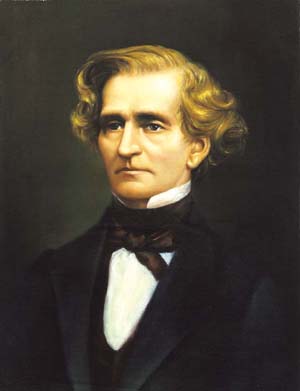 sometime in 1797, about the same time as his sonatas nos. 3 and 4, but it wasn’t published till 1805 and thus acquired its late opus and number. Here it is, performed by Alfred Brendel in a 1992 recording.
Also, on this day 220 years ago Hector Berlioz was born in La Côte-Saint-André, a small town halfway between Lyon and Grenoble. Berlioz was one of the greatest composers France ever produced, and a very unusual one at that: he didn’t follow any established schools and didn’t leave any behind. We’ve written about Berlioz many times, and he requires a separate entry, so for now, here is his symphony cum viola concerto Harold in Italy (parts 1, Harold in the mountains,2, March of the pilgrims, 3, Serenade of an Abruzzo mountaineer, and 4, Orgy of bandits). The great violinist Yehudi Menuhin is playing the viola, with Sir Colin Davis conducting the Philharmonia Orchestra.
Read more...Hector Berlioz - Harold in Italy, part 4
Philharmonia Orchestra (Orchestra)
Yehudi Menuhin (Viola)
Colin Davis (Conductor)
Hector Berlioz - Harold in Italy, part 3
Philharmonia Orchestra (Orchestra)
Yehudi Menuhin (Viola)
Colin Davis (Conductor)
Hector Berlioz - Harold in Italy, part 2
Philharmonia Orchestra (Orchestra)
Yehudi Menuhin (Viola)
Colin Davis (Conductor)
Hector Berlioz - Harold in Italy, part 1
Philharmonia Orchestra (Orchestra)
Yehudi Menuhin (Viola)
Colin Davis (Conductor)
Vernon Duke - Concerto in C Major for Cello and Orchestra (1946)
Samuel Magill (Cello)
Ernst Toch and more, 2023
This Week in Classical Music: December 4, 2023. Ernst Toch and more. Erns Toch, the Jewish-Austrian composer, was born on December 7th of 1887 in Leopoldstadt, a poor, mostly 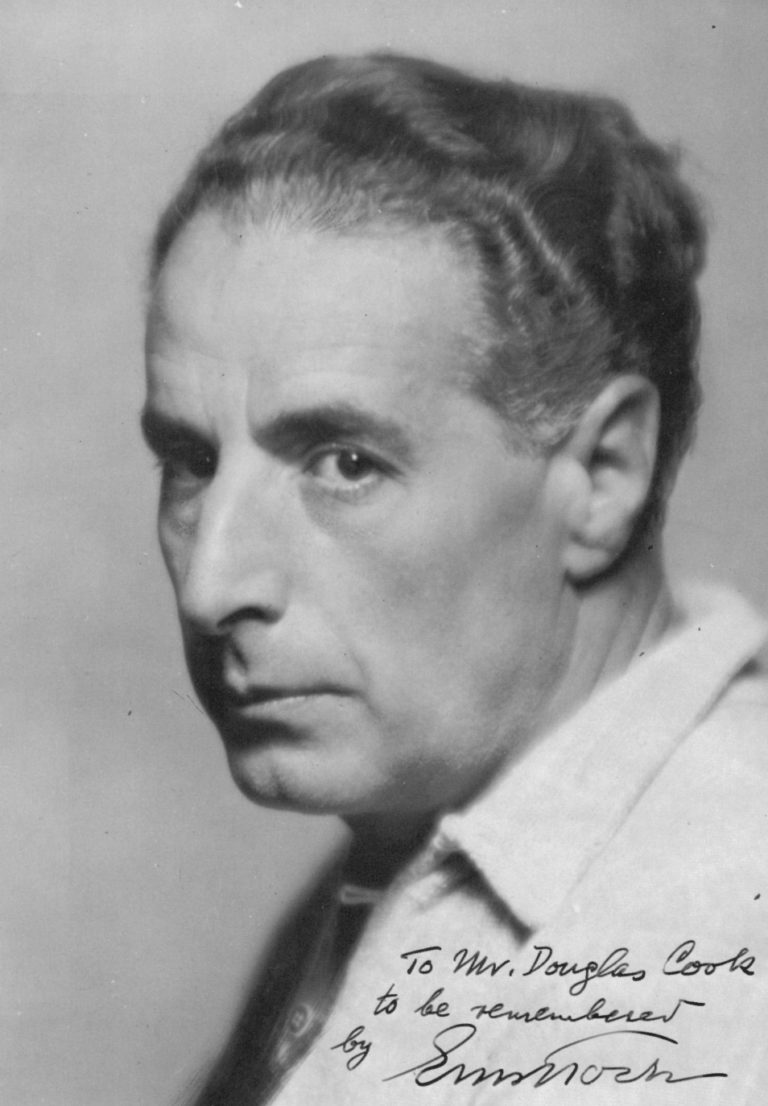 Jewish area in Vienna. Toch was one of a group of Austrian and German composers whose lives were upended by the rise of Nazism (Arnold Schoenberg, Franz Schreker, Karl Weigl, Egon Wellesz, Hans Gál, Erich Wolfgang Korngold and Berthold Goldschmidt, all Jewish, mostly forgotten except of course for Schoenberg, all talented if to a different degree, had their lives broken in 1933). One thing we find interesting is the ease with which they moved from Austria to Germany. These were two very different empires, one, declining, ruled by the peace-seeking Emperor Franz Joseph from Vienna, another – very much on the ascent, economically, politically and militarily, ruled by the arrogant and insecure Keiser Wilhelm II. But musicians thought nothing of moving from one country to another, from Vienna to Berlin and back, conducting in Hamburg or Leipzig one year and then returning to Austria, teaching at Berlin’s Hochschule für Musik and then at Universität für Musik in Vienna. And they didn’t need permission to work as long as positions were available. Musically, the pre-WWI Austria and Germany were one space, even more so than they are now.
Toch was at his most productive in the 1920s, when he wrote the Concerto for Cello and Chamber Orchestra, Bunte Suite, two short operas, many chamber pieces and piano music. Here’s Bunte Suite, whose sophisticated humor reminds us of the music of another Austrian composer, Ernst Krenek. The Suite is performed by the Karajan Academy of the Berliner Philharmoniker, Cornelius Meister conducting. You can read about Toch’s life after Hitler assumed power in last year’s post.
Jean Sibelius was also born this week, on December 8th of 1865. We have to admit that we’re not big fans of the Finnish composer, but his one-movement Symphony no. 7, is a masterpiece. Even though it’s his shortest, about 23 minutes long depending on performance, it took Sibelius 10 years (from 1914 to 1924) to complete. During that time, he managed to complete two more symphonies, nos. 5 and 6. Here’s the Seventh, performed by the Berlin Philharmonic under the direction of Herbert von Karajan.
While Sibelius may not be one of our favorites, Olivier Messiaen, born on December 10th of 1908, clearly is. We’ve written about him on several occasions and will get back to the great French master soon. Also this week: Henryk Górecki, a Polish composer whose minimalist symphonies became very popular with audiences worldwide, born on December 6th of 1933, and César Franck, the composer of one of the best violin sonatas, on December 10th of 1822.
Read more...Jean Sibelius - Symphony no. 7
Berlin Philharmonic Orchestra (Orchestra)
Herbert von Karajan (Conductor)
Ernst Toch - Bunte Suite, op. 48
Karajan Academy of the Berliner Philharmoniker (Orchestra)
Cornelius Meister (Conductor)
Ludwig van Beethoven - Piano Sonata no. 19
Alfred Brendel (Piano)