Concert in Honor of Liszt's Birthday
10/22/2023 15:00, Klavierhaus (NYC)
Sarabande und Chaconne aus dem Singspiel Almira, S.181 (1879)
Impromptu, S.191 (1872)
Toccata, S.197a (c. 1875)
Hungarian Rhapsody No. 19 in D minor, S.244 (1885)
INTERMISSION
Mephisto Waltz No. 3, S.216 (1883)
In festo transfigurationis Domini nostri Jesu Christi, S.188 (1880)
Mephisto Polka, S.217 (1882-1883)
Csardas macabre, S.224 (1881-1882)
Trauervorspiel und Trauermarsch, S.206 (1885)
Polonaise from Tchaikovsky’s Eugene Onegin, S.429 (1879)
All-Liszt recital
09/02/2023 17:00, Klavierhaus (NYC)
All-Liszt Recital
Sarabande und Chaconne aus dem Singspiel Almira, S.181 (1879)
Impromptu, S.191 (1872)
Toccata, S.197a (c. 1875)
Hungarian Rhapsody No. 19 in D minor, S.244 (1885)
INTERMISSION
Csardas macabre, S.224 (1881-1882)
In festo transfigurationis Domini nostri Jesu Christi, S.188 (1880)
Mephisto Polka, S.217 (1882-1883)
Trauervorspiel und Trauermarsch, S.206 (1885)
Mephisto Waltz No. 3, S.216 (1883)
Polonaise from Tchaikovsky’s Eugene Onegin, S.429 (1879)
Transitioning, 2023
This Week in Classical Music: November 13, 2023. Transitioning. Not in the sense of Classical Connect’s gender identity, but as a state of mind, which being in Rome largely is. CC is back in the US, but already missing Rome.
Papa Mozart (Leopold) was born this week, in 1719. He was a minor composer and music teacher but is remembered as the father of his genius son, whose career he managed (or exploited, 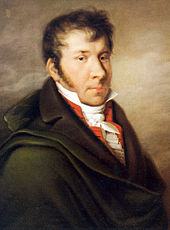 as some would say) for many years.
Johann Nepomuk Hummel was born on November 14th of 1778 in Pressburg (now Bratislava). When he was eight, the family moved to Vienna. Like Mozart, he was a child prodigy: according to his father, he could read music at the age of four, and at the age of five he could play the piano and the violin very well. In 1786, Hummel was offered music lessons by none other than Mozart, who also housed him for two years, all free of charge. Even though Mozart was 22 years older than the boy, they played billiards and spent time together. At the age of nine Hummel performed one of Mozart’s piano concertos. Very much like Leopold Mozart, Hummel’s father took his child on a European tour. They ended up in London and stayed there for four years, Hummel taking lessons from Muzio Clementi. In 1791, Haydn, who knew the young Hummel from his visits to Mozart’s house in Vienna, was also staying in London; he dedicated a piano sonata to the boy, who performed it in public to great success. The French Revolution, the Terror and the subsequent wars changed the Hummels’s plans, and in 1793 they returned to Vienna. There Hummel continued taking music lessons, with Antonio Salieri and Joseph Haydn. One of Haydn’s pupils was Beethoven; the young men became friends. Hummel played at Beethoven’s memorial concert in 1827, and there he met Franz Schubert, who later dedicated his last three piano sonatas (some of the greatest piano music ever written) to Hummel.
In 1804 Hummel succeeded Haydn as the Kapellmeister to Nikolaus II, Prince Esterházy in Eisenstadt. He stayed there for seven years, returning to Vienna in 1811. After successfully touring Europe with his singer-wife and working in Stuttgart, Hummel settled in Weimar, being offered the position of the Kapellmeister at the Grand Duke’s court. He arrived there in 1819 and stayed for the rest of his life (Hummel died in 1837), making numerous touring trips in the meantime. He became friends with Goethe and turned the city into a major music center. At the court theater, he staged and conducted new operas by Weber, Rossini, Auber, Meyerbeer, Halévy, and Bellini. He also established one of the first pension plans for retired musicians, sometimes playing benefit concerts to replenish the funds. In 1832, Goethe died, Hummel’s health was failing, and he semi-retired, formally retaining his position of the Kapellmeister. Hummel died five years later.
During his lifetime, Hummel was one of the most celebrated pianists in the world and a very popular composer. He was also an important cultural figure, a music entrepreneur, and a famous, sought-after, and very expensive piano teacher. As a composer, he was a transitional figure between the Classical style and Romanticism. Even though he heavily influenced many composers of his time, Chopin and Schumann among them, nowadays Hummel’s music is mostly forgotten. He wrote operas, sacred music, many orchestral pieces, concertos, chamber music, and of course numerous piano pieces. Very little of it is still performed. Here’s Hummel’s Piano Sonata no. 4, Op.38. It’s played by the Korean pianist Hae-Won Chang.
Read more...Johann Nepomuk Hummel - Piano Sonata no.4, Op.38, 2nd mov.
Hae-Won Chang (Piano)
Johann Nepomuk Hummel - Piano Sonata no.4, Op.38, 3rd mov.
Hae-Won Chang (Piano)
Johann Nepomuk Hummel - Piano Sonata no.4, Op.38, 1st mov.
Hae-Won Chang (Piano)
P KELLACH WADDLE - An Autumn Coffee Tambourin, Op. 505 for Solo Bass
P. Kellach Waddle (Double Bass)
Rome II, 2023
This Week in Classical Music: November 6, 2023. Rome, II. Classical Connect is still in Rome. On Saturday we went to a Santa Cecilia concert with Antonio Pappano conducting the Accademia's Orchestra and Igor Levit playing Beethoven's Third Piano Concerto. But we'd like to start with a decidedly non-musical detail. The Santa Cecilia Hall, inaugurated in 2002, was designed by the famous Italian architect, Renzo Piano. Many of Piano's pieces are airy and light, but not this one. It has little ambiance, despite the use of wood, and looks uninviting. The seating, which follows that of the Berliner Philharmonie, is placed all around the orchestra in shallow layers. We're not sure about the acoustics of the hall, as this was our first visit and we've never heard the Accademia Orchestra live, so it's not clear if the numerous imbalances (shrill winds, for example) are the orchestra's fault or the hall's.
But the most fascinating part of the hall's design is the men's bathroom. It has no urinals, only cabins. Men stand in line, not sure which cabin is empty, and enter one that's just vacated. When things get tough, they go around knocking on doors. The question is, were the urinals eliminated as a gesture of support for some feminist causes, or was Signor Piano not aware of how most men's toilets are usually (and efficiently) constructed?
But let’s get back to music. The program consisted of Cherubini’s Anacréon overture, Beethoven's Third Piano Concerto, Sibelius’s En Saga, and Richard Strauss’s Till Eulenspiegel.
Pappano’s entrance was accompanied by thunderous applause. The wind’s first entrance in the Cherubini was not a happy event. Things got better as they moved along, but even though Beethoven rated Cherubini highly, it’s little surprise that his music is played rarely these days.
Beethoven's Third Piano Concerto was a very different story. Igor Levit was superb. His technique seems to have improved since the last time we heard him in Chicago, and his command of the piece was total, even if one may disagree with some of his tempi. The performance was greeted ecstatically, and he played, exquisitely, an encore, Brahms’s Intermezzo in A major, Op. 118.
After the intermission, Pappano presented Sibelius with a speech and made the audience sing a tune from what was to follow. That was much more entertaining than the En Saga itself. The choice of the final piece, Till Eulenspiegel, would seem rather unusual, as the winds are not this orchestra's strong suit, but it went well, better than one might have expected judging by the three previous pieces.
If you add a hair-raising ride in a Roman taxi to the concert and back, this was, overall, quite an exhilarating event.
Read more...P. Kellach Waddle - The Vampire's Short Dream Of Hungary: Caprice a La Danza for Solo Bass, Op 575
P. Kellach Waddle (Double Bass)
Johann Nepomuk Hummel - Piano Sonata no.4, Op.38
Hae-Won Chang (Piano)