
P. Kellach Waddle - Chamber Chorus Piece on 3 words for God #1 by P. Kellach Waddle
Composer's Concordance Chamber Chorus (Chorale)
P. Kellach Waddle - EMBERS AUGUST : FIrst Trilogy Of Rhapsodic Variations On Themes from Romantic Violin Concertos -- Op. 2a, 2b, 2c ( 1986)
P. Kellach Waddle (Double Bass)
David Heyes - Two pieces about Whiskey written by David Heyes & dedicated to/performed by PKW
P. Kellach Waddle (Double Bass)
David Heyes - .. from both ends of the day -- 2 pieces for solo bass by David H
P. Kellach Waddle (Double Bass)
Rome I, 2023
This Week in Classical Music: October 30, 2023. Rome, I. Classical Connect is in Rome this week, so this entry is short. Rome overwhelms visually: the sites, interiors of churches worthy of museums, and Roman museums, some of the best in the world. And of course, the magical Roman light. Aurally, things are very different: the usual cacophony of crowds and the ever-jammed traffic, the sirens of the police cars and ambulances trying to get through, and awful street musicians, strategically positioned where the largest crowds congregate but also wandering the streets, assailing the dining public with their renditions of the European schlagers of the 1980s.
Historically, Rome has always been one of the greatest musical centers of Europe, and there are dozens of places, from the Vatican to the palaces of the cardinals and nobility, that are linked to major musical events of the past, but sometimes these connections take a different shape, quite literally: the enormous Borghese palace, which is still the major residence of the family (part of the palazzo is occupied by the Spanish embassy) is nicknamed Il Cembalo, and its plan does look like a harpsichord, with the narrowest side facing the Tiber.
In the next couple of days, Antonio Pappano will be conducting the orchestra of the Accademia Nazionale di Santa Cecilia in a program of Cherubini, Beethoven (Piano Concerto no. 3 with Igor Levit), Sibelius and Strauss’s Till Eulenspiegel. The site classictic.com, which sells tickets online, decided that the composer of the last piece is Johann Strauss.
Read more...Short Notes II, October 2023
This Week in Classical Music: October 23, 2023. Short notes, II. Today is Ned Rorem’s 100th anniversary. Rorem died last year, just days short of his 99th birthday. He was a wonderful 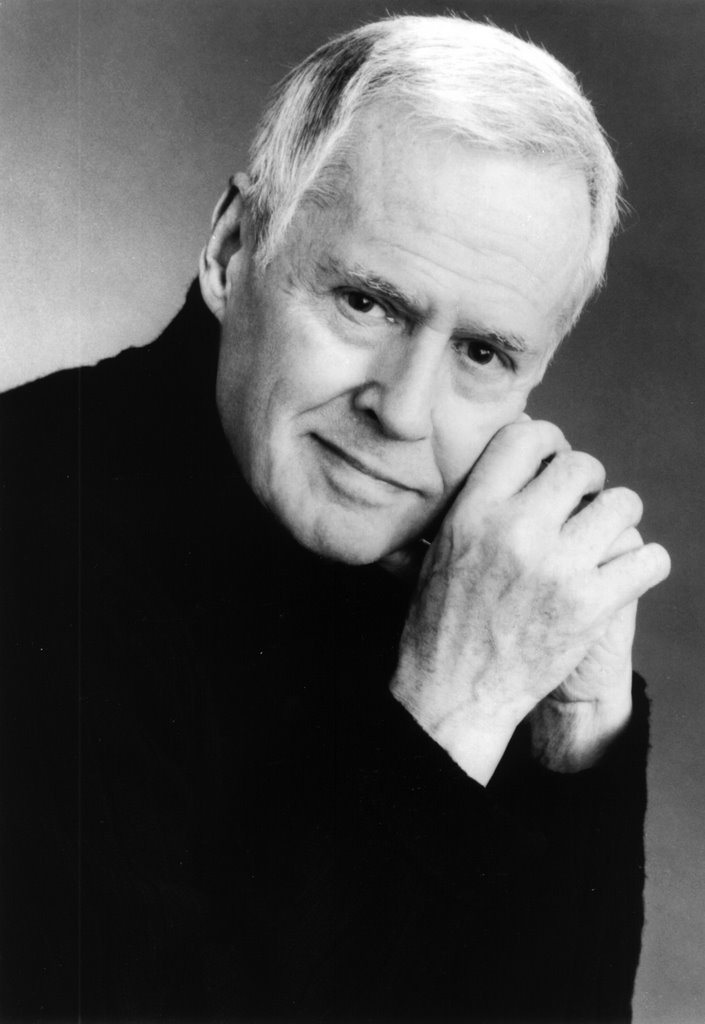 composer of songs and a whimsical writer. He spent almost a decade in France, where for a while he studied with Arthur Honegger (rather than Nadia Boulanger, as many American composers and pianists had done). In 1966 he published a book, Paris Diaries, based on his real diaries, full of gossip, gay stories, and a good read overall. In addition to about 500 art songs, some exceptionally good, he wrote two full-length operas, one of which, Our Town, based on a play by Thornton Wilder, was successfully staged in the US and abroad (he also wrote several smaller, one-act operas). In addition to that he composed three symphonies and a lot of piano music, including two concertos, but none of that music was as successful as his songs. Here is Rorem’s Sonnet. Susan Graham is accompanied by the pianist Malcolm Martineau and Ensemble Oriol.
If Rorem wrote about 500 art songs, Domenico Scarlatti, who was born on October 26th of 1685, wrote more than 500 piano sonatas. They are mostly short, about as long as Rorem’s songs. Domenico was born in Naples, where his father, the renowned opera composer Alessandro Scarlatti, was working as maestro di capella at the court of the Spanish Viceroy of Naples. Though a thoroughly Italian composer, his link with Spain lasted throughout his life. He moved to Spain in 1729 and lived there for the remaining 25 years of his life.
Another Italian, Luciano Berio, was also born this week, on October 24th of 1925. He was one of the most influential composers of the 20th century. You can read more about him here.
Niccolo Paganini and Georges Bizet both had their anniversaries this week, as did a minor but talented Russian composer of liturgical music, Alexander Gretchaninov. Next year is his 160th anniversary, so we’ll dedicate a post to him.
Read more...Ned Rorem - Sonnet
Susan Graham (Mezzo-soprano)
Malcolm Martineau (Piano)
Ensemble Oriol (Ensemble)
Mallery Concert Series: Rita Mitsel Trio
10/25/2023 11:20, Fine Arts Building
Concert is presented by the Rutgers-Camden Department of Fine Arts and led by Artistic Director Joseph Schiavo.
11:20 am - 12:20 am (NJ time)
Rita Mitsel Trio.
Rita Mitsel - Oboe,
Sabina Torosjan - Violin,
Anastasia Seifetdinova - Piano
On Concert will be presented "Being" Piece for Oboe and Piano of Anna Leonova.
Live streaming is available:
http://rcit.rutgers.edu/av-request/live/mallery-room
Short Notes I, October 2023
This Week in Classical Music: October 16, 2023. Short notes. It could’ve been a pretty good week, considering the talent we could celebrate, but the horrendous events of October 7th and their 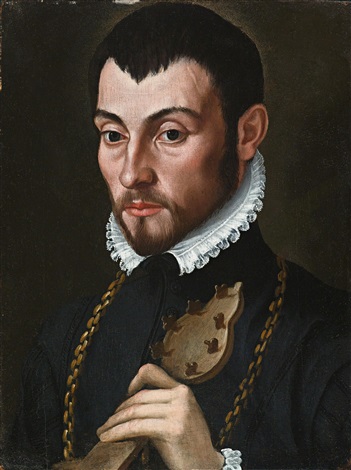 aftermath overwhelmed everything else. So, we’ll go over our list very briefly. The Italian composer Luca Marenzio was born on October 18th, 1553 (or 1554) in Coccaglio, near Brescia. Marenzio was one of the most prolific (and famous) composers of madrigals of the second half of the 16th century. Marenzio was lucky in finding great benefactors. For many years he had served at the court of Cardinal Luigi d’Este, son of Ercole II d'Este, Duke of Modena and Ferrara. After the cardinal’s death, Marenzio found employment with Cardinal Cinzio Aldobrandini, nephew of Pope Clement VIII, and later, with Ferdinando I de' Medici, the Grand Duke of Tuscany. We can assume that while in Florence, he met the three Florentine composers whose lives we had followed closely in our recent posts – Giulio Caccini, Jacopo Peri, and Emilio de' Cavalieri, but while he inhabited the same intellectual circles as the three, Marenzio never got interested in their ideas about monody and opera. He did, nevertheless, write music for two out of six intermedi to the play La Pellegrina, composed for the wedding of the Grand Duke Ferdinando to Christina of Lorraine in 1589 (Cavalieri oversaw the production and composed one of the intermedi, Caccini composed another one, Peri was both composer and a singer). That same year Marenzio returned to Rome and went on an adventurous trip to Poland, to the court of King Sigismund III Vasa in Warsaw. He stayed in Poland for a year, got seriously ill there, and returned to Rome, where he died in 1599.
Franz Liszt was also born this week, on October 22nd of 1811 in a small Hungarian village next to the border with Austria. One interesting snippet about Liszt that we were not aware of till recently: he didn’t speak Hungarian. Two fine Soviet pianists, Emil Gilels and Yakov Flier, both excellent interpreters of Liszt’s music, also have their anniversaries this week: Gilels was born on October 19th, 1916 in Odesa, Flier – on October 21st, 1912 – in a small town of Orekhovo-Zuyevo not far from Moscow.
Baldassare Galuppi and Georg Solti were also born this week, but as with so much else, we’ll leave them for better days.
Read more... « first ‹ previous … 48 49 50 51 52 53 54 55 56 … next › last »
P. Kellach Waddle - Chamber Chorus Piece on 3 words for God #2 by P. Kellach Waddle
Composer's Concordance Chamber Chorale (Chorale)