
Maria Callas, 2023
This Week in Classical Music: November 27, 2023. Maria Callas. We’re a bit early, but next Sunday is the 100th anniversary of Maria Callas, La Divina, as she was known worldwide: she 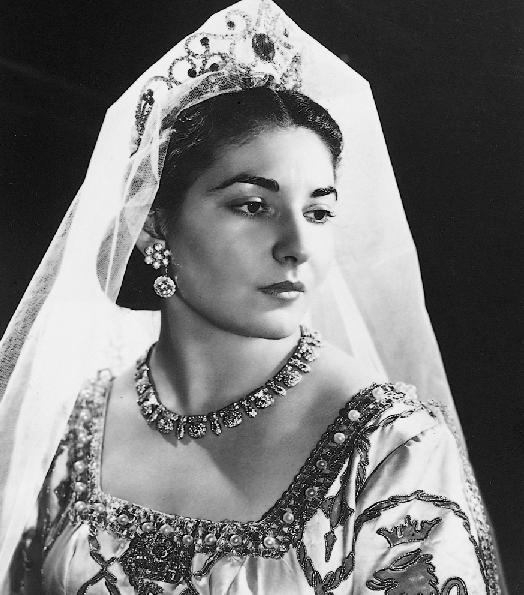 was born on December 2nd of 1923. It feels very strange that’s already been a century since her birth, as her presence is felt as strongly today as on the day she died in 1977: her instantly recognizable voice could be heard on classical music radio stations, on streaming services, on YouTube and (still) on CDs. The means have changed – back then it was LPs that people were buying and listening to – but she’s as adored as ever. Her Casta Diva alone has been heard on YouTube about 35 million times. Callas was so closely associated with Italian opera – Bellini, Donizetti, Verdi, Puccini – that she seemed Italian, but in fact was American, of Greek descent. She married an Italian, Giovanni Battista Meneghini, and, while they were married used his name with her own as Maria Meneghini Callas. She moved to Greece in 1940 and studied voice at the Athen Conservatory. There, she sang in the opera for the first time, appearing as Tosca in 1942. She returned to the US in 1945 but soon left for Italy. Tulio Serafin, the famous conductor who coached generations of singers, became her mentor. In 1947, at the Arena of Verona, he conducted Callas in her first Italian role, as La Gioconda in Ponchielli’s eponymous opera. Her appearance was tremendously successful and brought her career to a different level. During that time she often sang in the rarely produced bel canto operas, mostly because she was the only one who could sing these very difficult roles. She was exceptional as Donizetti’s Anna Boleyn, as Imogene and Norma in Bellini’s Il Pirata and Norma, Lucia in Donizetti’s Lucia di Lammermoor, Lady Macbeth and Violetta in Verdi's Macbeth and Traviata, and, of course, as Tosca. For three years she sang in smaller theaters, then, in 1950, she appeared, as Aida in La Scala. Even though her relationship with the management was troubled, in the 1950s La Scala became Callas’s home. Neither did Callas have a rapport with Rudolph Bing, the manager of the Met, where she premiered only in 1956. She had a reputation as a temperamental diva, but many of her colleagues thought that it was her exactness that made her difficult to work with. Later in the 1950s, she started experiencing problems with her voice, which may have contributed to her sometimes-erratic behavior. Some think that it was the loss of weight that affected her voice; in the early 1950s Callas was rather heavy, but then went on a diet and lost about 80 pounds. By the late 1950s, her vibrato was too heavy, sometimes the voice was forced and one could hear pronounced harshness, even though other performances were still excellent. Overall, Callas sang at the top of her form for just 10 years but what glorious years they were! Even her detractors, and there are some, recognize that the interpretations of the roles she sang were incomparable, it’s her voice that some people have problems with. We think that at its peak her voice was uniquely beautiful, and she created exceptional operatic characters that in other interpretations seem dull. Even the often mediocre music (and Italian operas are full of it) sounded exciting when she sang. There are none even close to La Divina on the opera stage today, and we don’t expect to hear anybody of that rank anytime soon.
Spaniards and Genealogy, 2023
This Week in Classical Music: November 20, 2023. The Spaniards and a bit of Genealogy. Three Spanish composers were born this week: Manuel de Falla, on November 23rd of 1876, Francisco Tárrega, on November 21st of 1852, and Joaquin Rodrigo, on November 21st of 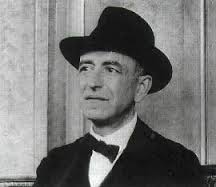 1901. Falla is probably the most important of the three – some might say the most important Spanish composer of the 20th century – although Tárrega was also instrumental in advancing Spanish classical music, which prior to the arrival of Tárrega and his friends Albéniz and Granados had been stagnant for many decades, practically since the death of Padre Antonio Soler in 1783. (It’s interesting to note that the Spanish missed out almost completely on symphonic music). Falla’s most interesting works were composed for the stage: the drama La Vida Breve, ballets El Amor Brujo and Three-Cornered Hat, the zarzuela (a Spanish genre that incorporates arias, songs, spoken word, and dance) Los Amores de la Inés. A fine pianist, he also composed many pieces for the piano, Andalusian Fantasy among them. Tárrega’s preferred instrument was the guitar: he was a virtuoso player, and he also composed mostly for the instrument. (Tárrega had a unique guitar with a very big sound, made by one Antonio Torres, a famous luthier). Here’s one of his best-known pieces, Recuerdos de la Alhambra (Memories of the Alhambra), performed by Sharon Isbin.
Rodrigo also wrote mostly for the guitar: his most famous piece is Concierto de Aranjuez, from 1939, for the guitar and orchestra. Here’s the concerto’s first movement; John Williams is the soloist; Daniel Barenboim leads the English Chamber Orchestra. The recording is almost fifty years old, from 1974, but still sounds very good.
Wilhelm Friedemann Bach, Johann Sebastian’s eldest son and a wonderful composer in his own right, was born on November 22nd of 1710. Here’s our entry about Wilhelm Friedemann from some years ago. We sympathize with Friedemann: he was brooding, mostly unhappy, and quite unlucky, but he wrote music that we find superior to that of his much more famous brother, Carl Philipp Emanuel Bach. And here’s an interesting historical tidbit: one of Wilhelm Friedemann’s harpsichord pupils was young Sara Itzig, daughter of Daniel Itzig, a Jewish banker of Frederick II the Great of Prussia. Daniel, one of the few Jews with full Prussian citizenship, had 13 children; Sara was born in 1761. She was a brilliant keyboardist and commissioned and premiered several pieces by Wilhelm Friedeman and CPE Bach. Sara married Salomon Levy in 1783 and had an important salon in Berlin. One of her sisters, Bella Itzig, married Levin Jakob Salomon; they had a son, Jakob Salomon, who upon converting to Christianity, took the name Bartholdy. His daughter Lea married Abraham Mendelssohn, son of the famous Jewish philosopher Moses Mendelssohn. Lea and Abraham had two children, Felix and Fanny Mendelssohn; their full name was Mendelssohn Bartholdy. Sara had a big influence on the musical education of her grandnephew Felix. Bella gave a manuscript of Johann Sebastian Bach’s St Matthew Passion to her grandson in 1824; Felix conducted the first 19th-century revival of the Passion in 1829. So, there’s a line, quite convoluted but fascinating, going from the Bach family to Felix (and Fanny) Mendelssohn. The Itzigs were a remarkable family: in addition to all the connections above, two other sisters, Fanny and Cecilie Itzig, were patrons of Mozart. Maybe we’ll get to that someday.
Read more...Joaquin Rodrigo - Concierto de Aranjuez, 1st mov.
John Williams (Guitar)
English Chamber Orchestra (Orchestra)
Daniel Barenboim (Conductor)
Alexander Scriabin - Piano Sonata No. 6, Op. 62 | Michael Kaykov
Dr. Michael Kaykov (Piano)
Frédéric Chopin - Chopin Scherzo No. 1 in B minor, Op. 20 | Michael Kaykov
Dr. Michael Kaykov (Piano)
Frédéric Chopin - Chopin Scherzo No. 2 in B-flat minor, Op. 31 | Michael Kaykov
Dr. Michael Kaykov (Piano)
Franz Liszt - Sarabande und Chaconne aus dem Singspiel Almira, S.181 | Michael Kaykov
Dr. Michael Kaykov (Piano)
Franz Liszt - Toccata, S.197a | Michael Kaykov
Dr. Michael Kaykov (Piano)
Franz Liszt - Saint-Saëns - Liszt: Danse Macabre Op.40 / S.555 | Michael Kaykov
Dr. Michael Kaykov (Piano)
Franz Liszt - Trauervorspiel und Trauermarsch, S. 206 | Michael Kaykov
Dr. Michael Kaykov (Piano)