Welcome to our free classical music site

Do you write about classical music? Are you a blogger? Want to team up with Classical Connect? Send us a message, let's talk!
Do you write about classical music? Are you a blogger? Want to team up with Classical Connect? Send us a message, let's talk!




This Week in Classical Music: May 6, 2024. Brahms, Tchaikovsky, and more. Tomorrow is the birthday of two great composers, Johannes Brahms and Pyotr (Peter) Tchaikovsky. Brahms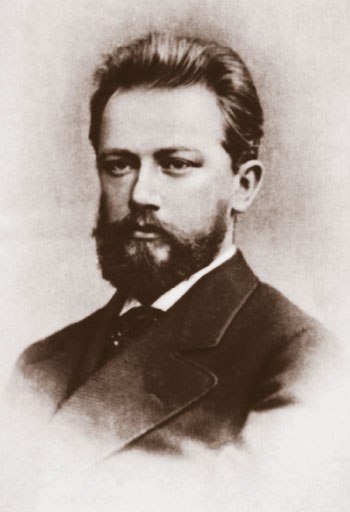 was born on May 7th of 1833 in Heide, a small town in northern Germany (then, the duchy of Schleswig-Holstein); Tchaikovsky – seven years later, in a small town of Votkinsk, not far from the Ural Mountains. Tchaikovsky is considered (at least, by the Russians) the greatest Russian composer, while Brahms is one of the “Three Bs” (with Bach and Beethoven). They lived through the same period (Brahms died in 1897, four years after Tchaikovsky), both were great symphonists, they wrote violin concertos that are considered among the best ever written, and their piano concertos are also hugely
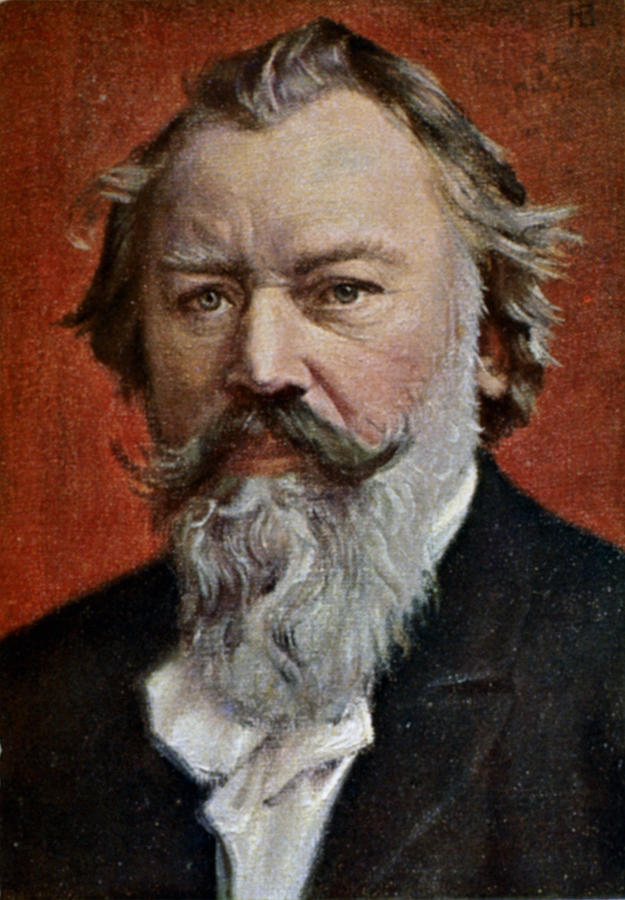 popular. Nonetheless, their music is as different as it can be, and so were their lives: Brahms’s was steady, not very eventful (at least the way it manifested itself to outsiders), Tchaikovsky’s – full of tragedies, many of which related to his closeted homosexuality. Given the format of our entries, we can do justice neither to their biographies, nor their music: we've dedicated four entries to Arnold Schoenberg just to go into some detail, and here we have two very prolific composers. So instead, we’ll play their violin concertos, the ones we mentioned above, both featuring female soloists. Here’s Rachel Barton Pine playing Brahms (Chicago Symphony Orchestra is conducted by Carlos Kalmar); and here is the Tchaikovsky; Julia Fischer is the soloist, Yakov Kreizberg leads the Russian National Orchestra).
Four composers were born on May 12th: Giovanni Battista Viotti, the famous Italian violinist and composer, in 1755; the Frenchman Jules Massenet, known for his operas Manon and Werther, in 1842; another, musically more adventuresome Frenchman, Gabriel Faure, three years later; and Anatoly Lyadov, the Russian composer known as much for his friendship with Tchaikovsky as for his small scale piano and orchestral pieces. Here’s Lyadov’s Kikimora (a nasty house spirit in Russian mythology); the Russian National Orchestra is conducted by Mikhail Pletnev.Permalink
This Week in Classical Music: April 29, 2024. Hans Pfitzner: antisemitism then and today. We are remembering the German composer Hans Pfitzner, who was born on May 5th of 1869, not because of his talent – he was a conservative composer with certain gifts, but not more than that – but because of the antisemitism on our campuses. Pfitzner was a nationalist who was taken by the Nazi ideas; he met Hitler as early as 1923 (Hitler visited him in a hospital where Pfitzer was recovering after surgery). Pfitzner was very impressed, but not Hitler, he even decided that Pfitzner was half-Jewish. It took poor Pfitzner many years to get rid of this reputational blemish. Pfitzner lived in an atmosphere of unmitigated antisemitism, and while himself a vocal antisemite who thought that Jews, especially foreign Jews, presented a danger to German spiritual life and culture, he was not a “total” antisemite like the Nazi leadership, he was an antisemite “with exceptions.” For example, he refused to write the music to Shakespeare’s A Midsummer Night’s Dream when the Nazis decided to replace the Jewish Mendelssohn’s classical score – unlike Carl Orff, who was happy to oblige. Pfitzner tried to help some Jewish musicians, in particular his good friend the music critic Paul Cossmann: Pfitzner was instrumental in saving Cossmann’s life in 1933 when he was arrested by the Gestapo but was helpless in 1942 when Cossmann was sent to the Theresienstadt concentration camp, where he perished several months later. Of course, Pfitzner was not an exception: during the Nazi period, German society as a whole was antisemitic. It was this societal antisemitism and, consequently, utter indifference to the fate of the Jews that allowed the Nazis to proceed with the “Final solution.”
After WWII and the Holocaust, antisemitism became an unacceptable trait, in all Western countries. So who could imagine that in 2024 the campuses of our elite universities would become centers of organized antisemitism? That Hamas supporters would become moral leaders of our most privileged youth, that we would hear the chants of “October 7th Every Day!”? What is worse, instead of acting responsibly and resisting antisemitism, university administrators equivocate, and so do many in our media. This is disheartening, and we don’t see the light at the end of this especially dark tunnel.Permalink
.jpg "Sergey Prokofiev, by Konchalovsky") composers of the first half of the 20th century, was born this week. The English-language wiki gives his birth date as April 27th of 1891, the Russian one – as April 23rd, and so does Grove Music. It’s even more confusing because at the end of the 19th century, Russia was still using the “old style” Julian calendar, according to which Prokofiev was born on April 11th (or April 15th). Even the English spelling of his first name differs in different sources: with an “i” at the end in Wiki, but a “y” in Grove and Britannica. None of which matters much; what is important is his undeniable talent as a composer and pianist. Prokofiev left Russia after the Revolution of 1917 but then returned, unexplainably in retrospect, to the Soviet Union in 1936. He wasn’t the only one: dozens of Russian emigres, writers, artists, composers, even the members of the White Guard, returned to their land of birth, driven by nostalgia and Soviet propaganda, many of them to be arrested and killed. Prokofiev was spared, even if for some years his position was tenuous. We’ve written about Prokofiev many times, you can read more, for example, here and here.
composers of the first half of the 20th century, was born this week. The English-language wiki gives his birth date as April 27th of 1891, the Russian one – as April 23rd, and so does Grove Music. It’s even more confusing because at the end of the 19th century, Russia was still using the “old style” Julian calendar, according to which Prokofiev was born on April 11th (or April 15th). Even the English spelling of his first name differs in different sources: with an “i” at the end in Wiki, but a “y” in Grove and Britannica. None of which matters much; what is important is his undeniable talent as a composer and pianist. Prokofiev left Russia after the Revolution of 1917 but then returned, unexplainably in retrospect, to the Soviet Union in 1936. He wasn’t the only one: dozens of Russian emigres, writers, artists, composers, even the members of the White Guard, returned to their land of birth, driven by nostalgia and Soviet propaganda, many of them to be arrested and killed. Prokofiev was spared, even if for some years his position was tenuous. We’ve written about Prokofiev many times, you can read more, for example, here and here.
This Week in Classical Music: April 22, 2024. Prokofiev, Menuhin and Pamphili. Classical Connect is still in turmoil, so we’ll be brief. Sergey Prokofiev, one of the most important
Yehudi Menuhin, one of the greatest violinists of the 20th century, was born in New York on this day in 1916. And we want to remember Cardinal Benedetto Pamphili, born on April 25th of 1653 in Rome. He was an important patron of arts, especially favoring composers (Handel was one of them), and a fine librettist. You can read about him here.Permalink
This Week in Classical Music: April 15, 2024. Marriner, Maderna. Sir Neville Marriner, a great English conductor, was born one hundred years ago today, on April 25th of 1924 in Lincoln,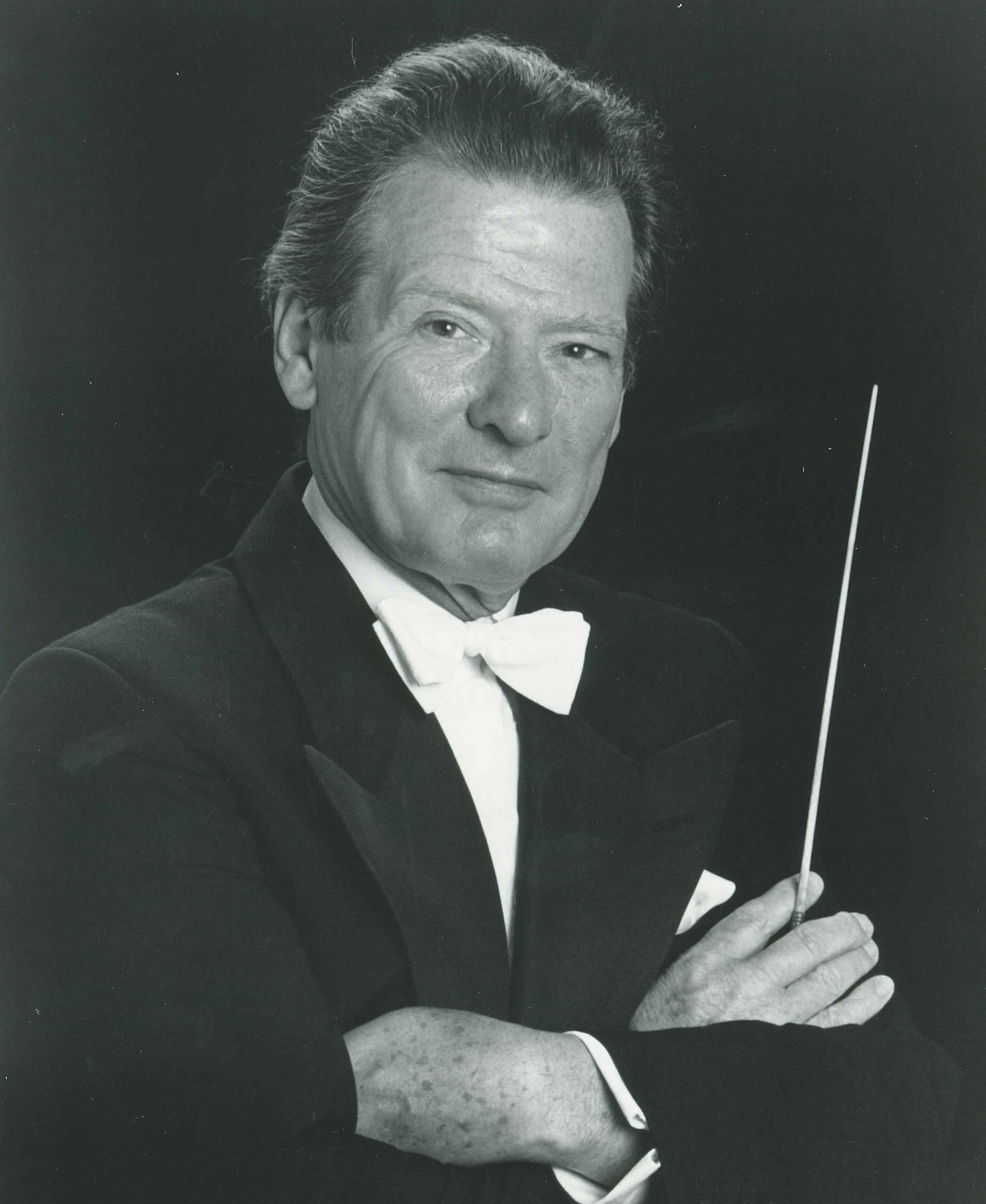 UK. He started as a violinist, played in different orchestras and chamber ensembles, and in 1958 founded the Academy of St Martin in the Fields, the chamber orchestra that became world famous. Among Marriner’s friends and founding members were Iona Brown, who led the orchestra for six years from 1974 to 1980, and Christopher Hogwood, who later founded the Academy of Ancient Music. Marriner and St Marin in the Fields made more recordings than any other ensemble-conductor pair. Their repertoire was very broad, from the mainstay of the baroque and classical music of the 18th century to Mahler, Janáček, Stravinsky, Prokofiev and other composers of the 20th. In the words of Grove Music, Marriner’s performances were “distinguished by clarity, buoyant vitality, crisp ensemble, and technical polish.” Altogether, Marriner made 600 recordings, more than any other conductor except for Karajan. In 1969 Marriner co-founded the Los Angeles Chamber Orchestra, he served as the music director of the ensemble till 1978. Marriner was active till the very end of his life; he died in London on October 2nd of 2016, at 92.
Bruno Maderna, one of the most interesting and influential composers of the 20th century, was born in Venice on April 21st of 1920. Here’s our entry from some years ago.Permalink
This Week in Classical Music: April 8, 2024. Sol Hurok, Impresario. He was neither a musician nor a composer, but Sol Hurok did for classical music in America more than almost any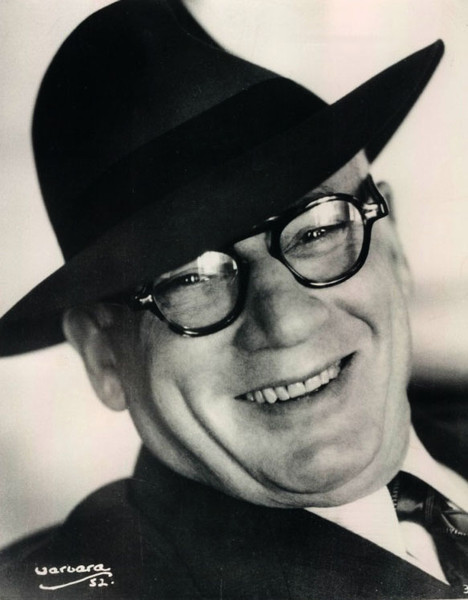 other person we can think of. Hurok was born Solomon Gurkov on April 9th of 1888 in Zarist Russia and moved to New York in 1906. A natural organizer, he started with left-wing politics in Brooklyn; that didn’t last long as he switched to representing musicians: Efrem Zimbalist and Mischa Elman, the talented violinists who also emigrated from Russia, were among his first clients. He represented the Russian bass Fyodor Chaliapin for several years (he also worked with Nellie Melba and Titta Ruffo). He then turned to dance: Anna Pavlova, Isadora Duncan, and Michel Fokine became his clients, as well as the Ballet Russe de Monte Carlo. In 1942, he organized one of the first tours of the American Ballet Theatre.
Hurok represented Marian Anderson when working with black singers was not a popular undertaking; he helped to organize Anderson’s famous concert at the Lincoln Memorial, which was broadcast nationwide and made her a household name. Among Hurok’s longest associations were those with Arthur Rubinstein and Isaac Stern. The list of Hurok’s clients read as Who-is-Who in American Music: he worked with the cellist Gregor Piatigorsky, violinists Nathan Milstein and Efrem Zimbalist, and later represented the younger stars, Van Cliburn, Jacqueline du Pré, Itzhak Perlman, and Pinchas Zukerman.
For many years Hurok tried to bring Soviet artists to America. It became possible only after Stalin’s death. The pianists Emil Gilels and violinist David Oistrakh came first, in 1955, then, later, such luminaries as Sviatoslav Richter, Vladimir Ashkenazy, Leonid Kogan and Mstislav Rostropovich. Hurok also represented the singers Galina Vishnevskaya and Irina Arkhipova and conductors Kiril Kondrashin and Yevgeny Svetlanov. Some of Hurok’s greatest coups were achieved with the ballet companies: the Bolshoi tour in 1959 was a sensational success, and so was Kirov’s, which Hurok brought in 1961.
Sol Hurok died in New York on March 5th of 1974.Permalink
This Week in Classical Music: April 1, 2024. Easter Sunday was yesterday. Here is the first chorus of Bach’s St. Matthew Passion, "Kommt, ihr Töchter, helft mir klagen" (Come ye daughters, join my lament). Collegium Vocale Gent is conducted by Philippe Herreweghe.
Two composers (great pianists both) were born on this day: Ferruccio Busoni in 1866 and Sergei Rachmaninov in 1873.Permalink