This Week in Classical Music: June 2, 2025. Cremona. In our latest Italian travels, we encountered several musically important cities, and Cremona is one of them.Cremona is somewhat unusual in this respect.As a rule, music flourished at the courts of the powerful dukes, as it did in the neighboring Mantua under the Gonzagas.Cremona never had a prince: during its long and turbulent history, it fought many enemies, belonged to different parties (the Guelfs, the supporters of the Pope, and sometimes to the Ghibellines, the allies of the Holy Roman Emperor) and at different times was occupied by the Duchy of Milan, the Genovese Republic, the French and the Spanish.And for a while, it was an independent commune, led by Capitano del Popolo.One thing it never had was a substantial court.Therefore, music-making was concentrated at the Cathedral, the Duomo.We must say that the Duomo is magnificent, one of the best examples of Romanesque architecture in Northern Italy.Next to the Duomo stands the Torrazzo, the tallest pre-modern campanile (bell tower) in Italy and Cremona’s symbol.On the other side is the Baptistry.The cathedral was originally built in the 12th century in the then-current Romanesque style but was enlarged in the subsequent centuries, acquiring many Renaissance elements.It’s decorated with many wonderful sculptures, some dating back to the 12th century.The Torrazzo has 500 steps, and if you brave them, you’ll be rewarded with a wonderful view from the top.
Marc'Antonio Ingegneriwas the most important composer to serve as the Maestro di Cappella at the Duomo, though we should also mention the Bishop, Nicolò Sfondrato, later Pope Gregory XIV, who was instrumental in promoting music and arts in the city.Ingegneri was born in Verona sometime around 1535 and moved to Cremona in the late 1560s.This was the time of the Counter-Reformation, and one of the conditions imposed by the Council of Trent, which produced the Counter-Reformation program, was that the words in Latin masses had to be legible.This, as we know, almost killed the polyphonic mass, which survived thanks to Palestrina’s mastery.Ingegneri worked in the style of Palestrina (some of his work was even attributed, incorrectly, to the great Roman).Here’s Ingegneri’s Salve Regina, performed by the Choir of Girton College, Cambridge, Gareth Wilson conducting.
But of course, the real fame was brought to Cremona by its luthiers: Cremona is rightfully considered the birthplace of the modern violin.The instruments made by the Amati family, Antonio Stradivari, and Giuseppe "del Gesù" Guarneri in the late 16th, 17th, and 18th centuries are still considered nonpareil.All of the Cremonese violin makers learned from each other: both Stradivari and Guarneri were pupils of Nicolò Amati, who in turn apprenticed with his father, Girolamo Amati.Girolamo’s father, Andrea Amati, born in 1505, is considered the first master to make a modern violin.
Cremona has a wonderful Museo del Violino (Violin Museum).It has a section dedicated to the history of string instruments and one on violin-making.All of it is done in good taste.But the most important part is the beautiful hall displaying rare instruments by the Amati family, Stradivari and Guarneri (there are other rooms with hundreds of instruments, some very important, for example, from the luthiers like Francesco Rugeri and Carlo Bergonzi).The museum has a small but beautiful auditorium, where several times a month the magnificent instruments from the museum’s collection are showcased by young musicians.For a small fee, anybody can come and listen.And clearly, the violin-making is still flourishing in Cremona: as you walk the streets of the city, you encounter many luthiers’ shops, some of them well-known around the world.Read more...
This Week in Classical Music: May 26, 2025. Still in Italy, traveling. Just two names that we’d like to mention: Isaac Albeniz, probably one of the most important Spanish composers since the Renaissance era, born May 29th of 1860, and Erich Wolfgang Korngold, a Jewish Austrian child prodigy, born on the same day in 1897, who had great talent and a difficult life, some of it of his own making.
This Week in Classical Music: May 19, 2025. On the (Italian) road. The only significant anniversary this week is that of Richard Wagner, who was born on May 22nd of 1813, in Leipzig. Nothing can be further from our minds than the Teutonic music of this great composer. We’ll have a chance to get back to him in the future, as we’ve done many times in the past. Also, Alicia de Larrocha’s birthday is on May 23rd. She was born in 1923, and is one of our favorite pianists of the 20th century. Read more...
This Week in Classical Music: May 12, 2025. Monteverdi, Two Frenchmen, and Travels. Claudio Monteverdi, one of the greatest composers in classical music history, was born in Cremona and baptized there on May 15th of 1567. He lived during a period of transition, at the end of what we call Renaissance music and the beginning of the Baroque, which he helped to forge. He was also the most important composer of the nascent art of opera. We’ve written about him many times: here, for example, is the entry celebrating his 450th anniversary. Here is Magnificat II, from the volume Vespro della Beata Vergine, published in 1610. The Magnificat was composed in Mantua, where Monteverdi served at the court of the Gonzagas. The recording (La Capella Reial, Coro Del Centro Musica Antica Di Padova, under the direction of Jordi Savall) was also made in Mantua, at the church of Santa Barbara. And speaking of Cremona and Mantua, see below.
Two Frenchmen, Jules Massenet and Gabriel Fauré, were born on the same day, May 12th, three years apart: Massenet in 1842, Fauré in 1845. Massenet is famous for two operas, Manon and Werther, though there are 28 more that he wrote. He was considered musically conservative even during his life, but, quite clearly, had a melodic talent. Fauré, on the other hand, was very much forward-looking and influenced many French composers.
Two more somewhat “round” anniversaries: the Russian composer Anatoly Lyadov was born 170 years ago, on May 12th of 1855. He was known for his indolence as much as for his talent. Expelled from Rimsky-Korsakov’s class for absenteeism, he managed to complete his studies at the St. Petersburg Conservatory two years later. His best-known compositions are tone poems Baba Yaga, Kikimora, The Enchanted Lake and some short piano pieces. The great German conductor Otto Klemperer was born 140 years ago, on May 14th of 1885.
We mentioned two cities in connection with Monteverdi, Cremona and Mantua. Classical Connect will be traveling the next two weeks or so and hopes to visit both cities. We’ll write about them upon return. Read more...
This Week in Classical Music: May 5, 2025. Double birthday, Sofronitsky. May 7th is in two days, a date that creates a yearly conundrum: the birthday of two great composers, Johannes Brahms and Peter Tchaikovsky. Only seven years separate them (Brahms was born in 1833, Tchaikovsky in 1840), both had worked with the “large form”: symphonies, concertos, but musically, they are very different. Brahms worked under the influence and in the tradition of Beethoven, while Tchaikovsky attempted to create a new national musical style. In some of our posts we had tried to address their similarities (both wrote some of the best violin and piano concertos in the classical repertory, their symphonies are momentous, etc.), other times we tried to accentuate the numerous differences; we wrote about one composer and then another. None of it worked too well. We even noted that both wrote some music quite popular with the public, that we dislike strongly (more of it, in fact, than other composers of their stature): Tchaikovsky in his ballets, Brahms in his Hungarian-themed pieces. So today we’ll abandon our efforts and turn to other musicians who have their anniversaries this week.
An important Russian pianist, Vladimir Sofronitsky, was born on May 8th of 1901, in St. Petersburg. Sofronitsky, one of the greatest interpreters of the music of Scriabin, was married to the composer’s eldest daughter (they married in 1920, five years after Scriabin’s death). The Sofronitskys temporarily moved to Warsaw in 1903, where Vladimir started his piano lessons. In 1913, the family returned to St. Petersburg, and in 1916, Vladimir entered the conservatory, where his classmates were Dmitry Shostakovich and the pianist Maria Yudina. In 1928, Sofronitsky went to Paris, where he met and befriended two recent émigré composers, Sergei Prokofiev and Nikolai Medtner. In 1930, he was invited to teach at the Leningrad (former St. Petersburg) conservatory. He was living in the city during the catastrophic WWII blockade, when more than 600,000 Leningraders died of starvation. Sofronitsky was evacuated in April of 1942 and brought to Moscow, where he lived for the rest of his life. For many years, he taught at the Moscow Conservatory. In addition to Scriabin, Sofronitsky was known for his interpretation of the music of Chopin, Schubert and Schumann. His technique was far from perfect (in that he reminds us of Alfred Cortot), but his musicianship was impeccable. Sofronitsky died in Moscow in 1961. Here’s his recording of Scriabin’s breakthrough Sonata no. 3. There is some confusion as to when this recording was made; we believe it’s a later one, a studio recording from 1961, the year of Sofronitsky’s death.
Two prominent conductors were also born this week: Jascha Horenstein, on May 6th of 1898 in Kiev, the Russian Empire, and Carlo Maria Giulini, on May 9th of 1914. Horenstein studied in Vienna and worked as an assistant to Wilhelm Furtwängler. He moved to the US in 1940. Horenstein was an early champion of the music of Gustav Mahler; he also conducted many composers of the 20th century. Giulini was born in a small coastal town of Barletta, Apulia, famous for the 5th century bronze statue, Colossus of Barletta. Giulini studied at the Conservatorio Santa Cecilia in Rome and later played the violin in the Orchestra of the Academy of Santa Cecilia, where he worked with some of the best conductors. He started conducting late, partly because during the war he was drafted into Mussolini’s army (a pacifist, he claimed not to have shot a single person). From 1944, his conducting career flourished. He started at the radio orchestras of RAI, the Italian radio corporation, then worked at the Bergamo opera, where he led performances of La Traviata with Maria Callas and Renata Tebaldi alternating the role of Violetta (what a treat that was!). He was noticed by Toscanini and Victor de Sabata, whom he replaced in 1953 as the music director of La Scala. The following five years, with Giulini at the helm, were some of the greatest in the history of the theater. He went on to conduct major orchestras in Europe and the US, including the Chicago Symphony and Vienna Philharmonic. Giulini lived to the age of 91 and died in 2005. Read more...
This Week in Classical Music: April 28, 2025. Alessandro Scarlatti. It was just a month ago that, while writing about the music of Naples, we illustrated it with a wonderful aria from one of Alessandro Scarlatti’s operas, Tigrane, which premiered in that city, in Teatro San Bartolomeo, in February of 1715 (the aria, Sussurrando il venticello, or Whispering the breeze, could be found here; the soprano is Elizabeth Watts). Scarlatti was born in Palermo on May 2nd of 1660. After moving between Palermo, Rome, and Naples, Alessandro’s family settled in Rome in 1672. The obvious musical talent of the young Scarlatti attracted the attention of many important Romans; Gian Lorenzo Bernini invited him to live in his palazzo, while Bernini’s son was the godfather of Scarlatti’s first child. Cardinal Pamphili, one of the most important patrons of music in Rome, provided Scarlatti with his poetry to be set to music and introduced him to Queen Christina, another important person in the arts scene. In short order, Christina made Scarlatti her Maestro di capella. His first opera, Gli equivoci nel sembiante, was composed in 1679 and was successful not just in Rome but also in other Italian cities. By 1683, he had written six operas (here’s the aria O cessate di piagarmi from his opera Il Pompeo from 1683). Pope Innocent XI disliked opera, and because of that, new productions were staged only in the private theaters of the nobility, like Queen Christina’s, or foreign dignitaries, who could flout the Pope’s displeasure. One such patron was a Neapolitan duke of Maddaloni, who, in 1683, convinced Scarlatti to move to Naples.
Naples was then a Spanish possession. The Viceroy, Gaspar Méndez de Haro, previously served as the Spanish ambassador to Rome, where he became a devotee of Scarlatti’s music. Thus, Scarlatti was assured of the most important patronage in the city. This relationship was also the cause of great jealousy among the Neapolitan musicians, as the Viceroy made Scarlatti his Maestro di capella. Scarlatti was writing about two operas a year; first they would be staged at the royal palace and then produced in the Teatro San Bartolomeo. Almost single-handedly, Scarlatti made Naples into an opera center to rival Venice. In 1685, his first of the eventual five Neapolitan children was born: the boy was named Domenico, and he would become a composer, at least as famous as his father.
While in Naples, Scarlatti continued to maintain a relationship with many Roman patrons. In 1689, Queen Christina died, but soon a new important patron would appear, Pietro Ottoboni. Cardinal Ottoboni was the grandnephew of Pope Alexander VIII (see our entry on this illustrious patron of the arts here). Pope Alexander came from Venice, where opera was king. He removed many restrictions imposed by his predecessor, Pope Innocent XI. Pietro Ottoboni, the Cardinal, rich off the nepotism of his granduncle, lavished much of his wealth on arts and music, Scarlatti being one of his main beneficiaries. Ottoboni wrote the libretto for one of Scarlatti’s operas, La Statira (two more libretti would follow). Another cardinal, Benedetto Pamphili, wrote the libretto for one act of La santa Dimna and staged it at the theater of his own Palazzo Doria Pamphili. Some of Scarlatti’s patrons came from afar; one of them, Ferdinando de' Medici, Grand Prince of Tuscany, was himself an excellent musician. Unfortunately, all operas written by Scarlatti for Ferdinando are lost. Here, on the other hand, is an aria from the same period, S'io non t'amassi, from the 1697 opera La Caduta de' Decemviri. The countertenor Dmitry Egorov is accompanied by La Stagione Frankfurt under the direction of Michael Schneider.Read more...
This Week in Classical Music: April 21, 2025. Prokofiev and Maderna. Two influential composers were born this week, Sergei Prokofiev and Bruno Maderna. Only 29 years separate them (Prokofiev was born on April 23rd of 1891, Maderna – on April 21st of 1920), about the same age difference that separated Haydn from Mozart, but it’s difficult to think of more different composers. Prokofiev, even if hugely talented, was conservative in his writings; Maderna, on the other hand, was one of the most adventuresome modernist composers of his time. We’ve written about Prokofiev many times, for example here, here, here, and here: you wouldn’t be wrong to surmise that we like Prokofiev a lot. We haven’t missed Maderna (here), but we’d like to add a bit to our previous post. Sometime around 1946, Maderna composed a Requiem. The score was lost and then rediscovered in 2009. Requiem is Maderna’s early piece, mostly tonal in style. Here are two first parts of it titled Requiem (introduction) and Kyrie eleison (Lord have mercy). This recording is from the world premier performance made in 2013 by the Robert-Schumann-Philharmonie and the MDR-Rundfunkchor Leipzig chorus under the direction of Frank Beermann. Maderna wrote many concertos for different instruments, but it seems the oboe was his favorite: he wrote three oboe concertos. Here’s Maderna’s First Oboe Concerto, from 1962-63. The great Heinz Holliger is the soloist; Cologne Radio Symphony Orchestra is led by Gary Bertini.
Yehudi Menuhin, one of the greatest violinists of the 20th century, was also born this week, on April 22nd of 1916 in New York. And of course, we’ve written about him before (here, for example). Menuhin’s musicianship was impeccable from the earliest days of his career till the end of it. The same could not be said about his technique. We heard him live in the late 1980s, and it was too late: by then, his technique was shaky, and it overshadowed the overall impression. But when you listen to some of his older recordings, they are wonderful. Here’s one of them, the 1966 live recording of Bach’s Violin and Keyboard Sonata No. 4 in C minor BWV 1017, which Menuhin made with Glenn Gould. Idiosyncratic (no doubt that Gould had something to do with this) but absolutely worth listening to.Read more...
This Week in Classical Music: April 14, 2025. Four Pianists. It has been a long time since we’ve written about the instrumentalists: the city of Naples and composers of note have taken up all of our time. Fortunately, this week presents us with the opportunity to address this problem, as four pianists have their birthdays this week. Two of them were born in the Soviet Union (neither still lives there), and both became famous after winning a Tchaikovsky competition. One is Grigory Sokolov, the other -- Mikhail Pletnev. Sokolov was born to a Jewish father and Russian mother on April 18th of 1950 in Leningrad, now St. Petersburg (we note the nationalities because of the persistent and official policies of antisemitism in the Soviet Union). Sokolov was 16 when, in 1966, he was awarded the first prize among pianists at the Third Tchaikovsky competition. It was quite unexpected (Misha Dichter was the public’s favorite that year), and nobody took Sokolov’s win seriously. Who could imagine then that this youngster would turn into one of the most profound pianists of his generation? For a while, Sokolov’s career didn’t go anywhere, even though he was allowed to play concerts internationally. Sometime around 1988, he left Russia (he’s a Spanish citizen and lives in Italy), and it wasn’t until the 2000s that his career really took off. Since 2006, he has performed only solo concerts; he plays mostly in continental Europe, where he’s famous. Sokolov eschews concerts in the UK and the US because of the visa requirements, which he deems Soviet-like. He rarely makes studio recordings but allows his live concerts to be recorded. Here is one of them, a live recording made in Haydnsaal of the Esterházy Palace in Eisenstadt, Austria, on August 10, 2018. Grigory Sokolov plays Schubert’s Impromptu no. 1 in F minor, from Four Impromptus, Op. 142, D. 935.
Mikhail Pletnev’s career was very different. He was born in the northern city of Arkhangelsk on April 14th of 1957. He won the Sixth Tchaikovsky Competition in 1974 when he was 21. His piano career flourished immediately after, as he went on tours of Europe and America. He played solo recitals and concerts with Claudio Abbado, Bernard Haitink, Zubin Mehta and other prominent conductors. Pletnev himself started conducting in 1980 while still studying at the Moscow Conservatory. In 1988 he met Mikhail Gorbachev, then the General Secretary of the Communist Party, in Washington, DC; two years later, Gorbachev helped him found the first non-state-owned orchestra, the Russian National Orchestra (RNO). Pletnev made it into one of the best orchestras in Russia. In 2022, after Russia invaded Ukraine, Pletnev made several anti-war comments, after which Putin’s officials pushed him out of his own orchestra. In the aftermath, Pletnev created a new ensemble, the Rachmaninoff International Orchestra; 18 musicians from the RNO joined it. Like Sokolov, Pletnev left Russia in the 1990s: he has been living in Switzerland since 1996. Here’s a recording, made live, like the one we heard from Sokolov. This one was made in Warsaw in August of 2017. Pletnev plays Rachmaninov’s Prelude in G-sharp minor op. 32, no. 12.
Two other pianists born this week are Murray Perahia, one of our all-time favorites; he was born on April 19th of 1947 and the great Artur Schnabel, born April 17th of 1882. We’ve written about Schnabel but not Perahia, which we hope to do in the future. Read more...
This Week in Classical Music: April 7, 2025. Musical Writings and Missed Dates. It happens to us often: we miss an important date, attempt to catch up, and in the process, miss other anniversaries. That’s what happened last week: as we celebrated Pierre Boulez, something we should’ve done two weeks ago, we missed several important birthdays: Franz Josef Haydn’s, Sergei Rachmaninov’s and Alessandro Stradella’s. Haydn, born on March 31st of 1732, is one of our favorite composers, but we feel that he was recently pushed to the periphery of the musical world, quite undeservedly, as we think he firmly belongs in the very center of it. We love his piano sonatas and think that some of them are at least as good as Mozart’s, if not better. He practically invented the genre of the string quartet, and his symphonies (which, to a large extent, were also his invention) are great. It seems he became a better symphonist as he got older: some of his best ones belong to the last cycle of symphonies called “London,” from number 93 to 104. Haydn finished it in 1795, when he was 63, an advanced age for the 18th century. Here is Haydn’s Symphony No. 103, Drumroll. Herbert von Karajan conducts the Vienna Philharmonic Orchestra.
Alessandro Stradella was one of the finest Italian composers of the second half of the 17th century. He also led a very turbulent and colorful life, which could’ve served as a basis for a TV series, so full it was of seductions and murders. That, and his talent, deserves a separate entry, which we promise to write. A bit of mystery surrounds his birthday. Grove Music says that Stradella was born on April 3rd of 1639 in Nepi, near Viterbo. Britannica says it was 1642, without providing any specifics. And Wikipedia believes that he was born in Bologna, on June 3rd of 1643. Both Wiki and Grove state that he was born into a noble family, but they differ in their origins. Without knowing any better, we’ll go with Grove.
Today is the birthday of Charles Burney, a minor composer and an influential writer on music, who was born in Shrewsbury, a town in the West Midlands region of England, in 1724. His father was a musician and dancer, and Charles studied music as a boy. At the age of 20, he became an apprentice to the composer Thomas Arne, now remembered mostly for his song Rule, Britannia. Arne connected Burney with Handel, in whose orchestras Burney played several times. In 1746, Burney met Fulke Greville, a rich aristocrat who made Burney his musical companion. Burney spent three years in Greville’s retinue but then left to marry one Esther Steep. They lived in London, where Burney became part of the cultural community, which included the painter Joshua Reynolds (who painted Burney’s portrait, above), Samuel Johnson, a poet and playwright famous for his Dictionary, and Edmund Burke, a statesman and politician. For many years, Burney contemplated writing a book on the history of music. While in London, Burney played the organ, taught music to fashionable people, and composed incidental music for popular plays. In 1751, after falling ill, he and his family moved to King’s Lynne, where they stayed for nine years and where Burney worked as an organist. When he returned to London, his influential friends helped him to reestablish his career in the theater (he collaborated with the great actor and producer David Garrick) and as a teacher.
In 1770, Burney traveled to France and Italy, where he met the young Mozart and, upon return, published a book, The Present State of Music in France and Italy. Then, in 1772, he went to Germany and the Netherlands and wrote a book about the music of those countries. This was the beginning of Burney's literary career, his claim to fame, which we’ll explore further next week. Read more...
This Week in Classical Music: March 31, 2025.Pierre Boulez.Last week we were preoccupied with Naples and missed a very important date: March 26th was the 100th anniversary of Pierre Boulez’s birth.It is hard to overestimate Boulez’s importance in the development of moder music in the second half of the 20th century (we can only think of Karlheinz Stockhausen and maybe Bruno Maderna being on the same level).Grove Music writes: “Resolute imagination, force of will, and ruthless combativeness secured him, as a young man, a position at the head of the Parisian musical avant garde.”But it was not just the Parisian avant-garde that he conquered, it was the whole musical word that he reigned for at least 30 years, from the early 1950s to the early 1980s.
Also this year is the 70th anniversary of the premier of one of Boulez’s most important works, Le Marteau sans maître (The Hammer without a Master).It premiered in June of 1955 in Baden-Baden and the work was met with interest by the listeners and praised by the critics and fellow composers.Even Stravinsky, who wrote very little in the serail mode, was enthusiastic.The piece, despite its difficulty, was then played around the world; Boulez brought it to the US in 1957. Le Marteau sans maître epitomized Boulez’s experimentation with the serialism, which he expanded to include not just the series of pitches, but also the duration, tone color and intensity of each sound.Seventy years later, and you cannot hear this seminal composition being played live.Something happened to classical music.Seventy years is a long period, it’s the time, for example, between the completions of Beethoven’s Ninth and Mahler’s Second symphonies (1824-1894), with the whole Romantic period in between.Both composers were celebrated in 1894, while Boulez almost disappeared from the musical scene.And who are the composers of his stature working today?
Boulez was born in a small town of Montbrison, about 100 km west of Lyon. In his youth his interests were split between the piano and mathematics.Upon leaving Catholic school in 1941 he spent a year in Lyon studying higher math.In 1942 he moved to Paris.Pierre’s father wanted him to attend the Ecole Polytechnique, but instead he went to theParis Conservatory where he studied harmony with Olivier Messiaen.The Paris Conservatory was a very conservative place in those days.Even Messiaen, himself a modern composer of huge talent, didn’t teach Mahler and Bruckner.Later on, Boulez would mention in an interview that at that time in his mind “there were two twins: Mahler, Bruckner.”In the same interview he said that “German music stopped at Wagner,” so the Second Viennese School wasn’t taught at all.Boulez learned about atonal music from René Leibowitz, a student of Arnold Schoenberg.He had already felt the need to expand his music language and immediately adopted the new techniques.A year later, in 1945, the young Boulez wrote his first atonal piece of music, a set of twelve Notations for piano.He also wrote two piano sonatas, the second one, large in scale, published in 1950.His music was performed by the pianists Yvette Grimaud and Yvonne Loriod (at that time, Messiaen’s wife), but it was the circulation of the scores among musicians that brought Boulez fame among avant-garde musicians.In 1952 Loriod performed the sonata in Darmstadt to great acclaim.Thus started Boulez’s association with a group of tremendously talented and adventuresome composers and theoreticians that became known as the Darmstadt School.Darmstadt Summer Courses for New Music were held from the early 1950s to 1970.Every other year young musicians gathered in the city to present and discuss their music.Formal courses were taught both in composition and interpretation.Even the abridged list of the attendees looks very impressive: in addition to Boulez, there was Bruno Maderna, Karlheinz Stockhausen, Luigi Nono, Luciano Berio, György Ligeti, John Cage – composers who shaped the music of the second half of the 20th century.Philosophers and critics such as Theodor Adorno, presented their ideas.It was around that time that Boulez came up with his famous aphorism: “Any musician who has not felt … the necessity of the dodecaphonic language is OF NO USE.”In 1952 he wrote a seminal piece, “Le Marteau sans maître” (The hammer without a master) for voice and six instruments.Still difficult, even after half a century of music development, it could be heard here.Pierre Boulez conducts a small ensemble consisting of the flute, the guitar and several percussion instruments.Jeanne Deroubaix is the contralto.The period between 1950s and 1970s was the most productive for Boulez as a composer.In the following years he continued to write but dedicated much time to reworking some of the compositions of the earlier period.
In 1970 President Georges Pompidou, bound to create a cultural legacy, asked Boulez, who was spending most of his time outside of France, to create an institute dedicated to research in music.The result was the IRCAM (Institut de Recherche et Coordination Acoustique/Musique, or Institute for Research and Coordination Acoustic/Music).It was set in a building next to the Center Pompidou.With the addition two years later of the Ensemble InterContemporain, IRCAM became a major research and performing center for avant-garde music.
Boulez started conducting in 1957.First it was mostly his own music and that of his young colleagues, but eventually he expanded his repertoire to Stravinsky, Debussy, Webern and Messiaen. In the late 50’s he became the guest conductor of the Southwest German Radio Symphony Orchestra and took residence in Baden-Baden, to a large extent in protest to the conservativism of the French musical culture (that was before the IRCAM).A big break came in 1971 when he was, rather unexpectedly, hired by the New York Philharmonic.During the following years he conducted every major orchestra, expanding his repertoire to include most of the classics (though he never conducted either Tchaikovsky or Shostakovich).Boulez became one of the greatest interpreters of Debussy; we also love his Mahler.Here’s a tremendous interpretation of the 4th movement (Adagio. Sehr langsam und noch zurückhaltend) of Mahler’s Symphony no. 9 with the Chicago Symphony at its best.Read more...
This Week in Classical Music: March 24, 2025. Naples. Last week we promised to get back to the music-related impressions of our recent travels. We should state upfront that they were somewhat disappointing. Classical music is not being played in Italy as often as one would hope (and expect), either live in concerts or on the radio. Of all the cities we visited, the one with the richest musical tradition was Naples. Naples is a very old city, going back to the Greek settlement in the 6th century BC, but the history of classical music is much shorter, so those two intersect in the Kingdom of Naples in the 15th century when the King’s chapel had more musicians than any other court in Italy. That was also the time when Tinctoris, a famous composer and music theoretician, stayed with the court. Early in the 16th century, the Aragonese Spanish took over Naples and made it a viceroyalty. Carlo Gesualdo, Price of Venosa, stayed at the court and influenced generations of Neapolitan musicians. The talented Giovanni de Macque was one of them. The Royal Chapel and several major churches were important musical centers; then, in the mid-16th century, the first Conservatory was created. Initially, it was a shelter for orphans where music was one of the subjects taught to children. Eventually, music became the most important subject, and conservatories (soon there were four) attracted talented teachers. Alessandro Scarlatti taught there briefly, as, sometime later, did Nicola Porpora and Leonardo Vinci.
Opera played a very important part in the musical life of Naples. The genre was invented in the early 17th century in northern Italy, Venice in particular, and by midcentury Naples had regular performances of operas by Claudio Monteverdi, Francesco Cavalli and others. Till 1737, the main venue was the San Bartolomeo Theater, when the grand San Carlo Theater was inaugurated (San Bartolomeo was eventually converted into a church). The main figure in the history of the Neapolitan opera was, without a doubt, Alessandro Scarlatti, who lived in the city from 1679 to 1721 and composed more than one hundred operas, of which 70 are extant. With the construction of San Carlo, Naples turned into one of the most important opera centers in Italy, with the best companies presenting their shows. Early in the 18th century, a new style was invented in Naples, that of Opera Buffa, or comic opera. The major composers writing in this genre were Vinci, Scarlatti, and the young Giovanni Battista Pergolesi, who was born in 1710 but lived only 26 years. Pergolesi’s La Serva Padrona is regularly staged these days. Many of the operas were written on the libretti of the famous playwright Carlo Goldoni, the best of them by Baldassare Galuppi, Niccolò Piccinni, Giovanni Paisiello and Domenico Cimarosa. Later in the 19th century, Gaetano Donizetti, a Bergamasque by birth, lived in Naples for many years. He was the director of the San Carlo from 1822 to 1838 and presented 17 premiers of his works there, including Lucia di Lammermoor.
Some of the most famous castrati were born or trained in Naples and performed in the operas of Porpora and Scarlatti. Among the best-known are Farinelli, whose real name was Carlo Broschi, and Caffarelli (Gaetano Majorano). Metastasio, one of the greatest opera librettists of all time, had lived in Naples for years.
As vigorous as the musical life of Naples was from the early 17th to the late 19th century, it thinned out by the 20th, at least in its “classical” form. Nonetheless, it left a treasure trove of great music, of which we’ll present a couple of samples. Here’s the achingly beautiful aria Sussurrando il venticello from Alessandro Scarlatti’s Tigrane, which premiered in Teatro San Bartolomeo, Naples, in February of 1715. And here’s the aria Le faccio un inchino from Domenico Cimarosa’s 1792 opera Il matrimonio segreto.
This Week in Classical Music: March 17, 2025. Bach, abbreviated. Our trip is over, but we’re not ready to resume our musical journeys. Of all the places we visited, only one was musically notable – Naples. Next week we’ll write about some composers who lived and worked in the city and made it famous.
All that said, there is one anniversary that is impossible to miss: Johann Sebastian Bach was born on March 21st of 1685 in Eisenach. What music are we to present to celebrate this event? Out of Bach’s vast and magnificent output, we’ll opt (almost at random) for one clavier piece and an excerpt from one of his grandest creations. The former is French Suite no. 1, performedhereby Murray Perahia. The latter, the aria Erbarme dich (Have mercy), from Part 2 of the St. Matthew Passion, ishere. The alto is Anne Sofie von Otter, Georg Solti conducts the Chicago Symphony Orchestra.Read more...
This Week in Classical Music: March 10, 2025.Still on the road.Georg Philipp Telemann was born on March 14th of 1681 in Magdeburg.He was the godfather of Carl Philipp Emanuel Bach, whose birthday was last week.CPE Bach’s second name, Philipp, was given in honor of Telemann, Johann Sebastian’s close friend.We hope to play some of Telemann’s music next week.And Arthur Honegger, a member of Les Six, was born on this day in 1892.He was Swiss but born in France, in Le Havre.Read more...
This Week in Classical Music: March 3, 2025.Travel.Three great composers were born this week: Antonio Vivaldi, on March 4th of 1678, in Venice; Maurice Ravel, on March 7th of 1875, in Ciboure, near Biarritz in France; and the notorious Carlo Gesualdo, on March 8th of 1566, most likely in Venosa, where Gesualdos were the princes (Venosa is located in the southern Italian region of Basilicata).To the list of the greats, some would add Carl Philipp Emanuel Bach, born on March 8th of 1714, in Weimar, where his father was the organist at the court of William Ernest, Duke of Saxe-Weimar.Unfortunately, we cannot delve into the lives and art of these composers, as we are ready to embark on a trip that will bring us close to Venosa, among other places.It seems there are no museums dedicated to Gesualdo in Venosa, the town’s most famous son.Still, there are old churches and even Jewish catacombs from around the 5th century AD: apparently, there was a Jewish community in Venosa, well integrated with the local population.Read more...
This Week in Classical Music: February 24, 2025.Chopin interpretations.Frédéric Chopin, one of the greatest composers of the 19th century, was born on March 1st of 1810.We’ll celebrate him through the works of pianists whose anniversaries fall around this date: we’ve been neglecting the interpreters for quite a while, and this is a good time to catch up.Most of these pianists are of the older generation when Chopin’s piano music was more popular and more often played than it is today.Their lives coincide with the early era of the recording industry, so the technical quality of some of the pieces we’ll hear today is not high, while the musicianship is, even if their approach may seem very different than what we hear today.
We’ll start with Benno Moiseiwitsch, born February 22nd of 1890 in Odessa (now Odesa), then in the Russian Empire and now in independent Ukraine.He started his studies in Odessa, then moved to Vienna to study with Theodor Leschetizky and eventually settled in England.Moiseiwitsch had a flourishing international career and for a while taught at the Curtis Institute of Music.Here’s Benno Moiseiwitsch performing Chopin’s Barcarolle, Op. 60.We like it a lot: the playing is elegant, the tone is singing. We don’t know the exact recording date but think it was made around 1950.
Alexander Brailowsky was also born in Ukraine, then part of Russia, and like Moiseiwitsch, he was Jewish.He was six years younger (his birthday is February 16th of 1896) and born in Kiev (now Kyiv). After studying at the Kiev Conservatory, he also went to Vienna to take lessons from Leschetizky. He then studied with Ferruccio Busoni in Switzerland and eventually settled in New York while getting French citizenship sometime later.Brailowsky was known for his interpretation of Chopin; in 1924 in Paris, he played 160 of his compositions in six concerts; then in 1938, he repeated the same program in New York (no established pianist would even consider such a programming choice these days).Here he is playing Chopin’s Nocturne Op. 9 No. 1.We believe the recording was made around 1957.
Nikita Magaloff was born in Saint Petersburg on February 21st of 1912 into a noble Georgian family.His family left Russia in 1918, following the Bolshevik Revolution.He studied at the Paris Conservatory where he befriended Ravel.Prokofiev also lived in Paris during that time and gave Magaloff composition lessons.Like Brailowsky, Magaloff was a “Chopinist”: he also performed all the piano music of Chopin in six concerts, but if Brailowsky did it twice, Magaloff did it many times.Magaloff was a noted teacher, starting in 1949 with a masterclass he picked up from his friend, the ailing Dinu Lipatti; Martha Argerich was one of his students.He married the daughter of the violinist Joseph Szigeti and often performed with the great violinist.Here’s Nikita Magaloff plays Chopin’s Nocturne Op. 9, No. 2.The recording was made in 1974.
Our last pianist is the only one not born in the Russian Empire: it’s Myra Hess.She’s also not famous for her Chopin, even though she played him a lot.Hess was born in London on February 25th of 1890.She was known for her interpretation of Bach and the Viennese classics, and even more so, for the free concerts of classical music she organized during WWII at the National Gallery.Here is her early recording of Chopin’s Nocturne in F sharp major, Op 15, No. 2.It was made in 1928.Read more...
This Week in Classical Music: February 17, 2025.Handel and Kurtág.The great was born on February 23rd of 1685.In one year, between 1724 and 1725, while Handel was the “Master of the orchestra” at the Royal Academy of Music in London, he created three very successful operas, Rodelinda, Giulio Cesare, and Tamerlano.Each of these operas had his favorite singers in leading roles: the castrato Senesino, and the soprano Francesca Cuzzoni.The aria Dove sei, amato bene? (Where are you, my dear?), from Act I of Rodelinda was written for Senesino and is performed here by the wonderful countertenor Andreas Scholl. The supporting Accademia Bizantina is led by Ottavio Dantone.
Last week we celebrated the 98th birthday of Leontyne Price; this week it’s György Kurtág’s turn: in two days he will be 99!György Kurtág (his first name is pronounced closer to Dyerd rather than George) was born on February 19th of 1926 in Lugoj, Banat.Most of the historical Banat now belongs to Romania, but before the dissolution of Austria-Hungary in 1918, Banat was part of the Austro-Hungarian empire, and the majority of its inhabitants were Hungarian speakers.It also had a large Jewish population; Kurtág himself is half-Jewish.He spoke Hungarian at home and Romanian at school.As a child, he studied the piano on and off, first with his mother and then with professional teachers.After WWII, in 1946, the 20-year-old Kurtág moved to Budapest and continued taking piano lessons, eventually entering the Franz Liszt Music Academy.There he met György Ligetiand they became friends for life (Ligeti, who died in 2006, was also of Hungarian-Jewish descent, and also born in a part of Austria-Hungary that now lies in Romania; he rivals Kurtág as one of the most important classical composers of the second half of the 20th century).After the Hungarian Revolution of 1956, Kurtág moved to Paris.There he studied with Olivier Messiaen and Darius Milhaud.He returned to Hungary in 1959 and stayed there for the duration of the Communist regime – the only Hungarian composer of international renown to do so (Ligeti, for example, fled to Vienna right after the failed revolution and stayed in the West for the rest of his life). At that time Kurtág became influential as a teacher.Surprisingly, he didn’t teach composition but rather interpretation: pianists Zoltán Kocsis and András Schiff, and the first Takács String Quartet were among his pupils. Kurtág resumed traveling only after the fall of communism in 1989, moving first to Berlin (he was the composer in residence for the Berlin Philharmonic in the mid-90s), then Vienna, the Netherlands and Paris, where he worked with Boulez’s Ensemble Intercontemporain.In 2002, the Kurtágs settled in Bordeaux but in 2015 he and his wife returned to Budapest (Kurtág’s wife Márta, a pianist, died in 2019).
Last week, when we played Luigi Nono’s Con Luigi Dallapiccola, we marveled at how a piece of interesting music could be created by limited means, in Nono’s case, an ensemble of percussion instruments.Here is another example, a piece by Kurtág titled...quasi una fantasia... (Kurtág likes ellipses in his titles).It was written in 1988.Very different from Nono’s, it is also very economical in how Kurtág uses different instruments.The piano, for example, works more as a percussion, rather than the Romantic instrument capable of creating a wall of sound.In this recording, Bahar Dördüncü is the pianist.We don’t know the name of the ensemble.
We should mention Arcangello Corelli, who was born on this day in 1653.And Luigi Boccherini was also born this week, on February 19th of 1743.Read more...
This Week in Classical Music: February 10, 2025. Still Catching Up. We’ve missed several important anniversaries during the last month and would like to acknowledge some of them now. But first, today is the birthday of Leontyne Price, one of the greatest sopranos of the 20th century.She’s with us and turned 98 today!
But back to the missed anniversaries.The Italians constitute the largest group. First, two important 20th-century composers: Luigi Dallapiccola, born on February 3rd of 1904, and Luigi Nono, born January 29th of 1924. We posted two entries on Dallapiccola last year (here and here). Last year was Nono’s 100th anniversary but we failed to commemorate the event appropriately. So, here's a short outline of Nono’s life and work.
Luigi Nono was born on January 29th of 1924 in Venice. He studied at the Liceo Musicale with the noted composer Gian Francesco Malipiero. In 1946 he met Bruno Maderna, one of the first avant-garde Italian composers. Maderna was only four years older but more established; as he and Nono were working in Venice, and a small community of musicians organized themselves around them. Dallapiccola, of an older generation but a friend of both, had a significant influence on their development.
Several early works by Nono were presented at the Darmstadt Summer Courses for New Music, the most important gathering of new composers. Soon after he became an active participant and, together with Boulez and Stockhausen, one of the leaders of the new music movement. In 1955 he married Nuria Schoenberg, daughter of Arnold Schoenberg. Nono was a leftist, as were many of his fellow composers. A principled anti-fascist, he went much further to the left than many. For example, his opera Al gran sole carico d'amore, (the libretto for which he co-wrote with Yuri Lyubimov, the director of the original production and also the director of the famous Moscow Taganka theater), was loosely based on plays by Bertolt Brecht and contained excerpts of speeches by Fidel Castro, Che Guevara, Karl Marx and Lenin. Some of his music composed during the 60s was extremely political and dogmatic. For example, his Non Consumiamo Marx consists of sounds recorded during the 1968 student uprising in Paris and a voice reading the messages left on the walls during that period. A much more interesting piece was his Prometeo, tragedia dell’ascolto composed over several years in the early 1980s, the period when his work became less political. Prometeo is called “opera,” although the word should be taken in its original Italian sense, “work” – it is a composition for five singers, two speakers, a chorus, and a small orchestra, with sounds being electronically manipulated. To celebrate both Nono and Dallapiccola, here is Luigi Nono’s piece from 1979, Con Luigi Dallapiccola, performed by the ensemble Percussions de Strasbourg. It’s about 12 minutes of different sound effects created by the different percussion instruments; we think there’s more music here, however unusual it is, than in many established compositions.
And then there is another Italian, Giovanni Pierluigi da Palestrina, one of the greatest composers of the Renaissance. He was born between February 3rd of 1525 and February 2nd of 1526. We don’t play him often enough, so no matter when his actual birthday was, here is Palestrina’s late motet, Peccantem me quotidie (I sin every day). Ensemble The Sixteen is led by their founder, Harry Christophers.Read more...
This Week in Classical Music: February 3, 2025. Post-Scriabin, catching up. For the whole month of January, we were preoccupied with Scriabin and his common-law wife, Tatiana Schloezer. We concede that we may have overdone it a bit, but many aspects of Scriabin’s story are fascinating. He was a complicated, difficult person, a terrible egocentric. He was also very talented. His music, once he got away from copying Chopin, was highly original and fascinating – as much today as when it was written. He attempted to expand the experience of listening to music by combining sound with light; this may not have worked as he expected, but the experiments were intriguing (the philosophy and poetics, with which he tried to imbue his music, were much less successful). And he had tremendous support from Tatiana, whose exalted adoration sustained him for many difficult years in Russia and abroad.
Scriabin was also a part of Russian culture at a historical high point; he knew many key people and was admired by many, from the contemporary composers, Rachmaninov, Prokofiev, and even Stravinsky, grudgingly, to poets like Balmont, Mandelstam and Tsvetaeva. His life was short (he died at the age of 43 after a furuncle led to blood poisoning) and so was the life of some of his children, two of whom, from his “official” wife, died at the age of seven, while musically gifted Julian, his and Tatiana’s son, drowned at the age of 12. Their daughter Ariadna, a poet and active member of the Russian post-Revolutionary diaspora, became a Zionist, converted to Judaism, founded a French Resistance group Armée Juive during the occupation, and was killed by a French Nazi collaborator shortly before France was liberated. Tatiana Schloezer died in Moscow in 1922 at the age of 39.
So, while we attended to all these happenings, we missed two big birthdays. The first one, on January 27th, was that of Mozart. And then, on the 31st of January, was Franz Schubert’s birthday. Fortunately, we covered both of them many times and have hundreds of pieces of their music in the library. Both composers were tremendously prolific, even though both had tragically short lives (Mozart died at the age of 35, Schubert – at 31), both created numerous masterpieces. We’ll celebrate them with two vocal pieces: the trio Soave sia il vento, from the first act of Mozart’s Cosi fan tutte (here), and the song An die Music by Schubert (here). Nothing can be better than this. Read more...
This Week in Classical Music: January 27, 2025. Scriabin and Schloezer, Part IV, the last one. Last week, we ended our story of the Russian composer Alexander Scriabin and his muse, Tatiana Schloezer, in 1908, with the composer completing the Poem of Ecstasy, his most innovative (and, looking back, the most significant and popular) piece, and living in Lausanne. Their son Julian, was also born in February of the same year. And it was in Lausanne that Scriabin met Serge Koussevitzky, a bass player and conductor, who, by marrying a daughter of a rich trader acquired a considerable fortune and was ready to become Scriabin’s benefactor. Koussevitzky, who would later become a beloved conductor of the Boston Symphony, organized a publishing house and promoted Scriabin’s works (and also published the music of Rachmaninov, Prokofiev and Medtner), and concerts, where Scriabin’s music was often performed. He also paid him 5,000 rubles a year, a considerable sum. For the first time in many years, Sciabin wasn’t poor. Koussevitzky was also instrumental in bringing Scriabin back to Russia, first as a trial, for a series of concerts in Moscow and St-Petersburg, and two years later, in 1910, permanently. Unfortunately, the visit to Moscow resulted in a breakup between Scriabin and his longtime benefactor, Margarita Morozova. Vera Scriabina, still formally Scriabin’s wife, attended one of the rehearsals of the Poem of Ecstasy; Morozova joined her in the hall, which was noticed by Schloezer who later created a scene. Scriabin joined in and demanded that Morozova choose between Vera and Tatiana. Morozova refused, and that was the end of her relationship with Scriabin. An interesting coincidence: Scriabin benefactors’ mansions stand practically next to each other. The distance between Koussevitzky’s mansion where Scriabin stayed during his visit to Moscow, and Morozova’s mansion is less than 100 yards. Morozova’s mansion is now occupied by Putin’s retired spies: it houses the so-called Russian Institute for Strategic Studies. Koussevitzky’s mansion was given to a Russian regional administration.
The year the Scriabins moved to Russia, his tone poem Prometheus: The Poem of Fire, was finished. It was premiered by Koussevitzky in 1911 and became as scandalous as the Poem of Ecstasy. Prometheus was the first of Scriabin’s compositions to call for colored light to be part of the performance. Scriabin strongly associated sounds and colors, a fascinating aspect of his creative work which we’ll address separately.
Life in Russia was not without problems, mostly because of Scriabin’s difficult character and Tatiana Schloezer’s influence. He broke up with Koussevitzky and lost his financial support. To earn money, he composed smaller pieces, mostly for the piano: sonatas Six through Ten were written between 1912 and 1913. Still, things were looking up. In 1912 the Scriabins moved to a new, larger apartment, next to Arbat Street (it’s now Scriabin’s Museum); the apartment became a gathering place for artists and musicians, especially theosophically inclined. All three of their children attended the Gnessin Music school, just around the corner on the Sobach’ya Ploshchadka (Dog’s Square). Scriabin’s music, the Poem of Ecstasy and Prometheus in particular, was played around the world, and his fame was growing. Things changed in August of 1914, as Russia entered the Great War. Scriabin’s piano recitals became the only source of income, and the family’s ties with Europe, where they spent so many years, were broken. Scriabin started working on the Preparatory Act of the Mysterium, a hugely ambitious composition in which he intended, in addition to sound, to involve light, touch and smell (when finished, it was supposed to be performed in the foothills of the Himalayas). In early April of 1915, he noticed a pimple on his upper lip, which developed into a furuncle, and on 14th of April (27th in the new style calendar) he died of blood poisoning.
Here is Vers la flamme (Toward the flame), the last piano piece written by Scriabin in 1914. It was recorded by Vladimir Horowitz in 1972. The portrait of Tatiana Schloezer, above, was made by Nikolai Vysheslavtsev in 1921, one year before her death at 39. In most photos Schloezer doesn’t look attractive; it seems the painter managed to capture something the camera couldn’t. Read more...
This Week in Classical Music: January 20, 2025. Scriabin and Schloezer, Part III. Last week, we ended our story in 1905 with Alexander Scriabin and Tatiana Schloezer moving to Bogliasco, Italy, while Vera Scriabin, the composer’s legal wife, remained in Vésenaz, Switzerland, with the children. A tragedy struck when the eldest daughter, age seven, died later that year. The heartbroken Scriabin rushed to Vésenaz, staying there for several weeks, while Tatiana was going mad with jealousy in Bogliasco. She should not have worried, as Scriabin returned to her; and that was the last time he and Vera would meet.
Soon after, Vasily Safonov, the director of the Moscow Conservatory and a friend of the Scriabins, invited Vera to return to Moscow and join the faculty. Safonov, an influential cultural figure in Russia, was Scriabin’s teacher and mentor; they fell apart over Scriabin’s affair with Schloezer, Safonov taking Vera’s side. Vera followed Safonov’s advice, bringing the three children with her (one of them, Lev, would die in 1910, also at the age of seven). An accomplished pianist, Vera continued to perform, playing, almost exclusively and by all accounts very well, her husband's music.
In the meantime, Scriabin and Tatiana were living in Bogliasco; Tatiana was pregnant with their first child while Scriabin was working, feverishly, on the Poem of Extasy (Scriabin’s original title was more shocking, Poéme Orgiaque). Penniless but in good spirits, they often shared one dinner between them. Some financial help came when Scriabin received an invitation to tour the US. Safonov was then the music director of the New York Philharmonic, and the relationship between him and Scriabin had improved. Scriabin arrived in New York in December of 1906. In the following months, his music was featured in several concerts, with Scriabin soloing his own Piano Concerto and the Philharmonic performing his First and Third Symphonies. Some pieces were performed by the Russian Symphony Orchestra of New York, founded in 1903 by Scriabin’s friend Modest Altschuler.
Scriabin’s problems in the US started when Tatiana arrived incognito in New York, though he pleaded with her not to come. For some time, they lived in separate hotels, but that became expensive, and she moved in with him. The United States back then was a rather puritanical country: just several months earlier another famous Russian, the writer Maxim Gorky, was kicked out of the same hotel when it became known that his travel companion, the actress Maria Andreeva, was his mistress, not the wife. Once Tatiana started appearing with Scriabin in public, rumors spread (most likely initiated by the local Russians) that Scriabin was married to another woman. One March 1907 night, Altschuler came running to their room with the news that in the morning a crowd of reporters was expected at their hotel. The scandal was imminent as they intended to seek information about Scriabin’s marital status. The couple fled that very night, borrowing the money for the fare to Europe from Altschuler.
Soon after arriving in Italy, Scriabin and Tatiana moved to Paris, where he worked on finishing The Poem of Ecstasy, and then to Lausanne. The Poem was premiered by Altschuler in New York in 1908; in Europe, it received the Glinka Prize, a prestigious award instituted by Mitrofan Belyaev, an industrialist and patron of arts, and named after the famous Russian composer.
Here is The Poem of Ecstasy, performed by the Chicago Symphony Orchestra under the direction of Pierre Boulez. Read more...
This Week in Classical Music: January 13, 2025. v. Last week, we ended our story in 1902, with Tatiana Schloezer coming to Moscow to meet Scriabin, who was married, by then rather unhappily, to Vera Isakovich, and with whom he already had four children.Scriabin was taken by Tatiana, who seemed to understand his music in an exalted, spiritual way, as opposed to Vera, who, in Scriabin’s opinion, didn’t appreciate his talent enough.Tatiana started taking piano lessons at Scriabin’s house, much to Vera’s displeasure.The Schloezer siblings, Boris and Tatiana, spent much time with the Scriabins, Alexander playing his music while Tatiana praised it extravagantly and rapturously, often standing on her knees.
Scriabin, who had just finished his Second Symphony, was working on the Third, “The Divine Poem,” the most important (and eventually successful) piece to date.In 1904, with the family situation in trouble, Scriabin suffered another blow: his good friend, benefactor and publisher, Mitrofan Belyaev, died, which drastically changed Scriabin’s financial situation.With few prospects in Russia, the ambitious Scriabin, who always wanted to “conquer Europe,” left for Geneva, alone, without the family.A month later, he asked Vera to join him.With very little money, living in the expensive Geneva was impossible, so they moved to the much cheaper Vésenaz, a village close by.In the meantime, Scriabin continued writing to Schloezer, eventually asking her to come to Switzerland, which she did without delay, settling in Geneva.
The relationship between Tatiana and Scriabin was an open secret in Russia, and very soon the rumors reached poor Vera.Scriabin was ready for a divorce, but to Vera the idea was abhorrent.With everything in the open, however uncomfortable and embarrassing the situation was, Tatiana used it to resume her musical lessons with Scriabin, coming to the house and staying there for hours, to Vera’s chagrin.That didn’t last long: Tatiana, who also had little money, had to move to Brussels and stay with her relatives.With the whole family situation in tatters, Scriabin went to Paris to oversee the premiere of his Third Symphony, which was to be led by Arthur Nikisch, then the principal conductor of the Berlin Philharmonic.Occasionally he’d visit Tatiana in Brussels.
The long-awaited premiere took place on May 29th of 1905; it was successful, but not without scandals, musical and social.Tatiana, on Scriabin’s invitation, came from Brussels, while Vera, unbeknown to the composer, traveled from Switzerland and announced herself after the concert, infuriating Tatiana and compromising Scriabin, who was called, by a local wit, a bigamist.The critics were divided: some thought the symphony was the new word in contemporary music, others, like Rimsky-Korsakov, hated it.Financially, however, the symphony brought very little money.
Tatiana moved to Paris with Scriabin while he embarked on a new project, a symphony that would become the “Poem of Extasy.”Absorbed in composing, he wasn’t earning any money.Tatiana was pregnant with their first child.His benefactors couldn’t help much, so the couple decided to move to Italy where life was cheaper.In June of 1905, they settled in Bogliasco, next to Genoa.One month later, Alexander and Vera’s elder daughter Rimma died in Vésenaz at the age of seven, and Vera, with three children, returned to Moscow.
We’ll finish the Scriabin-Schloezer story next week.The Third Symphony (“The Divine Poem”) runs for about 45 minutes.It’s in three movements.You can listen to the first movement, Luttes ("Struggles"), here, the second, Voluptés ("Delights"), here, and the third, Jeu divin ("Divine Play"), here.Or you could listen to the whole thing here. Michail Pletnev conducts the Russian National Orchestra.Read more...
This Week in Classical Music: January 6, 2025. Scriabin. We’re not sure if we completely share the enthusiasm of Grove Music, which writes that Alexander Scriabin was “[o]ne of the most extraordinary figures musical culture has ever witnessed, Skryabin has remained for a century a figure of cultish idolatry, reactionary yet modernist disapproval, analytical fascination and, finally, aesthetic re-evaluation and renewal.” It is clear, though, that Scriabin was very influential, and both his music and his persona evoked passionate reactions; moreover, the cultural life of Russia during his adult life, from the last decade of the 19th century through 1915, was at its peak, which amplifies Scriabin’s significance.
Alexander Scriabin (sometimes transliterated as Skryabin) was born in Moscow on January 6th of 1872 (December 25th of 1871, Old Style). Scriabin had a turbulent and complicated life, with ups and downs, both artistic and personal. There's no way we could describe it in any detail in the allotted space, so instead we'll try to untangle his complicated relationship with the Schloezer family and with his wives, relationships that so often intersected.
The Schloezers were of either German or, as some of Scriabin's friends presumed, Jewish descent. Two brothers, Teodor (Fyodor) and Paul (Pavel) settled in Russia, the former in the provincial city of Vitebsk, the latter in Moscow. Teodor became a successful lawyer, while Paul, a pianist, became, sometime around 1892, a professor at the Moscow Conservatory. With his French wife, Teodor had two children, Boris and Tatiana. We don’t know anything about Paul’s children, but what we do know is that among his pupils were Leonid Sabaneyev, who would become an important music critic and Scriabin’s good friend, Elena Gnessin, a founder of several music schools, and one Vera Isakovich, Scriabin’s future wife. Vera, an accomplished pianist, was one of Professor Schloezer’s favorite students and for a while even lived in his house. In 1892, Scriabin graduated from the Moscow Conservatory with a Little Gold Medal, as opposed to his rival Rachmaninov’s Great Gold Medal, mostly because of Alexander’s disagreements with Anton Arensky, a composer and Conservatory professor.
In his youth Scriabin had many affairs, some pretty scandalous; he met Vera Isakovich through Paul Schloezer in 1897. By then Scriabin was a struggling composer and a successful pianist. Vera and Alexander married, against the wishes of his family, in April of that year; he was 25 years old, she was 22.
In the meantime, Tatiana Schloezer, who was 11 years younger than Scriabin (she was born in 1883), grew up in Vitebsk, learned to play the piano, and fell in love with Scriabin’s music -- so much so that she would play only his compositions and nothing else. Sabaneyev also remembers seeing her at the Moscow house of Paul Schloezer while Vera was living there. In the meantime, Vera and Alexander’s marriage was having difficulties, mostly, in Alexander’s mind, on account of Vera not appreciating his music – and his genius – deeply enough. In 1902, Boris Schloezer and his sister Tatiana were staying in a hotel in Moscow (Tatiana, then 19, came with the specific goal of meeting Scriabin). Boris invited Alexander, who played his new compositions late into the night; Tatiana announced that she wanted to be his pupil. Later into the night, they moved to Scriabin’s house where Alexander continued to play; he was taken by Tatiana's deep understanding of his music. Sometime later Scriabin wrote a letter to Paul Schloezer praising his children and how happy he was to have met them.
We’ll stop here, even though we understand where this is leading. We’ll finish this story, just a small part of Scriabin’s biography, next week. In the meantime, some of Scriabin’s music from around that time. Soon after their marriage, Alexander and Vera moved to Paris, where he started working on his Third Piano Sonata. Here it is, in the 1988 performance of Grigory Sokolov. Read more...
This Week in Classical Music: December 30, 2024. New Year. New Year’s Day is Wednesday of this week, and we wish all our listeners a very happy New Year.We often celebrate the end of the year with the music of the great composers of the High Renaissance, as we’ll do this year.This time we present the music of four: Palestrina, Orlando di Lasso, Tomás Luis de Victoria, and Giovanni Gabrieli, all born within less than 30 years of each other.All four worked in Italy but only two were Italian, one of them the great Giovanni Pierluigi da Palestrina, born in 1525. We’ll hear a Magnificat by Palestrina, who wrote 35 versions of this hymn.Magnificat is the Virgin Mary’s praise of her Son, it forms part of the Vespers service.Here’s Palestrina’s Magnificat quinti toni (for five voices), published in 1591.The British Enselmble The Sixteen is conducted by its founder, Harry Christophers.
Orlando di Lasso (his name is often spelled Orlando Lassus) was born in the Flemish town of Mons in 1530 or 1532.Ferrante Gonzaga, of the Mantuan Gonzaga family, hired Orlando, then aged 12, while visiting the Low Countries.He brought him to Mantua in 1545.For the following 10 years, Orlando stayed in Italy, first in Sicily and Naples, then in Rome.Even though the rest of his life was spent at the Bavarian court in Munich, Orlando visited Italy several times.Here’s his motet Da Pacem Domine, performed by the German Alsfeld Vocal Ensemble, Wolfgang Helbich conducting.
The Spaniard Tomás Luis de Victoria was born in Avila in 1548.When he was 15, he was sent to Rome’s Jesuit Collegio Germanico; later, already an established composer, he would teach there.Victoria stayed in Rome till 1583 and then returned to Spain and spent the rest of his life in the service of Dowager Empress María, the wife of Charles V.In 1605 he composed Officium Defunctorum, a setting which includes a Requiem Mass, Missa pro defunctis, one of the greatest achievements of Renaissance music.Here is Versa est in luctum from the setting.David Hill leads the Westminster Cathedral Choir.
Giovanni Gabrieli, a nephew of another great composer, Andrea Gabrieli, was born in Venice in 1554.He worked at the tail end of the Renaissance when some, often minor, composers experimented with what would become the Baroque.Like his uncle, Giovanni was a student of Orlando di Lasso: he went to Munich and stayed at Duke Albrecht V's court for several years while Orlando was in charge of music-making there.In 1585 Giovanni returned to Venice and became the principal organist at the San Marco Basilica; a year later was appointed the principal composer at the church, the musical center of Venice.The unique acoustics of San Marco were used by many Venetian composers, and Gabrieli in his motet Hodie Christus Natus Est for eight voices created wonderful effects, using two choirs positioned on the opposite sides of the nave.And San Marco is where this particular recording was made.E. Power Biggs is the organist, and the Edward Tarr Brass Ensemble is conducted by Vittorio Negri.Read more...
This Week in Classical Music: December 23, 2024. Christmas. While this is not the time to read boring entries about composers and performers, it’s definitely worth listening to some good music of the season (and we don’t mean the tiresome Christmas carols).Georg Philipp Telemann wrote some very good music.His output was enormous, and naturally, some compositions were better than others.He wrote around 1,700 cantatas (yes, this is not a misprint), of which 1,400 are extant; among those are several Christmas cantatas.He also wrote many oratorios of different sorts: Passion oratorios (starting in 1722 he wrote a St Matthew Passion oratorio every four years – Bach, as we know, wrote just one, but of a different caliber), other sacred oratorios and secular ones as well.Inevitably, there was music for Christmas, for example, the oratorio Die Hirten an der Krippe zu Bethlehem (“The Shepherds at the Crib in Bethlehem”), which Telemann composed in 1759.By then, his friend Johann Sebastian Bach had been dead for nine years, the Classical style was in vogue and contemporary critics considered Telemann’s (as well as Bach’s) music outdated.But as we listen to it today, it becomes apparent that this oratorio is a wonderful piece, and, while not as grand as Bach’s Christmas Oratorio, it is colorful, inventive and charming on a smaller scale.You can listen to it here. Ludger Rémy conducts the Telemann-Kammerorchester (Telemann Chamber Orchestra), Kammerchor Michaelstein and the soloists.The recording was made in the Michaelstein Abbey (Kloster Michaelstein in German) in 1996.The abbey was founded in the 10th century and now houses a music institute.Read more...
This Week in Classical Music: December 16, 2024. Beethoven and more. Today is the birthday of Ludwig van Beethoven, and it’s a relief to celebrate it this year: gone, or mostly gone is the insanity of 2020 when the gender and the color of a composer became the determinant of his (and especially her) value.In 2020 Beethoven became one of the white, male and mostly dead bunch, and for that, wasn’t considered to be worth much.We still remember the infamous “musicology” article titled “Beethoven was an above-average composer: let’s leave it that.”Fortunately, in 2020 Beethoven is back to being one of the greatest, occupying an enormous space in the musical culture of Europe and the world. One of his most profound compositions was the piano sonata no. 29, op. 106 nicknamed “Hammerklavier,” one of the greatest piano sonatas ever written.It was composed from the fall of 1817 through the first half of 1818, after a period when Beethoven’s output was unusually slim.Hammerklavier is unusually long, running about 40 to 45 minutes (the slow third movement alone takes from 15 to 25 minutes, depending on the performer – about 20 minutes in the version we’re about to hear), and was by far the longest piano piece written up to that time.Despite its length, it is intense from the beginning to the end, full of amazing musical ideas, and is never dull.As this sonata is one of the most important pieces in the piano repertoire, practically all great (and many not-so-great) pianists tackled it during their careers.Thus, we are left with many remarkable performances of which it’s impossible to select the “best” one (or even ten).Here is the great Soviet pianist Emil Gilels, in a 1983 recording (his contemporary and competitor Sviatoslav Richter’s interpretation is also excellent).And let’s make one thing clear: Florence Price, for all her obvious gifts, didn’t come even remotely close to creating something as profound and significant, all accolades from the woke musicologists and media aside.
We’ve been recently reminded by one of the listeners that we’ve never written about Rodion Shchedrin. What can we say?We admit to being prejudiced, and that’s the reason why we’ve never posted an entry about Shchedrin.His rendition of Bizet’s Carmen, which he created for his wife, the ballerina assoluta Maya Plisetskaya, is very good, though we still think that his main life achievement was to be married to her for 57 years (Plisetskaya was seven years his older). Shchedrin was born on this day 91 years ago in Moscow.He studied the piano and composition at the Moscow Conservatory.In 1973 he succeeded Shostakovich as the chairman of the Composers’ Union of the Russian Federation.He composed in many genres, from the opera (he wrote seven of them) to ballet music, symphonies, concertos for orchestra and individual instruments, vocal music and piano works.Much of it has been recorded and you can hear it on YouTube and streaming services.
Rosalyn Tureck, a great interpreter of the music of Back, was born 110 years ago, on December 14th of 1914 in Chicago.Ida Haendel, the wonderful violinist, was born on December 15th of 1928 in Chelm, Poland.She won the Warsaw Conservatory gold medal and the first Huberman Prize for playing Beethoven’s Violin Concerto at the age of five (yes, it’s not a typo; at nine she played the same concerto in London on her tour of the country).And Fritz Reiner, one of the greatest conductors of the 20th century, was born in Budapest on December 19th of 1888.He, and later another Hungarian Jewish conductor, Georg Solti, made the Chicago Symphony into one of the best orchestras in the world, something the orchestra board seems intent on dismantling.Read more...
This Week in Classical Music: December 9, 2024. Three Francophone composers. One Belgian, Cesar Franck, and two French composers, Hector Berlioz, and Olivier Messiaen, were born this week. Berlioz, by far the greatest French composer of the mid-19th century, was born on December 11th of 1803 in the small town of La Côte-Saint-André in southeastern France. It seems strange, but France, artistically splendid, was not well represented in classical music in the first half of the 19th century; not, for example, as were the German-speaking countries. The 18th century was the time of Lully, Charpentier, Couperin and Rameau, the second half of the 19th century was also brimming with talent: from Gounod, Saint-Saëns and Bizet to Massenet and Fauré and then to Debussy and Ravel, well into the 20th century. Between those two groups, though, Berlioz was practically alone. He was unique, idiosyncratic, didn’t follow anybody, and didn’t leave a musical school after himself. All the same, he was a composer of genius. His Symphonie fantastique, composed in 1830, stands out in the originality of structure and musical ideas; the enormous opera, Les Troyens, is rarely performed but is exceptional in its richness. Harold en Italie, formally a symphony with the viola obbligato, is one of the best viola concertos ever composed. And of course, there are more: symphonic pieces, operas, choral works, like the Damnation of Faust, and songs. The Damnation of Faust runs for more than two hours, but here is a snippet: the first scene in which Faust contemplates nature. Kenneth Riegel is the tenor, Sir Georg Solti conducts the Chicago Symphony Orchestra in this 1982 recording.
As much as Berlioz was the greatest French composer of the middle of the 19th century, Olivier Messiaen was, in our opinion, the greatest French composer of the middle of the 20th. Messiaen was born in Avignon on December 10th of 1908. He was admitted to the Paris Conservatory at eleven; among his teachers were Pail Dukas and Charles-Marie Widor, composer and organist. Messiaen loved this instrument. In 1931 he was appointed the organist of Église de la Sainte-Trinité, a church not far from Gare Saint-Lazare, and held this position for the rest of his life. In 1940, at the outbreak of World War II, Messiaen was drafted into the French army as a medical auxiliary (he had poor eyesight). He was captured by the Germans soon after, at Verdun, the site of the terrible battles of the previous world war, and sent to a camp. There he met a violinist, a cellist and a clarinetist. He wrote a trio for them, and eventually incorporated it into the Quartet for the End of Time, creating a part for himself on the piano. It was first performed in January 1941 in the camp for an audience of prisoners and prison guards. We’ll hear two movements from the Quartet: Movement I, Liturgie de cristal (here), and Movement II, Vocalise, pour l'Ange qui annonce la fin du temps (here). It’s performed by a quartet anchored by Daniel Barenboim on the piano.
As for Franck, we love his violin sonata. Read more...
This Week in Classical Music: December 2, 2024. Barbirolli and more. We’ll start with a notable anniversary: the British conductor, SirJohn Barbirolli was born on December 2nd of 1899, 125 years ago. Born in London, Barbirolli was of Italian-French descent. He started as a cellist, playing in small orchestras. During the Great War, he served for two years. Barbirolli started conducting, mostly in opera, in 1927. He also conducted several provincial orchestras, including the Hallé, later his favorite, which he built into a world-class ensemble. In 1936 he was invited to guest-conduct the New York Philharmonic; after one successful season, he was appointed the permanent conductor, in succession to Toscanini. His contract was renewed till 1942. That year, in the middle of WWII, he crossed the Atlantic several times to conduct several London orchestras as a gesture of support for Britain; these were dangerous undertakings considering the number of ships sunk by the German U-boats. In 1943 he returned to England to take charge of the Hallé orchestra in Manchester and stayed at the helm till 1967.
Barbirolli was fond of English music, especially Elgar, Delius and Vaughan Williams (one of his most famous recordings is that of Elgar’s Cello Concerto with Jacqueline du Pré). Later he started conducting Mahler and Bruckner and was quite successful. Here’s the first movement of Bruckner’s Symphony no. 9. Sir John Barbirolli conducts the combined forces of the Hallé Orchestra and the BBC Northern Symphony Orchestra in a live recording from December 14, 1961. And for more enjoyment, here are the second and third movements.
December 2nd is also Maria Callas’s anniversary: she was born on that day in New York in 1923. Last year we celebrated La Divina’s 100th birthday, here.
Several composers have their anniversaries this week. Probably the most famous of them is Jean Sibelius, born on January 8th of 1865. Finland’s national hero, Sibelius was a highly original composer working within traditional musical idiom. He wrote seven symphonies, some more interesting than others, a violin concerto, one of the best ever, and many other pieces. We admit that Sibelius is not one of our favorites, which is probably the reason we never dedicated a full entry to him. Maybe next year.
Several more well-known names: Padre Antonio Soler, a Spanish (Catalan) composer, born on December 3rd of 1729, known for his short, one-movement clavier sonatas; Francesco Geminiani, an Italian composer and violinist, famous in his time and much less so in ours, born in Lucca on December 5th of 1687; Pietro Mascagni, another Italian, who wrote one masterpiece, the opera Cavalleria rusticana but not much else of real value, he was born in Livorno on December 7th of 1863; and Henryk Gorecki whose “sacred minimalist” pieces remain very popular with audiences worldwide. He was born on December 6th of 1933.
Finally, we’d like to mention Ernst Toch, one of the many Jewish composers from Germany and Austria, whose lives and careers were shattered by the Nazis. Toch was born in Leopoldstadt, a Jewish district of Vienna, on December 7th of 1887. You can read about him here and here. Read more...
This Week in Classical Music: November 25, 2024. A Busy Week. This week is full of interesting anniversaries, but unfortunately, we’re distracted by other things to give the composers and musicians born this week the attention they deserve. Therefore, we’ll limit ourselves to a simple list. Jean-Baptiste Lully, an Italian who became the most important composer of the early French Baroque, was born in Florence on November 28th of 1632. He was a favorite of Louis XIV, the Sun King, and Molière’s friend.
Anton Stamitz, a son of Johann Stamitz and a brother of Carl Stamitz, all prominent composers, was born in Německý Brod, Bohemia, on November 27th of 1750. The family lived in Mannheim, where the father was instrumental in making the court orchestra into one of the best ensembles in Europe. Anton played in this orchestra (he was a virtuoso violinist). Here is his Concerto for Two Flutes & Orchestra in G major; Shigenori Kudo and Jean-Pierre Rampal are the flutes; Josef Schneider conducts the Salzburg Mozarteum Orchestra.
The great Italian master of the bel canto opera, Gaetano Donizetti was born in Bergamo on November 29th of 1797. He wrote about 70 operas; among his best are Anna Bolena, L'elisir d'amore, Maria Stuarda and Lucia di Lammermoor. Maria Callas brought Anna and Lucia to life like very few have done, before or after.
Ferdinand Ries was a minor composer, Beethoven’s pupil, friend, secretary and copyist, and, importantly, the person who commissioned Beethoven’s Ninth Symphony. Like his teacher, Ries was born in Bonn, on November 28th of 1784.
Three Russian composers were also born this week, all in November: Anton Rubinstein, on the 28th, in 1829, Sergei Taneyev, on the 25th, in 1856, and Sergey Lyapunov, on the 30th, in 1859. Rubinstein was not just a composer but also a brilliant pianist, second only to Liszt, and conductor. In 1862 he founded the Saint Petersburg Conservatory, the first one in Russia (his brother, Nikolai Rubinstein, also a pianist, composer and conductor, founded the Moscow Conservatory in 1866). Taneyev was Nikolai Rubinstein’s pupil at the Moscow Conservatory and Tchaikovsky’s close friend (Tchaikovsky dedicated the symphonic poem Francesca da Rimini to Taneyev). Lyapunov wrote, among other things, Twelve Transcendental Etudes (études d'exécution transcendente). Here’s the second of these etudes, "The Ghosts' Dance," played by Florian Noack.
And speaking of etudes of transcendental difficulty, Charles-Valentin Alkan, a French virtuoso pianist and composer, wrote many of them (Alkan was born in Paris on November 30th of 1813). Marc-André Hamelin, one of the most technically capable pianists of our time, is one of the few who can give Alkan’s music its due. Alkan, a French Jew, had an unusual and interesting life and we’ll dedicate a separate entry to him. Read more...
This Week in Classical Music: November 18, 2024. A Day Worth a Week. Here’s what happened on this day in classical music: In 1786, Carl Maria von Weber was born in Eutin, a small town not far from Lübeck. He’s famous as one of the first German Romantic composers, especially for his opera Der Freischütz. At his time, he was also known as a virtuoso pianist, conductor, and an important music critic, like E.T.A. Hoffmann around the same time and Robert Schumann a generation later. Here’s the Overture to Der Freischütz (The Freeshooter or The Marksman in English). Carlos Kleiber conducts the Staatskapelle Dresden.
Though not a musician himself, our next celebrated birthday is that of an essential part of the famous duo responsible for the best comic operas in English: the librettist and playwright William Schwenck (W.S.) Gilbert, in partnership with the composer Arthur Sullivan, created such comic masterpieces as H.M.S. Pinafore, The Pirates of Penzance and The Mikado. Gilbert was born on this day in London in 1836. His partnership with Sullivan lasted 20 years and together they wrote 14 operas.
Ignacy Jan Paderewski¸ the Polish pianist, composer and statesman, was born on this day in a village of Kurilovka, then part of the Russian Empire, in 1860. Padarewski was one of the most famous pianists of his time, but during the Great War, he became a politician, joining the Polish National Committee in Paris: Poland, divided between Russia, Austria-Hungary, and Germany, didn’t exist as a state, and the National Committee pressed for the recognition of Poland once the war was over. Paderewski spoke to President Wilson, the Congress, and the leaders of France and the UK. More persuasive than any other Polish leader, he was instrumental in birthing Poland as a state. In January of 1919, he was appointed Prime Minister and the Minister of Foreign Affairs of this new state. In this capacity, he signed for Poland the Treaty of Versailles. He proved to be a poor administrator and resigned his premiership in December of 1919. He continued as the foreign minister till 1922 and then left politics for good, resuming his musical career. He returned to public life in 1939, after Germany (and then the Soviet Union) invaded Poland. He was made President of the Sejm (parliament) in exile in London. Paderewski died in New York in 1941.
Heinrich Schiff, a wonderful Austrian cellist, was also born on this day, in 1951. His performances of Bach’s unaccompanied cello pieces were peerless. All standard cello concertos were part of his repertoire; he also premiered several concertos of his contemporaries, like Henze and Richard Rodney Bennett. Schiff’s career was not very long: in 2010, when he was 60, he quit performing because of a consistent pain in his right shoulder. Schiff died in December of 2016.
And one more, and important, anniversary: the great conductor Eugene Ormandy was born on this day 125 years ago as Jenő Blau into a Jewish family in Budapest, then in Austria-Hungary. He started studying the violin at the age of three and entered the Royal National Hungarian Academy of Music when he was five, the youngest student ever. He emigrated to the US in 1921, and for the first several years played violin in small orchestras. He started conducting, sporadically, in 1927 and in 1931, almost by chance, led a Philadelphia Orchestra concert, substituting for Toscanini who fell ill. Following this successful performance, he was appointment the music director of the Minnesota Symphony. In 1936 he returned to Philadelphia to share the leadership of the orchestra with Stokowski, and two years later became their single music director, the position he held for the following 42 years, the longest tenure in any major US orchestra.Read more...
This Week in Classical Music: November 11, 2024. Leonid Kogan. The Soviet Union was obsessed with rankings, which were applied (or assumed) in many areas. Within the power structures, there was of course, the one and only Secretary General of the Communist party; in city planning, Moscow was number one and treated differently than any other city. The same applied to the arts. There had to be a best ballerina (Ulanova first, then Plisetskaya), and even in music, the same rankings applied. After Stalin’s death, Shostakovich was officially considered the greatest living composer. There had to be pianist number one (Sviatoslav Richter), but also pianist number two (Emil Gilels), same for the violin or cello (Rostropovich as cellist number one, Daniil Shafran number two). The ranking among the violinists was this: David Oistrakh – number one, Leonid Kogan – number two. Oistrakh was, undisputable, a great violinist, but so was Kogan, and looking from the outside, these rankings look silly, but such was the nature of Sovietsociety, where fuzzy diversity – whether of ideas or tastes – was not welcome.
November 14th marks Leonid Kogan’s 100th anniversary. He was born into a Jewish family in Ekaterinoslav, now Dnepr, in Ukraine. He studied in Moscow, first in the Central Music school, then in the Conservatory, in both places with Abram Yampolsky, the great Russian violin teacher (Yampolsky was so taken by his talented pupil that, for a while, he housed him in his small apartment). Kogan’s virtuosity became obvious very early, but, unlike many young musicians, he also demonstrated deep insights into the music he played. At the age of 16 he played Brahm’s violin concerto, and at 20, while still a student at the conservatory, he was given the official position of a soloist at the Moscow Philharmonic Organization, the body responsible for managing the careers of professional musicians and organizing concerts not only in the capital but in many other cities of the country. With that, Kogan embarked on several tours of the Soviet Union. In 1947 he shared the first prize at the Prague youth competition, and in 1949 he played all of Paganini’s 24 Caprices in one evening. In 1951 he won the prestigious Queen Elisabeth competition in Brussels and in 1955 he was allowed to play concerts in Paris (at that time, only very few Soviet musicians were allowed to travel to Western Europe or the US, Sviatoslav Richter’s first tour, to the US, happened only in 1960). The Paris concerts were very successful, and Kogan, not well known in the West at the time since most of his recordings were made by the Soviet firm “Melodia” and unavailable outside the Iron Curtain, became famous. Other Western tours followed: South America in 1956, and then, in 1957-59, the tour of North America. As Howard Taubman wrote of his concert at Carnegie Hall, “He left no doubt of the exceptional subtlety and refinement of his art. If the men in the Kremlin will forgive the expression, Mr. Kogan played like an aristocrat.”
Kogan, who loved large-form pieces, also played chamber music. The Gilels-Kogan-Rostropovich trio performed for about 10 years and made numerous recordings. Kogan was married to Elizaveta Gilels, sister of pianist Emil Gilels and also a student of Abram Yampolsky. Kogan died of a heart attack on December 17th of 1982, age 58, just outside of Moscow while traveling by train to give a concert in a provincial city.
Brahm’s Violin concerto was one of Kogan’s favorites. He performed it often, with different orchestras, and many recordings are available, for example, two from 1967, one with the Moscow Philharmonic and another with the Philharmonia Orchestra of London, both conducted by Kirill Kondrashin. We like the one he made in 1959, even if its recording quality is not great. Again, Leonid Kogan plays with the Philharmonia Orchestra and again Kirill Kondrashin is conducting (here). Read more...
This Week in Classical Music: November 4, 2024. Couperin and performers. François Couperin, called “Le Grand” to distinguish him from the lesser but still talented members of his extended musical family, was born in Paris on November 10th of 1668 during the reign of Louis XIV. With Jean-Baptiste Lully and Jean-Philippe Rameau, Couperin was one of the three greatest French composers of the Baroque era and we have written about him on many occasions, for example here. The French culture of the period was in many ways indebted to Italy (and so was its food: Catherine de' Medici, the Italian wife of King Henry II and mother of kings Francis II, Charles IX, and Henry III, taught the French how to cook). Lully, a founding father of French classical music, was Italian by birth and a major influence on all French composers who followed him; Couperin was also influenced by Arcangelo Corelli. This of course in no way dеtracts from Couperin’s great talent and individuality, it is just a historical fact that music in Italy was much more developed than in late-17th century France. Interestingly, this relationship didn’t last long: the French music school continued developing, especially in the 19th and 20th centuries, whereas Italian music languished, except for opera. Couperin freely admitted the influence, pronouncing later in his life that he wanted to create a “union” between French and Italian music.
Couperin was famous as an organist and clavier player and wrote much for both instruments: he published four volumes of harpsichord music containing more than 200 pieces, many with very evocative titles but sometimes so vague that they remain poorly understood. He also published a book of organ music. We, on the other hand, will listen to one of his trio sonatas, which was not just influenced by but dedicated to Corelli. It’s called Le Parnasse ou L'Apothéose de Corelli and consists of seven movements. Each movement has a separate (and long) title, such as Corelli at the foot of Mount Parnassus asks the Muses to welcome him amongst them (movement 1) or Corelli, enchanted by his favorable reception at Mount Parnassus, expresses his joy. He proceeds with his followers (movement 2). It’s performed by the Musica Ad Rhenum (here).
Two pianists were born on November 5th, György Cziffra, whom we recently heard playing Liszt when we celebrated the composer’s birthday, in 1921, and Walter Gieseking, in 1895. A German, Gieseking excelled in playing the music of two French composers, Debussy and Ravel. And yet another musician was born on November 5th: the Hungarian-American violinist Joseph Szigeti, in 1892.
Also born this week: Ivan Moravec, a Czech pianist, on November 9th of 1930. Moravec studied with Arturo Benedetti Michelangeli, traveled widely, even while Czechoslovakia was part of the Soviet bloc, and was known as a supreme interpreter of Chopin. Read more...
This Week in Classical Music: October 28, 2024. Dittersdorf.Carl Ditters von Dittersdorf, an Austrian with a funny-sounding name, was a serious composer. Born Carl Ditters in Vienna on November 2nd of 1739, he acquired the noble title “von Dittersdorf” years later, while serving at the court of the Prince-Bishop of Breslau. His full surname became Ditters von Dittersdorf and since then he has been known as Dittersdorf. As a child, Carl studied the violin, and as a boy of 11, he was recruited to the orchestra of Prince Sachsen-Hildburghausen, one of the best in Vienna. When the prince left Vienna and disbanded his orchestra, Carl found employment with Count Giacomo Durazzo, director of Burgtheater, the imperial court theatre. Ditters played in the Burgtheater orchestra and soloed, often playing his own violin concertos. By that time a recognized virtuoso and composer, he accompanied Christoph Willibald Gluck on a trip to Italy. In 1765 he left the Burgtheater to accept the position of Kapellmeister for the Bishop of Grosswardein, succeeding Michael Haydn, Franz Joseph’s younger brother. He stayed there for four years, composing orchestral music and operas for the court theater.
In 1769, after the bishop got into legal troubles, Ditters found employment with Count Schaffgotsch, Prince-Bishop of Breslau (now Wrocław, Poland, at that time a part of Silesia). The prince lived in exile in the castle of Johannisberg and built a theater next to it. Ditters, for all purposes a Kapellmeister except for the title, was tasked with improving the court orchestra, hiring the singers, and composing operas. During that time (in 1772) Ditters’ employer successfully petitioned Empress Maria-Theresia to have Ditters ennobled; thus, he became “von Dittersdorf.” Through trials and tribulations (in 1778 Austrian politics forced the prince to flee Johannisberg, leaving the composer to administer part of his estate), Dittersdorf continued to manage the orchestra and compose. While Schaffgotsch was out of the picture, Dittersdorf offered some of his operas to Prince Esterházy, Haydn’s employer.
With the prince temporarily gone and musical life in Johannisberg in decline, Dittersdorf spent much of his time in Vienna. His oratorio Giob, the twelve symphonies, and the opera Der Apotheker und der Doktor (here is the Overture and the first scene) were all well received. In 1785, while in Vienna, he played a quartet with Franz Joseph Haydn, Mozart, and his pupil, Johann Baptist Wanhal (Dittersdorf played the first violin, Haydn the second violin, while Mozart played the viola). Dittersdorf returned to Johannisberg in 1787, but musical life there was in shambles. Dittersdorf attempted to find a position with Friedrich Wilhelm II of Prussia, who liked his music, but an offer never came. He was formerly dismissed from Johannisberg in 1785. By the end of his life, Dittersdorf, penniless and suffering from gout, continued to compose; some of his best work was written during those years. He died in 1779 in the castle of one of his patrons.
Dittersdorf was a prolific composer of concertos, operas, symphonies, oratorios and chamber music. Some of his concertos were written for unusual instruments: for example, there are four (!) concertos for the double bass. Let’s listen to one of them, Concerto no. 2 for Double Bass and orchestra. Ödön Rácz is the soloist, he plays with the Franz Liszt Chamber Orchestra. Read more...
This Week in Classical Music: October 21, 2024. Lieberson and corrections. Last week our calendar got very much confused: we celebrated Franz Liszt, though his birthday, October 22nd, happens this week. There’s nothing wrong with celebrating Liszt early and often, so we’ll do it this week by playing one of his greatest compositions, the B minor Sonata. It’s a magnificent, grand Romantic piece, extremely popular in the early to mid-20th century when it was considered central to any virtuoso’s repertoire; it’s not played as often these days and its importance, so obvious before, is not as apparent. A one-movement piece, it is technically difficult and complex in structure. Liszt completed it in 1853 (the first sketches were written in 1842); it was premiered not by Liszt but Hans von Bülow, his student, in 1857. The sonata is dedicated to Robert Schumann, in return for Schumann dedicating his Fantasy in C major to Liszt some years earlier (Schumann died in 1856, between the Sonata’s completion and its premier). There are scores of excellent performances of the Sonata, so it’s nearly impossible to select the “best” one. Some recordings are more popular than others, for example, Krystian Zimerman’s from 1990 (and it’s indeed very good). And so are the recordings by Martha Argerich, Yuja Wang and Marc-André Hamelin. We’ll play an older recording, made live by the great pianist Sviatoslav Richter. He played it at the Aldeburgh Festival on June 21st of 1966 in the Aldeburgh parish church. We think it’s a profound performance.
The American composer Peter Lieberson was born on October 26th of 1946 in New York. He studied composition with Milton Babbitt and Charles Wuorinen, some of the most “modernist” of American composers but his own music is much more tuneful. Lieberson wrote several concertos (three for the piano, one each for the horn, viola, and cello), an opera, and many chamber pieces, but he’s best remembered for his two song cycles, Rilke Songs for mezzo-soprano and piano, composed in 2001 and, from 2005, Neruda Songs for mezzo and orchestra. Both cycles were written for his wife, the wonderful mezzo Loraine Hunt Lieberson. Here, from the Rilke cycle, O ihr Zärtlichen (Oh you, tender ones). Loraine Hunt Lieberson is accompanied by Peter Serkin. And here is another song from the same cycle, Atmen, du unsichtbares Gedicht! (Breathe, you invisible poem!). It’s performed by the same artists.
Loraine Hunt Lieberson died from breast cancer in 2006 at the age of 52. Shortly after her death, Peter Lieberson was diagnosed with lymphoma. He continued to compose till the end of his life. Peter Lieberson died on April 23rd of 2011. Read more...
This Week in Classical Music: October 14, 2024. Liszt and much more. Even though this week overflows with talent, we’ll be brief. First and foremost, Franz Liszt was born on October 22nd of 1811 in Doborján, a small village in the Kingdom of Hungary, then part of the Austro-Hungarian Empire. Now it’s a town called Raiding which lies in Austria. Liszt is considered Hungary’s national composer, though he never spoke Hungarian. His first language was German, he moved to Paris at the age of 12 and preferred to speak French for the rest of his life. But Hungarians have lived in Doborján for centuries, and Liszt was exposed to Hungarian music as a child. Even though Liszt was a thoroughly German composer heavily involved in German musical life, he used Hungarian (and Gipsy) tunes in many compositions, starting with many versions of Rákóczi-Marsch, the Hungarian national anthem at the time, to Hungarian Rhapsodies, nineteen of them for the piano, of which he later orchestrated six (or eight, but there are doubts about two of the orchestrations), to the symphonic poem Hungaria, and other pieces. Here is Liszt’s Hungarian Rhapsody no. 1, performed by Gyrgy (Georges) Cziffra, the great Hungarian pianist of Romani descent. The recording, later remastered, was originally made in 1957.
Alexander von Zemlinsky, a very interesting Austrian composer whose music is rarely performed these days, was born on October 14th of 1871 in Vienna. Zemlinsky was central to the musical life of Vienna at the end of the 19th – early 20th century. He knew “everybody,” from Brahms and Mahler to Schoenberg; you can read more in one of our earlier posts here.
Luca Marenzio, an Italian composer of the Renaissance famous for his madrigals, was born in Northern Italy on October 18th, 1553. A century and a quarter later, on October 16th of 1679, the Czech composer Jan Dismas Zelenka was born near Prague. From 1709 to 1716 he worked in Dresden, first for Baron von Hartig and then for the royal court. He then moved to Vienna, later returning to the Dresden court. Zelenka knew Johann Sebastian Bach, who highly valued his music. Here are Lamentations for Maundy Thursday, from Zelenka’s The Lamentations of Jeremiah the Prophet. Jana Semerádová conducts Collegium Marianum.
A quarter of a century later, on October 18th of 1706, Baldassare Galuppi, was born on the island of Burano, next to Venice. He authored many operas, both comical, written to librettos of the playwright Carlo Goldoni, and “serious” (seria), often collaborating with Metastasio, one of the most famous librettists of the 18th century.
Finally, two Americans: Charles Ives, the most original American composer of the early 20th century, on October 20th of 1874, and Ned Rorem, on October 23rd of 1923. Ives’s 150th anniversary calls for a separate entry and we’ll do it soon. Read more...
This Week in Classical Music: October 7, 2024. Schütz and more. Heinrich Schutz, the greatest German Renaissance predecessor of Johann Sebastian Bach, was born on October 8th of 1585 in Bad Köstritz, Thuringia.When Heinrich was five, his family moved to Weissenfels, where his father inherited an inn and became a mayor.Heinrich demonstrated musical talent from a very early age.In 1598, Maurice, the landgrave of Hesse-Kasse, a tiny principality then part of the Holy Roman Empire, stayed overnight in the family inn and heard Heinrich sing.Maurice, himself a musician and composer, was so impressed that he invited Heinrich to his court to study music and further his education (while at the court, Heinrich learned several languages, including Latin, Greek and French).Heinrich sang as a choir boy till his voice broke and then went to study law at Marburg.In 1609 he traveled to Venice to study music with Giovanni Gabrieli.Even though Gabrieli was 28 years older than Schütz, they became close friends (Gabrieli left him one of his rings when he died).The master died in 1612 and Schütz returned to Kassel.In 1614 the Elector of Saxony asked Schütz to come to Dresden.The famous Michael Praetorius was nominally in charge of music-making at the court but he had other responsibilities, so the elector was interested in Schütz’s service.Schütz moved to Dresden permanently in 1615.In 1619 he received the title of Hofkapellmeister.Soon after he published his first major work, Psalmen Davids (Psalms of David), a collection of 26 settings of psalms influenced, as one can hear, by Gabrieli.Here’s Psalm 128, “Wohl dem, der den Herren fürchte.”Cantus Cölln and Concerto Palatino are conducted by Konrad Junghänel.
Schütz lived in Dresden for the rest of his life, making periodic extended trips: in 1628 he went to Venice where he met Claudio Monteverdi who became a big influence.He also made several trips to Copenhagen, composing for the royal court.Schütz lived a long life: he died on November 6th of 1672 at the age of 87.Schütz composed mostly sacred choral music, although in 1627 he wrote what is considered the first German opera, Dafne.Even though the libretto survived, the score was lost years ago.Here’s one of Schütz’s Kleine Geistliche Konzerte (Little Sacred Concertos), composed in 1636.It’s called Bone Jesu Verbum Patris (Good Jesus, word of the Father).Tölzer Knabenchors is conducted by Gerhard Schmidt-Gaden.
Also this week: Giulio Caccini, a very important, if mostly forgotten Italian composer of the transitional period between the Renaissance and the Baroque, was born on October 8th of 1551, probably in Rome.A very popular “Ave Maria,” attributed to Caccini, was written by Vladimir Vavilov, a Russian guitarist, lutenist, composer and musical prankster who published several compositions ascribing them to composes of different eras. In 1970 Melodia issued an LP, “The Lute Music of the 16th and 17th Centuries” performed by Vavilov.Eight out of ten pieces were composed by him rather than composers indicated on the sleeve.Francesco da Milano, a lutenist and composer of the early 16th century, was Vavilov’s “favorite”: he composed six pieces, including a widely performed “Canzona,” and attributed all of them to the Italian.Read more...
This Week in Classical Music: September 30, 2024. The Pianists. Last week we complained that there were too many composers of note; this time the situation is reversed: only Paul Dukas of The Sorcerer's Apprentice fame has a birthday in the next seven days. One of the few French Jewish composers, he was born on October 1st of 1865 in Paris. (And our apologies to the fans of Sir Charles Villiers Stanford, we know you are there).
The pianists are faring much better. Vladimir Horowitz was born on October 1st of 1903 in Kiev, the Russian Empire (now Kyiv, Ukraine) into a well-off Jewish family. At nine, Horowitz entered the Kiev Conservatory where he studied with Felix Blumenfeld, among others. He made his solo debut in 1920; around that time, he met the violinist Nathan Milstein, who was the same age and showed great talent. They played together in concerts (Vladimir’s sister Regina was Milstein’s accompanist). Both Horowitz and Milstein left Russia in 1925; Vladimir went first to Berlin and then to the US. His debut, on January 12th of 1928, when he played Tchaikovsky’s First piano concerto faster than the conductor Thomas Beecham would have it and dazzled the public with his technique, became legendary. That was the beginning of one of the most brilliant pianistic careers of the 20th century, even though Horowitz interrupted it four times, first from 1936 to 1938, then from 1953 to 1965, his longest absence from the concert stage, and again in 1969–74 and 1983–85. Altogether, he was away from the public for a long 21 years. That didn’t prevent him from becoming both a celebrity and one of the most interesting pianists of the century.
Horowitz was known to make small alterations to the score. One example is Mussorgsky’s Pictures at an Exhibition: Horowitz felt that the composer, who wasn’t a pianist, didn’t use the instrument to its fullest extent. He added double octaves to some of Chopin’s pieces. But the real surprise was Rachmaninov’s Second Piano Sonata. Nobody would accuse Rachmaninov, one of the greatest pianists of the 20th century, of not knowing how to use the instrument. The sonata had two versions by then, the original, from 1930, and a reworking made in 1931. In 1940, Horowitz suggested some changes and Rachmaninov, who was in awe of Horowitz the pianist, consented to the alteration. Here it is, in Horowitz’s version, performed live in 1968 in Carnegie Hall. Horowitz always performed on his own Steinways, especially voiced by the maker. You can hear how, at around 12:25, in the middle of the second movement, a string breaks – on his own piano. After playing several more bars, Horowitz pauses (to applause) and waits for the technician to come on stage and remove the string. He then continues. Very often live recordings, despite some missed notes, are more exciting than ones made in a studio. This time the excitement reached a whole new level.
Vera Gornostayeva, a highly regarded Soviet/Russian pianist and pedagogue was born on October 1st of 1929 in Moscow. Alexander Slobodyanik, Pavel Egorov, Eteri Andjaparidze, Ivo Pogorelich, Sergei Babayan, Vassily Primakov, Lukas Geniušas, Vadym Kholodenko, Stanislav Khristenko, and others were her students.
Finally, Edwin Fischer, the Swiss pianist considered one of the greatest interpreters of Bach, was born in Basel on October 6th of 1886. Read more...
This Week in Classical Music: September 23, 2024. Another Bountiful Week. We celebrated two 150th anniversaries in a row, those of Schoenberg and Holst, an unusual event. In the process, we missed several anniversaries. We won’t try to catch up, even if we’re sorry to have missed the names of Henry Purcell and Girolamo Frescobaldi, or that of our contemporary, Arvo Pärt. The reason is that this week in itself is very rich in talent. There are three composers from Eastern Europe: Andrzej Panufnik, Dimitri Shostakovich, and Komitas; the great Rameau, also another Frenchman, the controversial Florent Schmitt, and the American favorite, George Gershwin. And then there are the instrumentalists: two pianists, Glenn Gould and Alfred Cortot, and the violinist Jacques Thibaud. Two noted conductors were born this week, Colin Davis and Charles Munch, as was the tenor Fritz Wunderlich, one of the greatest German singers of the 20th century.
It’s impossible to give credit to all of them; also, in the past, we’ve posted elaborate entries about some (but not all) of the composers and musicians. For example, last year we dedicated an entry to Florent Schmitt, not necessarily a great composer but a very interesting, if contentious, figure in the history of French music. Jacques Thibaud and Charles Munch are two musicians we’ve failed to acknowledge in the past, we’ll correct this fault as soon as the opportunity presents itself.
We have written about Dmitri Shostakovich on several occasions, but he was such a talent that we feel the need to mention him separately. Born on September 25th of 1906 in St. Petersburg, he was admitted to the Conservatory at the age of 13 (the director, Alexander Glazunov, noticed his talent very early). His First Symphony premiered in 1926 to great acclaim – Shostakovich wasn’t yet twenty but became prominent not just in the Soviet Union but in the West, as Bruno Walter, Toscanini, Klemperer, Stokowski and other luminaries presented his symphony in Europe and the US. A talented pianist, in 1927 he participated in the inaugural Chopin Piano Competition in Warsaw and earned a diploma (after the competition was over, Shostakovich spent a week in Berlin where he met Walter). In 1934 he wrote his second (after The Nose) opera, Lady Macbeth of Mtsensk, which premiered in Leningrad to great success. In 1935 it was staged in Cleveland, Philadelphia, New York, Zurich and other cities. In 1936, Stalin and his entourage attended a performance at the Bolshoi Theater and didn’t like it, after which it was denounced as “Muddle instead of Music” in Pravda, the main Soviet newspaper. That set a terrible pattern: Shostakovich would be rewarded and then criticized; he would then write something in the “Socialist Realism” style (he had a tremendous ear for that kind of music, you can listen to the “Festive Overture” to realize what we mean) then lauded and ostracized again. In 1948 Shostakovich was denounced by Stalin’s henchman, Zhdanov, together with Prokofiev and Khachaturian; he was dismissed from the Moscow Conservatory and was expected to be arrested at any moment. Then, one year later, he was instead sent to the Peace Conference in New York where he dutifully served as a mouthpiece for Soviet propaganda. That didn’t save him from the harsh criticism that his 24 Preludes and Fugues for the piano earned him from the Union of Soviet Composers.
Shostakovich started working on his Tenth Symphony in the late 1940s but finished it in several summer months in 1953, right after Stalin’s death. The Tenth is considered one of his greatest pieces, while the previous large-scale opus, the oratorio Song of the Forests, praising Stalin as a “Great Gardener” is one of the worst (and musically shallow) examples of his fawning productions, it’s painful to listen to. Here’s the first movement of Shostakovich’s Tenth Symphony. Vasily Petrenko leads the Royal Liverpool Philharmonic Orchestra. Read more...
This Week in Classical Music: September 16, 2024. Gustav Holst. We must admit that we’re not big fans of Gustav Holst’s music, though we readily acknowledge the talent of this English composer. Neither are we greatly enamored with the music of his best friend Ralph Vaughan Williams, or the older and more famous Edgar Elgar, or practically any other British composer of the late 19th - early 20th century.We know they’re all very dear to the English heart, but we find the music composed during the same period in Germany, Austria, France and Russia much more interesting and more to our taste.Nevertheless, September 21st marks the 150th anniversary of Holst’s birth, and obviously, we should recognize this important date. (History plays games with us: just last week we celebrated the 150th anniversary of Arnold Schoenberg, creating an interesting if unintended juxtaposition).
Holst was born in Cheltenham, a spa town in the Cotswolds.His father’s side of the family was of German descent and musical, his mother was English.Interested in music from an early age, Holst studied composition at the Royal College of Music with the prominent composer Charles Villiers Stanford.Till The Planets were first performed in 1918, Holst had to support himself by teaching and playing the trombone in different orchestras; none of his early compositions achieved popular success. That all changed with The Planets.This is an unusual piece, as few seven-movement symphonic works have ever been composed.Holst started working on it in 1913 and completed the suite in 1917.The premier, held on September 29th of 1918, less than six weeks before the end of WWI, was conducted by Adrian Boult.Boult, then 28 years old, lived to the ripe age of 92 and conducted almost till the end.The concert took place in the old Queen’s Hall, then the main performance venue in London (the hall was destroyed by a German bomb in 1941).It was a semi-private affair, as only selected listeners were invited, and the hall was half empty.While the structure and the musical language of the composition were quite unusual, many of the reviews were positive, and even those newspapers that first panned the music changed their minds soon after.Even though several subsequent performances played only four or five movements of the whole work, The Planets’ reputation grew with every concert and solidified soon after.In 1922 Holst himself conducted the first recording of the suite; more than 80 recordings have been made since then.
Here is the first movement of The Planets, Mars, the Bringer of War.Herbert von Karajan conducts the Vienna Philharmonic.And here, with the same performers, is the very contrasting last movement of the suite, Neptune, the Mystic, with a hidden chorus.This recording was issued in 1962.Read more...
This Week in Classical Music: September 9, 2024. Schoenberg 150. Last week we celebrated the 200th anniversary of Bruckner’s birth.This week is no less important: September 13th marks the 150th anniversary of one of the most consequential composers in the history of Western music, Arnold Schoenberg.Schoenberg was born in Leopoldstadt, a heavily Jewish district of Vienna, in 1874.Two years ago we published a series of four entries about him, here, here, here, and here, so we won’t go into the details of his life today.Even though Schoenberg’s music is still played only occasionally, especially pieces from his atonal and twelve-tone phases, it's generally accepted that he was a seminal figure in the history of music, and, given that it’s such an important date, many institutions around the world celebrate his anniversary with festivals and performances.Vienna, his birthplace, is exceptional in this regard, setting up exhibitions, a film festival, and many concerts.On Schoenberg’s birthday, September 13th, and the following day, the Vienna Symphony, three choruses and soloists, all under the direction of Petr Popelka, will perform his Gurre-Lieder, an oratorio in three parts, composed between 1900 and 1903 but finished in 1911 (Gurre-Lieder, together with Verklärte Nacht, is considered the most important of Schoenberg’s pieces from his tonal, late-Romantic period).Germany, where Schoenberg lived for years, mounted more events and performances than any other country, they’re spread among many cities.California, Schoenberg’s home for the last 16 years of his life, also celebrates the event with several concerts.The Chicago Symphony, on the other hand, completely ignored the anniversary.In general, Europe seems to be much more interested in Schoenberg than the US.Even in war-torn Ukraine, they plan to have two Schoenberg concerts, both in Kyiv. New recordings are also being made.Fabio Luisi, the Italian conductor who leads three orchestras at the same time - the Danish National Symphony, the Dallas Symphony and the NHK Symphony in Japan, is embarking on the most ambitious project.He plans to record all of Schoenberg’s symphonic output with the Danish NSO and distribute it on the Deutsche Grammophon label.
We’ll celebrate Schoenberg’s anniversary with two different pieces, his Five Pieces for Orchestra, op. 16, from 1909, and Four Orchestral Songs for soprano and large orchestra, composed between 1913 and 1916.Opus 16 was written while Schoenberg was still working within the tonal idiom, although by then he was already using “extreme chromaticism.”This music is clearly beyond the Romanticism of his earlier works.Here it is, performed by the London Symphony, Robert Craft conducting.
The admittedly more difficult Four Songs are the last ones from Schoenberg’s free atonal period, the one that followed his Romantic beginnings.After that, and for a long period, he wrote music using his own newly developed twelve-tone technique (at the end of his life he would sometimes revert to tonal compositions).The singer in this recording is the mezzo Catherine Wyn-Rogers.Robert Craft is again the conductor, in this case leading the Philharmonia Orchestra.
A note: while we’re celebrating Arnold Schoenberg, we remember that this week is rich in important birthdays, Henry Percell and Girolamo Frescobaldi’s among them, and also Clara Schumann’s and Arvo Pärt’s, who will be 89 on September 11th.Read more...
This Week in Classical Music: September 2, 2024. Bruckner 200. Several composers were born this week, the first and foremost of them – Anton Bruckner.We’re celebrating his 200thanniversary: Bruckner was born September 4th of 1824 in Ansfelden, a village outside of Linz.We love Bruckner and have written about him on many occasions, him personally (here, for example), as well as his music (here, about one of the several symphonies that we’ve touched upon). We had mentioned Bruckner’s notorious lack of confidence often: he was convinced that professional musicians knew and understood his music better than he did himself.This resulted in Bruckner rewriting major parts of practically all his symphonies over and over, sometimes following innocuous comments.In best cases we’re left with many editions of the same symphony: for example, he revised his Symphony no. 4, one of his most popular symphonies today, five times, and there are numerous editions of each revision, around 10 of them altogether.The Fourth was composed in 1872, the first revision followed one year later while the last one – in 1892, twenty years after the original composition was put to paper.But sometimes, things turned out much worse.Between January and September of 1869, Bruckner composed a symphony.It followed Symphony no. 1, which Bruckner completed in 1866 (as usual, many versions would follow, all the way to 1891), so he called it Symphony no. 2 (in D minor).Then, Otto Dessoff, a minor composer but a noted conductor who then led the Vienna Philharmonic, made a comment, and we’ll quote Georg Tintner, an Austrian conductor, on the consequences."How an off-hand remark, when directed at a person lacking any self-confidence, can have such catastrophic consequences! Bruckner, who all his life thought that able musicians (especially those in authority) knew better than he did, was devastated when Otto Dessoff (then the conductor of the Vienna Philharmonic) asked him about the first movement: "But where is the main theme?"In the aftermath, Bruckner failed to submit the Symphony for a performance, and some years later, while reviewing his output, wrote "annullirt" ("nullified") on the front page and replaced the number (no. 2) with a symbol "∅" which was later interpreted as zero (0).Since then, the symphony acquired the designation of “Symphony no. 0.”The first performance was made in 1924, 55 years after it was completed, and the first recording – some nine years later, in 1933.There are many wonderful recordings of the symphony, one of them made by Bernard Haitink in 1966 with the Concertgebouw Orchestra.You can listen to it here.
Bruckner had many detractors, Johannes Brahms being the foremost.Antonin Dvořák, Brahms’s follower and beneficiary, was also one of them.Dvořák was born on September 8th of 1841 in Nelahozeves, a village near Prague, then part of the Austrian Empire.His Symphony No.9, "From the New World," ranks highly on many lists of “most popular symphonies.”Clearly, Dvořák was a talented composer, but compared to Bruckner’s they sound somewhat trite, whereas Bruckner’s are fresh and, even now, innovative.
This was a rather special week: Darius Milhaud, Johann Christian Bach, Giacomo Meyerbeer, John Cage, Amy Beach, Isabella Leonarda, and Hernando De Cabezon were all born within these seven days.We’ll come back to some of them at a later date.Read more...
This Week in Classical Music: August 26, 2024. Performers and Conductors. Few composers were born this week; we’ll name two: Rebecca Clarke, a British composer and violist, born on August 27th of 1886, in Harrow, and Johan Pachelbel, the German composer, famous for his Cannon in D, but in reality, a prolific composer, whose Hexachordum Apollinis, a collection of keyboard music, deserves to be known better. He was born on September 1st of 1653 in Nuremberg.
If we turn to the performers and interpreters – instrumentalists, singers, and conductors – those are aplenty. Itzhak Perlman was born on August 31st of 1945 in Tel Aviv. Perlman is deservedly famous: from about the mid-1960s to the mid-1990s he was one of the greatest violinists to perform actively; he then narrowed his classical repertoire and branched out into klezmer and jazz, while also teaching and conducting.Some criticize his playing as too romantic, but we think that’s unfair: Perlman made hundreds of recordings, many excellent, some phenomenal.His Beethoven’s piano and violin sonatas and Brahm’s violin sonatas with Vladimir Ashkenazy are of the highest order. Here, for example, is the recording of Brahm’s Violin Sonata no. 1 made by Perlman and Ashkenazy in 1983.
Three conductors were born this week, two Germans and one Hungarian who worked mostly in Germany.The native Germans are Wolfgang Sawallisch and Karl Böhm; the Hungarian is István Kertész.We’ve written about Böhm, one of the most important conductors of the 20th century but a deeply flawed personality, more than once, for example, here.Both Sawallisch and Kertész were born in the 1920s: Sawallisch in 1923, in Munich on August 26th, Kertész in 1929, in Budapest, on August 28th.Sawallisch took piano lessons as a child and continued his musical education at the Musikhochschule in Munich.As a young man, he fought in the German army during WWII and was captured by the British in Italy at the tail-end of it.At the age of 30 he conducted the Berlin Philharmonic, and at 34 became the youngest conductor to appear at Bayreuth, where he led the performance of Tristan und Isolde.In 1960, he became the principal conductor of the Vienna Symphony (not to be confused with the much more famous Vienna Philharmonic).For 20 years he was the music director of the Bavarian State Opera where he conducted 32 complete cycles of Wagner’s Der Ring des Nibelungen.From 1993 to 2003 he was the music director of the Philadelphia Orchestra.He died in 2013, months shy of his 90th birthday.
István Kertész’s life was much shorter, he was only 43 when he drowned while swimming in the Mediterranean in Herzliya, a town next to Tel Aviv, in 1973.Kertész was Jewish, as were so many other Hungarian conductors: Fritz Reiner, Antal Doráti, Eugene Ormandy (born Jenő Blau), George Szell, Ferenc Fricsay (only his mother was Jewish but that was enough to be prosecuted in anti-Semitic Hungary), and Georg Solti.In 1944 most of Kertész’s relatives were deported to Auschwitz and killed there.Kertész survived, went to study at the Ferenc Liszt Academy when the war was over, and had some conducting assignments after graduation.He and his family left Hungary after the 1956 Uprising and settled in Germany.From 1958 to 1963 he was the music director of the Augsburg Opera, where he conducted a wide repertoire.At the same time, he guest-conducted many major European and American orchestras.In 1964, he assumed the same position with the Cologne Opera and also became the principal conductor of the London Symphony Orchestra.István Kertész had an unusually broad repertoire, both in opera and orchestral music.He conducted many major orchestras and was the first choice of the Cleveland musicians to replace the departing Geroge Szell (instead, Lorin Maazel was hired by the board).
Richard Tucker, a wonderful American tenor (also Jewish – we seem to have a Jewish theme today) was born on August 28th of 1913 in Brooklyn, NY.We’ll get back to him another time.Read more...
This Week in Classical Music: August 19, 2024. Peri, Bernstein. Jacopo Peri, an Italian composer of the transitional period between the Renaissance and Baroque and author of the very first opera, Dafne, was born on August 20th of 1561. Last year we got involved with Peri, his contemporary Emilio de’ Cavalieri, and the process of transitioning from one, deeply established musical style to a very different one, a style that may be considered a “lesser” one, at least in its initial phase. We still find this process and the personalities involved very interesting. You may want to read about Peri and the period here, here, and here.
Claude Debussy, one of the most influential composers of his time, was born in St. Germain-en-Laye on August 22nd of 1862. And when we say, “of his time,” we’re talking about one of the most fecund periods of classical music, the period from 1894, when Debussy composed Prélude à l'après-midi d'un faune, till his death in 1918 at the age of 55. Just for reference, let’s take a look at who else was active during the period. Here’s what we see: Gustav Mahler, who, by the way, conducted the Prélude in New York in 1910, his whole output falls within this period; Sergei Rachmaninov, whose piano concertos no. 2 and no. 2?? were written in the first decade of the 20th century; much of Alexander Scriabin’s late works; Richard Strauss’s most important tone poems and operas such as Salome and Der Rosenkavalier, all fall within the period. Composers as different as Arnold Schoenberg, Ottorino Respighi, Manuel de Falla, and of course, Debussy’s younger contemporary and friend Maurice Ravel were all extremely productive during the same period. And still, Debussy’s star shines brightly. While his piano and orchestral works are probably among his most popular, he worked in many genres. Pelléas et Mélisande, premiered in 1902, is one of the most important operas of the 20th century. His chamber music is brilliant; he also wrote wonderful songs. We have quite a bit of Debussy’s music in our library, you may take a look here. A note on labeling: Debussy created a musical style, at some point called “Impressionism,” the label stuck; he hated the term, and so did Ravel, another “impressionist.”
It's said that Debussy influenced all composers of the 20th century except for Schoenberg. That is an exaggeration, but Debussy did influence many composers, from Stravinsky to Les Six and on. One composer also born this week who clearly wasn’t is Karlheinz Stockhausen. Some years ago we wrote: “In our library, we have three recordings of Karlheinz Stockhausen. Two of them are rated “one note,” the lowest rating that could be given. Considering that one piece is played by the pianist Pierre-Laurent Aimard, we can safely assume that it’s not the performance that our listeners disliked but the pieces themselves. Stockhausen […] is considered one of the seminal composers of the second half of the 20th century. While we acknowledge the disapproval of some listeners, we think that his music is worth the effort, even if in small doses, and will continue bringing him up on occasion.” Since then, we added just one piece by Stockhausen, a composition called Kreuzspiel. It didn’t get rated, maybe nobody wanted to listen to it. The one-note ratings on older recordings still stand.
The great Leonard Bernstein was born on August 25th of 1918. Also, Lili Boulanger, whose life was tragically short, was born on August 21st of 1893; the Romanian composer and violinist George Enescu, born on August 19th of 1881; and a very interesting Austrian (and later American) composer Ernst Krenek, he was born on August 23rd of 1900. Read more...
This Week in Classical Music: August 12, 2024. Through the Centuries. This week covers four centuries of music: the oldest one, Heinrich Ignaz Biber, was born in 1644, and the most recent, Lucas Foss, in 1922 (he died in the 21st century, in 2009). There were too many in between, but we’ll mention some. Let’s start with Biber, a Bohemian-Austrian composer born on August 12th of 1644 in Wartenberg, Bohemia, then part of the Hapsburg Empire, now Stráž pod Ralskem in the Czech Republic. A highly reputable violinist, he was employed in courts of Graz, Olmütz (now Olomouc), Kremsier (now Kroměříž), and eventually, by the Archbishop of Salzburg, where one hundred years later Mozart would also be employed. Biber stayed in Salzburg for the rest of his life, eventually becoming the Kapellmeister. The finest or at least the most famous music composed by Biber was collected in his Mystery (sometimes called Rosary) Sonatas, in German Rosenkranzsonaten,15 short sonatas for the violin and continuo. Here’s the 3rd of the sonatas, The Nativity. Franzjosef Maier plays a Baroque violin; he’s accompanied by the organ, cello and theorbo, all of the Baroque era.
Two more composers were born in the 17th century this week: Nicola Porpora, in 1686, and Maurice Greene, in 1696. Porpora, born in Naples on August 17th of 1686, was one of the most important opera composers of the era, first challenging Alessandro Scarlatti in Naples, and then becoming Handel’s competitor in London. He was also a famous music teacher: his pupils included the castrati Farinelli and Caffarelli, and also Haydn. Porpora composed more than 50 operas, plus oratorios, cantatas and instrumental music. Here’s the aria In Amoroso Petto from Porpora’s opera Arianna In Nasso. Simone Kermes is the soprano, Vivica Genaux – the mezzo. Cappella Gabetta is conducted by Andrés Gabetta.
Maurice Green, born in London on August 12th of 1696 was an English composer known for his “anthems,” short sacred choral works. Lord, Let Me Know Mine End (here) is his most famous composition.
If three composers were born in the 17th century, only one comes from the 18th: Antonio Salieri, famous for all the wrong reasons. Three Frenchmen were born in the 19th century, Benjamin Godard, on August 18th of 1849, Gabriel Pierné, on August 16th of 1863, in Metz, and at the end of the century, on August 15th of 1890, Jacques Ibert. Of the three, Ibert seems to us to be the most interesting. The 20th century gave us only one composer, Lucas Foss. Foss was born in Berlin on August 15th of 1922 into a Jewish family (Benjamin Godard was also Jewish). Foss’s family left for Paris as soon as the Nazis came to power, and in 1937 they moved to the US. Foss was a prodigy, a talented composer, a lifelong friend of Leonard Bernstein, a teacher, music director and much more. We’ll write about him in detail next year.
This Week in Classical Music: August 5, 2024. Guillaume Dufay. Just last week we mentioned the troublesome fact regarding Early music composers, especially the pre-Renaissance ones: we practically never know their birthdays, and here comes a possible exception in the person of Guillaume Dufay: with some degree of certainty and based on existing documents, musicologists seem to have determined that he was born on August 5th of 1397. At a time when the individuality of the artists was often obscured and considered unimportant, Dufay was acknowledged as the greatest composer of his generation. Dufay, whose name during his time was written Du Fay, had a long and particularly eventful life. He was born in Beersel near Brussels and died at the age of 77 in Cambrai, on November 27th of 1474. As a boy, he studied at the Cathedral of Cambrai. His musical talents were acknowledged from an early age, and cathedral officials allowed Dufay to join the bishop of Cambrai’s retinue on his many travels. On one such trip, he was noticed by Carlo Malatesta, the ruler of Rimini, who brought Dufay to Italy sometime around 1420. He stayed in Rimini for about four years, returning to Cambrai in 1424. Two years later he was back in Italy, this time in Bologna, in the service of Cardinal Louis Aleman. His stay in Bologna was short, as in 1428 the Cardinal and his court, including Dufay, were expelled from the city. Dufay went to Rome, and, by then a well-known musician, he was hired by the papal chapel (choir). He served there till 1433, first to Pope Martin V, and after Martin’s death, to Pope Eugene IV. While in Rome, he asked for and received several “benefices,” clerical positions in churches that provided him with additional income. A large body of work is attributed to the years of Dufay’s sojourn in Rome. In 1434 Dufay joined the Court of Amédée VIII, the Duke of Savoy, then one of the most powerful duchies of Europe, which included not just the French territories by the same name but also Aosta and much of Piedmont in Italy. Again, his stay in Savoy was brief: one year later he was back in the service of Pope Eugene IV but this time in Florence, as, due to the extremely turbulent church politics, the pope was driven out of Rome. In 1437 the papal court moved to Bologna, and at about that time, Dufay received a very important benefice, the cannon’s position at the Cambrai Cathedral.
While serving in Savoy and later at the papal court, Defay developed many valuable connections: with the Burgundy court, where he met another famous composer, Gilles Binchois, and with the Estes, Dukes of Ferrara. Ferrara was an important musical center, second only to the pope’s chapel; Defay visited the city in 1437.
Things were getting even more confusing in Italy, where in 1439 Pope Eugene IV was deposed and Defay’s former patron, Duke Amédée of Savoy was proclaimed Pope (or rather antipope) Felix V. To avoid problems with his warring benefactors, Defay left the papal court and returned to Cambrai, assuming the canonicate. That marked the beginning of the most stable period of Dufay’s life: he stayed in Cambrai for 11 years, till 1450. In 1449 Pope Felix V abdicated, and the politics of Rome calmed down; Dufay started traveling again. In 1450 he went to Turin, to visit Duke Amédée, no longer the Pope (Amédée died shortly after their meeting). In 1452 Dufay went to Savoy again and stayed there for six years, till 1458, this time at the service of Duke Louis
In 1558 Dufay returned to Cambrai and his position of the cannon. A famous composer, he was visited by many notables, including composers Ockeghem and Antoine Busnois. Among the more significant compositions of the period was his Requiem Mass, now lost, unfortunately. Dufay was buried in the Cambrai Cathedral, which was demolished during the French Revolution. His tombstone was later found and is now in a museum in Lille.
Here's Gloria, from Dufay’s Missa de San Anthonii de Padua. The Binshois Concort is directed by Andrew Krikman.Read more...
This Week in Classical Music: July 29, 2024. Rott and Ingegneri. Hans Rott was born this week, on August 1st of 1858.This composer, who died at 25 and was mad for the last several years of his tragically short life, continues to fascinate us.Clearly, he was a major talent, and who knows how he would’ve developed, but even within the limited scope of his output, one can discern musical ideas Mahler would develop some years later.We’ve written about him several times, here, for example.We are also happy to report that his Symphony in E major is being performed and recorded more often, the latest time being in 2021 for Deutsche Grammophon with the excellent Jakub Hrůša leading the Bamberger Symphoniker.
There are many very talented composers of the Renaissance that we have never written about, for the only reason that their birthdays are unknown, so they fall outside of the framework of the “classical music this week.”One of these composers is Marc'Antonio Ingegneri.He’s mostly forgotten these days, unjustly so in our opinion.If he is remembered at all, it is as the teacher of the great Claudio Monteverdi, but in his days, he was the leading composer of Cremona, one of the musical centers of Italy.
Ingegneri was born in Verona in 1535 or 1536, which made him about 10 years younger than Palestrina, three years younger than Orlando di Lasso, and about the same age as Giaches de Wert.As is usually the case with the composers of that era, we know little about his early days.He was a choirboy at the Verona cathedral and probably took lessons from Vincenzo Ruffo, a noted composer, also a Veronese, who was active as a music reformer, implementing an edict of the Council of Trent which stated that words in church music should be legible, a requirement that almost killed the polyphonic mass.Ingegneri left Verona in his early 20s and for a while played the violin in the band of the Scuola Grande di San Marco in Venice.It’s likely that in the 1560s he went to Parma to study with Cipriano de Rore, one of the noted composers of the mid-16th century.Sometime around 1566, Ingegneri moved to Cremona and soon after had his Primo libro de madrigali a quattro voci published.He was active in the music-making at the Cremona Cathedral, and in 1580 was made the maestro di cappella.Sometime soon after he became the teacher of the young Monteverdi, who was born in Cremona and was at the time 15 or 16 years old.It’s clear that Ingegneri was famous outside of Cremona, as he dedicated books of madrigals to his patrons in Milan, Parma, Verona, and even Vienna.His music was published in many cities, such as Venice, Milan, Brescia, Ferrara and Rome.For about a decade from the mid-1570s to the mid-1580s Ingegneri composed mostly secular madrigals, but then reverted to church music.He was a good friend of bishop Nicolò Sfondrato, later Pope Gregory XIV who ruled the Catholic church for just 11 months.Ingegneri died in Cremona on July 1st of 1592.
Here is Ingegneri’s motet for the feast of the Assumption of Mary, Vidi speciosam.The Choir of Girton College, Cambridge, and the Historic Brass of Guildhall School are led by Gareth Wilson.Read more...
This Week in Classical Music: July 22, 2024. AlfredoCasella. About this time last year, we planned to celebrate Italian composer Alfredo Casella’s 100th anniversary but got involved with the lives of two German composers of the Nazi era and their very divergent paths: Carl Orff and Hanns Eisler.Eisler’s life is so fascinating that we returned to it this year with some added color provided by Hanns’s brother, a Comintern agent, and sister, one co-founder of the Austrian communist party and co-leader of the German one.But let’s get back to Alfredo Casella who was born on July 25th of 1883 in Turin.Not unlike Orff and Eisler, he lived through one of the most turbulent periods in modern history: the First World War, Mussolini’s fascist regime, and then the Second World War. Casella entered the Paris Conservatory in 1896 to study piano and composition, and while there he met "everybody": Debussy and Ravel, Stravinsky and Enescu, de Falla and Richard Strauss. He returned to Italy during the Great War and for some time taught at the Accademia di Santa Cecilia in Rome. He became involved in the new "futurist" music and even wrote a "futurist" piece, Pupazzetti (Puppets), here. But Casella’s interest in historical Futurism was fleeting. In 1917 he, together with composers Ottorino Respighi and Gian Francesco Malipiero founded the National Music Society to perform new Italian music and to "resurrect our old forgotten music." In 1923 Casella, the poet and playwright Gabriele D'Annunzio and the same Malipiero organized Corporazione delle nuove musiche (CDNM), again with the goals of promoting modern Italian music as well as reviving the old. CDNM brought to the then-provincial Italy a number of new composers, including Béla Bartók and Paul Hindemith; CDNM’s concerts also featured music of Schoenberg, Stravinsky, Poulenc, Kodály and other contemporaries.
The 1920s was a time of great interest in European musical patrimony, the interest often tinged with nationalism. Like Respighi, who wrote The Birds and Ancient Airs and Dances, and Stravinsky (Pulcinella), Casella created pieces that echoed the music of his predecessors, in his case Scarlattiana (1926), an orchestral piece based on Domenico Scarlatti’s sonatas. And so, it was only natural that Casella became involved in the research and promotion of the music of Vivaldi. Ezra Pound and the violinist Olga Rudge, Pound’s companion, were also actively involved in reviving Vivaldi’s music. Pound at that time was a strong proponent of fascism; Casella too was a follower of Mussolini, especially his effort to create a national, state culture based on Italian cultural “self-sufficiency.” Casella of course was not the only one being seduced by fascism: most of the Italian cultural elites of the time, from D'Annunzio to painters Filippo Marinetti, Mario Sironi and even to some extent De Chirico, were either supporters of Mussolini or were strongly influenced by fascist ideals.
Casella’s wife was Jewish of French descent (they married in 1929), and when in 1938 Mussolini, under pressure from Hitler, passed racial laws, the life of the pro-regime Casella turned upside down.He lived in constant fear that his wife would be deported; at some point they split and Yvonne, Casella’s wife, went into hiding.On top of that, in 1942 he became seriously ill.Casella continued composing and teaching into the 1940s; his last composition was written in 1944, while Italy was a battlefield. It was called Missa Solemnis Pro Pace – a mass for peace. Among his many students was the composer Nino Rota, who wrote Cantico in memoria di Alfredo Casella.And a note for cinephiles: the Italian actress and filmmaker Asia Argento is Casella’s great-granddaughter.
Here's Casella’s Scarlattiana for piano and a small orchestra.Martin Roscoe is on the piano, Gianandrea Noseda conducts the BBC Philharmonic.Read more...
This Week in Classical Music: July 8, 2024. Hanns Eisler, part II.We ended the first part of our Eisler story in 1933 when the Nazis took power in Germany.Eisler’s music was immediately banned, as were his friend Brecht’s plays, and both went into exile.Brecht settled in Denmark while Eisler moved from one place to another, temporarily living in Prague, Vienna, Paris, London, Moscow, Spain in 1937, during the Civil War, and other countries.He also visited the US, twice.In 1938 he permanently moved to the US, where he received a position at the New School for Social Research in New York.In 1942 Eisler moved to California, where Brecht had been living since 1941.They continued their cooperation: Brecht wrote the script for Fritz Lang’s movie, Hangmen Also Die!, and Eisler wrote the music, which was nominated for an Oscar.Eisler wrote music for seven other Hollywood films, receiving another Oscar nomination in 1945.He continued writing music for films for the rest of his creative life, 40 of them altogether – that was a major part of his creative output.In 1947 he published a book, Composing for the Films, co-written with another German exile, the philosopher Theodor Adorno.
That same year, 1947, he was brought before the Congress’s Committee on Un-American Activities.One of his accusers was his sister, Ruth Fischer, who by then had turned into a radical anti-Stalinist.She testified before the committee against her brothers, Hanns and Gerhart.She claimed that both of them were Soviet agents.Hanns, while a committed communist who lied on his US visa application, probably wasn’t an agent, whereas Gerhart was not only a Comintern agent but also a spymaster.Hanns was a well-known figure in the Hollywood German community and, as a noted composer active in leftist causes, in Europe as well.A worldwide campaign on his behalf was organized and led by many prominent intellectuals, among them Charlie Chaplin, Thomas Mann, Albert Einstein, Pablo Picasso, Henri Matisse, Igor Stravinsky, Aaron Copland and Jean Cocteau (Stravinsky is a surprising name on this list – he wasn’t known for his liberal views).Despite all that, Hanns Eisler was expelled from the US in March of 1948. He returned to Vienna, and, after a couple of trips to East Berlin, he settled in the German Democratic Republic for good.In 1949 he composed a song, Auferstanden aus Ruinen (Risen from the ruins) which became the country’s national anthem.Eisler was elected to the Academy of Arts and, for a while, feted as the most important composer of the Republic.Brecht moved to East Berlin in 1949 and established a theater company, the Berliner Ensemble.Together, Brecht and Eisler worked on 17 plays.While much of his previous output was dedicated to music of protest, in East Germany Eisler felt compelled to write music supporting the regime.No chamber music was written – that was too bourgeois.So the main output was “applied music“ for theater and movies, and songs, many for children and some for official occasions.Not everything was going well for Eisler: he wanted to compose an opera on the Faust theme, Johannes Faustus, and wrote a libretto for it, but the libretto was severely criticized in the press.Eisler got depressed and dropped the idea.Then, in 1956, Brecht died, and that depressed Eisler even more.He was encouraged by the 20th Congress of the Soviet Communist Party and its promise of de-Stalinization, but that didn’t have much effect on the repressive regime of East Germany.A lifelong communist, Eisler became disconnected from the realities of communist Germany.He suffered two heart attacks, the second killing him in September 1962.He was buried next to Brecht in Berlin.
Here, from the last pre-Nazi year, 1932, is Eisler’s Kleine Simphonie.Deutsches Symphonie-Orchester Berlin is conducted by Hans Zimmer.Read more...
This Week in Classical Music: July 8, 2024. Mahler, Eisler.Last week, we wanted to write about Hanns Eisler who was born on July 7th but were sidelined by the 100th anniversary of the great cellist János Starker.July 7th was also the anniversary of Gustav Mahler, and we couldn’t miss it.Mahler was born in 1860; his last completed symphony, no. 9, was written between 1908 and 1909 (he died in 1911, at age 50).The last (fourth), movement of the symphony, Adagio, is one of the greatest pieces of music ever written, bar none.The movement preceding it, Rondo-Burleske, is denoted by Mahler as Allegro assai (Very cheerful) and Sehr trotzig (Very defiant).It’s complex, contrapuntal, and borderline insane, and not cheerful at all.It’s difficult for a conductor to interpret and for an orchestra to play.At the same time, if well done, it leads perfectly into the deathly serenity of the last movement.Here is Claudio Abbado with the Lucerne Festival Orchestra in a live 2010 performance.You can compare it with the interpretation by Pierre Boulez and Chicago, here.
Now back to Hanns Eisler.Eisler was born in Leipzig, Germany, on July 7th of 1898; his father was Jewish, his mother Lutheran.The family was very political: Hanns’s brother was a prominent communist journalist, while his sister, Elfriede Eisler-Fischer, was a co-founder of the Austrian Communist party.In 1901 the family moved to Vienna.Hanns himself became active in politics at the age of 14, joining a Socialist youth group.During the Great War, Eisler served in the Austrian army.As a boy, he studied the piano on and off and composed some music (he did it even during the war).In 1918 the war was lost, the Austro-Hungarian empire disappeared; Eisler returned to the impoverished Vienna, now the capital of a tiny Austria, looking to continue his musical studies.He was accepted by Arnold Schoenberg, who taught him composition free of charge (Anton Webern sometimes was the substitute teacher).Inculcated in atonality and serialism, Eisler wrote several pieces that sounded very much like his teacher’s, especially the ones written for voice.Here, for example, is Palmström for Voice, Flute, Clarinet, Violin, Viola and Cello, which Schoenberg asked Eisler to write for a performance that also featured Pierrot lunaire (Junko Ohtsu- Bormann is the soprano).Eisler’s piano pieces of the period were light and fresh, as, for example, is the short Andante con moto, op. 3, no.1 (Siegfried Stöckigt is the pianist).
Parallel to being involved with music, Eisler continued to be actively engaged in politics, and that, in turn, strongly affected his composition style.Eisler became a devoted Marxist and joined several radical leftist organizations, first in Austria and then, after moving to Germany in 1925, in Berlin where he applied for membership in the German Communist Party.He became disaffected with the “bourgeois” 12-tonal music and quarreled with Schoenberg who could not accept his student’s political views.Affected by ideology, Eisler switched to composing marches and solidarity songs, including Kominternlied, the unofficial hymn of the Comintern, the Soviet Union-led Communist International.Many of his songs became very popular with the European Left.They contained fighting words, and we should remember that that was the time when the Communists were literally fighting the Nazis on the streets of Germany.
In 1930 Eisler met the playwright Bertolt Brecht, one of the stars of the Left.They became lifelong friends and their cooperation led to several influential theatrical productions.We’ll finish the story of Hans Eisler during the Nazi period, his emigration and, later, his unexpected return to Germany, next week.Read more...
This Week in Classical Music: July 1, 2024. Sarker and more.We will celebrate János Starker’s 100th birthday on July 5th. One of the greatest cellists of the 20th century, Starker was born in Budapest in 1924 into a Jewish family.Starker, a child prodigy, entered the Budapest Academy at the age of seven and gave his first solo performance at 11.His teachers at the Academy were Leo Weiner, Zoltán Kodály, Béla Bartók and Ernő (Ernst von) Dohnányi – the pre-war Budapest Academy was a great music institution. Starker left the Academy in 1939, the year WWII started; he spent the wartime in Budapest and survived (the majority of the Budapest Jews were sent to Auschwitz in the last months of the war and perished there; two of his older brothers were murdered by the Nazis). After the war, with Budapest occupied by the Soviets, Starker joined the Budapest Philharmonic Orchestra as Principal Cello.In 1946 he left Hungary, going to Paris first and two years later to the US.He became the principal cellist of the Dallas Symphony Orchestra whose music director was a fellow Hungarian Jewish conductor Antal Doráti.From 1949 to 1953 Starker was the principal cello of the Metropolitan Opera Orchestra, then under the direction of Fritz Reiner, another Jewish musician from Budapest.From 1953 to 1958 he occupied the same position at the Chicago Symphony, which at that time was also led by Reiner.In 1958 Starker was appointed professor of cello at Indiana University, Bloomington; he remained there for the rest of his life.He toured widely and made many recordings.
Starker recorded the complete set of Bach’s cello suites five times, the first recording made in 1950-52, the last – in 1997; that one won a Grammy.Here’s Johann Sebastian Bach’s Suite no. 5 in c minor.János Starker recorded it in New York on April 15th and 15th of 1963.There are many wonderful performances of this piece, we think this is one of the very best.
Starker died in Bloomington, Indiana, on April 28th of 2013.
We’d also like to mention several other names.Hans Werner Henze, an influential and prolific German composer, was born in Dresden on July 1st of 1926.And more than two centuries earlier, on July 2nd of 1714, another German, the great Christoph Willibald Gluck was born in the village of Erasbach, now part of Berching, a town in Bavaria.
We wanted to write about Hanns Eisler but Starker’s 100th anniversary intervened.Eisler, a composer of considerable talent, strong political opinions and an unusual life, was born on July 6th of 1898.We’ll write about him next week.Read more...
This Week in Classical Music: June 17, 2024. Benedetto Marcello. Benedetto Marcello, born on June 24th of 1686, was an unusual composer: a Venetian patrician, he was an amateur musician. His father wanted Benedetto to become a lawyer, which he did, and was so successful in this profession that at the age of 20, he was admitted to the Great Council of Venice, and five years later elected to the Council of Forty, Venice’s Supreme Court. In 1730 he was sent to Pula in Istria, then part of the Venetian Republic and now in Croatia, to serve as Governor (it could’ve been an exile, but we don’t know). He stayed in Pula for eight years and then retired to Brescia as a papal chamberlain. He died there of tuberculosis in 1739. While a successful public servant (and also a poet), Marcello’s real love was music. He took some lessons in his youth but never had formal musical training. He probably started composing around 1710: as he was never associated with any musical institution, researchers have a difficult time dating his work. He wrote some instrumental pieces, but Marcello’s main interest was sacred music. A collection titled Estro poetico-armonico (it could be roughly translated as Poetic and Harmonic Inspiration) consists of 50 psalms (Salmi), several masses, and a Requiem. Here are Kyrie I and II, from the Requiem. Academia de li Musici is led by Filippo Maria Bressan. And here is one of his Salmi, Psalm 3, O Dio perché. Konrad Junghänel conducts the ensemble Cantus Cölln.
An interesting tidbit: Faustina Bordoni, one of the most famous singers of the 18th century, Handel’s favorite, and the wife of the composer Johann Adolf Hasse, was “brought up under the protection of the brothers Alessandro and Benedetto Marcello,” as per Grove Music, and later received lessons from the brothers.
And speaking of singers, Anna Moffo was born on June 27th of 1932 in Philadelphia into a family of poor Italian immigrants. She studied at the Curtis and then in Italy. There, in 1955, she made her debut in Don Pasquale. Then, still just 23 and virtually unknown (but very pretty), she was offered the role of Cio-Cio San by RAI, the main Italian TV company. Madama Butterfly was telecast in January of 1956 and made Moffo famous overnight. Her career took off: she was asked to join Maria Callas, Giuseppe di Stefano and Rolando Panerai in the 1956 now-famous recording of La bohème, conducted by Karajan. In 1957 she premiered at the La Scala, and the Vienna State Opera, and in 1959 made her debut at the Metropolitan. Moffo had a beautiful lyric soprano voice; she also sang coloratura roles. Here she is, singing Sì. Mi chiamano Mimi, from Act I of La bohème. Tullio Serafin conducts the Rome Opera House Orchestra.
And so that we don’t forget, Claudio Abbado, one of our all-time favorite conductors, was born on June 26th of 1933.Read more...
This Week in Classical Music: June 17, 2024. Stravinsky. Is it just us or did the music of Stravinsky lose some of its magic?Not that long ago it seemed that Stravinsky’s place at the very top of the musical Olympus was unshakable – but maybe listeners have had too much of The Rite of Spring and piano transcriptions of Petrushka. That Igor Stravinsky, born on June 17th of 1882 outside of St. Peterburg, was a genius is without a doubt.He had several creative phases: the initial, “Russian” phase, closely linked to Sergei Diaghilev, a great Russian impresario who established himself in Paris.It was during this period and owing to Diaghilev’s commissions that Stravinsky composed his most popular ballets: The Firebird (1910), Petrushka (1911), The Rite of Spring (1913), Les Noces (The Wedding, 1914-17).He made symphonic suites out of The Firebird and The Rite and transcribed parts of Petrushka for the piano; the public knows them better in these incarnations.He also composed two operas, The Nightingale in 1914 and Histoire du soldat in 1918, and, as with the ballets, he then used them to write orchestral pieces, Song of the Nightingale and a chamber suite from the Histoire.This was a remarkably fertile period: his music was unlike anything else ever composed (and therefore, scandalous, which only helped his fame), its harmonies and dissonances, its rhythms, the Russian exoticism – all of it captivated the public.By the end of WWI Stravinsky was acknowledged as one of the greatest living composers.And then, in the early 1920s he completely changed his style, the very nature of his compositions, replacing the wild, in-your-face energy of The Rite of Spring and other Russian-phase compositions with the Apollonian clarity, balance and emotional distance of the ballets Pulcinella, Apollo, and The Fairy's Kiss; the opera Oedipus rex, and several instrumental pieces.Later he wrote three symphonies, Symphony of Psalms (1930), Symphony in C (1940), and Symphony in Three Movements (1945).All three are composed mostly in the “neo-classical” style, though one can hear the younger Stravinsky in all of them.And then he made another turn, this time to the twelve-tone technique of his rival, Schoenberg.That was in the mid-1950s when Stravinsky was already in his 70s.In music, this capacity to reinvent himself is unique but he had a great counterpart in the arts, Pablo Picasso, who also went through many “periods”: Blue, Rose, Cubism, Neoclassical, Surrealist, and so on.For a long time, Picasso was considered the greatest artist of the 20th century, but recently we came across an article that questioned his primacy.Is the same happening to Stravinsky?
Here, from the late neo-classical period, is Stravinsky’s Symphony in Three Movements.In this 1985 live recording, Leonard Bernstein leads the Israel Philharmonic.Read more...
This Week in Classical Music: June 10, 2024. On Place of Music in Culture, again.Edvard Grieg and Richard Strauss were born this week, the Norwegian on June 15th of 1843, and the German – on June 11th of 1864, but this is not what we want to write about this week. The pianist Bruce Liu played a recital in Chicago on Sunday a week ago. Mr. Liu is 27, he was born in Paris and raised in Montreal. Three years ago, he won the Chopin Piano Competition and since then his career has taken off. We heard good things about him, and his YouTube videos sounded interesting; we considered going to the concert but then circumstances intervened and we missed it. A couple of days later, interested in learning how Mr. Liu had played, we went online looking for a review. It turned out that not a single Chicago media outlet sent a reviewer to the concert: not the Chicago Tribune, not the Sun-Times, not even Larry Johnson’s Chicago Classical Review. We don’t know if Mr. Lui played well; what we do know is that the audience was very happy with him: he played six encores, all of them listed in the CSO updated program.Of course, the number of encores depends not only on the public’s enthusiasm but also on the performer – some prefer not to play any, as, for example, Sviatoslav Richter or Claudio Arrau later in their careers, others, likeEvgeny Kissin, enjoy playing them. Still, six encores at Orchestra Hall is a substantial number, which very likely reflects the audience’s appreciation, whether of the pianist's technique or musicianship, that we don’t know (that the technique is there is certain: listen to this half-minute Etude by Alkan).
And here’s another thing: while looking for a review, we came across one from the Stanford Daily. Musicians often perform on campuses, and it seems that student newspapers are better at covering classical music than the mainstream media (we saw several more of those). The review was enthusiastic if not very professional, but that was a minor problem. What caught our eye was a disclaimer that preceded the review itself. It said, “This article is a review and includes subjective thoughts, opinions and critiques.” Just think about it for a second: the readers, mostly students, were warned (or, in modern parlance, trigger-warned) that the article they’re about to read may include such scary things as “opinion and critique.” It is like the warning TV news programs give their thin-skinned viewer when covering wars, that some unpleasant things may be seen, probably because they don’t trust their audience to know what a war is. These warnings about thoughts, opinions and critiques are a direct consequence of the cultural metamorphosis on our campuses that also produced “safe spaces” and the notion of microaggression, and which, in the last years, spread out to society at large. It will take at least a generation to get rid of this inanity.
If anything, the program Bruce Liu played in Chicago was very imaginative: a sonata by Haydn, Chopin’s sonata no. 2, a piece by Kapustin, several pieces by Rameau, with Prokofiev’s Piano Sonata no 7 concluding the announced part of the program (the encores were by Bach, Chopin, Tchaikovsky and Liszt). Here’s one piece he played during the concert: Rameau’s Gavotte with six doubles from Nouvelles suites de pièces de clavecin. We think it’s very well-played, nuanced and in good taste.Read more...
This Week in Classical Music: June 2, 2024. Argerich and Bartoli. For several weeks now we’ve been posting entries about composers, neglecting the performers. In a way, it’s understandable: somehow, we value the creative talent of composers higher than that of performers and interpreters. It’s not immediately obvious why a gift from God of one type should be considered more important than another, especially considering that, historically, this has not always been the case, but this is a topic for another time. Two supremely gifted women were born this week, the pianist Martha Argerich, on June 5th of 1941, and the singer Cecilia Bartoli, on June 4th of 1966. Argerich, one of the most celebrated musicians of our time, still performs, at the age of 83. Here’s part of her schedule for June of this year: three performances on June 13th through 15th of Beethoven’s Second Piano Concerto in Rome at the Auditorium Il Parco Della Musica, then several concerts in Hamburg – playing Ravel’s La Valse for two pianos with Sergio Tiempo on the 20th, the next day playing chamber pieces of Schumann, Beethoven and Shostakovich, and the following day giving a concert of Chopin pieces. And it goes like that for the rest of the month, almost every day: Schumann’s Dichterliebe with Ema Nikolovska, Beethoven’s Triple Concerto with Gil Shaham and Edgar Moreau, some Debussy, Schubert and Mussorgsky, and on the last day of the month, Shostakovich’s Concerto no. 1, for piano and trumpet with Sergei Nakariakov, a Russian-Israeli, Paris-based trumpet virtuoso. What amazing energy! We wish her many years to come.
Cecilia Bartoli was born in Rome and studied there at the Santa Cecilia Conservatory. She made her opera debut at the age of 21, and one year later was already widely known in Europe. Bartoli has a rare voice, a coloratura mezzo-soprano, with a huge range and unique flexibility. This allowed her to sing not just the standard mezzo repertoire, such as Rosina in The Barber of Seville, Zerlina in Don Giovanni, Cherubino in The Marriage of Figaro, or Dorabella in Così fan tutte, all of which she did extremely well;, she also brought to life Baroque music rarely heard before, and almost never performed on such a level, not since the end of the era of castrati. Here, for example, is Bartoli performing two arias from Vivaldi’s opera Griselda. First, Agitata da due venti (Moved by the wind), recorded in 1998 with the ensemble Sonatori de la Gioiosa Marca, and next, Dopo Un'orrida Procella (After a horrible storm), recorded one year later with Il Giardino Armonico under the direction of Giovanni Antonini. We find Bartoli’s musicianship and technique incredible.
Here are the names of three conductors born this week, Yevgeny Mravinsky, born June 4th of 1903, who led the Leningrad Philharmonic for 50 years and was a great interpreter of the music of Tchaikovsky and Shostakovich; a wonderful Mahlerian, the German conductor Klaus Tennstedt (June 6th of 1926); and the Jewish Hungarian-American, George Szell (June 7th of 1897), who, among other things, made the Cleveland Orchestra into one of the best in the world. Read more...
This Week in Classical Music: May 27, 2024. Joachim Raff.The German composer Joachim Raff was born on this day in 1822.For all the years we’ve been writing these entries, not once did we mention his name.Of course, there are thousands of composers whose names escaped our attention, but these are usually second and third-tier; what makes Raff’s case unusual is that at the height of his popularity in the 1860s and 70s, his work was more popular than that of any other living German composer, including Bruckner (not at all popular during his lifetime) and Brahms.Soon after his death, Raff’s music was forgotten, and very few pieces are still performed today; it’s interesting to look back to see what attracted the sophisticated German public to his work and why it was abandoned so quickly.Raff, of German descent, was born in Switzerland, where his father escaped to avoid conscription during the Napoleonic wars.He was trained as a teacher, but as a musician, Raff was mostly self-taught (he became an accomplished pianist and organist); he started composing in his early 20s.Raff sent some of his work to Mendelssohn, who praised it and helped to get it published.In 1845 Raff, who lived in Zurich, met the great Franz Liszt.Liszt took a liking to him and found Raff a job in Cologne in a piano and music store.While in Cologne, Raff met Mendelssohn face-to-face and stayed in contact with Liszt.In 1847 he moved to Stuttgart and met the young Hans von Bülow.Bülow would later go to study with Liszt, marry his daughter Cosima, and then lose her to Wagner.He would also be one of the 19th-century best pianists and conductors.Bülow and Raff became best friends; Bülow had strong opinions and a sharp tongue and sometimes criticized Raff’s compositions but their friendship survived for the rest of Raff’s life.
Raff followed Lisz to Weimar, where, as Liszt’s protégé, he entered the circle of “New German composers,” an influential group that included Wagner.There he met Brahms and the famous violinist and conductor Josef Joachim.He also met his future wife, actress Doris Genast.Things looked positive for a while but eventually, it became clear that opportunities in Weimer were limited.And so, even though Liszt aided Raff financially and supported his musical efforts, Raff decided to leave Weimar.Around 1858, he found a position in Wiesbaden and moved there.It was in Wiesbaden that Raff composed the majority of his work and achieved public recognition.His First Symphony, a 70-minute composition subtitled An das Vaterland (To the Fatherland) was composed between 1859 and 1861 and was well received.And so were many other works that followed: his Third Symphony (Im Walde, In the Forest) became one of the most often-performed symphonies of its time, and the Fifth (Lenore) was also received enthusiastically.His piano and violin concertos became popular and the chamber pieces were widely performed.It’s even said that Raff’s music had some influence on Tchaikovsky and Richard Strauss.It’s not clear why Raff was forgotten so quickly.Indeed, he was not very original, much of his music was too long, and he wrote too much of it.But the same could be said about some 19th-century composers who are still feted today.And some of Raff’s music is very pretty.These days very few of his pieces are played, his Fifth Symphony, Lenore, is one of them.You can judge for yourself whether it’s worth it.Here’s the 1st movement of this symphony.Yondani Butt is leading the Philharmonia Orchestra.And if you want to hear more, here’s the rest of the symphony: the 2nd, 3rd and 4th movements.
This Week in Classical Music: May 20, 2024. Wagner and Lighter Things.Richard Wagner’s 211th anniversary is on May 22nd: he was born in Leipzig in 1813.Wagner’s music is still so fresh (and often so controversial) that it feels strange that he was only two years younger than his stepfather, Franz Liszt, and three years younger than Frédéric Chopin and Robert Schumann, whose places in the pantheon of European music have been established a long time ago.Hitler’s love for his music didn’t help Wagner’s reputation, and neither did the composer’s abhorrent antisemitism.But if we put the non-musical considerations aside (and we recognize that it’s easier said than done), what we have is a musical genius, well ahead of his contemporaries, a composer whose music influenced generations of musicians all over the world, sometimes in very unexpected ways (think, for example, of the orchestral works of Claude Debussy, who had a love-hate relationship with Wagner).
Liebestod, or Love Death in German, is the final music of Wagner’s opera Tristan und Isolde, and one of his best-known pieces.In it, Isolde sings over Tristan’s dead body.It’s a difficult piece, especially considering it comes at the end of an almost five-hour opera.In our library we have three recordings of this scene, with Kirsten Flagstad, Birgit Nilsson and Waltraud Meier; all three were leading Wagnerian sopranos of their generation.We like all three, but Flagstad’s probably the most, even though the recording quality is not great.Here it is, from 1936, with Fritz Reiner conducting the orchestra of the Royal Opera House (Covent Garden).
On a much lighter note is the anniversary of Jean Françaix, whose music was sunny, witty and sophisticated.Françaix was born on May 23rd of 1912 in Le Mans.His musical gifts were obvious from an early age.He studied in Le Mans and then at the Paris Conservatory.He also took lessons with Nadia Boulanger, who considered him one of her most talented pupils, a praise of the highest order considering the many talented musicians who studied with her.Here’s Jean Françaix’s Concertino for Piano and Orchestra.The soloist is Claude Françaix, the composer’s daughter.The London Symphony Orchestra is conducted by Antal Dorati.Read more...
This Week in Classical Music: May 13, 2023. Monteverdi and more. We’ll be brief this week, not that we’ve been too loquacious lately. Of the composers, the great Claudio Monteverdi, widely considered the most important composer of the end of the 16th – early 17th century, was born this week in 1567. He was baptized on May 15th in a church in Cremona, so most likely he was born a day earlier, on May 14th. In 2017, on Monteverdi’s 450th anniversary, we posted an entry about him. You can read it here.
Maria Theresia Paradis, born May 15th of 1759 in Vienna, was a blind piano virtuoso. As a composer, she is remembered for one piece only, her Sicilienne, even though she authored several operas and cantatas. It was performed on the violin and cello, and served as the favorite encore piece to many, from Nathan Milstein to Jacqueline du Pré (here). The problem is that most likely, the Sicilienne wasn’t written by Paradis at all but is a hoax perpetrated by Samuel Dushkin, a Polish-American violinist. Dushkin claimed that he found it among Paradis’ piano pieces and arranged it for the violin, but such a manuscript was never found. Sill, Paradis helped to establish the first school for the blind (in 1785, in Paris) and should be remembered if not as a composer, then as a pioneering blind musician.
Also, Otto Klemperer, one of the most important German conductors, was born on May 24th of 1885 in Breslau, then the capital of German Silesia, now Wrocław, Poland. He was one of many Jewish musicians who escaped Germany after the Nazis took power in 1933. He left for Switzerland but ended up in the United States where he led several major orchestras, including the LA Philharmonic and the Pittsburgh Symphony. After WWII, Klemperer reestablished his career in Europe, especially in London. He died in Zurich in 1973.Read more...
This Week in Classical Music: May 6, 2024. Brahms, Tchaikovsky, and more.Tomorrow is the birthday of two great composers, Johannes Brahms and Pyotr (Peter) Tchaikovsky.Brahms was born on May 7th of 1833 in Heide, a small town in northern Germany (then, the duchy of Schleswig-Holstein); Tchaikovsky – seven years later, in a small town of Votkinsk, not far from the Ural Mountains.Tchaikovsky is considered (at least, by the Russians) the greatest Russian composer, while Brahms is one of the “Three Bs” (with Bach and Beethoven).They lived through the same period (Brahms died in 1897, four years after Tchaikovsky), both were great symphonists, they wrote violin concertos that are considered among the best ever written, and their piano concertos are also hugely popular.Nonetheless, their music is as different as it can be, and so were their lives: Brahms’s was steady, not very eventful (at least the way it manifested itself to outsiders), Tchaikovsky’s – full of tragedies, many of which related to his closeted homosexuality.Given the format of our entries, we can do justice neither to their biographies, nor their music: we've dedicated four entries to Arnold Schoenberg just to go into some detail, and here we have two very prolific composers.So instead, we’ll play their violin concertos, the ones we mentioned above, both featuring female soloists.Here’s Rachel Barton Pine playing Brahms (Chicago Symphony Orchestra is conducted by Carlos Kalmar); and here is the Tchaikovsky; Julia Fischer is the soloist, Yakov Kreizberg leads the Russian National Orchestra).
Four composers were born on May 12th:Giovanni Battista Viotti, the famous Italian violinist and composer, in 1755; the Frenchman Jules Massenet, known for his operas Manon and Werther, in 1842; another, musically more adventuresome Frenchman, Gabriel Faure, three years later; and Anatoly Lyadov, the Russian composer known as much for his friendship with Tchaikovsky as for his small scale piano and orchestral pieces.Here’s Lyadov’s Kikimora (a nasty house spirit in Russian mythology); the Russian National Orchestra is conducted by Mikhail Pletnev.Read more...
This Week in Classical Music: April 29, 2024. Hans Pfitzner: antisemitism then and today.We are remembering the German composer Hans Pfitzner, who was born on May 5th of 1869, not because of his talent – he was a conservative composer with certain gifts, but not more than that – but because of the antisemitism on our campuses.Pfitzner was a nationalist who was taken by the Nazi ideas; he met Hitler as early as 1923 (Hitler visited him in a hospital where Pfitzer was recovering after surgery).Pfitzner was very impressed, but not Hitler, he even decided that Pfitzner was half-Jewish.It took poor Pfitzner many years to get rid of this reputational blemish.Pfitzner lived in an atmosphere of unmitigated antisemitism, and while himself a vocal antisemite who thought that Jews, especially foreign Jews, presented a danger to German spiritual life and culture, he was not a “total” antisemite like the Nazi leadership, he was an antisemite “with exceptions.”For example, he refused to write the music to Shakespeare’s A Midsummer Night’s Dream when the Nazis decided to replace the Jewish Mendelssohn’s classical score – unlike Carl Orff, who was happy to oblige.Pfitzner tried to help some Jewish musicians, in particular his good friend the music critic Paul Cossmann: Pfitzner was instrumental in saving Cossmann’s life in 1933 when he was arrested by the Gestapo but was helpless in 1942 when Cossmann was sent to the Theresienstadt concentration camp, where he perished several months later.Of course, Pfitzner was not an exception: during the Nazi period, German society as a whole was antisemitic.It was this societal antisemitism and, consequently, utter indifference to the fate of the Jews that allowed the Nazis to proceed with the “Final solution.”
After WWII and the Holocaust, antisemitism became an unacceptable trait, in all Western countries.So who could imagine that in 2024 the campuses of our elite universities would become centers of organized antisemitism?That Hamas supporters would become moral leaders of our most privileged youth, that we would hear the chants of “October 7th Every Day!”?What is worse, instead of acting responsibly and resisting antisemitism, university administrators equivocate, and so do many in our media.This is disheartening, and we don’t see the light at the end of this especially dark tunnel.Read more...
This Week in Classical Music: April 22, 2024. Prokofiev, Menuhin and Pamphili.Classical Connect is still in turmoil, so we’ll be brief.Sergey Prokofiev, one of the most important
composers of the first half of the 20th century, was born this week.The English-language wiki gives his birth date as April 27th of 1891, the Russian one – as April 23rd, and so does Grove Music.It’s even more confusing because at the end of the 19th century, Russia was still using the “old style” Julian calendar, according to which Prokofiev was born on April 11th(or April 15th).Even the English spelling of his first name differs in different sources: with an “i” at the end in Wiki, but a “y” in Grove and Britannica.None of which matters much; what is important is his undeniable talent as a composer and pianist.Prokofiev left Russia after the Revolution of 1917 but then returned, unexplainably in retrospect, to the Soviet Union in 1936.He wasn’t the only one: dozens of Russian emigres, writers, artists, composers, even the members of the White Guard, returned to their land of birth, driven by nostalgia and Soviet propaganda, many of them to be arrested and killed.Prokofiev was spared, even if for some years his position was tenuous.We’ve written about Prokofiev many times, you can read more, for example, here and here.
Yehudi Menuhin, one of the greatest violinists of the 20th century, was born in New York on this day in 1916.And we want to remember Cardinal Benedetto Pamphili, born on April 25th of 1653 in Rome.He was an important patron of arts, especially favoring composers (Handel was one of them), and a fine librettist.You can read about him here.Read more...
This Week in Classical Music: April 15, 2024. Marriner, Maderna.Sir Neville Marriner, a great English conductor, was born one hundred years ago today, on April 25th of 1924 in Lincoln, UK.He started as a violinist, played in different orchestras and chamber ensembles, and in 1958 founded the Academy of St Martin in the Fields, the chamber orchestra that became world famous.Among Marriner’s friends and founding members were Iona Brown, who led the orchestra for six years from 1974 to 1980, and Christopher Hogwood, who later founded the Academy of Ancient Music.Marriner and St Marin in the Fields made more recordings than any other ensemble-conductor pair. Their repertoire was very broad, from the mainstay of the baroque and classical music of the 18th century to Mahler, Janáček, Stravinsky, Prokofiev and other composers of the 20th.In the words of Grove Music, Marriner’s performances were “distinguished by clarity, buoyant vitality, crisp ensemble, and technical polish.”Altogether, Marriner made 600 recordings, more than any other conductor except for Karajan.In 1969 Marriner co-founded the Los Angeles Chamber Orchestra, he served as the music director of the ensemble till 1978.Marriner was active till the very end of his life; he died in London on October 2nd of 2016, at 92.
Bruno Maderna, one of the most interesting and influential composers of the 20th century, was born in Venice on April 21st of 1920.Here’s our entry from some years ago.Read more...
This Week in Classical Music: April 8, 2024. Sol Hurok, Impresario.Hewas neither a musician nor a composer, but Sol Hurok did for classical music in America more than almost any other person we can think of.Hurok was born Solomon Gurkov on April 9th of 1888 in Zarist Russia and moved to New York in 1906.A natural organizer, he started with left-wing politics in Brooklyn; that didn’t last long as he switched to representing musicians: Efrem Zimbalist and Mischa Elman, the talented violinists who also emigrated from Russia, were among his first clients.He represented the Russian bass Fyodor Chaliapin for several years (he also worked with Nellie Melba and Titta Ruffo).He then turned to dance: Anna Pavlova, Isadora Duncan, and Michel Fokine became his clients, as well as the Ballet Russe de Monte Carlo.In 1942, he organized one of the first tours of the American Ballet Theatre.
Hurok represented Marian Anderson when working with black singers was not a popular undertaking; he helped to organize Anderson’s famous concert at the Lincoln Memorial, which was broadcast nationwide and made her a household name.Among Hurok’s longest associations were those with Arthur Rubinstein and Isaac Stern.The list of Hurok’s clients read as Who-is-Who in American Music: he worked with the cellist Gregor Piatigorsky, violinists Nathan Milstein and Efrem Zimbalist, and later represented the younger stars, Van Cliburn, Jacqueline du Pré, Itzhak Perlman, and Pinchas Zukerman.
For many years Hurok tried to bring Soviet artists to America.It became possible only after Stalin’s death.The pianists Emil Gilels and violinist David Oistrakh came first, in 1955, then, later, such luminaries as Sviatoslav Richter, Vladimir Ashkenazy, Leonid Kogan and Mstislav Rostropovich.Hurok also represented the singers Galina Vishnevskaya and Irina Arkhipova and conductors Kiril Kondrashin and Yevgeny Svetlanov.Some of Hurok’s greatest coups were achieved with the ballet companies: the Bolshoi tour in 1959 was a sensational success, and so was Kirov’s, which Hurok brought in 1961.
Sol Hurok died in New York on March 5th of 1974.Read more...
This Week in Classical Music: April 1, 2024. Easter Sunday was yesterday.Here is the first chorus of Bach’s St. Matthew Passion, "Kommt, ihr Töchter, helft mir klagen" (Come ye daughters, join my lament).Collegium Vocale Gent is conducted by Philippe Herreweghe.
Two composers (great pianists both) were born on this day: Ferruccio Busoni in 1866 and Sergei Rachmaninov in 1873.Read more...
This Week in Classical Music: March 25, 2024. Maurizio Pollini, one of the greatest pianists of the last half century, died two days ago, on March 23rd in Milan at the age of 82.His technique was phenomenal, even though he lost some of it in the last years of his life (he performed almost till the very end of his life and probably should’ve stopped earlier).His Chopin was exquisite (no wonder that he won the eponymous competition in 1960), as was the rest of the standard 19th-century piano repertoire, but he also was incomparable as the interpreter of the music of the Second Viennese School, and even more so as the performer of the contemporary music, much of it written by his friends: Luigi Nono, Pierre Boulez, Karlheinz Stockhausen, Bruno Maderna, and many other.He will be sorely missed.Speaking of Pierre Boulez: his anniversary is this week as well: he was born on March 26th of 1925.
Also this week: Franz Joseph Haydn, born March 31st of 1732; Carlo Gesualdo – on March 30th of 1556; Johann Adolph Hasse, onMarch 25 of 1699; and one of our favorite composers of the 20th century, Béla Bartók, on March 25th of 1881.Read more...
This Week in Classical Music: March 18, 2024. Classical Connect is on a hiatus. Johann Sebastian Bach was born this week, on March 21st of 1685 (old style), in Eisenach.Here is the first part of Bach’s St. John Passion, one of his supreme masterpieces.
This Week in Classical Music: March 4, 2024. Luigi Dallapiccola, Part II. Last week, we ended the story of the Italian composer Luigi Dallapiccola at the beginning of WWII. Mussolini’s fascist state had passed race laws that restricted the civil rights of the Italian Jews, affecting Dallapiccola directly, as his wife was one of them. Later laws would strip the Jews of their assets and send them into internal exile. Italy was no Germany, and these laws weren’t enforced by the Mussolini fascists as they were by the Nazis: no Italian Jews were killed by the regime just because they were Jews (many political opponents of Mussolini were imprisoned and executed, and some of them were Jewish). That state of affairs abruptly changed in 1943 when the Italian army surrendered to the Allies, and in response, the Nazis occupied all of the northern part of Italy. During those years, Dallapiccola and his wife lived in Florence, where he was teaching at the conservatory – Florence was part of the occupied territory. In 1943 and again in 1944, they were forced into hiding, first in a village outside the city, then in apartments in Florence.
Once the war was over, Dallapiccola’s life stabilized. His opera Il prigioniero (The Prisoner), which he composed during the years 1944-48, was premiered in 1950 in Florence (the opera was based in part on the cycle Canti di prigionia, the first song of which we presented in our entry last week). The opera's music was serialist; it was one of the first complete operas in this style, as Berg’s Lulu, the first serialist opera, had not yet been finished. Hermann Scherchen, one of the utmost champions of 20th-century music, conducted the premiere. Despite the music’s complexity, it was often performed in the 1950s and ‘60s. Times have changed, but it’s still being performed, occasionally. Here is the Prologue and the first Intermezzo (Choral) of the opera, about eight minutes of music. It was recorded live in Bologna on April 16th of 2011; Valentina Corradetti is the soprano singing the role of Mother, the orchestra and chorus of the Teatro Comunale di Bologna are conducted by Michele Mariotti.
In 1951, Serge Koussevitzky, the music director of the Boston Symphony and himself a champion of modern music, invited Dallapiccola to give lectures at the Tanglewood Festival. After that first trip, Dallapiccola often traveled to the US, sometimes staying for a long time. Dallapiccola, who spoke English, German and French, also traveled in Europe. Interestingly, he never visited the Darmstadt Summer School, the gathering place for young composers such as Karlheinz Stockhausen, Pierre Boulez, Luigi Nono and Bruno Maderna, who were experimenting with serial music and developing new idioms. It’s especially surprising considering that he was very close to Luigi Nono, and that Luciano Berio, also a Darmstadt habitué, was his former student. It seems that the Darmstadt composers were too cerebral and too radical for Dallapiccola, whose pieces, while strictly serial during that period, were infused with lyricism, somewhat in the manner of one of his idols, Alban Berg.
Dallapiccola’s last large composition was the opera Ulisse, which premiered in Berlin in 1968; Lorin Maazel was the conductor. After that, Dallapiccola composed very little, his time went into adapting some of his lectures into a book. He died on February 19th of 1975 in Florence.
In 1971 Dallapiccolo compiled two suites based on Ulisse. Here is one of them, called Suite/A. The soprano Colette Herzog is Calypso, the baritone Claudio Desderi is Ulysses. Ernest Bour conducts the Chorus and the Philharmonic Orchestra of the French Radio.Read more...
This Week in Classical Music: February 26, 2024. Missed dates and Luigi Dallapiccola. For the last three weeks, we’ve been preoccupied with Alban Berg, and we feel good about it: Berg was a revolutionary composer (not by his constitution but by the nature of his creative talent) and he should be celebrated, even if our time, philistine and woke, doesn’t suit him well. The problem we have is that we missed several very significant anniversaries: for example, George Frideric Handel‘s – he was born on February 23rd of 1685; also, one of the most interesting German composers of the 16th century, Michael Praetorius, was born on February 15th of 1571. We missed the birthday of Francesco Cavalli, a very important composer in the history of opera, on February 14th of 1602. Two famous Italians were also born during those three weeks, Archangelo Corelli on February 17th of 1653 and Luigi Boccherini, on February 19th of 1743. Of our contemporaries, György Kurtág, one of the most important composers of the late 20th century, celebrated his 98th (!) birthday on February 19th. And then this week, there are two big dates: Frédéric Chopin’s anniversary is on March 1st (he was born in 1810) and Gioachino Rossini’s birthday will be celebrated on February 29th – he was born 232 years ago, in 1792. We’ve written about all these composers, about Handel and Chopin many times. Today, though, we’ll remember an Italian whom we’ve mentioned several times but only alongside somebody else; his name is Luigi Dallapiccola, and his story has a connection to Alban Berg.
Luigi Dallapiccola was born on February 3rd of 1904 in the mostly Italian-populated town of Pisino, Istria, then part of the Austrian Empire. Pisino was transferred to Italy after WWI, to Yugoslavia after WWII, as Pazin, and now is part of Croatia. The Austrians sent the Dallapiccola family to Graz as subversives (Luigi, not being able to play the piano, enjoyed the opera performances there); they returned to Pisino only after the end of the war. Luigi studied the piano in Trieste and in 1922 moved to Florence, where he continued with piano studies and composition, first privately and then at the conservatory. During that time, he was so much taken by the music of Debussy that he stopped composing for three years, trying to absorb the influence. A very different influence was Schoenberg’s Pierrot Lunaire, which Luigi heard in 1924 at a concert organized by Alfredo Casella (in the following years, Casella would become a big supporter and promoter of Dallapiccola’s music).
Upon graduation, Dallapiccola started giving recitals around Italy, later securing a position at the Florence Conservatory where he taught for more than 30 years, till 1967 (among his students was Luciano Berio). In 1930 in Vienna, he heard Mahler’s First Symphony, which also affected him strongly: at the time, Mahler’s music was practically unknown in Italy. In the 1930s, Dallapiccola's life underwent major changes. Musically, he became more influenced by the Second Viennese School, and in 1934 got to know Alban Berg (in 1942, while passing through Austria to a concert in Switzerland, he met Anton Webern). The policies of Italy also affected him greatly: first, he was taken by Mussolini’s rhetoric, openly becoming his supporter. This changed with the Abyssinian and Spanish wars, which Dallapiccola protested, and then much more so when Mussolini, under pressure from Hitler, adopted racial (for all practical purposes, antisemitic) policies: Dallapiccola’s wife, Laura Luzzatto, was Jewish. They married on May 1, 1938; the racial laws were adopted in November of that year. Here, from 1938, is the first of the three Canti di Prigionia (Songs of Imprisonment), Preghiera di Maria Stuarda (A Prayer of Mary Stuart) written, in part, as a protest against Mussolini’s racial laws. The New London Chamber Choir is conducted by James Wood, and the Ensemble Intercontemporain, by Hans Zender. We’ll continue with the life and music of Luigi Dallapiccola next week. Read more...
This Week in Classical Music: February 19, 2024. Alban Berg, Part III, Lulu. Frank Wedekind was a famous (and controversial) German playwright. Among his more famous plays
were two, Earth Spirit, written in 1895, and Pandora's Box, from 1904, usually paired together and called Lulu plays, after the name of the protagonist. For a while, the plays were banned for presumed obscenity. Berg saw the plays in the early 1900s in Berlin, with Wedekind himself playing Jack the Ripper in Pandora's Box. He was much taken by the plays, and some quarter century later, following the success of his first opera, Wozzeck, decided to write another one, based on Wedekind’s plays. The storyline of the plays is convoluted: Lulu, an impoverished girl, is saved by a rich publisher, Dr. Schön, from life on the streets. Schön brings her up and makes her his lover. Later, he marries Lulu off to one Dr. Goll. The painter Schwarz gets involved; Lulu seduces him, and poor Dr. Goll dies of a heart attack upon learning of Lulu’s betrayal. Lulu marries painter Schwarz while remaining Dr. Schön’s mistress. Dr. Schön tells Schwarz about Lulu’s past; overwhelmed, Schwarz kills himself. Eventually, Lulu marries Dr. Schön but is unfaithful to him, sleeping with Schön’s son Alwa and other men and women. Once Schön discovers her affairs, he gives Lulu a gun to kill herself - but instead, she shoots him. Lulu is imprisoned at the end of Earth Spirit. In Pandora's Box, Lulu escapes from prison with help from her lesbian lover and marries Alwa, Dr. Schön’s son, (whose father Lulu killed in cold blood). She’s then blackmailed by her former companions and subsequently loses all her money when a certain company’s shares, Lulu’s main asset, become worthless. Lulu and Alwa move to London; destitute, she works as a streetwalker. One of her clients kills Alwa, and eventually, Lulu herself is killed by Jack the Ripper.
By 1929, when Berg started working on Lulu, he was financially secure and quite famous, thanks to the popularity of Wozzeck. He used Wedekind’s Earth Spirit to write the libretto for Act I and part of Act II, and Pandora's Box for the rest of what he planned as a three-act opera. He worked on it for the next five years and mostly completed it in what’s called a “short score,” without complete orchestration, in 1934. By then the Naxis were in power and the cultural situation had changed dramatically. Berg’s position was difficult on two accounts: first, because of the kind of music he was composing (by now not just atonal but 12-tonal) – the Nazis considered it “Entartete,” that is “Degenerate.” And secondly, he was a pupil of a famous Jewish composer, Schoenberg, and that, in the eyes of the regime, tainted him even more. Wozzeck was banned (Erich Kleiber conducted the last performance of the opera in November of 1932), practically none of his music was being performed, and Berg’s financial situation was precarious. In January of 1935, the American violinist Louis Krasner commissioned Berg a violin concerto; financially, that was of great help and the concerto, dedicated to the 18-year-old daughter of Alma Mahler and the architect Walter Gropius, who died of polio, became one of Berg’s most successful compositions.
Understanding that Lulu most likely wouldn’t be staged in Germany – or anywhere else – anytime soon, Berg decided to write a suite for soprano and orchestra based on the opera, the so-called Lulu Suite. Erich Kleiber performed it in November of 1934, it was well received by the public but the level of condemnation by Goebbels and his underlings was such that Kleiber was not only forced to resign from the Berlin Opera but emigrated from Germany. Berg continued working on the orchestration of Lulu but never completed it: in November of 1935 he was bitten by an insect, that developed into a furuncle, which led to blood poisoning. Berg died on Christmas Eve of 1935. In 1979, the Austrian composer Friedrich Cerha completed the orchestration of the third act; this became the standard version of Lulu.
Here is Berg’s Lulu Suite. It’s performed by the City of Birmingham Symphony Orchestra with Simon Rattle conducting. Arleen Auger is the soprano.Read more...
This Week in Classical Music: February 12, 2024. Alban Berg, Part II. In 1911, Arnold Schoenberg moved from Vienna to Berlin but the intense relationship between Berg and his teacher continued through letters. Schoenberg’s notes often contained demands that were about more than just the music: some were domestic, some financial. Though Berg adored his teacher, Schoenberg’s demands were difficult and time-consuming, and the relationship was getting more difficult – so much so that in 1915 their correspondence broke off. WWI was in full swing; Berg was conscripted into the Austrian Army and served for three years (the 42-year-old Schoenberg, who moved back to Vienna in 1915, also served in the army, but only for a year). Things changed in 1918 after Berg was discharged: he returned to Vienna and reestablished his relationship with his teacher.
In May of 1914 Berg attended a performance of Woyzeck, a play by the German playwright Georg Büchner. He immediately decided to write an opera based on the play; it would become known as Wozzeck, a misspelling of the original play’s name that somehow stuck. Berg wrote the libretto himself, selecting 15 episodes from Woyzeck, a macabre story of a poor and desperate soldier, who, suspecting that the mother of his illegitimate child is having an affair with the Captain, murders her, and then drowns. Berg started writing sketches soon after he saw the play but had to stop in June of 1915 when he was drafted. He continued composing while on leave in 1917 and 1918, finished the first act in 1919, the second act two years later, and completed the opera in 1922. It premiered at the Berlin State Opera in December of 1925, with Erich Kleiber conducting. Wozzeck created a scandal, which is understandable, given that it was the first full-size opera written in an atonal idiom, unique not only musically but also in its emotional impact. What is more important (and somewhat surprising) is that the premier was followed by a slew of productions across Germany and Austria. Wozzeck was staged continuously in different German-speaking cities for the next eight years, but also internationally: in Prague, Philadelphia, and even in such an unlikely place as Leningrad. It all came to an end when the Nazis banned it as part of their campaign against Entartete Musik (Degenerate music) and the Austrians dutifully followed. Wozzeck’s success made Berg financially secure, brought him international recognition and some teaching jobs. We’ll listen for the first 15 minutes of Act II of Wozzeck. In Scene 1, Marie puts her son to bed, then Vozzeck arrives, gets suspicious of her earrings (they were given to her by the Captain), gives her some money and leaves. In Scene 2, the Doctor and the Captain walk the street; they see Wozzeck, make fun of him and insinuate that Marie isn’t faithful. Wozzeck runs away in despair. Claudio Abbado conducts the Orchestra and Chorus of the Vienna State Opera (we know the orchestra as the Vienna Philharmonic); Wozzeck is sung by Franz Grundheber, his common-law wife Marie is Hildegard Behrens. Heinz Zednik is the Captain, Aage Haugland is the Doctor.
Wozzeck was an atonal opera, but it wasn’t a 12-note composition, the technique which by then was being developed by Schoenberg. Berg was receptive to it and soon moved in a similar direction. He wrote two pieces, Kammerkonzert (Chamber Concerto for Piano and Violin with 13 Wind Instruments), completed in 1925, and Lyric Suite, a year later, which broadly used the 12-tone technique. In 1929 he started work on his second major opera, Lulu, a much larger and more complex composition than Wozzeck. We’ll cover it next week, in our the third and final installment on Berg.Read more...
This Week in Classical Music: February 5, 2024. Berg, Part I, Early Years.Alban Berg, a seminal German composer of the first half of the 20th century, was born in Vienna on February 9thof 1885. Berg, with Anton Webern, was a favorite pupil of Arnold Schoenberg and was one of the first composers to write atonal and 12-tonal music. While Schoenberg was often cerebral, even in his more expressive works and Webern a much stricter follower of the technique in his succinct, perfectly formed pieces, Berg’s music was more lyrical and Romantic, even as he abandoned the tonal format. Berg’s background was very different from his Jewish teacher’s: his Viennese family was well-off, at least while his father was alive (he died when Alban was 15), they lived in the center of the city (Schoenbergs lived in Leopoldstadt, a poor Jewish neighborhood). Berg was a poor student: he had to repeat the 6th and the 7th grades. Even though Alban was interested in music from an early age and wrote many songs, he clearly wasn’t suited for studies in a formal environment and lacked the required qualifications, so, instead of going to a conservatory he became an unpaid civil servant trainee. In 1904, without any previous musical education, he became Schoenberg’s student. By that time Schoenberg, who was struggling financially and took students to support himself, had already written Verklärte Nacht (Transfigured Night) and a symphonic poem Pelleas und Melisande. Both had a fluid tonal canvass as Schoenberg was already researching the atonal idiom, but it would be another three years till he’d write his Quartet no. 2, his first truly atonal piece; all these developments took place while Berg was his student. Berg studied with Schoenberg till 1911, first the counterpoint and music theory, and later composition. During that time he sketched several piano sonatas and later completed one of them, published as his op. 1. That was a big departure, as before joining Schoenberg all he could write were songs.
We should note that the pre-WWI years in Vienna were a period of tremendous cultural development; despite the overall antisemitism of the Austrian society, many of the leading figures were Jewish, and sexuality was explored deeply for the first time. In music, it was Gustav Mahler, Richard Strauss, Alexander von Zemlinsky, Schoenberg, Franz Schreker, Egon Wellesz, Ernst Toch, and of course, Webern and Berg, with many younger composers to follow. Arthur Schnitzler, Hugo von Hofmannsthal, Robert Musil and Stefan Zweig were important novelists and playwrights (Frank Wedekind, their German contemporary, was the source for Berg’s opera Lulu). The painter Gustav Klimt was Berg’s friend, and so was the architect Adolf Loos. And we shouldn’t forget Sigmund Freud, who was not just a psychoanalyst famous around Vienna but a leading cultural figure.
A characteristic episode happened in March of 1913 when Schoenberg conducted what became known as the Skandalkonzert ("scandal concert") in Vienna’s Musikverein. Here’s the program: Webern: Six Pieces for Orchestra; Zemlinsky: Four Orchestral Songs on poems by Maeterlinck; Schoenberg: Chamber Symphony No. 1; Berg: Two of the Five Orchestral Songs on Picture-Postcard Texts by Peter Altenberg. Mahler's Kindertotenlieder was supposed to be performed at the end, but during the performance of Berg’s songs fighting began and the concert was cut short. The Viennese public’s response could be expected, if not necessarily in its physical form (after all, their favorite music was Strauss’s waltzes), but how many American presenters would dare to program such a concert in our time, more than 100 years later? We can listen to Berg’s songs that were performed during the concert, no. 2 of op. 4 here and no. 3 here. The soprano is Renée Flemming; Claudio Abbado leads the Lucerne Festival Orchestra.
We’ll continue with Berg and his two masterpieces, operas Wozzeck and Lulu, next week. Read more...
This Week in Classical Music: January 29, 2024. Schubert, Mendelssohn and more. What an exceptional week: Franz Schubert was born on January 31st of 1797, and February 3rd is the anniversary of Felix Mendelssohn, born 12 years later, in 1809. We just celebrated Mozart’s birthday; he died very young, at 35. Schubert’s life was even shorter: he was 31 when he passed away, and Mendelssohn – only 38. All three could’ve lived twice as long, and our culture would’ve been so much richer. Schubert is one of our perennial favorites (tastes and predilections change, Schubert stays) and we’ve written many entries about him (here and here, for example), including longer articles on his song cycles. There are hundreds of his pieces in our library – he remains one of the most often performed composers. His life was not eventful, his music was sublime, so here’s one of his songs: An die Musik, that is, To Music that Schubert composed in March of 1817 (he was twenty). Nothing can be simpler and more beautiful. We could not select a favorite recording, there are too many excellent ones, so we present three, all sung by the Germans: soprano Elisabeth Schwarzkopf with the great pianist, Edwin Sicher, released in 1958 (here); the 1967 recording made by the baritone Dietrich Fischer-Dieskau with Roger Moore (here); and Fritz Wunderlich, an amazing tenor who also died at 35, accompanied by Hubert Giesen in a 1967 recording (here). You can decide for yourself which one you like better.
As for Mendelssohn, his most famous “songs” were not vocal butfor piano solo:Songs without Words. Still, he also composed “real” songs – not as many as Schubert, of course, who wrote about 600 – and some of them are wonderful.Here, for example, is Gruss (Greeting), a song from his op. 19a on a poem by Henrich Heine. It’s performed by the Irish tenor Robin Tritschler, accompanied by Malcolm Martineau. When he wrote his songs op. 19a, Mendelssohn wasn’t much older than Schubert of An die Musik: he started the cycle at the age of 21.
Three Italian composers were also born this week: Alessandro Marcello, on February 1st of 1673, Luigi Dallapiccola, on February 3rd of 1904, and Luigi Nono, on January 29th of 1924. We’ve never written about Dallapiccola even though he was a very interesting composer; we’ll do it next week.
Also, yesterday was Arthur Rubinstein’s birthday (he was born in 1887, 137 years ago, but his ever-popular recordings evidence that he was one of the greatest pianists of the 20th century). Two wonderful singers were also born this week, the Italian soprano Renata Tebaldi on February 1st of 1922, and the Swedish tenor Jussi Björling, one of the few non-Italians who could sing Italian operas as well as the best of the locals, on February 5th of 1911.Read more...
This Week in Classical Music: January 22, 2024. Mozart. The main event of this week is Mozart’s birthday, on January 27th.Wolfgang Amadeus was born in 1756 in Salzburg.One of the greatest composers in history, he excelled in practically every genre of classical music.His operas are of the highest order (just think of the Magic Flute, Don Giovanni, the Marriage of Figaro, or Così fan tutte, but then there are several operas, though not as popular, such as La clemenza di Tito, The Abduction from the Seraglio, or Idomeneo, that would make any other composer proud).His symphonies are the pinnacle of the orchestral music of the Classical period, and so are his piano concertos.His violin concertos were written when he was very young (the last one, no. 5, “Turkish” was completed when Mozart was 19) but were already very good.He wrote many piano sonatas that predate Beethoven’s, and wonderful violin sonatas (he was a virtuoso performer of both instruments).And then there is his chamber music: trios, quartets for all combinations of instruments, not just the strings, quintets, and much more.He did all that in just 35 years.In addition to the “standard” piano and violin concertos, Mozart wrote concertos for many different wind instruments: the horn (four of them), bassoon, flute, oboe, and clarinet.His Clarinet concerto in A major, K. 622 is marvelous.It’s a late piece, late, of course, in Mozart’s terms – he was 35 in 1791 when it was completed, less than two months before his death of still unknown causes (one thing we know for sure is that he has not been poisoned by Antonio Salieri): Mozart was already quite ill while working on the concerto.The concerto was written for Anton Stadler, a virtuoso clarinetist and a close friend of Mozart’s (they had known each other since 1781) for whom he also wrote his Clarinet Quintet.Stadler invented the so-called basset clarinet, a version of the instrument that allows the performer to reach lower notes, and that was the instrument for which Mozart wrote the concerto.We’ll hear it performed by a talented German clarinetist Sabine Meyer with the Staatskapelle Dresden under the direction of Hans Vonk.
Muzio Clementi, who competed as a keyboard player and composer with Mozart at the court of Emperor Josef II, was born on January 23rd of 1752.He, Henri Dutilleux, Witold Lutoslawski, the pianists Josef Hofmann, John Ogdon and Arthur Rubinstein, the cellist Jacqueline du Pré and Wilhelm Furtwängler, a great conductor, all of whom were born this week, will have to wait for another time.Read more...
This Week in Classical Music: January 15, 2024. Schein and much more. Several composers were born this week: Niccolò Piccinni (b. 1/16/1728), a nearly forgotten Italian composer who was famous in his day for his Neapolitan opera buffa; Cesar Cui (b. 1/18/1835), a Russian composer of French descent (his father entered Russia with Napoleon) and a member of the Mighty Five; Emmanuel Chabrier (b. 1/18/1841), a mostly self-taught French composer, whose España is his best-known symphonic work but who also wrote some very nice songs; Ernest Chausson (b. 1/20/1855), another Frenchman, who wrote the Poème for the violin and orchestra which entered the repertoire of all virtuoso violinists; Walter Piston (b. 1/20/1894), a prolific and prominent American composer of the 20th century who often used Schoenberg’s 12-note method; Alexander Tcherepnin (b. 1/20/1899), a Russian composer who was born into a prominent musical family (his father, Nikolai Tcherepnin was a noted composer and cultural figure), left Russia after the 1917 Revolution, settled in France, moved to the US after WII and had several symphonies premiered by the Chicago Symphony Orchestra; and, finally, another Frenchman, Henri Duparc (b. 1/21/1848), best known for his art songs.None of these composers were what is usually called “great” but all were talented and some of their works are very interesting.Listen, for example, to Alexander Tcherepnin’s 10 Bagatelles, op. 5 in a version for piano and orchestra (here).Margrit Weber is at the piano, Ferenc Fricsay conducts the Radio-Symphonie-Orchester Berlin.Or, in a very different way, here’s Duparc’s fine song, L'invitation au Voyage.Jessye Norman is accompanied by Dalton Baldwin.
One composer, also born this week, interests us more than all the above, even though his name is almost forgotten- Johann Hermann Schein.Schein, a good friend of the better-known Heinrich Schütz, was one of the most important German composers of the pre-Bach era.He was born on January 20th of 1586 (99 years before Bach) in Grünhain, a small town in Saxony.As a boy, he moved to Dresden where he joined the Elector’s boys’ choir; there he also received thorough music instruction.In his twenties, on the elector’s scholarship, he studied law and liberal arts at the University of Leipzig.He published his first collection of madrigals and dances, titled Venus Kräntzlein, in 1609.Starting in 1613 he occupied several kapellmeister positions, starting in smaller cities, till 1616, when he was called to Leipzig.He passed the audition and was accepted as the Thomaskantor, the most senior position in the city and the one Bach would assume 107 years later.Like Bach a century later, he was responsible for the music at two main churches, Thomaskirche and the Nicolaikirche, and for teaching students at the Thomasschule.Schein held the position of Thomaskantor for the rest of his life, which, unfortunately, was short: in his later years, he suffered from tuberculosis and other maladies and died at the age of 44 (Heinrich Schütz visited him on his deathbed).
Here's Schein’s motet, Drei schöne Ding sind (Three beautiful things), performed by the Ensemble Vocal Européen under the direction of Philippe Herreweghe.And here’s another motet, Ist nicht Ephraim mein teurer Sohn (Isn't Ephraim my dear son?), performed by the same musicians.Read more...
This Week in Classical Music: January 8, 2024. Catching up. Last week we simply wished you a happy New Year, so this week we’ll try to make up for it and cover the first two weeks of the year. January 5th should be officially named Piano Day, as on this day three great pianists were born: Arturo Benedetti Michelangeli, in 1920, Alfred Brendel, in 1930, and Maurizio Pollini, in 1942. Pollini still performs, but we stopped attending his concerts some years ago: he’s now just a shadow of his great self. This doesn’t diminish his prodigious talent that he brilliantly displayed for decades with virtuosity and incisive repertoire, which, unique to a pianist of his stature, included the music of many modern composers. (In comparison, the repertoire of his compatriot, the perfectionist Michelangeli, was very narrow).
Two prominent Soviet cellists were born during these two weeks, Sviatoslav Knushevitsky, on January 6th of 1908, and Daniil Shafran, on January 13th of 1923. Knushevitsky is not well known outside of Russia but in his day, he was considered one of the very best (in the rank-obsessed Soviet Union, he was the third best cellist, after Rostropovich and Shafran; had he not drunk, he might have been number one). In 1940, Knushevitsky, David Oistrakh and Lev Oborin organized a very successful trio; they performed worldwide to great acclaim. Knushevitsky and Oistrakh also played together in one of the incarnations of the Beethoven quartet. Knushevitsky died at the age of 55 from a heart attack, alcoholism probably contributing to his early death. Here’s the famous second movement from Schubert’s Piano Trio no. 2, which Stanley Kubrick used so effectively in his Barry Lindon. It’s performed by David Oistrakh, violin, Sviatoslav Knushevitsky, cello, and Lev Oborin, piano. The recording was made in 1947. You can also find the complete Triohere. And here, from 1950, is Sviatoslav Knushevitsky’s recording of Tchaikovsky’s Rococo Variations. Alexander Gauk leads the Great Radio Orchestra. As for Shafran, you can read more about him in one of our earlier entries.
Another Russia-born string player has an anniversary this week: Nathan Milstein, one of the greatest violinists of the 20th century. Odessa, where Milstein was born on January 13th of 1904, was back then part of the Russian empire. Now, spelled Odesa, it is in free Ukraine, being bombed by Russia almost daily. Speaking of Russia, Aleksander Scriabin was born on January 6th of 1872 in Moscow. His early piano pieces were charming imitations of Chopin’s but later he developed a musical language all his own, with a very fluid tonality, if not quite atonal. His grandiosity, both personal and musical, and his attempts to synthesize music and color didn’t age well (especially in his orchestral output), but his piano music is still played very often and is of the highest quality.
Among other anniversaries: Francis Poulenc’s 125th was celebrated on January 7th (he was born in 1899). Giovanni Battista Pergolesi, who died tragically young, aged 26, from tuberculosis, but left us a tremendous Stabat Mater and a brilliant intermezzo La serva padrona (Sonya Yoncheva is great as Serpina in this production), was born in a small town of Jesi, Italy, on January 4th of 1710.Read more...
This Week in Classical Music: January 1, 2024. Happy New Year!
This Week in Classical Music: December 25, 2023. Christmas. We wish our listeners a Merry Christmas!On this wonderful day, we won’t bother you with disquisitions and analyses but will present some Christmas music for your pleasure – and this joyful piece is perfect for the occasion.It’s the first section of Johann Sebastian Bach’s Christmas Oratorio, a cantata known for the initial words of the first chorus as Jauchzet, frohlocket! (Shout for joy, exult).It was first performed on this day in 1734, in the morning, at St. Nicholas; and then in the afternoon, at St. Thomas in Leipzig: Bach, as Thomaskantor, was the music director of both churches and led both performances.What we will hear is a recording made in January of 1987 by John Eliot Gardiner conducting the English Baroque Soloists and Monteverdi Choir and several prominent soloists, Anne-Sophie von Otter among them.Enjoy and see you in 2024!Read more...
This Week in Classical Music: December 18, 2023. Three Pianists. During the last month, we were preoccupied with composers and completely ignored the performers, who bring their music to the public. So today we bring you three wonderful pianists: Radu Lupu, a Romanian, Mitsuko Uchida, born in Japan, and András Schiff, a British-Hungarian. All three belong to the same generation: Lupu was born in 1945 (on November 30th), Uchida in 1948 (on December 20th), and Schiff – in 1953, on December 21st. Uchida and Schiff are still performing, Lupu died on April 17th of last year.
Radu Lupu is widely considered one of the greatest pianists of his time. He studied in Moscow with Heinrich Neuhaus, who also taught Richter and Gilels. In the three years from 1966 to 1969, he won three major piano competitions, the Cliburn, the Enescu, and the Leeds, and embarked on an international career with successful concerts in London. Though he played all major composers of the 18th and 19th centuries, he was most closely associated with the music of Schubert, Schumann and Brahms. Here is Schubert’s Impromptu in A flat major, D. 935, no. 2 from a legendary 1982 Decca recording of Schubert’s Impromptus D. 899 and D.935.
Lupu probably didn’t need any competition wins for his tremendous talent to be noticed by the public and the critics. Mitsuko Uchida didn’t need them either: all she got from competing in the majors was second place in the 1975 Leeds (a solid Dmitry Alekseyev won, and Schiff shared the third prize). Uchida’s family moved to Vienna when she was 12. She studied there at the Academy of Music (Wilhelm Kempff was one of her teachers). In the 1980s Uchida moved to London and has lived there since. In 2009, she was made Dame Commander of the Order of the British Empire, the second-highest British award. Uchida is rightfully famous for her Mozart, but her repertoire is very broad, from Haydn to Schoenberg. Here’s Mozart’s Piano Sonata No. 12 in F major, K.332, and here – one of the 12 Etudes by Debussy, no. 3, Pour les Quartes.
András Schiff fared even worse than Uchida in international competitions: in addition to third prize at the Leeds which we mentioned above, all he got was a shared fourth prize at the 1974 Tchaikovsky competition (the 18-year-old Andrei Gavrilov was the winner; a talented pianist, he had an interesting but brief career, which in its significance could not be compared to Schiff’s). András Schiff was born into a Jewish family in Budapest. He studied at the Franz Liszt Academy of Music there (György Kurtág was one of his professors and Zoltán Kocsis, who studied there at the same time, became a friend). He also took summer classes with Tatiana Nikolayeva and Bella Davidovich. Since the late 1980s he, like Uchida, has been living in London, and like her, was knighted (in 2014). Schiff is one of the most admired pianists of his generation; he feels comfortable in many venues: he plays recitals and concertos, loves ensemble playing, and often accompanies singers. His Bach is wonderful, but so are his Mozart and Haydn, Schubert and Schumann. He often played the music of his fellow Hungarian Bela Bartók but is very critical of the current political situation in his country of birth and even said that he’ll never set foot there. Here’s András Schiff playing Bach’s French Suite no. 4, recorded in 1991. This recording was made in Reitstadel, a former animal feed storage barn built in the 14th century and in our time converted into a concert hall. It’s located in the Bavarian town of Neumarkt in der Oberpfalz. Read more...
This Week in Classical Music: December 11, 2023. Beethoven and Berlioz. On December 16th we’ll celebrate Ludwig van Beethoven’s 253rd anniversary. As we thought of it, we remembered what happened on this date three years ago when the world was supposed to celebrate a monumental date, Beethoven’s 250th. It didn’t happen, as our musical organizations couldn’t bring themselves to honor a white male composer – that was the year of Critical Race Theory run amok, DEI ruling the world, and sanity running for cover On the website Music Theory’s White Racial Frace, Philip Ewell, a black musicologist, published an article titled “Beethoven Was an Above Average Composer – Let’s Leave It at That” which contained a sentence: “But Beethoven’s Ninth Symphony is no more a masterwork than Esperanza Spalding’s 12 Little Spells.” Alex Ross, our most important public music critic, felt compelled to respond to this nonsense with an article of his own, publishing “Black Scholars Confront White Supremacy in Classical Music” in the New Yorker magazine. The article's subtitle was: “The field must acknowledge a history of systemic racism while also giving new weight to Black composers, musicians, and listeners.” In the New York Times, Anthony Tomassini, the chief classical music critic who is no longer with the newspaper, wrote an article about the harm of the blind, behind-the-curtain orchestral auditions. Those were widely accepted a quarter century ago to avoid any racial or gender biases, but Tomassini argued that it hinders the racial diversification of our orchestras: “The audition process should take into account race, gender and other factors.” We wonder if he still thinks that way, or was that just intellectual cowardice, an attempt to cover his hide: after all, for decades he was toiling in a field that purportedly turned out to be racist through and through, and in all these years it never occurred to him to assess it in racial terms. All of this was just three years ago. This major burst of insanity seems to be behind us and hopefully will dissipate completely, sooner rather than later. Do we need to add a disclaimer that we are totally against any racial and gender discrimination, whether in music or any other cultural or social sphere? We hope not.
Back to Beethoven. We looked up our library, and it turns out that while we have most of Beethoven’s piano sonatas, we don’t have the sonata no. 19, a short and misnumbered piece, easy enough to be well known to practically all young pianists. Beethoven composed it sometime in 1797, about the same time as his sonatas nos. 3 and 4, but it wasn’t published till 1805 and thus acquired its late opus and number. Here it is, performed by Alfred Brendel in a 1992 recording.
Also, on this day 220 years ago Hector Berlioz was born in La Côte-Saint-André, a small town halfway between Lyon and Grenoble. Berlioz was one of the greatest composers France ever produced, and a very unusual one at that: he didn’t follow any established schools and didn’t leave any behind. We’ve written about Berlioz many times, and he requires a separate entry, so for now, here is his symphony cum viola concerto Harold in Italy (parts 1, Harold in the mountains,2, March of the pilgrims, 3, Serenade of an Abruzzo mountaineer, and 4, Orgy of bandits). The great violinist Yehudi Menuhin is playing the viola, with Sir Colin Davis conducting the Philharmonia Orchestra.Read more...
This Week in Classical Music: December 4, 2023.Ernst Toch and more.Erns Toch, the Jewish-Austrian composer, was born on December 7th of 1887 in Leopoldstadt, a poor, mostly Jewish area in Vienna.Toch was one of a group of Austrian and German composers whose lives were upended by the rise of Nazism (Arnold Schoenberg, Franz Schreker, Karl Weigl, Egon Wellesz, Hans Gál, Erich Wolfgang Korngold and Berthold Goldschmidt, all Jewish, mostly forgotten except of course for Schoenberg, all talented if to a different degree, had their lives broken in 1933).One thing we find interesting is the ease with which they moved from Austria to Germany.These were two very different empires, one, declining, ruled by the peace-seeking Emperor Franz Joseph from Vienna, another – very much on the ascent, economically, politically and militarily, ruled by the arrogant and insecure Keiser Wilhelm II.But musicians thought nothing of moving from one country to another, from Vienna to Berlin and back, conducting in Hamburg or Leipzig one year and then returning to Austria, teaching at Berlin’s Hochschule für Musik and then at Universität für Musik in Vienna.And they didn’t need permission to work as long as positions were available.Musically, the pre-WWI Austria and Germany were one space, even more so than they are now.
Toch was at his most productive in the 1920s, when he wrote the Concerto for Cello and Chamber Orchestra, Bunte Suite, two short operas, many chamber pieces and piano music.Here’s Bunte Suite, whose sophisticated humor reminds us of the music of another Austrian composer, Ernst Krenek.The Suite is performed by the Karajan Academy of the Berliner Philharmoniker, Cornelius Meister conducting.You can read about Toch’s life after Hitler assumed power in last year’s post.
Jean Sibelius was also born this week, on December 8th of 1865.We have to admit that we’re not big fans of the Finnish composer, but his one-movement Symphony no. 7, is a masterpiece.Even though it’s his shortest, about 23 minutes long depending on performance, it took Sibelius 10 years (from 1914 to 1924) to complete.During that time, he managed to complete two more symphonies, nos. 5 and 6.Here’s the Seventh, performed by the Berlin Philharmonic under the direction of Herbert von Karajan.
While Sibelius may not be one of our favorites, Olivier Messiaen, born on December 10th of 1908, clearly is.We’ve written about him on several occasions and will get back to the great French master soon.Also this week: Henryk Górecki, a Polish composer whose minimalist symphonies became very popular with audiences worldwide, born on December 6th of 1933, and César Franck, the composer of one of the best violin sonatas, on December 10th of 1822.Read more...
This Week in Classical Music: November 27, 2023.Maria Callas.We’re a bit early, but next Sunday is the 100th anniversary of Maria Callas, La Divina, as she was known worldwide: she was born on December 2nd of 1923.It feels very strange that’s already been a century since her birth, as her presence is felt as strongly today as on the day she died in 1977: her instantly recognizable voice could be heard on classical music radio stations, on streaming services, on YouTube and (still) on CDs.The means have changed – back then it was LPs that people were buying and listening to – but she’s as adored as ever.Her Casta Diva alone has been heard on YouTube about 35 million times.Callas was so closely associated with Italian opera – Bellini, Donizetti, Verdi, Puccini – that she seemed Italian, but in fact was American, of Greek descent.She married an Italian, Giovanni Battista Meneghini, and, while they were married used his name with her own as Maria Meneghini Callas.She moved to Greece in 1940 and studied voice at the Athen Conservatory.There, she sang in the opera for the first time, appearing as Tosca in 1942.She returned to the US in 1945 but soon left for Italy.Tulio Serafin, the famous conductor who coached generations of singers, became her mentor.In 1947, at the Arena of Verona, he conducted Callas in her first Italian role, as La Gioconda in Ponchielli’s eponymous opera.Her appearance was tremendously successful and brought her career to a different level.During that time she often sang in the rarely produced bel canto operas, mostly because she was the only one who could sing these very difficult roles.She was exceptional as Donizetti’s Anna Boleyn, as Imogene and Norma in Bellini’s Il Pirata and Norma, Lucia in Donizetti’s Lucia di Lammermoor, Lady Macbeth and Violetta in Verdi's Macbeth and Traviata, and, of course, as Tosca.For three years she sang in smaller theaters, then, in 1950, she appeared, as Aida in La Scala.Even though her relationship with the management was troubled, in the 1950s La Scala became Callas’s home.Neither did Callas have a rapport with Rudolph Bing, the manager of the Met, where she premiered only in 1956.She had a reputation as a temperamental diva, but many of her colleagues thought that it was her exactness that made her difficult to work with.Later in the 1950s, she started experiencing problems with her voice, which may have contributed to her sometimes-erratic behavior.Some think that it was the loss of weight that affected her voice; in the early 1950s Callas was rather heavy, but then went on a diet and lost about 80 pounds.By the late 1950s, her vibrato was too heavy, sometimes the voice was forced and one could hear pronounced harshness, even though other performances were still excellent.Overall, Callas sang at the top of her form for just 10 years but what glorious years they were!Even her detractors, and there are some, recognize that the interpretations of the roles she sang were incomparable, it’s her voice that some people have problems with.We think that at its peak her voice was uniquely beautiful, and she created exceptional operatic characters that in other interpretations seem dull.Even the often mediocre music (and Italian operas are full of it) sounded exciting when she sang.There are none even close to La Divina on the opera stage today, and we don’t expect to hear anybody of that rank anytime soon.Read more...
This Week in Classical Music: November 20, 2023.The Spaniards and a bit of Genealogy.Three Spanish composers were born this week: Manuel de Falla, on November 23rd of 1876, Francisco Tárrega, on November 21st of 1852, and Joaquin Rodrigo, on November 21st of 1901.Falla is probably the most important of the three – some might say the most important Spanish composer of the 20th century – although Tárrega was also instrumental in advancing Spanish classical music, which prior to the arrival of Tárrega and his friends Albéniz and Granados had been stagnant for many decades, practically since the death of Padre Antonio Soler in 1783.(It’s interesting to note that the Spanish missed out almost completely on symphonic music).Falla’s most interesting works were composed for the stage: the drama La Vida Breve, ballets El Amor Brujo and Three-Cornered Hat, the zarzuela (a Spanish genre that incorporates arias, songs, spoken word, and dance) Los Amores de la Inés.A fine pianist, he also composed many pieces for the piano, Andalusian Fantasy among them.Tárrega’s preferred instrument was the guitar: he was a virtuoso player, and he also composed mostly for the instrument.(Tárrega had a unique guitar with a very big sound, made by one Antonio Torres, a famous luthier).Here’s one of his best-known pieces, Recuerdos de la Alhambra (Memories of the Alhambra), performed by Sharon Isbin.
Rodrigo also wrote mostly for the guitar: his most famous piece is Concierto de Aranjuez, from 1939, for the guitar and orchestra.Here’s the concerto’s first movement; John Williams is the soloist; Daniel Barenboim leads the English Chamber Orchestra.The recording is almost fifty years old, from 1974, but still sounds very good.
Wilhelm Friedemann Bach, Johann Sebastian’s eldest son and a wonderful composer in his own right, was born on November 22nd of 1710.Here’s our entry about Wilhelm Friedemann from some years ago. We sympathize with Friedemann: he was brooding, mostly unhappy, and quite unlucky, but he wrote music that we find superior to that of his much more famous brother, Carl Philipp Emanuel Bach.And here’s an interesting historical tidbit: one of Wilhelm Friedemann’s harpsichord pupils was young Sara Itzig, daughter of Daniel Itzig, a Jewish banker of Frederick II the Great of Prussia.Daniel, one of the few Jews with full Prussian citizenship, had 13 children; Sara was born in 1761.She was a brilliant keyboardist and commissioned and premiered several pieces by Wilhelm Friedeman and CPE Bach.Sara married Salomon Levy in 1783 and had an important salon in Berlin.One of her sisters, Bella Itzig, married Levin Jakob Salomon; they had a son, Jakob Salomon, who upon converting to Christianity, took the name Bartholdy.His daughter Lea married Abraham Mendelssohn, son of the famous Jewish philosopher Moses Mendelssohn.Lea and Abraham had two children, Felix and Fanny Mendelssohn; their full name was Mendelssohn Bartholdy.Sara had a big influence on the musical education of her grandnephew Felix.Bella gave a manuscript of Johann Sebastian Bach’s St Matthew Passion to her grandson in 1824; Felix conducted the first 19th-century revival of the Passion in 1829.So, there’s a line, quite convoluted but fascinating, going from the Bach family to Felix (and Fanny) Mendelssohn.The Itzigs were a remarkable family: in addition to all the connections above, two other sisters, Fanny and Cecilie Itzig, were patrons of Mozart.Maybe we’ll get to that someday.Read more...
This Week in Classical Music: November 13, 2023.Transitioning.Not in the sense of Classical Connect’s gender identity, but as a state of mind, which being in Rome largely is.CC is back in the US, but already missing Rome.
Papa Mozart (Leopold) was born this week, in 1719.He was a minor composer and music teacher but is remembered as the father of his genius son, whose career he managed (or exploited, as some would say) for many years.
Johann Nepomuk Hummel was born on November 14th of 1778 in Pressburg (now Bratislava).When he was eight, the family moved to Vienna.Like Mozart, he was a child prodigy: according to his father, he could read music at the age of four, and at the age of five he could play the piano and the violin very well.In 1786, Hummel was offered music lessons by none other than Mozart, who also housed him for two years, all free of charge.Even though Mozart was 22 years older than the boy, they played billiards and spent time together.At the age of nine Hummel performed one of Mozart’s piano concertos.Very much like Leopold Mozart, Hummel’s father took his child on a European tour.They ended up in London and stayed there for four years, Hummel taking lessons from Muzio Clementi.In 1791, Haydn, who knew the young Hummel from his visits to Mozart’s house in Vienna, was also staying in London; he dedicated a piano sonata to the boy, who performed it in public to great success.The French Revolution, the Terror and the subsequent wars changed the Hummels’s plans, and in 1793 they returned to Vienna.There Hummel continued taking music lessons, with Antonio Salieri and Joseph Haydn.One of Haydn’s pupils was Beethoven; the young men became friends.Hummel played at Beethoven’s memorial concert in 1827, and there he met Franz Schubert, who later dedicated his last three piano sonatas (some of the greatest piano music ever written) to Hummel.
In 1804 Hummel succeeded Haydn as the Kapellmeister to Nikolaus II, Prince Esterházy in Eisenstadt.He stayed there for seven years, returning to Vienna in 1811.After successfully touring Europe with his singer-wife and working in Stuttgart, Hummel settled in Weimar, being offered the position of the Kapellmeister at the Grand Duke’s court.He arrived there in 1819 and stayed for the rest of his life (Hummel died in 1837), making numerous touring trips in the meantime.He became friends with Goethe and turned the city into a major music center.At the court theater, he staged and conducted new operas by Weber, Rossini, Auber, Meyerbeer, Halévy, and Bellini.He also established one of the first pension plans for retired musicians, sometimes playing benefit concerts to replenish the funds.In 1832, Goethe died, Hummel’s health was failing, and he semi-retired, formally retaining his position of the Kapellmeister.Hummel died five years later.
During his lifetime, Hummel was one of the most celebrated pianists in the world and a very popular composer.He was also an important cultural figure, a music entrepreneur, and a famous, sought-after, and very expensive piano teacher.As a composer, he was a transitional figure between the Classical style and Romanticism.Even though he heavily influenced many composers of his time, Chopin and Schumann among them, nowadays Hummel’s music is mostly forgotten.He wrote operas, sacred music, many orchestral pieces, concertos, chamber music, and of course numerous piano pieces.Very little of it is still performed.Here’s Hummel’s Piano Sonata no. 4, Op.38.It’s played by the Korean pianist Hae-Won Chang.Read more...
This Week in Classical Music: November 6, 2023.Rome, II.Classical Connect is still in Rome.On Saturday we went to a Santa Cecilia concert with Antonio Pappano conducting the Accademia's Orchestra and Igor Levit playing Beethoven's Third Piano Concerto.But we'd like to start with a decidedly non-musical detail.The Santa Cecilia Hall, inaugurated in 2002, was designed by the famous Italian architect, Renzo Piano.Many of Piano's pieces are airy and light, but not this one.It has little ambiance, despite the use of wood, and looks uninviting.The seating, which follows that of the Berliner Philharmonie, is placed all around the orchestra in shallow layers. We're not sure about the acoustics of the hall, as this was our first visit and we've never heard the Accademia Orchestra live, so it's not clear if the numerous imbalances (shrill winds, for example) are the orchestra's fault or the hall's.
But the most fascinating part of the hall's design is the men's bathroom.It has no urinals, only cabins.Men stand in line, not sure which cabin is empty, and enter one that's just vacated.When things get tough, they go around knocking on doors.The question is, were the urinals eliminated as a gesture of support for some feminist causes, or was Signor Piano not aware of how most men's toilets are usually (and efficiently) constructed?
But let’s get back to music.The program consisted of Cherubini’sAnacréon overture, Beethoven's Third PianoConcerto, Sibelius’s En Saga, and Richard Strauss’sTill Eulenspiegel.
Pappano’s entrance was accompanied by thunderous applause.The wind’s first entrance in the Cherubini was not a happy event.Things got better as they moved along, but even though Beethoven rated Cherubini highly, it’s little surprise that his music is played rarely these days.
Beethoven's Third Piano Concerto was a very different story.Igor Levit was superb.His technique seems to have improved since the last time we heard him in Chicago, and his command of the piece was total, even if one may disagree with some of his tempi.The performance was greeted ecstatically, and he played, exquisitely, an encore, Brahms’s Intermezzo in A major, Op. 118.
After the intermission, Pappano presented Sibelius with a speech and made the audience sing a tune from what was to follow.That was much more entertaining than the En Saga itself.The choice of the final piece, TillEulenspiegel, would seem rather unusual, as the winds are not this orchestra's strong suit, but it went well, better than one might have expected judging by the three previous pieces.
If you add a hair-raising ride in a Roman taxi to the concert and back, this was, overall, quite an exhilarating event.Read more...
This Week in Classical Music: October 30, 2023.Rome, I.Classical Connect is in Rome this week, so this entry is short.Rome overwhelms visually: the sites, interiors of churches worthy of museums, and Roman museums, some of the best in the world. And of course, the magical Roman light. Aurally, things are very different: the usual cacophony of crowds and the ever-jammed traffic, the sirens of the police cars and ambulances trying to get through, and awful street musicians, strategically positioned where the largest crowds congregate but also wandering the streets, assailing the dining public with their renditions of the European schlagers of the 1980s.
Historically, Rome has always been one of the greatest musical centers of Europe, and there are dozens of places, from the Vatican to the palaces of the cardinals and nobility, that are linked to major musical events of the past, but sometimes these connections take a different shape, quite literally: the enormous Borghese palace, which is still the major residence of the family (part of the palazzo is occupied by the Spanish embassy) is nicknamed Il Cembalo, and its plan does look like a harpsichord, with the narrowest side facing the Tiber.
In the next couple of days, Antonio Pappano will be conducting the orchestra of the Accademia Nazionale di Santa Cecilia in a program of Cherubini, Beethoven (Piano Concerto no. 3 with Igor Levit), Sibelius and Strauss’s Till Eulenspiegel.The site classictic.com, which sells tickets online, decided that the composer of the last piece is Johann Strauss.
This Week in Classical Music: October 23, 2023.Short notes, II.Today is Ned Rorem’s 100th anniversary.Rorem died last year, just days short of his 99th birthday.He was a wonderful composer of songs and a whimsical writer.He spent almost a decade in France, where for a while he studied with Arthur Honegger (rather than Nadia Boulanger, as many American composers and pianists had done).In 1966 he published a book, Paris Diaries, based on his real diaries, full of gossip, gay stories, and a good read overall.In addition to about 500 art songs, some exceptionally good, he wrote two full-length operas, one of which, Our Town, based on a play by Thornton Wilder, was successfully staged in the US and abroad (he also wrote several smaller, one-act operas).In addition to that he composed three symphonies and a lot of piano music, including two concertos, but none of that music was as successful as his songs.Here is Rorem’s Sonnet.Susan Graham is accompanied by the pianist Malcolm Martineau and Ensemble Oriol.
If Rorem wrote about 500 art songs, Domenico Scarlatti, who was born on October 26th of 1685, wrote more than 500 piano sonatas.They are mostly short, about as long as Rorem’s songs.Domenico was born in Naples, where his father, the renowned opera composer Alessandro Scarlatti, was working as maestro di capella at the court of the Spanish Viceroy of Naples.Though a thoroughly Italian composer, his link with Spain lasted throughout his life.He moved to Spain in 1729 and lived there for the remaining 25 years of his life.
Another Italian, Luciano Berio, was also born this week, on October 24th of 1925.He was one of the most influential composers of the 20th century.You can read more about him here.
Niccolo Paganini and Georges Bizet both had their anniversaries this week, as did a minor but talented Russian composer of liturgical music, Alexander Gretchaninov.Next year is his 160th anniversary, so we’ll dedicate a post to him.Read more...
This Week in Classical Music: October 16, 2023.Short notes.It could’ve been a pretty good week, considering the talent we could celebrate, but the horrendous events of October 7th and their aftermath overwhelmed everything else.So, we’ll go over our list very briefly.The Italian composer Luca Marenzio was born onOctober 18th, 1553 (or 1554) in Coccaglio, near Brescia.Marenzio was one of the most prolific (and famous) composers of madrigals of the second half of the 16th century. Marenzio was lucky in finding great benefactors. For many years he had served at the court of Cardinal Luigi d’Este, son of Ercole II d'Este, Duke of Modena and Ferrara.After the cardinal’s death, Marenzio found employment with Cardinal Cinzio Aldobrandini, nephew of Pope Clement VIII, and later, with Ferdinando I de' Medici, the Grand Duke of Tuscany.We can assume that while in Florence, he met the three Florentine composers whose lives we had followed closely in our recent posts – Giulio Caccini, Jacopo Peri, and Emilio de' Cavalieri, but while he inhabited the same intellectual circles as the three, Marenzio never got interested in their ideas about monody and opera.He did, nevertheless, write music for two out of six intermedi to the play La Pellegrina, composed for the wedding of the Grand Duke Ferdinando to Christina of Lorraine in 1589 (Cavalieri oversaw the production and composed one of the intermedi, Caccini composed another one, Peri was both composer and a singer).That same year Marenzio returned to Rome and went on an adventurous trip to Poland, to the court of King Sigismund III Vasa in Warsaw.He stayed in Poland for a year, got seriously ill there, and returned to Rome, where he died in 1599.
Franz Liszt was also born this week, on October 22nd of 1811 in a small Hungarian village next to the border with Austria. One interesting snippet about Liszt that we were not aware of till recently: he didn’t speak Hungarian.Two fine Soviet pianists, Emil Gilels and Yakov Flier, both excellent interpreters of Liszt’s music, also have their anniversaries this week: Gilels was born on October 19th, 1916 in Odesa, Flier – on October 21st, 1912 – in a small town of Orekhovo-Zuyevo not far from Moscow.
Baldassare Galuppi and Georg Solti were also born this week, but as with so much else, we’ll leave them for better days.Read more...
This Week in Classical Music: October 8, 2023.Verdi, War.Today is the 210th anniversary of Giuseppe Verdi’s birth, but we’re not in the mood to celebrate it: it seems inappropriate with the war raging in Israel and Gaza after the Hamas barbaric terrorist attack.There are many trite sayings about the power of music to heal, to make peace, but they all seem shallow in comparison to the news of civilians being killed in cold blood or the horror of the Israeli kids being abducted by Hamas into Gaza.If anything, throughout history music has been used to make war, from military bands leading troops into battle to Nazis using it in concentration camps.(And no, the Ride of the Valkyries wasn’t used in Vietnam by the US helicopter pilots, it was Francis Ford Coppola’s brilliant invention).
We thought of maybe using parts of Verdi’s Requiem or the famous chorus of the Hebrew Slaves, Va', pensiero (Fly, my thoughts), from his opera Nabucco, but that didn’t feel right either. So we’ll leave it at that.
Two great pianists were also born this week, Evgeny Kissin, who’ll turn 52 tomorrow, and Gary Graffman, who will celebrate his 95th birthday on the 14th of October.Both are Jewish; Kissin was born in Russia (then the Soviet Union), Graffman’s parents came from Russia.Hamas, if they could, would like to kill all Jews, no matter where they live.And they would definitely not spare musicians.Read more...
This Week in Classical Music: October 2, 2023.Giulio Caccini.During the last couple of months, we’ve published several entries ontwo subjects: one, the musical transition from the Renaissance to the Baroque and early opera, and another, about some unsavory but talented characters in music.The protagonist of today’s entry falls into both categories.Giulio Caccini was born in Rome on October 8th, 1551.One episode that puts him into the “unsavory” category happened in 1576 when Caccini was in Florence employed by the court of Grand Duke Francesco I de’ Medici.Francesco had a brother, Pietro, who was married to the beautiful Eleonora (Leonora) di Garzia di Toledo.Pietro was known to be gloomy and violent, the marriage was unhappy, and Leonora had several affairs.Caccini, attempting to curry favors from the Duke’s family, spied on Leonora and then denounced her and her lover, Bernardino Antinori, to Pietro.Pietro brought Leonora to Villa Medici at Cafaggiolo, where he strangled her with a dog leash.Leonora was 23.Bernardino Antinori was imprisoned and also killed.The whole story is even more sordid and involves other characters and victims, but though fascinating, it goes even further into Italian history and away from music.One note: if the name of Antinori sounds familiar to wine lovers, it’s not by chance – Bernardino’s family has been making wines since 1385.These days Antinori produce some of the best Chiantis and Super-Tuscans in Italy.
Other episodes are not as gruesome but still attest to Caccini’s character.Two more talented composers worked at the court at the same time, Emilio de' Cavalieri and Jacopo Peri.In 1600, the wedding of Henry IV of France and Maria de' Medici was a very important event.Cavalieri, who oversaw all major festivities of the house of Medici, was expected to direct this one as well.The conniving Caccini had him denied the position, and while Cavalieri did write some of the music, it was Caccini who managed the staging (we described this event here).The disappointed Cavalieri left Florence never to return.As for Peri, the stories are more comical.Upon learning that Peri was writing an opera, Euridice, for the wedding of Maria de' Medici to Henry IV, he rushed to compose his own version using the same libretto and had it published before the first performance of Peri’s work.That wasn’t all; Caccini’s daughter Francesca, a talented singer, was to participate in the performance of Peri’s Euridice.Even though Peri wrote the music for the whole opera, Caccini rewrote the parts performed by Francesca and several other singers under his command, all that just to spite Peri and promote himself.Francesca Caccini, by the way, turned into an excellent composer in her own right.Her opera, La liberazione di Ruggiero dall’isola d’Alcina (The Liberation of Ruggiero from the Island of Alcina) was just staged by the Chicago Haymarket Opera Company (yesterday was the last performance).
Even though Caccini wrote three operas, he’s better remembered for his collection of songs called Le nuove musiche (the New Music), published in 1602.Here are two songs from this collection, Amor, io parte and Alme luci beate, but the whole collection is wonderful.In this 1983 recording, the soprano is Montserrat Figueras, the wife of Jordi Savall, who accompanies her on the Viola da Gamba (Figueras died in 2011).Hopkinson Smith is playing the lute.Read more...
This Week in Classical Music: September 25, 2023.Florent Schmitt. We have to admit that we’re fascinated with the “bad boys” of music.They are invariably “boys,” as there are no “bad girls” in music historiography that we’re aware of.As for the male composers, there are plenty, Richard Wagner being the quintessential one.In the last couple of years, we’ve written about several of them, mostly the Germans in the 20th century, even though they are not the only ones: there were plenty of baddies in the Soviet bloc and, in a very different way, several Italians of the Renaissance.This week it’s Florent Schmitt’s turn, a French composer infamous for shouting “Vive Hitler!” during a concert.(Dmitri Shostakovich was also born this week, and, as talented as he was, he was no angel either, but we’ll return to Shostakovich another time).Schmitt was born on September 28th of 1870 in the town of Meurthe-et-Moselle, Lorraine, the area that was passing from France to Germany and back for centuries – thus the German name.At 17, he entered the conservatory in nearby Nancy, and two years later moved to Paris where he studied composition with Gabriel Fauré and Jules Massenet.While in Paris, Schmitt became friends with Frederick Delius, the English composer of German descent who was then living in Paris.In the 1890s he befriended Ravel and met Debussy.
Schmitt tried to get the prestigious Prix de Rome five times, submitting five different compositions every year from 1896 to 1900, when he finally won it with the cantata Sémiramis.He spent three years in Rome and then traveled extensively, visiting Russia and North Africa, among other places.One of his most popular pieces composed during the period after Rome is the Piano Quintet op. 51 (1902-1908).Schmitt dedicated it to Fauré.Here’s the final movement, Animé, performed by the Stanislas Quartet with Christian Ivaldi at the piano.The ballet La tragédie de Salomé was composed during the same period, in 1907.Igor Stravinsky was taken by it; in Grove’s quote, he wrote to Schmitt: “I am only playing French music – yours, Debussy, Ravel’.And later, “I confess that [Salomé] has given me greater joy than any work I have heard in a long time.”In 1910 Schmitt created a concert version of the ballet.Here’s the second part of it (the New Philharmonia Orchestra is conducted by Antonio de Almeida).It’s not surprising that Stravinsky liked it, as it clearly presages parts of Rite of Spring.Another important piece, Psalm XLVII, was written in 1906.
During WWI Schmitt wrote music for military bands but returned to regular composing once the war was over.He also worked as a music critic for the newspaper Le Temps.Schmitt was a nationalist with pronounced sympathies toward the Nazi regime.The episode we referred to at the beginning of this entry happened in November of 1933.During a concert of the music of Kurt Weill, a Jewish composer who had beenrecently forced into exile by the Nazis, he stood up and shouted “Vive Hitler!”According to a witness, he added: “We already have enough bad musicians to have to welcome German Jews.”That makes him not only a Nazi sympathizer but also an antisemite.During the German occupation of France, Schmitt collaborated with the Vichy government and was a member of the Music section of the France-Germany Committee. He visited Germany and in December of 1941 went to Vienna to commemorate the 150th anniversary of Mozart’s death.After the liberation, Schmitt was investigated as a collaborator, but these proceedings were later dropped, although a year-long ban was imposed on performing and publishing his music.Soon after everything was forgotten and in 1952, just seven years after the end of the war, Schmitt was made the Commander of the Legion of Honor.In 1996, the controversial past of this "one of the most fascinating of France's lesser-known classical composers," as he’s often described, came into prominence again, and his name was removed from a school and a concert hall.Read more...
This Week in Classical Music: September 18, 2023.Several conductors. We missed a lot of anniversaries while exploring the music of the transitional period between the Renaissance and early Baroque.Today we’ll get back to a group of conductors.First, Karl Böhm, one of the most successful of them.Böhm was born on August 28th of 1894 in Graz, Austria.His career took off in the 1920s, with some help from Bruno Walter; in 1927 Böhm was appointed the chief musical director in Darmstadt, and in 1931 he took the same position at the prestigious Hamburg Opera.In 1933 the Nazis came to power in Germany and Böhm took over the Dresden Semper Opera, after Fritz Busch, the previous director, went into exile.Böhm was a friend of Richard Strauss and conducted several premiers of his operas.In 1938 Böhm appeared at the Salzburg Festival, and in 1943 took over the famous Vienna opera.For many years Böhm was a Nazi sympathizer, though never a member of the NSDAP; after the war, he went through a two-year denazification period, and then his career took off again.He continued his engagements with Vienna and Dresden, conducted in South America, and made a very successful New York debut in 1957.He frequently led the Metropolitan, premiering operas by Berg and Strauss and successfully conducting many of Wagner’s operas (Birgit Nilsson debuted under Böhm’s baton).Böhm’s final engagements were in London, at Covent Garden and with the London Symphony.He died on August 14th of 1981, two weeks shy of his 87th birthday.
Here is Richard Strauss’s Ein Heldenleben (A Hero's Life), a tone poem from 1898.Karl Böhm conducts the Vienna Philharmonic Orchestra.This recording was made in 1976.Also, quite recently we came across a DW documentary from 2022 called Music in Nazi Germany: The Maestro and the Cellist of Auschwitz (here).It’s very much worth watching.The maestro in question is not Karl Böhm but Wilhelm Furtwängler, eight years older than Böhm and more established.Still, much of what is said in the documentary about Furtwängler applies to Böhm (we think that to an even higher degree).A note: the “kapellmeister” of the Auschwitz women’s orchestra, Alma Rosé, mentioned in the documentary, died there in April of 1944.Alma was the daughter of Arnold Rosé, the concertmaster of the Vienna Philharmonic for 50 years and the leader of the famous Rosé Quartet.Alma’s mother was Gustav Mahler’s sister.
We mentioned Bruno Walter’s name above; he also happens to be one of the conductors we wanted to write about.Walter was born on September 15th of 1876 in Berlin.We celebrated him several years ago here.At least as talented as Böhm, his life couldn’t have been more different.Walter was Jewish, for many years he collaborated closely with Mahler and, in 1912, led the posthumous premier performance of the composer’s Ninth Symphony.He was the music director of the Bavarian State Opera in Munich, where he conducted most of Wagner’s operas.Walter escaped from Germany in 1933 (at the time he was the principal conductor of the Leipzig Gewandhaus Orchestra).After working in Europe, he moved to the US in 1939 and settled in Beverly Hills, the area that hosted a large German expat community.In the US, he worked with many orchestras, including the Chicago Symphony, the Los Angeles Philharmonic, and the Philadelphia Orchestra.Bruno Walter was 85 when he died in 1962.Here Bruno Walter is playing the piano and conducting the NBC Symphony Orchestra in Mozart’s Piano Concerto no. 20.This is a live recording made on November 3rd of 1939.
Just to list other conductors in our group: István Kertész (b. August 28, 1929); three conductors, born on September 1: Tullio Serafin (in 1878), Leonard Slatkin (in 1944), Seiji Ozawa, (in 1935).Christoph von Dohnányi was born on September 8, 1929, and Christopher Hogwood, on September 10, 1941.Read more...
This Week in Classical Music: September 18, 2023.Several conductors. We missed a lot of anniversaries while exploring the music of the transitional period between the Renaissance and early Baroque.Today we’ll get back to a group of conductors.First, Karl Böhm, one of the most successful of them.Böhm was born on August 28th of 1894 in Graz, Austria.His career took off in the 1920s, with some help from Bruno Walter; in 1927 Böhm was appointed the chief musical director in Darmstadt, and in 1931 he took the same position at the prestigious Hamburg Opera.In 1933 the Nazis came to power in Germany and Böhm took over the Dresden Semper Opera, after Fritz Busch, the previous director, went into exile.Böhm was a friend of Richard Strauss and conducted several premiers of his operas.In 1938 Böhm appeared at the Salzburg Festival, and in 1943 took over the famous Vienna opera.For many years Böhm was a Nazi sympathizer, though never a member of the NSDAP; after the war, he went through a two-year denazification period, and then his career took off again.He continued his engagements with Vienna and Dresden, conducted in South America, and made a very successful New York debut in 1957.He frequently led the Metropolitan, premiering operas by Berg and Strauss and successfully conducting many of Wagner’s operas (Birgit Nilsson debuted under Böhm’s baton).Böhm’s final engagements were in London, at Covent Garden and with the London Symphony.He died on August 14th of 1981, two weeks shy of his 87th birthday.
Here is Richard Strauss’s Ein Heldenleben (A Hero's Life), a tone poem from 1898.Karl Böhm conducts the Vienna Philharmonic Orchestra.This recording was made in 1976.Also, quite recently we came across a DW documentary from 2022 called Music in Nazi Germany: The Maestro and the Cellist of Auschwitz (here).It’s very much worth watching.The maestro in question is not Karl Böhm but Wilhelm Furtwängler, eight years older than Böhm and more established.Still, much of what is said in the documentary about Furtwängler applies to Böhm (we think that to an even higher degree).A note: the “kapellmeister” of the Auschwitz women’s orchestra, Alma Rosé, mentioned in the documentary, died there in April of 1944.Alma was the daughter of Arnold Rosé, the concertmaster of the Vienna Philharmonic for 50 years and the leader of the famous Rosé Quartet.Alma’s mother was Gustav Mahler’s sister.
We mentioned Bruno Walter’s name above; he also happens to be one of the conductors we wanted to write about.Walter was born on September 15th of 1876 in Berlin.We celebrated him several years ago here.At least as talented as Böhm, his life couldn’t have been more different.Walter was Jewish, for many years he collaborated closely with Mahler and, in 1912, led the posthumous premier performance of the composer’s Ninth Symphony.He was the music director of the Bavarian State Opera in Munich, where he conducted most of Wagner’s operas.Walter escaped from Germany in 1933 (at the time he was the principal conductor of the Leipzig Gewandhaus Orchestra).After working in Europe, he moved to the US in 1939 and settled in Beverly Hills, the area that hosted a large German expat community.In the US, he worked with many orchestras, including the Chicago Symphony, the Los Angeles Philharmonic, and the Philadelphia Orchestra.Bruno Walter was 85 when he died in 1962.Here Bruno Walter is playing the piano and conducting the NBC Symphony Orchestra in Mozart’s Piano Concerto no. 20.This is a live recording made on November 3rd of 1939.
Just to list other conductors in our group: István Kertész (b. August 28, 1929); three conductors, born on September 1: Tullio Serafin (in 1878), Leonard Slatkin (in 1944), Seiji Ozawa, (in 1935).Christoph von Dohnányi was born on September 8, 1929, and Christopher Hogwood, on September 10, 1941.Read more...
This Week in Classical Music: September 11, 2023.Transitions. For the last four weeks, we were preoccupied with two Florentine composers, Emilio de' Cavalieri and Jacopo Peri.In a way, this is unusual, as neither of them was what we would call “great,” as were, for example, Tomás Luis de Victoria, just two years older than Cavalieri, or Giovanni Gabrieli, born sometime between Cavalieri and Peri.But somehow the Florentines became instrumental in furthering one of the great shifts in classical music, from polyphony to monody of the early Baroque.This is a fascinating topic in itself: How could the relatively simplistic works of Cavalieri and Peri replace the grand and sophisticated music of the High Renaissance?How could such stunning works as Victoria’s Funeral Mass or Gabrieli’s In Ecclesiis fall out of favor while the first rather clumsy attempts at opera became all the rage?As far as we can tell, Baroque music, as interesting as it was in its early phases, didn’t reach the level of Palestrina or Orlando di Lasso till the late 17th century and into the 18th, when Handel and Bach composed their masterpieces.This introduces another great example: Johann Sebastian Bach, who, in his later years, was considered old-fashioned, past his time; his great Mass in B minor was completed in 1749, a year before his death, when the music of his son, Carl Philipp Emanuel Bach, was much more popular.The first public performance of the Mass had to wait for more than 100 years (the history of St. Matthew Passion was similar).In the meantime, composers of the Mannheim school, nearly forgotten now, were working at the court with the best orchestra in Europe and developing, unknowingly, the style that would bring us, several decades later, the symphonies of Haydn, Mozart, and Beethoven.The “not-so-greats” leading the way, leaving the greats behind but paving the way for a new generation of supreme talents…
Yet again we don’t have the time to properly acknowledge the composers born this week (among them are Arnold Schoenberg and Girolamo Frescobaldi, and also Arvo Pärt, Clara Schumann and William Boyce, who, like Beethoven, went deaf but continued, for a while, to compose and play the organ).We wanted to go back a month and commemorate some of the composers born during that time: too many to mention, but two of them, Henry Purcell and Antonin Dvorak, were born last week.And of course, we’ve missed a lot of performers and conductors, among whom were the pianists Aldo Ciccolini and Maria Yudina, Ginette Neveu (violin) and William Primrose (viola), the singers Kathleen Battle and Angela Gheorghiu, and conductors Wolfgang Sawallisch and Karl Böhm.Till next time, then.Read more...
This Week in Classical Music: September 4, 2023.Jacopo Peri and Florence. Last week we started the story of Jacopo Peri, an important but mostly forgotten composer.Before we get back to it, we’d like to mention a Florentine institution that was instrumental in the development of ideas that Peri followed in his work.This institution is called Camerata de’ Bardi, or Florentine Camerata.
Count Giovanni de’ Bardi was a nobleman, writer, composer, and, in his younger years, a soldier.He was also an important patron of the arts and organized a society dedicated to the study of ancient Greek music in relation to the music of the day.That was in the 1570s and ‘80s, so we have to remember that the important music of the time was composed in the form of polyphony by the likes of Palestrina.We love his music, and that of Orlando Lasso or Tomás Luis de Victoria Victoria, and consider it the pinnacle of the Renaissance, but for Bardi and his circle, it felt outdated.They believed that the polyphonic idiom doesn’t allow the creation of emotionally expressive works and makes the words unintelligible (the criticism shared by many in the church).Thus, as an alternative, they came up with the “monody,” which replaced the multi-voiced polyphony with a single melodic line and instrumental accompaniment.The ideas of the Camerata were based on the members’ understanding of the music of Classical Greece, which most likely was wrong: they believed that Greek plays were sung, not spoken.That didn’t matter much as these ideas led to the creation of the recitative and the aria, and soon after, the cantata and, importantly, opera.
The most active members of the Camerata were composers Giulio Caccini, Vincenzo Galilei, the father of Galileo Galilei, and Pietro Strozzi, but the society included many Florentine intellectuals and composers.Jacopo Peri was one of the first to put these ideas into practice, creating Dafne and Euridice, the first two operas in history.The librettos to the operas were written by another member of the Camerata, the poet Ottavia Rinuccini.
Euridice was performed in October of 1600 in the Palazzo Pitti during the celebrations of the wedding of Maria de’ Medici and Henry IV, King of France.Peri’s rivals, composers Caccini and Cavalieri, also took part in the production: the jealous Caccini rewrote the parts sung by his musicians, and Cavalieri staged the opera’s production (that was not enough for Cavalieri: he expected to be put in charge of all the festivities, which didn’t happen; disappointed, he left Florence for good.We recently mentioned this episode while writing about Cavalieri).
In the 1600s, while residing in Florence and continuing to compose for the Medici court, Peri established a close relationship with Ferdinando Gonzaga, Duke of Mantua.He wrote two operas for the Mantuan court, neither of which were performed, and many songs and instrumental pieces, the majority of which are now lost. Later in his life, he worked mostly in collaboration with other composers, a practice quite unusual for our time.He wrote two operas with Marco da Gagliano, the second, La Flora, for the occasion of the election of Ferdinand II as the Emperor of the Holy Roman Empire.Pery died in 1633 and was buried in the church of Santa Maria Novella in Florence.
Here is the Prologue from Jacopo Peri’s Euridice, and here – the first scene of the opera, about five minutes of singing, with two wonderful choruses.The soloists and the Ensemble Arpeggio are conducted by Robert de Caro.Read more...
This Week in Classical Music: August 28, 2023.Jacopo Peri. For the last two weeks, we've been preoccupied with Emilio de' Cavalieri, partly because his music is so interesting, but also because he and his parents had fascinating lives.And the period during which they lived – the Italian Renaissance and early Baroque – is captivating.One composer, whose birthday we missed while being engaged with Cavalieri, lived during the same time and was Cavalieri’s rival.His name is Jacopo Peri.Peri was born on August 20th of 1561, either in Florence or, more likely, in Rome, like Cavalieri.About 10 years younger than Cavalieri, he spent most of his productive life at the court of the Grand Dukes of Tuscany, in Florence, the place where Cavalieri was employed for about 20 years.There was a difference in their position: the older composer was also the duke’s confidant, while Peri was “only” a musician and organizer of dramatic events.
Peri’s youth was spent in Florence; he had a very good voice and was employed in different churches (it seems he also sang in the choir of the Baptistery).He was a virtuoso player of the theorbo (chitarrone in Italian), a lute with a very long neck.Severo Bonini, a Florentine composer and Peri’s younger contemporary, said that “he could move the hardest heart to tears through his singing” and superb accompaniment.Peri also excelled at playing the organ and keyboard instruments.He was hired at the Medici court in 1588, soon after the accession of Grand Duke Ferdinando I.Like Cavalieri, he took part in composing music for different intermedi (we discussed these “proto-operas” last week), and participated in staging the festivities celebrating Ferdinando’s marriage to Christine of Lorraine.He also performed in these intermedi, singing and accompanying himself.
Peri’s interests were broad and, as a member of different learned Academies, he actively participated in the vigorous intellectual life of Florence.He became friends with Jacopo Corsi, a fellow composer and important patron of the arts, second only to the Medicis.Through Corsi he met the poet Ottavio Rinuccini.In 1597, Rinuccini wrote a libretto for Dafne, a dramatic piece, the music for which was composed by Peri and Corsi.Dafne is now considered the first opera in the history of music.While the libretto survived, the music for Dafne is mostly lost, with only six fragments extant; four were written by Peri and two by Corsi.The opera’s instrumental accompaniment is small: a harpsichord, an archlute (a type of theorbo), a regular lute, a viol, and a flute.Claudio Monteverdi, who by many is considered the “father of the opera,” even though his L’Orfeo was written 10 years later, in 1607, significantly expanded the accompanying ensemble. Dafne was a big success, and in 1600, for the festivities surrounding the marriage of King of France Henry IV and Marie de' Medici, Grand Duke Francesco’s daughter, the court requested another opera.Rinuccini was again the librettist, but this time Peri collaborated with Giulio Caccini.Their effort produced Euridice, the second opera ever written and the first whose music fully survived.(These days Caccini is best known for the music he never wrote, the so-called Ave Maria, composed around 1970 by a Russian lutenist Vladimir Vavilov, author of many musical hoaxes).Euridice was very successful (Peri himself sang the role of Orfeo and his performance was highly praised) and was later staged in other cities.
We’ll finish our story of Jacopo Peri and play some of his music next week.One last note before we go: Itzhak Perlman will turn 78 in three days.Read more...
This Week in Classical Music: August 21, 2023.Cavalieri, part II. Last week we began writing about the Italian composer Emilio de' Cavalieri and all we had time for were his illustrious parents.Emilio started his musical career in Rome – we know that he was an organist at the Oratorio del Santissimo Crocifisso and was responsible for the Lent music there.While in Rome, he made the acquaintance of CardinalFerdinando de' Medici. A historically important fact about the Cardinal is that soon after he became the Grand Duke of Tuscany, returned to Florence and brought Cavalieri with him.A minor, but curious, detail is that the Cardinal was an art lover and acquired the famous collection of Roman statues from Cardinal Andrea della Valle, the uncle of Emilio’s mother, Lavinia, thus connecting the families of Cavalieri, della Valle, and Medici.
In Florence Cavalieri became not just a court composer and overseer of crafts and music, but also a trusted personal diplomatic envoy to the Duke.Elections of the Pope were among the most important political events in Italy, and Cavalieri helped Ferdinando to elect popes predisposed toward the Medici family, often going on secret missions to buy cardinals’ votes.This was a turbulent time, with popes lasting no longer than the Politburo Secretaries General at the end of the Brezhnev era.Pope Urban VII, elected in September of 1590, died of malaria just 12 days after taking office, Pope Gregory XIV followed and ruled for 315 days, then Pope Innocent IX, who ruled for 62 days, and finally, Clement VIII, who would go on to rule for more than 13 years.The turmoil kept Cavalieri’s diplomatic career busy.
In Florence, Cavalieri was provided an apartment in the Palazzo Pitti, the main residence of the Duke of Tuscany, and a handsome salary.As the court administrator and composer, he was responsible for staging intermedi, theatrical performances with music and dance.The famous ones were set up in 1589 for the marriage of Duke Ferdinando to Christine of Lorraine.Cavalieri produced many of these intermedi in the following years, often to his own music.
He traveled to Rome often and maintained relations with major composers in the city.In 1600, his work titled Rappresentatione di anima et di corpo (Portrayal of the Soul and the Body) premiered in the Oratorio dei Filippini in Rome.Rappresentatione is considered the first oratorio in the history of music and, with the intermedi, a predecessor to opera.The significance of it becomes apparent if we consider how the oratorio, also developed by Cavalieri’s contemporaries Jacopo Peri and Giulio Caccini, has evolved since 1600: this was the musical form that Alessandro Scarlatti, Antonio Caldara, Johann Adolph Hasse, Heinrich Schütz, Johann Sebastian Bach and George Frideric Handel used to create some of their most important compositions.
Cavalieri left Florence for Rome in 1600 under a cloud: the wedding of Henry IV of France and Maria de' Medici was lavishly celebrated, and the main event was the staging of the opera Il rapimento di Cefalo.Cavalieri expected to be in charge, but the staging was given to his rival, Caccini.Cavalieri died in Rome two years later and was buried in Cappella de' Cavalieri in Santa Maria in Aracoeli on the Capitoline Hill.
Together with Rappresentatione, Lamentations of Jeremiah for the Holy Week is Cavalieri’s major work.It consists of four parts, to be performed on consecutive days.Here’s the first section, Lectio prima, of the Lamentations for the first day.It’s performed by the Concerto Italiano under the direction of Rinaldo Alessandrini.Read more...
This Week in Classical Music: August 14, 2023.Lukas Foss and Emilio de' Cavalieri. The richness and diversity of classical music is almost infinite.Of course, we’re not talking about the false, woke diversity of race and gender.We mean the diversity of sound, organized by composers of different eras into amazing combinations that we call “music,” combinations of the aural entities so different that composers of yesteryears would not even recognize the work of their followers as belonging to the same art (if they would consider it art at all).We, on the other hand, are lucky to have access to this enormous body of work and can enjoy music composed in the 15th century as much as music from half a millennium later.We have two composers this week, one born in the first half of the 20th century, and another – in the middle of the 15th.
Lukas Foss was born in Berlin on August 15th of 1922 as Lukas Fuchs.His family was Jewish, and as soon as Nazis came to power, the Fuchses emigrated to France and four years later to the US where they changed their name to Foss.In the US, Lukas, who studied music while in Paris, went to the Curtis Institute where he took piano classes, composition, and conducting (his teacher at the Curtis was Fritz Reiner).Lukas started composing at seven, and in 1945, at 23, he became the youngest composer ever to receive a Guggenheim Fellowship.In 1953 Foss was appointed Professor of Music at UCLA, a position previously occupied by Arnold Schoenberg.While in California, Foss founded the Improvisation Chamber Ensemble and became the music director of the Ojai Festival.Later he served as the music director of several orchestras: the Buffalo Philharmonic, the Brooklyn Philharmonic, and the Milwaukee Symphony.He also guest-conducted many European and American orchestras.
Musicologists divide the development of Foss’s art into three phases: neo-classical; transitional, which was dominated by what he called “controlled improvisation,” and the third, experimental, even more improvisational, with more freedom given to the performer, and the forays into serialism.Let’s listen to two pieces, Thirteen Ways Of Looking At A Blackbird for voice (mezzo-soprano RoseMarie Freni) and small ensemble from 1978, here; and, from 1967, unfortunately in a rather low-quality recording, his great Baroque Variations for Orchestra: I. On a Handel Larghetto, II. On a Scarlatti Sonata, III. On a Bach Prelude "Phorion" (here).The Buffalo Philharmonic Orchestra is led by the composer Lukas Foss, was one of the most interesting American composers, and we’ll come back to his art another time
Italian composer Emilio de' Cavalieri was born in Rome in 1550 into an illustrious family.His father, a nobleman Tommaso Cavalieri, was the great love of Michelangelo’s life (Michelangelo dedicated 30 of his sonnets to Emilio and called him "light of our century, paragon of all the world"). When they met, Tommaso was 23 and very handsome, Michelangelo – 57 years old; whether the relationship was platonic or not, we don’t know.Emilio’s mother was a cousin of Cardinal Andrea della Valle.The cardinal was one of the first collectors of Roman art; the sculptures in the courtyard of his palace across the street from the church of Sant’Andrea della Valle were restored in one of the first efforts of its kind, and his antiquities were described by Vasari.We will continue with the story of Emilio de' Cavalier next week.In the meantime, let’s listen to Cavalieri’s wonderful Viae Sion Lugent from Lamentations.Read more...
This Week in Classical Music: August 7, 2023. Chaminade and Jolivet. Two French composers were born this week, Cécile Chaminade, on August 8th of 1857, and André Jolivet, on the same day but in 1905. We suspect that in the last three years the music of Chaminade has been played more than throughout the previous 100: we live in the era of Wokeness when a composer’s gender (or race) is considered more important than his or her talent, and as there is a limited number of female composers, even the salon music of Chaminade becomes popular among presenters and performers, if not necessarily the listening public. This is not to say that in the past, women composers weren’t discriminated against: Chaminade, for example, was accused by her contemporary music critics of being both too feminine in her songs and lyrical piano pieces, and too masculine in the larger, more energetic pieces, such as the Konzertstück, (you can listen to it here). We don’t find anything excessively “masculine” in the piece, we’re not even sure what that term means when applied to music – it would’ve never been used by our contemporaries while discussing the music of Jennifer Higdon, Shulamit Ran, Libby Larsen, or Augusta Read Thomas. We just don’t find the Koncertstück very interesting – it has lots of trills in the style of the worst of Liszt and not much real musical material. (In this recording James Johnson plays the piano, the Royal Philharmonic Orchestra is conducted by Paul Freeman). Chaminade’s music became popular not only in her native France but also in England and the US in the 1890s, and that continued for another 20 years after which the interest in her music practically disappeared – her salon pieces clearly became obsolete. Chaminade lived till 1944, the last years in relative obscurity. She composed around 400 short piano pieces and songs, some of which are not without their charm. Here Anne Sofie von Otter sings her short song L'anneau d'argent. Bengt Forsberg is on the piano.
In the last three years, there has been no resurgence of interest in the music of André Jolivet, even if of the two, he is the more interesting, more inventive composer. We have several of his pieces in our library and have written about him more than once (for example, here). A prolific composer, Jolivet wrote several concertos. One of them was for the Ondes Martenot, an analog synthesizer invented in 1928 by Maurice Martenot; the sound of the Ondes (waves in French) is somewhat similar to that of a Theremin, another electronic instrument invented by the Russian researcher Leon Theremin around the same time). Jolivet also composed three symphonies, chamber and keyboard music, operas, and many songs. Here, from 1954, is Jolivet’s unusually scored Basson Concerto with the string orchestra, piano and harp (André Jolivet conducts the Jean-François Paillard Chamber Orchestra; Maurice Allard is the bassoonist).
And speaking of French music and musicians: the wonderful violinist Ginette Neveu was born on August 11th of 1919. You can read about her here.
This Week in Classical Music: July 31, 2023.Catching up. For the last three weeks we’ve been preoccupied with two German composers, Carl Orff and Hanns Eisler, and with that, we missed several notable anniversaries.We were going to write about Alfredo Casella who was born 140 years ago, on July 25th of 1883, in Turin.We’ll come back to him soon, in the meantime you can read our earlier entry.Eugène Ysaÿe was born 165 years ago, on July 16th of 1858.The wonderful Spanish composer Enrique Granados was born on July 27th of 1867.Hans Rott’s birthday is this week; he was born on August 1st of 1858. We have to admit our fascination with this underappreciated composer who predates Mahler in many ways.
Several outstanding pianists were born in the previous three weeks, all in July: Van Cliburn on the 12th in 1934, Leon Fleisher on the 23rd in 1928, also on the 23rd of July, but in 1944 – Maria João Pires, and Alexis Weissenberg, on the 26th, in 1929.The Portuguese pianist Maria João Pires is the only one still alive, and at the age of 79 is very active, performing about 50 concerts a year.
During this period we also could’ve celebrated three violinists: Pinchas Zukerman, born on the 16th, in 1948; Isaac Stern, on the 21st, in 1920, and Ruggiero Ricci, on the 24th, in 1918.Zukerman is alive and well, and, like Pires, is still very active.
We’ll turn to conductors: Igor Markevitch was born on July 27th of 1912.He was also a composer, but we’ve never had a chance to write about his creative (rather than interpretive) talents.Riccardo Muti just left, with great pomp and circumstance, the post of Music Director of the Chicago Symphony.He was born on July 28th of 1941.And Erich Kleiber, a wonderful conductor and the father of the even more famous Carlos Kleiber, will have his anniversary on August 5th; he was born in 1890.
And finally, the singers.They were especially bountiful, so we’ll list their names only.Every person in this unbelievable group had a birthday in the previous three weeks: Nicolai Gedda, Kirsten Flagstad, Carlo Bergonzi, Pauline Viardot, Susan Graham, Giuseppe Di Stefano, Sergei Lemeshev, Mario Del Monaco, and Peter Schreier.We’ve written about many of them, and if we’ve missed some, like Ms. Graham, we’ll get to it later.Read more...
This Week in Classical Music: July 24, 2023.Hanns Eislerand Carl Orff, Part III. In the previous two posts, we told the story of two German composers whose lives were upended by the Nazi regime.So what are the legacies of Carl Orff and Hans Eisler?Eisler, as you may recall, spent his last years in East Germany, the Communist country subjugated by the Soviet Union, with an indoctrinated and controlled cultural life.Even though he was GDR’s most famous composer, who wrote the music to the national anthem, Eisler had to live and create according to the Party rules.His more “formalist” music was criticized and much of his output in the last years was populist by design: music for films and choruses and of course for the plays of his dear friend Brecht who was also living in East Germany.But we should remember that Eisler was a committed Marxist who had written propagandist music for years, so the atmosphere of the GDR fitted him better than it probably would any other creative artist.Eisler died in 1968, pretty much forgotten by the West.Then, in 1989, the Berlin Wall fell, the country reunited under the leadership of the Western, democratic part, and Eisler was “rediscovered,” if not with great enthusiasm.Eisler’s music isn’t performed often, even though some of his output is clearly of very high quality.Listen, for example, to his late collection of eight “Serious songs (Ernste Gesänge): it’s absolutely wonderful.(The baritone Günther Leib is accompanied by the Rundfunk-Sinfonie-Orchester Berlin under the direction of Günther Herbig).
Carl Orff, who survived, and quite comfortably, the Nazi regime while not leaving Germany for a day, was investigated by the Americans in 1946 and underwent the denazification process.According to the musicologist Michael Kater, during the process Orff made up some facts, presenting himself in opposition to the Nazi regime.That helped him to receive the classification allowing a return to public life.In Orff’s defense, he never joined the Nazi Party and never held any leadership positions.He was in many respects a compromised figure (he fulfilled Nazi’s commissions by writing the music for the 1936 Olympic games and replacement music for the Midsummer Night’s Dream), but we cannot say that his music in itself was “fascist.”After the war, Orff taught at the Hochschule für Musik in Munich and received many awards.In 1951 he completed the cantata Trionfo di Afrodite, which, with Carmina Burana and Catulli Carmina formed a triptych called Trionfi. The first part of the triptych, Carmina Burana, remains not just Orff’s most popular composition, but one of the most popular music composed in the 20th century.It has been used in dozens of movies and advertisements.Orff is also remembered for his work in music education.His Schulwerk ("School Work") is some of the best music composed for children.
Here’s Catulli Carmina, composed by Orff in 1941-43.The Münchner Rundfunkorchester orchestra and the Mozart-Chor, Linz are conducted by Franz Welser-Möst.Read more...
This Week in Classical Music: July 17, 2023.Hanns Eislerand Carl Orff, Part II. We’ll continue with the story of the lives of two German composers, both talented, born at about the same time, but whose lives took very different turns during the Nazi era.Carl Orff became one of the Nazi establishment’s favorite composers; his Carmina Burana (1937) and Catulli Carmina (finished in 1943) were performed across Germany.Hanns Eisler, on the other hand, had it much harder.In 1933 his music was banned (as were the works of his friend Bertolt Brecht).Both emigrated the same year; Brecht settled in Denmark, while Eisler became peripatetic: he went to the US on a speech tour, then Vienna, France, Moscow, Mexico and Denmark.In some of these places he worked on film scores; while in Denmark he collaborated with Brecht, writing music for one of his plays.He visited Spain during the Civil War where he went to the front lines.During one of his subsequent visits to the US he taught composition at the New School for Social Research in New York.In 1940 he received a grant from the Rockefeller Foundation and moved to New York, and two years later to southern California where there was already a large German émigré community.Brecht moved there too (in 1941), and again Eisler joined him in writing music to Galileo and other plays.He also collaborated with the philosopher and musicologist Theodor Adorno, one of the many German emigres living in “Weimar on the Pacific,” on a book about music in films.And Eisler wasn’t just writing, he was also composing music for films, and many of them, thus making a decent living.
It all came to an end when Eisler, Brecht, and several other Hollywood personalities were brought before the Congress’ Committee on Un-American Activities.He was accused, among other things, of being a brother of a “communist spy” Gerhart Eisler, and was labeled "the Karl Marx of music" (his brother Gerhart very likely was a spy as for many years he worked for the Comintern as a liaison – not that this somehow excuses the actions of the HUAC).Eisler’s case became an international cause célèbre, and many artists came to his defense, Charlie Chaplin, Thomas Mann, Albert Einstein, Pablo Picasso, and Henri Matisse among them.Eisler was expelled from the US in 1948.He returned to Vienna but soon after moved to East Berlin, then the capital of the German Democratic Republic.There he wrote a song which became the national anthem of the GDR.He became a professor at the Berlin Hochschule für Musik and a member of the Academy of Arts.And while he was feted and living in a “workers’ paradise” consistent with his doctrinaire political beliefs, the reality of GDR wasn’t easy even for him.In 1953 he decided to write an opera about Faustus, but the libretto was criticized as “formalistic” – that was Eisler’s last attempt to write an opera.One big positive was that his good friend Brecht was also living in Berlin, and they continued to collaborate on many of his plays (Eisler’s brother Gerhart was also there: he escaped the US in 1948, moved to East Germany, and became a senior executive in the governing Socialist Unity Party).But in 1956 Brecht died and that scarred Eisler for the rest of his life.He continued to compose, mostly songs but also what he called Angewandte Musik (applied music)” music for film and plays.Eisler died in East Berlin in 1962.
We’ll finish our story and listen to some music by Orff and Eisner next week.Read more...
This Week in Classical Music: July 10, 2023.Hanns Eislerand Carl Orff. Carl Orff was born on this day in 1895.Hanns Eisler’s anniversary was three days ago, he was born in 1898.Last week we promised to write about these two composers: close contemporaries, they lived through the dreadful 12 years of Nazi rule.It’s interesting how differently their lives turned out.In a way, some of it was inevitable, given the antisemitism of the Nazi ideology: Eisler’s father was Jewish while Orff was a Bavarian whose father was an officer in the German Imperial Army.Still, many personal choices lead to their very different paths.(While this is the first time we’re writing about Hanns Eisler, we posted a detailed entry on Orff four years ago, you can read it here).Both Orff and Eisler served during the Great War, both were wounded (Orff severely, barely surviving).After the war, Orff moved to Munich, while Eisler returned to Vienna where he became Arnold Schoenberg’s student; five years later Eisler moved back to Germany and settled in Berlin.The cities, Berlin and Munich, were musical centers of Germany, though Berlin at the time was an epicenter of experimentation, while Munich’s musical establishment was more conservative.During the early years of the Weimar Republic, Orff and Eisler were adventuresome composers, though Eisler more so: he was the first of Schoenberg’s students to write music in the 12-tone system, while Orff was more inspired by Stravinsky.Both were profoundly influenced by the playwright and Marxist firebrand Bertolt Brecht, again Eisler more so than Orff – he maintained a relationship with Brech for the rest of his life, in Germany, then in the US, and later in the GDR.
In the mid-1920s their paths started to diverge: Orff got interested in musical education and in the music of early Italian opera composers, especially Monteverdi.Eisler in the meantime was turning more and more political.Here’s one of the songs from Eisler’s cycle Zeitungsausschnitt or Newspaper Clippings.It’s called Kriegslied eines Kindes (War Song of a Child).The soprano Anna Prohaska is accompanied by Eric Schneider.And here’s another wonderful song from the same cycle, Mariechen.This short “clipping” is performed by Irmgard Arnold (soprano) and Andre Asriel (piano).Also during those last years of the Weimer, Eisler wrote music to several of Brecht’s plays.Sometime around 1931, Eisler composed a then-famous (or in our opinion, infamous) song Solidaritätslied (Song of Solidarity) for the German Communist Party with the lyrics by Brecht.For all we know, with very little change in the lyrics it could’ve been a Nazi march, but as is, it was tremendously popular with the German Left before the Nazis took over.Here it is; Hannes Wader, a popular West German singer and a member of the German Communist Party, performs it to an appreciative audience sometime around 1977.
Things changed dramatically with the Nazi’s rise to power in 1933. Orff felt quite comfortable with the new regime, even though he never joined the Nazi party.In 1937 he composed his most famous work, Carmina Burana, a cantata based on the German Latin-language poems from the 11th-12th centuries.It became very popular in Germany and, after some hesitation, was embraced by the Nazi regime.It’s not clear why would the Nazi ideologues accepted this piece and its rather salty lyrics, but they did.But so did many liberal opponents of the regime, clearly there was no “fascist message” in the music itself.Unfortunately, Orff compromised himself on other occasions. For example, when the Nazis decided that Mendelssohn’s music to Midsummer Night’s Dream was no longer acceptable, because of its Jewish provenance, he answered their call and agreed to write a replacement.Here’s a scene from Ein Sommernachtstraum called Mondaufgang (Moonrise).The Academy of the Munich Radio Orchestra is conducted by Christian von Gehren.Our feeling is that were it performed more widely these days it would become very popular (as is, its story makes it a rather politically incorrect piece).
Eisler’s life after 1933 couldn’t have been more different.We’ll continue with it next week.Read more...
This Week in Classical Music: July 3, 2023.Mahler and more. Gustav Mahler was born on July 7th of 1860.With all the ebbs and flows in classical music tastes, he remains at the very top, acknowledged as one of the greatest European composers, beloved both by the regular listeners, judging by the number of “views” his symphonies receive on YouTube, and by music critics, based on their very subjectively compiled “best” lists.Here’s the finale (the fifth movement, Im Tempo des Scherzos) of his Symphony no. 2, Resurrection.The London Symphony Orchestra is conducted by Georg Solti.The Second Symphony was written between 1888 and 1894, while Mahler was moving from one city to another as an itinerant opera conductor.In 1888 he resigned from the Leipzig opera and went to Budapest, assuming the directorship of the Royal Hungarian Opera.He stayed there, rather unhappily, till 1891, when he was sacked, though by that time he was already negotiating a contract with the Stadttheater Hamburg, the city’s main opera house.Hired in Hamburg as the chief conductor, he later succeeded Hans von Bülow as director of the city's subscription concerts.It was also during the years in Hamburg that he established the pattern of composing during the summer months, first in Steinbach on Lake Attersee, then in Maiernigg on Lake Worthersee in Carinthia, and later in Toblach in South Tyrol.In Steinbach, the family stayed in an inn, but for his own purposes, Mahler built a tiny one-room house on the lake where he would retire to for hours and compose.It was in this hut that he completed the Second Symphony and wrote most of the Third.
Several interesting composers were born this week, all deserving their own entry. Leoš Janáček, a Czech composer, was born on July 3rd of 1854.Six years older than Mahler, he was born in the same country, Austria-Hungary: Mahler in Kaliště, Bohemia, Janáček in Hukvaldy, Moravia.Bohemia and Moravia are now parts of the Czech Republic but back then were ruled by the Austrian Emperor from Vienna.But of course, this is where the similarities end. Mahler, a Jew, eventually moved to Vienna, and assumed the leadership of the Hofoper, the main opera house of the Empire (in the antisemitic Vienna to get the post he had to convert to Christianity) and composed symphonies with universal appeal (and at times, almost universal rejection).Janáček, on the other hand, became a Czech nationalist, politically supported the independence of Czechia and is considered, together with Dvořák and Smetana, one of the most important Czech composers.One of Janáček’s best-known works is the opera Jenůfa, completed in 1902.Here’s the finale, with Gabriela Beňačková in the title role.In this 1992 live recording, James Conlon conducts the Metropolitan Opera orchestra.
Ottorino Respighi, one of the most important Italian composers of the early 20th century, was born on July 9th of 1879 in Rome.Some years ago, we wrote an entry about him, you can read it here.Also, an interesting composer with a fascinating biography, Hanns Eisler was born on July 6th of 1898.We’ll write about him next week, together with his contemporary and compatriot, Carl Orff.Read more...
This Week in Classical Music: June 26, 2023.Jiří Benda Jiří Antonin Benda, who is better known by his Germanized name, Georg Anton Benda, came from an illustrious family of Bohemian musicians.His father, his mother’s family and four of his siblings were musicians.Jiří was born in Staré Benátky (now Benátky nad Jizerou), a village about 25 miles from Prague on June 30th of 1722.His older brother Franz (František) became a famous violinist and found employment with the Prussian Crown Prince Frederick who later became the King of Prussia Frederick II, known as the Great.In 1743 Franz helped his family move to Prussia whereJiříjoined his brother, the Kapellmeister, in the court orchestra.In 1750 Georg, as was by then his name, became Kapellmeister at the court of Duke Friedrich III of Saxe-Gotha.There he started composing cantatas and Italian operas.After several years at the court, the Duke allowed Benda to go to Italy and even provided him with the money for the trip.In Venice Benda met the famous opera composer Johann Adolph Hasse.He also visited Bologna, Florence and Rome, where he was introduced to the modern operas of Gluck, Galuppi and others.Upon returning from Italy in 1767, Benda composed several intermezzi (short comic operas) and one of a regular length.An important event happened in 1774: a famous theatrical troupe arrived in Gotha, and Abel Seyler, the director, commissioned Brenda a “melodrama,” a staged dramatic work somewhat similar to opera but with the text being spoken rather than sung.His first melodrama, Ariadne auf Naxos, was very successful.The second melodrama, Medea, followed shortly after.Benda then composed several operas, Romeo und Julie among them.He left Gotha in 1778 to live in Hamburg and Vienna, but after failing to receive important court appointments, he returned to Gotha a year later.He retired soon after and lived on a small pension in the village of Köstritz nearby but traveled once in a while, even going to Paris to stage Ariadne at the theater Comédie-Italienne.Benda died in Köstritz on November 6th of 1795.
As far as we can tell, Ariadne auf Naxos and Medea are the best pieces of music Benda has written.Mozart enjoyed Benda’s melodramas and in a letter to his father called them “very excellent,” adding “I like those two works of his so much that I carry them about with me.”The problem with them as a genre is that it doesn’t really work.Melodramas consist of short bursts of music, usually no longer than a minute, often of very high quality, interspersed with spoken text.The text breaks down the music’s development ark, and the text begs for a melody.No wonder it didn’t take long foropera to completely replaced the melodrama.Still, we think it’s very much worth a try.Here’s Ariadne auf Naxos.Some of the music is quite Mozartean – no wonder Wolfgang liked it.The Prague Chamber Orchestra is conducted by Christian Benda, the composer’s descendant. Ariadne is about 40 minutes long; if you want a shorter sample, even if the music is not on the same level, here’s a scene from Romeo und Julie.Michael Schneider leads La Stagione Frankfurt and the soloists in a four-minute excerpt from Act III of the opera.
Also, June 26th is the birthday of one of our favorite conductors, Claudio Abbado.He was born 90 years ago in Milan.Read more...
This Week in Classical Music: June 19, 2023.Mid-18th Century Music, Watts, and two Conductors.Johann Stamitz, a Bohemian composer and the founder of the so-called Mannheim school, which, with its sudden crescendos and diminuendos, became very popular in the middle of the 18th century, was born on June 18th of 1717.The mid-18th century was a bit short on major talent unless you count Carl Philipp Emanuel Bach who was about three years older than Stamitz (we’re not big fans of CPE Bach but we understand that many people are).Johann Sebastian Bach died in 1750, George Frideric Handel – in 1759, but their music had went out of vogue many years earlier.Domenico Scarlatti, born like the previous two in 1685, was living in Madrid and by then mostly engaged in copying and editing his numerous sonatas; in any event, his output wasn’t well known outside of Spain.In 1750 Joseph Haydn was only 18, so of the living composers there were Telemann, who was getting old and not as productive as in his prodigious youth, and minor stars like Johann Friedrich Fasch and Johann Joachim Quantz.The opera was faring better: Rameau still reigned on the music scene in Paris, and Christoph Willibald Gluck, born the same years as CPE Bach, while not yet on the level of Orfeo ed Euridice, was dispatching operas at the rate of a couple a year.The world had yet to wait for Haydn to develop and for Mozart to appear.
Let’s hear one of Johann Stamitz’s symphonies, this one in A major, the so-called “Mannheim no. 2”.Taras Demchyshyn conducts what seems to be mostly the Ukrainian Hibiki Strings ensemble of Japan.
The American composer André Watts was born on June 20th of 1946 in Nuremberg.Watts’s mother was Hungarian and his father – an African-American NCO serving in Germany.Watts spent his childhood in different American military posts in Europe.He started his musical lessons studying the violin and later switched to the piano.At around nine, Watts went to the US and enrolled at the Philadelphia Musical Academy.His breakthrough came in 1963 when he played Liszt’s First Piano Concerto with the New York Philharmonic under the direction of Leonard Bernstein.He later studied with Leon Fleisher at the Peabody Conservatory.From an early age, Watts had a prodigious technique, and his musicianship grew with experience (and studies with Fleisher).His repertoire, while mostly Romantic, was broad.For many years he taught at the Jacobs School of Music of Indiana University.Here’s the 1963 recording of Liszt’s Piano Concerto no. 1 with the NYPO and Leonard Bernstein.
Two conductors were born this week, Hermann Scherchen on June 21st of 1891 in Berlin, and James Levine, on June 23rd of 1943 in Cincinnati.Scherchen was one of the more adventuresome German conductors: he promoted the music of Schoenberg, Berg, and Hindemith after WWI, and conducted Mahler’s symphonies when very few did so.After WWII he was active at Darmstadt and championed the music of Dallapiccola, Henze, and other young composers.He was the first to conduct parts of Schoenberg’s Moses and Aaron.
James Levine was probably the most talented conductor to ever lead the Metropolitan Opera.His place in the musical history of the US would’ve been very different were it not for a sex scandal that broke out in 2017.We’ll dedicate an entry to him shortly.Read more...
This Week in Classical Music: June 12, 2023.Maher’s 9th at the CSO.Jakub Hrůša, a Czech conductor, came to Chicago to perform one work, Mahler’s Ninth, his last completed symphony.Any performance of this work by the Chicago Symphony Orchestra is an event, and so was the concert this past Thursday.The CSO doesn’t play the Ninth often: the last performance at the Symphony Center was five years ago, under the direction of Esa-Pekka Salonen, a wonderful Finnish conductor and the current San Francisco Symphony music director.But we vividly remember it being played in December of 1995 when Pierre Boulez led the orchestra in a profound reading.Boulez and the CSO then recorded it at Medinah Temple and received a Grammy for it.Those were the times when Grammys were worth something.By the way, Riccardo Muti, the outgoing Music Director, has never conducted this symphony, or, as far as we know, any other of Mahler’s, except for his youthful no. 1.
Jakub Hrůša is 41 years old and somewhat of a late-rising star.After conducting several orchestras in his native Czech Republic for several years, in 2016 he was made the chief conductor of the Bamberg Symphony, one of Germany’s better orchestras.The following year he was appointed as one of two principal guest conductors of the Philharmonia Orchestra, London.In 2021 he was made the principal guest conductor of the Orchestra of the Accademia di Santa Cecilia in Rome.Hrůša’s big break came in 2022, when he was appointed the music director designate of the Royal Opera House (the Covent Garden), with the formal appointment as Music Director coming in 2025.
But what about the performance in Chicago?We want to preface our brief assessment with this: we think that no performance by a major orchestra can be bad these days (this was not the case 40 years ago).What we mean is that Mahler’s music contains so much material, both at any given moment and in temporal relation to each other, that even if certain episodes are not done very well, there’s still an enormous amount of substance to overwhelm the listener.For example, under Hrůša’s baton, the opening bars and the first “breathing theme” of the first movement (Andante Comodo) sounded a bit disjointed – maybe nerves and the fact that it was the first of three performances, but it didn’t matter much as things settled down quickly and proceeded wonderfully.The second movement, a series of rustic dances, and the third, Rondo-Burleske, were nervy, sardonic, and at times violent, altogether very well played.We have some qualms with the magnificent final Adagio marked Sehr langsam und noch zurückhaltend (very slowly and reserved).Everything was in place, but somehow not revelatory.This was good, but “good” is not exactly what one expects from this music: Boulez’s finale broke one’s heart.Maybe it’s his younger age and Hrůša will eventually go deeper.The public rewarded the conductor and the musicians with prolonged and enthusiastic applause.The gracious Hrůša went around the orchestra, thanking all the principal players, and then patted the score, indicating the most important element of the proceedings.We thought that to be a very proper gesture: even though the orchestra’s playing was excellent and Hrůša’s interpretation fine, it was Mahler’s genius that made the evening so memorable.
A couple of extraneous points.The Orchestra Hall was full, which is great, considering that Hrůša isn’t that well known in Chicago.As expected, no reviews were published in the major newspapers.Larry Johnson published a nice one in his Chicago Classical Review.And, despite some quibbles, we would be happy if Jakub Hrůša became Muti’s successor.Read more...
This Week in Classical Music: June 5, 2023.Schumann and much more.First thing, today is Martha Argerich’s 82nd birthday.Happy Birthday, Martha!
The great German Romantic composer Robert Schumann was born on June 8th of 1810, Richard Strauss – on June 11th of 1864.Several other names among the composers born this week: Tomaso Albinoni, once thought of as an equal to Corelli and Vivaldi, on Jun 8th of 1671.Carl Nielsen, Denmark’s by far most famous composer, on June 9th of 1865.The Soviet-Armenian Aram Khachaturian, whose ballets Spartacus and Gayane are still regularly staged in Russia, was born in Tiflis, now Tbilisi, the capital of Georgia, on June 6th of 1903 (in those years Tiflis boasted a large Armenian community).Erwin Schulhoff, the Jewish composer, was born in Prague into a German-speaking family on June 18th of 1894.His fate was tragic: his 1941 desperate attempt to escape to the Soviet Union failed; he was arrested, imprisoned in Bavaria, and died there of tuberculosis in 1942.Schulhoff went through many phases in his life and composed in many styles; his musical progression is quite unique: he started composing atonal pieces, then moved to the Dada, then Romantic, and then, finally (and incredibly) the Social Realism.A couple of years ago we promised to dedicate an entry to him but we’re still not there yet.In the meantime, here is Schulhoff’s Piano Concerto no. 2 (concerto with a chamber orchestra).The pianist is Dominic Cheli; RVC Ensemble is conducted by James Conlon.
Then there are two conductors, Klaus Tennstedt and George Szell.Szell, born on June 7th of 1897, is considered one of the greatest conductors of the 20th century.We published an entry about him a couple of years ago. Klaus Tennstedt was born on June 6th of 1926 in Merseburg, in the eastern part of Germany which, after WWII, became the GDR.He studied at the Leipzig Conservatory and, in 1958, became the director of the Dresden opera.Tennstedt emigrated from East Germany in 1971.First, he settled in Sweden, where he conducted the Swedish Radio Symphony Orchestra but a year later moved to West Germany.Tennstedt guest-conducted all major US orchestras and many in Europe, including the Berlin Philharmonic and the Concertgebouw. He was closely associated with two London orchestras, the London Symphony, and London Philharmonic.He became the principal conductor of the latter in 1987.Tennstedt’s interpretations of the music of Mahler were highly acclaimed.Here is the majestic Finale of Mahler’s Symphony no. 3 with the London Philharmonic.
And let’s not forget about Gaetano Berenstadt, a favorite alto-castrato of George Frideric Handel.He was born in Florence on June 6th of 1687.His parents were German, serving at the court of the Duke of Tuscany.Berenstadt first appeared in London in 1717, singing in the operas by Handel, Scarlatti and Ariosti.He then moved to Germany and back to Italy, returning to London in 1722 to join Handel’s Royal Academy of Music.He sang in several of Handel’s operas, including Giulio Cesare, Flavio, and Ottone.Berenstadt returned to Italy for good in 1726; he sang in Rome and Florence for another six years.In bad health for the last few years, he died in Florence at the age of 47.Read more...
This Week in Classical Music: May 29, 2023.Warmly, but without much enthusiasm.Erich Wolfgang Korngold was born on this day in 1897.A child prodigy, he had a fascinating, and in many ways difficult life that spanned several epochs.He was born in Brünn, Austria-Hungary, now Brno, the Czech Republic, at the end of the Empire’s culturally brilliant era, which was open enough to allow the assimilated Jews to flourish.A child prodigy, he was a darling of Vienna, where the family moved when Erich was four.His father, Julius Korngold, was the most prominent music critic of the time, working for the newspaper Neue Freie Presse, the New York Times of Vienna.Erich’s first piano sonata was composed at the age of 11; another piano and a violin sonata followed shortly after, then a Sinfonietta and a couple of short operas.World War I ended with the disappearance of Austria-Hungary, and Vienna, the capital of a world power and a cultural center of the world turned into a provincial Middle-European city.Korngold, by then in his early 20s, turned to the opera.Die Tote Stadt (The Dead City), composed in 1920 when Korngold was 23, was a tremendous success and staged all over Germany, then Europe, even reaching the Met two years later.In the meantime, Korngold turned to writing and arranging operettas.They were very popular and brought in quite a bit of money.His father, whose idol was Gustav Mahler and who didn’t care much for operettas, wasn’t pleased, considering this a waste of his son’s talent.In retrospect, the technique of writing lighter music with lots of words thrown in became an asset when Erich earned money in Hollywood writing music scores some years later.
In 1933 the Nazis came to power in Germany and banned Korngold’s music in that country (after the Anschluss, it would be banned in Austria too).In 1934, an invitation from Max Reinhardt, the famous German theater director, who was then working in New York theaters and trying his hand at film, brought Korngold to Hollywood.Nobody in the US was much interested in Korngold’s more “serious” music but his career in the movies took off.He wrote music for some of the most popular films of the 1930s, such as Captain Blood, The Adventures of Robin Hood, and many others, singlehandedly creating a new musical genre.He did write some “serious” music as well, but not much of it: the Violin Concerto in 1945 and a large-scale symphony in 1947, which used themes from his 1939 film The Private Lives of Elizabeth and Essex.These works are romantic, flowery, and pretty, but they sound rather dated – and, not surprisingly, remind one of his film music.We’re afraid that we agree with Julius Korngold that Erich, with all his obvious talents and tremendous promise, didn’t go “deep” enough.But maybe it was just inherently not in his nature: if you listen to his Sinfonietta, composed when Erich was 16, you can already hear the theatricality of Robin Hood.
Marin Marais was born on June 1st of 1653 in Paris.A student of Jean-Baptiste Lully, he became famous after the film Tous les matins du monde, featuring his music, premiered in 1991.We find most of it repetitive and not very imaginative (somehow the repetitious phrases in the music of Padre Antonio Soler work much better).
Mikhail Glinka, also born on June 1st but in 1804, is widely considered the father of Russian classical music and to that extent, is important.And Edward Elgar was born on June 2nd of 1857.He’s one of the most significant English composers of the modern era, but we’ve already confessed to being rather cool to his music, the Cello concerto in the interpretation of Jacqueline du Pré notwithstanding.Read more...
This Week in Classical Music: May 22, 2023.Wagner.These days when one says “Wagner” the first assumption is that the person is talking about the Russian military group fighting in Ukraine on behalf of the Russian government.The image of the great German composer comes in second.It is not clear why the Russian nationalistic paramilitary organization took such a Western name.As one theory goes, the original founder of the organization, one Dmitry Utkin, a neo-Nazi interested in the history of the Third Reich, took the call sign of Wagner, after Richard Wagner, Adolph Hitler’s favorite composer.This is almost too much: Richard Wagner had enough problems of his own doing to be associated with this murderous group.
Richard Wagner was born on May 22nd of 1813 in Leipzig.That he is a composer of genius goes without saying.That he was a rabid and active antisemite is also very clear.This gets us into a very complicated predicament: what do we do about an evil genius?Do we ignore all the “extraneous” biographical facts and just concentrate on the quality of his music?Or do we, as the Israelis have done, ban his music altogether?We don’t have an answer.A litmus test, suggested by some thinkers, goes like this: if the aspects of the creator’s philosophy, in this case, his antisemitism, have directly affected his works, then we cannot ignore them.If, on the other hand, they did not, then maybe we should concentrate on the work itself and ignore the rest while letting biographers dig into the sordid details.Even given this test we don’t quite know how to qualify Wagner’s work.Wagner’s writings are full of antisemitism, but clearly, they are not what he’s famous for – there were too many antisemites in Germany during his time.His opera Die Meistersinger von Nürnberg has a whiff of antisemitism while most other operas are free of it.We’re not going to solve this problem today, so just to confirm that we’re talking about a flawed genius, let’s listen to the Prelude to Act I of Parsifal, Wagner’s last opera.This is from the 1972 recording made by Sir Georg Solti and the Vienna Philharmonic Orchestra.This amazing recording also features René Kollo, Dietrich Fischer-Dieskau and Christa Ludwig, all at the top of their form.Wagner prohibited any performances of Parsifal outside of Bayreuth, and that’s how it was for the first 20 years after the premiere.Even though Wagner died in 1883, his widow Cosima, Liszt’s daughter and also an antisemite, wouldn’t allow any other staging.Then, in 1903, a court decided that the Metropolitan Opera could perform Parsifal in New York.Cosima banned all singers who participated in that performance from ever appearing in Bayreuth.Only in 1914 was the ban lifted and immediately 50 opera houses presented it all over Europe.Since then, Parsifal has remained on the stage of all major opera theaters around the world.
This Week in Classical Music: May 15, 2023.Monteverdi and Goldmark.One of our all-time favorite composers, Claudio Monteverdi, was born (or at least baptized) in Cremona on this day in 1567.A seminal figure in European music history, he spanned two traditions, the old, Renaissance, and the new, Baroque, and in the process created the new art of opera.We’ve written about him many times, so today we’ll just present one section, Laudate pueri, from his Vespro della Beata Vergine (Vespers for the Blessed Virgin), also known as his 1610 Vespers.Monteverdi composed the Vespers while in Mantua, at the court of the Gonzagas.It was published in Venice and dedicated to Pope Paul V, famous for his friendship and support of Galileo Galilei (but also for nepotism: he made his nephew, Cardinal Scipione Borghese so rich that it allowed Scipione to start what is now known as the Borghese Collection of paintings and sculptures).Back to the music, though: here is Laudate pueri, performed by the British ensemble The Sixteen under the direction of their founder, Harry Christophers.
Carl Goldmark is almost forgotten, but in his day, he was one of the most popular composers in the German-speaking world.His opera Die Königin von Saba (The Queen of Sheba) was performed continuously from the day it successfully premiered in 1875 in Vienna’s Hofoper, till 1938, when Austria was taken over by the Nazis in the so-called Anschluss.Goldmark was born on May 18th of 1830 in Keszthely, a Hungarian town in the Austro-Hungarian Empire.Goldmark was Jewish (his father was a cantor in the local synagogue); the family came from Galicia, and Goldmark’s first language was Yiddish – he never spoke Hungarian and learned German as a teenager.Goldmark studied the violin in Vienna and later supported himself by playing the instrument in various local orchestras.Around this time, he accepted the German culture as his own, which was the path for many upwardly mobile Jews in Austria and Germany in the second half of the 19th century.Around 1862 he became friends with Johannes Brahms, who had recently moved to Vienna from Hamburg.Goldmark’s first successful composition was a concert overture Sakuntala, based on the Indian epic Mahabharata, which premiered in 1865.Goldmark followed it with another exotic composition, the above-mentioned opera Die Königin von Saba.It was a spectacular success and performances of the opera were mounted internationally.Goldmark became part of the establishment, receiving prizes and honors, and presiding over important musical juries.His 70th and 80th birthdays were celebrated nationally with great pomp.He helped Mahler get his appointment at the Court Opera in 1897; some years later, he did a similar favor to Arnold Schoenberg, who was seeking an appointment to the Imperial Academy of Music and Arts. Goldmark died several months into WWI, grieving the loss of his grandchild who was killed in one of the first actions in Serbia.
Goldmark’s Violin Concerto no. 1 was composed in 1877.It’s a wonderful composition, rarely performed these days.Here is a marvelous recording made by Nathan Milstein in 1957.Harry Blech conducts the Philharmonia Orchestra.We wonder why it’s not being played more often.Read more...
This Week in Classical Music: May 8, 2023.A Listless List.A whole bunch of composers were born this week, and none of them inspire us.This may change with time: many of our musical attachments ebb and flow.Let’s list the more interesting names: two Frenchmen, born on the same day, May 12th, three years apart:Jules Massenet in 1842 and Gabriel Fauré in 1845.Massenet is famous (or at least known) for his operas; two of them, Manon and Werther, are staged often.His most popular piece, though, is not vocal: it is Meditation, from his opera Thaïs, for the violin and orchestra.Here it is played by Mischa Elman, at his Russian Romantic best.While Massenet was rather conservative, Fauré, was forward-looking and influenced many composers of the early 20th century.Here is Fauré’s Pavane, performed by the Berlin Philharmonic under the baton of Simon Rattle.
Carl Stamitz, the eldest son of Johann Stamitz, both prominent representatives of the Mannheim School, was baptized on May 8th of 1745.The American composer and pianist, Louis Moreau Gottschalk was born on that day in 1829 in New Orleans.Even if his music is mostly forgotten, his life was fascinating, and we’ll return to him someday.Giovanni Battista Viotti, an Italian violin virtuoso and composer, was born on May 12th of 1755.Viotti composed 29 violin concertos, some of them still in the active repertory, but we didn’t have a single piece of his in our library.We’re correcting the omission with this performance of his Violin concerto no. 22 with the wonderful Belgian-Romanian violinist Lola Bobesco.Kurt Redel conducts the Staatsphilharmonie Rheinland-Pfalz orchestra.Another Italian, Giovanni Paisiello, was born on May 9th of 1740.His most popular opera was Il Barbiere di Siviglia, composed in 1782 with the libretto adapted from Beaumarchais’s play, as was Rossini’s famous masterpiece, written some 36 years later.
Milton Babbitt was one of the most interesting (and difficult) American composers of the 20th century, and we wrote about him here.And speaking of fascinating lives, Arthur Lourié’s certainly was: he was linked, romantically or otherwise, with a good part of the Russian Silver Age artists, from the poet Anna Akhmatova to the painter Sudeikin, to Stravinsky and Vera de Bosset, Stravinsky’s eventual wife.Some of these relationships were rather unconventional; we’ve touched upon them here.
Two conductors were also born this week, Carlo Maria Giulini, on May 9th of 1914, and Otto Klemperer, on May 14th of 1895.Giulini, together with Arturo Toscanini, Victor de Sabata, and Claudio Abbado, was one of the few truly great Italian conductors (we probably should add Giuseppe Sinopoli and Riccardo Muti to the list).During his long career (he died at the age of 91) Giulini was closely associated with the Chicago Symphony Orchestra, London's Philharmonia, the Vienna Philharmonic, and sever other major ensembles.The number of prominent German 20th-century conductors is much larger, and Otto Klemperer was always considered one of the best.We wrote about him recently here.An interesting note: Giulini’s first instrument was the viola, and as a young man, he played in the orchestra of the Accademia di Santa Cecilia in Rome.Among the conductors whose music-making affected him the most were the Germans: Wilhelm Furtwängler, Bruno Walter – and Klemperer.Read more...
This Week in Classical Music: May 1, 2023.Pfitzner, Double Birthday and Alessandro Scarlatti.The German composer Hans Pfitzner was born in, of all places, Moscow, Russia, on May 5th of 1869.We wanted to write about him not because of his talent but because of the period he lived in, the one preceding the 1933 Nazi takeover and then the Nazi period in Germany and later Austria.We find this time frame of Austro-German music fascinating.Never before were music and politics as intertwined as then and there, and never in modern times were the ethics of the musicians tested to the same degree.Then it occurred to us that just two weeks ago we wrote about Max von Schillings, whose path was somewhat similar to Pfitzner’s.So, we decided to return to Pfitzner at a later date.Pfitzner was a better composer and not as rabid a Nazi supporter as Schillings, so we feel that we can play some of his music.Here are Three Preludes from his most successful opera, “Palestrina” (preludes to Acts I, II, and III).Christian Thielemann conducts the orchestra of the Deutsche Oper Berlin.
May 7th is special: Pyotr Tchaikovsky and Johannes Brahms were both born on this day, Tchaikovsky in 1840 and Brahms seven years earlier, in 1833.This is a rather unfortunate coincidence as both of them deserve separate entries.On the other hand, we’ve written so many entries about these composers, together and separately, that we’ll skip them this time.
These days Alessandro Scarlatti’s son Domenico is much better known than his father, but we think this is a purely technical issue: Alessandro was famous for his operas whereas Domenico – for his small clavier sonatas.It’s much easier to squeeze a three-minute piano piece into a recital or as a filler on a classical music radio station than stage a three-hour opera production.Scarlatti composed 65 operas, most of them in three acts.The exceptions being the famous (or as famous as Alessandro Scarlatti’s opera can get), Il Mitridate Eupatore, and Il trionfo della libertà are in five acts; both composed in 1707.Of all of his operas, probably five have been recorded (his oratorios fared a little bit better; Scarlatti wrote more than 30 of them, and being shorter, they are easier to produce).Alessandro Scarlatti was born on May 2nd of 1660 in Palermo.He spent most of his time in Rome and Naples and is considered “the father” of the Neapolitan opera.Even though opera was his favorite art form, he also wrote some church and orchestral music.We can listen to two examples: here’s his short (just five minutes) Concerto Grosso no. 4, performed by the ensemble Europa Galante under the direction of Fabio Biondi.It was composed around 1715.And here is Kyrie, from his St. Cecilia Mass (1720).The Wren orchestra, the choir of St. John’s College, Cambridge, and the soloists are led by George Guest.Read more...
This Week in Classical Music: April 24, 2023.Benedetto Pamphili.Occasionally we write about historical figures that, while not directly involved in composing or making music, greatly affected musical culture, for example, through their patronage, as librettists, or as music producers.Queen Christina is probably the most famous example of a patron.In a very different way, Pietro Metastasio, who wrote libretti to operas by Vinci, Caldara, Hasse, and many other opera seria composers, was also very influential.And then there was Lorenzo da Ponte: we know him as the librettist to Mozart’s Don Giovanni, Così fan tutte, and The Marriage of Figaro, but he also wrote libretti for 25 other operas by 11 composers, Antonio Salieri among them.The famous impresario Sol Hurok is an example of a powerful producer who shaped several musical careers.
Cardinal Benedetto Pamphili, whom we are celebrating today, was prominent in all three areas: he was an important benefactor, he wrote several libretti, and he staged many productions, some of which were premiers.Benedetto Pamphili was born in Rome on April 25th of 1653 into a prominent family whose name in Italian is often spelled Pamphilj, the ending “j” indicating a long “e” sound.Benedetto’s great-grandfather was Pope Innocent X, whose portrait you can see below.(The portrait, one of the greatest ever created, was painted by Diego Velázquez.It now hangs in a separate room in Galleria Doria Pamphilj; it alone is worth the price of the ticket.Read more about it here).Benedetto’s parents were Cardinal Camillo Pamphilj and Olimpia Aldobrandini, from a no less powerful Aldobrandini family.In order to marry Olimpia, Camillo had to renounce his cardinalship.The Palazzo Doria Pamphilj, which houses the gallery, was part of Olimpia’s dowry; prior to her marriage, it was called Palazzo Aldobrandini (the original Palazzo Pamphilj is on Piazza Navona and is now owned by the Brazilian embassy).
Benedetto, who inherited a fortune, also had a considerable income from numerous ecclesiastical positions he was granted by Pope Innocent XI.He spent much of it on art and patronage.Benedetto was a gifted writer and was admitted into two prestigious Academies: Accademia degli Umoristi, a literary society whose members were some of the best writers of the time (despite its name the Academy wasn’t necessarily dedicated to humoristic arts), and Accademia dell'Arcadia, about which we wrote an entry some time ago.As music was Benedetto’s favorite art, he applied his literary talents to writing libretti.Operas were prohibited in Rome by Pope Clement XI in 1703, so most of these libretti were for oratorios and cantatas, which temporarily replaced operas as accepted genres (texts for 88 cantatas are extant).A few of Benedetto’s operas were staged before the prohibition went into effect, for example, Alessandro Scarlatti’s La santa Dimna, presented in Palazzo Doria Pamphilj in 1687.
Benedetto employed several maestro di musica, among them Lulier and Cesarini.Arcangelo Corelli played in his orchestra and was handsomely rewarded for it.Bernardo Pasquini, a composer of operas and oratorios, was also supported by Benedetto, as was Giovanni Bononcini.His most famous charge was Handel during the young composer’s stay in Rome.They became friends and Handel dedicated several cantatas and oratorios to his patron.
Benedetto held weekly musical events in his palace, as did some other powererful cardinals, like Pietro Ottoboni and Carlo Colonna; he also sponsored productions in other theaters.What is interesting about these productions is the size of the orchestras they employed.We are used to the staging of Baroque operas supported by scaled-down groups, often consisting of just several players: a couple of violins, a viola da gamba, a theorbo, and a harpsichord.According to Lowell Lindgren, Benedetto employed 32 musicians in Scarlatti's Il trionfo della gratia and 60 for Lulier's S Maria Maddalena de' pazzi.Maybe the musical accompaniment of Baroque operas doesn’t have to sound so thin after all.Read more...
This Week in Classical Music: April 17, 2023.Schillings and the problem of evil.In his “little tragedy” Mozart and Salieri, the Russian poet Alexander Pushkin made a profound, if not necessarily true statement: “Genius and villainy are two things incompatible.”We’d like to believe it to be true, and in some higher sense it should be true, but we know that history is full of villainous geniuses.As far as music is concerned, Richard Wagner’s name is the first to come to mind.He was a vile antisemite and made statements that today are difficult to comprehend.One thing we’d like to make clear about Wagner is that in no way was he responsible for the atrocities committed by the Nazis, though much of them were accompanied by his music.Wagner’s music was favored by Hitler, but the Führer also loved Bruckner and Beethoven.Wagner’s place in the Nazi culture was unique, partly because of the Bayreuth Festival, run by the antisemitic Winifred Wagner, the wife of Richard’s son Siegfried and Hitler’s dear friend, but in no way does this make Wagner, as terrible a person as he was, an accomplice.Then there was Carlo Gesualdo, Prince of Venosa and Count of Conza, who murdered his wife and Fabrizio Carafa, Duke of Andria, after finding them in flagrante.Alessandro Stradella, a wonderful composer, embezzled money from the Catholic church, seduced and abandoned many women, and was killed by three assassins hired by a nobleman who found out that Stradella had become a lover of his mistress (or, in another version of the story, the nobleman’s sister).One person we find especially fascinating is the painter of genius, Caravaggio, who murdered several people, maimed many more, belonged to a gang, was arrested on many occasions, and had fled from justice for half of his life.We tend not to remember these things when we look at his pictures, some of the most profound ever created.
The musician whom we decided to write about this week never had the talent of the artists just mentioned, but neither were his sins as deep; nonetheless, his story, which is much closer to our time, seems to be more relevant.His name was Max Schillings, he was born on April 19th of 1868 in Düren, the Kingdom of Prussia.He studied the piano and the violin in Bonn and later entered the University of Munich, where he took courses in law, philosophy, and literature.While in Munich, he met Richard Strauss who became his friend for life.In 1892 Schillings was appointed assistant stage conductor at Bayreuth; in 1903 he was made professor in Munich (Wilhelm Furtwängler was one of his students).In 1908 he became the assistant to the Director of the Royal Theater in Stuttgart, the city’s main opera house, where he staged several premieres, including Strauss’s Ariadne auf Naxos; later he also conducted Strauss’s Salome and Elektra.By then he had composed several operas, most of them unsuccessful imitations of Wagner.Then, in 1915, he had a breakthrough with his opera Mona Lisa, which became the most often staged opera of the time.In 1918 Schillings succeeded Richard Strauss as the Intendant of the State Opera in Berlin (we know it as Staatsoper Unter den Linden; Barenboim lead it for years).He then spent several years outside of Germany, conducting and staging operas in Europe and the US.Upon his return in 1932, he was appointed President of the Prussian Academy of the Arts.
Schillings was a rabid antisemite, a nationalist and an opponent of the Weimar Republic.As soon as he became the President of the Academy, he fired some of the most talented members, among them Heinrich and Thomas Mann; Alfred Döblin, the author of Berlin Alexanderplatz; the composer Franz Werfel.He terminated Arnold Schoenberg’s contract and sent Franz Schreker into retirement.God only knows what else he would have done had he lived through the Nazi period, but he died on July 24th of 1933, four months after the Enabling Act gave Hitler dictatorial powers.We don’t want to keep Schillings’s music in our library, but you can find Mona Lisa on YouTube.Read more...
This Week in Classical Music: April 10, 2023.Pletnev and Caballé.Mikhail Pletnev is a wonderful pianist and an interesting conductor.He was born on April 14th of 1957 in the northern Russian city of Arkhangelsk.In 1978, when he was 21, Pletnev won the first prize at the sixth Tchaikovsky competition.That brought him international recognition and his career took off.He debuted in the US the following year and since then has performed in all major venues and played concerts with the best conductors, Claudio Abbado, Bernard Haitink, Lorin Mazel, and Zubin Mehta among them.As a pianist, Pletnev has a special affinity with Rachmaninov and is acknowledged as one of the best performers of his music.In 1990, Pletnev founded the Russian National Orchestra (RNO), the first non-governmental orchestra in the country since 1917, and developed it into one of the best orchestras in Russia.The NRO recordings of Tchaikovsky’s symphonies are especially good.Everything changed in 2022 with the Russian aggression against Ukraine.Pletnev’s reaction was both negative and direct.In an interview, he said: “Who starts the wars?Only stupid politicians.Not a single normal person likes the war.But the politicians use propaganda and manipulation, and they use them for their own benefit, not ours.”Of course, in a country with only one politician, Mr. Putin, this couldn’t be tolerated.First, the Russian government fired RNO’s executive director, a Pletnev supporter, and then practically banned Pletnev from conducting his own orchestra.Since then, Pletnev has created another ensemble he calls the Rachmaninoff International Orchestra.Among its members are musicians from Eastern and Western Europe, and 18 former members of the RNO.
Here are several piano recordings by Mikhail Pletnev.First, Rachmaninov’s Corelli Variations, recorded live in Moscow in 2001 (here).Then, another live recording, made in Luxemburg in 2015: a rather idiosyncratic interpretation of Chopin’s Nocturne in C-sharp minor op. posth. (here).And lastly, from Carnegie Hall, also live, the year 2000 recording of Chopin’s Scherzo no. 1 (here).
The great Spanish soprano Montserrat Caballé, “La Superba,” was born on April 12th of 1933 in Barcelona.Here she sings the aria Donde Lieta Usci from Puccini’s La Bohème.Charles Mackerras conducts the London Symphony Orchestra.
This Week in Classical Music: April 3, 2023.Two Italian Tenors.Only one of these singers has an anniversary this week, and that’s Franco Corelli, who was born on April 9th of 1921 in Ancona.Another tenor is Beniamino Gigli, whose name we mentioned several weeks ago when we were celebrating the birthday of the great Enrico Caruso.We promised then to write about Gigli, probably second only to Caruso among tenors of the first half of the 20th century.Gigli was born on March 20th of 1890, but with Bach and Rachmaninov’s 150th anniversaries intervening, this is the earliest we could get to Gigli.
Forty years separate Gigli from Corelli; that gap affected their legacies in many ways, but two of them are very important: one is technology, the other – politics. Gigli made a large number of records, but the recording technology of his time was rather poor, and the sound quality of his shellac records cannot compare with the ones made by Corelli. Subsequently, we rarely can hear the tone quality for which Gigli was famous. And politics is the second important factor: Gigli lived during the fascist years of Mussolini’s reign, and as was the case with many German, Soviet, and Italian musicians of the time, he compromised himself politically and ethically.
Beniamino Gigli was born in Recanati, a small town not far from Ancona on the Adriatic side of Italy.In 1914 he won a competition in Parma, and later that year made a successful début in Ponchielli’s La Gioconda.His career took off almost immediately, and he was invited to sing in all major opera theaters of Italy, from San Carlo in Naples to La Scala in Milan.In 1917 he sang in Spain and in 1920 made a highly successful debut in New York at the Met.He stayed in the US for the next 12 years, becoming, after Caruso’s death in 1921, the Met’s most popular tenor, even though the opera’s roster also included such singers as Giacomo Lauri-Volpi and Giovanni Martinelli.Even though the public called Gigli “Caruso Secondo,” the comparison is not fair: Caruso’s voice was bigger and darker than Gigli’s, whereas Gigli’s was “sweeter” and probably naturally more beautiful.In 1932, after refusing a pay cut, Gigli left the Met and returned to Italy.He became Mussolini’s favorite singer, which in itself, of course, is not a sin.Unfortunately, Gigli went much further: in 1937 he recorded the official hymn of the Italian fascist party, Giovinezza; in 1942 he wrote a book, Confidenze, in which he praised fascism.He valued his “friendship with Hitler, Goering and Goebbels.In 1944, he collaborated with the Germans after they occupied Rome.Were he in Germany at the end of the war, he would probably had been banned for years as a collaborator, but in Italy, he was forgiven almost immediately.Not everybody forgot his past, though: he wasn’t let into the US till 1955.That didn’t prevent Gigli from singing in Italy, Europe and South America.
Gigli’s recordings don’t do justice to his honeyed tone but we have two samples that seem to better reflect his voice.Here, from 1943, is his Vesti la giubba, from Leoncavallo’s I Pagliacci (it’s a live recording and we had to cut down part of the prolonged ovation).And here, from 1949, is Nessun dorma, from Puccin’s Turandot.
Gigli was one of Franco Corelli’s favorite singers; mostly self-taught, he learned to sing by listening to the recordings of Caruso, Lauri-Volpi and Gigli.Here’s Corelli’s rendition of Nessun dorma.Two years ago we celebrated Corelli’s 100th anniversary, you can read more about this great singer here.
This Week in Classical Music: March 27, 2023. Rachmaninov 150. One day of this week is very special: April 1st marks the 150th anniversary of the great Russian composer, pianist, and conductor, Sergei Rachmaninov (some outlets were celebrating his birthday on the 20th of March, as that was his birthdate according to the old Russian Julian calendar, but this is like observing the Russian Revolution on October 25th, rather than the conventional November 7th). We’re not going to trace Rachmaninov’s life; suffice it to say that it was divided into two irreconcilable parts, one, from his birth till the Russian Revolution, and then, from 1918, emigration and life in the United States. In terms of his creative output, these two parts are incomparable. The vast majority of his compositions were created while Rachmaninov lived in Russia: his piano pieces, such as the Études-Tableaux and the Preludes, the first three Piano concertos, two symphonies and Isle of the Dead, the Second piano sonata (the first one was a juvenile piece), the early operas, most of his songs, the choral works, such as The Bells and the All-Night Vigil – all of these were written in Russia. In America Rachmaninov had to earn his living by playing piano and conducting, with very little time left for composing. All he wrote while in America were (not counting several miscellaneous pieces) a not-very-successful Piano Concerto no. 4, Rhapsody on a Theme of Paganini, Symphony no. 3, Variations on a Theme of Corelli, and Symphonic Dances. We’ve always wondered if one could explain such a tremendous disparity just by Rachmaninov’s need to earn money by performing. We suspect there was more to it, but this is not the place to address this issue.
That Rachmaninov was one of the greatest pianists of the 20th century is accepted by practically everybody. But what about his compositions? He’s one of the most popular composers ever, if one judges by the number of his pieces being performed and broadcasted, the Piano concertos nos. 2 and 3 and Rhapsody on a Theme of Paganini in particular. But was he a great composer? Here opinions differ. Clearly, he wasn’t an innovator, but not all great composers were: we recently talked about Bach, whose music was considered outdated by many of his contemporaries. Eric Blom, a famous music critic and the editor of the 5th edition of Grove's Dictionary of Music, was one of the skeptics. He wrote that the composer “did not have the individuality of Taneyev or Medtner. Technically he was highly gifted, but also severely limited. His music is ... monotonous in texture ... The enormous popular success some few of Rakhmaninov's works had in his lifetime is not likely to last, and musicians never regarded it with much favour.” This seems to be both wrong and unfair, and Harold Schonberg, the chief music critic of the New York Times, responded (in his book on great composers) in kind: “It is one of the most outrageously snobbish and even stupid statements ever to be found in a work that is supposed to be an objective reference.” We have to confess that sometimes, listening to somewhat shallow, formulaic passages that appear quite often in many of Rachmaninov’s pieces, we have our doubts. But that’s not the way to judge any creative artist: it should be done by what he did best, and Rachmaninov did write brilliant music. That’s what will keep him in the pantheon of composers of the first half of the 20th century.
Let’s listen to some music.First, Sviatoslav Richter plays two of Rachmaninov’s Etudes-Tableaux op.33: no. 5 and no. 6, but from 1911.And here Richter again, in Prelude no. 10, from op. 32, composed a year earlier, in 1910.And finally, a sample of Rachmaninov’s late symphonic work: from 1940, his Symphonic Dances.Vladimir Ashkenazy leads the Royal Concertgebouw Orchestra.Read more...
This Week in Classical Music: March 20, 2023.Bach and Four Pianists.Johann Sebastian Bach was born on March 21st of 1685 in Eisenach.Four pianists were also born this week; we’ll present them briefly and then have them play several of Bach’s works.A word on dating Bach’s compositions: even though we know a lot about his life, the dating of his output is very approximate, so sometimes it’s not clear where Bach was when he wrote some of the pieces.Different sources often provide different dates and estimate ranges.
Our pianists are: Sviatoslav Richter, born on March 20th of 1915 in Zhytomyr, then in the Russian Empire, now a city in independent Ukraine.Richter is acknowledged by many as one of the greatest pianists of the 20th century.His repertoire was enormous, he said that he could play eighty different programs, not counting chamber pieces.He continued adding to it even in his 70s.
Egon Petri, a German pianist of Dutch descent, was born on March 23rd of 1881 in Hanover.He was the favorite pupil and associate of Ferruccio Busoni.Petri had an illustrious international career and in 1923 became the first foreign pianist to perform in the Soviet Union.Like his teacher, much of Petri’s repertoire was concentrated on Bach, and like him, he became a famous pedagogue.
The American pianist Byron Janis will turn 95 on March 24th.He was born in McKeesport, PA into a Jewish family (the original family name was Yankelevitch).As a child, he studied with Josef and Rosina Lhévinne in New York.Vladimir Horowitz was in the audience when Janis, age 16, played Rachmaninov’s 2nd Piano Concerto and immediately took him as his first pupil.In 1960 Janis had a tremendously successful tour of the Soviet Union, just two years after Van Cliburn’s win of the First Tchaikovsky competition.Janis’s career was cut short in 1973 when he developed arthritis in both hands.
Wilhelm Backhaus, one of the most interesting German pianists of the 20th century, was born on March 26th of 1884 in Leipzig. An early protégé of Arthur Nikisch, he studied for a year with Eugene d’Albert but was mostly self-taught.In 1900, Backhaus toured England, and four years later he became a professor of music in Manchester.In 1912-1913 he toured the US, the first of his many highly successful tours of the country.In 1931 he became a Swiss citizen.His technique was legendary, and he maintained it well into his 80s.Backhaus was compromised by his association with the Nazis after their takeover in 1933.We’ll address this chapter of his life later.
So now to some Bach, as performed by our pianists.Here is an early (1948-1952) Sviatoslav Richter recording of Fantasia and Fugue in A minor, BWV 944.Bach wrote it sometime between 1707-1713/1714 when he was most likely in Weimar, where he was an organist and Konzertmeister at the ducal court.
And here is a much later work, Prelude, Fugue and Allegro in E-Flat Major, BWV 998, from 1740-1745, when Back was Thomaskantor in Leipzig.It’s performed by Egon Petri.
Here, 19-year-old Byron Janis plays Prelude and Fugue in A minor, BWV 543 as arranged by Liszt.The dating of this piece is all over the place: Grove Music says “after 1715,” Wikipedia – after 1730.
And finally, Wilhelm Backhaus plays the English Suite No. 6 in D minor, BWV 811 (here), composed sometime between 1720 and 1725.This is a bit problematic because in 1720 Bach was living in Köthen, serving as the Kapellmeister to the Prince of Anhalt-Köthen, while in 1725 he was already in Leipzig.Read more...
This Week in Classical Music: March 13, 2023. Telemann and Two Singers.Georg Philipp Telemann, the prolific friend of Johann Sebastian Bach, was born on March 14th of 1681. We’ve written about the “Telemann problem”: he was so abundant in his output as to make it practically impossible to account for all his compositions and to select – if not the best, then at least the most representative – pieces. Not just a wonderful composer, Telemann was also a very interesting person of apparently boundless energy: in addition to composing, he produced concerts, published music, taught, and wrote theoretical treaties. We’ll dedicate another entry to him, but this time we’ll just play some of his music – as it happens, an Orchestra suite La Bizarre (here). It’s performed by the Akademie Für Alte Musik Berlin.
Two great singers were also born this week, both mezzo-sopranos and both born on the same day, March 16th: the German mezzo Christa Ludwig, and the Spanish Teresa Berganza, five years later, in 1933. Teresa Berganza died less than a year ago, on May 13th of 2022. We paid a tribute to her that year. Christa Ludwig died a year earlier, on April 24th of 2021 at the age of 93. She was born in Berlin, studied with her mother, and debuted at the age of 18 in Johann Strauss’s Die Fledermaus. In 1954 she sang the role of Cherubino in Mozart’s The Marriage of Figaro at the Salzburg festival. In 1959 she made her American debut as Dorabella in Cosi fan Tutti at the Lyric opera in Chicago (Elisabeth Schwarzkopf was Fiordiligi). She would return to Chicago five more times, singing Cherubino in Le nozze di Figaro, Fricka in Die Walküre, and roles in Boito’s Mefistofele, Verdi’s La forza del destino, and Richard Strauss’s Der Rosenkavalier. She had a rich, very focused voice with no unnecessary vibrato. Her repertoire was large, from Monteverdi to Gluck, Mozart, Wagner, Verdi, and Berg. She was also a great lied singer and a wonderful Mahlerian, performing in his song cycles, such as Kindertotenlieder and Rückert-Lieder, and in Das Lied von der Erde and Symphony no. 3. She worked with the best conductors of her time, from Böhm and Klemperer to Bernstein, Solti, and Karajan.
Here is her Dorabella in the aria È amore un ladroncello from Mozart’s Così fan tutte. Karl Böhm conducts the Philharmonia Orchestra in this 1962 recording. And here Christa Ludwig is in an exceptional recording of Gustav Mahler’s Rückert-Lieder. Herbert von Karajan conducts the Berlin Philharmonic Orchestra.Read more...
This Week in Classical Music: March 6, 2023.Honegger.The always popularMaurice Ravel was born this week, on March 7th of 1875.And so were Carl Philipp Emanuel Bach, probably the most important composer among Johann Sebastian’s sons (on March 8th of 1714); Carlo Gesualdo, the brooding murderer and composer of huge talent (on the same day in 1566);Josef Mysliveček, a Czech friend of Mozart’s (on March 9th of 1737); and Samuel Barber, one of the most popular American composers of the 20th century (on March 9th of 1910).All of them we’ve written about on many occasions.One composer whom we’ve mentioned often but, quite undeservedly, only in passing, is Arthur Honegger, a Swiss and unusual member of Les Six.
Honegger was born on March 10th of 1892 in the French port city of Le Havre to Swiss parents (there was an old Swiss colony in the city).As a child, Honegger studied the violin and harmony in Le Havre and then, for two years, in Zurich.At the age of 18, while still living in Zurich, he enrolled in the Paris Conservatory; he commuted there by train twice weekly.In Paris Honegger studied with Charles-Marie Widor, the famous organist and composer, and Vincent d'Indy.In 1913 Honegger settled in Montmartre, where he lived for the rest of his life.While at the Conservatory, he met Germaine Tailleferre, Georges Auric, Darius Milhaud, all future members of Les Six (Milhaud became his closest friend), and Jacques Ibert, with whom he would later collaborate on two pieces.In 1926 Honegger married a fellow pianist Andrée Vaurabourg.Their married life was unusual: Honegger required solitude to compose, so Andrée resided with her mother, while Honegger visited her every day for lunch.They lived apart for the rest of their married life, except for a period following Vaurabourg’s car accident, when Honegger took care of her, and at the end of Honegger’s life.Despite this arrangement, they had a daughter who was born in 1932.Vaurabourg was Honegger’s most trusted musical advisor; an excellent pianist, she was also a prominent teacher: among her students was Pierre Boulez.
During WWII Honegger remained in Paris and taught at the Ecole Normale de Musique.Depressed during the war, he further suffered from heart problems (a heart attack in 1947 almost killed him).He was in poor health for the rest of his life and died in November of 1955, the first of the Les Six.And speaking of Les Six, it was never a unified group, and esthetically, a serious-minded Honegger, mostly interested in large-form compositions like operas and musical dramas, was an odd man out.What kept them all together was stimulating companionship and appreciation of each other’s talent.
A composition that brought Honegger international fame was a 27-movement incidental score to a biblical drama Le roi David.Among his most popular pieces is Pacific 231, inspired by the sounds of a steam locomotive (Honegger was a big train enthusiast, he also loved fast cars and rugby).Here’s his last symphony, no. 5, subtitled “Di tre re” (or Of the three Ds, “re” is note D in the French notation.This note is played at the end of each movement).The Danish National Radio Symphony Orchestra is conducted by Neeme Järvi.Read more...

This Week in Classical Music: June 2, 2025. Cremona. In our latest Italian travels, we encountered several musically important cities, and Cremona is one of them. Cremona is somewhat unusual in this respect. As a rule, music flourished at the courts of the powerful dukes,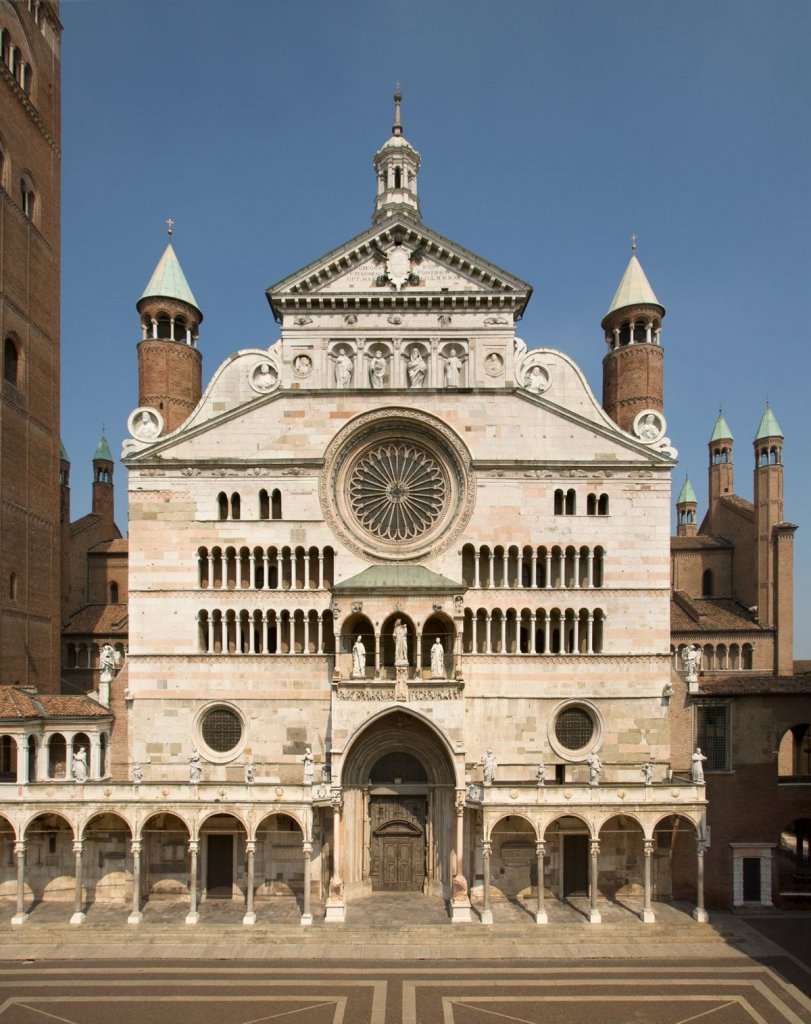 as it did in the neighboring Mantua under the Gonzagas. Cremona never had a prince: during its long and turbulent history, it fought many enemies, belonged to different parties (the Guelfs, the supporters of the Pope, and sometimes to the Ghibellines, the allies of the Holy Roman Emperor) and at different times was occupied by the Duchy of Milan, the Genovese Republic, the French and the Spanish. And for a while, it was an independent commune, led by Capitano del Popolo. One thing it never had was a substantial court. Therefore, music-making was concentrated at the Cathedral, the Duomo. We must say that the Duomo is magnificent, one of the best examples of Romanesque architecture in Northern Italy. Next to the Duomo stands the Torrazzo, the tallest pre-modern campanile (bell tower) in Italy and Cremona’s symbol. On the other side is the Baptistry. The cathedral was originally built in the 12th century in the then-current Romanesque style but was enlarged in the subsequent centuries, acquiring many Renaissance elements. It’s decorated with many wonderful sculptures, some dating back to the 12th century. The Torrazzo has 500 steps, and if you brave them, you’ll be rewarded with a wonderful view from the top.
Marc'Antonio Ingegneri was the most important composer to serve as the Maestro di Cappella at the Duomo, though we should also mention the Bishop, Nicolò Sfondrato, later Pope Gregory XIV, who was instrumental in promoting music and arts in the city. Ingegneri was born in Verona sometime around 1535 and moved to Cremona in the late 1560s. This was the time of the Counter-Reformation, and one of the conditions imposed by the Council of Trent, which produced the Counter-Reformation program, was that the words in Latin masses had to be legible. This, as we know, almost killed the polyphonic mass, which survived thanks to Palestrina’s mastery. Ingegneri worked in the style of Palestrina (some of his work was even attributed, incorrectly, to the great Roman). Here’s Ingegneri’s Salve Regina, performed by the Choir of Girton College, Cambridge, Gareth Wilson conducting.
But of course, the real fame was brought to Cremona by its luthiers: Cremona is rightfully considered the birthplace of the modern violin. The instruments made by the Amati family, Antonio Stradivari, and Giuseppe "del Gesù" Guarneri in the late 16th, 17th, and 18th centuries are still considered nonpareil. All of the Cremonese violin makers learned from each other: both Stradivari and Guarneri were pupils of Nicolò Amati, who in turn apprenticed with his father, Girolamo Amati. Girolamo’s father, Andrea Amati, born in 1505, is considered the first master to make a modern violin.
Cremona has a wonderful Museo del Violino (Violin Museum). It has a section dedicated to the history of string instruments and one on violin-making. All of it is done in good taste. But the most important part is the beautiful hall displaying rare instruments by the Amati family, Stradivari and Guarneri (there are other rooms with hundreds of instruments, some very important, for example, from the luthiers like Francesco Rugeri and Carlo Bergonzi). The museum has a small but beautiful auditorium, where several times a month the magnificent instruments from the museum’s collection are showcased by young musicians. For a small fee, anybody can come and listen. And clearly, the violin-making is still flourishing in Cremona: as you walk the streets of the city, you encounter many luthiers’ shops, some of them well-known around the world.Read more...
This Week in Classical Music: May 26, 2025. Still in Italy, traveling. Just two names that we’d like to mention: Isaac Albeniz, probably one of the most important Spanish composers since the Renaissance era, born May 29th of 1860, and Erich Wolfgang Korngold, a Jewish Austrian child prodigy, born on the same day in 1897, who had great talent and a difficult life, some of it of his own making.
Read more...
This Week in Classical Music: May 19, 2025. On the (Italian) road. The only significant anniversary this week is that of Richard Wagner, who was born on May 22nd of 1813, in Leipzig. Nothing can be further from our minds than the Teutonic music of this great composer. We’ll have a chance to get back to him in the future, as we’ve done many times in the past. Also, Alicia de Larrocha’s birthday is on May 23rd. She was born in 1923, and is one of our favorite pianists of the 20th century. Read more...
This Week in Classical Music: May 12, 2025. Monteverdi, Two Frenchmen, and Travels. Claudio Monteverdi, one of the greatest composers in classical music history, was born in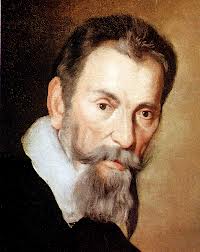 Cremona and baptized there on May 15th of 1567. He lived during a period of transition, at the end of what we call Renaissance music and the beginning of the Baroque, which he helped to forge. He was also the most important composer of the nascent art of opera. We’ve written about him many times: here, for example, is the entry celebrating his 450th anniversary. Here is Magnificat II, from the volume Vespro della Beata Vergine, published in 1610. The Magnificat was composed in Mantua, where Monteverdi served at the court of the Gonzagas. The recording (La Capella Reial, Coro Del Centro Musica Antica Di Padova, under the direction of Jordi Savall) was also made in Mantua, at the church of Santa Barbara. And speaking of Cremona and Mantua, see below.
Two Frenchmen, Jules Massenet and Gabriel Fauré, were born on the same day, May 12th, three years apart: Massenet in 1842, Fauré in 1845. Massenet is famous for two operas, Manon and Werther, though there are 28 more that he wrote. He was considered musically conservative even during his life, but, quite clearly, had a melodic talent. Fauré, on the other hand, was very much forward-looking and influenced many French composers.
Two more somewhat “round” anniversaries: the Russian composer Anatoly Lyadov was born 170 years ago, on May 12th of 1855. He was known for his indolence as much as for his talent. Expelled from Rimsky-Korsakov’s class for absenteeism, he managed to complete his studies at the St. Petersburg Conservatory two years later. His best-known compositions are tone poems Baba Yaga, Kikimora, The Enchanted Lake and some short piano pieces. The great German conductor Otto Klemperer was born 140 years ago, on May 14th of 1885.
We mentioned two cities in connection with Monteverdi, Cremona and Mantua. Classical Connect will be traveling the next two weeks or so and hopes to visit both cities. We’ll write about them upon return. Read more...
This Week in Classical Music: May 5, 2025. Double birthday, Sofronitsky. May 7th is in two days, a date that creates a yearly conundrum: the birthday of two great composers, Johannes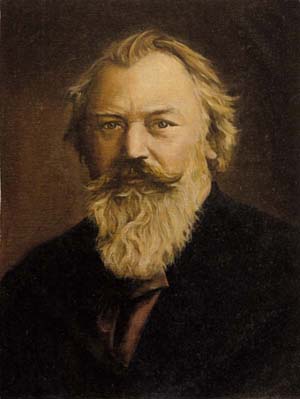 Brahms and Peter Tchaikovsky. Only seven years separate them (Brahms was born in 1833, Tchaikovsky in 1840), both had worked with the “large form”: symphonies, concertos, but musically, they are very different. Brahms worked under the influence and in the tradition of Beethoven, while Tchaikovsky attempted to create a new national musical style. In some of our posts we had tried to address their similarities (both wrote some of the best violin and piano concertos in the classical repertory, their symphonies are momentous, etc.), other times we tried to accentuate the numerous differences; we wrote about one composer and then another.
 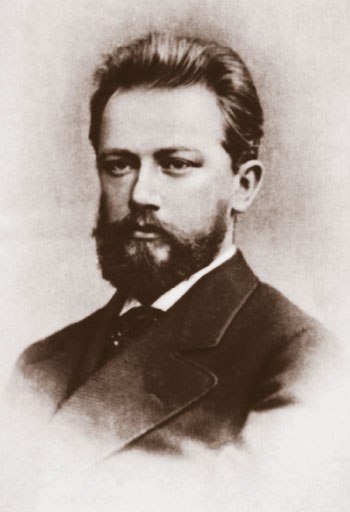 None of it worked too well. We even noted that both wrote some music quite popular with the public, that we dislike strongly (more of it, in fact, than other composers of their stature): Tchaikovsky in his ballets, Brahms in his Hungarian-themed pieces. So today we’ll abandon our efforts and turn to other musicians who have their anniversaries this week.
An important Russian pianist, Vladimir Sofronitsky, was born on May 8th of 1901, in St. Petersburg. Sofronitsky, one of the greatest interpreters of the music of Scriabin, was married to the composer’s eldest daughter (they married in 1920, five years after Scriabin’s death). The Sofronitskys temporarily moved to Warsaw in 1903, where Vladimir started his piano lessons. In 1913, the family returned to St. Petersburg, and in 1916, Vladimir entered the conservatory, where his classmates were Dmitry Shostakovich and the pianist Maria Yudina. In 1928, Sofronitsky went to Paris, where he met and befriended two recent émigré composers, Sergei Prokofiev and Nikolai Medtner. In 1930, he was invited to teach at the Leningrad (former St. Petersburg) conservatory. He was living in the city during the catastrophic WWII blockade, when more than 600,000 Leningraders died of starvation. Sofronitsky was evacuated in April of 1942 and brought to Moscow, where he lived for the rest of his life. For many years, he taught at the Moscow Conservatory. In addition to Scriabin, Sofronitsky was known for his interpretation of the music of Chopin, Schubert and Schumann. His technique was far from perfect (in that he reminds us of Alfred Cortot), but his musicianship was impeccable. Sofronitsky died in Moscow in 1961. Here’s his recording of Scriabin’s breakthrough Sonata no. 3. There is some confusion as to when this recording was made; we believe it’s a later one, a studio recording from 1961, the year of Sofronitsky’s death.
Two prominent conductors were also born this week: Jascha Horenstein, on May 6th of 1898 in Kiev, the Russian Empire, and Carlo Maria Giulini, on May 9th of 1914. Horenstein studied in Vienna and worked as an assistant to Wilhelm Furtwängler. He moved to the US in 1940. Horenstein was an early champion of the music of Gustav Mahler; he also conducted many composers of the 20th century. Giulini was born in a small coastal town of Barletta, Apulia, famous for the 5th century bronze statue, Colossus of Barletta. Giulini studied at the Conservatorio Santa Cecilia in Rome and later played the violin in the Orchestra of the Academy of Santa Cecilia, where he worked with some of the best conductors. He started conducting late, partly because during the war he was drafted into Mussolini’s army (a pacifist, he claimed not to have shot a single person). From 1944, his conducting career flourished. He started at the radio orchestras of RAI, the Italian radio corporation, then worked at the Bergamo opera, where he led performances of La Traviata with Maria Callas and Renata Tebaldi alternating the role of Violetta (what a treat that was!). He was noticed by Toscanini and Victor de Sabata, whom he replaced in 1953 as the music director of La Scala. The following five years, with Giulini at the helm, were some of the greatest in the history of the theater. He went on to conduct major orchestras in Europe and the US, including the Chicago Symphony and Vienna Philharmonic. Giulini lived to the age of 91 and died in 2005. Read more...
This Week in Classical Music: April 28, 2025. Alessandro Scarlatti. It was just a month ago that, while writing about the music of Naples, we illustrated it with a wonderful aria from one of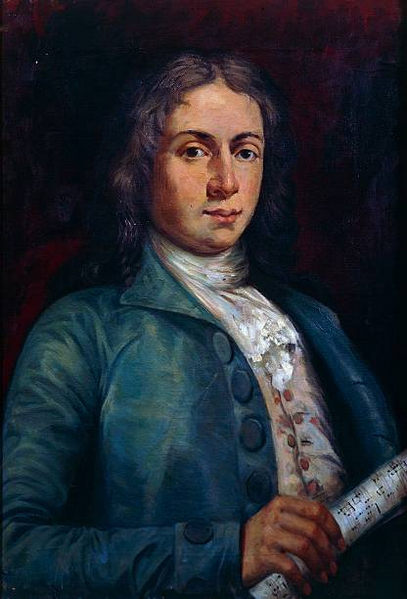 Alessandro Scarlatti’s operas, Tigrane, which premiered in that city, in Teatro San Bartolomeo, in February of 1715 (the aria, Sussurrando il venticello, or Whispering the breeze, could be found here; the soprano is Elizabeth Watts). Scarlatti was born in Palermo on May 2nd of 1660. After moving between Palermo, Rome, and Naples, Alessandro’s family settled in Rome in 1672. The obvious musical talent of the young Scarlatti attracted the attention of many important Romans; Gian Lorenzo Bernini invited him to live in his palazzo, while Bernini’s son was the godfather of Scarlatti’s first child. Cardinal Pamphili, one of the most important patrons of music in Rome, provided Scarlatti with his poetry to be set to music and introduced him to Queen Christina, another important person in the arts scene. In short order, Christina made Scarlatti her Maestro di capella. His first opera, Gli equivoci nel sembiante, was composed in 1679 and was successful not just in Rome but also in other Italian cities. By 1683, he had written six operas (here’s the aria O cessate di piagarmi from his opera Il Pompeo from 1683). Pope Innocent XI disliked opera, and because of that, new productions were staged only in the private theaters of the nobility, like Queen Christina’s, or foreign dignitaries, who could flout the Pope’s displeasure. One such patron was a Neapolitan duke of Maddaloni, who, in 1683, convinced Scarlatti to move to Naples.
Naples was then a Spanish possession. The Viceroy, Gaspar Méndez de Haro, previously served as the Spanish ambassador to Rome, where he became a devotee of Scarlatti’s music. Thus, Scarlatti was assured of the most important patronage in the city. This relationship was also the cause of great jealousy among the Neapolitan musicians, as the Viceroy made Scarlatti his Maestro di capella. Scarlatti was writing about two operas a year; first they would be staged at the royal palace and then produced in the Teatro San Bartolomeo. Almost single-handedly, Scarlatti made Naples into an opera center to rival Venice. In 1685, his first of the eventual five Neapolitan children was born: the boy was named Domenico, and he would become a composer, at least as famous as his father.
While in Naples, Scarlatti continued to maintain a relationship with many Roman patrons. In 1689, Queen Christina died, but soon a new important patron would appear, Pietro Ottoboni. Cardinal Ottoboni was the grandnephew of Pope Alexander VIII (see our entry on this illustrious patron of the arts here). Pope Alexander came from Venice, where opera was king. He removed many restrictions imposed by his predecessor, Pope Innocent XI. Pietro Ottoboni, the Cardinal, rich off the nepotism of his granduncle, lavished much of his wealth on arts and music, Scarlatti being one of his main beneficiaries. Ottoboni wrote the libretto for one of Scarlatti’s operas, La Statira (two more libretti would follow). Another cardinal, Benedetto Pamphili, wrote the libretto for one act of La santa Dimna and staged it at the theater of his own Palazzo Doria Pamphili. Some of Scarlatti’s patrons came from afar; one of them, Ferdinando de' Medici, Grand Prince of Tuscany, was himself an excellent musician. Unfortunately, all operas written by Scarlatti for Ferdinando are lost. Here, on the other hand, is an aria from the same period, S'io non t'amassi, from the 1697 opera La Caduta de' Decemviri. The countertenor Dmitry Egorov is accompanied by La Stagione Frankfurt under the direction of Michael Schneider.Read more...
This Week in Classical Music: April 21, 2025. Prokofiev and Maderna. Two influential composers were born this week, Sergei Prokofiev and Bruno Maderna. Only 29 years separate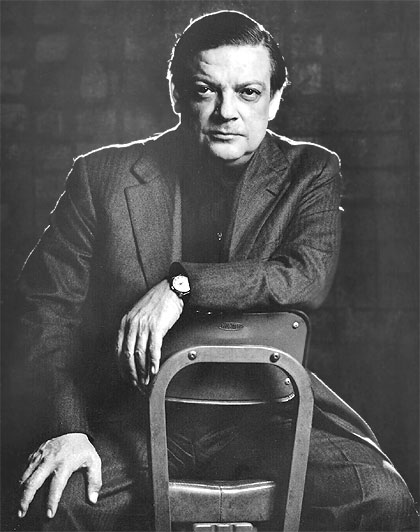 them (Prokofiev was born on April 23rd of 1891, Maderna – on April 21st of 1920), about the same age difference that separated Haydn from Mozart, but it’s difficult to think of more different composers. Prokofiev, even if hugely talented, was conservative in his writings; Maderna, on the other hand, was one of the most adventuresome modernist composers of his time. We’ve written about Prokofiev many times, for example here, here, here, and here: you wouldn’t be wrong to surmise that we like Prokofiev a lot. We haven’t missed Maderna (here), but we’d like to add a bit to our previous post. Sometime around 1946, Maderna composed a Requiem. The score was lost and then rediscovered in 2009. Requiem is Maderna’s early piece, mostly tonal in style. Here are two first parts of it titled Requiem (introduction) and Kyrie eleison (Lord have mercy). This recording is from the world premier performance made in 2013 by the Robert-Schumann-Philharmonie and the MDR-Rundfunkchor Leipzig chorus under the direction of Frank Beermann. Maderna wrote many concertos for different instruments, but it seems the oboe was his favorite: he wrote three oboe concertos. Here’s Maderna’s First Oboe Concerto, from 1962-63. The great Heinz Holliger is the soloist; Cologne Radio Symphony Orchestra is led by Gary Bertini.
Yehudi Menuhin, one of the greatest violinists of the 20th century, was also born this week, on April 22nd of 1916 in New York. And of course, we’ve written about him before (here, for example). Menuhin’s musicianship was impeccable from the earliest days of his career till the end of it. The same could not be said about his technique. We heard him live in the late 1980s, and it was too late: by then, his technique was shaky, and it overshadowed the overall impression. But when you listen to some of his older recordings, they are wonderful. Here’s one of them, the 1966 live recording of Bach’s Violin and Keyboard Sonata No. 4 in C minor BWV 1017, which Menuhin made with Glenn Gould. Idiosyncratic (no doubt that Gould had something to do with this) but absolutely worth listening to.Read more...
This Week in Classical Music: April 14, 2025. Four Pianists. It has been a long time since we’ve written about the instrumentalists: the city of Naples and composers of note have taken up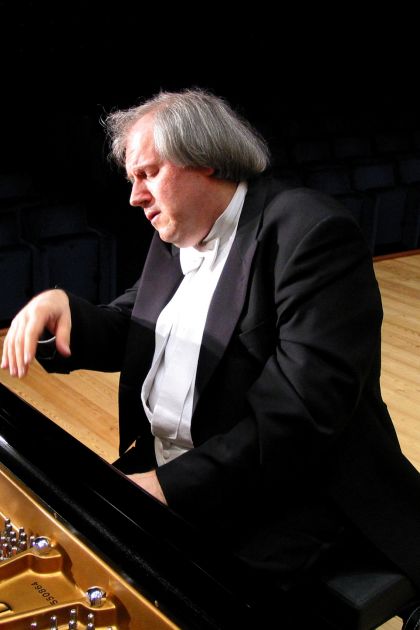 all of our time. Fortunately, this week presents us with the opportunity to address this problem, as four pianists have their birthdays this week. Two of them were born in the Soviet Union (neither still lives there), and both became famous after winning a Tchaikovsky competition. One is Grigory Sokolov, the other -- Mikhail Pletnev. Sokolov was born to a Jewish father and Russian mother on April 18th of 1950 in Leningrad, now St. Petersburg (we note the nationalities because of the persistent and official policies of antisemitism in the Soviet Union). Sokolov was 16 when, in 1966, he was awarded the first prize among pianists at the Third Tchaikovsky competition. It was quite unexpected (Misha Dichter was the public’s favorite that year), and nobody took Sokolov’s win seriously. Who could imagine then that this youngster would turn into one of the most profound pianists of his generation? For a while, Sokolov’s career didn’t go anywhere, even though he was allowed to play concerts internationally. Sometime around 1988, he left Russia (he’s a Spanish citizen and lives in Italy), and it wasn’t until the 2000s that his career really took off. Since 2006, he has performed only solo concerts; he plays mostly in continental Europe, where he’s famous. Sokolov eschews concerts in the UK and the US because of the visa requirements, which he deems Soviet-like. He rarely makes studio recordings but allows his live concerts to be recorded. Here is one of them, a live recording made in Haydnsaal of the Esterházy Palace in Eisenstadt, Austria, on August 10, 2018. Grigory Sokolov plays Schubert’s Impromptu no. 1 in F minor, from Four Impromptus, Op. 142, D. 935.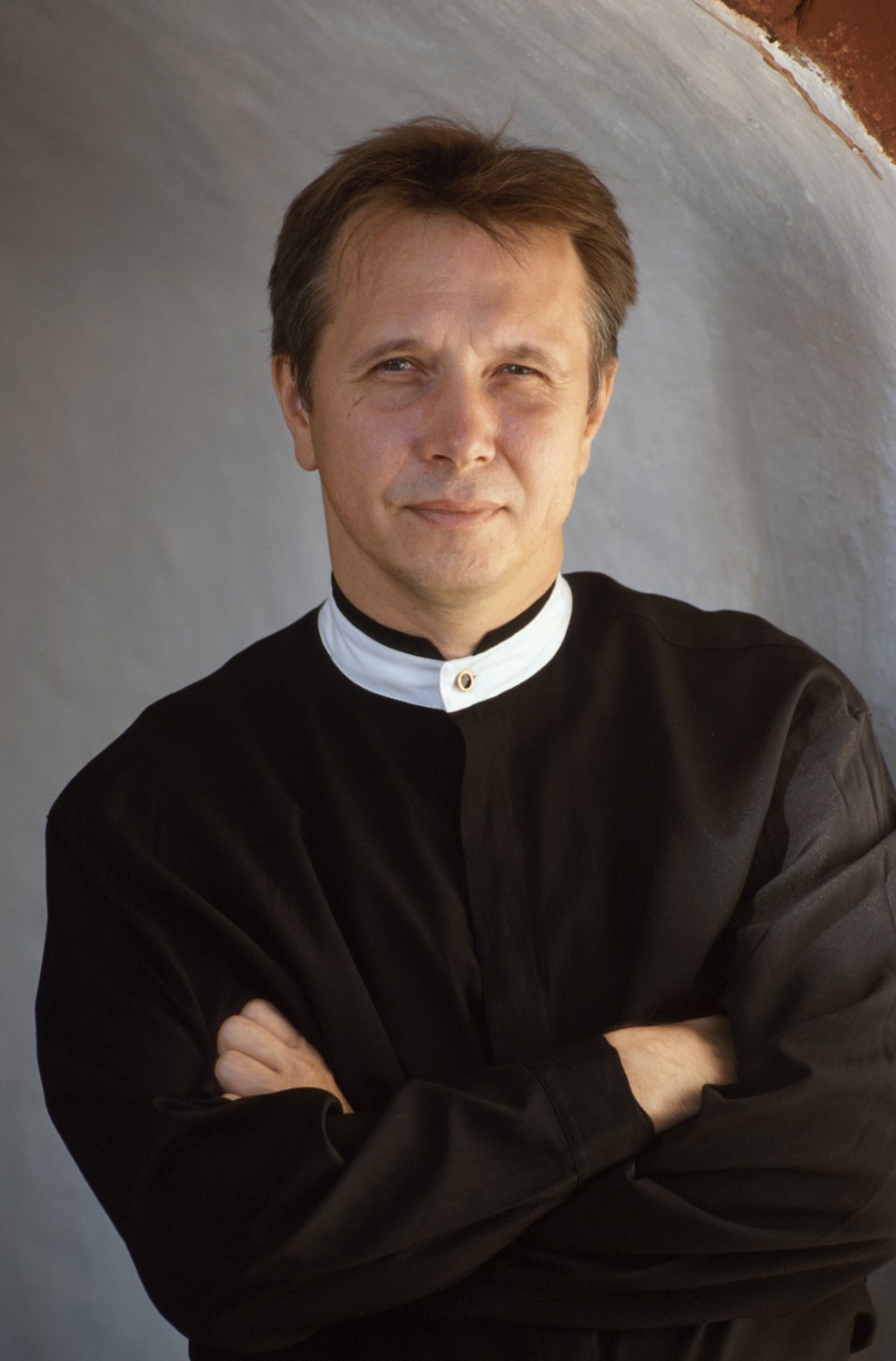
Mikhail Pletnev’s career was very different. He was born in the northern city of Arkhangelsk on April 14th of 1957. He won the Sixth Tchaikovsky Competition in 1974 when he was 21. His piano career flourished immediately after, as he went on tours of Europe and America. He played solo recitals and concerts with Claudio Abbado, Bernard Haitink, Zubin Mehta and other prominent conductors. Pletnev himself started conducting in 1980 while still studying at the Moscow Conservatory. In 1988 he met Mikhail Gorbachev, then the General Secretary of the Communist Party, in Washington, DC; two years later, Gorbachev helped him found the first non-state-owned orchestra, the Russian National Orchestra (RNO). Pletnev made it into one of the best orchestras in Russia. In 2022, after Russia invaded Ukraine, Pletnev made several anti-war comments, after which Putin’s officials pushed him out of his own orchestra. In the aftermath, Pletnev created a new ensemble, the Rachmaninoff International Orchestra; 18 musicians from the RNO joined it. Like Sokolov, Pletnev left Russia in the 1990s: he has been living in Switzerland since 1996. Here’s a recording, made live, like the one we heard from Sokolov. This one was made in Warsaw in August of 2017. Pletnev plays Rachmaninov’s Prelude in G-sharp minor op. 32, no. 12.
Two other pianists born this week are Murray Perahia, one of our all-time favorites; he was born on April 19th of 1947 and the great Artur Schnabel, born April 17th of 1882. We’ve written about Schnabel but not Perahia, which we hope to do in the future. Read more...
This Week in Classical Music: April 7, 2025. Musical Writings and Missed Dates. It happens to us often: we miss an important date, attempt to catch up, and in the process, miss other anniversaries. That’s what happened last week: as we celebrated Pierre Boulez, something we should’ve done two weeks ago, we missed several important birthdays: Franz Josef Haydn’s, Sergei Rachmaninov’s and Alessandro Stradella’s. Haydn, born on March 31st of 1732, is one of our favorite composers, but we feel that he was recently pushed to the periphery of the musical world, quite undeservedly, as we think he firmly belongs in the very center of it. We love his piano sonatas and think that some of them are at least as good as Mozart’s, if not better. He practically invented the genre of the string quartet, and his symphonies (which, to a large extent, were also his invention) are great. It seems he became a better symphonist as he got older: some of his best ones belong to the last cycle of symphonies called “London,” from number 93 to 104. Haydn finished it in 1795, when he was 63, an advanced age for the 18th century. Here is Haydn’s Symphony No. 103, Drumroll. Herbert von Karajan conducts the Vienna Philharmonic Orchestra.
Alessandro Stradella was one of the finest Italian composers of the second half of the 17th century. He also led a very turbulent and colorful life, which could’ve served as a basis for a TV series, so full it was of seductions and murders. That, and his talent, deserves a separate entry, which we promise to write. A bit of mystery surrounds his birthday. Grove Music says that Stradella was born on April 3rd of 1639 in Nepi, near Viterbo. Britannica says it was 1642,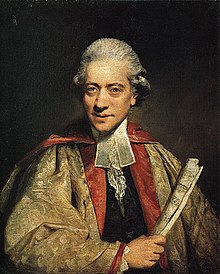 without providing any specifics. And Wikipedia believes that he was born in Bologna, on June 3rd of 1643. Both Wiki and Grove state that he was born into a noble family, but they differ in their origins. Without knowing any better, we’ll go with Grove.
Today is the birthday of Charles Burney, a minor composer and an influential writer on music, who was born in Shrewsbury, a town in the West Midlands region of England, in 1724. His father was a musician and dancer, and Charles studied music as a boy. At the age of 20, he became an apprentice to the composer Thomas Arne, now remembered mostly for his song Rule, Britannia. Arne connected Burney with Handel, in whose orchestras Burney played several times. In 1746, Burney met Fulke Greville, a rich aristocrat who made Burney his musical companion. Burney spent three years in Greville’s retinue but then left to marry one Esther Steep. They lived in London, where Burney became part of the cultural community, which included the painter Joshua Reynolds (who painted Burney’s portrait, above), Samuel Johnson, a poet and playwright famous for his Dictionary, and Edmund Burke, a statesman and politician. For many years, Burney contemplated writing a book on the history of music. While in London, Burney played the organ, taught music to fashionable people, and composed incidental music for popular plays. In 1751, after falling ill, he and his family moved to King’s Lynne, where they stayed for nine years and where Burney worked as an organist. When he returned to London, his influential friends helped him to reestablish his career in the theater (he collaborated with the great actor and producer David Garrick) and as a teacher.
In 1770, Burney traveled to France and Italy, where he met the young Mozart and, upon return, published a book, The Present State of Music in France and Italy. Then, in 1772, he went to Germany and the Netherlands and wrote a book about the music of those countries. This was the beginning of Burney's literary career, his claim to fame, which we’ll explore further next week. Read more...
This Week in Classical Music: March 31, 2025. Pierre Boulez. Last week we were preoccupied with Naples and missed a very important date: March 26th was the 100th anniversary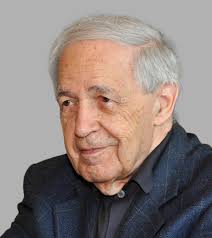 of Pierre Boulez’s birth. It is hard to overestimate Boulez’s importance in the development of moder music in the second half of the 20th century (we can only think of Karlheinz Stockhausen and maybe Bruno Maderna being on the same level). Grove Music writes: “Resolute imagination, force of will, and ruthless combativeness secured him, as a young man, a position at the head of the Parisian musical avant garde.” But it was not just the Parisian avant-garde that he conquered, it was the whole musical word that he reigned for at least 30 years, from the early 1950s to the early 1980s.
Also this year is the 70th anniversary of the premier of one of Boulez’s most important works, Le Marteau sans maître (The Hammer without a Master). It premiered in June of 1955 in Baden-Baden and the work was met with interest by the listeners and praised by the critics and fellow composers. Even Stravinsky, who wrote very little in the serail mode, was enthusiastic. The piece, despite its difficulty, was then played around the world; Boulez brought it to the US in 1957. Le Marteau sans maître epitomized Boulez’s experimentation with the serialism, which he expanded to include not just the series of pitches, but also the duration, tone color and intensity of each sound. Seventy years later, and you cannot hear this seminal composition being played live. Something happened to classical music. Seventy years is a long period, it’s the time, for example, between the completions of Beethoven’s Ninth and Mahler’s Second symphonies (1824-1894), with the whole Romantic period in between. Both composers were celebrated in 1894, while Boulez almost disappeared from the musical scene. And who are the composers of his stature working today?
Boulez was born in a small town of Montbrison, about 100 km west of Lyon. In his youth his interests were split between the piano and mathematics. Upon leaving Catholic school in 1941 he spent a year in Lyon studying higher math. In 1942 he moved to Paris. Pierre’s father wanted him to attend the Ecole Polytechnique, but instead he went to theParis Conservatory where he studied harmony with Olivier Messiaen. The Paris Conservatory was a very conservative place in those days. Even Messiaen, himself a modern composer of huge talent, didn’t teach Mahler and Bruckner. Later on, Boulez would mention in an interview that at that time in his mind “there were two twins: Mahler, Bruckner.” In the same interview he said that “German music stopped at Wagner,” so the Second Viennese School wasn’t taught at all. Boulez learned about atonal music from René Leibowitz, a student of Arnold Schoenberg. He had already felt the need to expand his music language and immediately adopted the new techniques. A year later, in 1945, the young Boulez wrote his first atonal piece of music, a set of twelve Notations for piano. He also wrote two piano sonatas, the second one, large in scale, published in 1950. His music was performed by the pianists Yvette Grimaud and Yvonne Loriod (at that time, Messiaen’s wife), but it was the circulation of the scores among musicians that brought Boulez fame among avant-garde musicians. In 1952 Loriod performed the sonata in Darmstadt to great acclaim. Thus started Boulez’s association with a group of tremendously talented and adventuresome composers and theoreticians that became known as the Darmstadt School. Darmstadt Summer Courses for New Music were held from the early 1950s to 1970. Every other year young musicians gathered in the city to present and discuss their music. Formal courses were taught both in composition and interpretation. Even the abridged list of the attendees looks very impressive: in addition to Boulez, there was Bruno Maderna, Karlheinz Stockhausen, Luigi Nono, Luciano Berio, György Ligeti, John Cage – composers who shaped the music of the second half of the 20th century. Philosophers and critics such as Theodor Adorno, presented their ideas. It was around that time that Boulez came up with his famous aphorism: “Any musician who has not felt … the necessity of the dodecaphonic language is OF NO USE.” In 1952 he wrote a seminal piece, “Le Marteau sans maître” (The hammer without a master) for voice and six instruments. Still difficult, even after half a century of music development, it could be heard here. Pierre Boulez conducts a small ensemble consisting of the flute, the guitar and several percussion instruments. Jeanne Deroubaix is the contralto. The period between 1950s and 1970s was the most productive for Boulez as a composer. In the following years he continued to write but dedicated much time to reworking some of the compositions of the earlier period.
In 1970 President Georges Pompidou, bound to create a cultural legacy, asked Boulez, who was spending most of his time outside of France, to create an institute dedicated to research in music. The result was the IRCAM (Institut de Recherche et Coordination Acoustique/Musique, or Institute for Research and Coordination Acoustic/Music). It was set in a building next to the Center Pompidou. With the addition two years later of the Ensemble InterContemporain, IRCAM became a major research and performing center for avant-garde music.
Boulez started conducting in 1957. First it was mostly his own music and that of his young colleagues, but eventually he expanded his repertoire to Stravinsky, Debussy, Webern and Messiaen. In the late 50’s he became the guest conductor of the Southwest German Radio Symphony Orchestra and took residence in Baden-Baden, to a large extent in protest to the conservativism of the French musical culture (that was before the IRCAM). A big break came in 1971 when he was, rather unexpectedly, hired by the New York Philharmonic. During the following years he conducted every major orchestra, expanding his repertoire to include most of the classics (though he never conducted either Tchaikovsky or Shostakovich). Boulez became one of the greatest interpreters of Debussy; we also love his Mahler. Here’s a tremendous interpretation of the 4th movement (Adagio. Sehr langsam und noch zurückhaltend) of Mahler’s Symphony no. 9 with the Chicago Symphony at its best.Read more...
This Week in Classical Music: March 24, 2025. Naples. Last week we promised to get back to the music-related impressions of our recent travels. We should state upfront that they were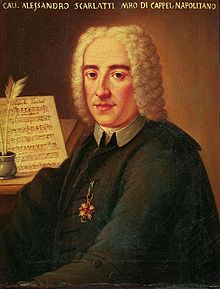 somewhat disappointing. Classical music is not being played in Italy as often as one would hope (and expect), either live in concerts or on the radio. Of all the cities we visited, the one with the richest musical tradition was Naples. Naples is a very old city, going back to the Greek settlement in the 6th century BC, but the history of classical music is much shorter, so those two intersect in the Kingdom of Naples in the 15th century when the King’s chapel had more musicians than any other court in Italy. That was also the time when Tinctoris, a famous composer and music theoretician, stayed with the court. Early in the 16th century, the Aragonese Spanish took over Naples and made it a viceroyalty. Carlo Gesualdo, Price of Venosa, stayed at the court and influenced generations of Neapolitan musicians. The talented Giovanni de Macque was one of them. The Royal Chapel and several major churches were important musical centers; then, in the mid-16th century, the first Conservatory was created. Initially, it was a shelter for orphans where music was one of the subjects taught to children. Eventually, music became the most important subject, and conservatories (soon there were four) attracted talented teachers. Alessandro Scarlatti taught there briefly, as, sometime later, did Nicola Porpora and Leonardo Vinci.
Opera played a very important part in the musical life of Naples. The genre was invented in the early 17th century in northern Italy, Venice in particular, and by midcentury Naples had regular performances of operas by Claudio Monteverdi, Francesco Cavalli and others. Till 1737, the main venue was the San Bartolomeo Theater, when the grand San Carlo Theater was inaugurated (San Bartolomeo was eventually converted into a church). The main figure in the history of the Neapolitan opera was, without a doubt, Alessandro Scarlatti, who lived in the city from 1679 to 1721 and composed more than one hundred operas, of which 70 are extant. With the construction of San Carlo, Naples turned into one of the most important opera centers in Italy, with the best companies presenting their shows. Early in the 18th century, a new style was invented in Naples, that of Opera Buffa, or comic opera. The major composers writing in this genre were Vinci, Scarlatti, and the young Giovanni Battista Pergolesi, who was born in 1710 but lived only 26 years. Pergolesi’s La Serva Padrona is regularly staged these days. Many of the operas were written on the libretti of the famous playwright Carlo Goldoni, the best of them by Baldassare Galuppi, Niccolò Piccinni, Giovanni Paisiello and Domenico Cimarosa. Later in the 19th century, Gaetano Donizetti, a Bergamasque by birth, lived in Naples for many years. He was the director of the San Carlo from 1822 to 1838 and presented 17 premiers of his works there, including Lucia di Lammermoor.
Some of the most famous castrati were born or trained in Naples and performed in the operas of Porpora and Scarlatti. Among the best-known are Farinelli, whose real name was Carlo Broschi, and Caffarelli (Gaetano Majorano). Metastasio, one of the greatest opera librettists of all time, had lived in Naples for years.
As vigorous as the musical life of Naples was from the early 17th to the late 19th century, it thinned out by the 20th, at least in its “classical” form. Nonetheless, it left a treasure trove of great music, of which we’ll present a couple of samples. Here’s the achingly beautiful aria Sussurrando il venticello from Alessandro Scarlatti’s Tigrane, which premiered in Teatro San Bartolomeo, Naples, in February of 1715. And here’s the aria Le faccio un inchino from Domenico Cimarosa’s 1792 opera Il matrimonio segreto.
Read more...This Week in Classical Music: March 17, 2025. Bach, abbreviated. Our trip is over, but we’re not ready to resume our musical journeys. Of all the places we visited, only one was musically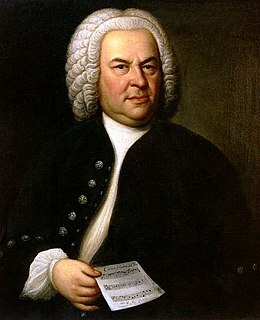 notable – Naples. Next week we’ll write about some composers who lived and worked in the city and made it famous.
All that said, there is one anniversary that is impossible to miss: Johann Sebastian Bach was born on March 21st of 1685 in Eisenach. What music are we to present to celebrate this event? Out of Bach’s vast and magnificent output, we’ll opt (almost at random) for one clavier piece and an excerpt from one of his grandest creations. The former is French Suite no. 1, performed here by Murray Perahia. The latter, the aria Erbarme dich (Have mercy), from Part 2 of the St. Matthew Passion, is here. The alto is Anne Sofie von Otter, Georg Solti conducts the Chicago Symphony Orchestra.Read more...
This Week in Classical Music: March 10, 2025. Still on the road. Georg Philipp Telemann was born on March 14th of 1681 in Magdeburg. He was the godfather of Carl Philipp Emanuel Bach, whose birthday was last week. CPE Bach’s second name, Philipp, was given in honor of Telemann, Johann Sebastian’s close friend. We hope to play some of Telemann’s music next week. And Arthur Honegger, a member of Les Six, was born on this day in 1892. He was Swiss but born in France, in Le Havre.Read more...
This Week in Classical Music: March 3, 2025. Travel. Three great composers were born this week: Antonio Vivaldi, on March 4th of 1678, in Venice; Maurice Ravel, on March 7th of 1875, in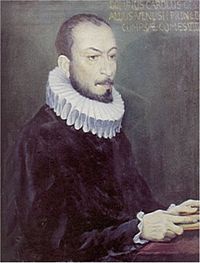 Ciboure, near Biarritz in France; and the notorious Carlo Gesualdo, on March 8th of 1566, most likely in Venosa, where Gesualdos were the princes (Venosa is located in the southern Italian region of Basilicata). To the list of the greats, some would add Carl Philipp Emanuel Bach, born on March 8th of 1714, in Weimar, where his father was the organist at the court of William Ernest, Duke of Saxe-Weimar. Unfortunately, we cannot delve into the lives and art of these composers, as we are ready to embark on a trip that will bring us close to Venosa, among other places. It seems there are no museums dedicated to Gesualdo in Venosa, the town’s most famous son. Still, there are old churches and even Jewish catacombs from around the 5th century AD: apparently, there was a Jewish community in Venosa, well integrated with the local population.Read more...
This Week in Classical Music: February 24, 2025. Chopin interpretations. Frédéric Chopin, one of the greatest composers of the 19th century, was born on March 1st of 1810. We’ll celebrate him through the works of pianists whose anniversaries fall around this date: we’ve been neglecting the interpreters for quite a while, and this is a good time to catch up. Most of these pianists are of the older generation when Chopin’s piano music was more popular and more often played than it is today. Their lives coincide with the early era of the recording industry, so the technical quality of some of the pieces we’ll hear today is not high, while the musicianship is, even if their approach may seem very different than what we hear today.
We’ll start with Benno Moiseiwitsch, born February 22nd of 1890 in Odessa (now Odesa), then in the Russian Empire and now in independent Ukraine. He started his studies in Odessa, then moved to Vienna to study with Theodor Leschetizky and eventually settled in England. Moiseiwitsch had a flourishing international career and for a while taught at the Curtis Institute of Music. Here’s Benno Moiseiwitsch performing Chopin’s Barcarolle, Op. 60. We like it a lot: the playing is elegant, the tone is singing. We don’t know the exact recording date but think it was made around 1950.
Alexander Brailowsky was also born in Ukraine, then part of Russia, and like Moiseiwitsch, he was Jewish. He was six years younger (his birthday is February 16th of 1896) and born in Kiev (now Kyiv). After studying at the Kiev Conservatory, he also went to Vienna to take lessons from Leschetizky. He then studied with Ferruccio Busoni in Switzerland and eventually settled in New York while getting French citizenship sometime later. Brailowsky was known for his interpretation of Chopin; in 1924 in Paris, he played 160 of his compositions in six concerts; then in 1938, he repeated the same program in New York (no established pianist would even consider such a programming choice these days). Here he is playing Chopin’s Nocturne Op. 9 No. 1. We believe the recording was made around 1957.
Nikita Magaloff was born in Saint Petersburg on February 21st of 1912 into a noble Georgian family. His family left Russia in 1918, following the Bolshevik Revolution. He studied at the Paris Conservatory where he befriended Ravel. Prokofiev also lived in Paris during that time and gave Magaloff composition lessons. Like Brailowsky, Magaloff was a “Chopinist”: he also performed all the piano music of Chopin in six concerts, but if Brailowsky did it twice, Magaloff did it many times. Magaloff was a noted teacher, starting in 1949 with a masterclass he picked up from his friend, the ailing Dinu Lipatti; Martha Argerich was one of his students. He married the daughter of the violinist Joseph Szigeti and often performed with the great violinist. Here’s Nikita Magaloff plays Chopin’s Nocturne Op. 9, No. 2. The recording was made in 1974.
Our last pianist is the only one not born in the Russian Empire: it’s Myra Hess. She’s also not famous for her Chopin, even though she played him a lot. Hess was born in London on February 25th of 1890. She was known for her interpretation of Bach and the Viennese classics, and even more so, for the free concerts of classical music she organized during WWII at the National Gallery. Here is her early recording of Chopin’s Nocturne in F sharp major, Op 15, No. 2. It was made in 1928.Read more...
This Week in Classical Music: February 17, 2025. Handel and Kurtág. The great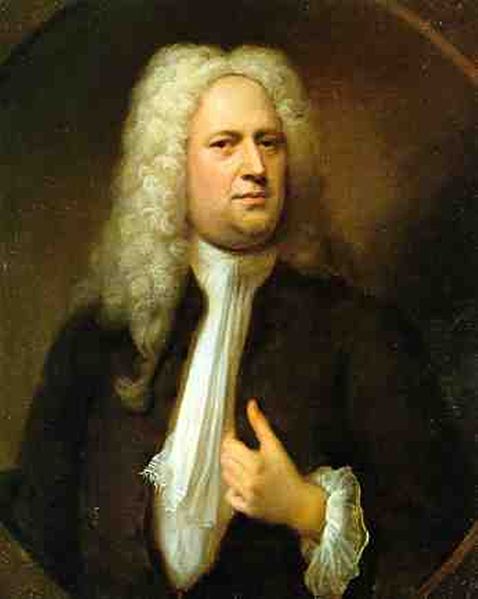 was born on February 23rd of 1685. In one year, between 1724 and 1725, while Handel was the “Master of the orchestra” at the Royal Academy of Music in London, he created three very successful operas, Rodelinda, Giulio Cesare, and Tamerlano. Each of these operas had his favorite singers in leading roles: the castrato Senesino, and the soprano Francesca Cuzzoni. The aria Dove sei, amato bene? (Where are you, my dear?), from Act I of Rodelinda was written for Senesino and is performed here by the wonderful countertenor Andreas Scholl. The supporting Accademia Bizantina is led by Ottavio Dantone.
Last week we celebrated the 98th birthday of Leontyne Price; this week it’s György Kurtág’s turn: in two days he will be 99! György Kurtág (his first name is pronounced closer to Dyerd rather than George) was born on February 19th of 1926 in Lugoj, Banat. Most of the historical Banat now belongs to Romania, but before the dissolution of Austria-Hungary in 1918, Banat was part of the Austro-Hungarian empire, and the majority of its inhabitants were Hungarian speakers. It also had a large Jewish population; Kurtág himself is half-Jewish. He spoke Hungarian at home and Romanian at school. As a child, he studied the piano on and off, first with his mother and then with professional teachers. After WWII, in 1946, the 20-year-old Kurtág moved to Budapest and continued taking piano lessons, eventually entering the Franz Liszt Music Academy. There he met György Ligeti and they became friends for life (Ligeti, who died in 2006, was also of Hungarian-Jewish descent, and also born in a part of Austria-Hungary that now lies in Romania; he rivals Kurtág as one of the most important classical composers of the second half of the 20th century). After the Hungarian Revolution of 1956, Kurtág moved to Paris. There he studied with Olivier Messiaen and Darius Milhaud. He returned to Hungary in 1959 and stayed there for the duration of the Communist regime – the only Hungarian composer of international renown to do so (Ligeti, for example, fled to Vienna right after the failed revolution and stayed in the West for the rest of his life). At that time Kurtág became influential as a teacher. Surprisingly, he didn’t teach composition but rather interpretation: pianists Zoltán Kocsis and András Schiff, and the first Takács String Quartet were among his pupils. Kurtág resumed traveling only after the fall of communism in 1989, moving first to Berlin (he was the composer in residence for the Berlin Philharmonic in the mid-90s), then Vienna, the Netherlands and Paris, where he worked with Boulez’s Ensemble Intercontemporain. In 2002, the Kurtágs settled in Bordeaux but in 2015 he and his wife returned to Budapest (Kurtág’s wife Márta, a pianist, died in 2019).
Last week, when we played Luigi Nono’s Con Luigi Dallapiccola, we marveled at how a piece of interesting music could be created by limited means, in Nono’s case, an ensemble of percussion instruments. Here is another example, a piece by Kurtág titled...quasi una fantasia... (Kurtág likes ellipses in his titles). It was written in 1988. Very different from Nono’s, it is also very economical in how Kurtág uses different instruments. The piano, for example, works more as a percussion, rather than the Romantic instrument capable of creating a wall of sound. In this recording, Bahar Dördüncü is the pianist. We don’t know the name of the ensemble.
We should mention Arcangello Corelli, who was born on this day in 1653. And Luigi Boccherini was also born this week, on February 19th of 1743.Read more...
This Week in Classical Music: February 10, 2025. Still Catching Up. We’ve missed several important anniversaries during the last month and would like to acknowledge some of them now.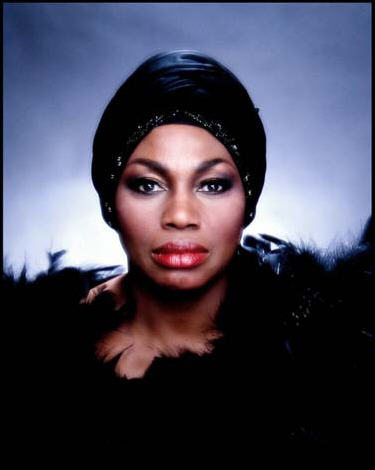 But first, today is the birthday of Leontyne Price, one of the greatest sopranos of the 20th century. She’s with us and turned 98 today!
But back to the missed anniversaries. The Italians constitute the largest group. First, two important 20th-century composers: Luigi Dallapiccola, born on February 3rd of 1904, and Luigi Nono, born January 29th of 1924. We posted two entries on Dallapiccola last year (here and here). Last year was Nono’s 100th anniversary but we failed to commemorate the event appropriately. So, here's a short outline of Nono’s life and work.
Luigi Nono was born on January 29th of 1924 in Venice..jpg "Luigi Nono") He studied at the Liceo Musicale with the noted composer Gian Francesco Malipiero. In 1946 he met Bruno Maderna, one of the first avant-garde Italian composers. Maderna was only four years older but more established; as he and Nono were working in Venice, and a small community of musicians organized themselves around them. Dallapiccola, of an older generation but a friend of both, had a significant influence on their development.
He studied at the Liceo Musicale with the noted composer Gian Francesco Malipiero. In 1946 he met Bruno Maderna, one of the first avant-garde Italian composers. Maderna was only four years older but more established; as he and Nono were working in Venice, and a small community of musicians organized themselves around them. Dallapiccola, of an older generation but a friend of both, had a significant influence on their development.
Several early works by Nono were presented at the Darmstadt Summer Courses for New Music, the most important gathering of new composers. Soon after he became an active participant and, together with Boulez and Stockhausen, one of the leaders of the new music movement. In 1955 he married Nuria Schoenberg, daughter of Arnold Schoenberg. Nono was a leftist, as were many of his fellow composers. A principled anti-fascist, he went much further to the left than many. For example, his opera Al gran sole carico d'amore, (the libretto for which he co-wrote with Yuri Lyubimov, the director of the original production and also the director of the famous Moscow Taganka theater), was loosely based on plays by Bertolt Brecht and contained excerpts of speeches by Fidel Castro, Che Guevara, Karl Marx and Lenin. Some of his music composed during the 60s was extremely political and dogmatic. For example, his Non Consumiamo Marx consists of sounds recorded during the 1968 student uprising in Paris and a voice reading the messages left on the walls during that period. A much more interesting piece was his Prometeo, tragedia dell’ascolto composed over several years in the early 1980s, the period when his work became less political. Prometeo is called “opera,” although the word should be taken in its original Italian sense, “work” – it is a composition for five singers, two speakers, a chorus, and a small orchestra, with sounds being electronically manipulated. To celebrate both Nono and Dallapiccola, here is Luigi Nono’s piece from 1979, Con Luigi Dallapiccola, performed by the ensemble Percussions de Strasbourg. It’s about 12 minutes of different sound effects created by the different percussion instruments; we think there’s more music here, however unusual it is, than in many established compositions.
And then there is another Italian, Giovanni Pierluigi da Palestrina, one of the greatest composers of the Renaissance. He was born between February 3rd of 1525 and February 2nd of 1526. We don’t play him often enough, so no matter when his actual birthday was, here is Palestrina’s late motet, Peccantem me quotidie (I sin every day). Ensemble The Sixteen is led by their founder, Harry Christophers.Read more...
This Week in Classical Music: February 3, 2025. Post-Scriabin, catching up. For the whole month of January, we were preoccupied with Scriabin and his common-law wife, Tatiana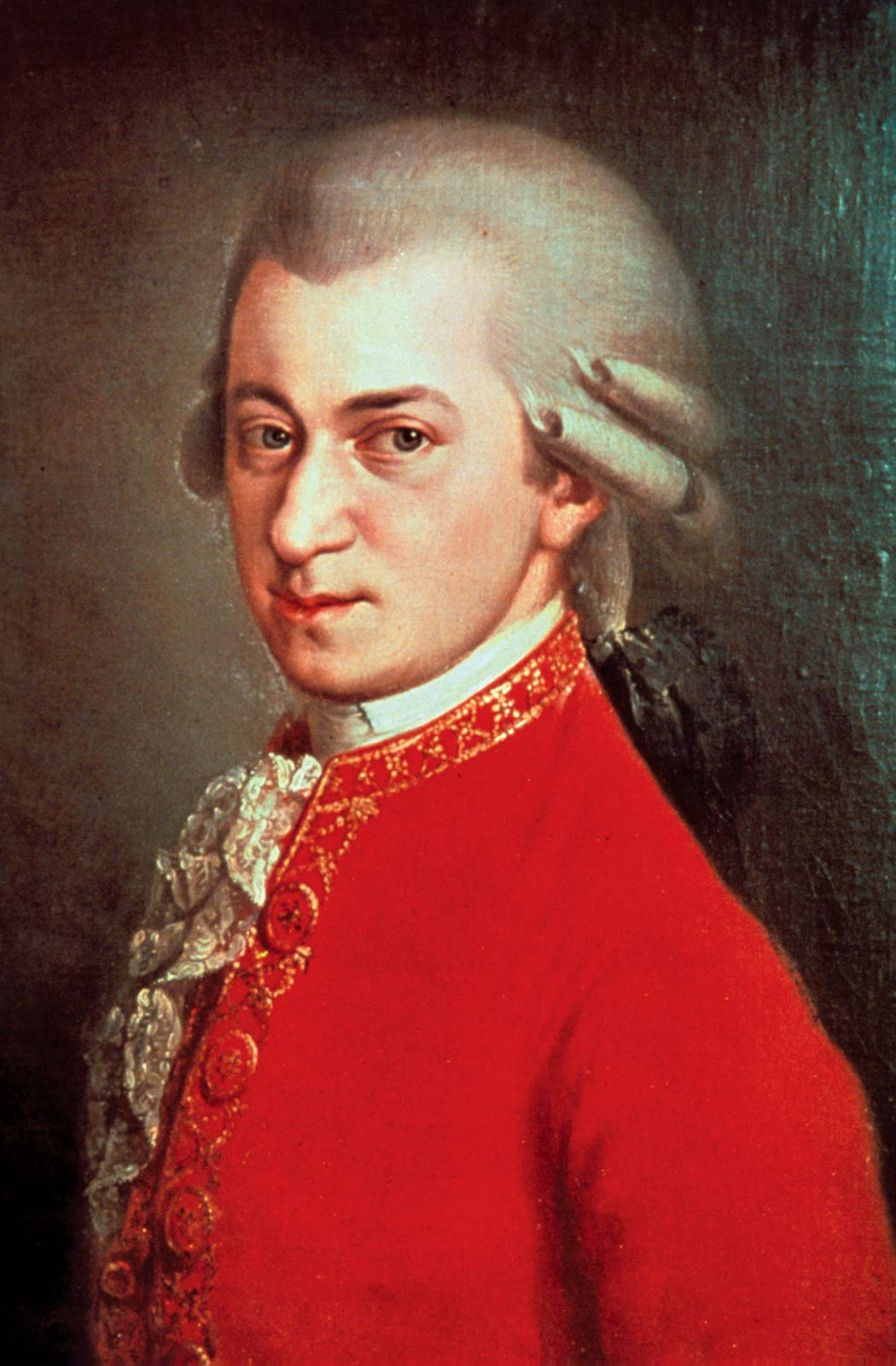 Schloezer. We concede that we may have overdone it a bit, but many aspects of Scriabin’s story are fascinating. He was a complicated, difficult person, a terrible egocentric. He was also very talented. His music, once he got away from copying Chopin, was highly original and fascinating – as much today as when it was written. He attempted to expand the experience of listening to music by combining sound with light; this may not have worked as he expected, but the experiments were intriguing (the philosophy and poetics, with which he tried to imbue his music, were much less successful). And he had tremendous support from Tatiana, whose exalted adoration sustained him for many difficult years in Russia and abroad.
Scriabin was also a part of Russian culture at a historical high point; he knew many key people and was admired by many, from the contemporary composers, Rachmaninov, Prokofiev, and even Stravinsky, grudgingly, to poets like Balmont, Mandelstam and Tsvetaeva. His life was short (he died at the age of 43 after a furuncle led to blood poisoning) and so was the life of some of his children, two of whom, from his “official” wife, died at the age of seven, while musically gifted Julian, his and Tatiana’s son, drowned at the age of 12. Their daughter Ariadna, a poet and active member of the Russian post-Revolutionary diaspora, became a Zionist, converted to Judaism, founded a French Resistance group Armée Juive during the occupation, and was killed by a French Nazi collaborator shortly before France was liberated. Tatiana Schloezer died in Moscow in 1922 at the age of 39.
So, while we attended to all these happenings, we missed two big birthdays. The first one, on January 27th, was that of Mozart. And then, on the 31st of January, was Franz Schubert’s birthday. Fortunately, we covered both of them many times and have hundreds of pieces of their music in the library. Both composers were tremendously prolific, even though both had tragically short lives (Mozart died at the age of 35, Schubert – at 31), both created numerous masterpieces. We’ll celebrate them with two vocal pieces: the trio Soave sia il vento, from the first act of Mozart’s Cosi fan tutte (here), and the song An die Music by Schubert (here). Nothing can be better than this. Read more...
This Week in Classical Music: January 27, 2025. Scriabin and Schloezer, Part IV, the last one. Last week, we ended our story of the Russian composer Alexander Scriabin and his muse, Tatiana Schloezer, in 1908, with the composer completing the Poem of Ecstasy, his most innovative (and, looking back, the most significant and popular) piece, and living in Lausanne. Their son Julian, was also born in February of the same year. And it was in Lausanne that Scriabin met Serge Koussevitzky, a bass player and conductor, who, by marrying a daughter of a rich trader acquired a considerable fortune and was ready to become Scriabin’s benefactor. Koussevitzky, who would later become a beloved conductor of the Boston Symphony, organized a publishing house and promoted Scriabin’s works (and also published the music of Rachmaninov, Prokofiev and Medtner), and concerts, where Scriabin’s music was often performed. He also paid him 5,000 rubles a year, a considerable sum. For the first time in many years, Sciabin wasn’t poor. Koussevitzky was also instrumental in bringing Scriabin back to Russia, first as a trial,
  for a series of concerts in Moscow and St-Petersburg, and two years later, in 1910, permanently. Unfortunately, the visit to Moscow resulted in a breakup between Scriabin and his longtime benefactor, Margarita Morozova. Vera Scriabina, still formally Scriabin’s wife, attended one of the rehearsals of the Poem of Ecstasy; Morozova joined her in the hall, which was noticed by Schloezer who later created a scene. Scriabin joined in and demanded that Morozova choose between Vera and Tatiana. Morozova refused, and that was the end of her relationship with Scriabin. An interesting coincidence: Scriabin benefactors’ mansions stand practically next to each other. The distance between Koussevitzky’s mansion where Scriabin stayed during his visit to Moscow, and Morozova’s mansion is less than 100 yards. Morozova’s mansion is now occupied by Putin’s retired spies: it houses the so-called Russian Institute for Strategic Studies. Koussevitzky’s mansion was given to a Russian regional administration.
The year the Scriabins moved to Russia, his tone poem Prometheus: The Poem of Fire, was finished. It was premiered by Koussevitzky in 1911 and became as scandalous as the Poem of Ecstasy. Prometheus was the first of Scriabin’s compositions to call for colored light to be part of the performance. Scriabin strongly associated sounds and colors, a fascinating aspect of his creative work which we’ll address separately.
Life in Russia was not without problems, mostly because of Scriabin’s difficult character and Tatiana Schloezer’s influence. He broke up with Koussevitzky and lost his financial support. To earn money, he composed smaller pieces, mostly for the piano: sonatas Six through Ten were written between 1912 and 1913. Still, things were looking up. In 1912 the Scriabins moved to a new, larger apartment, next to Arbat Street (it’s now Scriabin’s Museum); the apartment became a gathering place for artists and musicians, especially theosophically inclined. All three of their children attended the Gnessin Music school, just around the corner on the Sobach’ya Ploshchadka (Dog’s Square). Scriabin’s music, the Poem of Ecstasy and Prometheus in particular, was played around the world, and his fame was growing. Things changed in August of 1914, as Russia entered the Great War. Scriabin’s piano recitals became the only source of income, and the family’s ties with Europe, where they spent so many years, were broken. Scriabin started working on the Preparatory Act of the Mysterium, a hugely ambitious composition in which he intended, in addition to sound, to involve light, touch and smell (when finished, it was supposed to be performed in the foothills of the Himalayas). In early April of 1915, he noticed a pimple on his upper lip, which developed into a furuncle, and on 14th of April (27th in the new style calendar) he died of blood poisoning.
Here is Vers la flamme (Toward the flame), the last piano piece written by Scriabin in 1914. It was recorded by Vladimir Horowitz in 1972. The portrait of Tatiana Schloezer, above, was made by Nikolai Vysheslavtsev in 1921, one year before her death at 39. In most photos Schloezer doesn’t look attractive; it seems the painter managed to capture something the camera couldn’t. Read more...
This Week in Classical Music: January 20, 2025. Scriabin and Schloezer, Part III. Last week, we ended our story in 1905 with Alexander Scriabin and Tatiana Schloezer moving to Bogliasco, Italy, while Vera Scriabin, the composer’s legal wife, remained in Vésenaz, Switzerland, with the children. A tragedy struck when the eldest daughter, age seven, died later that year. The heartbroken Scriabin rushed to Vésenaz, staying there for several weeks, while Tatiana was going mad with jealousy in Bogliasco. She should not have worried, as Scriabin returned to her; and that was the last time he and Vera would meet.
Soon after, Vasily Safonov, the director of the Moscow Conservatory and a friend of the Scriabins, invited Vera to return to Moscow and join the faculty. Safonov, an influential cultural figure in Russia, was Scriabin’s teacher and mentor; they fell apart over Scriabin’s affair with Schloezer, Safonov taking Vera’s side. Vera followed Safonov’s advice, bringing the three children with her (one of them, Lev, would die in 1910, also at the age of seven). An accomplished pianist, Vera continued to perform, playing, almost exclusively and by all accounts very well, her husband's music.
In the meantime, Scriabin and Tatiana were living in Bogliasco; Tatiana was pregnant with their first child while Scriabin was working, feverishly, on the Poem of Extasy (Scriabin’s original title was more shocking, Poéme Orgiaque). Penniless but in good spirits, they often shared one dinner between them. Some financial help came when Scriabin received an invitation to tour the US. Safonov was then the music director of the New York Philharmonic, and the relationship between him and Scriabin had improved. Scriabin arrived in New York in December of 1906. In the following months, his music was featured in several concerts, with Scriabin soloing his own Piano Concerto and the Philharmonic performing his First and Third Symphonies. Some pieces were performed by the Russian Symphony Orchestra of New York, founded in 1903 by Scriabin’s friend Modest Altschuler.
Scriabin’s problems in the US started when Tatiana arrived incognito in New York, though he pleaded with her not to come. For some time, they lived in separate hotels, but that became expensive, and she moved in with him. The United States back then was a rather puritanical country: just several months earlier another famous Russian, the writer Maxim Gorky, was kicked out of the same hotel when it became known that his travel companion, the actress Maria Andreeva, was his mistress, not the wife. Once Tatiana started appearing with Scriabin in public, rumors spread (most likely initiated by the local Russians) that Scriabin was married to another woman. One March 1907 night, Altschuler came running to their room with the news that in the morning a crowd of reporters was expected at their hotel. The scandal was imminent as they intended to seek information about Scriabin’s marital status. The couple fled that very night, borrowing the money for the fare to Europe from Altschuler.
Soon after arriving in Italy, Scriabin and Tatiana moved to Paris, where he worked on finishing The Poem of Ecstasy, and then to Lausanne. The Poem was premiered by Altschuler in New York in 1908; in Europe, it received the Glinka Prize, a prestigious award instituted by Mitrofan Belyaev, an industrialist and patron of arts, and named after the famous Russian composer.
Here is The Poem of Ecstasy, performed by the Chicago Symphony Orchestra under the direction of Pierre Boulez. Read more...
This Week in Classical Music: January 13, 2025. v. Last week, we ended our story in 1902, with Tatiana Schloezer coming to Moscow to meet Scriabin, who was married, by then rather unhappily, to Vera Isakovich, and with whom he already had four children. Scriabin was taken by Tatiana, who seemed to understand his music in an exalted, spiritual way, as opposed to Vera, who, in Scriabin’s opinion, didn’t appreciate his talent enough. Tatiana started taking piano lessons at Scriabin’s house, much to Vera’s displeasure. The Schloezer siblings, Boris and Tatiana, spent much time with the Scriabins, Alexander playing his music while Tatiana praised it extravagantly and rapturously, often standing on her knees.
Scriabin, who had just finished his Second Symphony, was working on the Third, “The Divine Poem,” the most important (and eventually successful) piece to date. In 1904, with the family situation in trouble, Scriabin suffered another blow: his good friend, benefactor and publisher, Mitrofan Belyaev, died, which drastically changed Scriabin’s financial situation. With few prospects in Russia, the ambitious Scriabin, who always wanted to “conquer Europe,” left for Geneva, alone, without the family. A month later, he asked Vera to join him. With very little money, living in the expensive Geneva was impossible, so they moved to the much cheaper Vésenaz, a village close by. In the meantime, Scriabin continued writing to Schloezer, eventually asking her to come to Switzerland, which she did without delay, settling in Geneva.
The relationship between Tatiana and Scriabin was an open secret in Russia, and very soon the rumors reached poor Vera. Scriabin was ready for a divorce, but to Vera the idea was abhorrent. With everything in the open, however uncomfortable and embarrassing the situation was, Tatiana used it to resume her musical lessons with Scriabin, coming to the house and staying there for hours, to Vera’s chagrin. That didn’t last long: Tatiana, who also had little money, had to move to Brussels and stay with her relatives. With the whole family situation in tatters, Scriabin went to Paris to oversee the premiere of his Third Symphony, which was to be led by Arthur Nikisch, then the principal conductor of the Berlin Philharmonic. Occasionally he’d visit Tatiana in Brussels.
The long-awaited premiere took place on May 29th of 1905; it was successful, but not without scandals, musical and social. Tatiana, on Scriabin’s invitation, came from Brussels, while Vera, unbeknown to the composer, traveled from Switzerland and announced herself after the concert, infuriating Tatiana and compromising Scriabin, who was called, by a local wit, a bigamist. The critics were divided: some thought the symphony was the new word in contemporary music, others, like Rimsky-Korsakov, hated it. Financially, however, the symphony brought very little money.
Tatiana moved to Paris with Scriabin while he embarked on a new project, a symphony that would become the “Poem of Extasy.” Absorbed in composing, he wasn’t earning any money. Tatiana was pregnant with their first child. His benefactors couldn’t help much, so the couple decided to move to Italy where life was cheaper. In June of 1905, they settled in Bogliasco, next to Genoa. One month later, Alexander and Vera’s elder daughter Rimma died in Vésenaz at the age of seven, and Vera, with three children, returned to Moscow.
We’ll finish the Scriabin-Schloezer story next week. The Third Symphony (“The Divine Poem”) runs for about 45 minutes. It’s in three movements. You can listen to the first movement, Luttes ("Struggles"), here, the second, Voluptés ("Delights"), here, and the third, Jeu divin ("Divine Play"), here. Or you could listen to the whole thing here. Michail Pletnev conducts the Russian National Orchestra.Read more...
This Week in Classical Music: January 6, 2025. Scriabin. We’re not sure if we completely share the enthusiasm of Grove Music, which writes that Alexander Scriabin was “[o]ne of the most extraordinary figures musical culture has ever witnessed, Skryabin has remained for a century a figure of cultish idolatry, reactionary yet modernist disapproval, analytical fascination and, finally, aesthetic re-evaluation and renewal.” It is clear, though, that Scriabin was very influential, and both his music and his persona evoked passionate reactions; moreover, the cultural life of Russia during his adult life, from the last decade of the 19th century through 1915, was at its peak, which amplifies Scriabin’s significance.
Alexander Scriabin (sometimes transliterated as Skryabin) was born in Moscow on January 6th of 1872 (December 25th of 1871, Old Style). Scriabin had a turbulent and complicated life, with ups and downs, both artistic and personal. There's no way we could describe it in any detail in the allotted space, so instead we'll try to untangle his complicated relationship with the Schloezer family and with his wives, relationships that so often intersected.
The Schloezers were of either German or, as some of Scriabin's friends presumed, Jewish descent. Two brothers, Teodor (Fyodor) and Paul (Pavel) settled in Russia, the former in the provincial city of Vitebsk, the latter in Moscow. Teodor became a successful lawyer, while Paul, a pianist, became, sometime around 1892, a professor at the Moscow Conservatory. With his French wife, Teodor had two children, Boris and Tatiana. We don’t know anything about Paul’s children, but what we do know is that among his pupils were Leonid Sabaneyev, who would become an important music critic and Scriabin’s good friend, Elena Gnessin, a founder of several music schools, and one Vera Isakovich, Scriabin’s future wife. Vera, an accomplished pianist, was one of Professor Schloezer’s favorite students and for a while even lived in his house. In 1892, Scriabin graduated from the Moscow Conservatory with a Little Gold Medal, as opposed to his rival Rachmaninov’s Great Gold Medal, mostly because of Alexander’s disagreements with Anton Arensky, a composer and Conservatory professor.
In his youth Scriabin had many affairs, some pretty scandalous; he met Vera Isakovich through Paul Schloezer in 1897. By then Scriabin was a struggling composer and a successful pianist. Vera and Alexander married, against the wishes of his family, in April of that year; he was 25 years old, she was 22.
In the meantime, Tatiana Schloezer, who was 11 years younger than Scriabin (she was born in 1883), grew up in Vitebsk, learned to play the piano, and fell in love with Scriabin’s music -- so much so that she would play only his compositions and nothing else. Sabaneyev also remembers seeing her at the Moscow house of Paul Schloezer while Vera was living there. In the meantime, Vera and Alexander’s marriage was having difficulties, mostly, in Alexander’s mind, on account of Vera not appreciating his music – and his genius – deeply enough. In 1902, Boris Schloezer and his sister Tatiana were staying in a hotel in Moscow (Tatiana, then 19, came with the specific goal of meeting Scriabin). Boris invited Alexander, who played his new compositions late into the night; Tatiana announced that she wanted to be his pupil. Later into the night, they moved to Scriabin’s house where Alexander continued to play; he was taken by Tatiana's deep understanding of his music. Sometime later Scriabin wrote a letter to Paul Schloezer praising his children and how happy he was to have met them.
We’ll stop here, even though we understand where this is leading. We’ll finish this story, just a small part of Scriabin’s biography, next week. In the meantime, some of Scriabin’s music from around that time. Soon after their marriage, Alexander and Vera moved to Paris, where he started working on his Third Piano Sonata. Here it is, in the 1988 performance of Grigory Sokolov. Read more...
This Week in Classical Music: December 30, 2024. New Year. New Year’s Day is Wednesday of this week, and we wish all our listeners a very happy New Year. We often celebrate the end of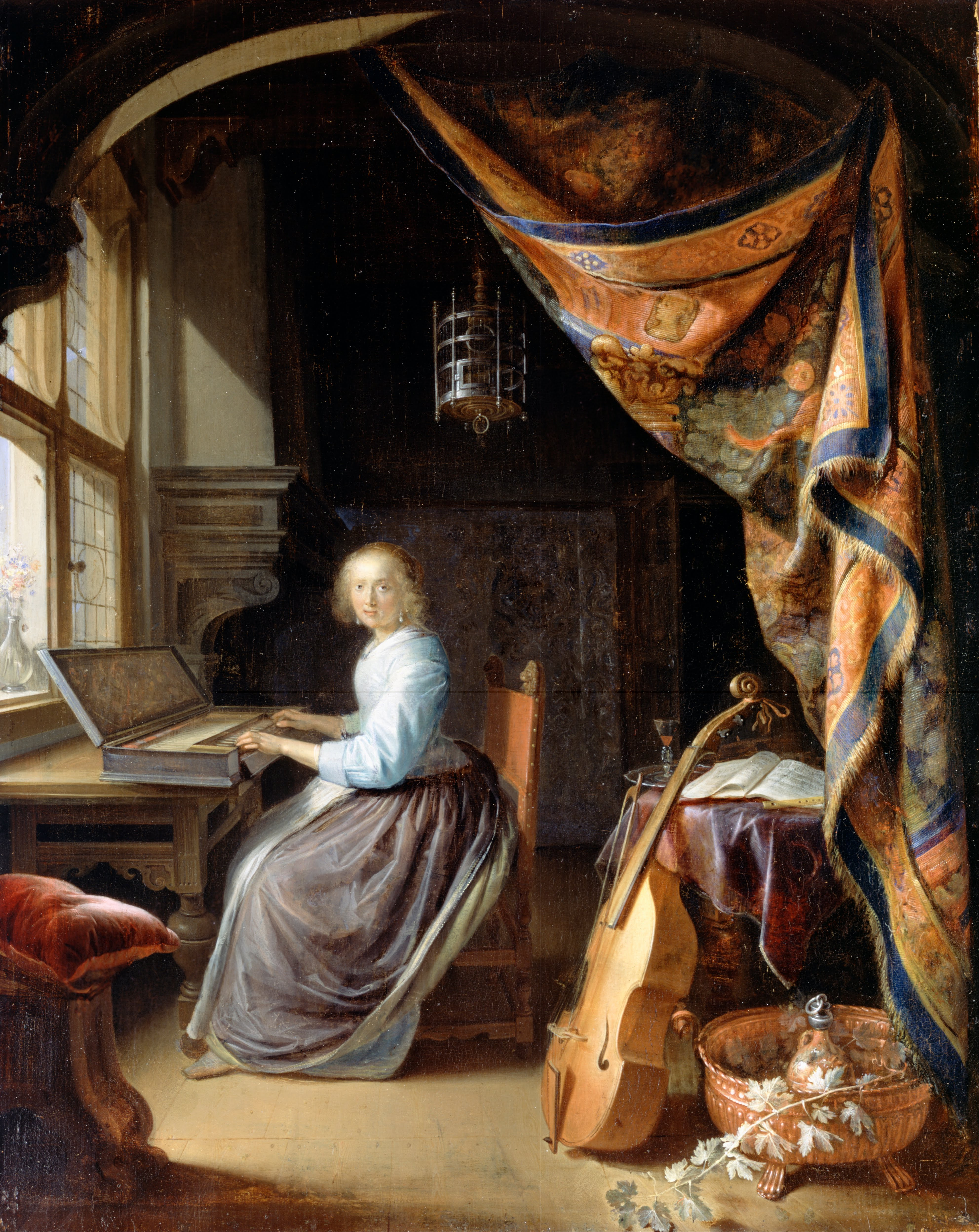 the year with the music of the great composers of the High Renaissance, as we’ll do this year. This time we present the music of four: Palestrina, Orlando di Lasso, Tomás Luis de Victoria, and Giovanni Gabrieli, all born within less than 30 years of each other. All four worked in Italy but only two were Italian, one of them the great Giovanni Pierluigi da Palestrina, born in 1525. We’ll hear a Magnificat by Palestrina, who wrote 35 versions of this hymn. Magnificat is the Virgin Mary’s praise of her Son, it forms part of the Vespers service. Here’s Palestrina’s Magnificat quinti toni (for five voices), published in 1591. The British Enselmble The Sixteen is conducted by its founder, Harry Christophers.
Orlando di Lasso (his name is often spelled Orlando Lassus) was born in the Flemish town of Mons in 1530 or 1532. Ferrante Gonzaga, of the Mantuan Gonzaga family, hired Orlando, then aged 12, while visiting the Low Countries. He brought him to Mantua in 1545. For the following 10 years, Orlando stayed in Italy, first in Sicily and Naples, then in Rome. Even though the rest of his life was spent at the Bavarian court in Munich, Orlando visited Italy several times. Here’s his motet Da Pacem Domine, performed by the German Alsfeld Vocal Ensemble, Wolfgang Helbich conducting.
The Spaniard Tomás Luis de Victoria was born in Avila in 1548. When he was 15, he was sent to Rome’s Jesuit Collegio Germanico; later, already an established composer, he would teach there. Victoria stayed in Rome till 1583 and then returned to Spain and spent the rest of his life in the service of Dowager Empress María, the wife of Charles V. In 1605 he composed Officium Defunctorum, a setting which includes a Requiem Mass, Missa pro defunctis, one of the greatest achievements of Renaissance music. Here is Versa est in luctum from the setting. David Hill leads the Westminster Cathedral Choir.
Giovanni Gabrieli, a nephew of another great composer, Andrea Gabrieli, was born in Venice in 1554. He worked at the tail end of the Renaissance when some, often minor, composers experimented with what would become the Baroque. Like his uncle, Giovanni was a student of Orlando di Lasso: he went to Munich and stayed at Duke Albrecht V's court for several years while Orlando was in charge of music-making there. In 1585 Giovanni returned to Venice and became the principal organist at the San Marco Basilica; a year later was appointed the principal composer at the church, the musical center of Venice. The unique acoustics of San Marco were used by many Venetian composers, and Gabrieli in his motet Hodie Christus Natus Est for eight voices created wonderful effects, using two choirs positioned on the opposite sides of the nave. And San Marco is where this particular recording was made. E. Power Biggs is the organist, and the Edward Tarr Brass Ensemble is conducted by Vittorio Negri.Read more...
This Week in Classical Music: December 23, 2024. Christmas. While this is not the time to read boring entries about composers and performers, it’s definitely worth listening to some good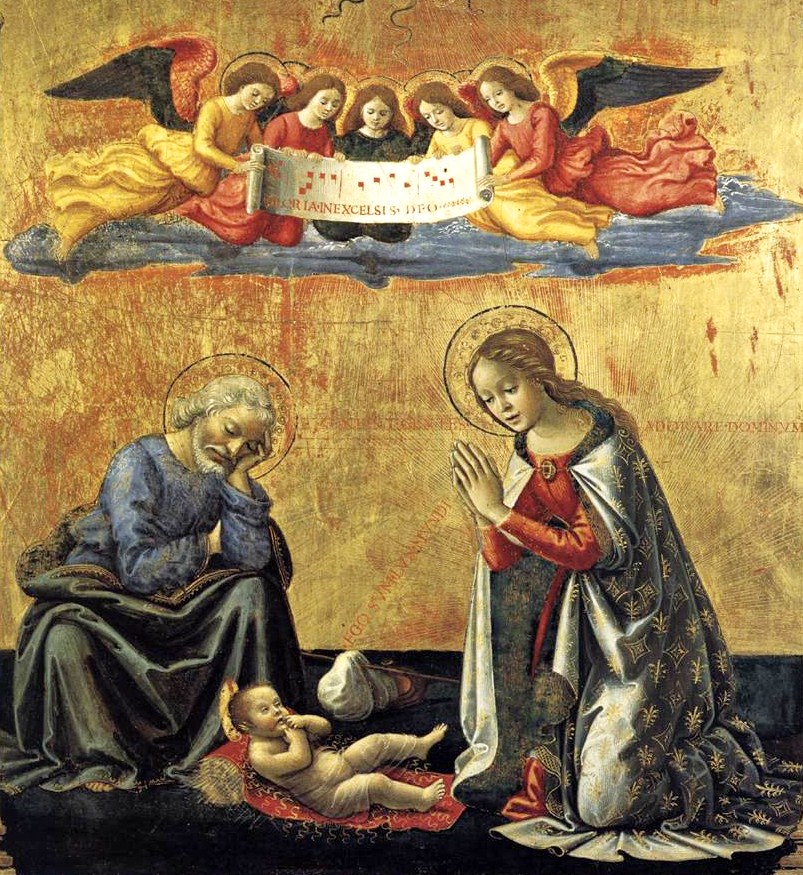 music of the season (and we don’t mean the tiresome Christmas carols). Georg Philipp Telemann wrote some very good music. His output was enormous, and naturally, some compositions were better than others. He wrote around 1,700 cantatas (yes, this is not a misprint), of which 1,400 are extant; among those are several Christmas cantatas. He also wrote many oratorios of different sorts: Passion oratorios (starting in 1722 he wrote a St Matthew Passion oratorio every four years – Bach, as we know, wrote just one, but of a different caliber), other sacred oratorios and secular ones as well. Inevitably, there was music for Christmas, for example, the oratorio Die Hirten an der Krippe zu Bethlehem (“The Shepherds at the Crib in Bethlehem”), which Telemann composed in 1759. By then, his friend Johann Sebastian Bach had been dead for nine years, the Classical style was in vogue and contemporary critics considered Telemann’s (as well as Bach’s) music outdated. But as we listen to it today, it becomes apparent that this oratorio is a wonderful piece, and, while not as grand as Bach’s Christmas Oratorio, it is colorful, inventive and charming on a smaller scale. You can listen to it here. Ludger Rémy conducts the Telemann-Kammerorchester (Telemann Chamber Orchestra), Kammerchor Michaelstein and the soloists. The recording was made in the Michaelstein Abbey (Kloster Michaelstein in German) in 1996. The abbey was founded in the 10th century and now houses a music institute.Read more...
This Week in Classical Music: December 16, 2024. Beethoven and more. Today is the birthday of Ludwig van Beethoven, and it’s a relief to celebrate it this year: gone, or mostly gone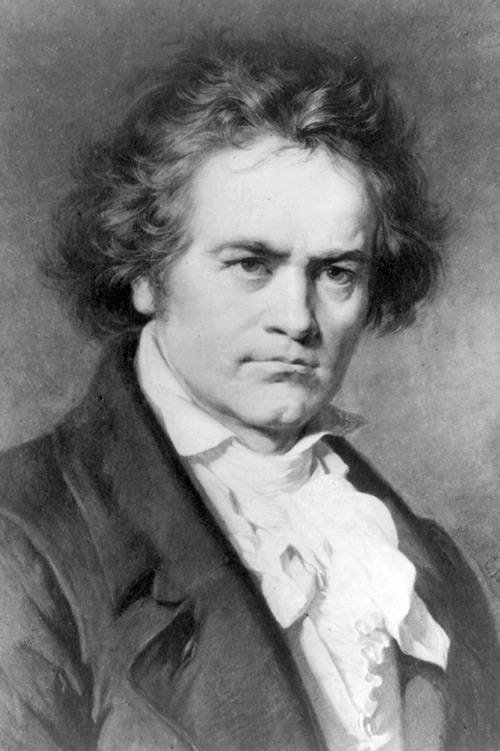 is the insanity of 2020 when the gender and the color of a composer became the determinant of his (and especially her) value. In 2020 Beethoven became one of the white, male and mostly dead bunch, and for that, wasn’t considered to be worth much. We still remember the infamous “musicology” article titled “Beethoven was an above-average composer: let’s leave it that.” Fortunately, in 2020 Beethoven is back to being one of the greatest, occupying an enormous space in the musical culture of Europe and the world. One of his most profound compositions was the piano sonata no. 29, op. 106 nicknamed “Hammerklavier,” one of the greatest piano sonatas ever written. It was composed from the fall of 1817 through the first half of 1818, after a period when Beethoven’s output was unusually slim. Hammerklavier is unusually long, running about 40 to 45 minutes (the slow third movement alone takes from 15 to 25 minutes, depending on the performer – about 20 minutes in the version we’re about to hear), and was by far the longest piano piece written up to that time. Despite its length, it is intense from the beginning to the end, full of amazing musical ideas, and is never dull. As this sonata is one of the most important pieces in the piano repertoire, practically all great (and many not-so-great) pianists tackled it during their careers. Thus, we are left with many remarkable performances of which it’s impossible to select the “best” one (or even ten). Here is the great Soviet pianist Emil Gilels, in a 1983 recording (his contemporary and competitor Sviatoslav Richter’s interpretation is also excellent). And let’s make one thing clear: Florence Price, for all her obvious gifts, didn’t come even remotely close to creating something as profound and significant, all accolades from the woke musicologists and media aside.
We’ve been recently reminded by one of the listeners that we’ve never written about Rodion Shchedrin. What can we say? We admit to being prejudiced, and that’s the reason why we’ve never posted an entry about Shchedrin. His rendition of Bizet’s Carmen, which he created for his wife, the ballerina assoluta Maya Plisetskaya, is very good, though we still think that his main life achievement was to be married to her for 57 years (Plisetskaya was seven years his older). Shchedrin was born on this day 91 years ago in Moscow. He studied the piano and composition at the Moscow Conservatory. In 1973 he succeeded Shostakovich as the chairman of the Composers’ Union of the Russian Federation. He composed in many genres, from the opera (he wrote seven of them) to ballet music, symphonies, concertos for orchestra and individual instruments, vocal music and piano works. Much of it has been recorded and you can hear it on YouTube and streaming services.
Rosalyn Tureck, a great interpreter of the music of Back, was born 110 years ago, on December 14th of 1914 in Chicago. Ida Haendel, the wonderful violinist, was born on December 15th of 1928 in Chelm, Poland. She won the Warsaw Conservatory gold medal and the first Huberman Prize for playing Beethoven’s Violin Concerto at the age of five (yes, it’s not a typo; at nine she played the same concerto in London on her tour of the country). And Fritz Reiner, one of the greatest conductors of the 20th century, was born in Budapest on December 19th of 1888. He, and later another Hungarian Jewish conductor, Georg Solti, made the Chicago Symphony into one of the best orchestras in the world, something the orchestra board seems intent on dismantling.Read more...
This Week in Classical Music: December 9, 2024. Three Francophone composers. One Belgian, Cesar Franck, and two French composers, Hector Berlioz, and Olivier Messiaen, were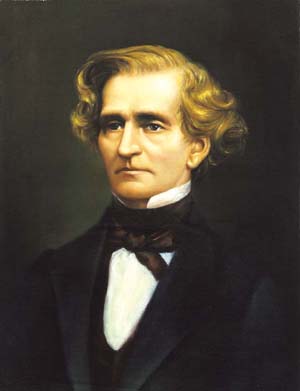 born this week. Berlioz, by far the greatest French composer of the mid-19th century, was born on December 11th of 1803 in the small town of La Côte-Saint-André in southeastern France. It seems strange, but France, artistically splendid, was not well represented in classical music in the first half of the 19th century; not, for example, as were the German-speaking countries. The 18th century was the time of Lully, Charpentier, Couperin and Rameau, the second half of the 19th century was also brimming with talent: from Gounod, Saint-Saëns and Bizet to Massenet and Fauré and then to Debussy and Ravel, well into the 20th century. Between those two groups, though, Berlioz was practically alone. He was unique, idiosyncratic, didn’t follow anybody, and didn’t leave a musical school after himself. All the same, he was a composer of genius. His Symphonie fantastique, composed in 1830, stands out in the originality of structure and musical ideas; the enormous opera, Les Troyens, is rarely performed but is exceptional in its richness. Harold en Italie, formally a symphony with the viola obbligato, is one of the best viola concertos ever composed. And of course, there are more: symphonic pieces, operas, choral works, like the Damnation of Faust, and songs. The Damnation of Faust runs for more than two hours, but here is a snippet: the first scene in which Faust contemplates nature. Kenneth Riegel is the tenor, Sir Georg Solti conducts the Chicago Symphony Orchestra in this 1982 recording.
As much as Berlioz was the greatest French composer of the middle of the 19th century, Olivier Messiaen was, in our opinion, the greatest French composer of the middle of the 20th. Messiaen was born in Avignon on December 10th of 1908. He was admitted to the Paris Conservatory at eleven; among his teachers were Pail Dukas and Charles-Marie Widor, composer and organist. Messiaen loved this instrument. In 1931 he was appointed the organist of Église de la Sainte-Trinité, a church not far from Gare Saint-Lazare, and held this position for the rest of his life. In 1940, at the outbreak of World War II, Messiaen was drafted into the French army as a medical auxiliary (he had poor eyesight). He was captured by the Germans soon after, at Verdun, the site of the terrible battles of the previous world war, and sent to a camp. There he met a violinist, a cellist and a clarinetist. He wrote a trio for them, and eventually incorporated it into the Quartet for the End of Time, creating a part for himself on the piano. It was first performed in January 1941 in the camp for an audience of prisoners and prison guards. We’ll hear two movements from the Quartet: Movement I, Liturgie de cristal (here), and Movement II, Vocalise, pour l'Ange qui annonce la fin du temps (here). It’s performed by a quartet anchored by Daniel Barenboim on the piano.
As for Franck, we love his violin sonata. Read more...
This Week in Classical Music: December 2, 2024. Barbirolli and more. We’ll start with a notable anniversary: the British conductor, Sir John Barbirolli was born on December 2nd of 1899, 125 years ago. Born in London, Barbirolli was of Italian-French descent. He started as a cellist, playing in small orchestras. During the Great War, he served for two years. Barbirolli started conducting, mostly in opera, in 1927. He also conducted several provincial orchestras, including the Hallé, later his favorite, which he built into a world-class ensemble. In 1936 he was invited to guest-conduct the New York Philharmonic; after one successful season, he was appointed the permanent conductor, in succession to Toscanini. His contract was renewed till 1942. That year, in the middle of WWII, he crossed the Atlantic several times to conduct several London orchestras as a gesture of support for Britain; these were dangerous undertakings considering the number of ships sunk by the German U-boats. In 1943 he returned to England to take charge of the Hallé orchestra in Manchester and stayed at the helm till 1967.
Barbirolli was fond of English music, especially Elgar, Delius and Vaughan Williams (one of his most famous recordings is that of Elgar’s Cello Concerto with Jacqueline du Pré). Later he started conducting Mahler and Bruckner and was quite successful. Here’s the first movement of Bruckner’s Symphony no. 9. Sir John Barbirolli conducts the combined forces of the Hallé Orchestra and the BBC Northern Symphony Orchestra in a live recording from December 14, 1961. And for more enjoyment, here are the second and third movements.
December 2nd is also Maria Callas’s anniversary: she was born on that day in New York in 1923. Last year we celebrated La Divina’s 100th birthday, here.
Several composers have their anniversaries this week. Probably the most famous of them is Jean Sibelius, born on January 8th of 1865. Finland’s national hero, Sibelius was a highly original composer working within traditional musical idiom. He wrote seven symphonies, some more interesting than others, a violin concerto, one of the best ever, and many other pieces. We admit that Sibelius is not one of our favorites, which is probably the reason we never dedicated a full entry to him. Maybe next year.
Several more well-known names: Padre Antonio Soler, a Spanish (Catalan) composer, born on December 3rd of 1729, known for his short, one-movement clavier sonatas; Francesco Geminiani, an Italian composer and violinist, famous in his time and much less so in ours, born in Lucca on December 5th of 1687; Pietro Mascagni, another Italian, who wrote one masterpiece, the opera Cavalleria rusticana but not much else of real value, he was born in Livorno on December 7th of 1863; and Henryk Gorecki whose “sacred minimalist” pieces remain very popular with audiences worldwide. He was born on December 6th of 1933.
Finally, we’d like to mention Ernst Toch, one of the many Jewish composers from Germany and Austria, whose lives and careers were shattered by the Nazis. Toch was born in Leopoldstadt, a Jewish district of Vienna, on December 7th of 1887. You can read about him here and here. Read more...
This Week in Classical Music: November 25, 2024. A Busy Week. This week is full of interesting anniversaries, but unfortunately, we’re distracted by other things to give the composers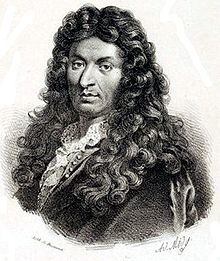 and musicians born this week the attention they deserve. Therefore, we’ll limit ourselves to a simple list. Jean-Baptiste Lully, an Italian who became the most important composer of the early French Baroque, was born in Florence on November 28th of 1632. He was a favorite of Louis XIV, the Sun King, and Molière’s friend.
Anton Stamitz, a son of Johann Stamitz and a brother of Carl Stamitz, all prominent composers, was born in Německý Brod, Bohemia, on November 27th of 1750. The family lived in Mannheim, where the father was instrumental in making the court orchestra into one of the best ensembles in Europe. Anton played in this orchestra (he was a virtuoso violinist). Here is his Concerto for Two Flutes & Orchestra in G major; Shigenori Kudo and Jean-Pierre Rampal are the flutes; Josef Schneider conducts the Salzburg Mozarteum Orchestra.
The great Italian master of the bel canto opera, Gaetano Donizetti was born in Bergamo on November 29th of 1797. He wrote about 70 operas; among his best are Anna Bolena, L'elisir d'amore, Maria Stuarda and Lucia di Lammermoor. Maria Callas brought Anna and Lucia to life like very few have done, before or after.
Ferdinand Ries was a minor composer, Beethoven’s pupil, friend, secretary and copyist, and, importantly, the person who commissioned Beethoven’s Ninth Symphony. Like his teacher, Ries was born in Bonn, on November 28th of 1784.
Three Russian composers were also born this week, all in November: Anton Rubinstein, on the 28th, in 1829, Sergei Taneyev, on the 25th, in 1856, and Sergey Lyapunov, on the 30th, in 1859. Rubinstein was not just a composer but also a brilliant pianist, second only to Liszt, and conductor. In 1862 he founded the Saint Petersburg Conservatory, the first one in Russia (his brother, Nikolai Rubinstein, also a pianist, composer and conductor, founded the Moscow Conservatory in 1866). Taneyev was Nikolai Rubinstein’s pupil at the Moscow Conservatory and Tchaikovsky’s close friend (Tchaikovsky dedicated the symphonic poem Francesca da Rimini to Taneyev). Lyapunov wrote, among other things, Twelve Transcendental Etudes (études d'exécution transcendente). Here’s the second of these etudes, "The Ghosts' Dance," played by Florian Noack.
And speaking of etudes of transcendental difficulty, Charles-Valentin Alkan, a French virtuoso pianist and composer, wrote many of them (Alkan was born in Paris on November 30th of 1813). Marc-André Hamelin, one of the most technically capable pianists of our time, is one of the few who can give Alkan’s music its due. Alkan, a French Jew, had an unusual and interesting life and we’ll dedicate a separate entry to him. Read more...
This Week in Classical Music: November 18, 2024. A Day Worth a Week. Here’s what happened on this day in classical music: In 1786, Carl Maria von Weber was born in Eutin, a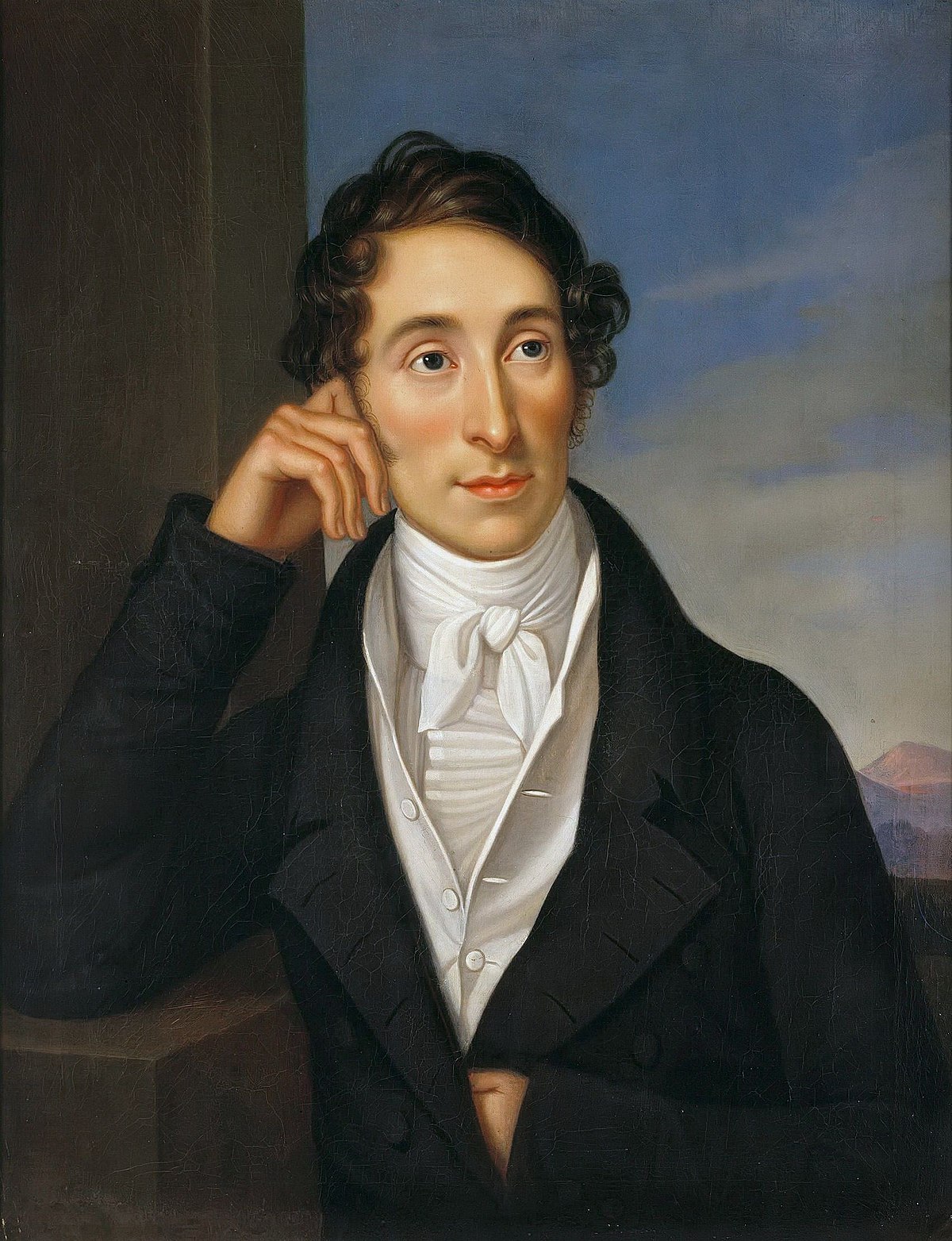 small town not far from Lübeck. He’s famous as one of the first German Romantic composers, especially for his opera Der Freischütz. At his time, he was also known as a virtuoso pianist, conductor, and an important music critic, like E.T.A. Hoffmann around the same time and Robert Schumann a generation later. Here’s the Overture to Der Freischütz (The Freeshooter or The Marksman in English). Carlos Kleiber conducts the Staatskapelle Dresden.
Though not a musician himself, our next celebrated birthday is that of an essential part of the famous duo responsible for the best comic operas in English: the librettist and playwright William Schwenck (W.S.) Gilbert, in partnership with the composer Arthur Sullivan, created such comic masterpieces as H.M.S. Pinafore, The Pirates of Penzance and The Mikado. Gilbert was born on this day in London in 1836. His partnership with Sullivan lasted 20 years and together they wrote 14 operas.
Ignacy Jan Paderewski¸ the Polish pianist, composer and statesman, was born on this day in a village of Kurilovka, then part of the Russian Empire, in 1860. Padarewski was one of the most famous pianists of his time, but during the Great War, he became a politician, joining the Polish National Committee in Paris: Poland, divided between Russia, Austria-Hungary, and Germany, didn’t exist as a state, and the National Committee pressed for the recognition of Poland once the war was over. Paderewski spoke to President Wilson, the Congress, and the leaders of France and the UK. More persuasive than any other Polish leader, he was instrumental in birthing Poland as a state. In January of 1919, he was appointed Prime Minister and the Minister of Foreign Affairs of this new state. In this capacity, he signed for Poland the Treaty of Versailles. He proved to be a poor administrator and resigned his premiership in December of 1919. He continued as the foreign minister till 1922 and then left politics for good, resuming his musical career. He returned to public life in 1939, after Germany (and then the Soviet Union) invaded Poland. He was made President of the Sejm (parliament) in exile in London. Paderewski died in New York in 1941.
Heinrich Schiff, a wonderful Austrian cellist, was also born on this day, in 1951. His performances of Bach’s unaccompanied cello pieces were peerless. All standard cello concertos were part of his repertoire; he also premiered several concertos of his contemporaries, like Henze and Richard Rodney Bennett. Schiff’s career was not very long: in 2010, when he was 60, he quit performing because of a consistent pain in his right shoulder. Schiff died in December of 2016.
And one more, and important, anniversary: the great conductor Eugene Ormandy was born on this day 125 years ago as Jenő Blau into a Jewish family in Budapest, then in Austria-Hungary. He started studying the violin at the age of three and entered the Royal National Hungarian Academy of Music when he was five, the youngest student ever. He emigrated to the US in 1921, and for the first several years played violin in small orchestras. He started conducting, sporadically, in 1927 and in 1931, almost by chance, led a Philadelphia Orchestra concert, substituting for Toscanini who fell ill. Following this successful performance, he was appointment the music director of the Minnesota Symphony. In 1936 he returned to Philadelphia to share the leadership of the orchestra with Stokowski, and two years later became their single music director, the position he held for the following 42 years, the longest tenure in any major US orchestra.Read more...
This Week in Classical Music: November 11, 2024. Leonid Kogan. The Soviet Union was obsessed with rankings, which were applied (or assumed) in many areas. Within the power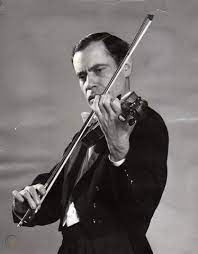 structures, there was of course, the one and only Secretary General of the Communist party; in city planning, Moscow was number one and treated differently than any other city. The same applied to the arts. There had to be a best ballerina (Ulanova first, then Plisetskaya), and even in music, the same rankings applied. After Stalin’s death, Shostakovich was officially considered the greatest living composer. There had to be pianist number one (Sviatoslav Richter), but also pianist number two (Emil Gilels), same for the violin or cello (Rostropovich as cellist number one, Daniil Shafran number two). The ranking among the violinists was this: David Oistrakh – number one, Leonid Kogan – number two. Oistrakh was, undisputable, a great violinist, but so was Kogan, and looking from the outside, these rankings look silly, but such was the nature of Sovietsociety, where fuzzy diversity – whether of ideas or tastes – was not welcome.
November 14th marks Leonid Kogan’s 100th anniversary. He was born into a Jewish family in Ekaterinoslav, now Dnepr, in Ukraine. He studied in Moscow, first in the Central Music school, then in the Conservatory, in both places with Abram Yampolsky, the great Russian violin teacher (Yampolsky was so taken by his talented pupil that, for a while, he housed him in his small apartment). Kogan’s virtuosity became obvious very early, but, unlike many young musicians, he also demonstrated deep insights into the music he played. At the age of 16 he played Brahm’s violin concerto, and at 20, while still a student at the conservatory, he was given the official position of a soloist at the Moscow Philharmonic Organization, the body responsible for managing the careers of professional musicians and organizing concerts not only in the capital but in many other cities of the country. With that, Kogan embarked on several tours of the Soviet Union. In 1947 he shared the first prize at the Prague youth competition, and in 1949 he played all of Paganini’s 24 Caprices in one evening. In 1951 he won the prestigious Queen Elisabeth competition in Brussels and in 1955 he was allowed to play concerts in Paris (at that time, only very few Soviet musicians were allowed to travel to Western Europe or the US, Sviatoslav Richter’s first tour, to the US, happened only in 1960). The Paris concerts were very successful, and Kogan, not well known in the West at the time since most of his recordings were made by the Soviet firm “Melodia” and unavailable outside the Iron Curtain, became famous. Other Western tours followed: South America in 1956, and then, in 1957-59, the tour of North America. As Howard Taubman wrote of his concert at Carnegie Hall, “He left no doubt of the exceptional subtlety and refinement of his art. If the men in the Kremlin will forgive the expression, Mr. Kogan played like an aristocrat.”
Kogan, who loved large-form pieces, also played chamber music. The Gilels-Kogan-Rostropovich trio performed for about 10 years and made numerous recordings. Kogan was married to Elizaveta Gilels, sister of pianist Emil Gilels and also a student of Abram Yampolsky. Kogan died of a heart attack on December 17th of 1982, age 58, just outside of Moscow while traveling by train to give a concert in a provincial city.
Brahm’s Violin concerto was one of Kogan’s favorites. He performed it often, with different orchestras, and many recordings are available, for example, two from 1967, one with the Moscow Philharmonic and another with the Philharmonia Orchestra of London, both conducted by Kirill Kondrashin. We like the one he made in 1959, even if its recording quality is not great. Again, Leonid Kogan plays with the Philharmonia Orchestra and again Kirill Kondrashin is conducting (here). Read more...
This Week in Classical Music: November 4, 2024. Couperin and performers. François Couperin, called “Le Grand” to distinguish him from the lesser but still talented members of his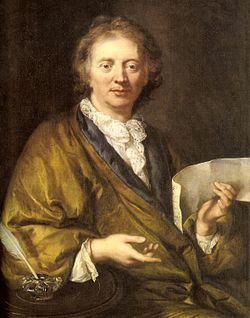 extended musical family, was born in Paris on November 10th of 1668 during the reign of Louis XIV. With Jean-Baptiste Lully and Jean-Philippe Rameau, Couperin was one of the three greatest French composers of the Baroque era and we have written about him on many occasions, for example here. The French culture of the period was in many ways indebted to Italy (and so was its food: Catherine de' Medici, the Italian wife of King Henry II and mother of kings Francis II, Charles IX, and Henry III, taught the French how to cook). Lully, a founding father of French classical music, was Italian by birth and a major influence on all French composers who followed him; Couperin was also influenced by Arcangelo Corelli. This of course in no way dеtracts from Couperin’s great talent and individuality, it is just a historical fact that music in Italy was much more developed than in late-17th century France. Interestingly, this relationship didn’t last long: the French music school continued developing, especially in the 19th and 20th centuries, whereas Italian music languished, except for opera. Couperin freely admitted the influence, pronouncing later in his life that he wanted to create a “union” between French and Italian music.
Couperin was famous as an organist and clavier player and wrote much for both instruments: he published four volumes of harpsichord music containing more than 200 pieces, many with very evocative titles but sometimes so vague that they remain poorly understood. He also published a book of organ music. We, on the other hand, will listen to one of his trio sonatas, which was not just influenced by but dedicated to Corelli. It’s called Le Parnasse ou L'Apothéose de Corelli and consists of seven movements. Each movement has a separate (and long) title, such as Corelli at the foot of Mount Parnassus asks the Muses to welcome him amongst them (movement 1) or Corelli, enchanted by his favorable reception at Mount Parnassus, expresses his joy. He proceeds with his followers (movement 2). It’s performed by the Musica Ad Rhenum (here).
Two pianists were born on November 5th, György Cziffra, whom we recently heard playing Liszt when we celebrated the composer’s birthday, in 1921, and Walter Gieseking, in 1895. A German, Gieseking excelled in playing the music of two French composers, Debussy and Ravel. And yet another musician was born on November 5th: the Hungarian-American violinist Joseph Szigeti, in 1892.
Also born this week: Ivan Moravec, a Czech pianist, on November 9th of 1930. Moravec studied with Arturo Benedetti Michelangeli, traveled widely, even while Czechoslovakia was part of the Soviet bloc, and was known as a supreme interpreter of Chopin. Read more...
This Week in Classical Music: October 28, 2024. Dittersdorf. Carl Ditters von Dittersdorf, an Austrian with a funny-sounding name, was a serious composer. Born Carl Ditters in Vienna on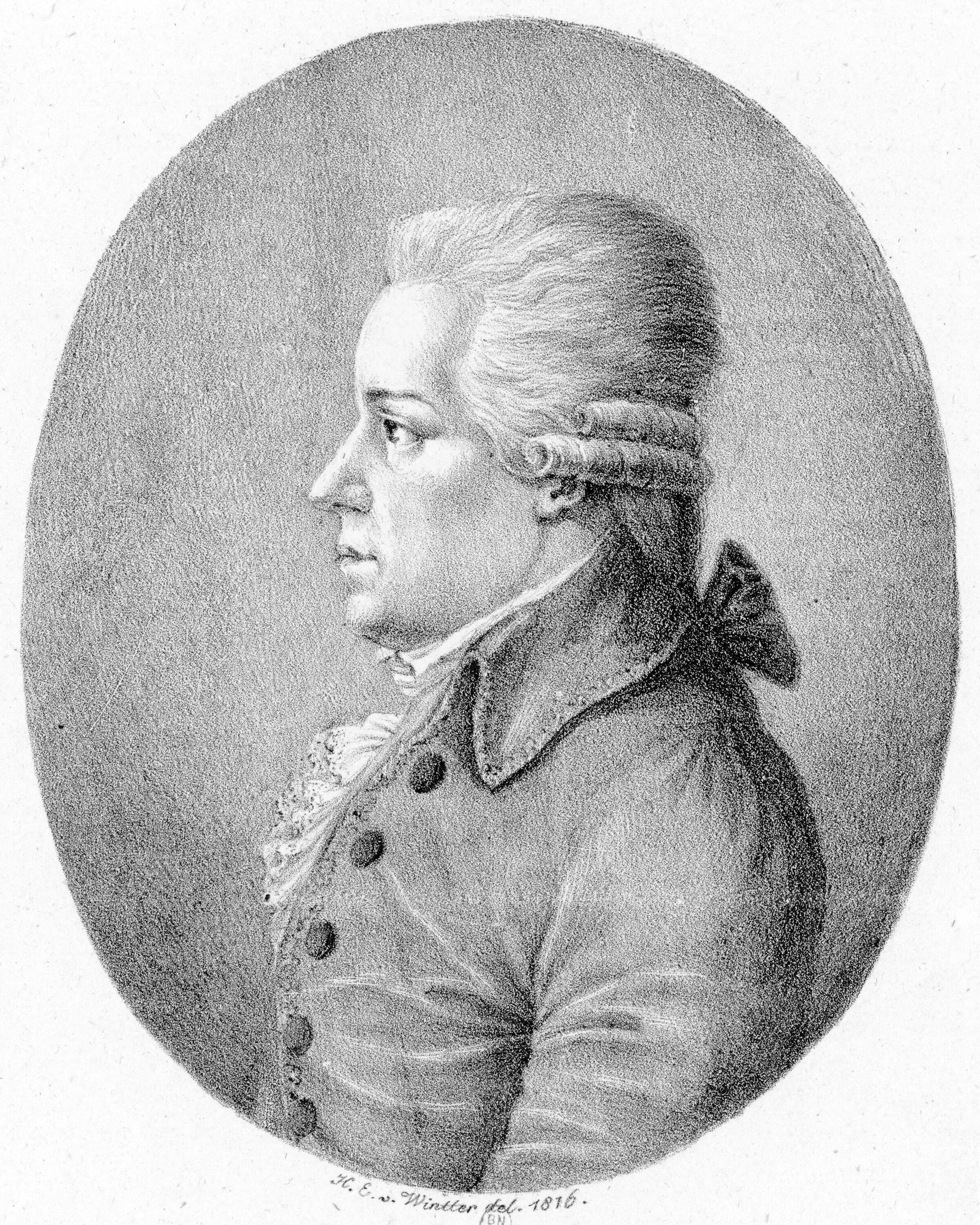 November 2nd of 1739, he acquired the noble title “von Dittersdorf” years later, while serving at the court of the Prince-Bishop of Breslau. His full surname became Ditters von Dittersdorf and since then he has been known as Dittersdorf. As a child, Carl studied the violin, and as a boy of 11, he was recruited to the orchestra of Prince Sachsen-Hildburghausen, one of the best in Vienna. When the prince left Vienna and disbanded his orchestra, Carl found employment with Count Giacomo Durazzo, director of Burgtheater, the imperial court theatre. Ditters played in the Burgtheater orchestra and soloed, often playing his own violin concertos. By that time a recognized virtuoso and composer, he accompanied Christoph Willibald Gluck on a trip to Italy. In 1765 he left the Burgtheater to accept the position of Kapellmeister for the Bishop of Grosswardein, succeeding Michael Haydn, Franz Joseph’s younger brother. He stayed there for four years, composing orchestral music and operas for the court theater.
In 1769, after the bishop got into legal troubles, Ditters found employment with Count Schaffgotsch, Prince-Bishop of Breslau (now Wrocław, Poland, at that time a part of Silesia). The prince lived in exile in the castle of Johannisberg and built a theater next to it. Ditters, for all purposes a Kapellmeister except for the title, was tasked with improving the court orchestra, hiring the singers, and composing operas. During that time (in 1772) Ditters’ employer successfully petitioned Empress Maria-Theresia to have Ditters ennobled; thus, he became “von Dittersdorf.” Through trials and tribulations (in 1778 Austrian politics forced the prince to flee Johannisberg, leaving the composer to administer part of his estate), Dittersdorf continued to manage the orchestra and compose. While Schaffgotsch was out of the picture, Dittersdorf offered some of his operas to Prince Esterházy, Haydn’s employer.
With the prince temporarily gone and musical life in Johannisberg in decline, Dittersdorf spent much of his time in Vienna. His oratorio Giob, the twelve symphonies, and the opera Der Apotheker und der Doktor (here is the Overture and the first scene) were all well received. In 1785, while in Vienna, he played a quartet with Franz Joseph Haydn, Mozart, and his pupil, Johann Baptist Wanhal (Dittersdorf played the first violin, Haydn the second violin, while Mozart played the viola). Dittersdorf returned to Johannisberg in 1787, but musical life there was in shambles. Dittersdorf attempted to find a position with Friedrich Wilhelm II of Prussia, who liked his music, but an offer never came. He was formerly dismissed from Johannisberg in 1785. By the end of his life, Dittersdorf, penniless and suffering from gout, continued to compose; some of his best work was written during those years. He died in 1779 in the castle of one of his patrons.
Dittersdorf was a prolific composer of concertos, operas, symphonies, oratorios and chamber music. Some of his concertos were written for unusual instruments: for example, there are four (!) concertos for the double bass. Let’s listen to one of them, Concerto no. 2 for Double Bass and orchestra. Ödön Rácz is the soloist, he plays with the Franz Liszt Chamber Orchestra. Read more...
This Week in Classical Music: October 21, 2024. Lieberson and corrections. Last week our calendar got very much confused: we celebrated Franz Liszt, though his birthday, October 22nd,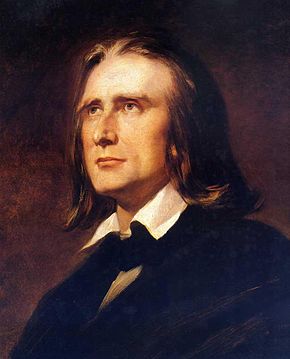 happens this week. There’s nothing wrong with celebrating Liszt early and often, so we’ll do it this week by playing one of his greatest compositions, the B minor Sonata. It’s a magnificent, grand Romantic piece, extremely popular in the early to mid-20th century when it was considered central to any virtuoso’s repertoire; it’s not played as often these days and its importance, so obvious before, is not as apparent. A one-movement piece, it is technically difficult and complex in structure. Liszt completed it in 1853 (the first sketches were written in 1842); it was premiered not by Liszt but Hans von Bülow, his student, in 1857. The sonata is dedicated to Robert Schumann, in return for Schumann dedicating his Fantasy in C major to Liszt some years earlier (Schumann died in 1856, between the Sonata’s completion and its premier). There are scores of excellent performances of the Sonata, so it’s nearly impossible to select the “best” one. Some recordings are more popular than others, for example, Krystian Zimerman’s from 1990 (and it’s indeed very good). And so are the recordings by Martha Argerich, Yuja Wang and Marc-André Hamelin. We’ll play an older recording, made live by the great pianist Sviatoslav Richter. He played it at the Aldeburgh Festival on June 21st of 1966 in the Aldeburgh parish church. We think it’s a profound performance.
The American composer Peter Lieberson was born on October 26th of 1946 in New York. He studied composition with Milton Babbitt and Charles Wuorinen, some of the most “modernist” of American composers but his own music is much more tuneful. Lieberson wrote several concertos (three for the piano, one each for the horn, viola, and cello), an opera, and many chamber pieces, but he’s best remembered for his two song cycles, Rilke Songs for mezzo-soprano and piano, composed in 2001 and, from 2005, Neruda Songs for mezzo and orchestra. Both cycles were written for his wife, the wonderful mezzo Loraine Hunt Lieberson. Here, from the Rilke cycle, O ihr Zärtlichen (Oh you, tender ones). Loraine Hunt Lieberson is accompanied by Peter Serkin. And here is another song from the same cycle, Atmen, du unsichtbares Gedicht! (Breathe, you invisible poem!). It’s performed by the same artists.
Loraine Hunt Lieberson died from breast cancer in 2006 at the age of 52. Shortly after her death, Peter Lieberson was diagnosed with lymphoma. He continued to compose till the end of his life. Peter Lieberson died on April 23rd of 2011. Read more...
This Week in Classical Music: October 14, 2024. Liszt and much more. Even though this week overflows with talent, we’ll be brief. First and foremost, Franz Liszt was born on October 22nd of 1811 in Doborján, a small village in the Kingdom of Hungary, then part of the Austro-Hungarian Empire. Now it’s a town called Raiding which lies in Austria. Liszt is considered Hungary’s national composer, though he never spoke Hungarian. His first language was German, he moved to Paris at the age of 12 and preferred to speak French for the rest of his life. But Hungarians have lived in Doborján for centuries, and Liszt was exposed to Hungarian music as a child. Even though Liszt was a thoroughly German composer heavily involved in German musical life, he used Hungarian (and Gipsy) tunes in many compositions, starting with many versions of Rákóczi-Marsch, the Hungarian national anthem at the time, to Hungarian Rhapsodies, nineteen of them for the piano, of which he later orchestrated six (or eight, but there are doubts about two of the orchestrations), to the symphonic poem Hungaria, and other pieces. Here is Liszt’s Hungarian Rhapsody no. 1, performed by Gyrgy (Georges) Cziffra, the great Hungarian pianist of Romani descent. The recording, later remastered, was originally made in 1957.
Alexander von Zemlinsky, a very interesting Austrian composer whose music is rarely performed these days, was born on October 14th of 1871 in Vienna. Zemlinsky was central to the musical life of Vienna at the end of the 19th – early 20th century. He knew “everybody,” from Brahms and Mahler to Schoenberg; you can read more in one of our earlier posts here.
Luca Marenzio, an Italian composer of the Renaissance famous for his madrigals, was born in Northern Italy on October 18th, 1553. A century and a quarter later, on October 16th of 1679, the Czech composer Jan Dismas Zelenka was born near Prague. From 1709 to 1716 he worked in Dresden, first for Baron von Hartig and then for the royal court. He then moved to Vienna, later returning to the Dresden court. Zelenka knew Johann Sebastian Bach, who highly valued his music. Here are Lamentations for Maundy Thursday, from Zelenka’s The Lamentations of Jeremiah the Prophet. Jana Semerádová conducts Collegium Marianum.
A quarter of a century later, on October 18th of 1706, Baldassare Galuppi, was born on the island of Burano, next to Venice. He authored many operas, both comical, written to librettos of the playwright Carlo Goldoni, and “serious” (seria), often collaborating with Metastasio, one of the most famous librettists of the 18th century.
Finally, two Americans: Charles Ives, the most original American composer of the early 20th century, on October 20th of 1874, and Ned Rorem, on October 23rd of 1923. Ives’s 150th anniversary calls for a separate entry and we’ll do it soon. Read more...
This Week in Classical Music: October 7, 2024. Schütz and more. Heinrich Schutz, the greatest German Renaissance predecessor of Johann Sebastian Bach, was born on October 8th of 1585 in Bad Köstritz, Thuringia. When Heinrich was five, his family moved to Weissenfels, where his father inherited an inn and became a mayor. Heinrich demonstrated musical talent from a very early age. In 1598, Maurice, the landgrave of Hesse-Kasse, a tiny principality then part of the Holy Roman Empire, stayed overnight in the family inn and heard Heinrich sing. Maurice, himself a musician and composer, was so impressed that he invited Heinrich to his court to study music and further his education (while at the court, Heinrich learned several languages, including Latin, Greek and French). Heinrich sang as a choir boy till his voice broke and then went to study law at Marburg. In 1609 he traveled to Venice to study music with Giovanni Gabrieli. Even though Gabrieli was 28 years older than Schütz, they became close friends (Gabrieli left him one of his rings when he died). The master died in 1612 and Schütz returned to Kassel. In 1614 the Elector of Saxony asked Schütz to come to Dresden. The famous Michael Praetorius was nominally in charge of music-making at the court but he had other responsibilities, so the elector was interested in Schütz’s service. Schütz moved to Dresden permanently in 1615. In 1619 he received the title of Hofkapellmeister. Soon after he published his first major work, Psalmen Davids (Psalms of David), a collection of 26 settings of psalms influenced, as one can hear, by Gabrieli. Here’s Psalm 128, “Wohl dem, der den Herren fürchte.” Cantus Cölln and Concerto Palatino are conducted by Konrad Junghänel.
Schütz lived in Dresden for the rest of his life, making periodic extended trips: in 1628 he went to Venice where he met Claudio Monteverdi who became a big influence. He also made several trips to Copenhagen, composing for the royal court. Schütz lived a long life: he died on November 6th of 1672 at the age of 87. Schütz composed mostly sacred choral music, although in 1627 he wrote what is considered the first German opera, Dafne. Even though the libretto survived, the score was lost years ago. Here’s one of Schütz’s Kleine Geistliche Konzerte (Little Sacred Concertos), composed in 1636. It’s called Bone Jesu Verbum Patris (Good Jesus, word of the Father). Tölzer Knabenchors is conducted by Gerhard Schmidt-Gaden.
Also this week: Giulio Caccini, a very important, if mostly forgotten Italian composer of the transitional period between the Renaissance and the Baroque, was born on October 8th of 1551, probably in Rome. A very popular “Ave Maria,” attributed to Caccini, was written by Vladimir Vavilov, a Russian guitarist, lutenist, composer and musical prankster who published several compositions ascribing them to composes of different eras. In 1970 Melodia issued an LP, “The Lute Music of the 16th and 17th Centuries” performed by Vavilov. Eight out of ten pieces were composed by him rather than composers indicated on the sleeve. Francesco da Milano, a lutenist and composer of the early 16th century, was Vavilov’s “favorite”: he composed six pieces, including a widely performed “Canzona,” and attributed all of them to the Italian. Read more...
This Week in Classical Music: September 30, 2024. The Pianists. Last week we complained that there were too many composers of note; this time the situation is reversed: only Paul Dukas of The Sorcerer's Apprentice fame has a birthday in the next seven days. One of the few French Jewish composers, he was born on October 1st of 1865 in Paris. (And our apologies to the fans of Sir Charles Villiers Stanford, we know you are there).
The pianists are faring much better. Vladimir Horowitz was born on October 1st of 1903 in Kiev, the Russian Empire (now Kyiv, Ukraine) into a well-off Jewish family. At nine, Horowitz entered the Kiev Conservatory where he studied with Felix Blumenfeld, among others. He made his solo debut in 1920; around that time, he met the violinist Nathan Milstein, who was the same age and showed great talent. They played together in concerts (Vladimir’s sister Regina was Milstein’s accompanist). Both Horowitz and Milstein left Russia in 1925; Vladimir went first to Berlin and then to the US. His debut, on January 12th of 1928, when he played Tchaikovsky’s First piano concerto faster than the conductor Thomas Beecham would have it and dazzled the public with his technique, became legendary. That was the beginning of one of the most brilliant pianistic careers of the 20th century, even though Horowitz interrupted it four times, first from 1936 to 1938, then from 1953 to 1965, his longest absence from the concert stage, and again in 1969–74 and 1983–85. Altogether, he was away from the public for a long 21 years. That didn’t prevent him from becoming both a celebrity and one of the most interesting pianists of the century.
Horowitz was known to make small alterations to the score. One example is Mussorgsky’s Pictures at an Exhibition: Horowitz felt that the composer, who wasn’t a pianist, didn’t use the instrument to its fullest extent. He added double octaves to some of Chopin’s pieces. But the real surprise was Rachmaninov’s Second Piano Sonata. Nobody would accuse Rachmaninov, one of the greatest pianists of the 20th century, of not knowing how to use the instrument. The sonata had two versions by then, the original, from 1930, and a reworking made in 1931. In 1940, Horowitz suggested some changes and Rachmaninov, who was in awe of Horowitz the pianist, consented to the alteration. Here it is, in Horowitz’s version, performed live in 1968 in Carnegie Hall. Horowitz always performed on his own Steinways, especially voiced by the maker. You can hear how, at around 12:25, in the middle of the second movement, a string breaks – on his own piano. After playing several more bars, Horowitz pauses (to applause) and waits for the technician to come on stage and remove the string. He then continues. Very often live recordings, despite some missed notes, are more exciting than ones made in a studio. This time the excitement reached a whole new level.
Vera Gornostayeva, a highly regarded Soviet/Russian pianist and pedagogue was born on October 1st of 1929 in Moscow. Alexander Slobodyanik, Pavel Egorov, Eteri Andjaparidze, Ivo Pogorelich, Sergei Babayan, Vassily Primakov, Lukas Geniušas, Vadym Kholodenko, Stanislav Khristenko, and others were her students.
Finally, Edwin Fischer, the Swiss pianist considered one of the greatest interpreters of Bach, was born in Basel on October 6th of 1886. Read more...
This Week in Classical Music: September 23, 2024. Another Bountiful Week. We celebrated two 150th anniversaries in a row, those of Schoenberg and Holst, an unusual event. In the process, we missed several anniversaries. We won’t try to catch up, even if we’re sorry to have missed the names of Henry Purcell and Girolamo Frescobaldi, or that of our contemporary, Arvo Pärt. The reason is that this week in itself is very rich in talent. There are three composers from Eastern Europe: Andrzej Panufnik, Dimitri Shostakovich, and Komitas; the great Rameau, also another Frenchman, the controversial Florent Schmitt, and the American favorite, George Gershwin. And then there are the instrumentalists: two pianists, Glenn Gould and Alfred Cortot, and the violinist Jacques Thibaud. Two noted conductors were born this week, Colin Davis and Charles Munch, as was the tenor Fritz Wunderlich, one of the greatest German singers of the 20th century.
It’s impossible to give credit to all of them; also, in the past, we’ve posted elaborate entries about some (but not all) of the composers and musicians. For example, last year we dedicated an entry to Florent Schmitt, not necessarily a great composer but a very interesting, if contentious, figure in the history of French music. Jacques Thibaud and Charles Munch are two musicians we’ve failed to acknowledge in the past, we’ll correct this fault as soon as the opportunity presents itself.
We have written about Dmitri Shostakovich on several occasions, but he was such a talent that we feel the need to mention him separately. Born on September 25th of 1906 in St. Petersburg, he was admitted to the Conservatory at the age of 13 (the director, Alexander Glazunov, noticed his talent very early). His First Symphony premiered in 1926 to great acclaim – Shostakovich wasn’t yet twenty but became prominent not just in the Soviet Union but in the West, as Bruno Walter, Toscanini, Klemperer, Stokowski and other luminaries presented his symphony in Europe and the US. A talented pianist, in 1927 he participated in the inaugural Chopin Piano Competition in Warsaw and earned a diploma (after the competition was over, Shostakovich spent a week in Berlin where he met Walter). In 1934 he wrote his second (after The Nose) opera, Lady Macbeth of Mtsensk, which premiered in Leningrad to great success. In 1935 it was staged in Cleveland, Philadelphia, New York, Zurich and other cities. In 1936, Stalin and his entourage attended a performance at the Bolshoi Theater and didn’t like it, after which it was denounced as “Muddle instead of Music” in Pravda, the main Soviet newspaper. That set a terrible pattern: Shostakovich would be rewarded and then criticized; he would then write something in the “Socialist Realism” style (he had a tremendous ear for that kind of music, you can listen to the “Festive Overture” to realize what we mean) then lauded and ostracized again. In 1948 Shostakovich was denounced by Stalin’s henchman, Zhdanov, together with Prokofiev and Khachaturian; he was dismissed from the Moscow Conservatory and was expected to be arrested at any moment. Then, one year later, he was instead sent to the Peace Conference in New York where he dutifully served as a mouthpiece for Soviet propaganda. That didn’t save him from the harsh criticism that his 24 Preludes and Fugues for the piano earned him from the Union of Soviet Composers.
Shostakovich started working on his Tenth Symphony in the late 1940s but finished it in several summer months in 1953, right after Stalin’s death. The Tenth is considered one of his greatest pieces, while the previous large-scale opus, the oratorio Song of the Forests, praising Stalin as a “Great Gardener” is one of the worst (and musically shallow) examples of his fawning productions, it’s painful to listen to. Here’s the first movement of Shostakovich’s Tenth Symphony. Vasily Petrenko leads the Royal Liverpool Philharmonic Orchestra. Read more...
This Week in Classical Music: September 16, 2024. Gustav Holst. We must admit that we’re not big fans of Gustav Holst’s music, though we readily acknowledge the talent of this English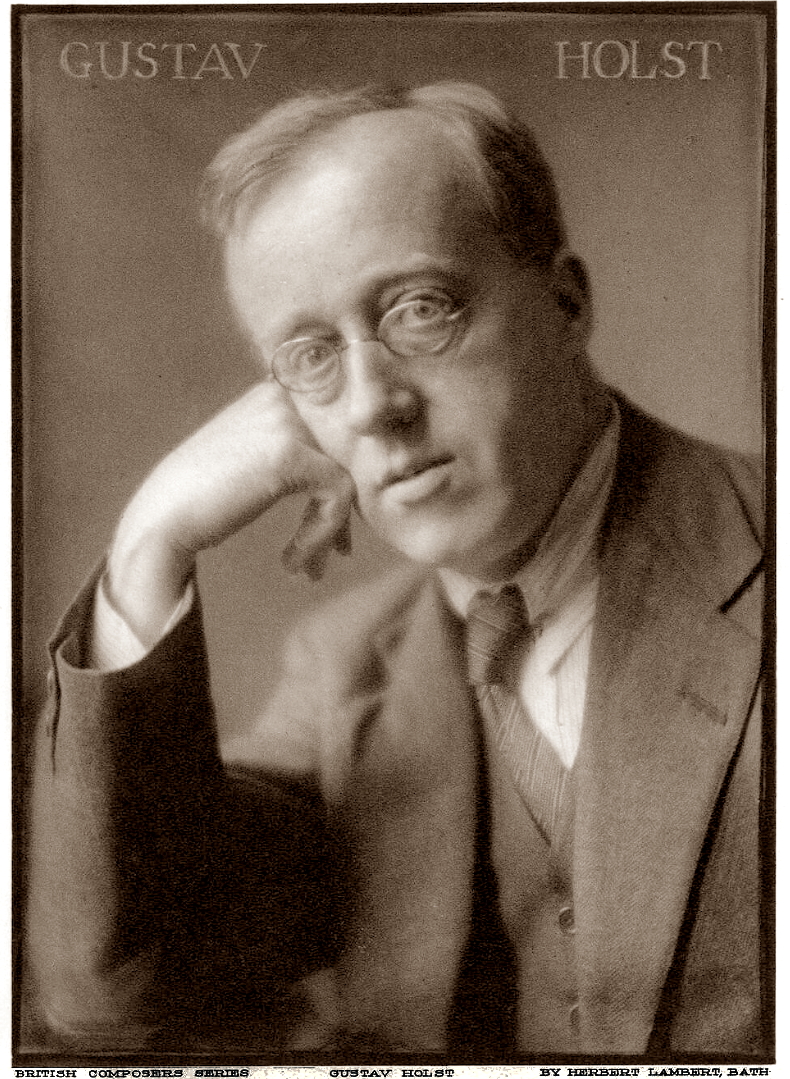 composer. Neither are we greatly enamored with the music of his best friend Ralph Vaughan Williams, or the older and more famous Edgar Elgar, or practically any other British composer of the late 19th - early 20th century. We know they’re all very dear to the English heart, but we find the music composed during the same period in Germany, Austria, France and Russia much more interesting and more to our taste. Nevertheless, September 21st marks the 150th anniversary of Holst’s birth, and obviously, we should recognize this important date. (History plays games with us: just last week we celebrated the 150th anniversary of Arnold Schoenberg, creating an interesting if unintended juxtaposition).
Holst was born in Cheltenham, a spa town in the Cotswolds. His father’s side of the family was of German descent and musical, his mother was English. Interested in music from an early age, Holst studied composition at the Royal College of Music with the prominent composer Charles Villiers Stanford. Till The Planets were first performed in 1918, Holst had to support himself by teaching and playing the trombone in different orchestras; none of his early compositions achieved popular success. That all changed with The Planets. This is an unusual piece, as few seven-movement symphonic works have ever been composed. Holst started working on it in 1913 and completed the suite in 1917. The premier, held on September 29th of 1918, less than six weeks before the end of WWI, was conducted by Adrian Boult. Boult, then 28 years old, lived to the ripe age of 92 and conducted almost till the end. The concert took place in the old Queen’s Hall, then the main performance venue in London (the hall was destroyed by a German bomb in 1941). It was a semi-private affair, as only selected listeners were invited, and the hall was half empty. While the structure and the musical language of the composition were quite unusual, many of the reviews were positive, and even those newspapers that first panned the music changed their minds soon after. Even though several subsequent performances played only four or five movements of the whole work, The Planets’ reputation grew with every concert and solidified soon after. In 1922 Holst himself conducted the first recording of the suite; more than 80 recordings have been made since then.
Here is the first movement of The Planets, Mars, the Bringer of War. Herbert von Karajan conducts the Vienna Philharmonic. And here, with the same performers, is the very contrasting last movement of the suite, Neptune, the Mystic, with a hidden chorus. This recording was issued in 1962.Read more...
This Week in Classical Music: September 9, 2024. Schoenberg 150. Last week we celebrated the 200th anniversary of Bruckner’s birth. This week is no less important: September 13th marks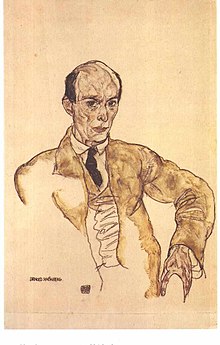 the 150th anniversary of one of the most consequential composers in the history of Western music, Arnold Schoenberg. Schoenberg was born in Leopoldstadt, a heavily Jewish district of Vienna, in 1874. Two years ago we published a series of four entries about him, here, here, here, and here, so we won’t go into the details of his life today. Even though Schoenberg’s music is still played only occasionally, especially pieces from his atonal and twelve-tone phases, it's generally accepted that he was a seminal figure in the history of music, and, given that it’s such an important date, many institutions around the world celebrate his anniversary with festivals and performances. Vienna, his birthplace, is exceptional in this regard, setting up exhibitions, a film festival, and many concerts. On Schoenberg’s birthday, September 13th, and the following day, the Vienna Symphony, three choruses and soloists, all under the direction of Petr Popelka, will perform his Gurre-Lieder, an oratorio in three parts, composed between 1900 and 1903 but finished in 1911 (Gurre-Lieder, together with Verklärte Nacht, is considered the most important of Schoenberg’s pieces from his tonal, late-Romantic period). Germany, where Schoenberg lived for years, mounted more events and performances than any other country, they’re spread among many cities. California, Schoenberg’s home for the last 16 years of his life, also celebrates the event with several concerts. The Chicago Symphony, on the other hand, completely ignored the anniversary. In general, Europe seems to be much more interested in Schoenberg than the US. Even in war-torn Ukraine, they plan to have two Schoenberg concerts, both in Kyiv. New recordings are also being made. Fabio Luisi, the Italian conductor who leads three orchestras at the same time - the Danish National Symphony, the Dallas Symphony and the NHK Symphony in Japan, is embarking on the most ambitious project. He plans to record all of Schoenberg’s symphonic output with the Danish NSO and distribute it on the Deutsche Grammophon label.
We’ll celebrate Schoenberg’s anniversary with two different pieces, his Five Pieces for Orchestra, op. 16, from 1909, and Four Orchestral Songs for soprano and large orchestra, composed between 1913 and 1916. Opus 16 was written while Schoenberg was still working within the tonal idiom, although by then he was already using “extreme chromaticism.” This music is clearly beyond the Romanticism of his earlier works. Here it is, performed by the London Symphony, Robert Craft conducting.
The admittedly more difficult Four Songs are the last ones from Schoenberg’s free atonal period, the one that followed his Romantic beginnings. After that, and for a long period, he wrote music using his own newly developed twelve-tone technique (at the end of his life he would sometimes revert to tonal compositions). The singer in this recording is the mezzo Catherine Wyn-Rogers. Robert Craft is again the conductor, in this case leading the Philharmonia Orchestra.
A note: while we’re celebrating Arnold Schoenberg, we remember that this week is rich in important birthdays, Henry Percell and Girolamo Frescobaldi’s among them, and also Clara Schumann’s and Arvo Pärt’s, who will be 89 on September 11th. Read more...
This Week in Classical Music: September 2, 2024. Bruckner 200. Several composers were born this week, the first and foremost of them – Anton Bruckner. We’re celebrating his 200th anniversary: Bruckner was born September 4th of 1824 in Ansfelden, a village outside of Linz. We love Bruckner and have written about him on many occasions, him personally (here, for example), as well as his music (here, about one of the several symphonies that we’ve touched upon). We had mentioned Bruckner’s notorious lack of confidence often: he was convinced that professional musicians knew and understood his music better than he did himself. This resulted in Bruckner rewriting major parts of practically all his symphonies over and over, sometimes following innocuous comments. In best cases we’re left with many editions of the same symphony: for example, he revised his Symphony no. 4, one of his most popular symphonies today, five times, and there are numerous editions of each revision, around 10 of them altogether. The Fourth was composed in 1872, the first revision followed one year later while the last one – in 1892, twenty years after the original composition was put to paper. But sometimes, things turned out much worse. Between January and September of 1869, Bruckner composed a symphony. It followed Symphony no. 1, which Bruckner completed in 1866 (as usual, many versions would follow, all the way to 1891), so he called it Symphony no. 2 (in D minor). Then, Otto Dessoff, a minor composer but a noted conductor who then led the Vienna Philharmonic, made a comment, and we’ll quote Georg Tintner, an Austrian conductor, on the consequences. "How an off-hand remark, when directed at a person lacking any self-confidence, can have such catastrophic consequences! Bruckner, who all his life thought that able musicians (especially those in authority) knew better than he did, was devastated when Otto Dessoff (then the conductor of the Vienna Philharmonic) asked him about the first movement: "But where is the main theme?" In the aftermath, Bruckner failed to submit the Symphony for a performance, and some years later, while reviewing his output, wrote "annullirt" ("nullified") on the front page and replaced the number (no. 2) with a symbol "∅" which was later interpreted as zero (0). Since then, the symphony acquired the designation of “Symphony no. 0.” The first performance was made in 1924, 55 years after it was completed, and the first recording – some nine years later, in 1933. There are many wonderful recordings of the symphony, one of them made by Bernard Haitink in 1966 with the Concertgebouw Orchestra. You can listen to it here.
Bruckner had many detractors, Johannes Brahms being the foremost. Antonin Dvořák, Brahms’s follower and beneficiary, was also one of them. Dvořák was born on September 8th of 1841 in Nelahozeves, a village near Prague, then part of the Austrian Empire. His Symphony No.9, "From the New World," ranks highly on many lists of “most popular symphonies.” Clearly, Dvořák was a talented composer, but compared to Bruckner’s they sound somewhat trite, whereas Bruckner’s are fresh and, even now, innovative.
This was a rather special week: Darius Milhaud, Johann Christian Bach, Giacomo Meyerbeer, John Cage, Amy Beach, Isabella Leonarda, and Hernando De Cabezon were all born within these seven days. We’ll come back to some of them at a later date.Read more...
This Week in Classical Music: August 26, 2024. Performers and Conductors. Few composers were born this week; we’ll name two: Rebecca Clarke, a British composer and violist, born on August 27th of 1886, in Harrow, and Johan Pachelbel, the German composer, famous for his Cannon in D, but in reality, a prolific composer, whose Hexachordum Apollinis, a collection of keyboard music, deserves to be known better. He was born on September 1st of 1653 in Nuremberg.
If we turn to the performers and interpreters – instrumentalists, singers, and conductors – those are aplenty. Itzhak Perlman was born on August 31st of 1945 in Tel Aviv. Perlman is deservedly famous: from about the mid-1960s to the mid-1990s he was one of the greatest violinists to perform actively; he then narrowed his classical repertoire and branched out into klezmer and jazz, while also teaching and conducting. Some criticize his playing as too romantic, but we think that’s unfair: Perlman made hundreds of recordings, many excellent, some phenomenal. His Beethoven’s piano and violin sonatas and Brahm’s violin sonatas with Vladimir Ashkenazy are of the highest order. Here, for example, is the recording of Brahm’s Violin Sonata no. 1 made by Perlman and Ashkenazy in 1983.
Three conductors were born this week, two Germans and one Hungarian who worked mostly in Germany. The native Germans are Wolfgang Sawallisch and Karl Böhm; the Hungarian is István Kertész. We’ve written about Böhm, one of the most important conductors of the 20th century but a deeply flawed personality, more than once, for example, here. Both Sawallisch and Kertész were born in the 1920s: Sawallisch in 1923, in Munich on August 26th, Kertész in 1929, in Budapest, on August 28th. Sawallisch took piano lessons as a child and continued his musical education at the Musikhochschule in Munich. As a young man, he fought in the German army during WWII and was captured by the British in Italy at the tail-end of it. At the age of 30 he conducted the Berlin Philharmonic, and at 34 became the youngest conductor to appear at Bayreuth, where he led the performance of Tristan und Isolde. In 1960, he became the principal conductor of the Vienna Symphony (not to be confused with the much more famous Vienna Philharmonic). For 20 years he was the music director of the Bavarian State Opera where he conducted 32 complete cycles of Wagner’s Der Ring des Nibelungen. From 1993 to 2003 he was the music director of the Philadelphia Orchestra. He died in 2013, months shy of his 90th birthday.
István Kertész’s life was much shorter, he was only 43 when he drowned while swimming in the Mediterranean in Herzliya, a town next to Tel Aviv, in 1973. Kertész was Jewish, as were so many other Hungarian conductors: Fritz Reiner, Antal Doráti, Eugene Ormandy (born Jenő Blau), George Szell, Ferenc Fricsay (only his mother was Jewish but that was enough to be prosecuted in anti-Semitic Hungary), and Georg Solti. In 1944 most of Kertész’s relatives were deported to Auschwitz and killed there. Kertész survived, went to study at the Ferenc Liszt Academy when the war was over, and had some conducting assignments after graduation. He and his family left Hungary after the 1956 Uprising and settled in Germany. From 1958 to 1963 he was the music director of the Augsburg Opera, where he conducted a wide repertoire. At the same time, he guest-conducted many major European and American orchestras. In 1964, he assumed the same position with the Cologne Opera and also became the principal conductor of the London Symphony Orchestra. István Kertész had an unusually broad repertoire, both in opera and orchestral music. He conducted many major orchestras and was the first choice of the Cleveland musicians to replace the departing Geroge Szell (instead, Lorin Maazel was hired by the board).
Richard Tucker, a wonderful American tenor (also Jewish – we seem to have a Jewish theme today) was born on August 28th of 1913 in Brooklyn, NY. We’ll get back to him another time.Read more...
This Week in Classical Music: August 19, 2024. Peri, Bernstein. Jacopo Peri, an Italian composer of the transitional period between the Renaissance and Baroque and author of the very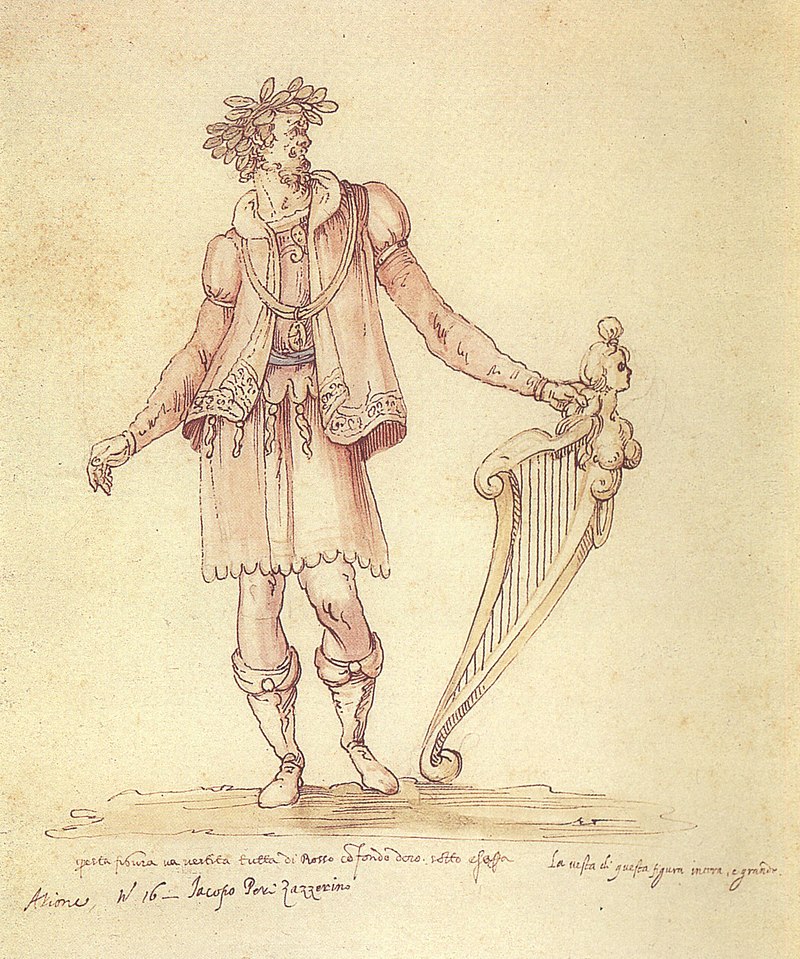 first opera, Dafne, was born on August 20th of 1561. Last year we got involved with Peri, his contemporary Emilio de’ Cavalieri, and the process of transitioning from one, deeply established musical style to a very different one, a style that may be considered a “lesser” one, at least in its initial phase. We still find this process and the personalities involved very interesting. You may want to read about Peri and the period here, here, and here.
Claude Debussy, one of the most influential composers of his time, was born in St. Germain-en-Laye on August 22nd of 1862. And when we say, “of his time,” we’re talking about one of the most fecund periods of classical music, the period from 1894, when Debussy composed Prélude à l'après-midi d'un faune, till his death in 1918 at the age of 55. Just for reference, let’s take a look at who else was active during the period. Here’s what we see: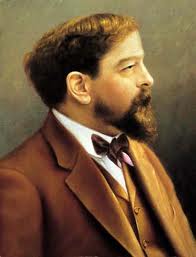 Gustav Mahler, who, by the way, conducted the Prélude in New York in 1910, his whole output falls within this period; Sergei Rachmaninov, whose piano concertos no. 2 and no. 2?? were written in the first decade of the 20th century; much of Alexander Scriabin’s late works; Richard Strauss’s most important tone poems and operas such as Salome and Der Rosenkavalier, all fall within the period. Composers as different as Arnold Schoenberg, Ottorino Respighi, Manuel de Falla, and of course, Debussy’s younger contemporary and friend Maurice Ravel were all extremely productive during the same period. And still, Debussy’s star shines brightly. While his piano and orchestral works are probably among his most popular, he worked in many genres. Pelléas et Mélisande, premiered in 1902, is one of the most important operas of the 20th century. His chamber music is brilliant; he also wrote wonderful songs. We have quite a bit of Debussy’s music in our library, you may take a look here. A note on labeling: Debussy created a musical style, at some point called “Impressionism,” the label stuck; he hated the term, and so did Ravel, another “impressionist.”
It's said that Debussy influenced all composers of the 20th century except for Schoenberg. That is an exaggeration, but Debussy did influence many composers, from Stravinsky to Les Six and on. One composer also born this week who clearly wasn’t is Karlheinz Stockhausen. Some years ago we wrote: “In our library, we have three recordings of Karlheinz Stockhausen. Two of them are rated “one note,” the lowest rating that could be given. Considering that one piece is played by the pianist Pierre-Laurent Aimard, we can safely assume that it’s not the performance that our listeners disliked but the pieces themselves. Stockhausen […] is considered one of the seminal composers of the second half of the 20th century. While we acknowledge the disapproval of some listeners, we think that his music is worth the effort, even if in small doses, and will continue bringing him up on occasion.” Since then, we added just one piece by Stockhausen, a composition called Kreuzspiel. It didn’t get rated, maybe nobody wanted to listen to it. The one-note ratings on older recordings still stand.
The great Leonard Bernstein was born on August 25th of 1918. Also, Lili Boulanger, whose life was tragically short, was born on August 21st of 1893; the Romanian composer and violinist George Enescu, born on August 19th of 1881; and a very interesting Austrian (and later American) composer Ernst Krenek, he was born on August 23rd of 1900. Read more...
This Week in Classical Music: August 12, 2024. Through the Centuries. This week covers four centuries of music: the oldest one, Heinrich Ignaz Biber, was born in 1644, and the most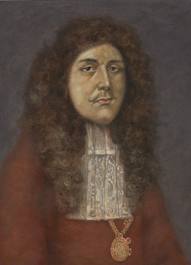 recent, Lucas Foss, in 1922 (he died in the 21st century, in 2009). There were too many in between, but we’ll mention some. Let’s start with Biber, a Bohemian-Austrian composer born on August 12th of 1644 in Wartenberg, Bohemia, then part of the Hapsburg Empire, now Stráž pod Ralskem in the Czech Republic. A highly reputable violinist, he was employed in courts of Graz, Olmütz (now Olomouc), Kremsier (now Kroměříž), and eventually, by the Archbishop of Salzburg, where one hundred years later Mozart would also be employed. Biber stayed in Salzburg for the rest of his life, eventually becoming the Kapellmeister. The finest or at least the most famous music composed by Biber was collected in his Mystery (sometimes called Rosary) Sonatas, in German Rosenkranzsonaten,15 short sonatas for the violin and continuo. Here’s the 3rd of the sonatas, The Nativity. Franzjosef Maier plays a Baroque violin; he’s accompanied by the organ, cello and theorbo, all of the Baroque era.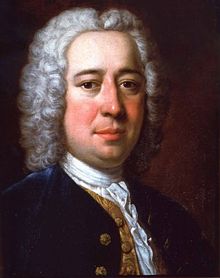
Two more composers were born in the 17th century this week: Nicola Porpora, in 1686, and Maurice Greene, in 1696. Porpora, born in Naples on August 17th of 1686, was one of the most important opera composers of the era, first challenging Alessandro Scarlatti in Naples, and then becoming Handel’s competitor in London. He was also a famous music teacher: his pupils included the castrati Farinelli and Caffarelli, and also Haydn. Porpora composed more than 50 operas, plus oratorios, cantatas and instrumental music. Here’s the aria In Amoroso Petto from Porpora’s opera Arianna In Nasso. Simone Kermes is the soprano, Vivica Genaux – the mezzo. Cappella Gabetta is conducted by Andrés Gabetta.
Maurice Green, born in London on August 12th of 1696 was an English composer known for his “anthems,” short sacred choral works. Lord, Let Me Know Mine End (here) is his most famous composition.
If three composers were born in the 17th century, only one comes from the 18th: Antonio Salieri, famous for all the wrong reasons. Three Frenchmen were born in the 19th century, Benjamin Godard, on August 18th of 1849, Gabriel Pierné, on August 16th of 1863, in Metz, and at the end of the century, on August 15th of 1890, Jacques Ibert. Of the three, Ibert seems to us to be the most interesting. The 20th century gave us only one composer, Lucas Foss. Foss was born in Berlin on August 15th of 1922 into a Jewish family (Benjamin Godard was also Jewish). Foss’s family left for Paris as soon as the Nazis came to power, and in 1937 they moved to the US. Foss was a prodigy, a talented composer, a lifelong friend of Leonard Bernstein, a teacher, music director and much more. We’ll write about him in detail next year.
Read more...This Week in Classical Music: August 5, 2024. Guillaume Dufay. Just last week we mentioned the troublesome fact regarding Early music composers, especially the pre-Renaissance ones: we practically never know their birthdays, and here comes a possible exception in the person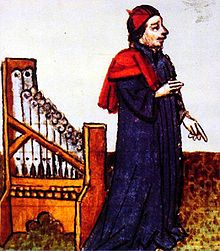 of Guillaume Dufay: with some degree of certainty and based on existing documents, musicologists seem to have determined that he was born on August 5th of 1397. At a time when the individuality of the artists was often obscured and considered unimportant, Dufay was acknowledged as the greatest composer of his generation. Dufay, whose name during his time was written Du Fay, had a long and particularly eventful life. He was born in Beersel near Brussels and died at the age of 77 in Cambrai, on November 27th of 1474. As a boy, he studied at the Cathedral of Cambrai. His musical talents were acknowledged from an early age, and cathedral officials allowed Dufay to join the bishop of Cambrai’s retinue on his many travels. On one such trip, he was noticed by Carlo Malatesta, the ruler of Rimini, who brought Dufay to Italy sometime around 1420. He stayed in Rimini for about four years, returning to Cambrai in 1424. Two years later he was back in Italy, this time in Bologna, in the service of Cardinal Louis Aleman. His stay in Bologna was short, as in 1428 the Cardinal and his court, including Dufay, were expelled from the city. Dufay went to Rome, and, by then a well-known musician, he was hired by the papal chapel (choir). He served there till 1433, first to Pope Martin V, and after Martin’s death, to Pope Eugene IV. While in Rome, he asked for and received several “benefices,” clerical positions in churches that provided him with additional income. A large body of work is attributed to the years of Dufay’s sojourn in Rome. In 1434 Dufay joined the Court of Amédée VIII, the Duke of Savoy, then one of the most powerful duchies of Europe, which included not just the French territories by the same name but also Aosta and much of Piedmont in Italy. Again, his stay in Savoy was brief: one year later he was back in the service of Pope Eugene IV but this time in Florence, as, due to the extremely turbulent church politics, the pope was driven out of Rome. In 1437 the papal court moved to Bologna, and at about that time, Dufay received a very important benefice, the cannon’s position at the Cambrai Cathedral.
While serving in Savoy and later at the papal court, Defay developed many valuable connections: with the Burgundy court, where he met another famous composer, Gilles Binchois, and with the Estes, Dukes of Ferrara. Ferrara was an important musical center, second only to the pope’s chapel; Defay visited the city in 1437.
Things were getting even more confusing in Italy, where in 1439 Pope Eugene IV was deposed and Defay’s former patron, Duke Amédée of Savoy was proclaimed Pope (or rather antipope) Felix V. To avoid problems with his warring benefactors, Defay left the papal court and returned to Cambrai, assuming the canonicate. That marked the beginning of the most stable period of Dufay’s life: he stayed in Cambrai for 11 years, till 1450. In 1449 Pope Felix V abdicated, and the politics of Rome calmed down; Dufay started traveling again. In 1450 he went to Turin, to visit Duke Amédée, no longer the Pope (Amédée died shortly after their meeting). In 1452 Dufay went to Savoy again and stayed there for six years, till 1458, this time at the service of Duke Louis
In 1558 Dufay returned to Cambrai and his position of the cannon. A famous composer, he was visited by many notables, including composers Ockeghem and Antoine Busnois. Among the more significant compositions of the period was his Requiem Mass, now lost, unfortunately. Dufay was buried in the Cambrai Cathedral, which was demolished during the French Revolution. His tombstone was later found and is now in a museum in Lille.
Here's Gloria, from Dufay’s Missa de San Anthonii de Padua. The Binshois Concort is directed by Andrew Krikman.Read more...
This Week in Classical Music: July 29, 2024. Rott and Ingegneri. Hans Rott was born this week, on August 1st of 1858. This composer, who died at 25 and was mad for the last several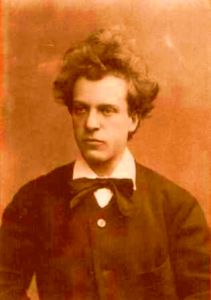 years of his tragically short life, continues to fascinate us. Clearly, he was a major talent, and who knows how he would’ve developed, but even within the limited scope of his output, one can discern musical ideas Mahler would develop some years later. We’ve written about him several times, here, for example. We are also happy to report that his Symphony in E major is being performed and recorded more often, the latest time being in 2021 for Deutsche Grammophon with the excellent Jakub Hrůša leading the Bamberger Symphoniker.
There are many very talented composers of the Renaissance that we have never written about, for the only reason that their birthdays are unknown, so they fall outside of the framework of the “classical music this week.” One of these composers is Marc'Antonio Ingegneri. He’s mostly forgotten these days, unjustly so in our opinion. If he is remembered at all, it is as the teacher of the great Claudio Monteverdi, but in his days, he was the leading composer of Cremona, one of the musical centers of Italy.
Ingegneri was born in Verona in 1535 or 1536, which made him about 10 years younger than Palestrina, three years younger than Orlando di Lasso, and about the same age as Giaches de Wert. As is usually the case with the composers of that era, we know little about his early days. He was a choirboy at the Verona cathedral and probably took lessons from Vincenzo Ruffo, a noted composer, also a Veronese, who was active as a music reformer, implementing an edict of the Council of Trent which stated that words in church music should be legible, a requirement that almost killed the polyphonic mass. Ingegneri left Verona in his early 20s and for a while played the violin in the band of the Scuola Grande di San Marco in Venice. It’s likely that in the 1560s he went to Parma to study with Cipriano de Rore, one of the noted composers of the mid-16th century. Sometime around 1566, Ingegneri moved to Cremona and soon after had his Primo libro de madrigali a quattro voci published. He was active in the music-making at the Cremona Cathedral, and in 1580 was made the maestro di cappella. Sometime soon after he became the teacher of the young Monteverdi, who was born in Cremona and was at the time 15 or 16 years old. It’s clear that Ingegneri was famous outside of Cremona, as he dedicated books of madrigals to his patrons in Milan, Parma, Verona, and even Vienna. His music was published in many cities, such as Venice, Milan, Brescia, Ferrara and Rome. For about a decade from the mid-1570s to the mid-1580s Ingegneri composed mostly secular madrigals, but then reverted to church music. He was a good friend of bishop Nicolò Sfondrato, later Pope Gregory XIV who ruled the Catholic church for just 11 months. Ingegneri died in Cremona on July 1st of 1592.
Here is Ingegneri’s motet for the feast of the Assumption of Mary, Vidi speciosam. The Choir of Girton College, Cambridge, and the Historic Brass of Guildhall School are led by Gareth Wilson.Read more...
This Week in Classical Music: July 22, 2024. AlfredoCasella. About this time last year, we planned to celebrate Italian composer Alfredo Casella’s 100th anniversary but got involved with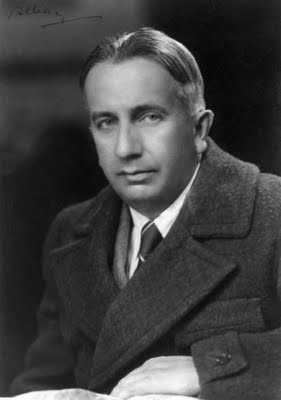 the lives of two German composers of the Nazi era and their very divergent paths: Carl Orff and Hanns Eisler. Eisler’s life is so fascinating that we returned to it this year with some added color provided by Hanns’s brother, a Comintern agent, and sister, one co-founder of the Austrian communist party and co-leader of the German one. But let’s get back to Alfredo Casella who was born on July 25th of 1883 in Turin. Not unlike Orff and Eisler, he lived through one of the most turbulent periods in modern history: the First World War, Mussolini’s fascist regime, and then the Second World War. Casella entered the Paris Conservatory in 1896 to study piano and composition, and while there he met "everybody": Debussy and Ravel, Stravinsky and Enescu, de Falla and Richard Strauss. He returned to Italy during the Great War and for some time taught at the Accademia di Santa Cecilia in Rome. He became involved in the new "futurist" music and even wrote a "futurist" piece, Pupazzetti (Puppets), here. But Casella’s interest in historical Futurism was fleeting. In 1917 he, together with composers Ottorino Respighi and Gian Francesco Malipiero founded the National Music Society to perform new Italian music and to "resurrect our old forgotten music." In 1923 Casella, the poet and playwright Gabriele D'Annunzio and the same Malipiero organized Corporazione delle nuove musiche (CDNM), again with the goals of promoting modern Italian music as well as reviving the old. CDNM brought to the then-provincial Italy a number of new composers, including Béla Bartók and Paul Hindemith; CDNM’s concerts also featured music of Schoenberg, Stravinsky, Poulenc, Kodály and other contemporaries.
The 1920s was a time of great interest in European musical patrimony, the interest often tinged with nationalism. Like Respighi, who wrote The Birds and Ancient Airs and Dances, and Stravinsky (Pulcinella), Casella created pieces that echoed the music of his predecessors, in his case Scarlattiana (1926), an orchestral piece based on Domenico Scarlatti’s sonatas. And so, it was only natural that Casella became involved in the research and promotion of the music of Vivaldi. Ezra Pound and the violinist Olga Rudge, Pound’s companion, were also actively involved in reviving Vivaldi’s music. Pound at that time was a strong proponent of fascism; Casella too was a follower of Mussolini, especially his effort to create a national, state culture based on Italian cultural “self-sufficiency.” Casella of course was not the only one being seduced by fascism: most of the Italian cultural elites of the time, from D'Annunzio to painters Filippo Marinetti, Mario Sironi and even to some extent De Chirico, were either supporters of Mussolini or were strongly influenced by fascist ideals.
Casella’s wife was Jewish of French descent (they married in 1929), and when in 1938 Mussolini, under pressure from Hitler, passed racial laws, the life of the pro-regime Casella turned upside down. He lived in constant fear that his wife would be deported; at some point they split and Yvonne, Casella’s wife, went into hiding. On top of that, in 1942 he became seriously ill. Casella continued composing and teaching into the 1940s; his last composition was written in 1944, while Italy was a battlefield. It was called Missa Solemnis Pro Pace – a mass for peace. Among his many students was the composer Nino Rota, who wrote Cantico in memoria di Alfredo Casella. And a note for cinephiles: the Italian actress and filmmaker Asia Argento is Casella’s great-granddaughter.
Here's Casella’s Scarlattiana for piano and a small orchestra. Martin Roscoe is on the piano, Gianandrea Noseda conducts the BBC Philharmonic.Read more...
This Week in Classical Music: July 8, 2024. Hanns Eisler, part II. We ended the first part of our Eisler story in 1933 when the Nazis took power in Germany. Eisler’s music was immediately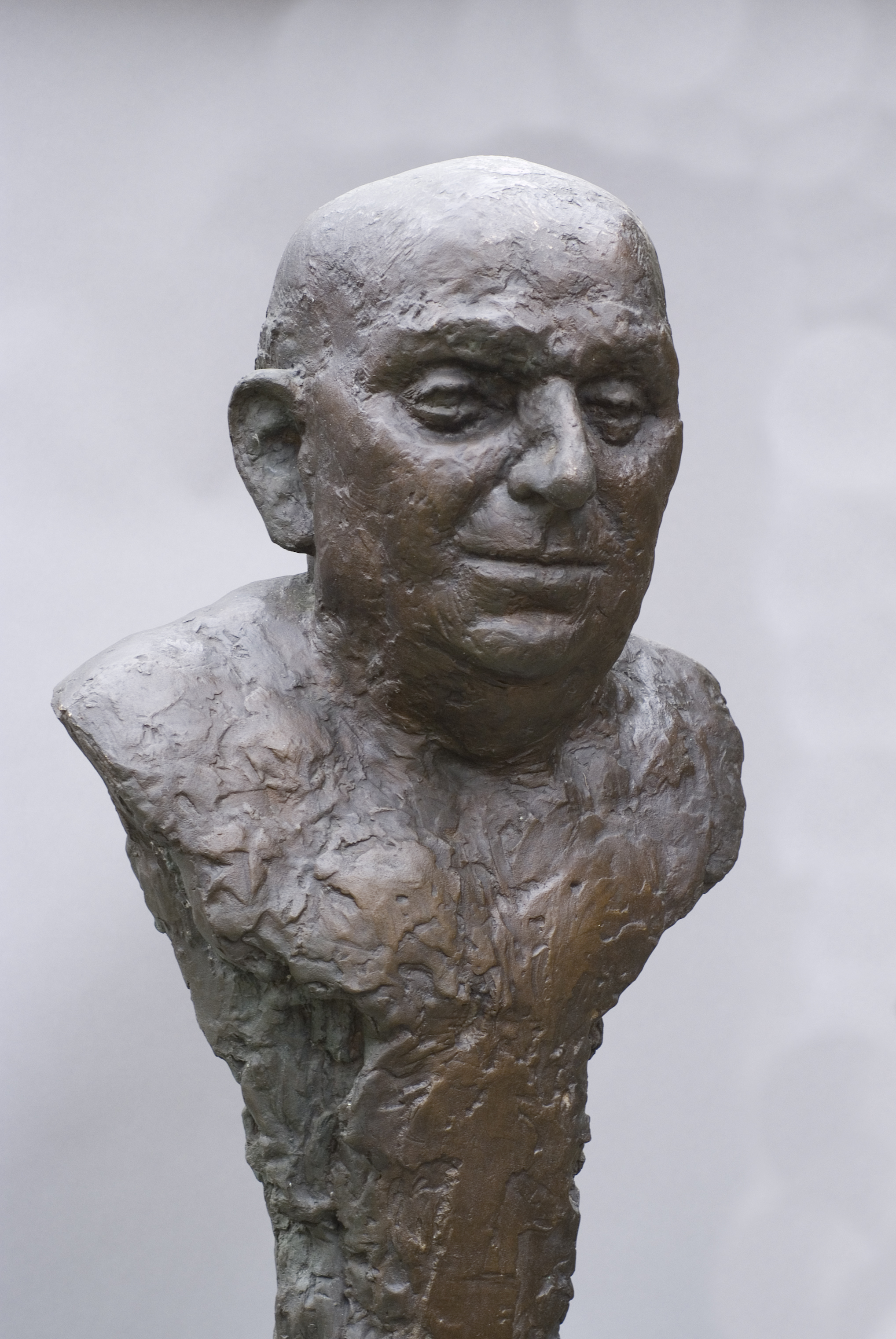 banned, as were his friend Brecht’s plays, and both went into exile. Brecht settled in Denmark while Eisler moved from one place to another, temporarily living in Prague, Vienna, Paris, London, Moscow, Spain in 1937, during the Civil War, and other countries. He also visited the US, twice. In 1938 he permanently moved to the US, where he received a position at the New School for Social Research in New York. In 1942 Eisler moved to California, where Brecht had been living since 1941. They continued their cooperation: Brecht wrote the script for Fritz Lang’s movie, Hangmen Also Die!, and Eisler wrote the music, which was nominated for an Oscar. Eisler wrote music for seven other Hollywood films, receiving another Oscar nomination in 1945. He continued writing music for films for the rest of his creative life, 40 of them altogether – that was a major part of his creative output. In 1947 he published a book, Composing for the Films, co-written with another German exile, the philosopher Theodor Adorno.
That same year, 1947, he was brought before the Congress’s Committee on Un-American Activities. One of his accusers was his sister, Ruth Fischer, who by then had turned into a radical anti-Stalinist. She testified before the committee against her brothers, Hanns and Gerhart. She claimed that both of them were Soviet agents. Hanns, while a committed communist who lied on his US visa application, probably wasn’t an agent, whereas Gerhart was not only a Comintern agent but also a spymaster. Hanns was a well-known figure in the Hollywood German community and, as a noted composer active in leftist causes, in Europe as well. A worldwide campaign on his behalf was organized and led by many prominent intellectuals, among them Charlie Chaplin, Thomas Mann, Albert Einstein, Pablo Picasso, Henri Matisse, Igor Stravinsky, Aaron Copland and Jean Cocteau (Stravinsky is a surprising name on this list – he wasn’t known for his liberal views). Despite all that, Hanns Eisler was expelled from the US in March of 1948. He returned to Vienna, and, after a couple of trips to East Berlin, he settled in the German Democratic Republic for good. In 1949 he composed a song, Auferstanden aus Ruinen (Risen from the ruins) which became the country’s national anthem. Eisler was elected to the Academy of Arts and, for a while, feted as the most important composer of the Republic. Brecht moved to East Berlin in 1949 and established a theater company, the Berliner Ensemble. Together, Brecht and Eisler worked on 17 plays. While much of his previous output was dedicated to music of protest, in East Germany Eisler felt compelled to write music supporting the regime. No chamber music was written – that was too bourgeois. So the main output was “applied music“ for theater and movies, and songs, many for children and some for official occasions. Not everything was going well for Eisler: he wanted to compose an opera on the Faust theme, Johannes Faustus, and wrote a libretto for it, but the libretto was severely criticized in the press. Eisler got depressed and dropped the idea. Then, in 1956, Brecht died, and that depressed Eisler even more. He was encouraged by the 20th Congress of the Soviet Communist Party and its promise of de-Stalinization, but that didn’t have much effect on the repressive regime of East Germany. A lifelong communist, Eisler became disconnected from the realities of communist Germany. He suffered two heart attacks, the second killing him in September 1962. He was buried next to Brecht in Berlin.
Here, from the last pre-Nazi year, 1932, is Eisler’s Kleine Simphonie. Deutsches Symphonie-Orchester Berlin is conducted by Hans Zimmer.Read more...
This Week in Classical Music: July 8, 2024. Mahler, Eisler. Last week, we wanted to write about Hanns Eisler who was born on July 7th but were sidelined by the 100th anniversary of the great cellist János Starker. July 7th was also the anniversary of Gustav Mahler, and we couldn’t miss it. Mahler was born in 1860; his last completed symphony, no. 9, was written between 1908 and 1909 (he died in 1911, at age 50). The last (fourth), movement of the symphony, Adagio, is one of the greatest pieces of music ever written, bar none. The movement preceding it, Rondo-Burleske, is denoted by Mahler as Allegro assai (Very cheerful) and Sehr trotzig (Very defiant). It’s complex, contrapuntal, and borderline insane, and not cheerful at all. It’s difficult for a conductor to interpret and for an orchestra to play. At the same time, if well done, it leads perfectly into the deathly serenity of the last movement. Here is Claudio Abbado with the Lucerne Festival Orchestra in a live 2010 performance. You can compare it with the interpretation by Pierre Boulez and Chicago, here.
Now back to Hanns Eisler. Eisler was born in Leipzig, Germany, on July 7th of 1898; his father was Jewish, his mother Lutheran. The family was very political: Hanns’s brother was a prominent communist journalist, while his sister, Elfriede Eisler-Fischer, was a co-founder of the Austrian Communist party. In 1901 the family moved to Vienna. Hanns himself became active in politics at the age of 14, joining a Socialist youth group. During the Great War, Eisler served in the Austrian army. As a boy, he studied the piano on and off and composed some music (he did it even during the war). In 1918 the war was lost, the Austro-Hungarian empire disappeared; Eisler returned to the impoverished Vienna, now the capital of a tiny Austria, looking to continue his musical studies. He was accepted by Arnold Schoenberg, who taught him composition free of charge (Anton Webern sometimes was the substitute teacher). Inculcated in atonality and serialism, Eisler wrote several pieces that sounded very much like his teacher’s, especially the ones written for voice. Here, for example, is Palmström for Voice, Flute, Clarinet, Violin, Viola and Cello, which Schoenberg asked Eisler to write for a performance that also featured Pierrot lunaire (Junko Ohtsu- Bormann is the soprano). Eisler’s piano pieces of the period were light and fresh, as, for example, is the short Andante con moto, op. 3, no.1 (Siegfried Stöckigt is the pianist).
Parallel to being involved with music, Eisler continued to be actively engaged in politics, and that, in turn, strongly affected his composition style. Eisler became a devoted Marxist and joined several radical leftist organizations, first in Austria and then, after moving to Germany in 1925, in Berlin where he applied for membership in the German Communist Party. He became disaffected with the “bourgeois” 12-tonal music and quarreled with Schoenberg who could not accept his student’s political views. Affected by ideology, Eisler switched to composing marches and solidarity songs, including Kominternlied, the unofficial hymn of the Comintern, the Soviet Union-led Communist International. Many of his songs became very popular with the European Left. They contained fighting words, and we should remember that that was the time when the Communists were literally fighting the Nazis on the streets of Germany.
In 1930 Eisler met the playwright Bertolt Brecht, one of the stars of the Left. They became lifelong friends and their cooperation led to several influential theatrical productions. We’ll finish the story of Hans Eisler during the Nazi period, his emigration and, later, his unexpected return to Germany, next week.Read more...
This Week in Classical Music: July 1, 2024. Sarker and more. We will celebrate János Starker’s 100th birthday on July 5th. One of the greatest cellists of the 20th century, Starker was born in Budapest in 1924 into a Jewish family. Starker, a child prodigy, entered the Budapest Academy at the age of seven and gave his first solo performance at 11. His teachers at the Academy were Leo Weiner, Zoltán Kodály, Béla Bartók and Ernő (Ernst von) Dohnányi – the pre-war Budapest Academy was a great music institution. Starker left the Academy in 1939, the year WWII started; he spent the wartime in Budapest and survived (the majority of the Budapest Jews were sent to Auschwitz in the last months of the war and perished there; two of his older brothers were murdered by the Nazis). After the war, with Budapest occupied by the Soviets, Starker joined the Budapest Philharmonic Orchestra as Principal Cello. In 1946 he left Hungary, going to Paris first and two years later to the US. He became the principal cellist of the Dallas Symphony Orchestra whose music director was a fellow Hungarian Jewish conductor Antal Doráti. From 1949 to 1953 Starker was the principal cello of the Metropolitan Opera Orchestra, then under the direction of Fritz Reiner, another Jewish musician from Budapest. From 1953 to 1958 he occupied the same position at the Chicago Symphony, which at that time was also led by Reiner. In 1958 Starker was appointed professor of cello at Indiana University, Bloomington; he remained there for the rest of his life. He toured widely and made many recordings.
Starker recorded the complete set of Bach’s cello suites five times, the first recording made in 1950-52, the last – in 1997; that one won a Grammy. Here’s Johann Sebastian Bach’s Suite no. 5 in c minor. János Starker recorded it in New York on April 15th and 15th of 1963. There are many wonderful performances of this piece, we think this is one of the very best.
Starker died in Bloomington, Indiana, on April 28th of 2013.
We’d also like to mention several other names. Hans Werner Henze, an influential and prolific German composer, was born in Dresden on July 1st of 1926. And more than two centuries earlier, on July 2nd of 1714, another German, the great Christoph Willibald Gluck was born in the village of Erasbach, now part of Berching, a town in Bavaria.
We wanted to write about Hanns Eisler but Starker’s 100th anniversary intervened. Eisler, a composer of considerable talent, strong political opinions and an unusual life, was born on July 6th of 1898. We’ll write about him next week.Read more...
This Week in Classical Music: June 17, 2024. Benedetto Marcello. Benedetto Marcello, born on June 24th of 1686, was an unusual composer: a Venetian patrician, he was an amateur musician. His father wanted Benedetto to become a lawyer, which he did, and was so successful in this profession that at the age of 20, he was admitted to the Great Council of Venice, and five years later elected to the Council of Forty, Venice’s Supreme Court. In 1730 he was sent to Pula in Istria, then part of the Venetian Republic and now in Croatia, to serve as Governor (it could’ve been an exile, but we don’t know). He stayed in Pula for eight years and then retired to Brescia as a papal chamberlain. He died there of tuberculosis in 1739. While a successful public servant (and also a poet), Marcello’s real love was music. He took some lessons in his youth but never had formal musical training. He probably started composing around 1710: as he was never associated with any musical institution, researchers have a difficult time dating his work. He wrote some instrumental pieces, but Marcello’s main interest was sacred music. A collection titled Estro poetico-armonico (it could be roughly translated as Poetic and Harmonic Inspiration) consists of 50 psalms (Salmi), several masses, and a Requiem. Here are Kyrie I and II, from the Requiem. Academia de li Musici is led by Filippo Maria Bressan. And here is one of his Salmi, Psalm 3, O Dio perché. Konrad Junghänel conducts the ensemble Cantus Cölln.
An interesting tidbit: Faustina Bordoni, one of the most famous singers of the 18th century, Handel’s favorite, and the wife of the composer Johann Adolf Hasse, was “brought up under the protection of the brothers Alessandro and Benedetto Marcello,” as per Grove Music, and later received lessons from the brothers.
And speaking of singers, Anna Moffo was born on June 27th of 1932 in Philadelphia into a family of poor Italian immigrants. She studied at the Curtis and then in Italy. There, in 1955, she made her debut in Don Pasquale. Then, still just 23 and virtually unknown (but very pretty), she was offered the role of Cio-Cio San by RAI, the main Italian TV company. Madama Butterfly was telecast in January of 1956 and made Moffo famous overnight. Her career took off: she was asked to join Maria Callas, Giuseppe di Stefano and Rolando Panerai in the 1956 now-famous recording of La bohème, conducted by Karajan. In 1957 she premiered at the La Scala, and the Vienna State Opera, and in 1959 made her debut at the Metropolitan. Moffo had a beautiful lyric soprano voice; she also sang coloratura roles. Here she is, singing Sì. Mi chiamano Mimi, from Act I of La bohème. Tullio Serafin conducts the Rome Opera House Orchestra.
And so that we don’t forget, Claudio Abbado, one of our all-time favorite conductors, was born on June 26th of 1933. Read more...
This Week in Classical Music: June 17, 2024. Stravinsky. Is it just us or did the music of Stravinsky lose some of its magic? Not that long ago it seemed that Stravinsky’s place at the very top of the musical Olympus was unshakable – but maybe listeners have had too much of The Rite of Spring and piano transcriptions of Petrushka. That Igor Stravinsky, born on June 17th of 1882 outside of St. Peterburg, was a genius is without a doubt. He had several creative phases: the initial, “Russian” phase, closely linked to Sergei Diaghilev, a great Russian impresario who established himself in Paris. It was during this period and owing to Diaghilev’s commissions that Stravinsky composed his most popular ballets: The Firebird (1910), Petrushka (1911), The Rite of Spring (1913), Les Noces (The Wedding, 1914-17). He made symphonic suites out of The Firebird and The Rite and transcribed parts of Petrushka for the piano; the public knows them better in these incarnations. He also composed two operas, The Nightingale in 1914 and Histoire du soldat in 1918, and, as with the ballets, he then used them to write orchestral pieces, Song of the Nightingale and a chamber suite from the Histoire. This was a remarkably fertile period: his music was unlike anything else ever composed (and therefore, scandalous, which only helped his fame), its harmonies and dissonances, its rhythms, the Russian exoticism – all of it captivated the public. By the end of WWI Stravinsky was acknowledged as one of the greatest living composers. And then, in the early 1920s he completely changed his style, the very nature of his compositions, replacing the wild, in-your-face energy of The Rite of Spring and other Russian-phase compositions with the Apollonian clarity, balance and emotional distance of the ballets Pulcinella, Apollo, and The Fairy's Kiss; the opera Oedipus rex, and several instrumental pieces. Later he wrote three symphonies, Symphony of Psalms (1930), Symphony in C (1940), and Symphony in Three Movements (1945). All three are composed mostly in the “neo-classical” style, though one can hear the younger Stravinsky in all of them. And then he made another turn, this time to the twelve-tone technique of his rival, Schoenberg. That was in the mid-1950s when Stravinsky was already in his 70s. In music, this capacity to reinvent himself is unique but he had a great counterpart in the arts, Pablo Picasso, who also went through many “periods”: Blue, Rose, Cubism, Neoclassical, Surrealist, and so on. For a long time, Picasso was considered the greatest artist of the 20th century, but recently we came across an article that questioned his primacy. Is the same happening to Stravinsky?
Here, from the late neo-classical period, is Stravinsky’s Symphony in Three Movements. In this 1985 live recording, Leonard Bernstein leads the Israel Philharmonic.Read more...
This Week in Classical Music: June 10, 2024. On Place of Music in Culture, again. Edvard Grieg and Richard Strauss were born this week, the Norwegian on June 15th of 1843, and the German – on June 11th of 1864, but this is not what we want to write about this week. The pianist Bruce Liu played a recital in Chicago on Sunday a week ago. Mr. Liu is 27, he was born in Paris and raised in Montreal. Three years ago, he won the Chopin Piano Competition and since then his career has taken off. We heard good things about him, and his YouTube videos sounded interesting; we considered going to the concert but then circumstances intervened and we missed it. A couple of days later, interested in learning how Mr. Liu had played, we went online looking for a review. It turned out that not a single Chicago media outlet sent a reviewer to the concert: not the Chicago Tribune, not the Sun-Times, not even Larry Johnson’s Chicago Classical Review. We don’t know if Mr. Lui played well; what we do know is that the audience was very happy with him: he played six encores, all of them listed in the CSO updated program.
  Of course, the number of encores depends not only on the public’s enthusiasm but also on the performer – some prefer not to play any, as, for example, Sviatoslav Richter or Claudio Arrau later in their careers, others, likeEvgeny Kissin, enjoy playing them. Still, six encores at Orchestra Hall is a substantial number, which very likely reflects the audience’s appreciation, whether of the pianist's technique or musicianship, that we don’t know (that the technique is there is certain: listen to this half-minute Etude by Alkan).
And here’s another thing: while looking for a review, we came across one from the Stanford Daily. Musicians often perform on campuses, and it seems that student newspapers are better at covering classical music than the mainstream media (we saw several more of those). The review was enthusiastic if not very professional, but that was a minor problem. What caught our eye was a disclaimer that preceded the review itself. It said, “This article is a review and includes subjective thoughts, opinions and critiques.” Just think about it for a second: the readers, mostly students, were warned (or, in modern parlance, trigger-warned) that the article they’re about to read may include such scary things as “opinion and critique.” It is like the warning TV news programs give their thin-skinned viewer when covering wars, that some unpleasant things may be seen, probably because they don’t trust their audience to know what a war is. These warnings about thoughts, opinions and critiques are a direct consequence of the cultural metamorphosis on our campuses that also produced “safe spaces” and the notion of microaggression, and which, in the last years, spread out to society at large. It will take at least a generation to get rid of this inanity.
If anything, the program Bruce Liu played in Chicago was very imaginative: a sonata by Haydn, Chopin’s sonata no. 2, a piece by Kapustin, several pieces by Rameau, with Prokofiev’s Piano Sonata no 7 concluding the announced part of the program (the encores were by Bach, Chopin, Tchaikovsky and Liszt). Here’s one piece he played during the concert: Rameau’s Gavotte with six doubles from Nouvelles suites de pièces de clavecin. We think it’s very well-played, nuanced and in good taste. Read more...
This Week in Classical Music: June 2, 2024. Argerich and Bartoli. For several weeks now we’ve been posting entries about composers, neglecting the performers. In a way, it’s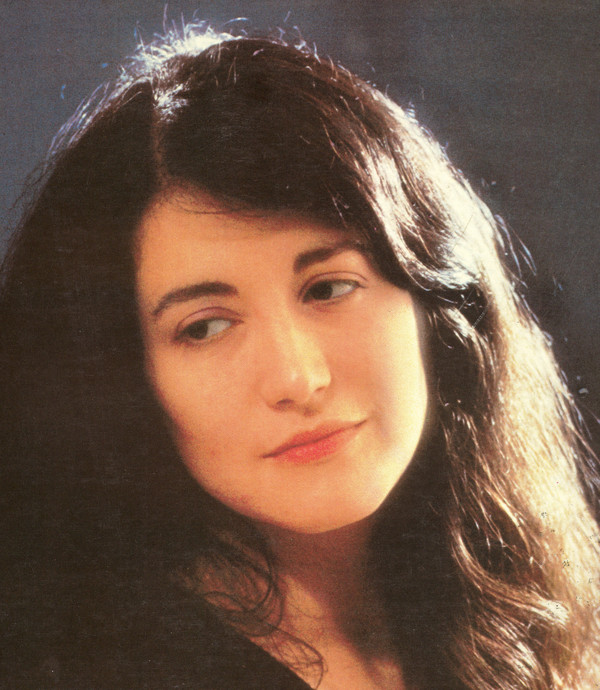 understandable: somehow, we value the creative talent of composers higher than that of performers and interpreters. It’s not immediately obvious why a gift from God of one type should be considered more important than another, especially considering that, historically, this has not always been the case, but this is a topic for another time. Two supremely gifted women were born this week, the pianist Martha Argerich, on June 5th of 1941, and the singer Cecilia Bartoli, on June 4th of 1966. Argerich, one of the most celebrated musicians of our time, still performs, at the age of 83. Here’s part of her schedule for June of this year: three performances on June 13th through 1
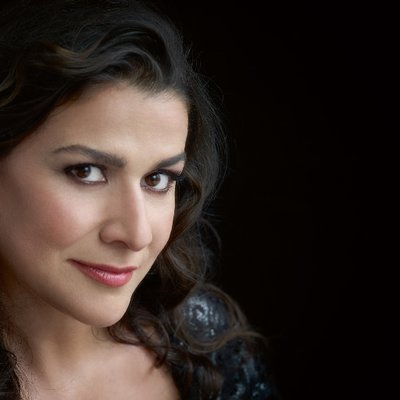 5th of Beethoven’s Second Piano Concerto in Rome at the Auditorium Il Parco Della Musica, then several concerts in Hamburg – playing Ravel’s La Valse for two pianos with Sergio Tiempo on the 20th, the next day playing chamber pieces of Schumann, Beethoven and Shostakovich, and the following day giving a concert of Chopin pieces. And it goes like that for the rest of the month, almost every day: Schumann’s Dichterliebe with Ema Nikolovska, Beethoven’s Triple Concerto with Gil Shaham and Edgar Moreau, some Debussy, Schubert and Mussorgsky, and on the last day of the month, Shostakovich’s Concerto no. 1, for piano and trumpet with Sergei Nakariakov, a Russian-Israeli, Paris-based trumpet virtuoso. What amazing energy! We wish her many years to come.
Cecilia Bartoli was born in Rome and studied there at the Santa Cecilia Conservatory. She made her opera debut at the age of 21, and one year later was already widely known in Europe. Bartoli has a rare voice, a coloratura mezzo-soprano, with a huge range and unique flexibility. This allowed her to sing not just the standard mezzo repertoire, such as Rosina in The Barber of Seville, Zerlina in Don Giovanni, Cherubino in The Marriage of Figaro, or Dorabella in Così fan tutte, all of which she did extremely well;, she also brought to life Baroque music rarely heard before, and almost never performed on such a level, not since the end of the era of castrati. Here, for example, is Bartoli performing two arias from Vivaldi’s opera Griselda. First, Agitata da due venti (Moved by the wind), recorded in 1998 with the ensemble Sonatori de la Gioiosa Marca, and next, Dopo Un'orrida Procella (After a horrible storm), recorded one year later with Il Giardino Armonico under the direction of Giovanni Antonini. We find Bartoli’s musicianship and technique incredible.
Here are the names of three conductors born this week, Yevgeny Mravinsky, born June 4th of 1903, who led the Leningrad Philharmonic for 50 years and was a great interpreter of the music of Tchaikovsky and Shostakovich; a wonderful Mahlerian, the German conductor Klaus Tennstedt (June 6th of 1926); and the Jewish Hungarian-American, George Szell (June 7th of 1897), who, among other things, made the Cleveland Orchestra into one of the best in the world. Read more...
This Week in Classical Music: May 27, 2024. Joachim Raff. The German composer Joachim Raff was born on this day in 1822. For all the years we’ve been writing these entries, not once did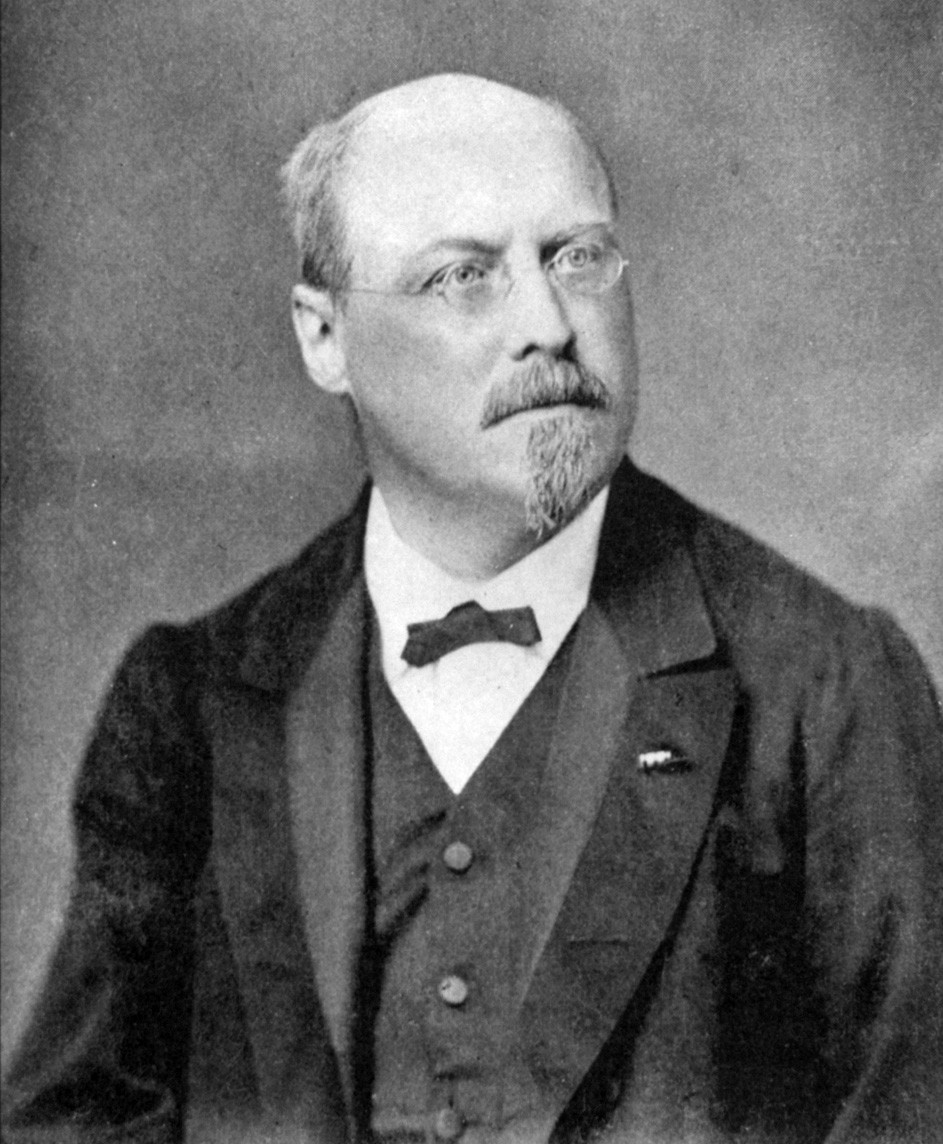 we mention his name. Of course, there are thousands of composers whose names escaped our attention, but these are usually second and third-tier; what makes Raff’s case unusual is that at the height of his popularity in the 1860s and 70s, his work was more popular than that of any other living German composer, including Bruckner (not at all popular during his lifetime) and Brahms. Soon after his death, Raff’s music was forgotten, and very few pieces are still performed today; it’s interesting to look back to see what attracted the sophisticated German public to his work and why it was abandoned so quickly. Raff, of German descent, was born in Switzerland, where his father escaped to avoid conscription during the Napoleonic wars. He was trained as a teacher, but as a musician, Raff was mostly self-taught (he became an accomplished pianist and organist); he started composing in his early 20s. Raff sent some of his work to Mendelssohn, who praised it and helped to get it published. In 1845 Raff, who lived in Zurich, met the great Franz Liszt. Liszt took a liking to him and found Raff a job in Cologne in a piano and music store. While in Cologne, Raff met Mendelssohn face-to-face and stayed in contact with Liszt. In 1847 he moved to Stuttgart and met the young Hans von Bülow. Bülow would later go to study with Liszt, marry his daughter Cosima, and then lose her to Wagner. He would also be one of the 19th-century best pianists and conductors. Bülow and Raff became best friends; Bülow had strong opinions and a sharp tongue and sometimes criticized Raff’s compositions but their friendship survived for the rest of Raff’s life.
Raff followed Lisz to Weimar, where, as Liszt’s protégé, he entered the circle of “New German composers,” an influential group that included Wagner. There he met Brahms and the famous violinist and conductor Josef Joachim. He also met his future wife, actress Doris Genast. Things looked positive for a while but eventually, it became clear that opportunities in Weimer were limited. And so, even though Liszt aided Raff financially and supported his musical efforts, Raff decided to leave Weimar. Around 1858, he found a position in Wiesbaden and moved there. It was in Wiesbaden that Raff composed the majority of his work and achieved public recognition. His First Symphony, a 70-minute composition subtitled An das Vaterland (To the Fatherland) was composed between 1859 and 1861 and was well received. And so were many other works that followed: his Third Symphony (Im Walde, In the Forest) became one of the most often-performed symphonies of its time, and the Fifth (Lenore) was also received enthusiastically. His piano and violin concertos became popular and the chamber pieces were widely performed. It’s even said that Raff’s music had some influence on Tchaikovsky and Richard Strauss. It’s not clear why Raff was forgotten so quickly. Indeed, he was not very original, much of his music was too long, and he wrote too much of it. But the same could be said about some 19th-century composers who are still feted today. And some of Raff’s music is very pretty. These days very few of his pieces are played, his Fifth Symphony, Lenore, is one of them. You can judge for yourself whether it’s worth it. Here’s the 1st movement of this symphony. Yondani Butt is leading the Philharmonia Orchestra. And if you want to hear more, here’s the rest of the symphony: the 2nd, 3rd and 4th movements.
Read more...This Week in Classical Music: May 20, 2024. Wagner and Lighter Things. Richard Wagner’s 211th anniversary is on May 22nd: he was born in Leipzig in 1813. Wagner’s music is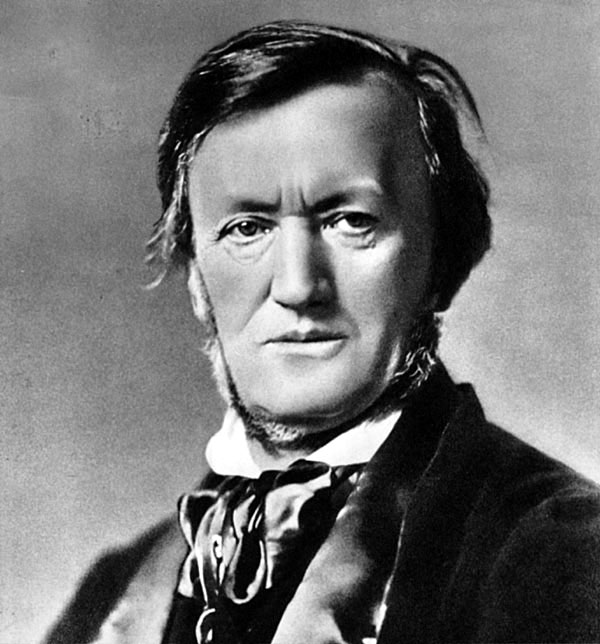 still so fresh (and often so controversial) that it feels strange that he was only two years younger than his stepfather, Franz Liszt, and three years younger than Frédéric Chopin and Robert Schumann, whose places in the pantheon of European music have been established a long time ago. Hitler’s love for his music didn’t help Wagner’s reputation, and neither did the composer’s abhorrent antisemitism. But if we put the non-musical considerations aside (and we recognize that it’s easier said than done), what we have is a musical genius, well ahead of his contemporaries, a composer whose music influenced generations of musicians all over the world, sometimes in very unexpected ways (think, for example, of the orchestral works of Claude Debussy, who had a love-hate relationship with Wagner).
Liebestod, or Love Death in German, is the final music of Wagner’s opera Tristan und Isolde, and one of his best-known pieces. In it, Isolde sings over Tristan’s dead body. It’s a difficult piece, especially considering it comes at the end of an almost five-hour opera. In our library we have three recordings of this scene, with Kirsten Flagstad, Birgit Nilsson and Waltraud Meier; all three were leading Wagnerian sopranos of their generation. We like all three, but Flagstad’s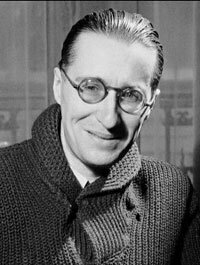 probably the most, even though the recording quality is not great. Here it is, from 1936, with Fritz Reiner conducting the orchestra of the Royal Opera House (Covent Garden).
On a much lighter note is the anniversary of Jean Françaix, whose music was sunny, witty and sophisticated. Françaix was born on May 23rd of 1912 in Le Mans. His musical gifts were obvious from an early age. He studied in Le Mans and then at the Paris Conservatory. He also took lessons with Nadia Boulanger, who considered him one of her most talented pupils, a praise of the highest order considering the many talented musicians who studied with her. Here’s Jean Françaix’s Concertino for Piano and Orchestra. The soloist is Claude Françaix, the composer’s daughter. The London Symphony Orchestra is conducted by Antal Dorati.Read more...
This Week in Classical Music: May 13, 2023. Monteverdi and more. We’ll be brief this week, not that we’ve been too loquacious lately. Of the composers, the great Claudio Monteverdi, widely considered the most important composer of the end of the 16th – early 17th century, was born this week in 1567. He was baptized on May 15th in a church in Cremona, so most likely he was born a day earlier, on May 14th. In 2017, on Monteverdi’s 450th anniversary, we posted an entry about him. You can read it here.
Maria Theresia Paradis, born May 15th of 1759 in Vienna, was a blind piano virtuoso. As a composer, she is remembered for one piece only, her Sicilienne, even though she authored several operas and cantatas. It was performed on the violin and cello, and served as the favorite encore piece to many, from Nathan Milstein to Jacqueline du Pré (here). The problem is that most likely, the Sicilienne wasn’t written by Paradis at all but is a hoax perpetrated by Samuel Dushkin, a Polish-American violinist. Dushkin claimed that he found it among Paradis’ piano pieces and arranged it for the violin, but such a manuscript was never found. Sill, Paradis helped to establish the first school for the blind (in 1785, in Paris) and should be remembered if not as a composer, then as a pioneering blind musician.
Also, Otto Klemperer, one of the most important German conductors, was born on May 24th of 1885 in Breslau, then the capital of German Silesia, now Wrocław, Poland. He was one of many Jewish musicians who escaped Germany after the Nazis took power in 1933. He left for Switzerland but ended up in the United States where he led several major orchestras, including the LA Philharmonic and the Pittsburgh Symphony. After WWII, Klemperer reestablished his career in Europe, especially in London. He died in Zurich in 1973.Read more...
This Week in Classical Music: May 6, 2024. Brahms, Tchaikovsky, and more. Tomorrow is the birthday of two great composers, Johannes Brahms and Pyotr (Peter) Tchaikovsky. Brahms was born on May 7th of 1833 in Heide, a small town in northern Germany (then, the duchy of Schleswig-Holstein); Tchaikovsky – seven years later, in a small town of Votkinsk, not far from the Ural Mountains. Tchaikovsky is considered (at least, by the Russians) the greatest Russian composer, while Brahms is one of the “Three Bs” (with Bach and Beethoven). They lived through the same period (Brahms died in 1897, four years after Tchaikovsky), both were great symphonists, they wrote violin concertos that are considered among the best ever written, and their piano concertos are also hugely
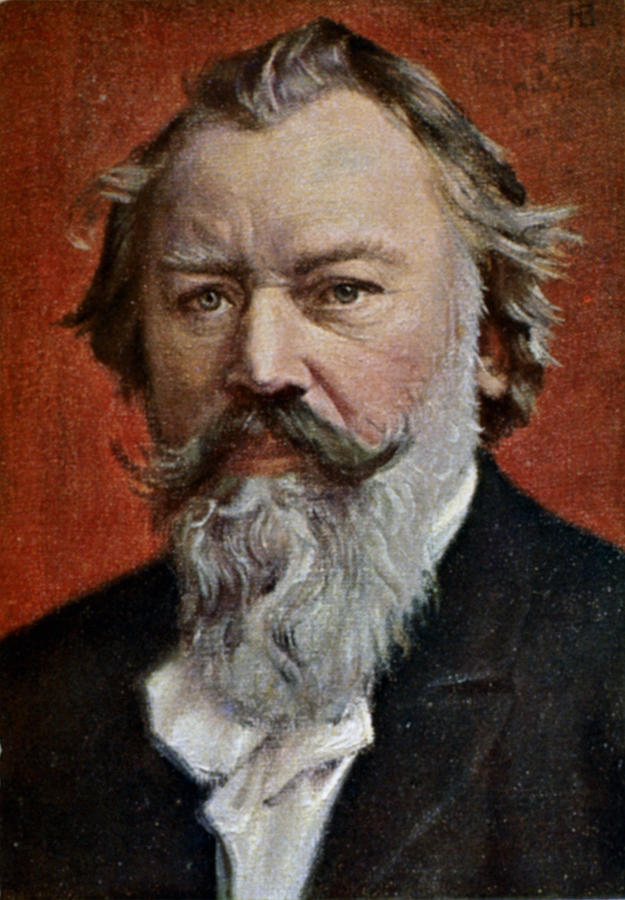 popular. Nonetheless, their music is as different as it can be, and so were their lives: Brahms’s was steady, not very eventful (at least the way it manifested itself to outsiders), Tchaikovsky’s – full of tragedies, many of which related to his closeted homosexuality. Given the format of our entries, we can do justice neither to their biographies, nor their music: we've dedicated four entries to Arnold Schoenberg just to go into some detail, and here we have two very prolific composers. So instead, we’ll play their violin concertos, the ones we mentioned above, both featuring female soloists. Here’s Rachel Barton Pine playing Brahms (Chicago Symphony Orchestra is conducted by Carlos Kalmar); and here is the Tchaikovsky; Julia Fischer is the soloist, Yakov Kreizberg leads the Russian National Orchestra).
Four composers were born on May 12th: Giovanni Battista Viotti, the famous Italian violinist and composer, in 1755; the Frenchman Jules Massenet, known for his operas Manon and Werther, in 1842; another, musically more adventuresome Frenchman, Gabriel Faure, three years later; and Anatoly Lyadov, the Russian composer known as much for his friendship with Tchaikovsky as for his small scale piano and orchestral pieces. Here’s Lyadov’s Kikimora (a nasty house spirit in Russian mythology); the Russian National Orchestra is conducted by Mikhail Pletnev.Read more...
This Week in Classical Music: April 29, 2024. Hans Pfitzner: antisemitism then and today. We are remembering the German composer Hans Pfitzner, who was born on May 5th of 1869, not because of his talent – he was a conservative composer with certain gifts, but not more than that – but because of the antisemitism on our campuses. Pfitzner was a nationalist who was taken by the Nazi ideas; he met Hitler as early as 1923 (Hitler visited him in a hospital where Pfitzer was recovering after surgery). Pfitzner was very impressed, but not Hitler, he even decided that Pfitzner was half-Jewish. It took poor Pfitzner many years to get rid of this reputational blemish. Pfitzner lived in an atmosphere of unmitigated antisemitism, and while himself a vocal antisemite who thought that Jews, especially foreign Jews, presented a danger to German spiritual life and culture, he was not a “total” antisemite like the Nazi leadership, he was an antisemite “with exceptions.” For example, he refused to write the music to Shakespeare’s A Midsummer Night’s Dream when the Nazis decided to replace the Jewish Mendelssohn’s classical score – unlike Carl Orff, who was happy to oblige. Pfitzner tried to help some Jewish musicians, in particular his good friend the music critic Paul Cossmann: Pfitzner was instrumental in saving Cossmann’s life in 1933 when he was arrested by the Gestapo but was helpless in 1942 when Cossmann was sent to the Theresienstadt concentration camp, where he perished several months later. Of course, Pfitzner was not an exception: during the Nazi period, German society as a whole was antisemitic. It was this societal antisemitism and, consequently, utter indifference to the fate of the Jews that allowed the Nazis to proceed with the “Final solution.”
After WWII and the Holocaust, antisemitism became an unacceptable trait, in all Western countries. So who could imagine that in 2024 the campuses of our elite universities would become centers of organized antisemitism? That Hamas supporters would become moral leaders of our most privileged youth, that we would hear the chants of “October 7th Every Day!”? What is worse, instead of acting responsibly and resisting antisemitism, university administrators equivocate, and so do many in our media. This is disheartening, and we don’t see the light at the end of this especially dark tunnel.Read more...
.jpg "Sergey Prokofiev, by Konchalovsky") composers of the first half of the 20th century, was born this week. The English-language wiki gives his birth date as April 27th of 1891, the Russian one – as April 23rd, and so does Grove Music. It’s even more confusing because at the end of the 19th century, Russia was still using the “old style” Julian calendar, according to which Prokofiev was born on April 11th (or April 15th). Even the English spelling of his first name differs in different sources: with an “i” at the end in Wiki, but a “y” in Grove and Britannica. None of which matters much; what is important is his undeniable talent as a composer and pianist. Prokofiev left Russia after the Revolution of 1917 but then returned, unexplainably in retrospect, to the Soviet Union in 1936. He wasn’t the only one: dozens of Russian emigres, writers, artists, composers, even the members of the White Guard, returned to their land of birth, driven by nostalgia and Soviet propaganda, many of them to be arrested and killed. Prokofiev was spared, even if for some years his position was tenuous. We’ve written about Prokofiev many times, you can read more, for example, here and here.
composers of the first half of the 20th century, was born this week. The English-language wiki gives his birth date as April 27th of 1891, the Russian one – as April 23rd, and so does Grove Music. It’s even more confusing because at the end of the 19th century, Russia was still using the “old style” Julian calendar, according to which Prokofiev was born on April 11th (or April 15th). Even the English spelling of his first name differs in different sources: with an “i” at the end in Wiki, but a “y” in Grove and Britannica. None of which matters much; what is important is his undeniable talent as a composer and pianist. Prokofiev left Russia after the Revolution of 1917 but then returned, unexplainably in retrospect, to the Soviet Union in 1936. He wasn’t the only one: dozens of Russian emigres, writers, artists, composers, even the members of the White Guard, returned to their land of birth, driven by nostalgia and Soviet propaganda, many of them to be arrested and killed. Prokofiev was spared, even if for some years his position was tenuous. We’ve written about Prokofiev many times, you can read more, for example, here and here.
This Week in Classical Music: April 22, 2024. Prokofiev, Menuhin and Pamphili. Classical Connect is still in turmoil, so we’ll be brief. Sergey Prokofiev, one of the most important
Yehudi Menuhin, one of the greatest violinists of the 20th century, was born in New York on this day in 1916. And we want to remember Cardinal Benedetto Pamphili, born on April 25th of 1653 in Rome. He was an important patron of arts, especially favoring composers (Handel was one of them), and a fine librettist. You can read about him here.Read more...
This Week in Classical Music: April 15, 2024. Marriner, Maderna. Sir Neville Marriner, a great English conductor, was born one hundred years ago today, on April 25th of 1924 in Lincoln,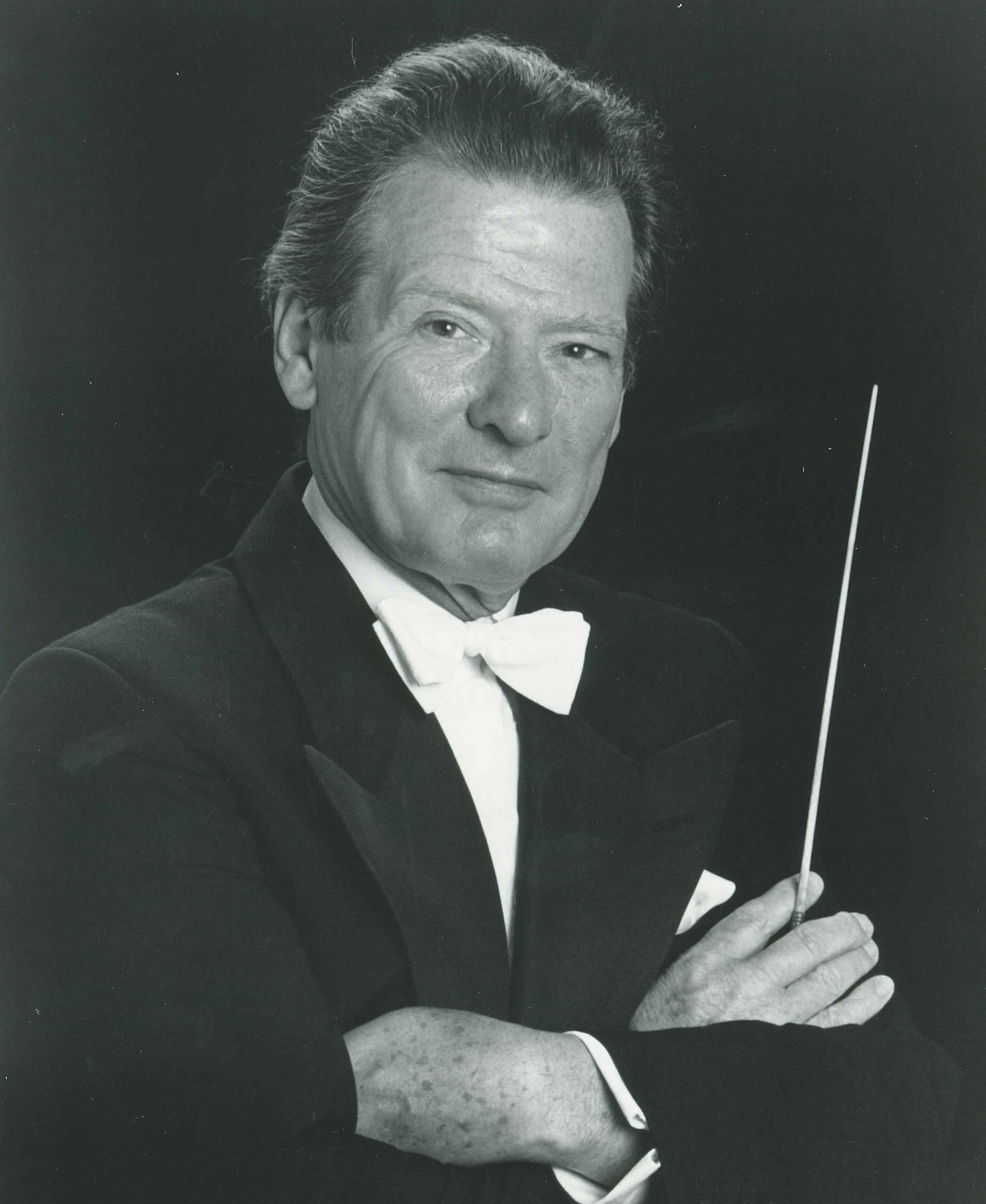 UK. He started as a violinist, played in different orchestras and chamber ensembles, and in 1958 founded the Academy of St Martin in the Fields, the chamber orchestra that became world famous. Among Marriner’s friends and founding members were Iona Brown, who led the orchestra for six years from 1974 to 1980, and Christopher Hogwood, who later founded the Academy of Ancient Music. Marriner and St Marin in the Fields made more recordings than any other ensemble-conductor pair. Their repertoire was very broad, from the mainstay of the baroque and classical music of the 18th century to Mahler, Janáček, Stravinsky, Prokofiev and other composers of the 20th. In the words of Grove Music, Marriner’s performances were “distinguished by clarity, buoyant vitality, crisp ensemble, and technical polish.” Altogether, Marriner made 600 recordings, more than any other conductor except for Karajan. In 1969 Marriner co-founded the Los Angeles Chamber Orchestra, he served as the music director of the ensemble till 1978. Marriner was active till the very end of his life; he died in London on October 2nd of 2016, at 92.
Bruno Maderna, one of the most interesting and influential composers of the 20th century, was born in Venice on April 21st of 1920. Here’s our entry from some years ago.Read more...
This Week in Classical Music: April 8, 2024. Sol Hurok, Impresario. He was neither a musician nor a composer, but Sol Hurok did for classical music in America more than almost any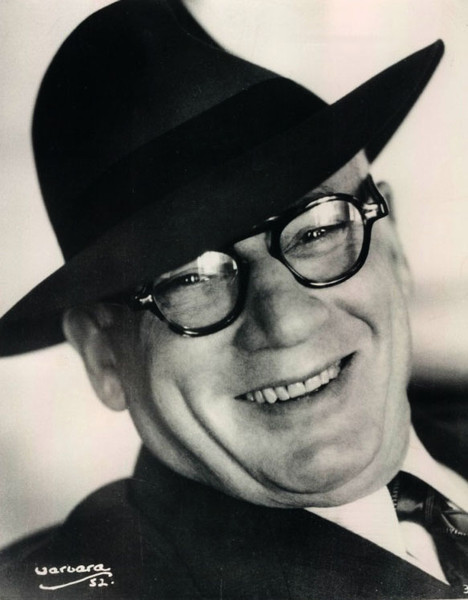 other person we can think of. Hurok was born Solomon Gurkov on April 9th of 1888 in Zarist Russia and moved to New York in 1906. A natural organizer, he started with left-wing politics in Brooklyn; that didn’t last long as he switched to representing musicians: Efrem Zimbalist and Mischa Elman, the talented violinists who also emigrated from Russia, were among his first clients. He represented the Russian bass Fyodor Chaliapin for several years (he also worked with Nellie Melba and Titta Ruffo). He then turned to dance: Anna Pavlova, Isadora Duncan, and Michel Fokine became his clients, as well as the Ballet Russe de Monte Carlo. In 1942, he organized one of the first tours of the American Ballet Theatre.
Hurok represented Marian Anderson when working with black singers was not a popular undertaking; he helped to organize Anderson’s famous concert at the Lincoln Memorial, which was broadcast nationwide and made her a household name. Among Hurok’s longest associations were those with Arthur Rubinstein and Isaac Stern. The list of Hurok’s clients read as Who-is-Who in American Music: he worked with the cellist Gregor Piatigorsky, violinists Nathan Milstein and Efrem Zimbalist, and later represented the younger stars, Van Cliburn, Jacqueline du Pré, Itzhak Perlman, and Pinchas Zukerman.
For many years Hurok tried to bring Soviet artists to America. It became possible only after Stalin’s death. The pianists Emil Gilels and violinist David Oistrakh came first, in 1955, then, later, such luminaries as Sviatoslav Richter, Vladimir Ashkenazy, Leonid Kogan and Mstislav Rostropovich. Hurok also represented the singers Galina Vishnevskaya and Irina Arkhipova and conductors Kiril Kondrashin and Yevgeny Svetlanov. Some of Hurok’s greatest coups were achieved with the ballet companies: the Bolshoi tour in 1959 was a sensational success, and so was Kirov’s, which Hurok brought in 1961.
Sol Hurok died in New York on March 5th of 1974.Read more...
This Week in Classical Music: April 1, 2024. Easter Sunday was yesterday. Here is the first chorus of Bach’s St. Matthew Passion, "Kommt, ihr Töchter, helft mir klagen" (Come ye daughters, join my lament). Collegium Vocale Gent is conducted by Philippe Herreweghe.
Two composers (great pianists both) were born on this day: Ferruccio Busoni in 1866 and Sergei Rachmaninov in 1873.Read more...
This Week in Classical Music: March 25, 2024. Maurizio Pollini, one of the greatest pianists of the last half century, died two days ago, on March 23rd in Milan at the age of 82. His technique was phenomenal, even though he lost some of it in the last years of his life (he performed almost till the very end of his life and probably should’ve stopped earlier). His Chopin was exquisite (no wonder that he won the eponymous competition in 1960), as was the rest of the standard 19th-century piano repertoire, but he also was incomparable as the interpreter of the music of the Second Viennese School, and even more so as the performer of the contemporary music, much of it written by his friends: Luigi Nono, Pierre Boulez, Karlheinz Stockhausen, Bruno Maderna, and many other. He will be sorely missed. Speaking of Pierre Boulez: his anniversary is this week as well: he was born on March 26th of 1925.
Also this week: Franz Joseph Haydn, born March 31st of 1732; Carlo Gesualdo – on March 30th of 1556; Johann Adolph Hasse, onMarch 25 of 1699; and one of our favorite composers of the 20th century, Béla Bartók, on March 25th of 1881.Read more...
This Week in Classical Music: March 18, 2024. Classical Connect is on a hiatus. Johann Sebastian Bach was born this week, on March 21st of 1685 (old style), in Eisenach. Here is the first part of Bach’s St. John Passion, one of his supreme masterpieces.
Read more...This Week in Classical Music: March 11, 2024. Classical Connect is on a hiatus.
Read more...This Week in Classical Music: March 4, 2024. Luigi Dallapiccola, Part II. Last week, we ended the story of the Italian composer Luigi Dallapiccola at the beginning of WWII. Mussolini’s fascist state had passed race laws that restricted the civil rights of the Italian Jews, affecting Dallapiccola directly, as his wife was one of them. Later laws would strip the Jews of their assets and send them into internal exile. Italy was no Germany, and these laws weren’t enforced by the Mussolini fascists as they were by the Nazis: no Italian Jews were killed by the regime just because they were Jews (many political opponents of Mussolini were imprisoned and executed, and some of them were Jewish). That state of affairs abruptly changed in 1943 when the Italian army surrendered to the Allies, and in response, the Nazis occupied all of the northern part of Italy. During those years, Dallapiccola and his wife lived in Florence, where he was teaching at the conservatory – Florence was part of the occupied territory. In 1943 and again in 1944, they were forced into hiding, first in a village outside the city, then in apartments in Florence.
Once the war was over, Dallapiccola’s life stabilized. His opera Il prigioniero (The Prisoner), which he composed during the years 1944-48, was premiered in 1950 in Florence (the opera was based in part on the cycle Canti di prigionia, the first song of which we presented in our entry last week). The opera's music was serialist; it was one of the first complete operas in this style, as Berg’s Lulu, the first serialist opera, had not yet been finished. Hermann Scherchen, one of the utmost champions of 20th-century music, conducted the premiere. Despite the music’s complexity, it was often performed in the 1950s and ‘60s. Times have changed, but it’s still being performed, occasionally. Here is the Prologue and the first Intermezzo (Choral) of the opera, about eight minutes of music. It was recorded live in Bologna on April 16th of 2011; Valentina Corradetti is the soprano singing the role of Mother, the orchestra and chorus of the Teatro Comunale di Bologna are conducted by Michele Mariotti.
In 1951, Serge Koussevitzky, the music director of the Boston Symphony and himself a champion of modern music, invited Dallapiccola to give lectures at the Tanglewood Festival. After that first trip, Dallapiccola often traveled to the US, sometimes staying for a long time. Dallapiccola, who spoke English, German and French, also traveled in Europe. Interestingly, he never visited the Darmstadt Summer School, the gathering place for young composers such as Karlheinz Stockhausen, Pierre Boulez, Luigi Nono and Bruno Maderna, who were experimenting with serial music and developing new idioms. It’s especially surprising considering that he was very close to Luigi Nono, and that Luciano Berio, also a Darmstadt habitué, was his former student. It seems that the Darmstadt composers were too cerebral and too radical for Dallapiccola, whose pieces, while strictly serial during that period, were infused with lyricism, somewhat in the manner of one of his idols, Alban Berg.
Dallapiccola’s last large composition was the opera Ulisse, which premiered in Berlin in 1968; Lorin Maazel was the conductor. After that, Dallapiccola composed very little, his time went into adapting some of his lectures into a book. He died on February 19th of 1975 in Florence.
In 1971 Dallapiccolo compiled two suites based on Ulisse. Here is one of them, called Suite/A. The soprano Colette Herzog is Calypso, the baritone Claudio Desderi is Ulysses. Ernest Bour conducts the Chorus and the Philharmonic Orchestra of the French Radio.Read more...
This Week in Classical Music: February 26, 2024. Missed dates and Luigi Dallapiccola. For the last three weeks, we’ve been preoccupied with Alban Berg, and we feel good about it: Berg was a revolutionary composer (not by his constitution but by the nature of his creative talent) and he should be celebrated, even if our time, philistine and woke, doesn’t suit him well. The problem we have is that we missed several very significant anniversaries: for example, George Frideric Handel‘s – he was born on February 23rd of 1685; also, one of the most interesting German composers of the 16th century, Michael Praetorius, was born on February 15th of 1571. We missed the birthday of Francesco Cavalli, a very important composer in the history of opera, on February 14th of 1602. Two famous Italians were also born during those three weeks, Archangelo Corelli on February 17th of 1653 and Luigi Boccherini, on February 19th of 1743. Of our contemporaries, György Kurtág, one of the most important composers of the late 20th century, celebrated his 98th (!) birthday on February 19th. And then this week, there are two big dates: Frédéric Chopin’s anniversary is on March 1st (he was born in 1810) and Gioachino Rossini’s birthday will be celebrated on February 29th – he was born 232 years ago, in 1792. We’ve written about all these composers, about Handel and Chopin many times. Today, though, we’ll remember an Italian whom we’ve mentioned several times but only alongside somebody else; his name is Luigi Dallapiccola, and his story has a connection to Alban Berg.
Luigi Dallapiccola was born on February 3rd of 1904 in the mostly Italian-populated town of Pisino, Istria, then part of the Austrian Empire. Pisino was transferred to Italy after WWI, to Yugoslavia after WWII, as Pazin, and now is part of Croatia. The Austrians sent the Dallapiccola family to Graz as subversives (Luigi, not being able to play the piano, enjoyed the opera performances there); they returned to Pisino only after the end of the war. Luigi studied the piano in Trieste and in 1922 moved to Florence, where he continued with piano studies and composition, first privately and then at the conservatory. During that time, he was so much taken by the music of Debussy that he stopped composing for three years, trying to absorb the influence. A very different influence was Schoenberg’s Pierrot Lunaire, which Luigi heard in 1924 at a concert organized by Alfredo Casella (in the following years, Casella would become a big supporter and promoter of Dallapiccola’s music).
Upon graduation, Dallapiccola started giving recitals around Italy, later securing a position at the Florence Conservatory where he taught for more than 30 years, till 1967 (among his students was Luciano Berio). In 1930 in Vienna, he heard Mahler’s First Symphony, which also affected him strongly: at the time, Mahler’s music was practically unknown in Italy. In the 1930s, Dallapiccola's life underwent major changes. Musically, he became more influenced by the Second Viennese School, and in 1934 got to know Alban Berg (in 1942, while passing through Austria to a concert in Switzerland, he met Anton Webern). The policies of Italy also affected him greatly: first, he was taken by Mussolini’s rhetoric, openly becoming his supporter. This changed with the Abyssinian and Spanish wars, which Dallapiccola protested, and then much more so when Mussolini, under pressure from Hitler, adopted racial (for all practical purposes, antisemitic) policies: Dallapiccola’s wife, Laura Luzzatto, was Jewish. They married on May 1, 1938; the racial laws were adopted in November of that year. Here, from 1938, is the first of the three Canti di Prigionia (Songs of Imprisonment), Preghiera di Maria Stuarda (A Prayer of Mary Stuart) written, in part, as a protest against Mussolini’s racial laws. The New London Chamber Choir is conducted by James Wood, and the Ensemble Intercontemporain, by Hans Zender. We’ll continue with the life and music of Luigi Dallapiccola next week. Read more...
 were two, Earth Spirit, written in 1895, and Pandora's Box, from 1904, usually paired together and called Lulu plays, after the name of the protagonist. For a while, the plays were banned for presumed obscenity. Berg saw the plays in the early 1900s in Berlin, with Wedekind himself playing Jack the Ripper in Pandora's Box. He was much taken by the plays, and some quarter century later, following the success of his first opera, Wozzeck, decided to write another one, based on Wedekind’s plays. The storyline of the plays is convoluted: Lulu, an impoverished girl, is saved by a rich publisher, Dr. Schön, from life on the streets. Schön brings her up and makes her his lover. Later, he marries Lulu off to one Dr. Goll. The painter Schwarz gets involved; Lulu seduces him, and poor Dr. Goll dies of a heart attack upon learning of Lulu’s betrayal. Lulu marries painter Schwarz while remaining Dr. Schön’s mistress. Dr. Schön tells Schwarz about Lulu’s past; overwhelmed,
 Schwarz kills himself. Eventually, Lulu marries Dr. Schön but is unfaithful to him, sleeping with Schön’s son Alwa and other men and women. Once Schön discovers her affairs, he gives Lulu a gun to kill herself - but instead, she shoots him. Lulu is imprisoned at the end of Earth Spirit. In Pandora's Box, Lulu escapes from prison with help from her lesbian lover and marries Alwa, Dr. Schön’s son, (whose father Lulu killed in cold blood). She’s then blackmailed by her former companions and subsequently loses all her money when a certain company’s shares, Lulu’s main asset, become worthless. Lulu and Alwa move to London; destitute, she works as a streetwalker. One of her clients kills Alwa, and eventually, Lulu herself is killed by Jack the Ripper.
This Week in Classical Music: February 19, 2024. Alban Berg, Part III, Lulu. Frank Wedekind was a famous (and controversial) German playwright. Among his more famous plays
By 1929, when Berg started working on Lulu, he was financially secure and quite famous, thanks to the popularity of Wozzeck. He used Wedekind’s Earth Spirit to write the libretto for Act I and part of Act II, and Pandora's Box for the rest of what he planned as a three-act opera. He worked on it for the next five years and mostly completed it in what’s called a “short score,” without complete orchestration, in 1934. By then the Naxis were in power and the cultural situation had changed dramatically. Berg’s position was difficult on two accounts: first, because of the kind of music he was composing (by now not just atonal but 12-tonal) – the Nazis considered it “Entartete,” that is “Degenerate.” And secondly, he was a pupil of a famous Jewish composer, Schoenberg, and that, in the eyes of the regime, tainted him even more. Wozzeck was banned (Erich Kleiber conducted the last performance of the opera in November of 1932), practically none of his music was being performed, and Berg’s financial situation was precarious. In January of 1935, the American violinist Louis Krasner commissioned Berg a violin concerto; financially, that was of great help and the concerto, dedicated to the 18-year-old daughter of Alma Mahler and the architect Walter Gropius, who died of polio, became one of Berg’s most successful compositions.
Understanding that Lulu most likely wouldn’t be staged in Germany – or anywhere else – anytime soon, Berg decided to write a suite for soprano and orchestra based on the opera, the so-called Lulu Suite. Erich Kleiber performed it in November of 1934, it was well received by the public but the level of condemnation by Goebbels and his underlings was such that Kleiber was not only forced to resign from the Berlin Opera but emigrated from Germany. Berg continued working on the orchestration of Lulu but never completed it: in November of 1935 he was bitten by an insect, that developed into a furuncle, which led to blood poisoning. Berg died on Christmas Eve of 1935. In 1979, the Austrian composer Friedrich Cerha completed the orchestration of the third act; this became the standard version of Lulu.
Here is Berg’s Lulu Suite. It’s performed by the City of Birmingham Symphony Orchestra with Simon Rattle conducting. Arleen Auger is the soprano.Read more...
This Week in Classical Music: February 12, 2024. Alban Berg, Part II. In 1911, Arnold Schoenberg moved from Vienna to Berlin but the intense relationship between Berg and his teacher continued through letters. Schoenberg’s notes often contained demands that were about more than just the music: some were domestic, some financial. Though Berg adored his teacher, Schoenberg’s demands were difficult and time-consuming, and the relationship was getting more difficult – so much so that in 1915 their correspondence broke off. WWI was in full swing; Berg was conscripted into the Austrian Army and served for three years (the 42-year-old Schoenberg, who moved back to Vienna in 1915, also served in the army, but only for a year). Things changed in 1918 after Berg was discharged: he returned to Vienna and reestablished his relationship with his teacher.
In May of 1914 Berg attended a performance of Woyzeck, a play by the German playwright Georg Büchner. He immediately decided to write an opera based on the play; it would become known as Wozzeck, a misspelling of the original play’s name that somehow stuck. Berg wrote the libretto himself, selecting 15 episodes from Woyzeck, a macabre story of a poor and desperate soldier, who, suspecting that the mother of his illegitimate child is having an affair with the Captain, murders her, and then drowns. Berg started writing sketches soon after he saw the play but had to stop in June of 1915 when he was drafted. He continued composing while on leave in 1917 and 1918, finished the first act in 1919, the second act two years later, and completed the opera in 1922. It premiered at the Berlin State Opera in December of 1925, with Erich Kleiber conducting. Wozzeck created a scandal, which is understandable, given that it was the first full-size opera written in an atonal idiom, unique not only musically but also in its emotional impact. What is more important (and somewhat surprising) is that the premier was followed by a slew of productions across Germany and Austria. Wozzeck was staged continuously in different German-speaking cities for the next eight years, but also internationally: in Prague, Philadelphia, and even in such an unlikely place as Leningrad. It all came to an end when the Nazis banned it as part of their campaign against Entartete Musik (Degenerate music) and the Austrians dutifully followed. Wozzeck’s success made Berg financially secure, brought him international recognition and some teaching jobs. We’ll listen for the first 15 minutes of Act II of Wozzeck. In Scene 1, Marie puts her son to bed, then Vozzeck arrives, gets suspicious of her earrings (they were given to her by the Captain), gives her some money and leaves. In Scene 2, the Doctor and the Captain walk the street; they see Wozzeck, make fun of him and insinuate that Marie isn’t faithful. Wozzeck runs away in despair. Claudio Abbado conducts the Orchestra and Chorus of the Vienna State Opera (we know the orchestra as the Vienna Philharmonic); Wozzeck is sung by Franz Grundheber, his common-law wife Marie is Hildegard Behrens. Heinz Zednik is the Captain, Aage Haugland is the Doctor.
Wozzeck was an atonal opera, but it wasn’t a 12-note composition, the technique which by then was being developed by Schoenberg. Berg was receptive to it and soon moved in a similar direction. He wrote two pieces, Kammerkonzert (Chamber Concerto for Piano and Violin with 13 Wind Instruments), completed in 1925, and Lyric Suite, a year later, which broadly used the 12-tone technique. In 1929 he started work on his second major opera, Lulu, a much larger and more complex composition than Wozzeck. We’ll cover it next week, in our the third and final installment on Berg.Read more...
This Week in Classical Music: February 5, 2024. Berg, Part I, Early Years. Alban Berg, a seminal German composer of the first half of the 20th century, was born in Vienna on February 9th of 1885. Berg, with Anton Webern, was a favorite pupil of Arnold Schoenberg and was one of the first composers to write atonal and 12-tonal music. While Schoenberg was often cerebral, even in his more expressive works and Webern a much stricter follower of the technique in his succinct, perfectly formed pieces, Berg’s music was more lyrical and Romantic, even as he abandoned the tonal format. Berg’s background was very different from his Jewish teacher’s: his Viennese family was well-off, at least while his father was alive (he died when Alban was 15), they lived in the center of the city (Schoenbergs lived in Leopoldstadt, a poor Jewish neighborhood). Berg was a poor student: he had to repeat the 6th and the 7th grades. Even though Alban was interested in music from an early age and wrote many songs, he clearly wasn’t suited for studies in a formal environment and lacked the required qualifications, so, instead of going to a conservatory he became an unpaid civil servant trainee. In 1904, without any previous musical education, he became Schoenberg’s student. By that time Schoenberg, who was struggling financially and took students to support himself, had already written Verklärte Nacht (Transfigured Night) and a symphonic poem Pelleas und Melisande. Both had a fluid tonal canvass as Schoenberg was already researching the atonal idiom, but it would be another three years till he’d write his Quartet no. 2, his first truly atonal piece; all these developments took place while Berg was his student. Berg studied with Schoenberg till 1911, first the counterpoint and music theory, and later composition. During that time he sketched several piano sonatas and later completed one of them, published as his op. 1. That was a big departure, as before joining Schoenberg all he could write were songs.
We should note that the pre-WWI years in Vienna were a period of tremendous cultural development; despite the overall antisemitism of the Austrian society, many of the leading figures were Jewish, and sexuality was explored deeply for the first time. In music, it was Gustav Mahler, Richard Strauss, Alexander von Zemlinsky, Schoenberg, Franz Schreker, Egon Wellesz, Ernst Toch, and of course, Webern and Berg, with many younger composers to follow. Arthur Schnitzler, Hugo von Hofmannsthal, Robert Musil and Stefan Zweig were important novelists and playwrights (Frank Wedekind, their German contemporary, was the source for Berg’s opera Lulu). The painter Gustav Klimt was Berg’s friend, and so was the architect Adolf Loos. And we shouldn’t forget Sigmund Freud, who was not just a psychoanalyst famous around Vienna but a leading cultural figure.
A characteristic episode happened in March of 1913 when Schoenberg conducted what became known as the Skandalkonzert ("scandal concert") in Vienna’s Musikverein. Here’s the program: Webern: Six Pieces for Orchestra; Zemlinsky: Four Orchestral Songs on poems by Maeterlinck; Schoenberg: Chamber Symphony No. 1; Berg: Two of the Five Orchestral Songs on Picture-Postcard Texts by Peter Altenberg. Mahler's Kindertotenlieder was supposed to be performed at the end, but during the performance of Berg’s songs fighting began and the concert was cut short. The Viennese public’s response could be expected, if not necessarily in its physical form (after all, their favorite music was Strauss’s waltzes), but how many American presenters would dare to program such a concert in our time, more than 100 years later? We can listen to Berg’s songs that were performed during the concert, no. 2 of op. 4 here and no. 3 here. The soprano is Renée Flemming; Claudio Abbado leads the Lucerne Festival Orchestra.
We’ll continue with Berg and his two masterpieces, operas Wozzeck and Lulu, next week. Read more...
This Week in Classical Music: January 29, 2024. Schubert, Mendelssohn and more. What an exceptional week: Franz Schubert was born on January 31st of 1797, and February 3rd is the anniversary of Felix Mendelssohn, born 12 years later, in 1809. We just celebrated Mozart’s birthday; he died very young, at 35. Schubert’s life was even shorter: he was 31 when he passed away, and Mendelssohn – only 38. All three could’ve lived twice as long, and our culture would’ve been so much richer. Schubert is one of our perennial favorites (tastes and predilections change, Schubert stays) and we’ve written many entries about him (here and here, for example), including longer articles on his song cycles. There are hundreds of his pieces in our library – he remains one of the most often performed composers. His life was not eventful, his music was sublime, so here’s one of his songs: An die Musik, that is, To Music that Schubert composed in March of 1817 (he was twenty). Nothing can be simpler and more beautiful. We could not select a favorite recording, there are too many excellent ones, so we present three, all sung by the Germans: soprano Elisabeth Schwarzkopf with the great pianist, Edwin Sicher, released in 1958 (here); the 1967 recording made by the baritone Dietrich Fischer-Dieskau with Roger Moore (here); and Fritz Wunderlich, an amazing tenor who also died at 35, accompanied by Hubert Giesen in a 1967 recording (here). You can decide for yourself which one you like better.
As for Mendelssohn, his most famous “songs” were not vocal butfor piano solo:Songs without Words. Still, he also composed “real” songs – not as many as Schubert, of course, who wrote about 600 – and some of them are wonderful. Here, for example, is Gruss (Greeting), a song from his op. 19a on a poem by Henrich Heine. It’s performed by the Irish tenor Robin Tritschler, accompanied by Malcolm Martineau. When he wrote his songs op. 19a, Mendelssohn wasn’t much older than Schubert of An die Musik: he started the cycle at the age of 21.
Three Italian composers were also born this week: Alessandro Marcello, on February 1st of 1673, Luigi Dallapiccola, on February 3rd of 1904, and Luigi Nono, on January 29th of 1924. We’ve never written about Dallapiccola even though he was a very interesting composer; we’ll do it next week.
Also, yesterday was Arthur Rubinstein’s birthday (he was born in 1887, 137 years ago, but his ever-popular recordings evidence that he was one of the greatest pianists of the 20th century). Two wonderful singers were also born this week, the Italian soprano Renata Tebaldi on February 1st of 1922, and the Swedish tenor Jussi Björling, one of the few non-Italians who could sing Italian operas as well as the best of the locals, on February 5th of 1911. Read more...
This Week in Classical Music: January 22, 2024. Mozart. The main event of this week is Mozart’s birthday, on January 27th. Wolfgang Amadeus was born in 1756 in Salzburg. One of the greatest composers in history, he excelled in practically every genre of classical music. His operas are of the highest order (just think of the Magic Flute, Don Giovanni, the Marriage of Figaro, or Così fan tutte, but then there are several operas, though not as popular, such as La clemenza di Tito, The Abduction from the Seraglio, or Idomeneo, that would make any other composer proud). His symphonies are the pinnacle of the orchestral music of the Classical period, and so are his piano concertos. His violin concertos were written when he was very young (the last one, no. 5, “Turkish” was completed when Mozart was 19) but were already very good. He wrote many piano sonatas that predate Beethoven’s, and wonderful violin sonatas (he was a virtuoso performer of both instruments). And then there is his chamber music: trios, quartets for all combinations of instruments, not just the strings, quintets, and much more. He did all that in just 35 years. In addition to the “standard” piano and violin concertos, Mozart wrote concertos for many different wind instruments: the horn (four of them), bassoon, flute, oboe, and clarinet. His Clarinet concerto in A major, K. 622 is marvelous. It’s a late piece, late, of course, in Mozart’s terms – he was 35 in 1791 when it was completed, less than two months before his death of still unknown causes (one thing we know for sure is that he has not been poisoned by Antonio Salieri): Mozart was already quite ill while working on the concerto. The concerto was written for Anton Stadler, a virtuoso clarinetist and a close friend of Mozart’s (they had known each other since 1781) for whom he also wrote his Clarinet Quintet. Stadler invented the so-called basset clarinet, a version of the instrument that allows the performer to reach lower notes, and that was the instrument for which Mozart wrote the concerto. We’ll hear it performed by a talented German clarinetist Sabine Meyer with the Staatskapelle Dresden under the direction of Hans Vonk.
Muzio Clementi, who competed as a keyboard player and composer with Mozart at the court of Emperor Josef II, was born on January 23rd of 1752. He, Henri Dutilleux, Witold Lutoslawski, the pianists Josef Hofmann, John Ogdon and Arthur Rubinstein, the cellist Jacqueline du Pré and Wilhelm Furtwängler, a great conductor, all of whom were born this week, will have to wait for another time.Read more...
This Week in Classical Music: January 15, 2024. Schein and much more. Several composers were born this week: Niccolò Piccinni (b. 1/16/1728), a nearly forgotten Italian composer who was famous in his day for his Neapolitan opera buffa; Cesar Cui (b. 1/18/1835), a Russian.jpg "Johann Hermann Schein, 1620") composer of French descent (his father entered Russia with Napoleon) and a member of the Mighty Five; Emmanuel Chabrier (b. 1/18/1841), a mostly self-taught French composer, whose España is his best-known symphonic work but who also wrote some very nice songs; Ernest Chausson (b. 1/20/1855), another Frenchman, who wrote the Poème for the violin and orchestra which entered the repertoire of all virtuoso violinists; Walter Piston (b. 1/20/1894), a prolific and prominent American composer of the 20th century who often used Schoenberg’s 12-note method; Alexander Tcherepnin (b. 1/20/1899), a Russian composer who was born into a prominent musical family (his father, Nikolai Tcherepnin was a noted composer and cultural figure), left Russia after the 1917 Revolution, settled in France, moved to the US after WII and had several symphonies premiered by the Chicago Symphony Orchestra; and, finally, another Frenchman, Henri Duparc (b. 1/21/1848), best known for his art songs. None of these composers were what is usually called “great” but all were talented and some of their works are very interesting. Listen, for example, to Alexander Tcherepnin’s 10 Bagatelles, op. 5 in a version for piano and orchestra (here). Margrit Weber is at the piano, Ferenc Fricsay conducts the Radio-Symphonie-Orchester Berlin. Or, in a very different way, here’s Duparc’s fine song, L'invitation au Voyage. Jessye Norman is accompanied by Dalton Baldwin.
composer of French descent (his father entered Russia with Napoleon) and a member of the Mighty Five; Emmanuel Chabrier (b. 1/18/1841), a mostly self-taught French composer, whose España is his best-known symphonic work but who also wrote some very nice songs; Ernest Chausson (b. 1/20/1855), another Frenchman, who wrote the Poème for the violin and orchestra which entered the repertoire of all virtuoso violinists; Walter Piston (b. 1/20/1894), a prolific and prominent American composer of the 20th century who often used Schoenberg’s 12-note method; Alexander Tcherepnin (b. 1/20/1899), a Russian composer who was born into a prominent musical family (his father, Nikolai Tcherepnin was a noted composer and cultural figure), left Russia after the 1917 Revolution, settled in France, moved to the US after WII and had several symphonies premiered by the Chicago Symphony Orchestra; and, finally, another Frenchman, Henri Duparc (b. 1/21/1848), best known for his art songs. None of these composers were what is usually called “great” but all were talented and some of their works are very interesting. Listen, for example, to Alexander Tcherepnin’s 10 Bagatelles, op. 5 in a version for piano and orchestra (here). Margrit Weber is at the piano, Ferenc Fricsay conducts the Radio-Symphonie-Orchester Berlin. Or, in a very different way, here’s Duparc’s fine song, L'invitation au Voyage. Jessye Norman is accompanied by Dalton Baldwin.
One composer, also born this week, interests us more than all the above, even though his name is almost forgotten- Johann Hermann Schein. Schein, a good friend of the better-known Heinrich Schütz, was one of the most important German composers of the pre-Bach era. He was born on January 20th of 1586 (99 years before Bach) in Grünhain, a small town in Saxony. As a boy, he moved to Dresden where he joined the Elector’s boys’ choir; there he also received thorough music instruction. In his twenties, on the elector’s scholarship, he studied law and liberal arts at the University of Leipzig. He published his first collection of madrigals and dances, titled Venus Kräntzlein, in 1609. Starting in 1613 he occupied several kapellmeister positions, starting in smaller cities, till 1616, when he was called to Leipzig. He passed the audition and was accepted as the Thomaskantor, the most senior position in the city and the one Bach would assume 107 years later. Like Bach a century later, he was responsible for the music at two main churches, Thomaskirche and the Nicolaikirche, and for teaching students at the Thomasschule. Schein held the position of Thomaskantor for the rest of his life, which, unfortunately, was short: in his later years, he suffered from tuberculosis and other maladies and died at the age of 44 (Heinrich Schütz visited him on his deathbed).
Here's Schein’s motet, Drei schöne Ding sind (Three beautiful things), performed by the Ensemble Vocal Européen under the direction of Philippe Herreweghe. And here’s another motet, Ist nicht Ephraim mein teurer Sohn (Isn't Ephraim my dear son?), performed by the same musicians.Read more...
This Week in Classical Music: January 8, 2024. Catching up. Last week we simply wished you a happy New Year, so this week we’ll try to make up for it and cover the first two weeks of the year. January 5th should be officially named Piano Day, as on this day three great pianists were born: Arturo Benedetti Michelangeli, in 1920, Alfred Brendel, in 1930, and Maurizio Pollini, in 1942. Pollini still performs, but we stopped attending his concerts some years ago: he’s now just a shadow of his great self. This doesn’t diminish his prodigious talent that he brilliantly displayed for decades with virtuosity and incisive repertoire, which, unique to a pianist of his stature, included the music of many modern composers. (In comparison, the repertoire of his compatriot, the perfectionist Michelangeli, was very narrow).
Two prominent Soviet cellists were born during these two weeks, Sviatoslav Knushevitsky, on January 6th of 1908, and Daniil Shafran, on January 13th of 1923. Knushevitsky is not well known outside of Russia but in his day, he was considered one of the very best (in the rank-obsessed Soviet Union, he was the third best cellist, after Rostropovich and Shafran; had he not drunk, he might have been number one). In 1940, Knushevitsky, David Oistrakh and Lev Oborin organized a very successful trio; they performed worldwide to great acclaim. Knushevitsky and Oistrakh also played together in one of the incarnations of the Beethoven quartet. Knushevitsky died at the age of 55 from a heart attack, alcoholism probably contributing to his early death. Here’s the famous second movement from Schubert’s Piano Trio no. 2, which Stanley Kubrick used so effectively in his Barry Lindon. It’s performed by David Oistrakh, violin, Sviatoslav Knushevitsky, cello, and Lev Oborin, piano. The recording was made in 1947. You can also find the complete Triohere. And here, from 1950, is Sviatoslav Knushevitsky’s recording of Tchaikovsky’s Rococo Variations. Alexander Gauk leads the Great Radio Orchestra. As for Shafran, you can read more about him in one of our earlier entries.
Another Russia-born string player has an anniversary this week: Nathan Milstein, one of the greatest violinists of the 20th century. Odessa, where Milstein was born on January 13th of 1904, was back then part of the Russian empire. Now, spelled Odesa, it is in free Ukraine, being bombed by Russia almost daily. Speaking of Russia, Aleksander Scriabin was born on January 6th of 1872 in Moscow. His early piano pieces were charming imitations of Chopin’s but later he developed a musical language all his own, with a very fluid tonality, if not quite atonal. His grandiosity, both personal and musical, and his attempts to synthesize music and color didn’t age well (especially in his orchestral output), but his piano music is still played very often and is of the highest quality.
Among other anniversaries: Francis Poulenc’s 125th was celebrated on January 7th (he was born in 1899). Giovanni Battista Pergolesi, who died tragically young, aged 26, from tuberculosis, but left us a tremendous Stabat Mater and a brilliant intermezzo La serva padrona (Sonya Yoncheva is great as Serpina in this production), was born in a small town of Jesi, Italy, on January 4th of 1710. Read more...
This Week in Classical Music: January 1, 2024. Happy New Year!

Read more...This Week in Classical Music: December 25, 2023. Christmas. We wish our listeners a Merry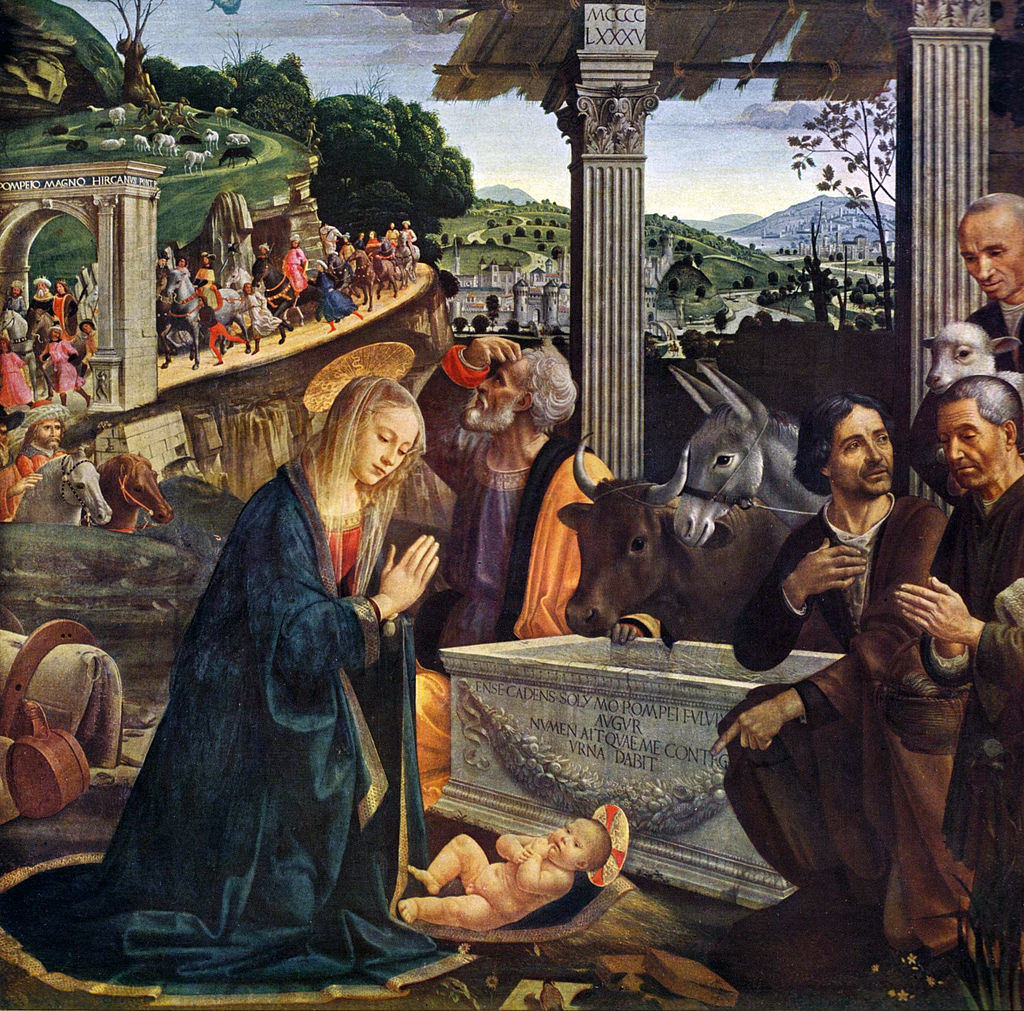 Christmas! On this wonderful day, we won’t bother you with disquisitions and analyses but will present some Christmas music for your pleasure – and this joyful piece is perfect for the occasion. It’s the first section of Johann Sebastian Bach’s Christmas Oratorio, a cantata known for the initial words of the first chorus as Jauchzet, frohlocket! (Shout for joy, exult). It was first performed on this day in 1734, in the morning, at St. Nicholas; and then in the afternoon, at St. Thomas in Leipzig: Bach, as Thomaskantor, was the music director of both churches and led both performances. What we will hear is a recording made in January of 1987 by John Eliot Gardiner conducting the English Baroque Soloists and Monteverdi Choir and several prominent soloists, Anne-Sophie von Otter among them. Enjoy and see you in 2024!Read more...
This Week in Classical Music: December 18, 2023. Three Pianists. During the last month, we were preoccupied with composers and completely ignored the performers, who bring their music to the public. So today we bring you three wonderful pianists: Radu Lupu, a Romanian, Mitsuko Uchida, born in Japan, and András Schiff, a British-Hungarian. All three belong to the same generation: Lupu was born in 1945 (on November 30th), Uchida in 1948 (on December 20th), and Schiff – in 1953, on December 21st. Uchida and Schiff are still performing, Lupu died on April 17th of last year.
Radu Lupu is widely considered one of the greatest pianists of his time. He studied in Moscow with Heinrich Neuhaus, who also taught Richter and Gilels. In the three years from 1966 to 1969, he won three major piano competitions, the Cliburn, the Enescu, and the Leeds, and embarked on an international career with successful concerts in London. Though he played all major composers of the 18th and 19th centuries, he was most closely associated with the music of Schubert, Schumann and Brahms. Here is Schubert’s Impromptu in A flat major, D. 935, no. 2 from a legendary 1982 Decca recording of Schubert’s Impromptus D. 899 and D.935.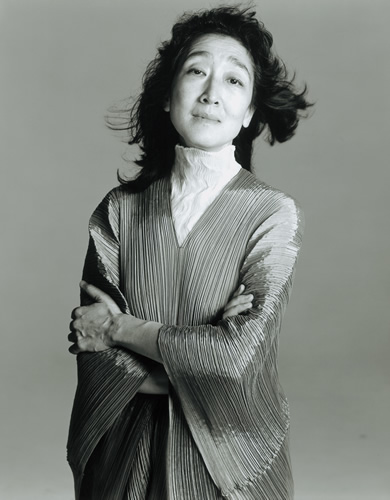
Lupu probably didn’t need any competition wins for his tremendous talent to be noticed by the public and the critics. Mitsuko Uchida didn’t need them either: all she got from competing in the majors was second place in the 1975 Leeds (a solid Dmitry Alekseyev won, and Schiff shared the third prize). Uchida’s family moved to Vienna when she was 12. She studied there at the Academy of Music (Wilhelm Kempff was one of her teachers). In the 1980s Uchida moved to London and has lived there since. In 2009, she was made Dame Commander of the Order of the British Empire, the second-highest British award. Uchida is rightfully famous for her Mozart, but her repertoire is very broad, from Haydn to Schoenberg. Here’s Mozart’s Piano Sonata No. 12 in F major, K.332, and here – one of the 12 Etudes by Debussy, no. 3, Pour les Quartes.
András Schiff fared even worse than Uchida in international competitions: in addition to third prize at the Leeds which we mentioned above, all he got was a shared fourth prize at the 1974 Tchaikovsky competition (the 18-year-old Andrei Gavrilov was the winner; a talented pianist, he had an interesting but brief career, which in its significance could not be compared to Schiff’s). András Schiff was born into a Jewish family in Budapest. He studied at the Franz Liszt Academy of Music there (György Kurtág was one of his professors and Zoltán Kocsis, who studied there at the same time, became a friend). He also took summer classes with Tatiana Nikolayeva and Bella Davidovich. Since the late 1980s he, like Uchida, has been living in London, and like her, was knighted (in 2014). Schiff is one of the most admired pianists of his generation; he feels comfortable in many venues: he plays recitals and concertos, loves ensemble playing, and often accompanies singers. His Bach is wonderful, but so are his Mozart and Haydn, Schubert and Schumann. He often played the music of his fellow Hungarian Bela Bartók but is very critical of the current political situation in his country of birth and even said that he’ll never set foot there. Here’s András Schiff playing Bach’s French Suite no. 4, recorded in 1991. This recording was made in Reitstadel, a former animal feed storage barn built in the 14th century and in our time converted into a concert hall. It’s located in the Bavarian town of Neumarkt in der Oberpfalz. Read more...
This Week in Classical Music: December 11, 2023. Beethoven and Berlioz. On December 16th we’ll celebrate Ludwig van Beethoven’s 253rd anniversary. As we thought of it, we remembered what happened on this date three years ago when the world was supposed to celebrate a monumental date, Beethoven’s 250th. It didn’t happen, as our musical organizations couldn’t bring themselves to honor a white male composer – that was the year of Critical Race Theory run amok, DEI ruling the world, and sanity running for cover On the website Music Theory’s White Racial Frace, Philip Ewell, a black musicologist, published an article titled “Beethoven Was an Above Average Composer – Let’s Leave It at That” which contained a sentence: “But Beethoven’s Ninth Symphony is no more a masterwork than Esperanza Spalding’s 12 Little Spells.” Alex Ross, our most important public music critic, felt compelled to respond to this nonsense with an article of his own, publishing “Black Scholars Confront White Supremacy in Classical Music” in the New Yorker magazine. The article's subtitle was: “The field must acknowledge a history of systemic racism while also giving new weight to Black composers, musicians, and listeners.” In the New York Times, Anthony Tomassini, the chief classical music critic who is no longer with the newspaper, wrote an article about the harm of the blind, behind-the-curtain orchestral auditions. Those were widely accepted a quarter century ago to avoid any racial or gender biases, but Tomassini argued that it hinders the racial diversification of our orchestras: “The audition process should take into account race, gender and other factors.” We wonder if he still thinks that way, or was that just intellectual cowardice, an attempt to cover his hide: after all, for decades he was toiling in a field that purportedly turned out to be racist through and through, and in all these years it never occurred to him to assess it in racial terms. All of this was just three years ago. This major burst of insanity seems to be behind us and hopefully will dissipate completely, sooner rather than later. Do we need to add a disclaimer that we are totally against any racial and gender discrimination, whether in music or any other cultural or social sphere? We hope not.
Back to Beethoven. We looked up our library, and it turns out that while we have most of Beethoven’s piano sonatas, we don’t have the sonata no. 19, a short and misnumbered piece, easy enough to be well known to practically all young pianists. Beethoven composed it sometime in 1797, about the same time as his sonatas nos. 3 and 4, but it wasn’t published till 1805 and thus acquired its late opus and number. Here it is, performed by Alfred Brendel in a 1992 recording.
Also, on this day 220 years ago Hector Berlioz was born in La Côte-Saint-André, a small town halfway between Lyon and Grenoble. Berlioz was one of the greatest composers France ever produced, and a very unusual one at that: he didn’t follow any established schools and didn’t leave any behind. We’ve written about Berlioz many times, and he requires a separate entry, so for now, here is his symphony cum viola concerto Harold in Italy (parts 1, Harold in the mountains,2, March of the pilgrims, 3, Serenade of an Abruzzo mountaineer, and 4, Orgy of bandits). The great violinist Yehudi Menuhin is playing the viola, with Sir Colin Davis conducting the Philharmonia Orchestra. Read more...
This Week in Classical Music: December 4, 2023. Ernst Toch and more. Erns Toch, the Jewish-Austrian composer, was born on December 7th of 1887 in Leopoldstadt, a poor, mostly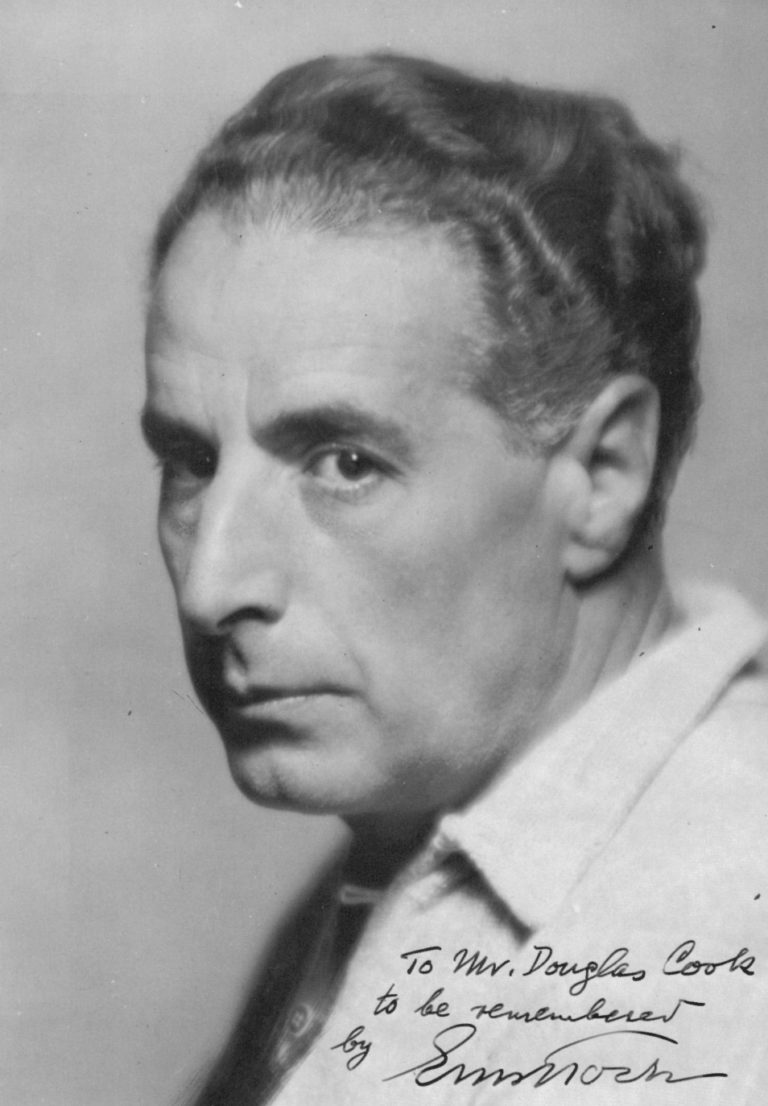 Jewish area in Vienna. Toch was one of a group of Austrian and German composers whose lives were upended by the rise of Nazism (Arnold Schoenberg, Franz Schreker, Karl Weigl, Egon Wellesz, Hans Gál, Erich Wolfgang Korngold and Berthold Goldschmidt, all Jewish, mostly forgotten except of course for Schoenberg, all talented if to a different degree, had their lives broken in 1933). One thing we find interesting is the ease with which they moved from Austria to Germany. These were two very different empires, one, declining, ruled by the peace-seeking Emperor Franz Joseph from Vienna, another – very much on the ascent, economically, politically and militarily, ruled by the arrogant and insecure Keiser Wilhelm II. But musicians thought nothing of moving from one country to another, from Vienna to Berlin and back, conducting in Hamburg or Leipzig one year and then returning to Austria, teaching at Berlin’s Hochschule für Musik and then at Universität für Musik in Vienna. And they didn’t need permission to work as long as positions were available. Musically, the pre-WWI Austria and Germany were one space, even more so than they are now.
Toch was at his most productive in the 1920s, when he wrote the Concerto for Cello and Chamber Orchestra, Bunte Suite, two short operas, many chamber pieces and piano music. Here’s Bunte Suite, whose sophisticated humor reminds us of the music of another Austrian composer, Ernst Krenek. The Suite is performed by the Karajan Academy of the Berliner Philharmoniker, Cornelius Meister conducting. You can read about Toch’s life after Hitler assumed power in last year’s post.
Jean Sibelius was also born this week, on December 8th of 1865. We have to admit that we’re not big fans of the Finnish composer, but his one-movement Symphony no. 7, is a masterpiece. Even though it’s his shortest, about 23 minutes long depending on performance, it took Sibelius 10 years (from 1914 to 1924) to complete. During that time, he managed to complete two more symphonies, nos. 5 and 6. Here’s the Seventh, performed by the Berlin Philharmonic under the direction of Herbert von Karajan.
While Sibelius may not be one of our favorites, Olivier Messiaen, born on December 10th of 1908, clearly is. We’ve written about him on several occasions and will get back to the great French master soon. Also this week: Henryk Górecki, a Polish composer whose minimalist symphonies became very popular with audiences worldwide, born on December 6th of 1933, and César Franck, the composer of one of the best violin sonatas, on December 10th of 1822. Read more...
This Week in Classical Music: November 27, 2023. Maria Callas. We’re a bit early, but next Sunday is the 100th anniversary of Maria Callas, La Divina, as she was known worldwide: she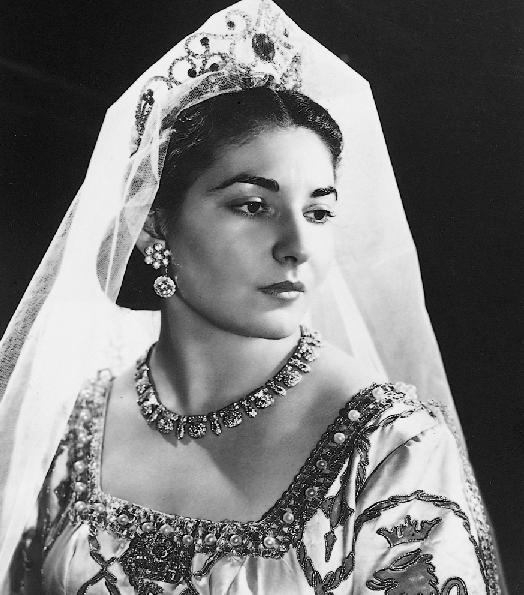 was born on December 2nd of 1923. It feels very strange that’s already been a century since her birth, as her presence is felt as strongly today as on the day she died in 1977: her instantly recognizable voice could be heard on classical music radio stations, on streaming services, on YouTube and (still) on CDs. The means have changed – back then it was LPs that people were buying and listening to – but she’s as adored as ever. Her Casta Diva alone has been heard on YouTube about 35 million times. Callas was so closely associated with Italian opera – Bellini, Donizetti, Verdi, Puccini – that she seemed Italian, but in fact was American, of Greek descent. She married an Italian, Giovanni Battista Meneghini, and, while they were married used his name with her own as Maria Meneghini Callas. She moved to Greece in 1940 and studied voice at the Athen Conservatory. There, she sang in the opera for the first time, appearing as Tosca in 1942. She returned to the US in 1945 but soon left for Italy. Tulio Serafin, the famous conductor who coached generations of singers, became her mentor. In 1947, at the Arena of Verona, he conducted Callas in her first Italian role, as La Gioconda in Ponchielli’s eponymous opera. Her appearance was tremendously successful and brought her career to a different level. During that time she often sang in the rarely produced bel canto operas, mostly because she was the only one who could sing these very difficult roles. She was exceptional as Donizetti’s Anna Boleyn, as Imogene and Norma in Bellini’s Il Pirata and Norma, Lucia in Donizetti’s Lucia di Lammermoor, Lady Macbeth and Violetta in Verdi's Macbeth and Traviata, and, of course, as Tosca. For three years she sang in smaller theaters, then, in 1950, she appeared, as Aida in La Scala. Even though her relationship with the management was troubled, in the 1950s La Scala became Callas’s home. Neither did Callas have a rapport with Rudolph Bing, the manager of the Met, where she premiered only in 1956. She had a reputation as a temperamental diva, but many of her colleagues thought that it was her exactness that made her difficult to work with. Later in the 1950s, she started experiencing problems with her voice, which may have contributed to her sometimes-erratic behavior. Some think that it was the loss of weight that affected her voice; in the early 1950s Callas was rather heavy, but then went on a diet and lost about 80 pounds. By the late 1950s, her vibrato was too heavy, sometimes the voice was forced and one could hear pronounced harshness, even though other performances were still excellent. Overall, Callas sang at the top of her form for just 10 years but what glorious years they were! Even her detractors, and there are some, recognize that the interpretations of the roles she sang were incomparable, it’s her voice that some people have problems with. We think that at its peak her voice was uniquely beautiful, and she created exceptional operatic characters that in other interpretations seem dull. Even the often mediocre music (and Italian operas are full of it) sounded exciting when she sang. There are none even close to La Divina on the opera stage today, and we don’t expect to hear anybody of that rank anytime soon.Read more...
This Week in Classical Music: November 20, 2023. The Spaniards and a bit of Genealogy. Three Spanish composers were born this week: Manuel de Falla, on November 23rd of 1876, Francisco Tárrega, on November 21st of 1852, and Joaquin Rodrigo, on November 21st of 1901. Falla is probably the most important of the three – some might say the most important Spanish composer of the 20th century – although Tárrega was also instrumental in advancing Spanish classical music, which prior to the arrival of Tárrega and his friends Albéniz and Granados had been stagnant for many decades, practically since the death of Padre Antonio Soler in 1783. (It’s interesting to note that the Spanish missed out almost completely on symphonic music). Falla’s most interesting works were composed for the stage: the drama La Vida Breve, ballets El Amor Brujo and Three-Cornered Hat, the zarzuela (a Spanish genre that incorporates arias, songs, spoken word, and dance) Los Amores de la Inés. A fine pianist, he also composed many pieces for the piano, Andalusian Fantasy among them. Tárrega’s preferred instrument was the guitar: he was a virtuoso player, and he also composed mostly for the instrument. (Tárrega had a unique guitar with a very big sound, made by one Antonio Torres, a famous luthier). Here’s one of his best-known pieces, Recuerdos de la Alhambra (Memories of the Alhambra), performed by Sharon Isbin.
Rodrigo also wrote mostly for the guitar: his most famous piece is Concierto de Aranjuez, from 1939, for the guitar and orchestra. Here’s the concerto’s first movement; John Williams is the soloist; Daniel Barenboim leads the English Chamber Orchestra. The recording is almost fifty years old, from 1974, but still sounds very good.
Wilhelm Friedemann Bach, Johann Sebastian’s eldest son and a wonderful composer in his own right, was born on November 22nd of 1710. Here’s our entry about Wilhelm Friedemann from some years ago. We sympathize with Friedemann: he was brooding, mostly unhappy, and quite unlucky, but he wrote music that we find superior to that of his much more famous brother, Carl Philipp Emanuel Bach. And here’s an interesting historical tidbit: one of Wilhelm Friedemann’s harpsichord pupils was young Sara Itzig, daughter of Daniel Itzig, a Jewish banker of Frederick II the Great of Prussia. Daniel, one of the few Jews with full Prussian citizenship, had 13 children; Sara was born in 1761. She was a brilliant keyboardist and commissioned and premiered several pieces by Wilhelm Friedeman and CPE Bach. Sara married Salomon Levy in 1783 and had an important salon in Berlin. One of her sisters, Bella Itzig, married Levin Jakob Salomon; they had a son, Jakob Salomon, who upon converting to Christianity, took the name Bartholdy. His daughter Lea married Abraham Mendelssohn, son of the famous Jewish philosopher Moses Mendelssohn. Lea and Abraham had two children, Felix and Fanny Mendelssohn; their full name was Mendelssohn Bartholdy. Sara had a big influence on the musical education of her grandnephew Felix. Bella gave a manuscript of Johann Sebastian Bach’s St Matthew Passion to her grandson in 1824; Felix conducted the first 19th-century revival of the Passion in 1829. So, there’s a line, quite convoluted but fascinating, going from the Bach family to Felix (and Fanny) Mendelssohn. The Itzigs were a remarkable family: in addition to all the connections above, two other sisters, Fanny and Cecilie Itzig, were patrons of Mozart. Maybe we’ll get to that someday.Read more...
This Week in Classical Music: November 13, 2023. Transitioning. Not in the sense of Classical Connect’s gender identity, but as a state of mind, which being in Rome largely is. CC is back in the US, but already missing Rome.
Papa Mozart (Leopold) was born this week, in 1719. He was a minor composer and music teacher but is remembered as the father of his genius son, whose career he managed (or exploited, as some would say) for many years.
Johann Nepomuk Hummel was born on November 14th of 1778 in Pressburg (now Bratislava). When he was eight, the family moved to Vienna. Like Mozart, he was a child prodigy: according to his father, he could read music at the age of four, and at the age of five he could play the piano and the violin very well. In 1786, Hummel was offered music lessons by none other than Mozart, who also housed him for two years, all free of charge. Even though Mozart was 22 years older than the boy, they played billiards and spent time together. At the age of nine Hummel performed one of Mozart’s piano concertos. Very much like Leopold Mozart, Hummel’s father took his child on a European tour. They ended up in London and stayed there for four years, Hummel taking lessons from Muzio Clementi. In 1791, Haydn, who knew the young Hummel from his visits to Mozart’s house in Vienna, was also staying in London; he dedicated a piano sonata to the boy, who performed it in public to great success. The French Revolution, the Terror and the subsequent wars changed the Hummels’s plans, and in 1793 they returned to Vienna. There Hummel continued taking music lessons, with Antonio Salieri and Joseph Haydn. One of Haydn’s pupils was Beethoven; the young men became friends. Hummel played at Beethoven’s memorial concert in 1827, and there he met Franz Schubert, who later dedicated his last three piano sonatas (some of the greatest piano music ever written) to Hummel.
In 1804 Hummel succeeded Haydn as the Kapellmeister to Nikolaus II, Prince Esterházy in Eisenstadt. He stayed there for seven years, returning to Vienna in 1811. After successfully touring Europe with his singer-wife and working in Stuttgart, Hummel settled in Weimar, being offered the position of the Kapellmeister at the Grand Duke’s court. He arrived there in 1819 and stayed for the rest of his life (Hummel died in 1837), making numerous touring trips in the meantime. He became friends with Goethe and turned the city into a major music center. At the court theater, he staged and conducted new operas by Weber, Rossini, Auber, Meyerbeer, Halévy, and Bellini. He also established one of the first pension plans for retired musicians, sometimes playing benefit concerts to replenish the funds. In 1832, Goethe died, Hummel’s health was failing, and he semi-retired, formally retaining his position of the Kapellmeister. Hummel died five years later.
During his lifetime, Hummel was one of the most celebrated pianists in the world and a very popular composer. He was also an important cultural figure, a music entrepreneur, and a famous, sought-after, and very expensive piano teacher. As a composer, he was a transitional figure between the Classical style and Romanticism. Even though he heavily influenced many composers of his time, Chopin and Schumann among them, nowadays Hummel’s music is mostly forgotten. He wrote operas, sacred music, many orchestral pieces, concertos, chamber music, and of course numerous piano pieces. Very little of it is still performed. Here’s Hummel’s Piano Sonata no. 4, Op.38. It’s played by the Korean pianist Hae-Won Chang.Read more...
This Week in Classical Music: November 6, 2023. Rome, II. Classical Connect is still in Rome. On Saturday we went to a Santa Cecilia concert with Antonio Pappano conducting the Accademia's Orchestra and Igor Levit playing Beethoven's Third Piano Concerto. But we'd like to start with a decidedly non-musical detail. The Santa Cecilia Hall, inaugurated in 2002, was designed by the famous Italian architect, Renzo Piano. Many of Piano's pieces are airy and light, but not this one. It has little ambiance, despite the use of wood, and looks uninviting. The seating, which follows that of the Berliner Philharmonie, is placed all around the orchestra in shallow layers. We're not sure about the acoustics of the hall, as this was our first visit and we've never heard the Accademia Orchestra live, so it's not clear if the numerous imbalances (shrill winds, for example) are the orchestra's fault or the hall's.
But the most fascinating part of the hall's design is the men's bathroom. It has no urinals, only cabins. Men stand in line, not sure which cabin is empty, and enter one that's just vacated. When things get tough, they go around knocking on doors. The question is, were the urinals eliminated as a gesture of support for some feminist causes, or was Signor Piano not aware of how most men's toilets are usually (and efficiently) constructed?
But let’s get back to music. The program consisted of Cherubini’s Anacréon overture, Beethoven's Third Piano Concerto, Sibelius’s En Saga, and Richard Strauss’s Till Eulenspiegel.
Pappano’s entrance was accompanied by thunderous applause. The wind’s first entrance in the Cherubini was not a happy event. Things got better as they moved along, but even though Beethoven rated Cherubini highly, it’s little surprise that his music is played rarely these days.
Beethoven's Third Piano Concerto was a very different story. Igor Levit was superb. His technique seems to have improved since the last time we heard him in Chicago, and his command of the piece was total, even if one may disagree with some of his tempi. The performance was greeted ecstatically, and he played, exquisitely, an encore, Brahms’s Intermezzo in A major, Op. 118.
After the intermission, Pappano presented Sibelius with a speech and made the audience sing a tune from what was to follow. That was much more entertaining than the En Saga itself. The choice of the final piece, Till Eulenspiegel, would seem rather unusual, as the winds are not this orchestra's strong suit, but it went well, better than one might have expected judging by the three previous pieces.
If you add a hair-raising ride in a Roman taxi to the concert and back, this was, overall, quite an exhilarating event.Read more...
This Week in Classical Music: October 30, 2023. Rome, I. Classical Connect is in Rome this week, so this entry is short. Rome overwhelms visually: the sites, interiors of churches worthy of museums, and Roman museums, some of the best in the world. And of course, the magical Roman light. Aurally, things are very different: the usual cacophony of crowds and the ever-jammed traffic, the sirens of the police cars and ambulances trying to get through, and awful street musicians, strategically positioned where the largest crowds congregate but also wandering the streets, assailing the dining public with their renditions of the European schlagers of the 1980s.
Historically, Rome has always been one of the greatest musical centers of Europe, and there are dozens of places, from the Vatican to the palaces of the cardinals and nobility, that are linked to major musical events of the past, but sometimes these connections take a different shape, quite literally: the enormous Borghese palace, which is still the major residence of the family (part of the palazzo is occupied by the Spanish embassy) is nicknamed Il Cembalo, and its plan does look like a harpsichord, with the narrowest side facing the Tiber.
In the next couple of days, Antonio Pappano will be conducting the orchestra of the Accademia Nazionale di Santa Cecilia in a program of Cherubini, Beethoven (Piano Concerto no. 3 with Igor Levit), Sibelius and Strauss’s Till Eulenspiegel. The site classictic.com, which sells tickets online, decided that the composer of the last piece is Johann Strauss.
Read more...This Week in Classical Music: October 23, 2023. Short notes, II. Today is Ned Rorem’s 100th anniversary. Rorem died last year, just days short of his 99th birthday. He was a wonderful composer of songs and a whimsical writer. He spent almost a decade in France, where for a while he studied with Arthur Honegger (rather than Nadia Boulanger, as many American composers and pianists had done). In 1966 he published a book, Paris Diaries, based on his real diaries, full of gossip, gay stories, and a good read overall. In addition to about 500 art songs, some exceptionally good, he wrote two full-length operas, one of which, Our Town, based on a play by Thornton Wilder, was successfully staged in the US and abroad (he also wrote several smaller, one-act operas). In addition to that he composed three symphonies and a lot of piano music, including two concertos, but none of that music was as successful as his songs. Here is Rorem’s Sonnet. Susan Graham is accompanied by the pianist Malcolm Martineau and Ensemble Oriol.
If Rorem wrote about 500 art songs, Domenico Scarlatti, who was born on October 26th of 1685, wrote more than 500 piano sonatas. They are mostly short, about as long as Rorem’s songs. Domenico was born in Naples, where his father, the renowned opera composer Alessandro Scarlatti, was working as maestro di capella at the court of the Spanish Viceroy of Naples. Though a thoroughly Italian composer, his link with Spain lasted throughout his life. He moved to Spain in 1729 and lived there for the remaining 25 years of his life.
Another Italian, Luciano Berio, was also born this week, on October 24th of 1925. He was one of the most influential composers of the 20th century. You can read more about him here.
Niccolo Paganini and Georges Bizet both had their anniversaries this week, as did a minor but talented Russian composer of liturgical music, Alexander Gretchaninov. Next year is his 160th anniversary, so we’ll dedicate a post to him.Read more...
This Week in Classical Music: October 16, 2023. Short notes. It could’ve been a pretty good week, considering the talent we could celebrate, but the horrendous events of October 7th and their aftermath overwhelmed everything else. So, we’ll go over our list very briefly. The Italian composer Luca Marenzio was born on October 18th, 1553 (or 1554) in Coccaglio, near Brescia. Marenzio was one of the most prolific (and famous) composers of madrigals of the second half of the 16th century. Marenzio was lucky in finding great benefactors. For many years he had served at the court of Cardinal Luigi d’Este, son of Ercole II d'Este, Duke of Modena and Ferrara. After the cardinal’s death, Marenzio found employment with Cardinal Cinzio Aldobrandini, nephew of Pope Clement VIII, and later, with Ferdinando I de' Medici, the Grand Duke of Tuscany. We can assume that while in Florence, he met the three Florentine composers whose lives we had followed closely in our recent posts – Giulio Caccini, Jacopo Peri, and Emilio de' Cavalieri, but while he inhabited the same intellectual circles as the three, Marenzio never got interested in their ideas about monody and opera. He did, nevertheless, write music for two out of six intermedi to the play La Pellegrina, composed for the wedding of the Grand Duke Ferdinando to Christina of Lorraine in 1589 (Cavalieri oversaw the production and composed one of the intermedi, Caccini composed another one, Peri was both composer and a singer). That same year Marenzio returned to Rome and went on an adventurous trip to Poland, to the court of King Sigismund III Vasa in Warsaw. He stayed in Poland for a year, got seriously ill there, and returned to Rome, where he died in 1599.
Franz Liszt was also born this week, on October 22nd of 1811 in a small Hungarian village next to the border with Austria. One interesting snippet about Liszt that we were not aware of till recently: he didn’t speak Hungarian. Two fine Soviet pianists, Emil Gilels and Yakov Flier, both excellent interpreters of Liszt’s music, also have their anniversaries this week: Gilels was born on October 19th, 1916 in Odesa, Flier – on October 21st, 1912 – in a small town of Orekhovo-Zuyevo not far from Moscow.
Baldassare Galuppi and Georg Solti were also born this week, but as with so much else, we’ll leave them for better days.Read more...
This Week in Classical Music: October 8, 2023. Verdi, War. Today is the 210th anniversary of Giuseppe Verdi’s birth, but we’re not in the mood to celebrate it: it seems inappropriate with the war raging in Israel and Gaza after the Hamas barbaric terrorist attack. There are many trite sayings about the power of music to heal, to make peace, but they all seem shallow in comparison to the news of civilians being killed in cold blood or the horror of the Israeli kids being abducted by Hamas into Gaza. If anything, throughout history music has been used to make war, from military bands leading troops into battle to Nazis using it in concentration camps. (And no, the Ride of the Valkyries wasn’t used in Vietnam by the US helicopter pilots, it was Francis Ford Coppola’s brilliant invention).
We thought of maybe using parts of Verdi’s Requiem or the famous chorus of the Hebrew Slaves, Va', pensiero (Fly, my thoughts), from his opera Nabucco, but that didn’t feel right either. So we’ll leave it at that.
Two great pianists were also born this week, Evgeny Kissin, who’ll turn 52 tomorrow, and Gary Graffman, who will celebrate his 95th birthday on the 14th of October. Both are Jewish; Kissin was born in Russia (then the Soviet Union), Graffman’s parents came from Russia. Hamas, if they could, would like to kill all Jews, no matter where they live. And they would definitely not spare musicians.Read more...
This Week in Classical Music: October 2, 2023. Giulio Caccini. During the last couple of months, we’ve published several entries on two subjects: one, the musical transition from the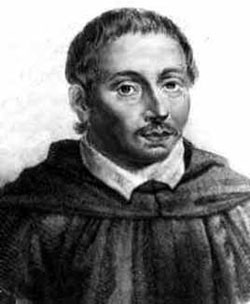 Renaissance to the Baroque and early opera, and another, about some unsavory but talented characters in music. The protagonist of today’s entry falls into both categories. Giulio Caccini was born in Rome on October 8th, 1551. One episode that puts him into the “unsavory” category happened in 1576 when Caccini was in Florence employed by the court of Grand Duke Francesco I de’ Medici. Francesco had a brother, Pietro, who was married to the beautiful Eleonora (Leonora) di Garzia di Toledo. Pietro was known to be gloomy and violent, the marriage was unhappy, and Leonora had several affairs. Caccini, attempting to curry favors from the Duke’s family, spied on Leonora and then denounced her and her lover, Bernardino Antinori, to Pietro. Pietro brought Leonora to Villa Medici at Cafaggiolo, where he strangled her with a dog leash. Leonora was 23. Bernardino Antinori was imprisoned and also killed. The whole story is even more sordid and involves other characters and victims, but though fascinating, it goes even further into Italian history and away from music. One note: if the name of Antinori sounds familiar to wine lovers, it’s not by chance – Bernardino’s family has been making wines since 1385. These days Antinori produce some of the best Chiantis and Super-Tuscans in Italy.
Other episodes are not as gruesome but still attest to Caccini’s character. Two more talented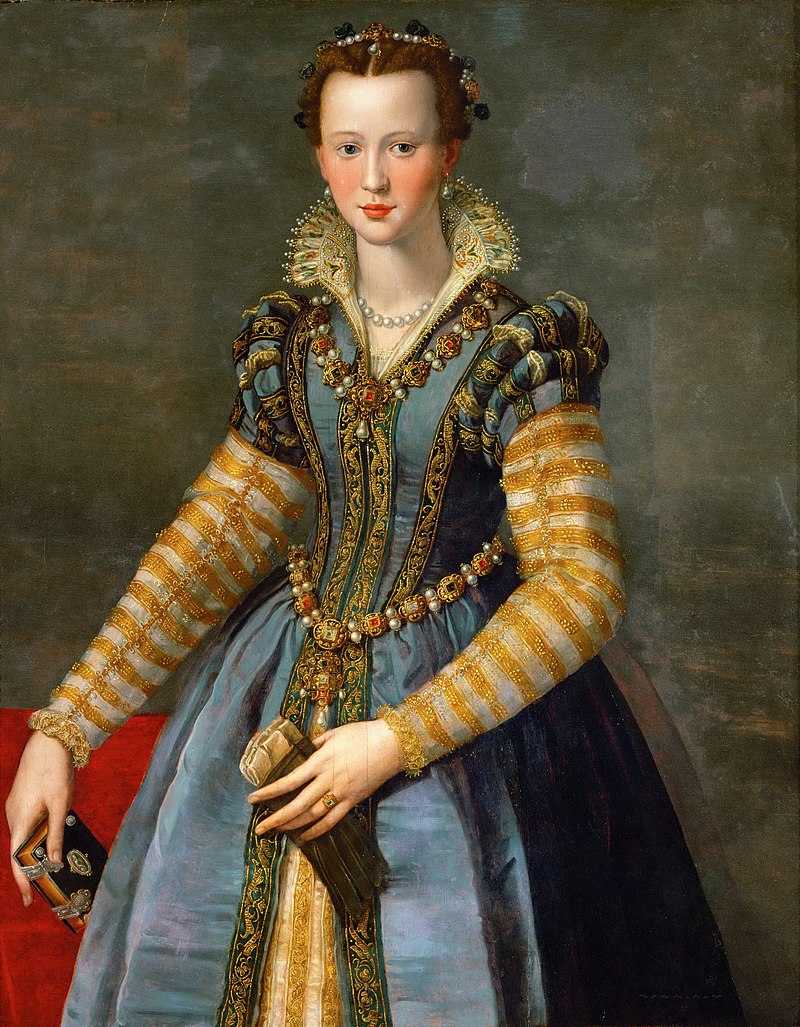 composers worked at the court at the same time, Emilio de' Cavalieri and Jacopo Peri. In 1600, the wedding of Henry IV of France and Maria de' Medici was a very important event. Cavalieri, who oversaw all major festivities of the house of Medici, was expected to direct this one as well. The conniving Caccini had him denied the position, and while Cavalieri did write some of the music, it was Caccini who managed the staging (we described this event here). The disappointed Cavalieri left Florence never to return. As for Peri, the stories are more comical. Upon learning that Peri was writing an opera, Euridice, for the wedding of Maria de' Medici to Henry IV, he rushed to compose his own version using the same libretto and had it published before the first performance of Peri’s work. That wasn’t all; Caccini’s daughter Francesca, a talented singer, was to participate in the performance of Peri’s Euridice. Even though Peri wrote the music for the whole opera, Caccini rewrote the parts performed by Francesca and several other singers under his command, all that just to spite Peri and promote himself. Francesca Caccini, by the way, turned into an excellent composer in her own right. Her opera, La liberazione di Ruggiero dall’isola d’Alcina (The Liberation of Ruggiero from the Island of Alcina) was just staged by the Chicago Haymarket Opera Company (yesterday was the last performance).
Even though Caccini wrote three operas, he’s better remembered for his collection of songs called Le nuove musiche (the New Music), published in 1602. Here are two songs from this collection, Amor, io parte and Alme luci beate, but the whole collection is wonderful. In this 1983 recording, the soprano is Montserrat Figueras, the wife of Jordi Savall, who accompanies her on the Viola da Gamba (Figueras died in 2011). Hopkinson Smith is playing the lute.Read more...
This Week in Classical Music: September 25, 2023. Florent Schmitt. We have to admit that we’re fascinated with the “bad boys” of music. They are invariably “boys,” as there are no “bad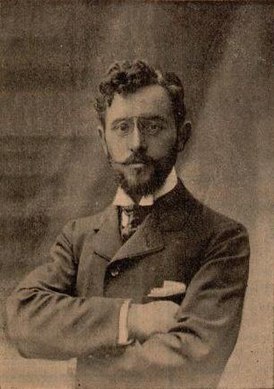 girls” in music historiography that we’re aware of. As for the male composers, there are plenty, Richard Wagner being the quintessential one. In the last couple of years, we’ve written about several of them, mostly the Germans in the 20th century, even though they are not the only ones: there were plenty of baddies in the Soviet bloc and, in a very different way, several Italians of the Renaissance. This week it’s Florent Schmitt’s turn, a French composer infamous for shouting “Vive Hitler!” during a concert. (Dmitri Shostakovich was also born this week, and, as talented as he was, he was no angel either, but we’ll return to Shostakovich another time). Schmitt was born on September 28th of 1870 in the town of Meurthe-et-Moselle, Lorraine, the area that was passing from France to Germany and back for centuries – thus the German name. At 17, he entered the conservatory in nearby Nancy, and two years later moved to Paris where he studied composition with Gabriel Fauré and Jules Massenet. While in Paris, Schmitt became friends with Frederick Delius, the English composer of German descent who was then living in Paris. In the 1890s he befriended Ravel and met Debussy.
Schmitt tried to get the prestigious Prix de Rome five times, submitting five different compositions every year from 1896 to 1900, when he finally won it with the cantata Sémiramis. He spent three years in Rome and then traveled extensively, visiting Russia and North Africa, among other places. One of his most popular pieces composed during the period after Rome is the Piano Quintet op. 51 (1902-1908). Schmitt dedicated it to Fauré. Here’s the final movement, Animé, performed by the Stanislas Quartet with Christian Ivaldi at the piano. The ballet La tragédie de Salomé was composed during the same period, in 1907. Igor Stravinsky was taken by it; in Grove’s quote, he wrote to Schmitt: “I am only playing French music – yours, Debussy, Ravel’. And later, “I confess that [Salomé] has given me greater joy than any work I have heard in a long time.” In 1910 Schmitt created a concert version of the ballet. Here’s the second part of it (the New Philharmonia Orchestra is conducted by Antonio de Almeida). It’s not surprising that Stravinsky liked it, as it clearly presages parts of Rite of Spring. Another important piece, Psalm XLVII, was written in 1906.
During WWI Schmitt wrote music for military bands but returned to regular composing once the war was over. He also worked as a music critic for the newspaper Le Temps. Schmitt was a nationalist with pronounced sympathies toward the Nazi regime. The episode we referred to at the beginning of this entry happened in November of 1933. During a concert of the music of Kurt Weill, a Jewish composer who had beenrecently forced into exile by the Nazis, he stood up and shouted “Vive Hitler!” According to a witness, he added: “We already have enough bad musicians to have to welcome German Jews.” That makes him not only a Nazi sympathizer but also an antisemite. During the German occupation of France, Schmitt collaborated with the Vichy government and was a member of the Music section of the France-Germany Committee. He visited Germany and in December of 1941 went to Vienna to commemorate the 150th anniversary of Mozart’s death. After the liberation, Schmitt was investigated as a collaborator, but these proceedings were later dropped, although a year-long ban was imposed on performing and publishing his music. Soon after everything was forgotten and in 1952, just seven years after the end of the war, Schmitt was made the Commander of the Legion of Honor. In 1996, the controversial past of this "one of the most fascinating of France's lesser-known classical composers," as he’s often described, came into prominence again, and his name was removed from a school and a concert hall.Read more...
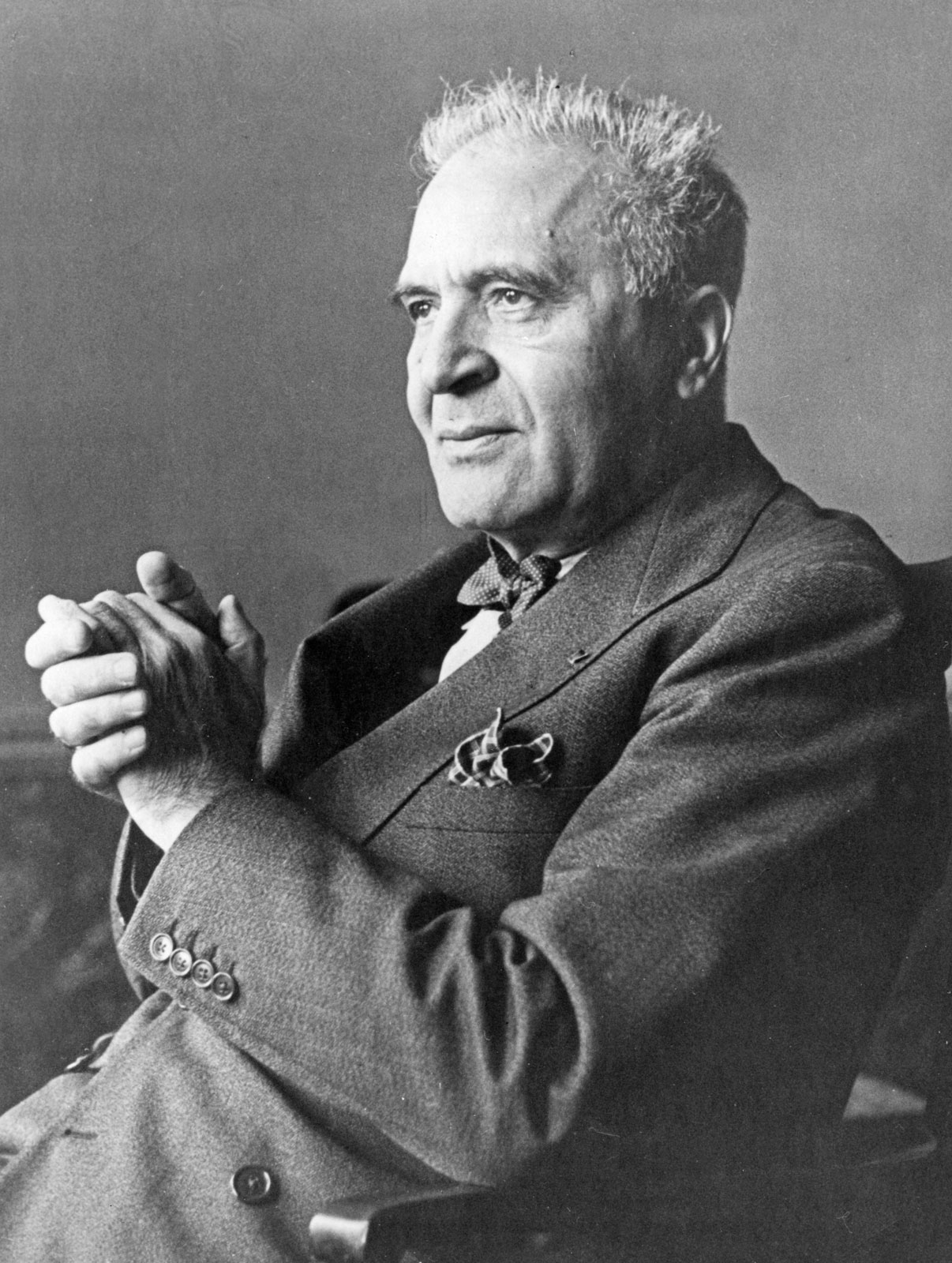 We mentioned Bruno Walter’s name above; he also happens to be one of the conductors we wanted to write about. Walter was born on September 15th of 1876 in Berlin. We celebrated him several years ago here. At least as talented as Böhm, his life couldn’t have been more different. Walter was Jewish, for many years he collaborated closely with Mahler and, in 1912, led the posthumous premier performance of the composer’s Ninth Symphony. He was the music director of the Bavarian State Opera in Munich, where he conducted most of Wagner’s operas. Walter escaped from Germany in 1933 (at the time he was the principal conductor of the Leipzig Gewandhaus Orchestra). After working in Europe, he moved to the US in 1939 and settled in Beverly Hills, the area that hosted a large German expat community. In the US, he worked with many orchestras, including the Chicago Symphony, the Los Angeles Philharmonic, and the Philadelphia Orchestra. Bruno Walter was 85 when he died in 1962. Here Bruno Walter is playing the piano and conducting the NBC Symphony Orchestra in Mozart’s Piano Concerto no. 20. This is a live recording made on November 3rd of 1939.
This Week in Classical Music: September 18, 2023. Several conductors. We missed a lot of anniversaries while exploring the music of the transitional period between the Renaissance and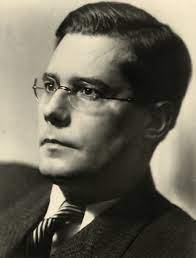 early Baroque. Today we’ll get back to a group of conductors. First, Karl Böhm, one of the most successful of them. Böhm was born on August 28th of 1894 in Graz, Austria. His career took off in the 1920s, with some help from Bruno Walter; in 1927 Böhm was appointed the chief musical director in Darmstadt, and in 1931 he took the same position at the prestigious Hamburg Opera. In 1933 the Nazis came to power in Germany and Böhm took over the Dresden Semper Opera, after Fritz Busch, the previous director, went into exile. Böhm was a friend of Richard Strauss and conducted several premiers of his operas. In 1938 Böhm appeared at the Salzburg Festival, and in 1943 took over the famous Vienna opera. For many years Böhm was a Nazi sympathizer, though never a member of the NSDAP; after the war, he went through a two-year denazification period, and then his career took off again. He continued his engagements with Vienna and Dresden, conducted in South America, and made a very successful New York debut in 1957. He frequently led the Metropolitan, premiering operas by Berg and Strauss and successfully conducting many of Wagner’s operas (Birgit Nilsson debuted under Böhm’s baton). Böhm’s final engagements were in London, at Covent Garden and with the London Symphony. He died on August 14th of 1981, two weeks shy of his 87th birthday.
Here is Richard Strauss’s Ein Heldenleben (A Hero's Life), a tone poem from 1898. Karl Böhm conducts the Vienna Philharmonic Orchestra. This recording was made in 1976. Also, quite recently we came across a DW documentary from 2022 called Music in Nazi Germany: The Maestro and the Cellist of Auschwitz (here). It’s very much worth watching. The maestro in question is not Karl Böhm but Wilhelm Furtwängler, eight years older than Böhm and more established. Still, much of what is said in the documentary about Furtwängler applies to Böhm (we think that to an even higher degree). A note: the “kapellmeister” of the Auschwitz women’s orchestra, Alma Rosé, mentioned in the documentary, died there in April of 1944. Alma was the daughter of Arnold Rosé, the concertmaster of the Vienna Philharmonic for 50 years and the leader of the famous Rosé Quartet. Alma’s mother was Gustav Mahler’s sister.
Just to list other conductors in our group: István Kertész (b. August 28, 1929); three conductors, born on September 1: Tullio Serafin (in 1878), Leonard Slatkin (in 1944), Seiji Ozawa, (in 1935). Christoph von Dohnányi was born on September 8, 1929, and Christopher Hogwood, on September 10, 1941.Read more...
This Week in Classical Music: September 18, 2023. Several conductors. We missed a lot of anniversaries while exploring the music of the transitional period between the Renaissance and early Baroque. Today we’ll get back to a group of conductors. First, Karl Böhm, one of the most successful of them. Böhm was born on August 28th of 1894 in Graz, Austria. His career took off in the 1920s, with some help from Bruno Walter; in 1927 Böhm was appointed the chief musical director in Darmstadt, and in 1931 he took the same position at the prestigious Hamburg Opera. In 1933 the Nazis came to power in Germany and Böhm took over the Dresden Semper Opera, after Fritz Busch, the previous director, went into exile. Böhm was a friend of Richard Strauss and conducted several premiers of his operas. In 1938 Böhm appeared at the Salzburg Festival, and in 1943 took over the famous Vienna opera. For many years Böhm was a Nazi sympathizer, though never a member of the NSDAP; after the war, he went through a two-year denazification period, and then his career took off again. He continued his engagements with Vienna and Dresden, conducted in South America, and made a very successful New York debut in 1957. He frequently led the Metropolitan, premiering operas by Berg and Strauss and successfully conducting many of Wagner’s operas (Birgit Nilsson debuted under Böhm’s baton). Böhm’s final engagements were in London, at Covent Garden and with the London Symphony. He died on August 14th of 1981, two weeks shy of his 87th birthday.
Here is Richard Strauss’s Ein Heldenleben (A Hero's Life), a tone poem from 1898. Karl Böhm conducts the Vienna Philharmonic Orchestra. This recording was made in 1976. Also, quite recently we came across a DW documentary from 2022 called Music in Nazi Germany: The Maestro and the Cellist of Auschwitz (here). It’s very much worth watching. The maestro in question is not Karl Böhm but Wilhelm Furtwängler, eight years older than Böhm and more established. Still, much of what is said in the documentary about Furtwängler applies to Böhm (we think that to an even higher degree). A note: the “kapellmeister” of the Auschwitz women’s orchestra, Alma Rosé, mentioned in the documentary, died there in April of 1944. Alma was the daughter of Arnold Rosé, the concertmaster of the Vienna Philharmonic for 50 years and the leader of the famous Rosé Quartet. Alma’s mother was Gustav Mahler’s sister.
We mentioned Bruno Walter’s name above; he also happens to be one of the conductors we wanted to write about. Walter was born on September 15th of 1876 in Berlin. We celebrated him several years ago here. At least as talented as Böhm, his life couldn’t have been more different. Walter was Jewish, for many years he collaborated closely with Mahler and, in 1912, led the posthumous premier performance of the composer’s Ninth Symphony. He was the music director of the Bavarian State Opera in Munich, where he conducted most of Wagner’s operas. Walter escaped from Germany in 1933 (at the time he was the principal conductor of the Leipzig Gewandhaus Orchestra). After working in Europe, he moved to the US in 1939 and settled in Beverly Hills, the area that hosted a large German expat community. In the US, he worked with many orchestras, including the Chicago Symphony, the Los Angeles Philharmonic, and the Philadelphia Orchestra. Bruno Walter was 85 when he died in 1962. Here Bruno Walter is playing the piano and conducting the NBC Symphony Orchestra in Mozart’s Piano Concerto no. 20. This is a live recording made on November 3rd of 1939.
Just to list other conductors in our group: István Kertész (b. August 28, 1929); three conductors, born on September 1: Tullio Serafin (in 1878), Leonard Slatkin (in 1944), Seiji Ozawa, (in 1935). Christoph von Dohnányi was born on September 8, 1929, and Christopher Hogwood, on September 10, 1941.Read more...
This Week in Classical Music: September 11, 2023. Transitions. For the last four weeks, we were preoccupied with two Florentine composers, Emilio de' Cavalieri and Jacopo Peri. In a way, this is unusual, as neither of them was what we would call “great,” as were, for example, Tomás Luis de Victoria, just two years older than Cavalieri, or Giovanni Gabrieli, born sometime between Cavalieri and Peri. But somehow the Florentines became instrumental in furthering one of the great shifts in classical music, from polyphony to monody of the early Baroque. This is a fascinating topic in itself: How could the relatively simplistic works of Cavalieri and Peri replace the grand and sophisticated music of the High Renaissance? How could such stunning works as Victoria’s Funeral Mass or Gabrieli’s In Ecclesiis fall out of favor while the first rather clumsy attempts at opera became all the rage? As far as we can tell, Baroque music, as interesting as it was in its early phases, didn’t reach the level of Palestrina or Orlando di Lasso till the late 17th century and into the 18th, when Handel and Bach composed their masterpieces. This introduces another great example: Johann Sebastian Bach, who, in his later years, was considered old-fashioned, past his time; his great Mass in B minor was completed in 1749, a year before his death, when the music of his son, Carl Philipp Emanuel Bach, was much more popular. The first public performance of the Mass had to wait for more than 100 years (the history of St. Matthew Passion was similar). In the meantime, composers of the Mannheim school, nearly forgotten now, were working at the court with the best orchestra in Europe and developing, unknowingly, the style that would bring us, several decades later, the symphonies of Haydn, Mozart, and Beethoven. The “not-so-greats” leading the way, leaving the greats behind but paving the way for a new generation of supreme talents…
Yet again we don’t have the time to properly acknowledge the composers born this week (among them are Arnold Schoenberg and Girolamo Frescobaldi, and also Arvo Pärt, Clara Schumann and William Boyce, who, like Beethoven, went deaf but continued, for a while, to compose and play the organ). We wanted to go back a month and commemorate some of the composers born during that time: too many to mention, but two of them, Henry Purcell and Antonin Dvorak, were born last week. And of course, we’ve missed a lot of performers and conductors, among whom were the pianists Aldo Ciccolini and Maria Yudina, Ginette Neveu (violin) and William Primrose (viola), the singers Kathleen Battle and Angela Gheorghiu, and conductors Wolfgang Sawallisch and Karl Böhm. Till next time, then.Read more...
This Week in Classical Music: September 4, 2023. Jacopo Peri and Florence. Last week we started the story of Jacopo Peri, an important but mostly forgotten composer. Before we get back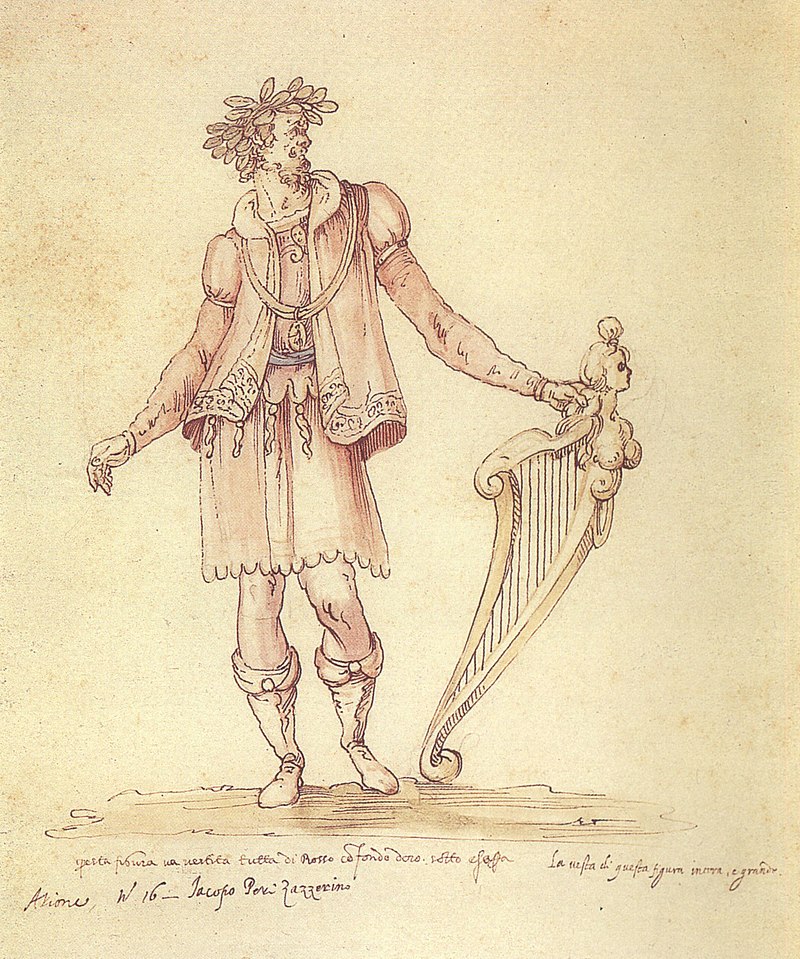 to it, we’d like to mention a Florentine institution that was instrumental in the development of ideas that Peri followed in his work. This institution is called Camerata de’ Bardi, or Florentine Camerata.
Count Giovanni de’ Bardi was a nobleman, writer, composer, and, in his younger years, a soldier. He was also an important patron of the arts and organized a society dedicated to the study of ancient Greek music in relation to the music of the day. That was in the 1570s and ‘80s, so we have to remember that the important music of the time was composed in the form of polyphony by the likes of Palestrina. We love his music, and that of Orlando Lasso or Tomás Luis de Victoria Victoria, and consider it the pinnacle of the Renaissance, but for Bardi and his circle, it felt outdated. They believed that the polyphonic idiom doesn’t allow the creation of emotionally expressive works and makes the words unintelligible (the criticism shared by many in the church). Thus, as an alternative, they came up with the “monody,” which replaced the multi-voiced polyphony with a single melodic line and instrumental accompaniment. The ideas of the Camerata were based on the members’ understanding of the music of Classical Greece, which most likely was wrong: they believed that Greek plays were sung, not spoken. That didn’t matter much as these ideas led to the creation of the recitative and the aria, and soon after, the cantata and, importantly, opera.
The most active members of the Camerata were composers Giulio Caccini, Vincenzo Galilei, the father of Galileo Galilei, and Pietro Strozzi, but the society included many Florentine intellectuals and composers. Jacopo Peri was one of the first to put these ideas into practice, creating Dafne and Euridice, the first two operas in history. The librettos to the operas were written by another member of the Camerata, the poet Ottavia Rinuccini.
Euridice was performed in October of 1600 in the Palazzo Pitti during the celebrations of the wedding of Maria de’ Medici and Henry IV, King of France. Peri’s rivals, composers Caccini and Cavalieri, also took part in the production: the jealous Caccini rewrote the parts sung by his musicians, and Cavalieri staged the opera’s production (that was not enough for Cavalieri: he expected to be put in charge of all the festivities, which didn’t happen; disappointed, he left Florence for good. We recently mentioned this episode while writing about Cavalieri).
In the 1600s, while residing in Florence and continuing to compose for the Medici court, Peri established a close relationship with Ferdinando Gonzaga, Duke of Mantua. He wrote two operas for the Mantuan court, neither of which were performed, and many songs and instrumental pieces, the majority of which are now lost. Later in his life, he worked mostly in collaboration with other composers, a practice quite unusual for our time. He wrote two operas with Marco da Gagliano, the second, La Flora, for the occasion of the election of Ferdinand II as the Emperor of the Holy Roman Empire. Pery died in 1633 and was buried in the church of Santa Maria Novella in Florence.
Here is the Prologue from Jacopo Peri’s Euridice, and here – the first scene of the opera, about five minutes of singing, with two wonderful choruses. The soloists and the Ensemble Arpeggio are conducted by Robert de Caro.Read more...
This Week in Classical Music: August 28, 2023. Jacopo Peri. For the last two weeks, we've been preoccupied with Emilio de' Cavalieri, partly because his music is so interesting, but also because he and his parents had fascinating lives. And the period during which they lived – the Italian Renaissance and early Baroque – is captivating. One composer, whose birthday we missed while being engaged with Cavalieri, lived during the same time and was Cavalieri’s rival. His name is Jacopo Peri. Peri was born on August 20th of 1561, either in Florence or, more likely, in Rome, like Cavalieri. About 10 years younger than Cavalieri, he spent most of his productive life at the court of the Grand Dukes of Tuscany, in Florence, the place where Cavalieri was employed for about 20 years. There was a difference in their position: the older composer was also the duke’s confidant, while Peri was “only” a musician and organizer of dramatic events.
Peri’s youth was spent in Florence; he had a very good voice and was employed in different churches (it seems he also sang in the choir of the Baptistery). He was a virtuoso player of the theorbo (chitarrone in Italian), a lute with a very long neck. Severo Bonini, a Florentine composer and Peri’s younger contemporary, said that “he could move the hardest heart to tears through his singing” and superb accompaniment. Peri also excelled at playing the organ and keyboard instruments. He was hired at the Medici court in 1588, soon after the accession of Grand Duke Ferdinando I. Like Cavalieri, he took part in composing music for different intermedi (we discussed these “proto-operas” last week), and participated in staging the festivities celebrating Ferdinando’s marriage to Christine of Lorraine. He also performed in these intermedi, singing and accompanying himself.
Peri’s interests were broad and, as a member of different learned Academies, he actively participated in the vigorous intellectual life of Florence. He became friends with Jacopo Corsi, a fellow composer and important patron of the arts, second only to the Medicis. Through Corsi he met the poet Ottavio Rinuccini. In 1597, Rinuccini wrote a libretto for Dafne, a dramatic piece, the music for which was composed by Peri and Corsi. Dafne is now considered the first opera in the history of music. While the libretto survived, the music for Dafne is mostly lost, with only six fragments extant; four were written by Peri and two by Corsi. The opera’s instrumental accompaniment is small: a harpsichord, an archlute (a type of theorbo), a regular lute, a viol, and a flute. Claudio Monteverdi, who by many is considered the “father of the opera,” even though his L’Orfeo was written 10 years later, in 1607, significantly expanded the accompanying ensemble. Dafne was a big success, and in 1600, for the festivities surrounding the marriage of King of France Henry IV and Marie de' Medici, Grand Duke Francesco’s daughter, the court requested another opera. Rinuccini was again the librettist, but this time Peri collaborated with Giulio Caccini. Their effort produced Euridice, the second opera ever written and the first whose music fully survived. (These days Caccini is best known for the music he never wrote, the so-called Ave Maria, composed around 1970 by a Russian lutenist Vladimir Vavilov, author of many musical hoaxes). Euridice was very successful (Peri himself sang the role of Orfeo and his performance was highly praised) and was later staged in other cities.
We’ll finish our story of Jacopo Peri and play some of his music next week. One last note before we go: Itzhak Perlman will turn 78 in three days.Read more...
This Week in Classical Music: August 21, 2023. Cavalieri, part II. Last week we began writing about the Italian composer Emilio de' Cavalieri and all we had time for were his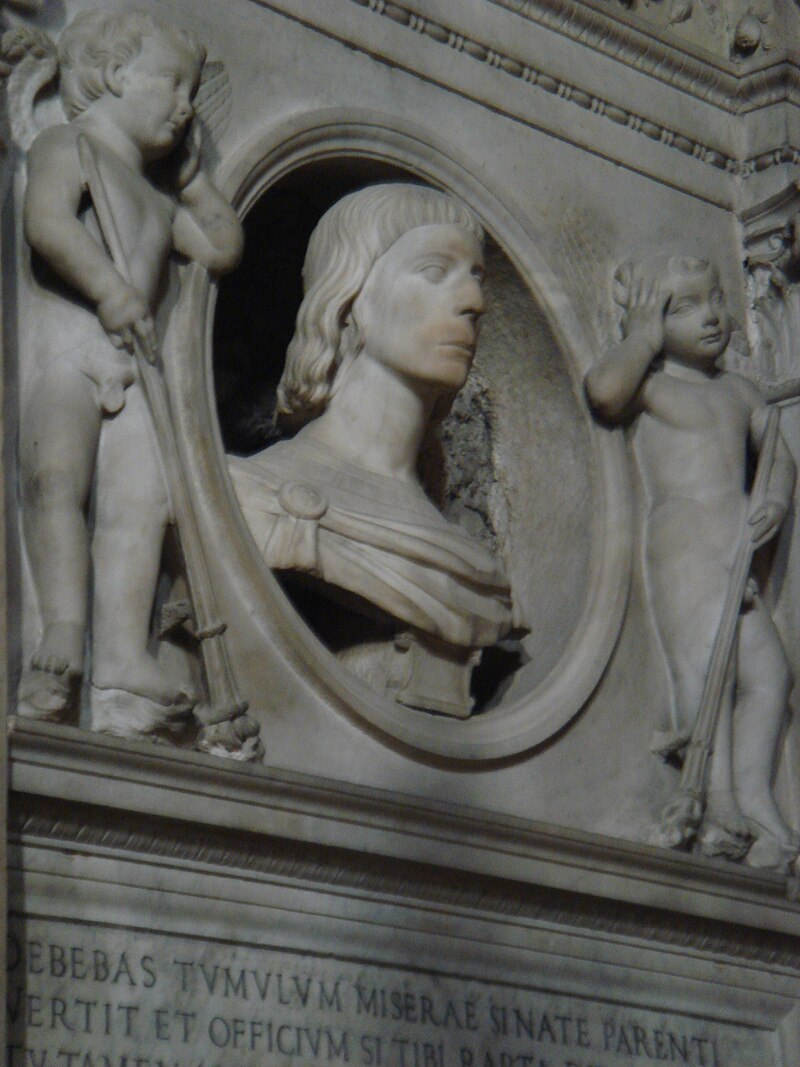 illustrious parents. Emilio started his musical career in Rome – we know that he was an organist at the Oratorio del Santissimo Crocifisso and was responsible for the Lent music there. While in Rome, he made the acquaintance of Cardinal Ferdinando de' Medici. A historically important fact about the Cardinal is that soon after he became the Grand Duke of Tuscany, returned to Florence and brought Cavalieri with him. A minor, but curious, detail is that the Cardinal was an art lover and acquired the famous collection of Roman statues from Cardinal Andrea della Valle, the uncle of Emilio’s mother, Lavinia, thus connecting the families of Cavalieri, della Valle, and Medici.
In Florence Cavalieri became not just a court composer and overseer of crafts and music, but also a trusted personal diplomatic envoy to the Duke. Elections of the Pope were among the most important political events in Italy, and Cavalieri helped Ferdinando to elect popes predisposed toward the Medici family, often going on secret missions to buy cardinals’ votes. This was a turbulent time, with popes lasting no longer than the Politburo Secretaries General at the end of the Brezhnev era. Pope Urban VII, elected in September of 1590, died of malaria just 12 days after taking office, Pope Gregory XIV followed and ruled for 315 days, then Pope Innocent IX, who ruled for 62 days, and finally, Clement VIII, who would go on to rule for more than 13 years. The turmoil kept Cavalieri’s diplomatic career busy.
In Florence, Cavalieri was provided an apartment in the Palazzo Pitti, the main residence of the Duke of Tuscany, and a handsome salary. As the court administrator and composer, he was responsible for staging intermedi, theatrical performances with music and dance. The famous ones were set up in 1589 for the marriage of Duke Ferdinando to Christine of Lorraine. Cavalieri produced many of these intermedi in the following years, often to his own music.
He traveled to Rome often and maintained relations with major composers in the city. In 1600, his work titled Rappresentatione di anima et di corpo (Portrayal of the Soul and the Body) premiered in the Oratorio dei Filippini in Rome. Rappresentatione is considered the first oratorio in the history of music and, with the intermedi, a predecessor to opera. The significance of it becomes apparent if we consider how the oratorio, also developed by Cavalieri’s contemporaries Jacopo Peri and Giulio Caccini, has evolved since 1600: this was the musical form that Alessandro Scarlatti, Antonio Caldara, Johann Adolph Hasse, Heinrich Schütz, Johann Sebastian Bach and George Frideric Handel used to create some of their most important compositions.
Cavalieri left Florence for Rome in 1600 under a cloud: the wedding of Henry IV of France and Maria de' Medici was lavishly celebrated, and the main event was the staging of the opera Il rapimento di Cefalo. Cavalieri expected to be in charge, but the staging was given to his rival, Caccini. Cavalieri died in Rome two years later and was buried in Cappella de' Cavalieri in Santa Maria in Aracoeli on the Capitoline Hill.
Together with Rappresentatione, Lamentations of Jeremiah for the Holy Week is Cavalieri’s major work. It consists of four parts, to be performed on consecutive days. Here’s the first section, Lectio prima, of the Lamentations for the first day. It’s performed by the Concerto Italiano under the direction of Rinaldo Alessandrini.Read more...
This Week in Classical Music: August 14, 2023. Lukas Foss and Emilio de' Cavalieri. The richness and diversity of classical music is almost infinite. Of course, we’re not talking about the false, woke diversity of race and gender. We mean the diversity of sound, organized by composers of different eras into amazing combinations that we call “music,” combinations of the aural entities so different that composers of yesteryears would not even recognize the work of their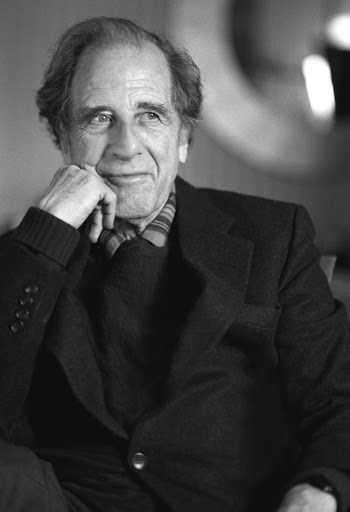 followers as belonging to the same art (if they would consider it art at all). We, on the other hand, are lucky to have access to this enormous body of work and can enjoy music composed in the 15th century as much as music from half a millennium later. We have two composers this week, one born in the first half of the 20th century, and another – in the middle of the 15th.
Lukas Foss was born in Berlin on August 15th of 1922 as Lukas Fuchs. His family was Jewish, and as soon as Nazis came to power, the Fuchses emigrated to France and four years later to the US where they changed their name to Foss. In the US, Lukas, who studied music while in Paris, went to the Curtis Institute where he took piano classes, composition, and conducting (his teacher at the Curtis was Fritz Reiner). Lukas started composing at seven, and in 1945, at 23, he became the youngest composer ever to receive a Guggenheim Fellowship. In 1953 Foss was appointed Professor of Music at UCLA, a position previously occupied by Arnold Schoenberg. While in California, Foss founded the Improvisation Chamber Ensemble and became the music director of the Ojai Festival. Later he served as the music director of several orchestras: the Buffalo Philharmonic, the Brooklyn Philharmonic, and the Milwaukee Symphony. He also guest-conducted many European and American orchestras.
Musicologists divide the development of Foss’s art into three phases: neo-classical; transitional, which was dominated by what he called “controlled improvisation,” and the third, experimental, even more improvisational, with more freedom given to the performer, and the forays into serialism. Let’s listen to two pieces, Thirteen Ways Of Looking At A Blackbird for voice (mezzo-soprano RoseMarie Freni) and small ensemble from 1978, here; and, from 1967, unfortunately in a rather low-quality recording, his great Baroque Variations for Orchestra: I. On a Handel Larghetto, II. On a Scarlatti Sonata, III. On a Bach Prelude "Phorion" (here). The Buffalo Philharmonic Orchestra is led by the composer Lukas Foss, was one of the most interesting American composers, and we’ll come back to his art another time
Italian composer Emilio de' Cavalieri was born in Rome in 1550 into an illustrious family. His father, a nobleman Tommaso Cavalieri, was the great love of Michelangelo’s life (Michelangelo dedicated 30 of his sonnets to Emilio and called him "light of our century, paragon of all the world"). When they met, Tommaso was 23 and very handsome, Michelangelo – 57 years old; whether the relationship was platonic or not, we don’t know. Emilio’s mother was a cousin of Cardinal Andrea della Valle. The cardinal was one of the first collectors of Roman art; the sculptures in the courtyard of his palace across the street from the church of Sant’Andrea della Valle were restored in one of the first efforts of its kind, and his antiquities were described by Vasari. We will continue with the story of Emilio de' Cavalier next week. In the meantime, let’s listen to Cavalieri’s wonderful Viae Sion Lugent from Lamentations.Read more...
This Week in Classical Music: August 7, 2023. Chaminade and Jolivet. Two French composers were born this week, Cécile Chaminade, on August 8th of 1857, and André Jolivet,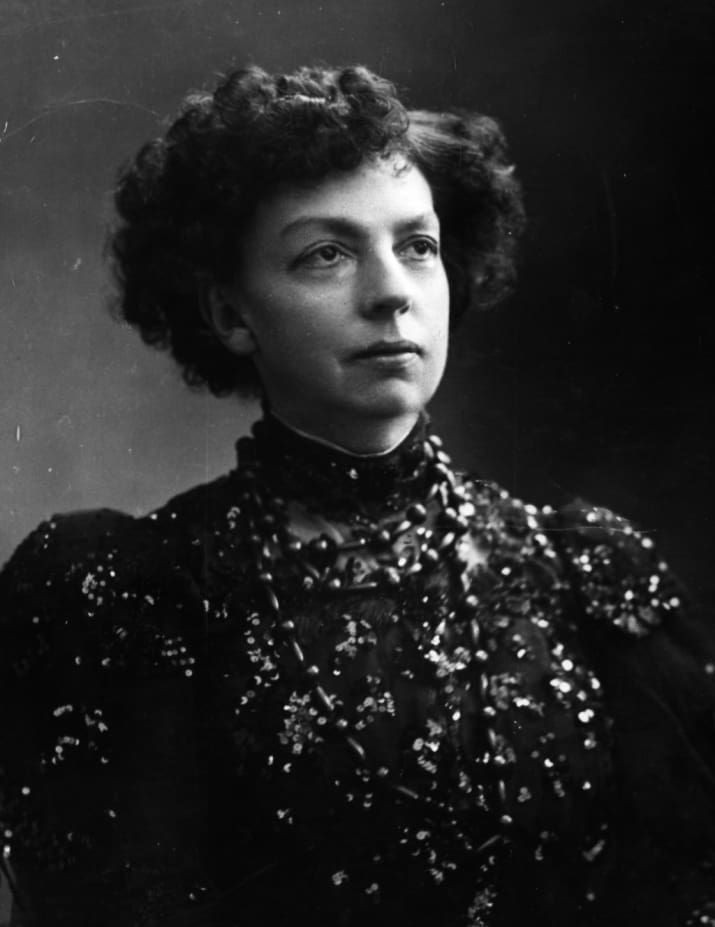 on the same day but in 1905. We suspect that in the last three years the music of Chaminade has been played more than throughout the previous 100: we live in the era of Wokeness when a composer’s gender (or race) is considered more important than his or her talent, and as there is a limited number of female composers, even the salon music of Chaminade becomes popular among presenters and performers, if not necessarily the listening public. This is not to say that in the past, women composers weren’t discriminated against: Chaminade, for example, was accused by her contemporary music critics of being both too feminine in her songs and lyrical piano pieces, and too masculine in the larger, more energetic pieces, such as the Konzertstück, (you can listen to it here). We don’t find anything excessively “masculine” in the piece, we’re not even sure what that term means when applied to music – it would’ve never been used by our contemporaries while discussing the music of Jennifer Higdon, Shulamit Ran, Libby Larsen, or Augusta Read Thomas. We just don’t find the Koncertstück very interesting – it has lots of trills in the style of the worst of Liszt and not much real musical material. (In this recording James Johnson plays the piano, the Royal Philharmonic Orchestra is conducted by Paul Freeman). Chaminade’s music became popular not only in her native France but also in England and the US in the 1890s, and that continued for another 20 years after which the interest in her music practically disappeared – her salon pieces clearly became obsolete. Chaminade lived till 1944, the last years in relative
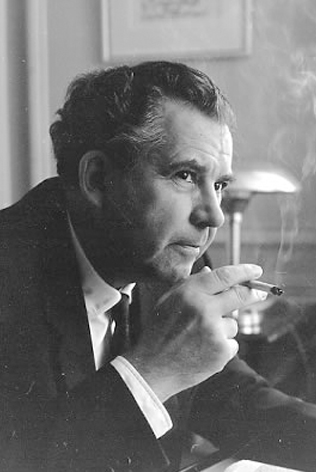 obscurity. She composed around 400 short piano pieces and songs, some of which are not without their charm. Here Anne Sofie von Otter sings her short song L'anneau d'argent. Bengt Forsberg is on the piano.
In the last three years, there has been no resurgence of interest in the music of André Jolivet, even if of the two, he is the more interesting, more inventive composer. We have several of his pieces in our library and have written about him more than once (for example, here). A prolific composer, Jolivet wrote several concertos. One of them was for the Ondes Martenot, an analog synthesizer invented in 1928 by Maurice Martenot; the sound of the Ondes (waves in French) is somewhat similar to that of a Theremin, another electronic instrument invented by the Russian researcher Leon Theremin around the same time). Jolivet also composed three symphonies, chamber and keyboard music, operas, and many songs. Here, from 1954, is Jolivet’s unusually scored Basson Concerto with the string orchestra, piano and harp (André Jolivet conducts the Jean-François Paillard Chamber Orchestra; Maurice Allard is the bassoonist).
And speaking of French music and musicians: the wonderful violinist Ginette Neveu was born on August 11th of 1919. You can read about her here.
Read more...This Week in Classical Music: July 31, 2023. Catching up. For the last three weeks we’ve been preoccupied with two German composers, Carl Orff and Hanns Eisler, and with that, we missed several notable anniversaries. We were going to write about Alfredo Casella who was born 140 years ago, on July 25th of 1883, in Turin. We’ll come back to him soon, in the meantime you can read our earlier entry. Eugène Ysaÿe was born 165 years ago, on July 16th of 1858. The wonderful Spanish composer Enrique Granados was born on July 27th of 1867. Hans Rott’s birthday is this week; he was born on August 1st of 1858. We have to admit our fascination with this underappreciated composer who predates Mahler in many ways.
Several outstanding pianists were born in the previous three weeks, all in July: Van Cliburn on the 12th in 1934, Leon Fleisher on the 23rd in 1928, also on the 23rd of July, but in 1944 – Maria João Pires, and Alexis Weissenberg, on the 26th, in 1929. The Portuguese pianist Maria João Pires is the only one still alive, and at the age of 79 is very active, performing about 50 concerts a year.
During this period we also could’ve celebrated three violinists: Pinchas Zukerman, born on the 16th, in 1948; Isaac Stern, on the 21st, in 1920, and Ruggiero Ricci, on the 24th, in 1918. Zukerman is alive and well, and, like Pires, is still very active.
We’ll turn to conductors: Igor Markevitch was born on July 27th of 1912. He was also a composer, but we’ve never had a chance to write about his creative (rather than interpretive) talents. Riccardo Muti just left, with great pomp and circumstance, the post of Music Director of the Chicago Symphony. He was born on July 28th of 1941. And Erich Kleiber, a wonderful conductor and the father of the even more famous Carlos Kleiber, will have his anniversary on August 5th; he was born in 1890.
And finally, the singers. They were especially bountiful, so we’ll list their names only. Every person in this unbelievable group had a birthday in the previous three weeks: Nicolai Gedda, Kirsten Flagstad, Carlo Bergonzi, Pauline Viardot, Susan Graham, Giuseppe Di Stefano, Sergei Lemeshev, Mario Del Monaco, and Peter Schreier. We’ve written about many of them, and if we’ve missed some, like Ms. Graham, we’ll get to it later.Read more...
This Week in Classical Music: July 24, 2023. Hanns Eisler and Carl Orff, Part III. In the previous two posts, we told the story of two German composers whose lives were upended by the Nazi regime. So what are the legacies of Carl Orff and Hans Eisler? Eisler, as you may recall, spent his last years in East Germany, the Communist country subjugated by the Soviet Union, with an indoctrinated and controlled cultural life. Even though he was GDR’s most famous composer, who wrote the music to the national anthem, Eisler had to live and create according to the Party rules. His more “formalist” music was criticized and much of his output in the last years was populist by design: music for films and choruses and of course for the plays of his dear friend Brecht who was also living in East Germany. But we should remember that Eisler was a committed Marxist who had written propagandist music for years, so the atmosphere of the GDR fitted him better than it probably would any other creative artist. Eisler died in 1968, pretty much forgotten by the West. Then, in 1989, the Berlin Wall fell, the country reunited under the leadership of the Western, democratic part, and Eisler was “rediscovered,” if not with great enthusiasm. Eisler’s music isn’t performed often, even though some of his output is clearly of very high quality. Listen, for example, to his late collection of eight “Serious songs (Ernste Gesänge): it’s absolutely wonderful. (The baritone Günther Leib is accompanied by the
 Rundfunk-Sinfonie-Orchester Berlin under the direction of Günther Herbig).
Carl Orff, who survived, and quite comfortably, the Nazi regime while not leaving Germany for a day, was investigated by the Americans in 1946 and underwent the denazification process. According to the musicologist Michael Kater, during the process Orff made up some facts, presenting himself in opposition to the Nazi regime. That helped him to receive the classification allowing a return to public life. In Orff’s defense, he never joined the Nazi Party and never held any leadership positions. He was in many respects a compromised figure (he fulfilled Nazi’s commissions by writing the music for the 1936 Olympic games and replacement music for the Midsummer Night’s Dream), but we cannot say that his music in itself was “fascist.” After the war, Orff taught at the Hochschule für Musik in Munich and received many awards. In 1951 he completed the cantata Trionfo di Afrodite, which, with Carmina Burana and Catulli Carmina formed a triptych called Trionfi. The first part of the triptych, Carmina Burana, remains not just Orff’s most popular composition, but one of the most popular music composed in the 20th century. It has been used in dozens of movies and advertisements. Orff is also remembered for his work in music education. His Schulwerk ("School Work") is some of the best music composed for children.
Here’s Catulli Carmina, composed by Orff in 1941-43. The Münchner Rundfunkorchester orchestra and the Mozart-Chor, Linz are conducted by Franz Welser-Möst.Read more...
This Week in Classical Music: July 17, 2023. Hanns Eisler and Carl Orff, Part II. We’ll continue with the story of the lives of two German composers, both talented, born at about the same time, but whose lives took very different turns during the Nazi era. Carl Orff became one of the Nazi establishment’s favorite composers; his Carmina Burana (1937) and Catulli Carmina (finished in 1943) were performed across Germany. Hanns Eisler, on the other hand, had it much harder. In 1933 his music was banned (as were the works of his friend Bertolt Brecht). Both emigrated the same year; Brecht settled in Denmark, while Eisler became peripatetic: he went to the US on a speech tour, then Vienna, France, Moscow, Mexico and Denmark. In some of these places he worked on film scores; while in Denmark he collaborated with Brecht, writing music for one of his plays. He visited Spain during the Civil War where he went to the front lines. During one of his subsequent visits to the US he taught composition at the New School for Social Research in New York. In 1940 he received a grant from the Rockefeller Foundation and moved to New York, and two years later to southern California where there was already a large German émigré community. Brecht moved there too (in 1941), and again Eisler joined him in writing music to Galileo and other plays. He also collaborated with the philosopher and musicologist Theodor Adorno, one of the many German emigres living in “Weimar on the Pacific,” on a book about music in films. And Eisler wasn’t just writing, he was also composing music for films, and many of them, thus making a decent living.
It all came to an end when Eisler, Brecht, and several other Hollywood personalities were brought before the Congress’ Committee on Un-American Activities. He was accused, among other things, of being a brother of a “communist spy” Gerhart Eisler, and was labeled "the Karl Marx of music" (his brother Gerhart very likely was a spy as for many years he worked for the Comintern as a liaison – not that this somehow excuses the actions of the HUAC). Eisler’s case became an international cause célèbre, and many artists came to his defense, Charlie Chaplin, Thomas Mann, Albert Einstein, Pablo Picasso, and Henri Matisse among them. Eisler was expelled from the US in 1948. He returned to Vienna but soon after moved to East Berlin, then the capital of the German Democratic Republic. There he wrote a song which became the national anthem of the GDR. He became a professor at the Berlin Hochschule für Musik and a member of the Academy of Arts. And while he was feted and living in a “workers’ paradise” consistent with his doctrinaire political beliefs, the reality of GDR wasn’t easy even for him. In 1953 he decided to write an opera about Faustus, but the libretto was criticized as “formalistic” – that was Eisler’s last attempt to write an opera. One big positive was that his good friend Brecht was also living in Berlin, and they continued to collaborate on many of his plays (Eisler’s brother Gerhart was also there: he escaped the US in 1948, moved to East Germany, and became a senior executive in the governing Socialist Unity Party). But in 1956 Brecht died and that scarred Eisler for the rest of his life. He continued to compose, mostly songs but also what he called Angewandte Musik (applied music)” music for film and plays. Eisler died in East Berlin in 1962.
We’ll finish our story and listen to some music by Orff and Eisner next week.Read more...
This Week in Classical Music: July 10, 2023. Hanns Eisler and Carl Orff. Carl Orff was born on this day in 1895. Hanns Eisler’s anniversary was three days ago, he was born in 1898. Last week we promised to write about these two composers: close contemporaries, they lived through the dreadful 12 years of Nazi rule. It’s interesting how differently their lives turned out. In a way, some of it was inevitable, given the antisemitism of the Nazi ideology: Eisler’s father was Jewish while Orff was a Bavarian whose father was an officer in the German Imperial Army. Still, many personal choices lead to their very different paths. (While this is the first time we’re writing about Hanns Eisler, we posted a detailed entry on Orff four years ago, you can read it here). Both Orff and Eisler served during the Great War, both were wounded (Orff severely, barely surviving). After the war, Orff moved to Munich, while Eisler returned to Vienna where he became Arnold Schoenberg’s student; five years later Eisler moved back to Germany and settled in Berlin. The cities, Berlin and Munich, were musical centers of Germany, though Berlin at the time was an epicenter of experimentation, while Munich’s musical establishment was more conservative.
  During the early years of the Weimar Republic, Orff and Eisler were adventuresome composers, though Eisler more so: he was the first of Schoenberg’s students to write music in the 12-tone system, while Orff was more inspired by Stravinsky. Both were profoundly influenced by the playwright and Marxist firebrand Bertolt Brecht, again Eisler more so than Orff – he maintained a relationship with Brech for the rest of his life, in Germany, then in the US, and later in the GDR.
In the mid-1920s their paths started to diverge: Orff got interested in musical education and in the music of early Italian opera composers, especially Monteverdi. Eisler in the meantime was turning more and more political. Here’s one of the songs from Eisler’s cycle Zeitungsausschnitt or Newspaper Clippings. It’s called Kriegslied eines Kindes (War Song of a Child). The soprano Anna Prohaska is accompanied by Eric Schneider. And here’s another wonderful song from the same cycle, Mariechen. This short “clipping” is performed by Irmgard Arnold (soprano) and Andre Asriel (piano). Also during those last years of the Weimer, Eisler wrote music to several of Brecht’s plays. Sometime around 1931, Eisler composed a then-famous (or in our opinion, infamous) song Solidaritätslied (Song of Solidarity) for the German Communist Party with the lyrics by Brecht. For all we know, with very little change in the lyrics it could’ve been a Nazi march, but as is, it was tremendously popular with the German Left before the Nazis took over. Here it is; Hannes Wader, a popular West German singer and a member of the German Communist Party, performs it to an appreciative audience sometime around 1977.
Things changed dramatically with the Nazi’s rise to power in 1933. Orff felt quite comfortable with the new regime, even though he never joined the Nazi party. In 1937 he composed his most famous work, Carmina Burana, a cantata based on the German Latin-language poems from the 11th-12th centuries. It became very popular in Germany and, after some hesitation, was embraced by the Nazi regime. It’s not clear why would the Nazi ideologues accepted this piece and its rather salty lyrics, but they did. But so did many liberal opponents of the regime, clearly there was no “fascist message” in the music itself. Unfortunately, Orff compromised himself on other occasions. For example, when the Nazis decided that Mendelssohn’s music to Midsummer Night’s Dream was no longer acceptable, because of its Jewish provenance, he answered their call and agreed to write a replacement. Here’s a scene from Ein Sommernachtstraum called Mondaufgang (Moonrise). The Academy of the Munich Radio Orchestra is conducted by Christian von Gehren. Our feeling is that were it performed more widely these days it would become very popular (as is, its story makes it a rather politically incorrect piece).
Eisler’s life after 1933 couldn’t have been more different. We’ll continue with it next week.Read more...
This Week in Classical Music: July 3, 2023. Mahler and more. Gustav Mahler was born on July 7th of 1860. With all the ebbs and flows in classical music tastes, he remains at the very top, acknowledged as one of the greatest European composers, beloved both by the regular listeners, judging by the number of “views” his symphonies receive on YouTube, and by music critics, based on their very subjectively compiled “best” lists. Here’s the finale (the fifth movement, Im Tempo des Scherzos) of his Symphony no. 2, Resurrection. The London Symphony Orchestra is conducted by Georg Solti. The Second Symphony was written between 1888 and 1894, while Mahler was moving from one city to another as an itinerant opera conductor. In 1888 he resigned from the Leipzig opera and went to Budapest, assuming the directorship of the Royal Hungarian Opera. He stayed there, rather unhappily, till 1891, when he was sacked, though by that time he was already negotiating a contract with the Stadttheater Hamburg, the city’s main opera house. Hired in Hamburg as the chief conductor, he later succeeded Hans von Bülow as director of the city's subscription concerts. It was also during the years in Hamburg that he established the pattern of composing during the summer months, first in Steinbach on Lake Attersee, then in Maiernigg on Lake Worthersee in Carinthia, and later in Toblach in South Tyrol. In Steinbach, the family stayed in an inn, but for his own purposes, Mahler built a tiny one-room house on the lake where he would retire to for hours and compose. It was in this hut that he completed the Second Symphony and wrote most of the Third.
Several interesting composers were born this week, all deserving their own entry. Leoš Janáček, a Czech composer, was born on July 3rd of 1854. Six years older than Mahler, he was born in the same country, Austria-Hungary: Mahler in Kaliště, Bohemia, Janáček in Hukvaldy, Moravia. Bohemia and Moravia are now parts of the Czech Republic but back then were ruled by the Austrian Emperor from Vienna. But of course, this is where the similarities end. Mahler, a Jew, eventually moved to Vienna, and assumed the leadership of the Hofoper, the main opera house of the Empire (in the antisemitic Vienna to get the post he had to convert to Christianity) and composed symphonies with universal appeal (and at times, almost universal rejection). Janáček, on the other hand, became a Czech nationalist, politically supported the independence of Czechia and is considered, together with Dvořák and Smetana, one of the most important Czech composers. One of Janáček’s best-known works is the opera Jenůfa, completed in 1902. Here’s the finale, with Gabriela Beňačková in the title role. In this 1992 live recording, James Conlon conducts the Metropolitan Opera orchestra.
Ottorino Respighi, one of the most important Italian composers of the early 20th century, was born on July 9th of 1879 in Rome. Some years ago, we wrote an entry about him, you can read it here. Also, an interesting composer with a fascinating biography, Hanns Eisler was born on July 6th of 1898. We’ll write about him next week, together with his contemporary and compatriot, Carl Orff.Read more...
This Week in Classical Music: June 26, 2023. Jiří Benda Jiří Antonin Benda, who is better known by his Germanized name, Georg Anton Benda, came from an illustrious family of Bohemian musicians. His father, his mother’s family and four of his siblings were musicians. Jiří was born in Staré Benátky (now Benátky nad Jizerou), a village about 25 miles from Prague on June 30th of 1722. His older brother Franz (František) became a famous violinist and found employment with the Prussian Crown Prince Frederick who later became the King of Prussia Frederick II, known as the Great. In 1743 Franz helped his family move to Prussia where Jiříjoined his brother, the Kapellmeister, in the court orchestra. In 1750 Georg, as was by then his name, became Kapellmeister at the court of Duke Friedrich III of Saxe-Gotha. There he started composing cantatas and Italian operas. After several years at the court, the Duke allowed Benda to go to Italy and even provided him with the money for the trip. In Venice Benda met the famous opera composer Johann Adolph Hasse. He also visited Bologna, Florence and Rome, where he was introduced to the modern operas of Gluck, Galuppi and others. Upon returning from Italy in 1767, Benda composed several intermezzi (short comic operas) and one of a regular length. An important event happened in 1774: a famous theatrical troupe arrived in Gotha, and Abel Seyler, the director, commissioned Brenda a “melodrama,” a staged dramatic work somewhat similar to opera but with the text being spoken rather than sung. His first melodrama, Ariadne auf Naxos, was very successful. The second melodrama, Medea, followed shortly after. Benda then composed several operas, Romeo und Julie among them. He left Gotha in 1778 to live in Hamburg and Vienna, but after failing to receive important court appointments, he returned to Gotha a year later. He retired soon after and lived on a small pension in the village of Köstritz nearby but traveled once in a while, even going to Paris to stage Ariadne at the theater Comédie-Italienne. Benda died in Köstritz on November 6th of 1795.
As far as we can tell, Ariadne auf Naxos and Medea are the best pieces of music Benda has written. Mozart enjoyed Benda’s melodramas and in a letter to his father called them “very excellent,” adding “I like those two works of his so much that I carry them about with me.” The problem with them as a genre is that it doesn’t really work. Melodramas consist of short bursts of music, usually no longer than a minute, often of very high quality, interspersed with spoken text. The text breaks down the music’s development ark, and the text begs for a melody. No wonder it didn’t take long foropera to completely replaced the melodrama. Still, we think it’s very much worth a try. Here’s Ariadne auf Naxos. Some of the music is quite Mozartean – no wonder Wolfgang liked it. The Prague Chamber Orchestra is conducted by Christian Benda, the composer’s descendant. Ariadne is about 40 minutes long; if you want a shorter sample, even if the music is not on the same level, here’s a scene from Romeo und Julie. Michael Schneider leads La Stagione Frankfurt and the soloists in a four-minute excerpt from Act III of the opera.
Also, June 26th is the birthday of one of our favorite conductors, Claudio Abbado. He was born 90 years ago in Milan.Read more...
This Week in Classical Music: June 19, 2023. Mid-18th Century Music, Watts, and two Conductors. Johann Stamitz, a Bohemian composer and the founder of the so-called Mannheim school, which, with its sudden crescendos and diminuendos, became very popular in the middle of the 18th century, was born on June 18th of 1717. The mid-18th century was a bit short on major talent unless you count Carl Philipp Emanuel Bach who was about three years older than Stamitz (we’re not big fans of CPE Bach but we understand that many people are). Johann Sebastian Bach died in 1750, George Frideric Handel – in 1759, but their music had went out of vogue many years earlier. Domenico Scarlatti, born like the previous two in 1685, was living in Madrid and by then mostly engaged in copying and editing his numerous sonatas; in any event, his output wasn’t well known outside of Spain. In 1750 Joseph Haydn was only 18, so of the living composers there were Telemann, who was getting old and not as productive as in his prodigious youth, and minor stars like Johann Friedrich Fasch and Johann Joachim Quantz. The opera was faring better: Rameau still reigned on the music scene in Paris, and Christoph Willibald Gluck, born the same years as CPE Bach, while not yet on the level of Orfeo ed Euridice, was dispatching operas at the rate of a couple a year. The world had yet to wait for Haydn to develop and for Mozart to appear.
Let’s hear one of Johann Stamitz’s symphonies, this one in A major, the so-called “Mannheim no. 2”. Taras Demchyshyn conducts what seems to be mostly the Ukrainian Hibiki Strings ensemble of Japan.
The American composer André Watts was born on June 20th of 1946 in Nuremberg. Watts’s mother was Hungarian and his father – an African-American NCO serving in Germany. Watts spent his childhood in different American military posts in Europe. He started his musical lessons studying the violin and later switched to the piano. At around nine, Watts went to the US and enrolled at the Philadelphia Musical Academy. His breakthrough came in 1963 when he played Liszt’s First Piano Concerto with the New York Philharmonic under the direction of Leonard Bernstein. He later studied with Leon Fleisher at the Peabody Conservatory. From an early age, Watts had a prodigious technique, and his musicianship grew with experience (and studies with Fleisher). His repertoire, while mostly Romantic, was broad. For many years he taught at the Jacobs School of Music of Indiana University. Here’s the 1963 recording of Liszt’s Piano Concerto no. 1 with the NYPO and Leonard Bernstein.
Two conductors were born this week, Hermann Scherchen on June 21st of 1891 in Berlin, and James Levine, on June 23rd of 1943 in Cincinnati. Scherchen was one of the more adventuresome German conductors: he promoted the music of Schoenberg, Berg, and Hindemith after WWI, and conducted Mahler’s symphonies when very few did so. After WWII he was active at Darmstadt and championed the music of Dallapiccola, Henze, and other young composers. He was the first to conduct parts of Schoenberg’s Moses and Aaron.
James Levine was probably the most talented conductor to ever lead the Metropolitan Opera. His place in the musical history of the US would’ve been very different were it not for a sex scandal that broke out in 2017. We’ll dedicate an entry to him shortly.Read more...
This Week in Classical Music: June 12, 2023. Maher’s 9th at the CSO. Jakub Hrůša, a Czech conductor, came to Chicago to perform one work, Mahler’s Ninth, his last completed symphony. Any performance of this work by the Chicago Symphony Orchestra is an event, and so was the concert this past Thursday. The CSO doesn’t play the Ninth often: the last performance at the Symphony Center was five years ago, under the direction of Esa-Pekka Salonen, a wonderful Finnish conductor and the current San Francisco Symphony music director. But we vividly remember it being played in December of 1995 when Pierre Boulez led the orchestra in a profound reading. Boulez and the CSO then recorded it at Medinah Temple and received a Grammy for it. Those were the times when Grammys were worth something. By the way, Riccardo Muti, the outgoing Music Director, has never conducted this symphony, or, as far as we know, any other of Mahler’s, except for his youthful no. 1.
Jakub Hrůša is 41 years old and somewhat of a late-rising star. After conducting several orchestras in his native Czech Republic for several years, in 2016 he was made the chief conductor of the Bamberg Symphony, one of Germany’s better orchestras. The following year he was appointed as one of two principal guest conductors of the Philharmonia Orchestra, London. In 2021 he was made the principal guest conductor of the Orchestra of the Accademia di Santa Cecilia in Rome. Hrůša’s big break came in 2022, when he was appointed the music director designate of the Royal Opera House (the Covent Garden), with the formal appointment as Music Director coming in 2025.
But what about the performance in Chicago? We want to preface our brief assessment with this: we think that no performance by a major orchestra can be bad these days (this was not the case 40 years ago). What we mean is that Mahler’s music contains so much material, both at any given moment and in temporal relation to each other, that even if certain episodes are not done very well, there’s still an enormous amount of substance to overwhelm the listener. For example, under Hrůša’s baton, the opening bars and the first “breathing theme” of the first movement (Andante Comodo) sounded a bit disjointed – maybe nerves and the fact that it was the first of three performances, but it didn’t matter much as things settled down quickly and proceeded wonderfully. The second movement, a series of rustic dances, and the third, Rondo-Burleske, were nervy, sardonic, and at times violent, altogether very well played. We have some qualms with the magnificent final Adagio marked Sehr langsam und noch zurückhaltend (very slowly and reserved). Everything was in place, but somehow not revelatory. This was good, but “good” is not exactly what one expects from this music: Boulez’s finale broke one’s heart. Maybe it’s his younger age and Hrůša will eventually go deeper. The public rewarded the conductor and the musicians with prolonged and enthusiastic applause. The gracious Hrůša went around the orchestra, thanking all the principal players, and then patted the score, indicating the most important element of the proceedings. We thought that to be a very proper gesture: even though the orchestra’s playing was excellent and Hrůša’s interpretation fine, it was Mahler’s genius that made the evening so memorable.
A couple of extraneous points. The Orchestra Hall was full, which is great, considering that Hrůša isn’t that well known in Chicago. As expected, no reviews were published in the major newspapers. Larry Johnson published a nice one in his Chicago Classical Review. And, despite some quibbles, we would be happy if Jakub Hrůša became Muti’s successor.Read more...
 The great German Romantic composer Robert Schumann was born on June 8th of 1810, Richard Strauss – on June 11th of 1864. Several other names among the composers born this week: Tomaso Albinoni, once thought of as an equal to Corelli and Vivaldi, on Jun 8th of 1671. Carl Nielsen, Denmark’s by far most famous composer, on June 9th of 1865. The Soviet-Armenian Aram Khachaturian, whose ballets Spartacus and Gayane are still regularly staged in Russia, was born in Tiflis, now Tbilisi, the capital of Georgia, on June 6th of 1903 (in those years Tiflis boasted a large Armenian community). Erwin Schulhoff, the Jewish composer, was born in Prague into a German-speaking family on June 18th of 1894. His fate was tragic: his 1941 desperate attempt to escape to the Soviet Union failed; he was
 arrested, imprisoned in Bavaria, and died there of tuberculosis in 1942. Schulhoff went through many phases in his life and composed in many styles; his musical progression is quite unique: he started composing atonal pieces, then moved to the Dada, then Romantic, and then, finally (and incredibly) the Social Realism. A couple of years ago we promised to dedicate an entry to him but we’re still not there yet. In the meantime, here is Schulhoff’s Piano Concerto no. 2 (concerto with a chamber orchestra). The pianist is Dominic Cheli; RVC Ensemble is conducted by James Conlon.
This Week in Classical Music: June 5, 2023. Schumann and much more. First thing, today is Martha Argerich’s 82nd birthday. Happy Birthday, Martha!
Then there are two conductors, Klaus Tennstedt and George Szell. Szell, born on June 7th of 1897, is considered one of the greatest conductors of the 20th century. We published an entry about him a couple of years ago. Klaus Tennstedt was born on June 6th of 1926 in Merseburg, in the eastern part of Germany which, after WWII, became the GDR. He studied at the Leipzig Conservatory and, in 1958, became the director of the Dresden opera. Tennstedt emigrated from East Germany in 1971. First, he settled in Sweden, where he conducted the Swedish Radio Symphony Orchestra but a year later moved to West Germany. Tennstedt guest-conducted all major US orchestras and many in Europe, including the Berlin Philharmonic and the Concertgebouw. He was closely associated with two London orchestras, the London Symphony, and London Philharmonic. He became the principal conductor of the latter in 1987. Tennstedt’s interpretations of the music of Mahler were highly acclaimed. Here is the majestic Finale of Mahler’s Symphony no. 3 with the London Philharmonic.
And let’s not forget about Gaetano Berenstadt, a favorite alto-castrato of George Frideric Handel. He was born in Florence on June 6th of 1687. His parents were German, serving at the court of the Duke of Tuscany. Berenstadt first appeared in London in 1717, singing in the operas by Handel, Scarlatti and Ariosti. He then moved to Germany and back to Italy, returning to London in 1722 to join Handel’s Royal Academy of Music. He sang in several of Handel’s operas, including Giulio Cesare, Flavio, and Ottone. Berenstadt returned to Italy for good in 1726; he sang in Rome and Florence for another six years. In bad health for the last few years, he died in Florence at the age of 47.Read more...
This Week in Classical Music: May 29, 2023. Warmly, but without much enthusiasm. Erich Wolfgang Korngold was born on this day in 1897. A child prodigy, he had a fascinating, and in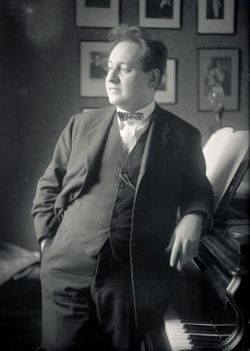 many ways difficult life that spanned several epochs. He was born in Brünn, Austria-Hungary, now Brno, the Czech Republic, at the end of the Empire’s culturally brilliant era, which was open enough to allow the assimilated Jews to flourish. A child prodigy, he was a darling of Vienna, where the family moved when Erich was four. His father, Julius Korngold, was the most prominent music critic of the time, working for the newspaper Neue Freie Presse, the New York Times of Vienna. Erich’s first piano sonata was composed at the age of 11; another piano and a violin sonata followed shortly after, then a Sinfonietta and a couple of short operas. World War I ended with the disappearance of Austria-Hungary, and Vienna, the capital of a world power and a cultural center of the world turned into a provincial Middle-European city. Korngold, by then in his early 20s, turned to the opera. Die Tote Stadt (The Dead City), composed in 1920 when Korngold was 23, was a tremendous success and staged all over Germany, then Europe, even reaching the Met two years later. In the meantime, Korngold turned to writing and arranging operettas. They were very popular and brought in quite a bit of money. His father, whose idol was Gustav Mahler and who didn’t care much for operettas, wasn’t pleased, considering this a waste of his son’s talent. In retrospect, the technique of writing lighter music with lots of words thrown in became an asset when Erich earned money in Hollywood writing music scores some years later.
In 1933 the Nazis came to power in Germany and banned Korngold’s music in that country (after the Anschluss, it would be banned in Austria too). In 1934, an invitation from Max Reinhardt, the famous German theater director, who was then working in New York theaters and trying his hand at film, brought Korngold to Hollywood. Nobody in the US was much interested in Korngold’s more “serious” music but his career in the movies took off. He wrote music for some of the most popular films of the 1930s, such as Captain Blood, The Adventures of Robin Hood, and many others, singlehandedly creating a new musical genre. He did write some “serious” music as well, but not much of it: the Violin Concerto in 1945 and a large-scale symphony in 1947, which used themes from his 1939 film The Private Lives of Elizabeth and Essex. These works are romantic, flowery, and pretty, but they sound rather dated – and, not surprisingly, remind one of his film music. We’re afraid that we agree with Julius Korngold that Erich, with all his obvious talents and tremendous promise, didn’t go “deep” enough. But maybe it was just inherently not in his nature: if you listen to his Sinfonietta, composed when Erich was 16, you can already hear the theatricality of Robin Hood.
Marin Marais was born on June 1st of 1653 in Paris. A student of Jean-Baptiste Lully, he became famous after the film Tous les matins du monde, featuring his music, premiered in 1991. We find most of it repetitive and not very imaginative (somehow the repetitious phrases in the music of Padre Antonio Soler work much better).
Mikhail Glinka, also born on June 1st but in 1804, is widely considered the father of Russian classical music and to that extent, is important. And Edward Elgar was born on June 2nd of 1857. He’s one of the most significant English composers of the modern era, but we’ve already confessed to being rather cool to his music, the Cello concerto in the interpretation of Jacqueline du Pré notwithstanding.Read more...
This Week in Classical Music: May 22, 2023. Wagner. These days when one says “Wagner” the first assumption is that the person is talking about the Russian military group fighting in Ukraine on behalf of the Russian government. The image of the great German composer comes in second. It is not clear why the Russian nationalistic paramilitary organization took such a Western name. As one theory goes, the original founder of the organization, one Dmitry Utkin, a neo-Nazi interested in the history of the Third Reich, took the call sign of Wagner, after Richard Wagner, Adolph Hitler’s favorite composer. This is almost too much: Richard Wagner had enough problems of his own doing to be associated with this murderous group.
Richard Wagner was born on May 22nd of 1813 in Leipzig. That he is a composer of genius goes without saying. That he was a rabid and active antisemite is also very clear. This gets us into a very complicated predicament: what do we do about an evil genius? Do we ignore all the “extraneous” biographical facts and just concentrate on the quality of his music? Or do we, as the Israelis have done, ban his music altogether? We don’t have an answer. A litmus test, suggested by some thinkers, goes like this: if the aspects of the creator’s philosophy, in this case, his antisemitism, have directly affected his works, then we cannot ignore them. If, on the other hand, they did not, then maybe we should concentrate on the work itself and ignore the rest while letting biographers dig into the sordid details. Even given this test we don’t quite know how to qualify Wagner’s work. Wagner’s writings are full of antisemitism, but clearly, they are not what he’s famous for – there were too many antisemites in Germany during his time. His opera Die Meistersinger von Nürnberg has a whiff of antisemitism while most other operas are free of it. We’re not going to solve this problem today, so just to confirm that we’re talking about a flawed genius, let’s listen to the Prelude to Act I of Parsifal, Wagner’s last opera. This is from the 1972 recording made by Sir Georg Solti and the Vienna Philharmonic Orchestra. This amazing recording also features René Kollo, Dietrich Fischer-Dieskau and Christa Ludwig, all at the top of their form. Wagner prohibited any performances of Parsifal outside of Bayreuth, and that’s how it was for the first 20 years after the premiere. Even though Wagner died in 1883, his widow Cosima, Liszt’s daughter and also an antisemite, wouldn’t allow any other staging. Then, in 1903, a court decided that the Metropolitan Opera could perform Parsifal in New York. Cosima banned all singers who participated in that performance from ever appearing in Bayreuth. Only in 1914 was the ban lifted and immediately 50 opera houses presented it all over Europe. Since then, Parsifal has remained on the stage of all major opera theaters around the world.
Read more...This Week in Classical Music: May 15, 2023. Monteverdi and Goldmark. One of our all-time favorite composers, Claudio Monteverdi, was born (or at least baptized) in Cremona on this day in 1567. A seminal figure in European music history, he spanned two traditions, the old, Renaissance, and the new, Baroque, and in the process created the new art of opera. We’ve written about him many times, so today we’ll just present one section, Laudate pueri, from his Vespro della Beata Vergine (Vespers for the Blessed Virgin), also known as his 1610 Vespers. Monteverdi composed the Vespers while in Mantua, at the court of the Gonzagas. It was published in Venice and dedicated to Pope Paul V, famous for his friendship and support of Galileo Galilei (but also for nepotism: he made his nephew, Cardinal Scipione Borghese so rich that it allowed Scipione to start what is now known as the Borghese Collection of paintings and sculptures). Back to the music, though: here is Laudate pueri, performed by the British ensemble The Sixteen under the direction of their founder, Harry Christophers.
Carl Goldmark is almost forgotten, but in his day, he was one of the most popular composers in the German-speaking world. His opera Die Königin von Saba (The Queen of Sheba) was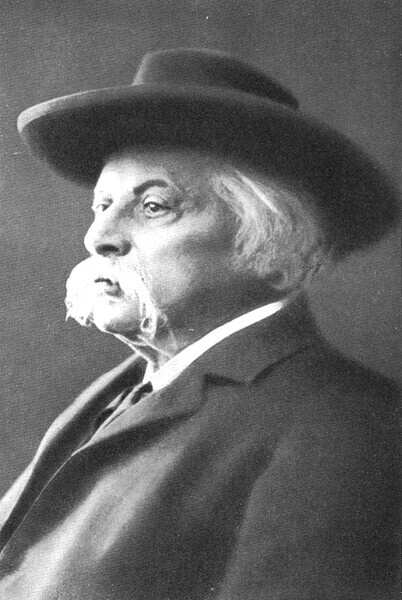 performed continuously from the day it successfully premiered in 1875 in Vienna’s Hofoper, till 1938, when Austria was taken over by the Nazis in the so-called Anschluss. Goldmark was born on May 18th of 1830 in Keszthely, a Hungarian town in the Austro-Hungarian Empire. Goldmark was Jewish (his father was a cantor in the local synagogue); the family came from Galicia, and Goldmark’s first language was Yiddish – he never spoke Hungarian and learned German as a teenager. Goldmark studied the violin in Vienna and later supported himself by playing the instrument in various local orchestras. Around this time, he accepted the German culture as his own, which was the path for many upwardly mobile Jews in Austria and Germany in the second half of the 19th century. Around 1862 he became friends with Johannes Brahms, who had recently moved to Vienna from Hamburg. Goldmark’s first successful composition was a concert overture Sakuntala, based on the Indian epic Mahabharata, which premiered in 1865. Goldmark followed it with another exotic composition, the above-mentioned opera Die Königin von Saba. It was a spectacular success and performances of the opera were mounted internationally. Goldmark became part of the establishment, receiving prizes and honors, and presiding over important musical juries. His 70th and 80th birthdays were celebrated nationally with great pomp. He helped Mahler get his appointment at the Court Opera in 1897; some years later, he did a similar favor to Arnold Schoenberg, who was seeking an appointment to the Imperial Academy of Music and Arts. Goldmark died several months into WWI, grieving the loss of his grandchild who was killed in one of the first actions in Serbia.
Goldmark’s Violin Concerto no. 1 was composed in 1877. It’s a wonderful composition, rarely performed these days. Here is a marvelous recording made by Nathan Milstein in 1957. Harry Blech conducts the Philharmonia Orchestra. We wonder why it’s not being played more often.Read more...
This Week in Classical Music: May 8, 2023. A Listless List. A whole bunch of composers were born this week, and none of them inspire us. This may change with time: many of our.jpg "Gabriel Fauré, by Sargent") musical attachments ebb and flow. Let’s list the more interesting names: two Frenchmen, born on the same day, May 12th, three years apart: Jules Massenet in 1842 and Gabriel Fauré in 1845. Massenet is famous (or at least known) for his operas; two of them, Manon and Werther, are staged often. His most popular piece, though, is not vocal: it is Meditation, from his opera Thaïs, for the violin and orchestra. Here it is played by Mischa Elman, at his Russian Romantic best. While Massenet was rather conservative, Fauré, was forward-looking and influenced many composers of the early 20th century. Here is Fauré’s Pavane, performed by the Berlin Philharmonic under the baton of Simon Rattle.
musical attachments ebb and flow. Let’s list the more interesting names: two Frenchmen, born on the same day, May 12th, three years apart: Jules Massenet in 1842 and Gabriel Fauré in 1845. Massenet is famous (or at least known) for his operas; two of them, Manon and Werther, are staged often. His most popular piece, though, is not vocal: it is Meditation, from his opera Thaïs, for the violin and orchestra. Here it is played by Mischa Elman, at his Russian Romantic best. While Massenet was rather conservative, Fauré, was forward-looking and influenced many composers of the early 20th century. Here is Fauré’s Pavane, performed by the Berlin Philharmonic under the baton of Simon Rattle.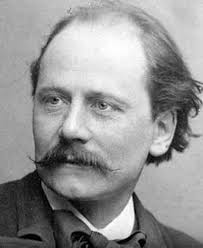
Carl Stamitz, the eldest son of Johann Stamitz, both prominent representatives of the Mannheim School, was baptized on May 8th of 1745. The American composer and pianist, Louis Moreau Gottschalk was born on that day in 1829 in New Orleans. Even if his music is mostly forgotten, his life was fascinating, and we’ll return to him someday. Giovanni Battista Viotti, an Italian violin virtuoso and composer, was born on May 12th of 1755. Viotti composed 29 violin concertos, some of them still in the active repertory, but we didn’t have a single piece of his in our library. We’re correcting the omission with this performance of his Violin concerto no. 22 with the wonderful Belgian-Romanian violinist Lola Bobesco. Kurt Redel conducts the Staatsphilharmonie Rheinland-Pfalz orchestra. Another Italian, Giovanni Paisiello, was born on May 9th of 1740. His most popular opera was Il Barbiere di Siviglia, composed in 1782 with the libretto adapted from Beaumarchais’s play, as was Rossini’s famous masterpiece, written some 36 years later.
Milton Babbitt was one of the most interesting (and difficult) American composers of the 20th century, and we wrote about him here. And speaking of fascinating lives, Arthur Lourié’s certainly was: he was linked, romantically or otherwise, with a good part of the Russian Silver Age artists, from the poet Anna Akhmatova to the painter Sudeikin, to Stravinsky and Vera de Bosset, Stravinsky’s eventual wife. Some of these relationships were rather unconventional; we’ve touched upon them here.
Two conductors were also born this week, Carlo Maria Giulini, on May 9th of 1914, and Otto Klemperer, on May 14th of 1895. Giulini, together with Arturo Toscanini, Victor de Sabata, and Claudio Abbado, was one of the few truly great Italian conductors (we probably should add Giuseppe Sinopoli and Riccardo Muti to the list). During his long career (he died at the age of 91) Giulini was closely associated with the Chicago Symphony Orchestra, London's Philharmonia, the Vienna Philharmonic, and sever other major ensembles. The number of prominent German 20th-century conductors is much larger, and Otto Klemperer was always considered one of the best. We wrote about him recently here. An interesting note: Giulini’s first instrument was the viola, and as a young man, he played in the orchestra of the Accademia di Santa Cecilia in Rome. Among the conductors whose music-making affected him the most were the Germans: Wilhelm Furtwängler, Bruno Walter – and Klemperer.Read more...
This Week in Classical Music: May 1, 2023. Pfitzner, Double Birthday and Alessandro Scarlatti. The German composer Hans Pfitzner was born in, of all places, Moscow, Russia, on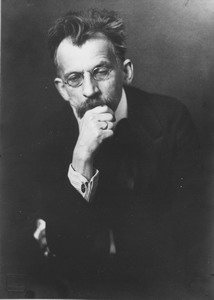 May 5th of 1869. We wanted to write about him not because of his talent but because of the period he lived in, the one preceding the 1933 Nazi takeover and then the Nazi period in Germany and later Austria. We find this time frame of Austro-German music fascinating. Never before were music and politics as intertwined as then and there, and never in modern times were the ethics of the musicians tested to the same degree. Then it occurred to us that just two weeks ago we wrote about Max von Schillings, whose path was somewhat similar to Pfitzner’s. So, we decided to return to Pfitzner at a later date. Pfitzner was a better composer and not as rabid a Nazi supporter as Schillings, so we feel that we can play some of his music. Here are Three Preludes from his most successful opera, “Palestrina” (preludes to Acts I, II, and III). Christian Thielemann conducts the orchestra of the Deutsche Oper Berlin.
May 7th is special: Pyotr Tchaikovsky and Johannes Brahms were both born on this day, Tchaikovsky in 1840 and Brahms seven years earlier, in 1833. This is a rather unfortunate coincidence as both of them deserve separate entries. On the other hand, we’ve written so many entries about these composers, together and separately, that we’ll skip them this time.
These days Alessandro Scarlatti’s son Domenico is much better known than his father, but we think this is a purely technical issue: Alessandro was famous for his operas whereas Domenico – for his small clavier sonatas. It’s much easier to squeeze a three-minute piano piece into a recital or as a filler on a classical music radio station than stage a three-hour opera production. Scarlatti composed 65 operas, most of them in three acts. The exceptions being the famous (or as famous as Alessandro Scarlatti’s opera can get), Il Mitridate Eupatore, and Il trionfo della libertà are in five acts; both composed in 1707. Of all of his operas, probably five have been recorded (his oratorios fared a little bit better; Scarlatti wrote more than 30 of them, and being shorter, they are easier to produce). Alessandro Scarlatti was born on May 2nd of 1660 in Palermo. He spent most of his time in Rome and Naples and is considered “the father” of the Neapolitan opera. Even though opera was his favorite art form, he also wrote some church and orchestral music. We can listen to two examples: here’s his short (just five minutes) Concerto Grosso no. 4, performed by the ensemble Europa Galante under the direction of Fabio Biondi. It was composed around 1715. And here is Kyrie, from his St. Cecilia Mass (1720). The Wren orchestra, the choir of St. John’s College, Cambridge, and the soloists are led by George Guest.Read more...
This Week in Classical Music: April 24, 2023. Benedetto Pamphili. Occasionally we write about historical figures that, while not directly involved in composing or making music, greatly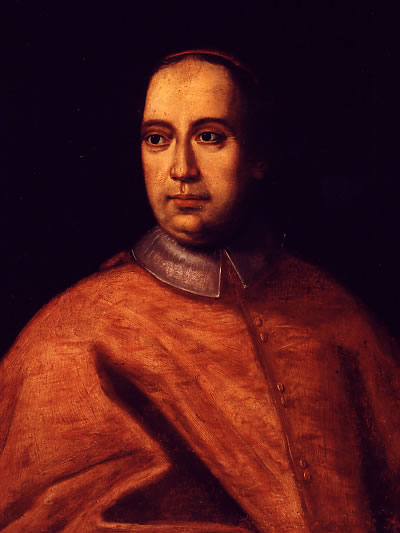 affected musical culture, for example, through their patronage, as librettists, or as music producers. Queen Christina is probably the most famous example of a patron. In a very different way, Pietro Metastasio, who wrote libretti to operas by Vinci, Caldara, Hasse, and many other opera seria composers, was also very influential. And then there was Lorenzo da Ponte: we know him as the librettist to Mozart’s Don Giovanni, Così fan tutte, and The Marriage of Figaro, but he also wrote libretti for 25 other operas by 11 composers, Antonio Salieri among them. The famous impresario Sol Hurok is an example of a powerful producer who shaped several musical careers.
Cardinal Benedetto Pamphili, whom we are celebrating today, was prominent in all three areas: he was an important benefactor, he wrote several libretti, and he staged many productions, some of which were premiers. Benedetto Pamphili was born in Rome on April 25th of 1653 into a prominent family whose name in Italian is often spelled Pamphilj, the ending “j” indicating a long “e” sound. Benedetto’s great-grandfather was Pope Innocent X, whose portrait you can see below. (The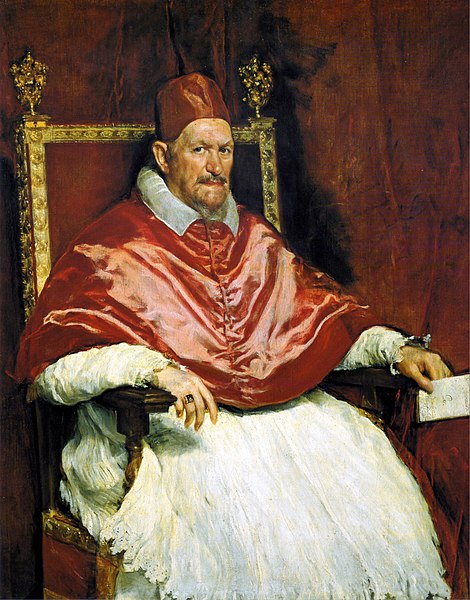 portrait, one of the greatest ever created, was painted by Diego Velázquez. It now hangs in a separate room in Galleria Doria Pamphilj; it alone is worth the price of the ticket. Read more about it here). Benedetto’s parents were Cardinal Camillo Pamphilj and Olimpia Aldobrandini, from a no less powerful Aldobrandini family. In order to marry Olimpia, Camillo had to renounce his cardinalship. The Palazzo Doria Pamphilj, which houses the gallery, was part of Olimpia’s dowry; prior to her marriage, it was called Palazzo Aldobrandini (the original Palazzo Pamphilj is on Piazza Navona and is now owned by the Brazilian embassy).
Benedetto, who inherited a fortune, also had a considerable income from numerous ecclesiastical positions he was granted by Pope Innocent XI. He spent much of it on art and patronage. Benedetto was a gifted writer and was admitted into two prestigious Academies: Accademia degli Umoristi, a literary society whose members were some of the best writers of the time (despite its name the Academy wasn’t necessarily dedicated to humoristic arts), and Accademia dell'Arcadia, about which we wrote an entry some time ago. As music was Benedetto’s favorite art, he applied his literary talents to writing libretti. Operas were prohibited in Rome by Pope Clement XI in 1703, so most of these libretti were for oratorios and cantatas, which temporarily replaced operas as accepted genres (texts for 88 cantatas are extant). A few of Benedetto’s operas were staged before the prohibition went into effect, for example, Alessandro Scarlatti’s La santa Dimna, presented in Palazzo Doria Pamphilj in 1687.
Benedetto employed several maestro di musica, among them Lulier and Cesarini. Arcangelo Corelli played in his orchestra and was handsomely rewarded for it. Bernardo Pasquini, a composer of operas and oratorios, was also supported by Benedetto, as was Giovanni Bononcini. His most famous charge was Handel during the young composer’s stay in Rome. They became friends and Handel dedicated several cantatas and oratorios to his patron.
Benedetto held weekly musical events in his palace, as did some other powererful cardinals, like Pietro Ottoboni and Carlo Colonna; he also sponsored productions in other theaters. What is interesting about these productions is the size of the orchestras they employed. We are used to the staging of Baroque operas supported by scaled-down groups, often consisting of just several players: a couple of violins, a viola da gamba, a theorbo, and a harpsichord. According to Lowell Lindgren, Benedetto employed 32 musicians in Scarlatti's Il trionfo della gratia and 60 for Lulier's S Maria Maddalena de' pazzi. Maybe the musical accompaniment of Baroque operas doesn’t have to sound so thin after all.Read more...
This Week in Classical Music: April 17, 2023. Schillings and the problem of evil. In his “little tragedy” Mozart and Salieri, the Russian poet Alexander Pushkin made a profound, if not necessarily true statement: “Genius and villainy are two things incompatible.” We’d like to believe it to be true, and in some higher sense it should be true, but we know that history is full of villainous geniuses. As far as music is concerned, Richard Wagner’s name is the first to come to mind. He was a vile antisemite and made statements that today are difficult to comprehend. One thing we’d like to make clear about Wagner is that in no way was he responsible for the atrocities committed by the Nazis, though much of them were accompanied by his music. Wagner’s music was favored by Hitler, but the Führer also loved Bruckner and Beethoven. Wagner’s place in the Nazi culture was unique, partly because of the Bayreuth Festival, run by the antisemitic Winifred Wagner, the wife of Richard’s son Siegfried and Hitler’s dear friend, but in no way does this make Wagner, as terrible a person as he was, an accomplice. Then there was Carlo Gesualdo, Prince of Venosa and Count of Conza, who murdered his wife and Fabrizio Carafa, Duke of Andria, after finding them in flagrante. Alessandro Stradella, a wonderful composer, embezzled money from the Catholic church, seduced and abandoned many women, and was killed by three assassins hired by a nobleman who found out that Stradella had become a lover of his mistress (or, in another version of the story, the nobleman’s sister). One person we find especially fascinating is the painter of genius, Caravaggio, who murdered several people, maimed many more, belonged to a gang, was arrested on many occasions, and had fled from justice for half of his life. We tend not to remember these things when we look at his pictures, some of the most profound ever created.
The musician whom we decided to write about this week never had the talent of the artists just mentioned, but neither were his sins as deep; nonetheless, his story, which is much closer to our time, seems to be more relevant. His name was Max Schillings, he was born on April 19th of 1868 in Düren, the Kingdom of Prussia. He studied the piano and the violin in Bonn and later entered the University of Munich, where he took courses in law, philosophy, and literature. While in Munich, he met Richard Strauss who became his friend for life. In 1892 Schillings was appointed assistant stage conductor at Bayreuth; in 1903 he was made professor in Munich (Wilhelm Furtwängler was one of his students). In 1908 he became the assistant to the Director of the Royal Theater in Stuttgart, the city’s main opera house, where he staged several premieres, including Strauss’s Ariadne auf Naxos; later he also conducted Strauss’s Salome and Elektra. By then he had composed several operas, most of them unsuccessful imitations of Wagner. Then, in 1915, he had a breakthrough with his opera Mona Lisa, which became the most often staged opera of the time. In 1918 Schillings succeeded Richard Strauss as the Intendant of the State Opera in Berlin (we know it as Staatsoper Unter den Linden; Barenboim lead it for years). He then spent several years outside of Germany, conducting and staging operas in Europe and the US. Upon his return in 1932, he was appointed President of the Prussian Academy of the Arts.
Schillings was a rabid antisemite, a nationalist and an opponent of the Weimar Republic. As soon as he became the President of the Academy, he fired some of the most talented members, among them Heinrich and Thomas Mann; Alfred Döblin, the author of Berlin Alexanderplatz; the composer Franz Werfel. He terminated Arnold Schoenberg’s contract and sent Franz Schreker into retirement. God only knows what else he would have done had he lived through the Nazi period, but he died on July 24th of 1933, four months after the Enabling Act gave Hitler dictatorial powers. We don’t want to keep Schillings’s music in our library, but you can find Mona Lisa on YouTube.Read more...
This Week in Classical Music: April 10, 2023. Pletnev and Caballé. Mikhail Pletnev is a wonderful pianist and an interesting conductor. He was born on April 14th of 1957 in the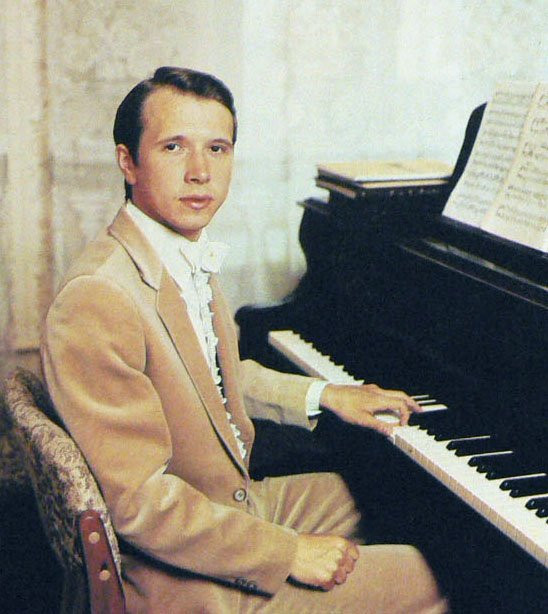 northern Russian city of Arkhangelsk. In 1978, when he was 21, Pletnev won the first prize at the sixth Tchaikovsky competition. That brought him international recognition and his career took off. He debuted in the US the following year and since then has performed in all major venues and played concerts with the best conductors, Claudio Abbado, Bernard Haitink, Lorin Mazel, and Zubin Mehta among them. As a pianist, Pletnev has a special affinity with Rachmaninov and is acknowledged as one of the best performers of his music. In 1990, Pletnev founded the Russian National Orchestra (RNO), the first non-governmental orchestra in the country since 1917, and developed it into one of the best orchestras in Russia. The NRO recordings of Tchaikovsky’s symphonies are especially good. Everything changed in 2022 with the Russian aggression against Ukraine. Pletnev’s reaction was both negative and direct. In an interview, he said: “Who starts the wars? Only stupid politicians. Not a single normal person likes the war. But the politicians use propaganda and manipulation, and they use them for their own benefit, not ours.” Of course, in a country with only one politician, Mr. Putin, this couldn’t be tolerated. First, the Russian government fired RNO’s executive director, a Pletnev supporter, and then practically banned Pletnev from conducting his own orchestra. Since then, Pletnev has created another ensemble he calls the Rachmaninoff International Orchestra. Among its members are musicians from Eastern and Western Europe, and 18 former members of the RNO.
Here are several piano recordings by Mikhail Pletnev. First, Rachmaninov’s Corelli Variations, recorded live in Moscow in 2001 (here). Then, another live recording, made in Luxemburg in 2015: a rather idiosyncratic interpretation of Chopin’s Nocturne in C-sharp minor op. posth. (here). And lastly, from Carnegie Hall, also live, the year 2000 recording of Chopin’s Scherzo no. 1 (here).
The great Spanish soprano Montserrat Caballé, “La Superba,” was born on April 12th of 1933 in Barcelona. Here she sings the aria Donde Lieta Usci from Puccini’s La Bohème. Charles Mackerras conducts the London Symphony Orchestra.
Read more...This Week in Classical Music: April 3, 2023. Two Italian Tenors. Only one of these singers has an anniversary this week, and that’s Franco Corelli, who was born on April 9th of 1921 in.jpg "Beniamino Gigli in the role of Andrea Chenier") Ancona. Another tenor is Beniamino Gigli, whose name we mentioned several weeks ago when we were celebrating the birthday of the great Enrico Caruso. We promised then to write about Gigli, probably second only to Caruso among tenors of the first half of the 20th century. Gigli was born on March 20th of 1890, but with Bach and Rachmaninov’s 150th anniversaries intervening, this is the earliest we could get to Gigli.
Ancona. Another tenor is Beniamino Gigli, whose name we mentioned several weeks ago when we were celebrating the birthday of the great Enrico Caruso. We promised then to write about Gigli, probably second only to Caruso among tenors of the first half of the 20th century. Gigli was born on March 20th of 1890, but with Bach and Rachmaninov’s 150th anniversaries intervening, this is the earliest we could get to Gigli.
Forty years separate Gigli from Corelli; that gap affected their legacies in many ways, but two of them are very important: one is technology, the other – politics. Gigli made a large number of records, but the recording technology of his time was rather poor, and the sound quality of his shellac records cannot compare with the ones made by Corelli. Subsequently, we rarely can hear the tone quality for which Gigli was famous. And politics is the second important factor: Gigli lived during the fascist years of Mussolini’s reign, and as was the case with many German, Soviet, and Italian musicians of the time, he compromised himself politically and ethically.
Beniamino Gigli was born in Recanati, a small town not far from Ancona on the Adriatic side of Italy. In 1914 he won a competition in Parma, and later that year made a successful début in Ponchielli’s La Gioconda. His career took off almost immediately, and he was invited to sing in all major opera theaters of Italy, from San Carlo in Naples to La Scala in Milan. In 1917 he sang in Spain and in 1920 made a highly successful debut in New York at the Met. He stayed in the US for the next 12 years, becoming, after Caruso’s death in 1921, the Met’s most popular tenor, even though the opera’s roster also included such singers as Giacomo Lauri-Volpi and Giovanni Martinelli. Even though the public called Gigli “Caruso Secondo,” the comparison is not fair: Caruso’s voice was bigger and darker than Gigli’s, whereas Gigli’s was “sweeter” and probably naturally more beautiful. In 1932, after refusing a pay cut, Gigli left the Met and returned to Italy. He became Mussolini’s favorite singer, which in itself, of course, is not a sin. Unfortunately, Gigli went much further: in 1937 he recorded the official hymn of the Italian fascist party, Giovinezza; in 1942 he wrote a book, Confidenze, in which he praised fascism. He valued his “friendship with Hitler, Goering and Goebbels. In 1944, he collaborated with the Germans after they occupied Rome. Were he in Germany at the end of the war, he would probably had been banned for years as a collaborator, but in Italy, he was forgiven almost immediately. Not everybody forgot his past, though: he wasn’t let into the US till 1955. That didn’t prevent Gigli from singing in Italy, Europe and South America.
Gigli’s recordings don’t do justice to his honeyed tone but we have two samples that seem to better reflect his voice. Here, from 1943, is his Vesti la giubba, from Leoncavallo’s I Pagliacci (it’s a live recording and we had to cut down part of the prolonged ovation). And here, from 1949, is Nessun dorma, from Puccin’s Turandot.
Gigli was one of Franco Corelli’s favorite singers; mostly self-taught, he learned to sing by listening to the recordings of Caruso, Lauri-Volpi and Gigli. Here’s Corelli’s rendition of Nessun dorma. Two years ago we celebrated Corelli’s 100th anniversary, you can read more about this great singer here.
Read more...This Week in Classical Music: March 27, 2023. Rachmaninov 150. One day of this week is very special: April 1st marks the 150th anniversary of the great Russian composer, pianist, and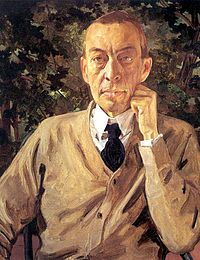 conductor, Sergei Rachmaninov (some outlets were celebrating his birthday on the 20th of March, as that was his birthdate according to the old Russian Julian calendar, but this is like observing the Russian Revolution on October 25th, rather than the conventional November 7th). We’re not going to trace Rachmaninov’s life; suffice it to say that it was divided into two irreconcilable parts, one, from his birth till the Russian Revolution, and then, from 1918, emigration and life in the United States. In terms of his creative output, these two parts are incomparable. The vast majority of his compositions were created while Rachmaninov lived in Russia: his piano pieces, such as the Études-Tableaux and the Preludes, the first three Piano concertos, two symphonies and Isle of the Dead, the Second piano sonata (the first one was a juvenile piece), the early operas, most of his songs, the choral works, such as The Bells and the All-Night Vigil – all of these were written in Russia. In America Rachmaninov had to earn his living by playing piano and conducting, with very little time left for composing. All he wrote while in America were (not counting several miscellaneous pieces) a not-very-successful Piano Concerto no. 4, Rhapsody on a Theme of Paganini, Symphony no. 3, Variations on a Theme of Corelli, and Symphonic Dances. We’ve always wondered if one could explain such a tremendous disparity just by Rachmaninov’s need to earn money by performing. We suspect there was more to it, but this is not the place to address this issue.
That Rachmaninov was one of the greatest pianists of the 20th century is accepted by practically everybody. But what about his compositions? He’s one of the most popular composers ever, if one judges by the number of his pieces being performed and broadcasted, the Piano concertos nos. 2 and 3 and Rhapsody on a Theme of Paganini in particular. But was he a great composer? Here opinions differ. Clearly, he wasn’t an innovator, but not all great composers were: we recently talked about Bach, whose music was considered outdated by many of his contemporaries. Eric Blom, a famous music critic and the editor of the 5th edition of Grove's Dictionary of Music, was one of the skeptics. He wrote that the composer “did not have the individuality of Taneyev or Medtner. Technically he was highly gifted, but also severely limited. His music is ... monotonous in texture ... The enormous popular success some few of Rakhmaninov's works had in his lifetime is not likely to last, and musicians never regarded it with much favour.” This seems to be both wrong and unfair, and Harold Schonberg, the chief music critic of the New York Times, responded (in his book on great composers) in kind: “It is one of the most outrageously snobbish and even stupid statements ever to be found in a work that is supposed to be an objective reference.” We have to confess that sometimes, listening to somewhat shallow, formulaic passages that appear quite often in many of Rachmaninov’s pieces, we have our doubts. But that’s not the way to judge any creative artist: it should be done by what he did best, and Rachmaninov did write brilliant music. That’s what will keep him in the pantheon of composers of the first half of the 20th century.
Let’s listen to some music. First, Sviatoslav Richter plays two of Rachmaninov’s Etudes-Tableaux op.33: no. 5 and no. 6, but from 1911. And here Richter again, in Prelude no. 10, from op. 32, composed a year earlier, in 1910. And finally, a sample of Rachmaninov’s late symphonic work: from 1940, his Symphonic Dances. Vladimir Ashkenazy leads the Royal Concertgebouw Orchestra.Read more...
This Week in Classical Music: March 20, 2023. Bach and Four Pianists. Johann Sebastian Bach was born on March 21st of 1685 in Eisenach. Four pianists were also born this week; we’ll present them briefly and then have them play several of Bach’s works. A word on dating Bach’s compositions: even though we know a lot about his life, the dating of his output is very approximate, so sometimes it’s not clear where Bach was when he wrote some of the pieces. Different sources often provide different dates and estimate ranges.
Our pianists are: Sviatoslav Richter, born on March 20th of 1915 in Zhytomyr, then in the Russian Empire, now a city in independent Ukraine. Richter is acknowledged by many as one of the greatest pianists of the 20th century. His repertoire was enormous, he said that he could play eighty different programs, not counting chamber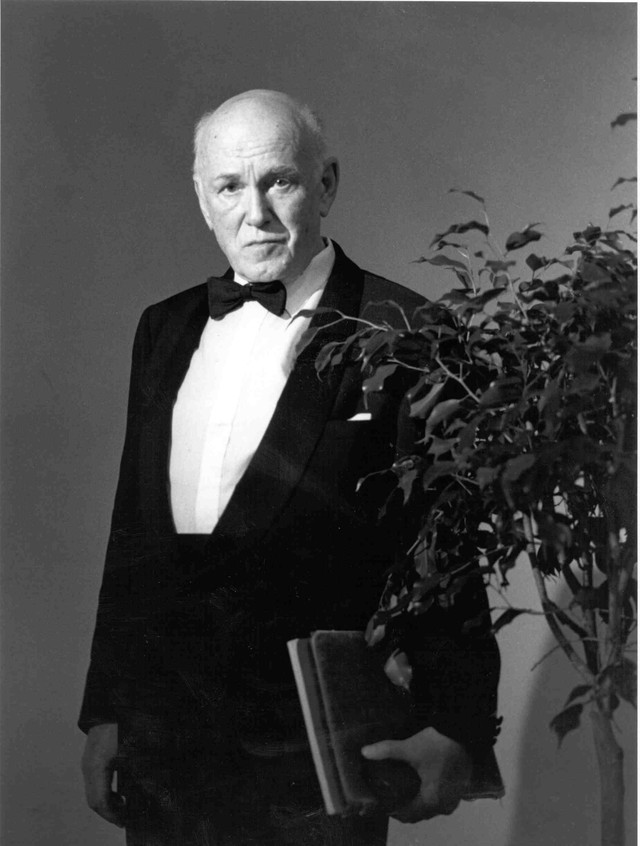 pieces. He continued adding to it even in his 70s.
Egon Petri, a German pianist of Dutch descent, was born on March 23rd of 1881 in Hanover. He was the favorite pupil and associate of Ferruccio Busoni. Petri had an illustrious international career and in 1923 became the first foreign pianist to perform in the Soviet Union. Like his teacher, much of Petri’s repertoire was concentrated on Bach, and like him, he became a famous pedagogue.
The American pianist Byron Janis will turn 95 on March 24th. He was born in McKeesport, PA into a Jewish family (the original family name was Yankelevitch). As a child, he studied with Josef and Rosina Lhévinne in New York. Vladimir Horowitz was in the audience when Janis, age 16, played Rachmaninov’s 2nd Piano Concerto and immediately took him as his first pupil. In 1960 Janis had a tremendously successful tour of the Soviet Union, just two years after Van Cliburn’s win of the First Tchaikovsky competition. Janis’s career was cut short in 1973 when he developed arthritis in both hands.
Wilhelm Backhaus, one of the most interesting German pianists of the 20th century, was born on March 26th of 1884 in Leipzig. An early protégé of Arthur Nikisch, he studied for a year with Eugene d’Albert but was mostly self-taught. In 1900, Backhaus toured England, and four years later he became a professor of music in Manchester. In 1912-1913 he toured the US, the first of his many highly successful tours of the country. In 1931 he became a Swiss citizen. His technique was legendary, and he maintained it well into his 80s. Backhaus was compromised by his association with the Nazis after their takeover in 1933. We’ll address this chapter of his life later.
So now to some Bach, as performed by our pianists. Here is an early (1948-1952) Sviatoslav Richter recording of Fantasia and Fugue in A minor, BWV 944. Bach wrote it sometime between 1707-1713/1714 when he was most likely in Weimar, where he was an organist and Konzertmeister at the ducal court.
And here is a much later work, Prelude, Fugue and Allegro in E-Flat Major, BWV 998, from 1740-1745, when Back was Thomaskantor in Leipzig. It’s performed by Egon Petri.
Here, 19-year-old Byron Janis plays Prelude and Fugue in A minor, BWV 543 as arranged by Liszt. The dating of this piece is all over the place: Grove Music says “after 1715,” Wikipedia – after 1730.
And finally, Wilhelm Backhaus plays the English Suite No. 6 in D minor, BWV 811 (here), composed sometime between 1720 and 1725. This is a bit problematic because in 1720 Bach was living in Köthen, serving as the Kapellmeister to the Prince of Anhalt-Köthen, while in 1725 he was already in Leipzig. Read more...
This Week in Classical Music: March 13, 2023. Telemann and Two Singers. Georg Philipp Telemann, the prolific friend of Johann Sebastian Bach, was born on March 14th of 1681. We’ve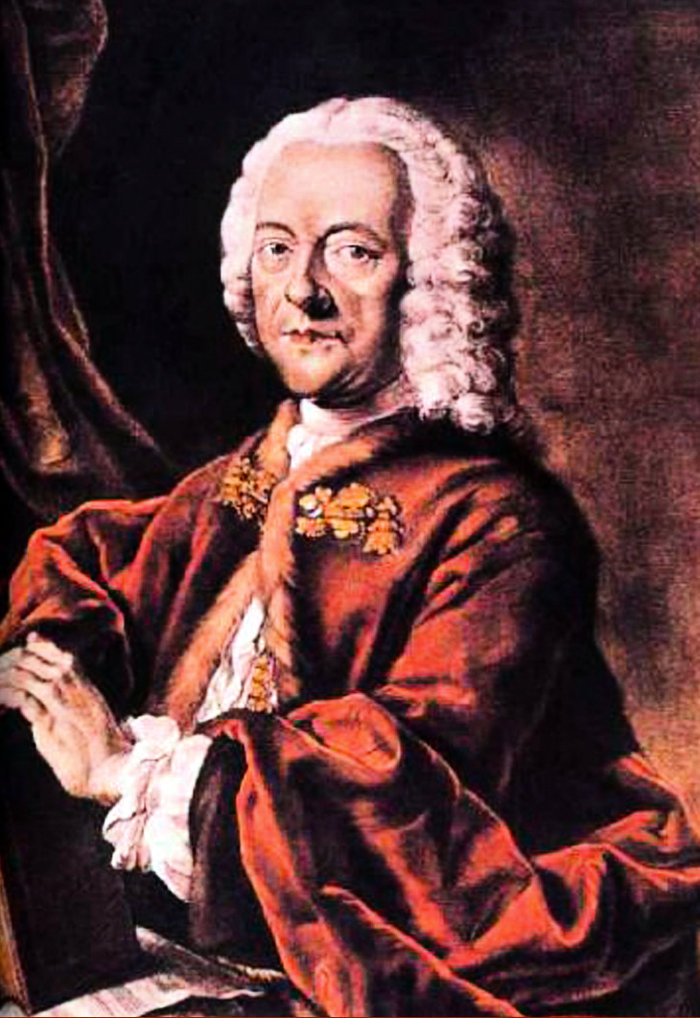 written about the “Telemann problem”: he was so abundant in his output as to make it practically impossible to account for all his compositions and to select – if not the best, then at least the most representative – pieces. Not just a wonderful composer, Telemann was also a very interesting person of apparently boundless energy: in addition to composing, he produced concerts, published music, taught, and wrote theoretical treaties. We’ll dedicate another entry to him, but this time we’ll just play some of his music – as it happens, an Orchestra suite La Bizarre (here). It’s performed by the Akademie Für Alte Musik Berlin.
Two great singers were also born this week, both mezzo-sopranos and both born on the same day, March 16th: the German mezzo Christa Ludwig, and the Spanish Teresa Berganza, five years later, in 1933. Teresa Berganza died less than a year ago, on May 13th of 2022. We paid a tribute to her that year. Christa Ludwig died a year earlier, on April 24th of 2021 at the age of 93. She was born in Berlin, studied with her mother, and debuted at the age of 18 in Johann Strauss’s Die Fledermaus. In 1954 she sang the role of Cherubino in Mozart’s The Marriage of Figaro at the Salzburg festival. In 1959 she made her American debut as Dorabella in Cosi fan Tutti at the Lyric opera in Chicago (Elisabeth Schwarzkopf was Fiordiligi). She would return to Chicago five more times,.jpg "Christa Ludwig (with Bernstein)") singing Cherubino in Le nozze di Figaro, Fricka in Die Walküre, and roles in Boito’s Mefistofele, Verdi’s La forza del destino, and Richard Strauss’s Der Rosenkavalier. She had a rich, very focused voice with no unnecessary vibrato. Her repertoire was large, from Monteverdi to Gluck, Mozart, Wagner, Verdi, and Berg. She was also a great lied singer and a wonderful Mahlerian, performing in his song cycles, such as Kindertotenlieder and Rückert-Lieder, and in Das Lied von der Erde and Symphony no. 3. She worked with the best conductors of her time, from Böhm and Klemperer to Bernstein, Solti, and Karajan.
singing Cherubino in Le nozze di Figaro, Fricka in Die Walküre, and roles in Boito’s Mefistofele, Verdi’s La forza del destino, and Richard Strauss’s Der Rosenkavalier. She had a rich, very focused voice with no unnecessary vibrato. Her repertoire was large, from Monteverdi to Gluck, Mozart, Wagner, Verdi, and Berg. She was also a great lied singer and a wonderful Mahlerian, performing in his song cycles, such as Kindertotenlieder and Rückert-Lieder, and in Das Lied von der Erde and Symphony no. 3. She worked with the best conductors of her time, from Böhm and Klemperer to Bernstein, Solti, and Karajan.
Here is her Dorabella in the aria È amore un ladroncello from Mozart’s Così fan tutte. Karl Böhm conducts the Philharmonia Orchestra in this 1962 recording. And here Christa Ludwig is in an exceptional recording of Gustav Mahler’s Rückert-Lieder. Herbert von Karajan conducts the Berlin Philharmonic Orchestra.Read more...
This Week in Classical Music: March 6, 2023. Honegger. The always popular Maurice Ravel was born this week, on March 7th of 1875. And so were Carl Philipp Emanuel Bach, probably the most important composer among Johann Sebastian’s sons (on March 8th of 1714); Carlo Gesualdo, the brooding murderer and composer of huge talent (on the same day in 1566); Josef Mysliveček, a Czech friend of Mozart’s (on March 9th of 1737); and Samuel Barber, one of the most popular American composers of the 20th century (on March 9th of 1910). All of them we’ve written about on many occasions. One composer whom we’ve mentioned often but, quite undeservedly, only in passing, is Arthur Honegger, a Swiss and unusual member of Les Six.
Honegger was born on March 10th of 1892 in the French port city of Le Havre to Swiss parents (there was an old Swiss colony in the city). As a child, Honegger studied the violin and harmony in Le Havre and then, for two years, in Zurich. At the age of 18, while still living in Zurich, he enrolled in the Paris Conservatory; he commuted there by train twice weekly. In Paris Honegger studied with Charles-Marie Widor, the famous organist and composer, and Vincent d'Indy. In 1913 Honegger settled in Montmartre, where he lived for the rest of his life. While at the Conservatory, he met Germaine Tailleferre, Georges Auric, Darius Milhaud, all future members of Les Six (Milhaud became his closest friend), and Jacques Ibert, with whom he would later collaborate on two pieces. In 1926 Honegger married a fellow pianist Andrée Vaurabourg. Their married life was unusual: Honegger required solitude to compose, so Andrée resided with her mother, while Honegger visited her every day for lunch. They lived apart for the rest of their married life, except for a period following Vaurabourg’s car accident, when Honegger took care of her, and at the end of Honegger’s life. Despite this arrangement, they had a daughter who was born in 1932. Vaurabourg was Honegger’s most trusted musical advisor; an excellent pianist, she was also a prominent teacher: among her students was Pierre Boulez.
During WWII Honegger remained in Paris and taught at the Ecole Normale de Musique. Depressed during the war, he further suffered from heart problems (a heart attack in 1947 almost killed him). He was in poor health for the rest of his life and died in November of 1955, the first of the Les Six. And speaking of Les Six, it was never a unified group, and esthetically, a serious-minded Honegger, mostly interested in large-form compositions like operas and musical dramas, was an odd man out. What kept them all together was stimulating companionship and appreciation of each other’s talent.
A composition that brought Honegger international fame was a 27-movement incidental score to a biblical drama Le roi David. Among his most popular pieces is Pacific 231, inspired by the sounds of a steam locomotive (Honegger was a big train enthusiast, he also loved fast cars and rugby). Here’s his last symphony, no. 5, subtitled “Di tre re” (or Of the three Ds, “re” is note D in the French notation. This note is played at the end of each movement). The Danish National Radio Symphony Orchestra is conducted by Neeme Järvi.Read more...
This Week in Classical Music: February 27, 2023.